

A wedding is one of the few things a government office still treats as sacred. So what happens when the official behind the desk refuses to perform one? In Texas, apparently they get paid. Judge Dianne Hensley turned same-sex couples away and handed them a referral list. The state's judicial watchdog reprimanded her for it. She sued, arguing that the reprimand itself punished her faith – and this week a court agreed, ordering the state to pay her $640,000.
What Just Happened In Waco?
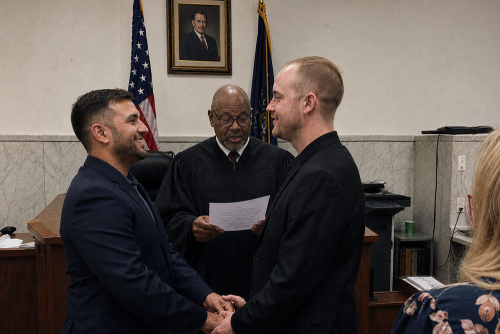 First, some context. In Texas, judges and justices of the peace may perform weddings but aren't required to – it's an optional duty. For couples who want something quick, affordable, and secular, the justice of the peace is often the only option available. So when that judge says no, the refusal carries the weight of the state behind it, not just one person's faith.
Hensley, citing her Christian faith, refused to officiate same-sex weddings after the Supreme Court legalized them across the country in 2015 in Obergefell v. Hodges. She kept marrying opposite-sex couples and pointed same-sex couples to a referral list instead. In 2019 the State Commission on Judicial Conduct issued a public warning to Hensley, indicating that a sitting judge cannot treat one class of couples differently from another.
Religious Liberty, Or A Two-Tier Bench?
Supporters call this a clean win for conscience. Texas keeps a Religious Freedom Restoration Act on the books precisely so government workers aren't forced to choose between their faith and their paycheck. Officiating, her lawyers argued, is a form of speech the state cannot compel. And no couple left empty-handed, and no one ever filed a complaint.
Critics see a public office drawing a private line. A justice of the peace is not a parish pastor; she holds a post funded by the whole county, including the couples turned away at her door. A referral slip, ethics scholars argue, is still a separate, unequal treatment for one kind of couple – a denial with a Post-it attached.
Then there is the bill. The $630,000 went to her lawyers came straight out of the Commission's budget – so the public financed one official's right to decline to marry themselves, or a select group of their neighbors. Fair price for conscience, or a strange use of tax dollars? Depends which side you started on.
And here is what unsettles many people of faith: religious freedom was supposed to run both directions. The ULC ministers who marry same-sex couples with open hearts are exercising their faith, too. When the law shields only the refusal and never the blessing, "religious liberty" starts to seems like a contest to decide whose God gets to win.
Is Gay Marriage Now At Risk Nationwide?
Hensley has appeared on this blog before, when the Texas Supreme Court first let her suit proceed. The pattern is familiar – a Kentucky clerk who refused marriage licenses, a wave of state laws letting businesses decline service to same-sex couples.
Two further elements lurking under the surface could prove monumental:
Hensley has also asked federal courts to overturn the 2015 Obergefell ruling outright – the decision that legalized gay marriage nationwide. So a story sold as a simple accommodation carries a much larger aim underneath. Her lawyer in that suit is Jonathan Mitchell, the man who helped topple Roe v. Wade by masterminding Texas's 2021 abortion ban, and his filing asks the courts to hand same-sex marriage back to the states, exactly as the Supreme Court did with abortion.
The Waco award may just be the beginning. A statewide class action, Brandt v. State Commission on Judicial Conduct, led by Tarrant County justice of the peace Bill Brandt, seeks tens of millions of dollars in payouts for judges who stopped marrying anyone at all – a number large enough to spook every county in the state away from facilitating weddings. Letting judges refuse to serve is simply safer than asking them to do their job. Across Texas, access to courthouse weddings could disappear by attrition.
But if Texas judges keep stepping back, we are confident that many of the ULC ministers in Texas are ready-and-willing to step up – anyone who feels called to make sure that no loving couple is denied their right to marry can get ordained and perform these weddings themselves.
So here is the fight worth having: When a faith-based accommodation comes from a public office, does a referral slip preserve equal access – or just outsource the denial? If refusing gay couples becomes the financially safe choice for a county, how many will still say yes? And if religious freedom belongs to everyone, why does it so often guard the refusal and never the blessing?
Tell us where you land.
135 comments
-
 Timothy
In this case the judge has a right to deny performing a ceremony there is zero obligation for a judge to execute this union. Distasteful maybe, biased possibly but not legally required absolutely. Again write your senators and congressional representative to lobby for change.
-
Timothy
Again people are going off topic here. Under Texas law: Performing marriage ceremonies is an authorized privilege, not a duty, under Texas law. Judges can decline to perform marriages entirely or opt out based on sincerely held religious beliefs.
-
 Pastor George Day
Marriage, in any form, is between a man and a woman—according to a gay non-binary man!
-
 Rev. Matthew Mastrogiovanni
It's a civil ceremony. A judge should marry any 2 consenting adults.
-
 James Richard Munro
1.Obama is a democrat. Get the point? 2.You are referring to June 26, 2015, when the US Supreme Court overruled all the states by saying all states had to allow alphabet people to marry. And Obama shamed America in front of all the nations by displaying the gay flag colors on the white house. (Had to do some self-editing here so hopefully, my comment won't be deleted) Paster Jim
-
 Andrew Keith Dupree
I do not care about any repercussion here but I do NOT condone any Gay marriages or the Practice there of! We have only 2 genders in humanity under My belief in Christianity, Period!
-
Timothy
If they can obtain a license, there is nothing barring them to finding someone to officiate the ceremony. As stated Texas allows a minister, even one ordained on line to officiate. So if a judge is not compelled to officiate, and in doing so conflicts their own moral values, why the fuss? If you want respect for one person you need to respect all parties involved. Indeed it is not like they have to find an underground place to perform the marriage, just a legally officiate person capable of signing the contract. I personally have no issues with this as I am sure there are a plethora of persons performing this act.
-
 Jillian Michelle Winsor
The same sex couple and their wedding insurance company should in return sue for financial harm. Just for starters.
-
 Patricia Ann Gross
Since she was referring couples, none of them complained. It was the state board of ethics (or something like it) that sent her a cease and desist of referring same-sex couples away rather than performing the weddings. She sued them!
-
-
Jillian Michelle Winsor
A parochial officiant has the choice but a secular government officiator operating under the constraints of the constitution has the responsibility of enforcing equality. She should be stripped of her license to practice law. Who is next? Interracial couples or couples in which one or both persons have a birth defect?
-
 Ari Joseph Bertine
Seems like a very lucrative way to throw your weight around. There is absolutely no way that she didn't know from the beginning exactly how all of that was going to go down, from the anticipated reprimand to her clever use of it. I previously remarked about faith being weaponized these days, but seeing it prostituted is probably even more common.
-
 Doctor Loyal
Based on Biblical constraints, same sex marriage is an abomination. Based on Sexual Deviance minorities, same sex marriage is approved. Based on the Law, same sex marriage is approved. A minister has constraints based on their faith and Religion and MUST NOT be forced into performing a marriage that is against their belief and Religious conviction.
Under the First Amendment, the Officiant may not be compelled to act against their Faith, Religion or Belief !!!
-
 Rev. Kev
The official in question is not a minister or any sort of religious representative. He is a civil judge. He was asked to serve in his capacity of a government official. A government that is supposed to serve ALL of the citizens. Not just the ones he feels like serving. He was not asked to perform a religious ceremony. It was a civil ceremony.
He needs to put on his big boy pants and just do his frikken job without all the whinging.
-
 Keith Graham Ainsworth
Is the minister Jewish? The biblical reference is from the old testament which is a Judaic book. Christ never said anything about homosexuality, therefore it should not be an issuse to Christian minister
-
-
 Lion on the Beach
The easiest thing to do if a layman is put in an unwanted situation such as this, is simply state that they are vacation that particular date.
-
 James Riggle-Johnson
A judge should be able to set aside their religious beliefs in the courtroom. They serve the public, and if you cannot serve all of the public, then resign.
I’ve also seen some comments about “Gays” wanting to force people to do things. No, the LGBTQ community is asking people to treat us with the same respect as they want to be treated with, and to be given the same rights as everyone else.
The only reason we are currently able to marry nationwide is one Supreme Court case. A court case that is constantly being challenged.
-
Pastor George Day
James Riggle-Johnson
The First Amendment is also a protected right.
-
James Riggle-Johnson
This Judge is not being asked to stop practicing their religion. They are being asked to perform the duties of their position. Will this judge bring their religous beliefs into the courtroom on other cases? Will they rule against an idividual who is Muslim because the do not follow Christ. How can we be sure now?
-
-
-
Rev. Kev
IMO this is more about politics and playing cultural warrior than some truly, deeply held faith and conflict of conscience. It's performative. Flimsy dogma over just being a decent person and letting other people live their lives they way they choose. As long as it's legal, that's all that should matter.
I'm over this whole "but muh religion" nonsense from people in offices or businesses that exist to serve the public.
My thoughts are: grow up, do the job you worked to get, and stop trying to tell anyone else how to live their lives.
-
James Riggle-Johnson
100%
-
-
 Steven Ferrell
It seems gays want to be able to force everyone to agree with them and force others to perform the ceremony because they say it is their right.
Well others have the right to recognize gay as sin and therefore should absolutely have the right to choose not to perform a ceremony for them.-
 Dr Dennis Chevalier PhD, DDvin
yes
Dr. D
-
 Michael Hunt
Same-sex couples just want the same legal marriage benefits that opposite-sex couples have. This judge's job is to serve the people of his city/county/state as a representative of the state government. He's imposing his religious beliefs on others and refusing to serve all of the people of his community.
If he was a religious minister, totally fine to turn the couple away, but if you're a civil officiant you work for the people and have to serve everyone in their community, not just the people they want to serve.
-
Timothy
You miss the point. Under Texas law the judge is not obligated to marry anyone.
-
Patricia Ann Gross
The problem was, she married heterosexual couples, but referred homosexuals out. If she won't marry one couple that presents with legal documents (marriage license, appropriate fees and IDs, etc.,) then she should not marry ANY couple. Otherwise she is descriminating, which as a public official is against the ethical laws they swore to uphold.
-
Michael Hunt
Then I don't see how Texas's law would be constitutional. If state officials are not going to serve all of their constituents equally and are instead allowed to use their religious beliefs to deny citizens equal treatment under the law, it sure seems to me like that would be the state impinging on the free exercise of the religious beliefs, or lack thereof, of their citizens.
These are the same kind of tactics used in the Jim Crow South to legalize discrimination against people of color now being used against the LGBTQ+ community.
-
Timothy
Again if it is not required by law then noone has violated any rights. It may wreak of distaste but there is no judicial obligation to marry anyone. Talk to your legislature about amending it making it criminal to refuse any civil marriage. It is not always fair but we must accept the law.
-
Michael Hunt
You're missing my point. I am saying it is unconstitutional for a public official to impose their religious beliefs on others when performing their state duties. It doesn't matter if Texas has a law or not, the action itself is unconstitutional based on federal, constitutional law.
What if every judge in Texas was Christian and refused to perform a ceremony for a same-sex couple? That's clear discrimination by state officials.
-
-
-
-
James Richard Munro
Did the judge have to take an oath? So, Helm me God?
-
Timothy
That is a good question. Where do we draw the line of separation of church and government? In God we trust or do we. A debate for another time perhaps.
-
Pastor George Day
Timothy
In the First Amendment rights.
-
-
-
-
-
 JT Sunrise
A government office is not a church pew.
A judge does not cease to have a conscience upon taking office—but neither does the citizen cease to possess equal dignity before the law.
The difficult question is not whether religious liberty exists. It does.
The difficult question is whether one may voluntarily accept the authority of the State while selectively withholding the services of that office from citizens the law recognizes as equal.
When church and state occupy the same chair, both institutions become confused.
A minister may decline a wedding.
A judge acts on behalf of the people.
Those are different callings.
The Gospel repeatedly warns us against confusing power with righteousness. It also reminds us that every human being bears the image of God before they bear any political label.
If your conscience will not permit you to perform the duties of a public office, the honorable response may not be to reshape the office around your conscience—but to serve in another vocation where your conscience remains entirely your own.
— Rev. JTSUNRISE
-
 Rickie Lee Sands
We had a pastor who believe love was more important than anything, and would marry anyone. With one exception: a couple loved the building but wanted no mention of God. Since it is God's house, she refused to perform the wedding.
-
Patricia Ann Gross
Rickie,
That pastor wasn't a public official, and therefore had the right to refuse to officiate a wedding in "God's house" with no mention of God.
-
-
 Renee Chevalier
I am so sorry after reading the comments by fake dd of divinitity.. Men made the rule not god. Just common fishermen or grave diggers or maybe even rulers. BUT JUST COMMON MEN AND, POSSIBLY, MAYBE, a few oligargs.
-
 Rev. Lindsay
If you're not a typical straight couple marriage isn't possible for you so why even go through a ceremony. Worldly people decided gay marriage was a thing years ago when Obama was president when it clearly is make believe for same sex couples. Even calling two people of the same sex a couple is debatable. Keep ministers out of it. It's in no way anything real. gay marriages all need to be declared null. I think Obama tried to create gay marriage to resolve social conflict and tried to group fictitious marriages with real ones as a fix and his lack of grasp of what marriage is created this national conflict.
-
 Lisbeth Kieran Bushey
Marriage is a legal definition, not necessarily a religious one.
-
Rev. Lindsay
You can tell yourself whatever lie you want. That's why hell is bursting at the seams. Marriage is the joining of one man and one woman. Genesis 2;24.
-
 Rev. BH
Gerald, "hell is bursting at the seams". Wow. Your proof?
-
Pastor George Day
Rev. BH
Have you heard of the Fatima apparitions?
-
Rev. BH
Yes. Your point? "It's a subject of intense debate, but most historians, psychologists, and skeptics agree that it was not a deliberate hoax. Instead, researchers who doubt the miracle point to a combination of mass psychology, optical effects, and historical exaggeration to explain what happened."
-
-
-
-
-
Rev. Kev
As Lisbeth pointed out, marriage is a legal term in the United State. It bestows legal rights on the couple that two single cohabitants cannot enjoy. Everything from tax laws to the ability to make decisions for a partner if they become incapacitated. Marriage between same sex individuals was not about "convenience" and it is not "fictitious".
You don't have to like it. It doesn't affect your life one bit unless you or someone you know is in a same sex marriage. But not liking it should not give anyone the right to take away their legal rights as a married couple, if not a family.
Because the bottom line is they are people. Just like you. Human being with wants, needs, emotions, dreams, and all the other stuff we humans experience. They are equally entitled to love and happiness and marital rights as anyone else in the land.
-
Rev. Kev
Edit: The religious ceremony is most commonly referred to as a wedding in Christian communities. Different faiths and communities may have different terms.
But every religious ceremony includes someone (usually the officiant recognized by the state to do the legal stuff) who signs the marriage license and the forms that go to the local government office to file the legal paperwork. No paperwork....no legal marriage.
-
-
Patricia Ann Gross
Gerald,
I may have gotten the gist of your post wrong, but this was a judge, not a minister who was referring a same-sex couple away. As a legal right to marry, the judge has no say who can come before her, except what the law says about their ability to marry and a valid marriage license. Prior to the Obergfell decision, I have known couples who had to spend thousands of dollars in legal fees to set up trusts and powers of attorney just to give them the same rights as people got with a $75 Marriage License, and a $30 fee to the judge for the wedding. Even then, they were not "under the law" equal to a married couple in some cases, especially when it came to the rights of child custody in the case they had a child and the relationship ended.
-
Steven Ferrell
Comment removed by user.
-
-
 Joshua Sarozek
just bias. if your “religious beliefs” prevent you from performing your job EQUALLY for all members of the community you do not belong in the Judiciary, in law enforcement, or in any other public service. if that “judge’s” religion has her so biased and bigoted that she cannot marry a homosexual couple, how can anyone trust she will rule without bias when a defendant or plaintiff is found to be gay, or a member of a different “church”, or of an ethnic background sh considers lesser!?
-
Patricia Ann Gross
Thank you, Joshua,
I made the same point about bias now being an automatic call for her to recuse herself from any case involving a gay person, or any member of the LGBTQIA++ community.
-
-
 Roy S. Thorpe
The judge will be judged by THE JUDGE at the end, so his loss ! And all that money won't buy him a ticket on the Heavenly Express!
-
 Kevin LaCour
Religious beliefs are protected by first amendment. She did not stop them or block them from getting married. She referred them to ministers and other public judges that would perform the ceremony. Not unlike the Seattle bakers, as per the US Supreme Court ruling, they did not stop them from going someplace else to have their cake baked, not prevented nor obstructed their right to a marriage. They simply could not perform these functions without violating their religious beliefs or teachings.
We live in a free society. Becoming less free by the day as vocal minorities force their beliefs on other people. Then have the government violate any number of the Bill of Rights amendments, including freedom of speech and religion, and the right to bear arms, force citizens to heel to the mob, when they should be protecting those citizens.
-
Dr Dennis Chevalier PhD, DDvin
Amen!
-
Patricia Ann Gross
Kevin,
If you went to a church that believed differently than she did, or if you were an athiest/agnostic, and she knew where/how/if you worshiped, would you trust her to be impartial if you were brought before her in court? I don't think you have completely thought through this. A judge as an appointed or elected PUBLIC official has a legal and ethical duty to be impartial, which means they check their bias at the door, and do their jobs.
-
Michael Hunt
The difference is that this judge is a civil servant, not a private business. They are supposed to serve everyone in their community, not just those who share their beliefs. This is imposing his religious beliefs on others in his official government capacity. It's a clear first amendment violation.
-
-
 obere mchugh
this judge is a public servent, she is meant to represent the people of the county all people and her personal lets say that again her personal convictions do not or should not enter into any decision as they are just that personal, she is meant to apply the law equally and without personal conviction. she is meant to be impartial as all judges looking at it from a legal and statutory manner not personal.
she needs to be voted out of her job, the commision is right in what they did other wise what are they there for they are a ruling body to oversee to which if a complaint comes to them about a judge they rule cite and reprimand said judge within the confines of the law. to which they did she doesnt deserve 640k of tax payers money for her bigitoed way of thinking if she cannot in good conciouse do something then she doesnt deserve to be a judge as her personal convictions need not be apart of her job as a sitting judge. to which her christian thinking needs not be apart of her job as the world is not only made up of christians public life and public political and government officials are for all people not just christians get it through your think heads christianity is not the only religion of the world treat people fairly and all people deserve to be treated equally under the law as it is mean to be.
-
Dr Dennis Chevalier PhD, DDvin
So many deletions with no explanations and now not just mine. What is going on? Someone having a meltdown?
Dr. D.
-
James Richard Munro
Perhaps the perverts have infested those who censor what you can and can't say on this sight?
-
Dr Dennis Chevalier PhD, DDvin
There is no telling. But they have investigated and returned some posts that were deleted. So I do know that the people I'm dealing with right now. Are actively looking and as they indicated to me before, they have already gotten rid of one of them.
Dr. D
-
-
-
 Mary Smith
If a judge chooses to refuse a legal duty based on personal conviction, then the question is whether that role can still be carried out impartially. Scripture says, “You shall appoint judges and officers… and they shall judge the people with righteous judgment” (Deuteronomy 16:18, ESV). Righteous judgment requires justice without partiality. If a judge cannot apply the law equally to every citizen, then perhaps the issue is not the people seeking marriage, but whether that judge can faithfully fulfill the responsibilities of that office.
-
Dr Dennis Chevalier PhD, DDvin
Yes correct! All this was is she excused herself from the case because of bias.
Dr. D.
-
Patricia Ann Gross
Dr. D.
Then she should recuse herself from any court case in which there is a defendant, victim, or witness that is in the LGBTQIA+ community, because she obviously cannot control her bias.
-
Dr Dennis Chevalier PhD, DDvin
Patricia,
I completely agree.
In actuality. I think. That in the future involving such cases, every attorney will be asking her to recuse herself.
Dr. D
-
-
-
-
 Rev. Carol M Anaski-Figurski
Interesting article I am glad Judge Hensley won her case. You can shop around to find another professional officiant to do your LGBT wedding vows, in modern religion. I personally had to ask myself & do some soul searching as to if it is well with my soul to do LGBT etc. & I came to my own conclusion Yes. I can do LGBT weddings, WICCAN weddings non traditional weddings, Buddhist weddings etc.
-
Joshua Sarozek
just bias. if your “religious beliefs” prevent you from performing your job EQUALLY for all members of the community you do not belong in the Judiciary, in law enforcement, or in any other public service. if that “judge’s” religion has her so biased and bigoted that she cannot marry a homosexual couple, how can anyone trust she will rule without bias when a defendant or plaintiff is found to be gay, or a member of a different “church”, or of an ethnic background sh considers lesser!?
-
-
 Nicholas J Page
Discrimination against the gay community again
-
Mary Smith
History keeps showing us the same pattern: one group gets marked as “less than,” then society tries to justify treating them differently. Black people, Indigenous people, immigrants, Jews, women, disabled people, interracial couples, the poor, and now the LGBTQ+ community have all been targeted by discrimination. Different laws. Same spirit. And every time, justice eventually asks: why did we ever think exclusion was holy?
-
-
 Colleen McAllister
As with any elected or appointed government employee this judge needs to serve all the people in her jurisdiction. Her liking or approving of them does not matter. If a legal ceremony is what the couple wanted then all that she needed to do was alter the ceremony so that no mention of God was in the vows.
-
James Richard Munro
OH, But the Judge is serving all the people by not being part of allowing Perversion to spread. She took an oath, "So Help Me God."
-
-
 Rev. Miche'al Yosef Dixon
In 1812 Congress tried passing a federal law against "Poligomy"; James Madison the man that wrote the 1st amendment of the United States of America Constitution went before Congress to oppose it. "there is nog a shadow of right for the government to interfere with matters of religion and marriage is a matter for ministers to judge not government officials." Regardless of opposite gender, same gender, man marrying car or computer (Florida cases), of human marrying his goat (Tesseseas case) marriage is marriage and a religious matter not judge or justice of peace has right to dictate, control whom goes what to whom or what. The government was ruled by Supreme court 1894 "allowed to record marriages but not control whom may marry, that it a matter of the church not the courts". As to above article the Judge like a Doctor gave the couples a referral for someone that would do the job. That's a professional move, I don't think she deserves $630,000 of tax payers money as it was a personal opinion not the government's opinion as the government via court ruled in her favor she followed procedure by giving the referrals which is hypocritical as if she truly objected would refuse to direct them to another to do what she refuses. "I object to plugging a knife into a human sacrifice, but here's someone that will do it."
-
 Kevin Patrick Dabbs
Texas Supreme Court ruled that judges DO NOT have to perform same sex marriages
-
Mary Smith
Jesus never refused to love someone because of who they were. He consistently confronted the powerful, defended the marginalized, and reminded religious leaders that the weightier matters of God’s law are justice, mercy, and faithfulness (Matthew 23:23). Christians can hold convictions, but we should be careful not to use faith to deny others dignity.
-
 Kenneth
Religious bigots love everything about Jesus except for the things Jesus actually did and stood for.
-
James Richard Munro
Did not Jesus say, go out and sin no more?
-
Rev. BH
Yes, James. Spoken by Jesus in the Bible to a woman caught in adultery.
-
-
-
Patricia Ann Gross
Then, if the judges choose to discriminate based on who they marry (same-sex, bi-racial, etc.), then they should stick to the Civil/Criminal court cases and not marry anybody. The biggest issue I have with this case, and where I believe they got it wrong, was that this judge actually married people who she thought was "worthy" of being married, and can deny/refer any other couple to someone less "discriminating" (even those reasons are covered by civil rights laws). If this is how she wants to do things, and still marry couples, she needs to resign from the bench and become the pastor of a church that is free to make that sort of decision.
-
-
Michael Hunt
If this was a preacher or pastor or minister or any other religious faith leader acting in a religious capacity, they can and should absolutely be able to turn a couple away. This is a judge, a state employee, whose job it is to serve the people they represent, regardless of their faith or sexual orientation. It is a Judge's job to perform weddings for couples as a state representative and now this judge is getting Texans' tax dollars in a settlement so he can continue to impose his faith on the citizens he is supposed to serve. He's literally getting paid to discriminate against same-sex couples as a state official and I find it to be an appalling decision.
What happens to queer couples who live in areas where every judge's faith "prevents" them from performing same-sex marriages? How would this be any different than a judge refusing to marry an interracial couple or any couple of color because it "went against their faith beliefs"?
This is what Christian nationalists dream of and just another step closer to an American Christian theocracy.
-
 ServantOfJudgement
Michael,
I agree that a judge is to conduct legal government business. If the government requires paperwork and a process for something, it MUST execute its portion of the process it demands we follow.
-
James Richard Munro
Why do you keep removing my comment's? Do you not want to hear the truth? What have I said that isn't true? Sometimes the truth hurts. Paster Jim.
-
James Richard Munro
Comment has been removed.
-
Dr Dennis Chevalier PhD, DDvin
Looks like you too are having the same issues I am having. Its an inside job!
Dr. D.
-
-
James Richard Munro
Comment has been removed.
-
-
James Richard Munro
Good Couto's to the judge for standing up for what is right and moral. Wish there were more people like him. Society needs to stand up and stop this idiocy and perversion. God Bless her. Pastor Jim
-
Mary Smith
Pastor, Jesus reserved His harshest words for religious leaders who judged others while neglecting “the weightier matters of the law: justice, mercy and faithfulness” (Matthew 23:23). Calling people “perverse” is easy. Loving your neighbor is harder.
-
James Richard Munro
Would you prefer that I call them sexual deviants? After all, that's what they are. No matter what you call them doesn't change what they are.
-
Michael Hunt
Sexual deviancy is completely subjective. To someone who rejects sexual activity altogether, straight couples are sexual deviants too. What you're failing to recognize is how society changes over time as we gain more knowledge and understanding and how today our society understands that homosexuality is no more deviant than heterosexuality.
-
James Richard Munro
Comment has been removed.
-
Michael Hunt
I did look up the definition, although as far as I can tell there is no dictionary entry for "sexual deviant/deviancy" since it is a two-word phrase, not just a word, and the definition I was able to find from a scientific study states the following:
"Sexual deviance, and what is defined as sexually deviant, is culturally and historically specific. This concept refers to behaviors where individuals seek erotic gratification through means that are considered odd, different, or unacceptable to either most or influential persons in one's community. As with most forms of deviance, sexual deviance is something that is defined differently by persons of different backgrounds, beliefs, morals, and locations. However, sexual deviance is also an idea about which most persons hold very strong views, and react in stigmatizing and ostracizing ways."
https://onlinelibrary.wiley.com/doi/abs/10.1002/9781405165518.wbeoss091.pub2
So again, what someone considers to be sexually deviant is subjective based on their beliefs, culture, and societal acceptance. Some people might believe that homosexuality is deviant but today's society writ large no longer views homosexuality to be deviant.
-
James Richard Munro
Look up. Perversion in the Webster Collage Dictionary.
-
Michael Hunt
Sure! I did and perversion is still subjective to society's beliefs and views. Back in ancient Greece, it wasn't abnormal for adult men to have sex with minors but today we rightly recognize pedophilia as harmful and a perversion.
Today's society, writ large, no longer views homosexuality as a perversion.
-
Pastor George Day
Michael Hunt
Rightfully so.
I am a man with same-sex attraction and gender dysphoria, neither of which are chosen but inherent. I recognize, in agreement with most practitioners, that while my gender dysphoria is classified as a mental disorder due to its dissonance with my physical reality, my homosexuality is solely a sexual orientation, which I choose to live out in chastity.
-
-
-
-
Rev. BH
James Richard Munro, "Would you prefer that I call them sexual deviants? After all, that's what they are."
If your comments like this get posted, how much worse must they be to get deleted? (You too, Dr. Dennis)
Play nice boys.
-
Dr Dennis Chevalier PhD, DDvin
BH,
Your attack on me is a perfect example of the pot calling the kettle black!
Dr. D
-
-
-
-
-
 Sir Lionheart
Ministers/Oficiators are always easy to find. I had a sunset medieval pagan wedding on a beach in Maui where we Tied the Knot, and Jumped The Broomstick. The officiator had never performed this style wedding before but he was willing to learn and did an excellent job. It’s just a question of shopping around to find who can accommodate the needs of those being married.
🦁❤️
-
 Elizabeth Jane Erbe Wilcox
Wow, you make it sound so easy to DISCRIMINATE against human beings who did not choose to be gay. Your lack of character and integrity are showing.
So, do you think it’s OK to discriminate against human beings who did not choose to be Black, Asian Pacific, Indigenous? Ohhhhh, that’s different because they didn’t choose….
-
Sir Lionheart
Perhaps you can point out to me Elizabeth where you think I have been discriminatory when all I have done is to have suggested one can always find someone to perform a ceremony to meet the needs of the Bride and Groom if it’s needed, irrespective of race, color, or belief structure.
Thank you for responding though.
🦁❤️
-
Rev. BH
Lion, she may not have been responding to you personally. I keep suggesting that posters address who they are responding to. Like I just did here. And you did above.
-
-
-
 Dr. Zerpersande, NSC
You’re correct about it being easy to find ‘someone else’. Thing is we’re talking about a judge who signed up to do a job. No discrimination allowed.
Thing is… Texas. Yeehaw, good buddy!
-
Pastor George Day
Lionheart, have you now added gay marriage to your list of heroic quests?
-
Sir Lionheart
I was the photographer at our friends wedding about 9 years ago, both were biological males, so it’s nothing that I need to add as a quest, as you put it. 🤗
🦁❤️
-
-
-
ServantOfJudgement
I had a preacher refuse to marry my wife and I.
We didn't want him for his opinion, just the paperwork.
I found different one.
-
Dr Dennis Chevalier PhD, DDvin
😂
-
Mary Smith
But should one have to shop around for a judge ?
Aren’t they appointed by the people ?
On the other hand a call to ministry for oneself comes with the responsibility of upholding your individual religious beliefs-
Judge doesn’t = A minster Minster doesn’t = A Judge
-
Dr Dennis Chevalier PhD, DDvin
Mary,
There really isn't a simple answer because several different issues are often confused with one another: civil law, religious doctrine, and personal beliefs.
Let's look at each one separately.
- Civil Law
In Texas, as in every state, same-sex marriage is legal. On June 26, 2015, the U.S. Supreme Court ruled in Obergefell v. Hodges that same-sex couples have the constitutional right to marry. In 2022, the Respect for Marriage Act further strengthened federal recognition of same-sex marriages.
- Religious Rites
As a Catholic, my faith teaches that the sacrament of marriage is between one man and one woman. That is the Catholic Church's position. Other faiths have reached different conclusions and may choose to perform same-sex marriages. Whether a religious minister officiates is determined by the teachings of that particular faith, not by civil law.
- Judicial Ethics
Now consider the role of a judge.
Judges are expected to remain impartial. If a judge believes that a personal conviction could affect the fair performance of their duties, the ethical response is often to recuse themselves and allow another qualified judge to handle the matter. We expect that standard in every area of the law because everyone deserves an impartial official.
Why does that matter?
Because marriage is a significant legal contract. If mistakes are made—whether intentional or accidental—they can create serious legal complications involving property, inheritance, insurance, taxes, medical decisions, and many other rights.
If another judge is readily available to perform the ceremony, why insist that it be the one judge whose personal convictions create a conflict? The couple still receives exactly the same legal marriage, and the integrity of the process is preserved for everyone involved.
To me, that seems like the practical and reasonable solution.
-
Patricia Ann Gross
Dr. D.
She has also handed any person who is a member of the LGBTQIA++ community a reason to require her to recuse herself (for bias) in any legal matter (civil or criminal).
-
Dr Dennis Chevalier PhD, DDvin
Yes she should after all, why would you want her knowing her position on the subject to marry anyone that is LGBTQ+ ?
So many officients are available and would be prefered. Those would make it special and memorable instead of a judge that is breathing fire over their lifestyle.
Dr. D.
-
Patricia Ann Gross
As a judge, she likely presides over trials as well, not just weddings. I would not want anyone I knew had a bias against me for any reason to be involved in my wedding, but I also wouldn't want her presiding over a traffic ticket, or anything with any consequence.
-
Dr Dennis Chevalier PhD, DDvin
that's what I said.
Dr. D
-
-
-
-
-
Michael Hunt
Well this is a judge, not a preacher so... your point?
-
Dr Dennis Chevalier PhD, DDvin
who?
-
Dr Dennis Chevalier PhD, DDvin
Please re-read my answer.
Dr. D.
-
-
ServantOfJudgement
My point is don't let little things get in the way of a happy life. Go around or absorb any obstacle you encounter. Don't spend your life in litigation, strife and continual protest.
-
Mary Smith
Jesus did protest. He protested hypocrisy, corruption, and the oppression of the vulnerable. He stood up for the poor, the outcast, and those treated unjustly, always pointing people back to justice, mercy, and faithfulness—not hatred or violence.
-
Dr Dennis Chevalier PhD, DDvin
know I'm going to get harsh feedback for these next statements, so please hang in there with me on this but read the entire info.
Jesus. Went so far as everything that you just said with one exception and we get a new term from him. It is called righteous indignation. When you go against His father's wishes It is OK as he demonstrated as he says “ To get angry and to take action. “ That's not a contradiction in terms and it is not a point of contention for argument in so far as being accepting of God's grace is Jesus's grace's the Holy Spirit's graces because it's all consistent with his message. But throughout the Old Testament and the New Testament he discusses their side of it being considered an abomination. (...Please unload your guns and don't aim them at me right now...) I am just the messenger on this.
In previous posts I listed all the old and new testaments references that indeed call it out as not being allowed by God. In Catholicism there is a demon that is named specifically for homosexual behavior and conduct. His/her name is Sitri .
Sitri first manifested as an angel in service to Eli, a fact that caused no little confusion among the members of the Divine hierarchy. Still, it stands to reason that, if someone had to hold the divine word of Homosexual Love, it would have to be an Elohite. Their resonance for emotion and utter impartiality would be required to understand that the love held by these men and women was real, and that judgment should not be passed based on who happens to receive that love. As an angel, Sitri helped his charges maintain the balance between eros and agape, the passion of the body and the stirrings of the heart. Sadly, he also often had to help them endure the trials inflicted upon them for the feelings they held.
Although Eli did his best to protect him, the eyes of the Archangel Dominic looked with scorn upon an angel who encouraged acts which were clearly "abominations that cried out to God." When Eli abandoned the Halls of Heaven in the beginning of the century, Sitri was left without a Superior and defenseless against the will of those who would cast him out. (Novalis kept silent as the servitor of her ally was tried. Love of man for man and woman for woman she could comprehend...but she couldn't bear the thought of the "unnatural" acts involved.)
It wasn't long after that Sitri Fell. His perspective fractured, he now emphasizes the physical part of homosexuality over all else, and tends his "divine" word by using his resonance to encourage same-sex lust. Strangely enough, though, he seems to exhibit the same care for his charges that he always did, but shows no signs of dissonance. Either Andre is taking good care of his servant, or Sitri isn't as far away from Eli as others think.
So, there you have it. Please make sure my body armor’s on before you start shooting in my direction again; this is Recorded information in the Bible and in the dead sea scrolls and Liturgical Discussions and Sciences of Psychology. I am merely the reporter of it.
I did not make this up. Please take that in consideration before you send hot lead down range at me.
Dr. D.
-
James Richard Munro
Dr.D Bravo. Well said.
-
Dr Dennis Chevalier PhD, DDvin
Thank you
Dr. D.
-
-
 Pastor Xal
Indeed, You didn't make it up. Many many before you decided how scrolls and ancient writings would be interpreted and then revised. Them revised many more times to make it more "readable" or to satisfy a king. Ignoring centuries cultural context bibles now reflect more modern symbology. Don't the Bibles in OK schools have personalized pages regarding a shredded US Constitution?
-
Patricia Ann Gross
Dr. D,
So, since homosexuality is considered being posessed by a demon, are you suggesting that an exhorcism will cure them? In what scriptures do these stories exist?
-
Dr Dennis Chevalier PhD, DDvin
I don't believe that's what I said in my brief.
My point was that the demon is described as an influence rather than a possession. Because of that distinction, an exorcism would not change a person's orientation, since the individual still has free will and chooses whether to accept or reject that influence.
If this were a case of actual possession—for example, if someone suddenly and dramatically changed in a way consistent with possession—then your conclusion would be more understandable within that framework.
The explanation for the distinction can be found in several sections of the Catechism, as well as in books written by experienced exorcists discussing demonic influence. Similar distinctions are also discussed in some APA psychology literature when examining the concepts from a clinical or academic perspective.
— Dr. D.
-
Patricia Ann Gross
None of which is scripture. If the Catholic doctrine is based on scripture, where is it? Specifically the story you related about Sitri who was apparently a "fallen" angel.
-
Dr Dennis Chevalier PhD, DDvin
Sour grapes are we?
Dr. D.
-
Dr Dennis Chevalier PhD, DDvin
Every bit of it is scripture. Just because you don't get it in the form that you want doesn't mean you get to get away with saying it doesn't exist or is not real.
Dr. D.
-
Patricia Ann Gross
Dr. D.
Sorry bud. I'm done with you.
-
Dr Dennis Chevalier PhD, DDvin
Good. I'll alert the media.
Dr. D.
-
-
Pastor George Day
Dr Dennis Chevalier, MDiv, PhD, DDvin, ULC honorary DD
You have completely fabricated this information.
First and foremost, Sitri is a deity from ancient Semitic mythology, entirely unrelated to Catholicism, which is an expression of Christianity based on the Gospel. Furthermore, Sitri is not mentioned in the Hebrew Bible or the Christian canon.
While it may be acceptable to identify him as a demon, any association with homosexuality appears to be your own unfounded claim.
The demon associated with lust in Scripture is Asmodeus, mentioned in the apocryphal Book of Tobit. Traditionally, homosexuality has been linked to the ancient practices of Sodom and Gomorrah, hence the term “sodomite.”
The Catholic Church, to which you claim membership (yet where anything but Catholic ordinations take place here), maintains a balanced and fair stance on homosexuality as outlined in the Catechism of the Catholic Church, sections 2357–2359.
Regarding the Dead Sea Scrolls, they are ancient manuscripts of Scripture with no connection to Semitic mythology.
It would be advisable to study these sources before making inaccurate statements.
-
Dr Dennis Chevalier PhD, DDvin
Here is the Catalog excerpt used to locate him:
Sitri is primarily known as a Great Prince of Hell in demonology, associated with desire, passion, and the revelation of hidden truths. Sitri originates from medieval demonological texts, most notably the Ars Goetia in the 17th-century grimoire Lesser Key of Solomon, where he is described as the twelfth spirit, commanding sixty legions of demons and capable of inciting love and lust between people
. He is depicted as a leopard with griffin wings, but can also take the form of a handsome human at the conjurer’s request, symbolizing his dominion over transformation, illusion, and desire
Etymology and Linguistic Roots The name Sitri is often linked to Semitic roots associated with concealment or hiddenness. In Hebrew, the root סָתַר (sathar) means “to hide” or “conceal,” reflecting Sitri’s paradoxical role as a demon who exposes secrets while embodying hidden knowledge
. In Arabic, similar roots like sitr or sutr mean “covering” or “protection,” aligning with the theme of veiling and revealing The Meaning of Names
The Meaning of Names . Some interpretations suggest connections to Latin or other ancient traditions, though these are less certain.
Symbolism and Modern Usage Sitri’s powers extend beyond physical attraction; he is considered a revealer of hidden emotions and desires, often compelling people to confess secret feelings solitarymorrigan.co.uk
. His dual form—beast and human—symbolizes the interplay between raw instinct and refined allure, emphasizing both temptation and the unveiling of truth. In modern contexts, Sitri occasionally appears in popular culture, such as anime and manga, and is sometimes adopted as a rare personal name for its evocative, mystical aura
Summary Overall, Sitri embodies passion, desire, and the revelation of hidden truths, with a name rooted in concepts of concealment and protection and homosexuality. Whether studied in historical demonology, linguistic analysis, or modern esoteric practice, Sitri represents the complex interplay between secrecy, attraction, and transformation
Catalog 88-71 New York Public Library -Demonology, Curtis 1987
-
Dr Dennis Chevalier PhD, DDvin
https://www.reddit.com/r/occult/comments/oqnc61/demons_or_entities_relating_to_homosexual_love/
yet another reference That the world has more free knowledge and access to research than you do. The please next time. You wanna tell me Of all people That I lied in a post. You need to look in the mirror to see who the real liar is.
Dr. D
-
Dr Dennis Chevalier PhD, DDvin
You are a liar sir. I obtained that information from a few universities. I never claimed the research to be mine but moreover, your attack on me show much more that you are willing to admit in this forum and I bet many others.
Dr. D
-
-
-
ServantOfJudgement
Mary,
We're in agreement that the judge is in error under the umbrella of Christian legalism. Jesus Judged the Pharisees for this same thing.
It will appear to us that Jesus protested during his ministry. However, Jesus pronounced judgement on people and government.
When he told people that they were the children of Satan. He judged them in reality on the spot. We are not all the children of God according to Jesus Christ, the judge of man and mankind.
Imagine the Creator telling you your mother is a serpent. He doesn't do it for a crowd pleaser or likes. He's giving a live judgement that should be heard as an alarming wake-up call.
That wakeup call is for all who believe in Jesus Christ, that we would look on him(Bible) for instruction.
-
 Rev. Dr. Dennis Chevalier, Ph.D; DD
Amen brother
Dr. D
-
-
-
Michael Hunt
That's easy for you to say when your ability to get legally married isn't being denied by the government. Your existence isn't being legislated, but the LGBTQ+ community's is.
-
James Richard Munro
Gee, You may get married legally, but not in the eyes of God.
If he refused to marry you and a tree, would he be failing in his duties or doing what is the right thing? No difference than marrying the alphabet people.
-
Rev. BH
James, "married legally" entitles a couple to certain rights and benefits and protections. "in the eyes of God"?- nothing useful I can think of.
And you equate the "alphabet people" with trees. Does your god agree?
-
James Richard Munro
And there lies the problem. yours, not mine
-
Pastor George Day
Rev. BH
It does not have to be referred to as marriage. History offers numerous examples of same-sex commitments, including within the Catholic Church, though they were never designated as marriages.
Marriage, as a divine institution, predates any national legislation. What is occurring now is not an extension but a redefinition of marriage. I am fully comfortable with the term “civil parentship”; the issue arises when it is labeled as marriage in law, even if the civil rights remain the same.
In the ancient Church, same-sex commitments existed, not perceived as sexual in nature, yet, in my view, they were positively embraced by gay couples. These were known as brotherhoods.
-
Rev. BH
Pastor G.D. Two (or three or four or five?) cave people living together for safety and protection predates both any "divine institution" or "national legislation". Seems to have worked out, no? I mean, here we are!
-
Rev. Dr. Dennis Chevalier, Ph.D; DD
Day, More lies about the Catholic. Church. Catholicism has never, ever condoned homosexual marriage. And they never used different language to get around a so called loophole.
My God, quit taking the medicines and drinking the liquor that has bent your mind. Repent and return back home.
Dr. D
-
Pastor George Day
NB: TYPO ALERT
I meant to say 'civil partnerships.'
Spell check has a wicked sense of humor—always double-check before it rewrites your life story!
-
-
Michael Hunt
There are states that still have laws barring same-sex marriages from being legal that are only not being enforced because of the Obergefell ruling. If that ruling gets overturned, instantly same-sex couples will lose the right to be legally married in over half the country.
https://www.axios.com/2025/06/26/marriage-equality-bans-trigger-laws-obergefell-hodges-anniversary
A person cannot marry a tree because it is not a human being capable of consenting to being married. LGBTQ+ people are human beings capable of consenting to marriage. Trying to say there is no difference is an incredible false equivalence.
-
-
-
-
-

HOMOSEXAULITY IS AGAINST GOD WILL AND MESSAGE WHY DO PEOPLE DONT UNDERSTAND THIS I KNOW WHY THEY DONE READ OR STUDY THE BIBLE