

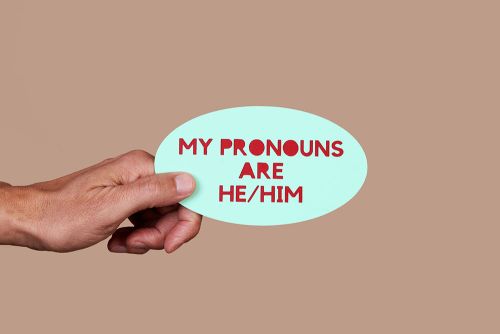
 On the afternoon of July 7, 2025, a library technician in Baton Rouge corrected Luke Ash mid-sentence. A trainee at the East Baton Rouge Parish Library went by "he," not "she," the colleague said. Ash, who worked the job part time while pastoring a small Baptist church down the road, said he couldn't comply. Three days later, on a Thursday morning, the library fired him.
That quiet exchange has since traveled through cable news, a governor's social media feed, and will now enter a federal courtroom. This month, Ash sued the library, East Baton Rouge Parish, and half a dozen named officials, asking a judge to decide whether his faith gave him the right to refuse to use his new coworker's preferred pronouns.
What Happened at the Library?
Ash had worked as a Library Technician 1, a role paying between $34,927 and $57,566 a year, for about four months when the pronoun conversation happened. He knew the request was in-line with the library's written code of conduct, which asks staff members to respect their coworkers by using their preferred pronouns when asked, and objected anyway. "I'm not going to lie, I cannot do it," he said. He was reprimanded for his refusal the next day, and fired that Thursday.
Ash's other job, pastoring Stevendale Baptist Church, was a two-person operation he had started only months earlier. Quickly, however, his church would be launched into the national spotlight: Governor Jeff Landry posted online that "Louisianans should never lose their job because they refuse to lie!" Louisiana's attorney general weighed in too, Franklin Graham urged Ash to sue, and Family Research Council president Tony Perkins hosted a prayer event where supporters laid hands on him. Local pastors wrote the library board demanding reinstatement, while other residents defended the policy. Ultimately, the board took no further action.
What Is Ash Asking the Court to Do?
Represented by Liberty Counsel and a Monroe attorney, Ash names the city-parish, the library, the library board, the metropolitan council, and officials including Mayor-President Sid Edwards and Library Director Katrina Stokes as defendants. The suit raises claims under Title VII, the First and Fourteenth Amendments, and Louisiana's Preservation of Religious Freedom Act, arguing the library never explored whether a smaller fix, like using coworkers' names instead of pronouns, would have worked.
"Public employers cannot force employees to choose between their faith and their livelihood," said Liberty Counsel Chairman Mat Staver, whose group filed suit this month, after Ash cleared the EEOC's required review process this summer. Ash wants his job back with full pay, plus damages, and a court order striking down the policy entirely.
Whose Voice Is Missing From This Story?
One person hasn't spoken publicly through a full year of coverage: the trainee whose pronoun Ash refused to use. He has never been named, interviewed, or quoted in any account of the dispute, including Ash's own retelling of it. Stokes, the library director, has said only that the library doesn't discuss personnel matters. A national argument about his identity has unfolded entirely without him, run instead through pastors, a governor, and cable news bookers.
Is Baton Rouge Part of a Larger Pattern?
Ash's case fits a pattern working through American courts and workplaces. A federal appeals court recently ruled on whether a public school teacher could be forced to use a transgender student's pronouns, and a technician's lawsuit over refusing to work alongside women is still pending in another circuit.
A Tennessee teacher faced discipline for refusing to read an LGBTQ-affirming book to his class under similar reasoning. None of these cases has produced one clear rule, and that unsettled ground is exactly why disputes like Ash's keep landing in federal court instead of getting resolved at the workplace level.
What Happens If Ash Wins, or Loses?
A win would likely force East Baton Rouge to rewrite its inclusivity policy, on top of back pay and damages paid by taxpayers. It would also land in a friendlier legal climate than it might have a few years back: a 2023 Supreme Court ruling raised the bar for "undue hardship" under Title VII, making accommodation requests like Ash's harder for public employers to deny.
A loss would echo a federal appeals court's ruling in a similar Maryland case earlier this year: that using a colleague's correct pronouns is simply part of the job. That ruling turned mostly on free speech, though, not Title VII, and came from a different circuit than the one hearing Ash's case. The Fifth Circuit, covering Louisiana, is widely seen as one of the country's more conservative appeals courts, so a Baton Rouge loss isn't guaranteed either. Either way, the ruling adds another data point to a larger, unsettled legal fight over transgender workers' rights that courts are still sorting out circuit by circuit.
What Would Real Inclusion Require Here?
Ash believes the forced use of preferred pronouns violates his conscience. The library believes a workplace can't function if any employee can refuse to address a colleague respectfully. Both readings of "inclusion", it's becoming apparent, can not coexist. Where should the line sit between an employee's religious conscience and a coworker's right to basic dignity in the workplace?
148 comments
-
 Pix Edward
It's not difficult to be respectful of someone's pronouns. I personally don't adhere to one set of beliefs, I have an ideology; if a debate makes sense and is morally sound, I can change and adapt... but I do agree with the teachings of Christ, even though I know the history of political edits, as the Gospel of Thomas is also in agreement.
Anyway, when Jesus said love thy neighbour, he didn't specify, which leads me to believe he meant all of them. That means respecting someone's pronouns, because nothing in the New Testament suggests he took offense with gender and biological sex having two different boxes checked. Should the pastor win the case? No, it costs zero dollars to be kind, and while he may believe it's somehow in conflict, it isn't. Will the courts agree? Who knows, I would've sworn Roe was respected precedent (as each of the justices recently appointed clearly stated during their confirmation hearings), and that Slaughter would've been laughed out of court (effectively setting civil and voting rights back 50 years). In short, doesn't the New Testament supercede the Old Testament, as God reconsidered his stance on being vengeful and wanting to be feared, and instead brought forth Christ to bring forgiveness and love into the equation? One can't do the opposite of what the red words clearly state and use the New Testament to justify those actions (as in the social experiment where the woman called area places of worship asking for a can of baby formula, and being told to pound sand by most of the Christian churches).
So, yes, he is wrong for refusing to use the individual's pronouns, and I hope the courts follow precedent and logic. Will they? "Lower," courts have been doing so, for the most part.
-
 Pastor George Day
Pix Edward
Mandating the use of preferred pronouns is viewed by some as both lacking scientific basis and infringing upon the principles of free speech.
-
-
 Teresa Louise Barberot
I am a Christian that believes in Free Will to choose to follow God’s Ways or other ways of the world. Each to his own. Not up to us to judge other’s beliefs. We are free to spread the Gospel whether other’s choose to follow it or not. If public school supports ways parents do not want for their children there are other school choices out there. Maybe in the work place which should be neutral from religious and political beliefs people shouldn’t even bother with pronouns. Just call workers by their name even if don’t care for their name. As Christians we should show tolerance & respect for others that are different from us. No hypocrisy! It is their Free Will Choice & their right. Don’t discriminate against people whether in the workplace or even customers in restaurants, etc. just because they don’t follow the mainstream beliefs of the Bible & Church. God is about Love & Tolerance. America is Free To Be - not like that in some countries. 🇺🇸🙏🏻
-
Pix Edward
I agree, but I must point out that a public school is violating the separation of church and state by displaying the ten commandments, and that court knows it. Some people can afford choose to send their kids to a religious private school, but many can't... And vouchers are depriving public school funding, I've seen what happens when that program backfires. Public school is closed due to lack of funds, private school hikes tuition, some kids are left with no school to attend... I'm not sure if that's what your intent was regarding schools supporting things parents don't want for their children, and I'm in an overthinking mood today :)
-
-
 Tripthi Mary Mathew
The Bible or other religious books do not discriminate against Trans people. Infact, they were given publicly visible jobs (for e.g. the trans person who prepared Esther before she became Queen Esther to the most wealthy and powerful Iranian King (King kashverosh) and performed his/her job well. The Govt and employers can help trans people by not having employers insist upon the use of pronouns at the workplace, rather requesting people to declare when applying for positions, if they have a birth defect (visible on invisible) and provide them with healthcare (e.g. 20% of total pay will be allocated for healthcare- hormone treatment and or surgery as regular healthcare plans will not provide for such treatment). This way they can look and feel one or the other sex/gender. The employer and Govt can also give them flexible work location (remote) as being "trans (XY chromosomal variation)" is considered a "social disability", while they are transitioning or otherwise as no one wants to be excluded from society. Being Trans today is like being a Leper in the Biblical days. So, people need to respect and understand the special needs of these individuals and adjust accordingly.
-
 Justin Adam Kalm
That’s not the way transphobia works. Even if all trans people wanted to get top notch, ultra-convincing surgeries to make them appear extremely masculine or feminine, which is not the case by the way, transphobes delight in deadnaming and misgendering trans people, especially when those trans people are passing as their gender identity. They find it all the more important then, because they fear that trans people are trying to go undercover as their opposite gender to do all sorts of terrible things.
It’s also not correct and more than a little insulting to say that trans people have “birth defects.” Trans people aren’t defective. And the idea of relegating them to remote work until they can 100% pass as their identified gender is definitely exclusionary. I guess that’s why you called them today’s lepers. You acknowledge that no one wants to be excluded from society, but then you propose a very exclusionary solution. How’s that supposed to work.
If anyone should have to tell their employer that they have a birth defect, it’s the transphobes who, like the Grinch, have hearts two sizes too small.
-
-
 Jaye Henneberger
My question to any Christian is when did Jesus say anything about transgender people or the LGBTQ+ community in any way? If you follow Jesus, you follow Jesus. If you quote Paul or Moses in order to justify things that Jesus never said then you are not following Jesus. I would ask, why are you looking at the nails and boards rather than the house of god Itself.
Viewing Paul as the authority, it's falling for the lies of Rome. Paul had wisdom, and paul was called to lead the early church while yet he was no apostle, and he was no prophet therefore, he spoke without God's direct authority unlike the prophets and Jesus himself.
The Romans made Jesus into an untouchable deity that everyone should grovel and beg forgiveness from daily, when he taught us to stand up and receive the love that is available. And give it freely, as he walked amongst us not separated, he touched us, he talked to us, he lived amongst us. He never even claimed a title, nor did he ask for worship he asked us to follow.
Using the law of Moses to justify your own internal discomfort with another whilst disobeying the same law yourself you are exercising hypocrisy. If you condemn a gay couple, but eat a cheeseburger or wear a polycotton shirt or have ever slept in the same bed with your menstruating wife you are a hypocrite.
Why not try what Jesus actually taught, judge righteously and not on appearances, pull the log out of your own eye before you look at the splinter in your neighbor's, love each other as he has loved you. He chose the cross rather than to be silent. That is true love, something unseen in most humans.
I'm sure if the situation was flipped you would not want to be treated the way that transgender people are treated in society. So many of you claim that trans people are mentally ill, but you advocate for their abuse, physically, legally, emotionally, and socially. Justify it how you want, but there's no amount of backflips you can do to make it right. The problem is within you, that you have a discomfort you need to unpack that is satan lying to you. And if a transgender person is going to hell anyway, why are you trying to make their finite life hell on Earth, that is sinful.
What you may not understand because you don't have intimate knowledge, And are judging on appearances. There is evidence-based science that is peer, reviewed, showing that the state of being transgender is natural. It happens and is just part of the variety of human existence, and the inherence of a person's creation, and what is naturally with them is divine permission. Anything else what would be sadism, and the father I know is no sadist.
-
Pastor George Day
Jaye Henneberger
I do not know your source of authority, but your statements are filled with inaccuracies.
Paul was commissioned directly by Yeshua and, like the other apostles, spent three years in private instruction through heavenly revelations before meeting Peter and James. He affirms his apostleship to the Gentiles ass divinely commissioned, and some scholars suggest he was the true successor to Judas rather than Matthias, as Matthias was chosen by casting lots without proper guidance from the Holy Spirit, whereas Paul was appointed by Christ himself.
The Law of Moses, or Torah (Instruction), remains in effect for us Jews in full, only partially for Gentiles. Moses, the greatest of all prophets, received the Torah and stood face to face with God; only Yeshua is greater than Moses. The Torah prescribes specific punishments for certain sins, including death, which were not abolished; rather, Yeshua took these upon himself, setting us free (Galatians 5:1).
The Bible clearly states that men should not dress as women, nor women as men, and that same-sex relations are prohibited. However, Isaiah 56 affirms that eunuchs who keep the Sabbath are blessed by God.
-
-
 Rev. Matthew Mastrogiovanni
The clergy of Christianity are Christofascists and preach a religion of hate and intolerance. Those Christians who aren't full of hate, aren't following god the father.
-
 David J Hebert
The gibberish posted here is appalling. In a work setting there is absolutely no reason to use pronouns at all, call them by their name. The mentally ill should not be humored by reinforcing their illness. This issue was settled years ago, it is a legitimate diagnosis that greedy politicians and doctors support to make more money. In a private setting people should just walk away and not engage with the mentally ill on this topic.
-
 Michael Hunt
Does that mean you should be referring to yourself by name when at work?
You: "David completed David's sales reports and emailed them to Jim, Jim."
Jim: "Umm... thanks for sending those to me but why are you talking about yourself in the third person?"
You: " David doesn't use pronouns while at work."
-
David J Hebert
Incredible, I call people by their name and don’t say hey you! Yes I refer to myself as “I” because I am not an arrogant moron like you, dipstick!
-
Michael Hunt
Then there is a reason to use pronouns at work. Thank you for acknowledging that.
I also do not refer to myself by my name but instead use the pronoun "I" as well. I also use all of the other pronouns as necessary.
What's unnecessary is the name calling you've resorted to. Calling me an "arrogant moron" and a "dipstick" for pointing out to you that, yes, there are absolutely reasons to use pronouns at work is quite rude and doesn't contribute to this discussion at all.
-
David J Hebert
You’re ignorant, that’s not name calling, you are ignorant meaning you do not know what you’re talking about. That is your state of existence not name calling! Moron is name calling, moron.
-
Michael Hunt
How am I being ignorant here? I specifically pointed out you calling me an "arrogant moron" and a "dipstick" is name calling, which you seemed to reaffirm in this last comment.
You claimed, "in a work setting there is absolutely no reason to use pronouns at all" and I'm simply pointing out that there are plenty of reasons and times to use pronouns in the work place. You even admitted that you do use pronouns in the work place when you refer to yourself as "I."
-
-
-
-
David J Hebert
Comment has been removed.
-
-
-
 Anne Elizabeth Maggio
There’s more to the story.
-
Justin Adam Kalm
What are you implying?
-
-
 John Alex Paxson
There's three, He, She, and It.
-
Justin Adam Kalm
I think you’re mistaking English for being one of the simpler languages. Here’s a non-exhaustive list of English pronouns from Berlitz:
In English, there are 7 types of pronouns:
Personal pronouns: Subject pronouns (I, you, he, she, it, we, you, they) Object pronouns (me, you, him, her, it, us, you, them) Possessive pronouns (mine, yours, his, hers, its, ours, yours, theirs) Demonstrative pronouns (this, these, that, those) Interrogative pronouns (who, whom, which, what) Relative pronouns (who, whom, that, which, whoever, whichever, whomever) Indefinite pronouns (all, another, any, anybody, anyone, anything, each, everybody, everyone, everything, few, many, nobody, none, one, several, some, somebody, and someone) Reflexive pronouns (myself, yourself, himself, herself, ourselves, yourselves, themselves) Intensive pronouns (myself, yourself, himself, herself, ourselves, yourselves, themselves) We know it can be a lot of information to absorb. That’s why we’re here to explain it all in simple terms.
-
-
 Tami Tabone
Honestly, i feel like it us very sad thst this is a religious issue. If someone wants to be called apple it isnt lying it is kust simply their preference. Calling a fender born male she is not really lying, it is simply how they prefer to be addressed. I am gradually training myself to use "they" for most folks. I do n9t like to disrespect anyone. But i am wondering 8f Ash was doing it because he doesnt agree with tjose who are tran and purposefully wanted to disrespect the person because Ash has issues with trsnsgenders. Anyway, that is my take. The more i see of kids these days, it is getting harder to tell what gender they were born as. So i dont even know why it matters.
-
 Clayton Lee Pratt
I personally do not get the pronoun stuff. If I'm interacting with what I visually identify as a man or a woman I'm going to refer to them as such. It has nothing to do with religious beliefs, I'm an atheist, I have zero religious beliefs. I see use of pronouns that are out of context as nothing more than gaslighting. If a person is telling me they are male, yet I'm looking at an obvious female? I'm being told not to believe what I'm seeing, that is simply gaslighting and nothing more. I really do not care what another person identifies themselves as, identify however you wish, but do not expect it from me because it's not happening.
-
 Patricia Ann Gross
Clayton,
People often mis-gender me, so when someone refers to me as "Sir" I politely correct them, and most of the time they apologize. So, I have a question, "What do you visually identify as a female?" Long hair? Curvy figure? You'd be wrong on both counts if you met me, but from what I understand in what you said, you would continue to call me "Sir." Not everyone is as they appear. Do I have to show you what is under my clothes for you to believe? because that ain't happening.
-
Justin Adam Kalm
Nobody is gaslighting you. Nobody is trying to get you distrust the evidence of your own eyes. All that people are asking for is a little kindness and courtesy. Those are things that atheists can believe in too.
If you see a man who you think is fat, do you have a need to refer to him as “that fatso” when you’re talking to others about him? Probably not. You probably wouldn’t feel the need to call out to others that you have clocked him as a fat person. You’d probably understand that pointing out his weight wouldn’t be telling anyone anything they don’t already know, and that the only point of doing so would be cruelty. So what’s different if you see someone who you perceive to be a man who wants to be called a woman? Is it important for you to call them out as a man because you worry that you’re the only one who sees them that way, and you want to correct everyone else? What do you get out of it and is it worth the pain you’ll cause?
-
-
 Rev. Lindsay
It's amazing to me no one is mentioning here most people aren't saying a couple things very wrong here. First if you let people tell you what you can and can't say you're being controlled by the devil or the gays and lesbians and it violates the right to free speech, the first amendment. Secondly a lot of people say you're not loving me by using my pronouns. You can love people into hell by going along with their sin and you will wind up with their blood on your hands for not warning.
Ezekiel 3;20 - Again, When a righteous man doth turn from his righteousness, and commit iniquity, and I lay a stumbling block before him, he shall die: because thou hast not given him warning, he shall die in his sin, and his righteousness which he hath done shall not be remembered; but his blood will I require at thine hand.
This is talking about the righteous but also applies to sitting by idly knowing that life will never make heaven and doing nothing about makes us blood guilty. I'm not helping anyone go to hell. If you don't care you'll face God for that at the great white throne judgement.
-
Justin Adam Kalm
Hi, Rev. Lindsay!
Could you please explain how is it iniquitous to be transgender?
-
Rev. Lindsay
Comment has been removed.
-
Rev. Lindsay
I had a reply here but it was removed because someone working here couldn't handle my answer. To say this in brief version when you're converted to someone that isn't who you were born to be your going to commit sin with your own gender. God doesn't just see us in the present but he knows the intentions of our heart(what we're planning to do). When you become transgender of course your constantly going to sin by being attracted unnaturally to others of your birth gender. That's why Sodom and Gomorrah burned to the ground.
-
Justin Adam Kalm
You may be surprised to learn that gender identity and sexual orientation are not connected. The fact that a person is trans tells you nothing about the sorts of people they will be attracted to. There are plenty of trans women who are lesbians, i.e. attracted to other women, and plenty of trans men who are gay. In your theology, is it iniquitous for someone who was assigned female at birth, but identifies as male, to be sexually attracted to someone who was assigned male at birth and identifies as male?
-
Patricia Ann Gross
Rev. Lindsay,
Who are you to decide how God created someone and what the purpose is for thier life? Gender is a social construct, not biology. It is dictating to a person with certain genitals how society expects them to act. Gender is not only non-binary, it is fluid. A person can feel and do more of the "male" things one day and completely different things another day. I have made it to senior management in a former career, and then became a pastor and chaplain which are things society, up until the mid-20th Century were exclusive positions for males, but that does not make me transgender or even want to transition. I have taken on more male tasks than female though, although I identify as a strait cis-gender female (who is often misgendered because of short hair, stocky build, and small bustline. Society and the world is evolving, and I believe that God is the architect of that change, so who's to say that God didn't create people exactly the way they are: fluid in gender and sexuality.
-
-
-
-
 Silver Weston
This comment section is fascinating to me. I fail to see how anyone can call preferred pronouns lying, considering how pronouns have been being made up since the 1600's or even earlier, Shakespeare being one such example. Scholars debated over gender neutral pronouns (even solely for usage for a group of individuals) for several decades. Intersex people make it obvious that you can't tell everything on a simple glance, gender is a performance, not a science, after all. Even for those who are perisex (not intersex), typically gendered traits such as body hair, and height vary for countless reasons. There's no cookie cutter formula for male and female for every single person, welcome to the real world. Trends aren't facts. And before anyone says that gender ideology is a trend, you read this article, please go read a few more on gender history, haha!
And a note on if someone genuinely can't use certain pronouns due to disability or lack of education to do so: just talk to the person in question, if you're candid, they will likely understand and offer some sort of help.
-
Justin Adam Kalm
Let’s imagine that Ash was working at a museum of natural history instead of a library, and got into trouble with his management because every time someone asked him how to find the Hall of Evolution, he said, “We don’t have one of those. What we have is a Hall of Lies. Go down those stairs and you’ll find it on your right.” Ash was counseled that all employees are required to use the museum’s designated names for the exhibits while interacting with the public in the capacity of their employment. Ash says he cannot comply, because following the directive would violate his sincerely held religious belief that he must always tell the truth. Ash is fired for failing to follow directions of his superiors. He sues alleging violation of his religion freedom.
Who should win, the museum or Ash?
-
 Terri Ann Cruze
As a Christian, I believe in speaking the truth, but in love. I don’t judge those outside the church. They can believe whatever they want. I use their name, not their pronoun, and interact respectfully with everyone. If they ASK my advice or opinion, then I am free to share, respectfully and out of love and concern. Otherwise, I mind my own business. I do believe gender confusion is a mental illness. But I am not their doctor, so it’s not my place to intervene, nor do I have the skills to do anything about it. As such, I treat them with the dignity and respect I would give to someone with anxiety or depression. I don’t judge people with those conditions, either.
-
Justin Adam Kalm
I wish more Christians were like you.
I wonder if you might consider that perhaps what you call those who have “gender confusion” are not ill, but just different. There are varying degrees of course, but there’s a good argument that a lot of anxiety and depression isn’t any kind of illness, but is instead the result of higher sensitivity to certain things, coupled with living in a deeply dysfunctional world. You could say that you’d have to be crazy to not be depressed and anxious while living in a world that seems perpetually on the brink of nuclear war, where the number of non-human animals has shrunk by 50% since 1970, with an accelerating climate crisis, and rising authoritarianism. Similarly, in many cases, being on the Autism spectrum or having ADHD isn’t so much an issue of brains malfunctioning or being sick as it is one of brains working differently, and the people with those brains struggling in a world designed for neurotypical people.
I had a mentor who told me, “An orchid isn’t sick just because it requires more skill to grow than a dandelion. You just have to know how to care for it.” I think that captures it beautifully.
-
-
 Ronald A Sherwood
Instead of causing a scene and suing the library for not specifically saying, "First Names can be used in lieu of pronouns," how about just using their first name 100% of the time after they mention their pronouns? That's what I do, not because I have anything against using pronouns, but because that's just more information than I want to remember on every person I meet.
-
Ronald A Sherwood
Instead of causing a scene and suing the library for not specifically saying, "First Names can be used in lieu of pronouns," how about just using their first name 100% of the time after they mention their pronouns? That's what I do, not because I have anything against using pronouns, but because that's just more information than I want to remember on every person I meet.
-
Justin Adam Kalm
It’s a real shame when a Christian’s religious education includes the prohibition against lying but not the commands to be humble and practice loving kindness.
I also wonder that nobody appears to have suggested that Ash just use the trans employee’s name in place of any pronouns. It’s not as if pronouns are mandatory. If Ash had done that, he could have been kind and avoided “lying.”
From a legal perspective, I don’t see how requiring employees to use their colleagues’ preferred pronouns, if pronouns are used, puts any burden on religious practice. If I worked at a restaurant and my employer directed me to refer to stop calling their “boneless chicken wings,” “wing-shaped chicken tenders,” and I objected because my religious beliefs required me to avoid lying, I don’t think I would have a leg (or a drumstick) to stand on.
-
Pix Edward
This! Props for being so punny.
-
-
 Clara Ries
"Lots of folks make biological sex sex seem really simple. Well, since it’s so simple, let’s find the biological roots, shall we? Let’s talk about sex...[a thread]
If you know a bit about biology you will probably say that biological sex is caused by chromosomes, XX and you’re female, XY and you’re male. This is “chromosomal sex” but is it “biological sex”? Well...
Turns out there is only ONE GENE on the Y chromosome that really matters to sex. It’s called the SRY gene. During human embryonic development the SRY protein turns on male-associated genes. Having an SRY gene makes you “genetically male”. But is this “biological sex”?
Sometimes that SRY gene pops off the Y chromosome and over to an X chromosome. Surprise! So now you’ve got an X with an SRY and a Y without an SRY. What does this mean?
A Y with no SRY means physically you’re female, chromosomally you’re male (XY) and genetically you’re female (no SRY). An X with an SRY means you’re physically male, chromsomally female (XX) and genetically male (SRY). But biological sex is simple! There must be another answer...
Sex-related genes ultimately turn on hormones in specifics areas on the body, and reception of those hormones by cells throughout the body. Is this the root of “biological sex”??
“Hormonal male” means you produce ‘normal’ levels of male-associated hormones. Except some percentage of females will have higher levels of ‘male’ hormones than some percentage of males. Ditto ditto ‘female’ hormones. And...
...if you’re developing, your body may not produce enough hormones for your genetic sex. Leading you to be genetically male or female, chromosomally male or female, hormonally non-binary, and physically non-binary. Well, except cells have something to say about this...
Maybe cells are the answer to “biological sex”?? Right?? Cells have receptors that “hear” the signal from sex hormones. But sometimes those receptors don’t work. Like a mobile phone that’s on “do not disturb’. Call and cell, they will not answer.
What does this all mean?
It means you may be genetically male or female, chromosomally male or female, hormonally male/female/non-binary, with cells that may or may not hear the male/female/non-binary call, and all this leading to a body that can be male/non-binary/female.
Try out some combinations for yourself. Notice how confusing it gets? Can you point to what the absolute cause of biological sex is? Is it fair to judge people by it?
Of course you could try appealing to the numbers. “Most people are either male or female” you say. Except that as a biologist professor I will tell you...
The reason I don’t have my students look at their own chromosome in class is because people could learn that their chromosomal sex doesn’t match their physical sex, and learning that in the middle of a 10-point assignment is JUST NOT THE TIME.
Biological sex is complicated. Before you discriminate against someone on the basis of “biological sex” & identity, ask yourself: have you seen YOUR chromosomes? Do you know the genes of the people you love? The hormones of the people you work with? The state of their cells?
Since the answer will obviously be no, please be kind, respect people’s right to tell you who they are, and remember that you don’t have all the answers. Again: biology is complicated. Kindness and respect don’t have to be.
Note: Biological classifications exist. XX, XY, XXY XXYY and all manner of variation which is why sex isn't classified as binary. You can't have a binary classification system with more than two configurations even if two of those configurations are more common than others. Biology is a [mess]. Be kind to people."
Quoted from Rebecca Helm, a biologist and an assistant professor at the University of North Carolina, Asheville
-
 Richard Voogd
Exactly. What I was taught in school back in the 1970s was the basic XX and XY arrangement, which leads to female and male respectively. What I was also taught was that sometimes things go a bit wonky, and we end up with combinations such as XXX, XXY, and XYY. There are other situations which can cause problems, such as ambiguous "bits." I think there's an episode in the second series of House which deals with one such issue.
-
-
 Gregory L Miller
Truth can sometimes be painful, I stand with God and Him alone..To agree with falsehood however noble makes us a partaker of the sin.
-
Patricia Ann Gross
Believing that God is "Him," is believing a falsehood. God has no gender, and many times in The Bible is refered to as "Sophia" translated to "Wisdom," which are female. Language and culture are what assigned genders to everything, and sometimes got it wrong. Why is a house female (Spanish - casa=female)? Why is a burrito or a taco male?
-
Justin Adam Kalm
Sophia was originally another god in early Levantine mythology. She and other deities were incorporated into YHWH during textual revisions circa 600 BCE as part of a drive to make Judaism more monotheistic. Before that, YHWH was a very masculine storm god, with red skin, huge biceps, and an impressive “member.” For more on this, I highly recommend “God: An Anatomy” by Francesca Stavrakopoulou.
“Why is a burrito or a taco male?” Excellent question and much more fun to argue about than how many angels fit on the head of a pin. I could really go for a taca right now.
-
Patricia Ann Gross
In the Latin languages (Spanish, Portugese, French), all objects have a gender. Because burrito and taco end in an "o," therefore are male while casa (house) ends in an "a" and is female. Don't ask me, I didn't originate the languages.
-
-
-
-
 Frederick Charles Whitmarsh Junior
They can pretend what they want, but I or we should not have to play along
-
 Ari Joseph Bertine
No one is pretending anything when it comes to what they want to be called and how to address them. That is a personal preference that we allow everyone to set when we meet them. I guarantee you that you have called people by an assumed name in past without knowing it, and that you have probably even used a pronoun for someone that was not always used for them and didn't know it. It's only when you think you know better than that person who they are that you have a problem. What gives you the right to say who other people are? It's not reality, because you're not going by any scientific criteria that exist. It's not religon, because that's not listed anywhere either. So where did you get the idea that your opinion defines who other people are?
-
Pix Edward
That's the root of many problems we face as a society today. It's easy to say you have morals that align with those Christ advocated (love thy neighbour, full stop ). It's not difficult, imo, to be kind and actually do it; it takes a lot of extra energy and a rather abhorrent degree of hypocrisy to go against those teachings.
-
-
-
 Rev. Dr. Robert Allan Roush
"So, this pastor, "Ash," saying that she doesn't personally use pronouns other than the ones she had assigned at birth is fine for her faith. But, using someone's preferred pronouns is not against Her religion. That's imposing HER religion on others. When are these "religious" people going to understand that religious freedom is following your own religion for yourself, and not imposing it on others. I am she was fired because she was a total b*tch about it. Oops, I'm sorry. Did my crazy reply offend you? Of course it did. Do you get my point now?
-
 Joseph Saffomilla
Feeding into people's delusions is not healthy for them and is just wrong. Just because someone wants to be a woman doesn't mean they are. I wanted to be a pro baseball player; I even had a Mickey Mantle jersey when I was a kid. Does that mean the Yankees have to let me play center field?
-
Patricia Ann Gross
Sure, if you are talented enough to bat 350, knock in 130 runs, hit 50 homers and win a golden glove consistently each year. The Yankees would love to have you. What does this have to do with a person's pronouns?
-
-
-
 Julie Armstrong
Male or Female........that's it. You are what GOD intended. We need to stop embracing Mental Illness.
-
Ari Joseph Bertine
Tell me something, Julie. When a child is born with a cleft palate that causes them to be unable to eat without food falling out of their mouth or speak without slurring their words badly, and that makes them terribly uncomfortable, did God intend for them to stay that way? Or did he allow humanity to develop the medical knowledge and expertise to know how to make that child able to live a live that is more similar to everyone else's, without the inconvenience and embarrassment and self-consciousness? Is it mentally ill to want to live like other people, without being uncomfortable with your body? Was it wrong for Jesus to heal a man who was born blind, if God intended for him to be that way? I honestly would like to know how you would answer these questions.
-
Pix Edward
Comment removed by user.
-
-
 Lion on the Beach
If a sick individual wishes to carry out an inner mental fantasy by all means they are free to do so. Just don't do it in a public or professional setting or work environment. Do not expect other coworkers to comply with your unnecessary fantastical wishes and feed your inability to be rational.
-
Ari Joseph Bertine
Apparently all you have to do is claim that your inner mental fantasy is a sincerely held religious belief and apparently you can sue your former workplace over it.
-
-
 Steven Ferrell
People should not be forced to play the alphabet game and call people what they are not, simply because they have a mental disorder and want to think they are something other then what they were born.
-
Ari Joseph Bertine
Steven, the fact that being transgender is not due to mental disorder has been reiterated time and again by not only every medical organization in the world but by the entire psychiatric and psychological profession as well. When someone insists on calling something by a term that it isn't, despite having been corrected by all experts in the related field, it's simply stubbornness and does not make anyone think that person is right. It just makes people think that person is angry and inexplicably resistant to facts. If you are unwilling to learn, that's just stubborn pride on your part. I don't know why you're making that the problem of transgender people, but I assure you that it won't help you to keep that up. It just makes you look mean and hostile.
-
-
 Martin S
I find it amazing how many people claiming Christian Faith refuse to even follow their own religion. You will push how The Bible condemns homosexuality and use it to proclaim homosexual and transgender people as "evil". Tell me...have you sold your daughter yet? When was the last time you beat your wife? Your neighbor mowed his yard last Sunday...am I invited to watch while you "stone him unto death"? Are you out protesting American Football Teams, since they are befouling themselves by touching the skin of a pig?
These are all from The Old Testament, which I've been told I "don't understand because I don't have Faith". What I "don't understand" is how you can just toss out the parts of your religion that you don't want to follow yet cling so desperately to the few others that serve your narrative.
Let's not forget...the condemnation of homosexuality is mentioned...what? 4 times? 5 maybe? ...and ALL in The Old Testament. Compare that to how many times Jesus commanded that you love everyone? That you care for the oppressed? That you protect those in need? How many times did Jesus condemn the hate you are promoting?
FOLLOW your religion or stop using it as your excuse to be a bigot!!!
-
 Steve Allen Coomes
Martin S in response to your comments I would invite you to read from the book of Romans chapter 1 verses 26 & 27! Paul was pretty clear when it comes to homosexuality and lesbianism. In regard to Jesus speaking about love in John 14:15 Jesus himself tells all, "If you love me keep my commandments". Those commandments are spelled out very clearly within scripture! Love the sinner but hate the sin!!
-
Patricia Ann Gross
Steve,
First, Paul was not Jesus.
Second, Jesus gave us two commandments, Love God (first and greatest), and the second is to love our neighbor's as ourselves (Matthew 22:37-40). Those two say nothing about homosexuality.
-
-
-
 Susan A MacDonald
All humans should have equal rights, and all humans should respect those rights but I don’t believe we have the right to expect every human to understand the multitude of ne nouns and pronouns being created almost daily and in all honesty I find it confusing.
That being said… if a human doesn’t like being labeled, doesn’t like others using a wrong label then why label yourself?
And it’s not all or every who expects others to study this multitude of nouns and pronouns because I have many friends from all walks of life who don’t concern themselves with that level of intricacies… they simply are humans and all humans are different. Those that take it to that extreme extent are no different than others who take it to that extreme extent and create a whole set of rules for themselves that others are expected to follow… those who call themselves Christians but hate people of any color, who sets rules for others but not themselves, who break laws but cast stones at others…etc.
Every aspect of human life will have those who truly are who they say they are and those who say who they are but hide who the their true self.
I don’t care about pronouns or nouns… I care whether or not you’re kind, understanding, intelligent enough to respect life and stop pointing fingers at others when you also are contributing to the mayhem that currently exists.
If you don’t like what you see… talk to the man in the mirror.
-
 Hector Luis Moctezuma
Are these the same folk who do nothing when real injustices happen in today’s America? I need not mention them, this current administration has committed unspeakable atrocities and crimes too many to number. They pick a choose their moral high ground, and then sue??? Hypocrites. Will they win? All world religions affirm they will not. All. Love is affirmed. Greed, hate, are not.
-
 Barry Baker
When someone prefers to be be called a different name, call them whatever the new name is. William can choose to be Bill, Elizabeth can choose to be Betty. I will go so far as to call Bill….MaryAnne if that’s what Bill wants. I think it’s common courtesy. Conversely, changing my vernacular is a slippery slope. What could be next? Don’t make eye contact with me? Don’t shake my hand? Don’t say “goodbye” to me? I make every effort to replace pronouns with the preferred name. If it sounds awkward, it feels awkward….and that door has to swing both ways. Both sides have to give a little.
-
Pix Edward
I agree with referring to people by name, as long as it's not their dead-name, to be both respectful and not have to second guess being respectful. Every time I see people going out of their way to be hurtful, I facepalm... Kindness is free, and it's a lot easier than being rude.
-
-
 John Joseph Martinez
This is what happens when you let the natural progression of equal parts liberal teaching and religious right propaganda into the government.
Both should be scrubbed fully and NEVER let anything religious or liberal into government.
Both are deadly, have wackos on either side, and can kill people if pushed hard enough on either sides as well.
-
Rev. Matthew Mastrogiovanni
If preferred descriptors don't matter them let's see if Pastor Ash is okay with being called Mother Superior Ash or just in general refer to Ash as Her/She.
-
 Anne Bryant Taylor
Separation of church and state exists, for now at least, and the pastor needs to abide by rules in contracts that he agreed to. He broke the rules, End of story.
-
 Rolando Couce
ALL THIS GAY CRAP I KNOW IF YOU GIVE SIN LEVERAGW IT WOULD SPIRAL OUT OF CONTROL I KNEW THIS A LONG TIME AGO AND LOOK WHAT IS HAPPENING
-
 Ainsley S.
DOES TYPING IN ALL CAPS MAKE YOU FEEL BETTER?
-
-
 Reverend Paula Copp
Whatever happened to the Golden Rule?
-
 James Richard Munro
The Golden Rule? Thou Shall not bear false wittiness. If you're born a male, you're a male If your born female, you're a female. End of story. Pastor Jim
-
Michael Hunt
Male and female is different from Man and Woman.
-
 Rev. Mike Eggleston
Different from masculine and feminine too, which is what pronouns are.
-
James Richard Munro
See, your back in your fantasy world again.
-
Patricia Ann Gross
So James,
Why then do you sign your posts with "Pastor Jim?" Neither name occurs on your birth certificate (I am guessing anyway), and I'm sure you would be offended if I said "James is such a girl, let's all use she/her when referring to her," or "Let's call her Jimmie instead and see how she likes it?" Of course you would, and rightfully so, because that is not how you identify.
Like others have said sex and gender are two different things, and sometimes the gender doesn't align with what people expect according to the genitals. Am I mentally ill because my hair is short enough that I often get mis-gendered? No, it's because I have alopecia which is a common affliction when people are under a lot of stress. My hair falls out before it gets long enough to have those "beautiful locks." It's also something I can't change.
-
-
James Richard Munro
You are one of two. Male or female. That's it. They are not interchangeable. You don't get to choose. Why do you insist on trying to mess with nature? Remember the 9th commandment?
-
Michael Hunt
Male and female is biological sex (and so is intersex as well) while man and woman refers to gender, the way we portray ourselves in society. It's not fantasy land, it's science.
https://journalofethics.ama-assn.org/article/sex-gender-and-why-differences-matter/2008-07
-
-
James Richard Munro
Hear you go again, living in a fantasy world. The grownups don't want to play.
-
Michael Hunt
So scientific study is a fantasy world now?
-
James Richard Munro
Are you referring to the independent study`s that John Hopkins, Mt Sanai and the Cleveland Clinic Hospitals did on your fantasy sex issue? All three say you are what your born with. Male or female. Thay are not interchangeable. You don't get to choose. End of story.
-
Michael Hunt
I'm not finding those studies you're referring to. I am finding studies that conclude that gender identity and sexual preference are biological.
https://pmc.ncbi.nlm.nih.gov/articles/PMC6677266/#ABS1
https://www.nature.com/articles/s41598-019-53500-y
https://www.sciencedirect.com/science/article/pii/S2341287925002108
-
 Robert Gagnon
Gender identity is a conscious choice. Sexual identity is also, physical sex is what you were born as. You can not change the sex you were born anymore than you can choose to become a tree.
-
-
-
-
Pastor George Day
Michael Hunt
Oxford dictionary...
Woman
An adult female human being. The counterpart of man.
-
Michael Hunt
Stanford Medicine's scientific definition:
A term used to describe someone who self-identifies as a woman or as feminine based on what is important to them as an individual—including gender roles, behavior, expression, identity, and/or physiology.
https://mededucation.stanford.edu/glossary/woman/
-
Pastor George Day
Michael Hunt
What is a woman then? You are still not providing a clear definition of the term.
-
Michael Hunt
I just gave you the scientific one but, to simplify it for you: A woman is a human being who outwardly displays the feminine characteristics a society has ascribed to femininity and womanhood. It's a social construct, not biology.
-
-
-
-
-
Ari Joseph Bertine
In saying that you are the one bearing false witness. I'm not saying you're lying, because you obviously believe it yourself. But you have been lied to and you have been told that the information you were told was untrue, and you keep saying it, and doubling down on disinformation is absolutely bearing false witness. Not to mention it's on the side of cruelty, which just makes it worse. You need to go read some medical studies and think about whether you want to sound like a ranting weirdo or whether you want to actually think about why you've been lied to and by whom.
Getting to the bottom of the facts of conflicting issues is what grown-ups do. They don't dig in their heels and put their fingers in their ears and refuse to try to understand what is really going on when there is a big social divide.
-
 Rosemary West
I got a good chuckle out of "false wittiness," which could well be the description of a joke that isn't funny.
-
James Richard Munro
Did I hurt your feelings? You are what you were born with. Calling you something else would-be showing encouragement in something that's not true. Again, You're living in a fantasy, and we will not play along.
-
-
-
Martin S
Reverend Paula Copp, apparently no one even knows what the Golden Rule is anymore.
-
Pastor George Day
Reverend Paula Copp
The Golden Rule states: treat others as you would wish them to be treating you, which aligns with 'first, do no harm.'
Removing healthy body parts is unethical, as it affirms individuals with gender dysphoria in their perceived reality.
I have been medically diagnosed with gender dysphoria, and there are many alternative treatments that do not involve assuming a gender different from one’s biological sex.
Before asserting that gender and biological sex are distinct, consider the etymology: genitals = to generate = generation = gender.
As a Messianic Jew, even the term “Gentiles” refers to those who generate among the nations.
Simple extended grammar, beyond pronouns, shows that... reality cannot be avoided. It's called accuracy.
-
-
 Daniel Todd Kamm
I quote: "Both readings of "inclusion", it's becoming apparent, can not coexist."
Yes they can, with reasonable people who can advocate fairness for both parties to be included.
The governor of the state is a known political hack, so exit Landry. Exit others who hope to profit: attorneys... not for profits both secular and religious. Too many people drooling in the background making puddles for the rest of us to walk through.
It is okay for the library system to have a policy that maintains the dignity and safety of all its employees. I would expect nothing less myself from an employer: hate Jews for some reason? Too bad. Keep it at home.
Assuming the information provided is correct, BIG mistakes were made on both sides; the library system could have mediated a fair solution for everyone involved.
The employee whose pronouns are at the center of this mess... not really involved also not a party to the court apparently.
That leaves the person who is alleging harm: being fired, loss of job, loss of income, desire for reinstatement, etc. and the library system.
How hard is that?
For the party who was fired and who with the backing of others with their own agendas, this is a constitutional issue.
No it is not. And for this reason:
The party above expressed concerns that he would be "lying" if he were to address the employee with non-preferred pronouns.
Has he tried referring to the other employee simply by their preferred name? Forget the pronoun garbage... it's lawyer fodder.
And, can he prove he has not ever lied previously, and why would lying about a previous situation be any different than lying now, and what makes the current situation one where there is a layer of lies... sometimes good, sometimes not.
I could take this way, way, out....
But the net.net of this situation is, in reality, a very fixable situation that should have never gone outside the library systems HR department and been mediated.
Its Friday! Good Shabbos! Peace Out...tk
-
James Richard Munro
You are eighter a male or female. What you are born with is what you are. You can't change it. If you want to pretend your something else, don't expect everyone else to play along with your fantasy. We don't live in your fantasy, sexual deviant world. Save it for play time and maybe some of your perverted friends will play along with you. Pastor Jim
-
 Elizabeth Jane Erbe Wilcox
Are you not familiar with intersex human beings?
How dare you refer to transgender human beings as “deviant” and “perverted.”
White, christian males are overwhelmingly the groomers and pedophiles.
Your congregation is the perfect hunting ground. Pastors, ministers, etc. easily gain the trust of parents, then proceed to groom the children.
Transgender human beings want to live their lives as their authentic selves no matter what your opinion or beliefs are.
Stop weaponizing the Bible.
-
Anne Bryant Taylor
Incorrect on various levels. There are various sex markers in the human body and they do not always align in a binary structure. This is extremely ignorant on top of being inaccurate.
-
Ari Joseph Bertine
That's just scientifically untrue, James. There is no fantasy involved. There's nothing sexual involved, either, I have no idea where you are getting that idea unless you yourself are indulging in content that makes it sexual. Transgender people are born with a physical brain structure that does not match their reproductive system, and this has been confirmed through numerous medical studies over decades of research by many, many medical specialists. You do not know more than someone who has spent their life developing expertise in a particular area of science through schooling and practice. You do not have any believability contradicting the information provided by someone who has the credentials of the doctors making up every major medical organization in the world. You sound more like someone who has a psychological obsession, spouting judgments with no basis in reality either scientifically or religiously.
-
Justin Adam Kalm
I’m familiar with the current research and what you’re stating just isn’t true. We can surmise that something neurological is going on, but we don’t currently have any test that would allow us to look at the brain structure of any person and know whether they are/were trans or not. There is some evidence from functional MRI research that in the aggregate trans people’s neuroprocessing is recognizably different from that of cis people assigned the same sex at birth. But those differences cannot be generalized to any individual. Nor are they necessarily causal differences.
-
James Richard Munro
So, the alphabet people have a brain defect? That explains a lot. Thank you for the info. Pastor Jim
-
Michael Hunt
A defect causes harm. Being LGBTQ+ isn't dangerous to your health unless other people attack you for it.
Here are some studies linking sexual preference and gender identity to gene markers.
https://pmc.ncbi.nlm.nih.gov/articles/PMC6677266/#ABS1
https://www.nature.com/articles/s41598-019-53500-y
https://www.sciencedirect.com/science/article/pii/S2341287925002108
-
-
-
-
 Colleen McAllister
Not using a person's preferred pronoun is very disrespectful. Referring to someone by the name or pronoun they prefer does not signify that you approve of their choices. It shows that you respect their right to do so.
-
 Brian Hand
I don’t respect anyone that chooses a pronoun. So I don’t need to engage with you.
-
Michael Hunt
So do you not respect yourself? You've clearly chosen the pronouns he/him even if you're not sharing that with people.
-
Ari Joseph Bertine
We don't know what pronouns Brian has chosen, Michael, and she hasn't told us so we are free to just guess.
-
-
Rosemary West
"I" is a pronoun, as is "you". It appears you do choose some pronouns.
Pronouns are just part of the English language. Grow up.
-
 Joshua Randall Helms
If you prefer "he/him" Brian then you do in fact have a preferred pronoun and by your assessment are not worth respecting. However it would be unkind and unChristian to be so outright dismissive.
-
-
James Richard Munro
You do not have the right to push your perversion on decent people. We will not play in your delusional world.
-
Michael Hunt
What's perverted about respecting someone's preferred pronoun?
-
James Richard Munro
Mr.Hunt. If your requested pronoun is not your biological pronoun, then your pronoun is incorrect. Knowing that your preferred pronoun is incorrect doesn't justify you asking other people to use it when addressing you.
-
Michael Hunt
There is no such thing as a biological pronoun. It is not a scientifically or linguistically recognized term. Biology is male, female, and intersex (though I might be forgetting another). Pronouns track social identity, personhood, and gender expression in human language. There is no biological DNA sequence or chromosome that determines a personal pronoun. Pronouns are grammar and linguistics, not biological sex.
-
-
-
Ari Joseph Bertine
So being born with a physical difference is perverted? What a bizarre and sad outlook. Jesus healed people who were born with disabilities. Since he isn't around anymore, doctors do that job now. If you think that's perverted, you are calling Jesus perverted. Not cool.
-
Rosemary West
Ma'am, it appears you are confused.
-
-
-
 Brother Sen
Simple solution for pronoun hangups, use the person's name! Sure it may feel a bit clunky when saying "Jo is a decent person, Jo always has time for Jo's friends," but grammatically it is correct and you do not run the risk of having a fight about whether "Jo" is a he, she, they, or whatever. This is why my preferred pronoun is "None". Pronouns are just a hassle these days.
-
Brian Hand
No one should have to be forced to play along with a person’s mental illness. It’s even worse when it involves they, them zer etc. Then you’re just stupid. I will call you what you actually are & too bad if you don’t like it.
-
 Chris
Chris
Oh, bless your heart. The old "I'll call you what I want to call you and I don't care what you think" approach. You're such a special person, Daisy.
-
Rev. Mike Eggleston
I'll show you the same respect you show others then, madam. You don't get to dictate what pronouns or modes of address I use for you either.
-
-
David J Hebert
Well stated. That is a passive approach that in my opinion does not support God’s Word in the long term. This approach basically supports lies passively because there will be increased opposition to your approach. It’s already been happening for decades.
-
-
 Nicholas J Page
There is no wrong pronouns is either he or she we have a gay couple living above us and I always greet the pair of them as girls and they greet my wife and I as guys ww don't care about being called that and the girls have never once complained as being addressed as girls i prefer that to lesbians which i don't really like the name so I hope the guy is successful in suing
-
Anne Bryant Taylor
This is gibberish and shows a lack of linguistic and cultural understanding...
-
Ari Joseph Bertine
I don't think she understood the article, Anne.
-
-
-
David J Hebert
When the Church refuses to stand for truth and instead does Satan’s bidding that expression of the church is a lie! The Church has a calling to honor God, His Word, and the truth!
-
Elizabeth Jane Erbe Wilcox
You, I’ll try to break this to you gently as you seem to be someone who could be upset by what I am about to tell you.
Words have no gender. They are simply a collection of letters in some order depending on what word is being written, typed, read, spoken, etc. Letters are also genderless.
I sincerely hope this clears things up for you. Thank you for giving me the opportunity to assist.
-
 Stephanie A Willey
Huh ?? ...
-
David J Hebert
You really need to read a lot more like Selling Out the Church: The Dangers of Church Marketing. The majority of churches in America lost their soles a long time ago.
-
 LordoLight
the bottoms 0f their feet must be very sore
-
-
-
-
Chris
His religious belief is to be disrespectful to someone? What an odd thing to do. I thought religion included loving one another and being kind.
-
David J Hebert
You really do not seem to understand the Biblical texts at all. You are supporting the perpetuation of lies.
-
Anne Bryant Taylor
I'd argue that your understanding is based solely on transcribed texts that were edited based upon political leanings and power structures. If you go through the roots of the texts and the gendered language throughout the original text, you will find you are incorrect.
Let's put that aside for now though. Intersex people exist and many people do not know their chromosomal composition. Someone may have external sex markers that do not match internal sex markers and who are we to know that on an individual level? So even if pronouns did reflect an inherent truth this would still be unethical to assume you know what someone's sex characteristics are. But pronouns are language constructs and vary culturally and linguistically and so hold no universal truth.
-
Joseph Saffomilla
Nonsense. We need to reopen asylums so these confused people can get the help they so obviously need. I remember back during Covid when libs were telling everyone to follow the science. Well, biology is a science, and just because a dude puts on a dress or a woman cuts her hair, they are still what God made them.
-
Michael Hunt
The science supports the existence of transgender people. They're not confused or mentally ill. There's more scientific evidence of a biological basis for being transgender than there is evidence of God.
https://pmc.ncbi.nlm.nih.gov/articles/PMC8955456/
-
David J Hebert
Comment has been removed.
-
Michael Hunt
Sounds like someone's upset that people smarter than them have made scientific discoveries through decades of study that contradict your outdated beliefs. You can deny the existence of transgender people all you want but that won't make it true.
-
-
-
Joshua Randall Helms
I do want to confirm that you are advocating for state and federally funded mental health programs which would be a great boon to the United States.
-
David J Hebert
Joseph, you’re demonstrating that you have a brain, That’s pretty rare on this blog. Common sense is so missing but supporting the mentally ill in their delusional thought is being Christ-Like!!! That’s just sick.
-
-
-
Chris
You assume much. I've studied the bible for years. There is nothing in the teachings of Jesus that would give permission to be dismissive and rude to someone. Using religion as a shield to oppress is definitely not what Jesus taught. His second greatest commandment was to love one another as He loves us. Referring to someone as they wish to be referred to is love. Refusing to do so is not love.
-
Joseph Saffomilla
And there is nothing in the texts that says we have to buy into the delusions of other people. It is not rude to use the right pronouns; it is cowardly to be bullied into using the wrong ones so some mentally ill person doesn't get their "feelings" hurt.
-
Chris
What a strange way to look at being polite: Bullying. I feel sorry for your loved ones, Daisy. Thinking someone is mentally ill for wanting to be referred to how they see themselves. Bigotry is as much a mental illness as being trans is, and you're pulling that one off splendidly. I really pity you, Daisy, for being so closed minded.
-
-
-
Ari Joseph Bertine
I don't know what version of the Bible you think you're understanding, but there isn't one where Jesus promoted harassment and disrespect toward anyone, least of all people he would have supported with healing. And if you personally refuse to believe that transgender people transition because that is how they heal, that's your own personal problem with denying scientific reality and does not come from the Bible or anything related to Jesus whatsoever. Gee, where could ideas that promote hatred and mistreatment come from, I wonder.
-
-
James Richard Munro
Chris. You say his Christian belief is to be disrespectful to someone? Asking someone to say something that is a lie is disrespectful. To promote someone's perverted fantasy is just plain wrong. Pastor Jim
-
-
 Najah P Tamargo
Najah Tamargo-USA
Wasn't this country founded on the principals of ...." ...life, liberty and the pursuit of HAPPINESS?". Or am I just being logical again???? Well, slap my face!?!?:):):)
-
David J Hebert
This country is not the Church!
-
Chris
You're right. It's not a church. Yet so many in power today seem to think it is and are enacting laws based on their interpretation of religion despite the First Amendment of the Constitution. Many who are not in power want these laws. But the point of this article is that a person who claims to be a follower of Christ is suing because he got called on his anti-Christ behavior.
-
David J Hebert
Comment removed by user.
-
David J Hebert
Comment has been removed.
-
-
-
James Richard Munro
Pursuit of Happiness? If living in a fantasy world brings you happiness, Good for you. Go for it. Don't expect the rest of us to play along. Most of us live in the real world.
-
Patricia Ann Gross
James,
Did you ever consider or realize that not everybody's "reality" is the same? Have you ever been at a family reunion and a sibling tells the story of an even and it is NOT the way you remember it? It happens every day? Whose "reality" is right and whose is wrong? Are you or your sibling living in the "fantacy world" as you descibe it? Just because you saw something differently does not discount how someone else saw the same thing.
-
-
-
Michael Hunt
Why is so hard for some Christians to be polite and courteous to others? What if non-Christians refused to refer to him as Pastor and instead only called him False Prophet or Spiritual Deceiver or some other title that he might find offensive? Would he claim religious discrimination in the work place by that person and demand they be fired?
All he's doing is creating a hostile work environment by refusing to use a co-worker's preferred pronouns. This isn't religious discrimination against the pastor, it's the pastor using their religion to discriminate against another.
-
 Barbara Harris
I like the "False Prophet or Spiritual Deceiver".
-
David J Hebert
Nope, you are a false prophet. You do not support the Biblical narrative.
-
Ari Joseph Bertine
There is nothing in the Bible that says to harass transgender people by treating them with constant disrespect in the workplace.
-
James Richard Munro
Disrespect in the workplace or any ware else is a two-way street. Asking someone to use your fantasy pronoun is just as disrespectful.
-
-
-
Joshua Randall Helms
Well said. To be called what they prefer is not a matter of lying and to invoke that you are being told to lie is inherently wrong. The individual instead tried to make a scene that was against the library's policy, a stance that historically has always lead to a termination or other consequences.
-
-
 Dr Dennis Chevalier PhD, DDvin
Oh get over yourself!
Dr. D.

I see from the comments that a lot of the commentors moms did not take them to see Disney’s Bambi. Thumper’s mom told him, “If you can’t say something nice, don’t say nothing at all.”