

The pastor’s first wife made the big introduction.
Standing before their congregation at LifeWorks Church in Cleveland, Lydia Ford welcomed Minister Shakayla Ford as her “sister in marriage.” Her husband, church founder Israel Ford, said he and Shakayla were approaching their third anniversary. According to The Christian Post’s October 26 report, the congregation applauded.
Ford wasn’t asking for forgiveness; he was preaching. In a post accompanying the announcement, he argued that the teaching that a man should have only one wife is unbiblical.
Lydia hadn’t always been convinced. In an interview with Larry Reid the following day, she recalled her first response: “Ain’t no way. I ain’t doing that. That’s not for me.”
The three described prayer and fasting, jealousy, and the everyday business of sharing a home and paying bills. They also explained a firm rule: only the husband gets to have another partner.
How the Marriage Began
Shakayla said she first visited LifeWorks in 2018 and became close to the pastor and his wife while helping Lydia recover from surgery. Israel fell in love with her. The three agreed to pray and fast for 40 days before deciding whether to pursue a plural marriage.
Lydia said accepting the arrangement meant reconsidering the teachings she’d grown up with. “God, I’m not listening to this man,” she recalled praying. “Like, you going to have to talk to me.” Israel said he wouldn’t marry Shakayla until Lydia agreed.
For Shakayla, the appeal included shared expenses, help with responsibilities, and companionship. Of Lydia, she said: “I have a forever best friend.”
Finding More Than One Marriage in the Bible
Israel says he can support the way he lives with scripture. Anyone opening the Bible to check will indeed find men with multiple wives.
Jacob married Leah and Rachel, but clearly loved Rachel more (Genesis doesn’t hide Leah’s unhappiness with the arrangement). Exodus 21:10 lays out protections for a wife whose husband takes another: he must not reduce her food, clothing, or marital rights.
Jewish communities inherited those texts without all arriving at the same marriage rules. Around a thousand years ago, Rabbi Gershom banned polygyny, the marriage of one man to multiple women. Ashkenazi Jews adopted the prohibition; Sephardic and Yemenite communities did not universally do so. Rabbi Naftali Silberberg, writing for Chabad.org, describes polygamy as something that “is not, and never was, an ideal state.”
For Christians who reject plural marriage, Jesus’ teaching supplies a central objection. In Matthew 19, he turns to the creation story and describes husband and wife becoming one flesh. First Timothy also lists being “the husband of one wife” among the qualifications for a church overseer.
Reid asked Israel about that passage. “I’m not a bishop, nor am I a deacon,” he replied. He questioned applying a leadership restriction to everyone in the church, then pointed to the preceding chapter. First Timothy 2:11–12 restricts women from teaching or exercising authority over men. Israel said he considers that restriction cultural: “I was able to get over that one.” He argued that modern Christians should reconsider the two-person marriage restriction, too.
When Plural Marriage Divided a Church
Israel isn’t the first American preacher to say God allows more than one wife. Joseph Smith famously introduced plural marriage among Latter-day Saints in the early 1840s as a revelation. It became a source of conflict inside the church and with its neighbors.
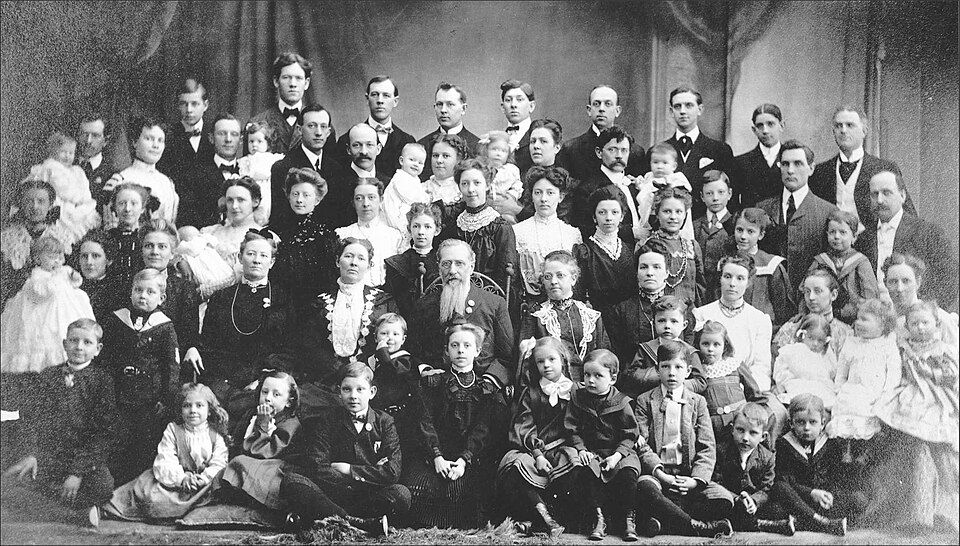
Plural marriage contributed to hostility toward Mormons, but it wasn’t the sole reason they were driven from their homes. The National Park Service also identifies conflicts over land, business, and politics.
In Nauvoo, Illinois, secret marriages helped fuel dissent. After an opposition newspaper exposed the practice, Smith ordered its printing press destroyed. His arrest and murder by a mob followed; continued violence helped drive the church’s further westward migration.
Under pressure from federal anti-polygamy laws, the Church of Jesus Christ of Latter-day Saints began ending the practice with its 1890 Manifesto and strictly prohibited new plural marriages in 1904. It now bars practitioners from membership.
As we’ve covered in examining polygamy and religious freedom, groups that continued the practice are separate from that church. They include the Apostolic United Brethren (AUB), based in Bluffdale, Utah, and the separate Fundamentalist Church of Jesus Christ of Latter-Day Saints, or FLDS.
The Browns of TLC’s Sister Wives came from the AUB tradition and even challenged Utah’s bigamy law in court. Their original plural household has since broken apart: TLC’s 2026 season follows Christine, Janelle, and Meri after leaving their shared ex-husband, Kody.
Living With Jealousy
Lydia told Reid that sharing her husband brought unexpected jealousy: “Y’all, I’m struggling.” She described family meetings and open conversations, but also said sharing responsibilities with Shakayla reduced her stress.
Muslim discussions of plural marriage have wrestled with these questions of fairness for centuries. The Qur’an permits up to four wives in verse 4:3, but tells a man who fears he can’t treat them justly to marry only one. Verse 4:129 warns against favoring one so completely that another is left neglected.
The medieval scholar Ibn Kathir distinguished between what a husband can control, such as dividing his time, and feelings he can’t make equal. Other Muslim thinkers see the demand for justice as a reason to end the practice. Musawah, a movement seeking equality in Muslim family law, argues for monogamy. Writing for the organization, Rasha Dewedar says “we use God’s word to discriminate against women rather than upholding justice, which is the real essence of Islam.”
 Who Gets Another Partner?
The Fords face their own question about equal treatment. Reid asked whether the wives could have another husband. Israel’s answer was no.
“If they wanted, you know, another husband, then they don’t want me,” he said. He would consider a third wife, however, provided both women agreed and the newcomer fit into the family. Both Lydia and Shakayla said they didn’t want another husband.
Israel said the three pool their income, which he allocates, and both women have access to it.
Shakayla continues to regard her husband as her pastor. “He is always going to be my spiritual leader. That doesn’t change,” she said.
The Fords’ husband-only rule is one way to organize a multiple-partner household. Polygamy, the broader term for multiple-spouse marriage, can also include a woman with multiple husbands. Polyamory involves consensual multiple romantic relationships; it needn’t involve marriage or reserve additional partners for men.
What Does the Law Say?
As of October 30, we found no publicly reported bigamy charges against the Fords. That doesn’t establish that authorities have cleared the arrangement. Ohio law prohibits a married person from marrying another or continuing to cohabit with that person and classifies bigamy as a first-degree misdemeanor.
Some of the laws around polygamy, though, are changing. In 2020, Utah reduced consensual adult bigamy to an infraction while retaining felony penalties for inducing involuntary bigamy and for bigamy accompanied by specified crimes. The change did not authorize multiple civil marriage licenses.
Joe Darger, a plural-marriage advocate, explained his religious objection to criminalization in a 2013 Libertas Institute interview: “I could believe what I believe, but I couldn’t practice what I believe.”
Tonia Tewell, whose organization Holding Out HELP assists people leaving polygamous communities, opposed Utah’s change. She told Utah Public Radio that clients feared their abusers would feel emboldened: “See? Now I can do anything I want.”
A Secular Movement for Multiple Partners
Religious permission isn’t essential to every argument for a different kind of family. As our coverage of humanist convictions explores, moral commitments don’t require belief in God.
A 2021 study of 3,438 single American adults found that 10.7% had experienced polyamory and 16.8% expressed interest in it. These figures describe that sample of single adults, rather than the share of all Americans currently living with multiple partners.
The Polyamory Legal Advocacy Coalition has helped advance multi-partner domestic partnerships, including in Massachusetts. A coalition including OPEN, the Organization for Polyamory and Ethical Non-monogamy, and Harvard Law School’s LGBTQ+ Advocacy Clinic is also campaigning against discrimination based on family or relationship structure. Somerville and Cambridge adopted protections in 2023; Berkeley and Oakland followed in 2024. And just last month, in September 2026, Seattle’s City Council passed an ordinance explicitly including consensual relationships with multiple partners in its civil rights protections.
These campaigns seek recognition and protection for families that already exist. Domestic partnership and protection from discrimination don’t amount to permission to hold multiple civil marriage licenses.
Public approval of plural marriage remains limited. Gallup’s May 2026 poll found that 19% of U.S. adults considered polygamy morally acceptable and 77% considered it morally wrong.
Who Holds the Power?
Questions about who leads a household reach well beyond plural marriage. The Council on Biblical Manhood and Womanhood’s "Danvers Statement" calls for wives to submit to their husbands’ leadership and reserves some church leadership roles for men. It rejects harsh or selfish leadership, but still assigns authority along gender lines.
Pastor Doug Wilson takes household hierarchy into civic life. In an April 2026 blog post, he called the Nineteenth Amendment, which protects women’s voting rights, “a terrible idea.” He favors voting by household rather than by individual and says his church already practices household voting.
These arguments expose different ambitions for family life. Secular polyamory advocates seek room for adults to negotiate relationships beyond the traditional couple. Advocates of biblical patriarchy prescribe roles for men and women. Having multiple partners doesn’t by itself tell us how much say each person has.
When one spouse holds spiritual authority, allocates the money, and sets the relationship’s rules, how much room do the others have to disagree? That question belongs in discussions of traditional marriage as well as unconventional ones.
It appears as though across the spectrum, the face of the American family could be changing. Is it time to expand the understanding of marriage beyond 1+1=2? Why or why not?

Sounds okay to me. If everybody involved is cool with it I see no reason to have a law that prevents such. I think that people should be able to ‘marry’ inanimate objects, or AI robots. Just can’t get tax breaks for such marriages. It’s no crazier than religion in concept.