

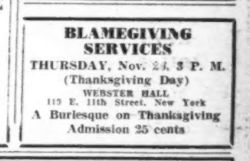
“A Burlesque on Thanksgiving,” promised a small advertisement for an event on November 26, 1931, in The New Leader newspaper. The Great Depression was in full swing by then. The event was being held at Webster Hall in New York City. The show started at 3:00PM, and (for 25 cents) you could watch a group of atheists put God on trial.
The same issue of The New Leader also carried a notice from a down-and-out 37-year-old man with twelve years experience in the U.S. Customs Service who was looking for work. He was willing to take just about any job, even if it lasted only a few months. By April 1931, the city’s Municipal Library had reported an estimate of 750,000 New Yorkers out of work. The city had helped 30,000 families in February alone, 60 percent more than the February before.
Thanksgiving happens to fall on November 26 again this year, exactly 95 years after the trial, which the organizers called "Blamesgiving". For this anti-celebration, they invited the unemployed, people hit by drought, and anyone else who had suffered “through no fault of their own.”
An Offer for Hoover
Charles Lee Smith, president of the American Association for the Advancement of Atheism, had given President Herbert Hoover a way to call the whole thing off. That summer, in an open letter reported by Robert Benchley in The New Yorker, Smith said the association’s previous objections to presidential Thanksgiving proclamations had gone ignored. This time, the group would hold a service of its own. It would cancel if Hoover agreed to forgo a religious proclamation.
The question of whether presidents should invite the country to pray was already an old one. Thomas Jefferson had declined to proclaim days of prayer and thanksgiving because he believed religious observance lay outside the federal government’s authority. Smith’s association had another objection. The year had brought good and bad, with the bad doing rather better in the group’s estimation. It called it “dishonest accounting” to hold either kind of service by itself. If the country was going to take stock, the losses belonged on the books, too.
Benchley spotted an awkward point. By the association’s own lights, the proposed defendant didn’t exist. The next party available to blame, he suggested, was the Hoover administration. He imagined the affair turning into a Democratic field day, complete with “sack races and steamed clams.”
A Good Harvest, Depending on Where You Stood
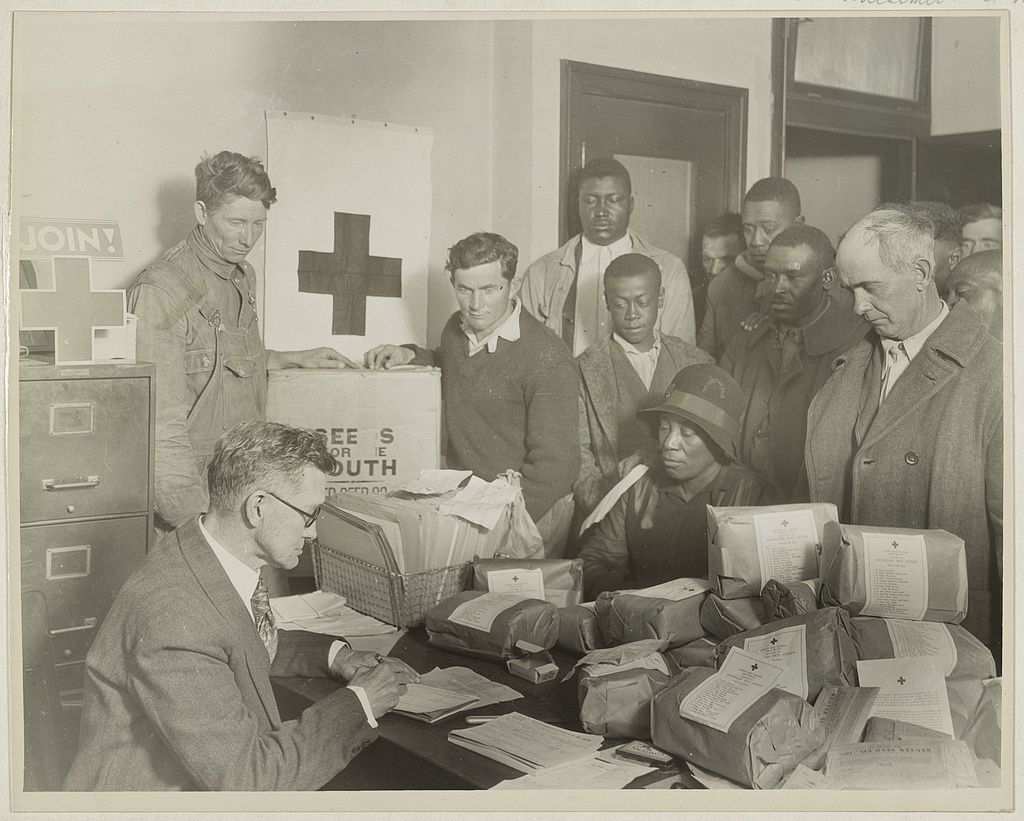
Hoover issued his religious proclamation on November 3. He asked Americans to rest from their work on Thanksgiving and give thanks to God at home and in their usual places of worship. “We have been widely blessed with abundant harvests,” he wrote.
The word widely mattered. That January, Hoover had gone on the radio to help the American Red Cross raise $10 million for drought relief (equivalent to about $220 million today). He told listeners that people in the affected areas had lost much of their crop and that thousands were short of food. The man asking Americans to thank God for the harvest had spent part of the same year asking them to help feed the people whose harvest had failed.
“Many of our neighbors are in need from causes beyond their control,” Hoover wrote in the proclamation. He urged Americans to help those neighbors get through the winter so that they, too, would have reason to give thanks. Put that beside the association’s invitation to “the drought-stricken.” Both recognized that you could work hard and end the year in trouble for reasons you had no power over. Hoover asked people with enough to take responsibility for neighbors who were struggling. At Webster Hall, the organizers wanted to ask about the responsibility of the “merciful Father” to whom Hoover directed the country’s thanks.
If God gets credit for the harvest, does he get any blame for the drought?
The Defendant Regrets His Absence
The printed program settled Benchley’s difficulty. For Thanksgiving Day only, the atheists would proceed on the assumption that God existed. There was still the matter of getting him to court. In an account reproduced in 1934, the association’s vice president, Woolsey Teller, had an announcement. “I am sorry to announce that God cannot be with us this afternoon.” The reason he gave was a New York law barring God from appearing in person on the platform.
The program called for an opening prayer of protest, a scripture reading, and a hymn. The prayer was a parody of the Lord’s Prayer, meant to be said in unison. The hymn, “The Modern Doxology,” took the familiar praise of God as the source of all blessings and changed what came from him. “Blame God from whom all cyclones blow,” it began. The verses held him responsible for floods, shipwrecks, and volcanic eruptions.
Then came the business of the court. The program listed Teller as the prosecutor, making the case against God for an abysmal 1931. Smith was to give the reply, “The Ways of God Justified to Man.” There was also a collection plate passed to support the association’s work.
The program made time for people to voice their own grievances. Attendees could also act as witnesses, speaking up about what had happened on a particular farm, or what it was like to look for work and keep coming home without any.
In the end, the appointed judge Timothy Patrick Murphy declared victory for the Atheists: “Divine Negligence Overwhelmingly Established.”
God's ultimate sentence was reportedly delivered immediately after the verdict: a collective silent reprimand.
The Other Trial
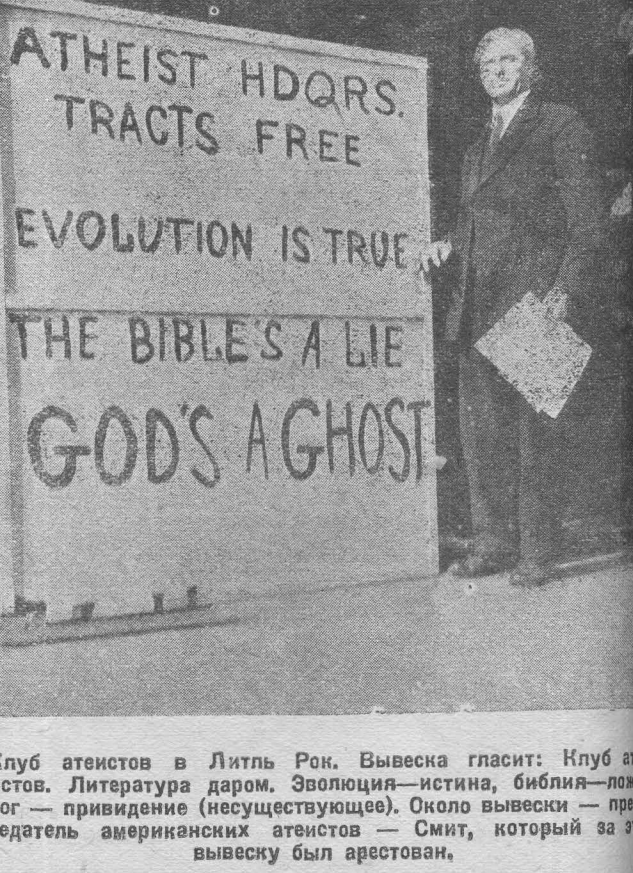
The event would eventually land Charles Lee Smith in a real courtroom. A month before Blamesgiving, he’d drawn a crowd at Columbus Circle. A nearby police officer testified that Smith had told people what the association planned to do on Thanksgiving. They’d “tell God just what they thought of the evils he has put in the world.” Smith was arrested and convicted under a city ordinance requiring a permit for public worship.
A lower court upheld the conviction in February 1932. In April, New York’s highest court threw it out. The judges read the ordinance as applying to people who gathered to worship or urged others to do so. Smith had been urging people to give it up. The city later amended the rule to cover atheist speakers. Smith was convicted again under the new version of the law, and in 1934 the same court let that conviction stand.
The mock trial, meanwhile, went into print. In May 1932, The New Leader announced that the association had published both the prosecution and defense speeches in full. If you’d missed the 25-cent show, you could write to the association’s East 14th Street office for a free copy. The notice called it the “First Annual Trial of God.”
Who Sent the Drought?
By the time of the 1621 harvest feast at Plymouth, often referred to as The First Thanksgiving, roughly half of the Mayflower’s passengers had died. To the survivors, the Wampanoag leader Ousamequin came with about 90 men, and his party brought five deer. Together, the group engaged in a feast that lasted for three straight days. In a letter to a friend in England, the colonist Edward Winslow credited their plenty to “the goodness of God.”
Two summers later, Winslow had a different report to make. Hardly any rain fell for six weeks after the last corn was planted, and some of the plants looked dead. The colony set aside a whole day to pray. Clouds gathered before people went home, Winslow wrote, and the next morning it rained. Plymouth appointed a day of thanksgiving, and the name stuck.
Winslow gave God credit for the rain that eventually came, but also held him responsible for the lack thereof. The drought, he wrote, had been sent “for our further chastisement.” He understood it as a duly-deserved punishment. Three centuries later, the people invited to Webster Hall had been told the opposite about their own troubles. They’d suffered “through no fault of their own.”
The Proclamations Kept Coming
The following November, Hoover issued yet another Thanksgiving proclamation. It was November 3, 1932, five days before he would lose his bid for re-election to Franklin D. Roosevelt. Hoover again urged Americans to go to their places of worship and give thanks to the “beneficent Providence from whom comes all our good.” He also attached George Washington’s 1789 Thanksgiving proclamation for anyone who wanted to read it (this was when Presidents were still relying on newspapers to disseminate their announcements, not Twitter).
By the following spring, April 1933, more than 20 million Americans were receiving emergency relief, about one person in six. That November, Roosevelt also asked Americans to thank Almighty God for the blessings of the past year. The following summer, another major drought hit all or part of 25 states.
Roosevelt was still issuing religious Thanksgiving proclamations in 1939. That year he went back to Plymouth, recalling how the Pilgrims had thanked God for “the abundant yield of the soil.” He pointed to progress against unemployment and asked Americans to give thanks for the strength to carry on their daily work. An estimated 9.5 million Americans were still out of work that year. Meanwhile, a new crisis had just started to take shape across the Atlantic that would lead to countless more sad Thanksgivings itself.
At Webster Hall, 25 cents bought you a hymn, a trial, and a chance to say what the year had cost you. Is it time to bring back this alternate tradition?
Is your family celebrating Blamesgiving and/or Thanksgiving this year? And what would you like to put on the record?

Atheists are actually quite amusing with all their hard work and huffing and puffing to tell us there is no God! If they would shut up and listen maybe they could hear Him!God knew we needed something to laugh at, so he created atheists as a living joke! Original people would say you cannot see the wind,but it exists! It touches you like a ghost and is gone! So it is with the Great Spirit! Air surrounds you but you can't see it, just like God!