

Nearly every faith tradition has wrestled with the same question: what does the person who has a lot owe to those who have so little? Today, that ancient question got a very modern test case: Elon Musk became the world's first trillionaire.
How Did We Get a Trillionaire?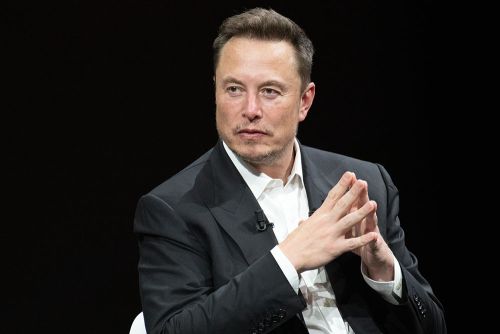
When Musk's rocket company SpaceX made its stock market debut Friday, the value of his stake, combined with his Tesla holdings, pushed his net worth past $1 trillion. Only about 20 nations have economies larger than that; Sweden, Ireland, and Musk's native South Africa do not. If he started spending $1 million every hour, it would take more than a century for Musk to exhaust a fortune this size.
The milestone did not appear from nowhere. While Musk is a politically controversial figure, and while there has been substantial skepticism over the true value of his companies, over the years they have reshaped how we travel both on Earth and in space. And Musk wasn't the only winner todady: Friday's offering minted thousands of new millionaires - many of them current or former SpaceX employees - as well. The question the world's faiths ask is: what comes next?
What Does Each Tradition Teach?
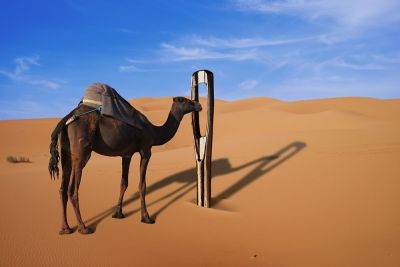
Christianity has never spoken with one voice about wealth. One strand of scripture treats riches as spiritual danger: Jesus told a rich young ruler to sell all he had and give to the poor, warned that a camel passes through a needle's eye more easily than a rich man enters the kingdom of God, and taught that no one can serve both God and money. After Jesus' ascension, the book of Acts famously explains that the earliest members of the new Christian church held all of their property together as a common collective, and sold as much as they could in order to distribute their excess to the needy.
But another strand runs just as deep. Abraham, Job, and Solomon are portrayed as wealthy and beloved of God, their fortunes a mark of blessing rather than a barrier to it. Proverbs praises the diligent hand that makes rich, and Paul aimed his famous warning not at money, but at the love of it, instructing the rich to be generous rather than to divest. Christian history carries both strands forward: monastics renounced property while stewardship theology blessed it as God's own, held in trust by the believer. Catholic social teaching, beginning with Leo XIII's 1891 encyclical on capital and labor, affirms private ownership while also insisting that those holding property carry a social mortgage owed to the common good. The Protestant work ethic that honored thrift eventually fed Andrew Carnegie's claim that the rich should serve as trustees of their fortunes – though even Carnegie wrote that "the man who dies rich, dies disgraced."
Pope Leo XIV invoked the cautionary strand when asked last fall about Musk's prospective trillion-dollar fortune: "If that is the only thing that has value anymore, then we're in big trouble."
Judaism treats giving as a law, rather than a sentiment. Their rule of Tzedakah shares a root with the Hebrew word for justice; withholding it directly wrongs the poor rather than merely disappointing them. Torah law built generosity into the economy itself: farmers were commanded to leave the corners of their fields unharvested for the hungry, debts were released in the sabbatical year, and the jubilee returned land to families who had lost it. Taken together, these practices essentially reset accumulated advantage roughly twice a century. Rabbi Maimonides, one of the most influential Jewish scholars, ranked eight levels of giving, placing anonymous gifts above public ones and, at the very top, the gift that makes the recipient self-sufficient. In Judaism, wealth itself is regarded as a blessing... but a blessing that arrives with serious obligations attached, and a ledger that is audited.
Islam perhaps goes further in encouraging generosity than any other major religion by making giving an essential pillar of the faith. The law of Zakat obliges Muslims whose wealth exceeds a minimum threshold to give a fixed share of accumulated assets, traditionally 2.5 percent each year, to categories of recipients the Quran itself names, beginning with the poor. Beneath the rule sits a theology of trusteeship: all wealth belongs to God, and the holder is a steward who will answer for its acquisition and its use. Islam also bans riba, exploitative interest, on the principle that money should not breed money off another's hardship, and it prizes sadaqah, voluntary giving beyond the minimum, along with the waqf, an endowment that puts property permanently in service of the public – this endowment built hospitals, schools, and fountains across the historic Muslim world.
Buddhism worries less about the accumulation of wealth than about clinging to it. Dana, or generosity, is the first of the perfections that adherents are taught to seek on the path to awakening. The Buddha did not condemn prosperity among the people; in the Sigalovada Sutta he advised householders to earn through 'right livelihood' – work that harms no one – and to divide their gains among present needs, emergency savings, and the welfare of others. In Buddhism, a fortune is judged by what it does to the holder's heart and for the holder's neighbors. Hoarding fails on both counts.
Hinduism counts artha, prosperity, among the four legitimate aims of human life, alongside duty, pleasure, and liberation – provided dharma (a strict moral code) governs how wealth is gained and spent. The Bhagavad Gita advises that people should take action without attachment to the fruits of their labor, a teaching that blesses effort while warning against being possessed by the results. Daana, righteous giving, also runs through the tradition's texts. This concept grades gifts by the spirit in which they are offered: the highest is given freely, at the right time, to one who can give nothing back. Wealth is honored as the blessing of the goddess Lakshmi, and the tradition warns that she departs from those who hoard or misuse her gifts.
Sikhism may state it most compactly. Three pillars anchor Sikh life: nam japo, remember the divine; kirat karo, earn by honest labor; and vand chhako, share what you earn before you enjoy it. Sikhs traditionally give dasvandh, a tenth of their income, to the community, and every Sikh temple on earth runs a langar – a free kitchen that feeds anyone who walks in, of any faith or none, with all diners seated on the same floor as equals. Sharing isn't just an appendix to Sikh worship, it's literally built into the architecture.
What About the Prosperity Gospel?
One modern movement reads the ledger in reverse. The prosperity gospel, which grew from twentieth-century American revivalism into a global phenomenon, teaches that God wants his believers to be wealthy and healthy, and that faith, and giving – often to the preacher's own ministry – will multiply one's material blessings. Prosperity gospel teaches that fortune is not a test or a trust but a receipt: evidence of heaven's favor.
Its defenders argue it restores dignity and agency to people the church long told to be content with poverty, and the movement's growth in poor communities worldwide suggests the message resonates. Its critics, which include the Vatican, Southern Baptist leaders, and theologians across the spectrum, call it a distortion that effectively turns God into a vending machine, and the poor into the insufficiently faithful. ULC has covered where that logic leads, from prosperity gospel preachers selling blessings for cash to crypto schemes marketed in God's name.
Are the Super-Rich Super-Done With Giving?
Musk's trillionaire milestone arrives amid a quieter shift: a backlash among the ultra-wealthy against the expectation of giving itself. The Giving Pledge, founded in 2010 to encourage billionaires to promise away at least half their fortunes, has seen new signatures slow from over a hundred in its first five years to only a handful annually. Investor and antichrist enthusiast Peter Thiel has privately urged at least a dozen signers to retract their pledges – reportedly including Musk – and says most he has spoken with regret signing. Some names have simply vanished from the pledge's website.
Proponents of retreating from the pledge, like Thiel, argue that beyond mere greed, they are making a moral argument that deserves a fair hearing. In their view, building companies, creating jobs, and driving innovation are the real contribution to humanity, and philanthropy is a reputational ritual – at worst, in the word now circulating in tech circles, a shakedown. Researchers have added a separate critique from the opposite direction: roughly 80 percent of identifiable donations from the Giving Pledge's original signers have flowed into private foundations, vehicles that can hold money for years while tax benefits arrive immediately.
Set against the traditions above, the new position is striking. Every faith surveyed here treats giving as obligation, justice, or worship. None treats the building of the fortune as the discharge of the duty. Carnegie, the patron saint of big philanthropy, considered dying rich a disgrace; the emerging view considers it a vindication.
A Question of Scale
What is genuinely new is not wealth, but it's extreme concentration. Every major faith tradition described above took shape when the richest person in a region might own all of the area's sheep; none imagined one individual's wealth surpassing that of most nations. Some faith voices say the old teachings simply scale up: more given, more owed. Others suggest a threshold where accumulation itself becomes the spiritual problem – where wealth stops being a blessing to steward and becomes a golden idol to worship.
What responsibility do the wealthiest have to society? Do you believe giving is charity? Justice? An obligation? And is there an amount of wealth that no one person should hold?
142 comments
-
 Mary Smith
Namaste 🙏 Dr Dennis Chevalier
-
 Dr Dennis Chevalier PhD, DDvin
Thank you Mary! Bless you!
Dr. D.
-
-
Mary Smith
Whether he is called to give, how much he is called to give, and where he is called to give are matters between him and God—not for us to decree.
-
Dr Dennis Chevalier PhD, DDvin
Amen!
-
-
 Rolando Couce
WHAT PROFIT IF HE GAINS THE WHOLE WORLD AND LOSES HIS SOUL DONT WORRY ABOUJT THE RICH WORRY ABOUT YOUR SOUL THE ONLY THING THAT IS OWED IS THE LOVE YOU HAVE FOR CHRIST
-
Dr Dennis Chevalier PhD, DDvin
prayers , for you are more right than others see! Praise God in the highest!
Dr. D.
-
-
 Jodie C. Lenser
I would be satisfied for now if the wealthy were simply required to pay the same percentage taxes as the rest of us.
-
 Katie Yvonne Grogan
The question should be do they believe in God and Scripture, and if they believe they have a moral obligation to help others. If working people and others who claim to have moral believes did not buy their items , how rich would they be? I believe Revelation 18:11 describes a prophecy where merchants of the earth weep when Babylon falls because there may be no one left to buy their cargo and halting trade. I guess the greedy. selfish, self absorbed better enjoy it while they can, because one day they will not have it.
-
Dr Dennis Chevalier PhD, DDvin
Revelation 18:11 reads:
"And the merchants of the earth weep and mourn for her, since no one buys their cargo anymore..." (ESV)
To understand this verse, we need to look at the larger context of Revelation 18, which describes the fall of "Babylon the Great." In the Book of Revelation, Babylon is presented as a symbol of a worldly power opposed to God—often understood by scholars as representing the pagan Roman Empire in John's day, but also as a broader symbol of corrupt political, economic, and cultural systems throughout history.
What is happening in this verse?
The merchants are mourning because Babylon has fallen. Their grief is not primarily spiritual or moral; it is economic. They have become wealthy through trade with Babylon, and now their source of profit has vanished.
The verses that follow list luxury goods—gold, silver, precious stones, fine fabrics, spices, livestock, and even human beings. The image is of a society built on wealth, excess, exploitation, and self-indulgence. When God's judgment comes, those who benefited from that system lament the loss of their prosperity.
For my Catholic understanding:
From a Catholic perspective, this passage is not a condemnation of commerce itself. The Church has never taught that trade, business, or wealth are inherently evil. Rather, Revelation condemns:
Greed and the worship of wealth. Economic systems that exploit the vulnerable. The tendency to place material prosperity above God. Complicity in injustice for the sake of profit.
The merchants' sorrow reveals where their hearts are. They do not mourn Babylon's sins; they mourn the loss of their income.
Spiritual lesson
A common theme throughout Scripture is the danger of becoming attached to worldly things. Jesus Himself warned:
"For where your treasure is, there your heart will be also." (Matthew 6:21)
Revelation 18:11 asks us to examine what we value most. If our security, identity, or happiness depends entirely on wealth, status, or possessions, we may find ourselves grieving their loss more than we grieve separation from God.
A homiletic reflection
One way to read this verse is to ask: What would make me weep if it disappeared tomorrow? My bank account? My reputation? My comforts? Or my relationship with God? Not that do I owe anything else to others. Mathew 25 talks about that.
The merchants of Revelation weep because their treasure is gone. The saints rejoice because their treasure was never Babylon—it was God.
That contrast is at the heart of Revelation 18. It is not merely a prophecy about the fall of an empire; it is a warning about where we place our trust.
Musk or anyone else it doesn't address except simply stated they have no place to sell and get wealth.
Dr. D.
-
-
 William M Buzanoski
Somewhere it was written "To Whom Much is Given....Much is Asked" I understand this to mean that does who have gained greater things need to share a larger portion of those things/wealth with those who have less! Those who have still should share what they have....it need not be in conventional forms of substance.....it may be in a y form of assistance ... The basis of all charity! Charity must come from all and shared with all! It is the basis of all forms of life, morality and the purpose of our very existence......without which society will devolve into great chaos!
-
Dr Dennis Chevalier PhD, DDvin
Luke 12:48
-
William M Buzanoski
Exactly...AMEN!
-
-
-
 Jean Gariel Lapointe
Reverend Jean Gariel Lapointe
h there a double coincidence between GOD of men,but who ever men could be rich or poor. There was a director of law came to jesus and ask him: "Good master, we acknowledge you are a right man, you show the lord's path as it is , but tell us for what we must give the contribution, Cezar or God ?" Jesus look the man who want to trap him and he asked one piece of money, and he said the crowd: " portrait and name of whom insight the this piece of money? All yelled 'CEZAR', then jesus gave back the piece of money and he said:" Give to Cezar it's own and give to God it's own either. When the Pharisees and the director of law heard this answer, they let him alone and be a strayed !
What it means clearly that money is serve either God and human. How we present our offerings to God ,the sacrifices and the prayer.
So the fact a richman could be banned to the kingdom of God is not the purpose of what God want to show of demonstrate as examples of Christianity. What God wants is a compassion and mercy to all rich man desire to sacrifice the wealth for his service, such leave your houses, your million in bank and follow him, as the family, your children and sometimes your times to thanks him and share with your neighbors who have none !
To be rich for the kingdom of God is meaningful l to be humble, to donate, and to serve !
-
 Rev. Henry
He may not be legally required to share his wealth, but morally is a different story. Of course, I don't actually believe Musk has a moral bone in his body. I could be wrong, but have seen no evidence.
-
Katie Yvonne Grogan
I agree, most extremely wealthy people like Elon Musk and others, love only money. I believe God and Christ taught " the love of money is the root of all evil", i think the question is do Elon and all the others believe in God or see themselves as God's. I think he is a selfish man like the rest, some of his wealth like the others comes from all those tax breaks and loop holes, they have been made entitled to, especially his job at DOGE, a made up department created to remove people off SS something many pay into every time they earn a paycheck, in order for him and the reach to get all those corrupt tax breaks and contracts among others things. Maybe one day his heart might change among others, but I am not holding out on that one.
-
Dr Dennis Chevalier PhD, DDvin
Katie, How do you know what is in Musk's heart? Why are you equipped to judge others? Inquiring minds want to know...
Dr. D.
-
-
 Sir Lionheart
What sort of evidence are you seeking that will help you think differently about him? With his wealth he has created companies providing employment for many.
His companies directly employ roughly 160,000 people, with an estimated 784,000 additional indirect jobs supported through supply chains, subcontractors, and broader industry growth. That means Musk is responsible for nearly 1Million people being employed, and they will be paying taxes and not looking for free handouts from tax payers. I’m sure all those employed people are very grateful for him and his philanthropy.
🦁❤️
-
-
 William Laddie Akins
I believe that as Christ said, we should: "Render unto Caesar that which is Caesar's and render unto God that which is God's". (Matt 22:21)
It is an endlessly arguable point of philosophy as to what is supposed to be rendered to either one. It depends entirely on one's point of view, or put another way, on each individual's OPINION. But basically our immortal soul either belongs to God or Satan (my opinion) so (in my opinion) we should render unto God primarily things of the spirit and the monastery and as ministers of the monastery we should stay out of having anything to do with Caesar and money (politics) and stick strictly to issues of the spirit (souls, God, supreme being, things of the spirit, universal life, etc).
The Christ also said: "The poor will always be with us". Is it fair to ask Musk, or for that matter Henry Ford, Edison, Westinghouse, Nobel, or any other billionaire who has worked hard and providence has perhaps shined upon greatly financially, to feed and clothe the hungry and needy of this world? Why not just expect governments to do this? Ah! in both instances we leave from the rendering of God's spirit domain and get into the domain of Karl Marx's failed dogma where supposedly we can somehow rely on these super rich individuals to feed and clothe and make everyone equal on the planet which has failed every time that has been tried and to expect Elon Musk to do it is beyond arrogance.
My advice to anyone who is serious and expects Musk to do this, is for them to personally sell everything they own, give the proceeds of what they sold to feed and clothe the hungry and needy in whatever countries they happen to live in after they have joined and worked in the peace corps for free for just a place to sleep and eat. Practice what you preach. Otherwise it's hypocrisy.
-
 Rev. Kev
William,
You asked: "Is it fair to ask Musk, or for that matter Henry Ford, Edison, Westinghouse, Nobel, or any other billionaire who has worked hard and providence has perhaps shined upon greatly financially, to feed and clothe the hungry and needy of this world?"
Of course it is. But less as a request to please be a decent human being and more as the result of a balanced society. Tax rates for the rich used to be higher. The average American could afford a nice house and a car and plenty of food -- even a vacation for the entire family at least one a year -- on a single paycheck. We had the American Dream. And you know what? The rich folks were still rich and lived pampered lives.
They paid their fair share to a society they depended upon for the raw materials that workers pulled out of the land and sea. They paid the people who worked for them and made them all their money. They were pricing goods so that their customers who put money into the business could afford them. Business owners depend on everyone else to make their business successful and grow. So they should also give of their success to the same country and society that made their success possible. No rich person earns that money. They acquire it by leveraging the time and labor of others. There is a cap to what a single person can actually earn. A cap to what they can produce in any given day.
Very rich people do no, actual, productive work. They don't cook for a restaurant chain. They don't work an assembly line for a car company. Other people do that. For some reason, too many appear to have forgotten that and give the rich folks in the executive offices all the credit. And none to anyone else. "They made all that money themselves so why should they have to give it up?"
Because they didn't. But what they have been doing is making it harder and harder for those other people to scratch out a living.
In the U.S. we have seen an increasing redistribution of wealth from the poor and lower income classes to the wealthy. The wealth gap has continued to grow. Which is why more reasonable individuals suggest we reverse this and make it so the tax structure and government (which is supposed to protect and serve ALL the citizens) better supports the less wealthy from the abundant coffers of the rich. It takes very little to make someone with nothing better off, and without even stopping the elites from enjoying their lives of luxury. In fact, they won't even notice it. People who have so many mansions and yachts that they are maintained all year without ever being occupied or used are not going to miss a meal or vacation to their private villa if something like the social security tax cap is removed. Or if their effective tax rate is hiked a few points. Or if they stopped receiving a tax incentive that was supposed to be temporary but never seems to go away and serves no real purpose any more.
In addition to that, we can go back to breaking up monopolies that have been allowed to form. We can also make it illegal for private equity to invest in residential housing, which gives them control over entire blocks of apartment or private home communities, and has been a driving force in making them unaffordable to the average American. Because the companies are just in it to squeeze as much money out of people as possible. They don't care about helping people live the now fabled American Dream.
I certainly don't expect any member of the upper tier to do a single thing for anyone other than themselves. It's not in them to do so. They live to help themselves and look at the working poor as mere insects. The rich are completely detached from the society in which the majority struggles. It never touches their lives. They live in some very weird fantasy worlds, to hear them when they voice what's going on in their heads. Some of them even see a future where we are rendered extinct on purpose and only the elite get to live their perfect, little, warped lives.
-
Dr Dennis Chevalier PhD, DDvin
Adkins,
Amen brother!
Dr. D
-
-
 Mother Elizabeth
According to U.S. News, malnutrition has doubled in the U.S. How can you let children die of hunger?
-
 Peter Mark Callahan
Stop talking! Stop explaining! Stop trying to impress! Actions speak louder than words.
You will know the Christians by their love.
-
Dr Dennis Chevalier PhD, DDvin
"....by their fruits"
-
Peter Mark Callahan
Thank you Rev. Gadfly!😂
-
Dr Dennis Chevalier PhD, DDvin
:)
-
-
-
-
 Man of God
Where in the Bible does God, our Creator force us to give. God does not force. The God of Creation and life ask us to listen, do, and have faith. To love our brothers and sisters, and to treat each other as we want to be treated. All the men of wealth I have met teach about having faith in the God of Creation. Most have started with little, but use the teachings our Creator have given to build wealth. Their children are the ones you usually have to watch out for. People with low spiritual development and who become greedy, with hate in their hearts are the problem. To acquire wealth you MUST fight for it. A fight that can make some very hateful. Money is just a tool created by man, and by man's own will can use it for good or evil. In fact coins and later paper money was developed by China. Ancient Egypt didn't have money, Original Nations peoples of this continent, had no money and were fooled and tricked because of it. Money has never been necessary, it is a gimmick devised by man for power and control.
-
Man of God
Where in the Bible does God, our Creator force us to give. God does not force. The God of Creation and life ask us to listen, do, and have faith. To love our brothers and sisters, and to treat each other as we want to be treated. All the men of wealth I have met teach about having faith in the God of Creation. Most have started with little, but use the teachings our Creator have given to build wealth. Their children are the ones you usually have to watch out for. People with low spiritual development and who become greedy, with hate in their hearts are the problem. To acquire wealth you MUST fight for it. A fight that can make some very hateful. Money is just a tool created by man, and by man's own will can use it for good or evil. In fact coins and later paper money was developed by China. Ancient Egypt didn't have money, Original Nations peoples of this continent, had no money and were fooled and tricked because of it. Money has never been necessary, it is a gimmick devised by man for power and control.
-
Dr Dennis Chevalier PhD, DDvin
Man of God
Amen brother!
Dr. D
-
-
 Sean Michael Loftus
He already gives a significant portion of his wealth away, AND he patents nothing, so anyone can follow in his footsteps and use the technologies he's developed to make their own things with them. The only thing left is to expect him to do all the work for you as well...
-
Rev. Kev
Sean,
I honestly have no idea why you posted this. He does NOT give a "significant portion" of his wealth away. But even if he did....so? That in no way changes the facts of all the damage has has done and continues to do.
He patents nothing because he has created nothing to patent. He isn't some genius. He didn't design any of the products he sells or pretends to sell. He doesn't even appear to know how to run a business. The only company making any sort of a profit is the starlink program. And that because of government contracts and the fact that he forced starlink terminals into every U.S. government agency. He is the ultimate leech on our society. He is only as successful as he is due to a good con job and raking in billions of dollars in government contracts, tax breaks and incentives, and getting the government to drop all of its investigations into his business practises, as well as cutting oversight and regulations.
I am quite amazed at how many people hate the idea of some family trying to get by from receiving food assistance to feed themselves, or a poor family getting Medicaid, but a billionaire can put them all to shame by raking in more taxpayer money every month than all the people on government programs combined. Which does no more than keep the wealthy guy artificially propped up instead of letting his businesses sink or swim on their own merits. "You poor people need to get more jobs. That rich guy needs all the money so he can buy nice things and go to nice places and attend expensive parties. Doesn't matter that his businesses would have failed by now without our money that most of us can't even afford to give."
Corporate welfare at the highest level.
No. "Anyone" can't follow in his footsteps. That's silly to write. Most "anyone's" don't come from a well-to-do family to begin with.
And I certainly wouldn't expect him to do ANY work for me. He barely works as it is. And he is wholly incompetent at it. He excels at telling tall tale and milking the marks who are impressed with his lies and lack the critical thinking skills to understand that most of what he sells are impossible dreams from old science fiction stories he absorbed in his youth or poorly conceived ideas from his ketamine fueled dreams.
-
Dr Dennis Chevalier PhD, DDvin
Sean, Amen!
-
-
 Steven Ferrell
Amazing how people think that trillion dollars is cash. That amount is assets including all the businesses he owns that employ THOUSANDS of people.
Guess since people do not want him having that trillion, he should lay off the thousands he employs, close all his businesses and let all those people be out of jobs.
He will no longer be a trillionaire, but don’t cry about all the unemployed people.-
 Michael Hunt
If Tesla were to close operations, other companies would end up filling the demand created by Tesla's departure from the market which would lead to job growth and employment for the people laid off by Tesla. Billionaires don't create jobs, consumer/market demand does.
-
Man of God
The first cars women would ride in or drive where electric cars. Why? The first cars where difficult to start, hard to steer, and stank!! The electric cars where very fancy and easy to start or drive. Their draw back was the battery. But the rich auto developers and producers once acquiring their wealth, did not invest in developing that tech. Instead, they worked together to kill off competition from the electric car development. They bought the competition out, had laws passed to protect their position and in particular put an end to N. Tesla's dreams by destroying his ideas, his laboratory, and bankruping him with false propaganda so he would be forced into silence.
-
 Patricia Ann Gross
Man of God,
You need to get your timeline checked, because it is all out of whack. Women were driving, sometimes those stinky and hard-to-start cars long before the emergence of the electric cars. I learned to drive in a four-speed stick shift pick-up truck, which very few men (or women) under the age of 60 can drive today.
-
-
-
-
 Donald G Magel
He could start by paying his actual taxes. He is too rich for that of course. He also has all those babies and their mommies to support. That gives him dozens of deductions.
-
 David Lee Nabors
If Elon claims Christianity, for instance, then he is morally obligated to help people. Maybe that is why he gifted Space-X stock to his employees so that someone working in the cafeteria is not set on becoming a millionaire. When a person subscribes to a faith and gives part f his wealth to another, to feed or clothe that person, then he is giving. When a person does not subscribe to a faith and a mob takes it "for the greater good" that is theft.
-
Dr Dennis Chevalier PhD, DDvin
Comment has been removed.
-
Patricia Ann Gross
David,
I'm not sure where you were going with this comment, but Elon "gifting" Space-X stock to employees is not a gift, it is a benefit and part of their compensation, which at some point they will have to pay income taxes on. I know this because I had to pay tens of thousands in taxs for stock options that tripled or more by the time I exercised and sold them. If they were a "gift," the company would have had to pay a gift tax, and I likely wouldn't have had such a burden, if anything.
Giving to get a tax break, as I've mentioned in other responses robs the communites where the businesses are get robbed by the "charity" deduction. I would feel better if, instead of a foundation that supports the development and training of AI, which only benefits his companies, he would spend that money on the local charities in every community he does business. Pick a cause: Food banks, affordable housing, healthcare subsidies for certain diseases, shelters for abuse victims, or all of the above. That takes away the need for federal and state subsidies, and potentially allows some of those displaced by AI and government layoffs to learn new skills and re-enter the workforce instead of having to survive on public assistance.
-
-
David Lee Nabors
If Elon claims Christianity, for instance, then he is morally obligated to help people. Maybe that is why he gifted Space-X stock to his employees so that someone working in the cafeteria is not set on becoming a millionaire. When a person subscribes to a faith and gives part f his wealth to another, to feed or clothe that person, then he is giving. When a person does not subscribe to a faith and a mob takes it "for the greater good" that is theft.
-
Rev. Kev
No one "gifted" SpaceX stock to anyone except for Musk being gifted stocks as part of his personal compensation package.
Any employee with SpaceX shares gets them the same way other employees of major corporations get theirs: 1) through retail purchases or 2) a company offered stock purchase plan where shares are acquired through payroll deductions.
Elon, like almost all of the very wealthy, appears to only be obligated to help himself. Even his very few acts that outwardly look to be fruits of altruism are for himself. He subscribes to no spiritual faith and he takes and takes and takes from many.
-
-
 Cam Kirmser
Do the wealthy owe the world?
No.
One thing that is often misunderstood is that a billionaire's net worth is not the same thing as cash sitting in a bank account. Most of that wealth exists on paper in the form of stock ownership, business valuations, real estate, and other assets. Its value is largely theoretical until those assets are actually sold.
But even if every dollar of that wealth were liquid and sitting in cash, the principle would remain the same: other people are not automatically entitled to it.
Wealth does not create an obligation to surrender property simply because others have less. If wealthy individuals choose to support charities, humanitarian causes, medical research, education, or other public interests, that's commendable. Many do. But it should be their choice, not an expectation imposed upon them.
The wealthy may have a moral choice to help others. They do not, however, have a debt to society simply for being successful.
-
Dr Dennis Chevalier PhD, DDvin
Amen
-
-
 Charles Wesley Fuller
to actually believe that Musk is the first "trillionaire" means that you aren't paying attention to anything.
-
 Religion as a Weapon is Wrong
What a trillionaire should do with his wealth is up to him, but at the same time, the taxpayers of the US should decide what we do with OUR money. We should stop giving the richest man in the world "grants" and loans. He owns all of us because he has all of our most private information (via Palantir) and he now owns and governs an entire section of Texas. I'm saddened that "the richest man in the world is starving the poorest children of the world." So I have three opinions about this: 1. He can spend his wealth as he wishes. 2. He should have no say in how our country funds starving countries or anything else. 3. He has no right to erase law suits against himself or own our information. And to add one more thing: 4. He needs help with his serious substance abuse problem.
-
 Wayne L Christensen
We should not care about the wealth that others gather, and strive to use our skills we have and grow. A wealthy person does not guarantee a place in Heaven, not does he declare whether they are good or bad, but is in the things they do---the things we all do that shows God, and us what kind of man or woman they are. We do not have to add to their wealth by our own actions if they are bad or corrupt.
-
Rev. Kev
We actually do have to care. Because we live in a world of finite resources with economies of finite means. The more that wealth is centralized to a few, the less that leaves all the rest. It matters because this affects actual lives. People have literally and needlessly died from the decisions of the wealthy looking out only for themselves.
This isn't about religious beliefs or theological debates. This is about hard, cold reality.
-
-
Rev. Kev
When greedy people (and all wealthy people are greedy) are given so much power they will use that power for one goal: to make themselves even wealthier. When a few people hoard so much wealth in a finite system of resources that automatically means everyone else gets less. We can see that truth in the fact that citizens in the U.S. are getting less. Less protections. Less food security. Less medical care. Less income. Less housing. Less job security. Less anything.
Again, we live in a social and economic system of finite resources. There is only so much to go around. Those who needlessly hoard resources leave the rest with less. A person who harms others for their own needless gain are anti-social. They only destroy the fabric of a society.
Everyone benefits in a society where its members work together to lift everyone up. Humans only reached their current position in the food chain by working in groups. Any cohesive, cooperative group is stronger than any single individual. The myth of a "self-made" anyone is a lie.
Money is, unfortunately, power in this world. More power breeds lust for still more. And it will ALWAYS be a corrupting force. Absolute power does corrupt absolutely. We can either have a successful, strong, healthy, democracy or we can have billionaires and trillionaires. But we cannot ever have both.
The wealthy are a cancer in the world. They are not to be looked up to.
We need to start raising the current and future generations to value people, teamwork, and positive relationships over wealth. To value others as we wish to be valued, ourselves. Which includes ensuring we and future generations have a clean environment in which to grow and flourish. To help and lift up those in need and never look down on anyone for any reason. We need to value honesty and integrity in ourselves and others.
It's possible to compare and contrast various societies in the current world that model the different positions. The way forward to a happy, healthy future can be seen when doing so. No society is perfect. Never will be. But the preferable way forward to objectively better lives is evident.
I can only speak for myself, but I prefer a world where peace is always the goal. Where we measure success with gross domestic happiness. Where people can live lives without needless stress. Where people can raise families in comfort and peace.Where an individual's worth is never judged on superficial nonsense like what house they own or car they drive or how much money they make or hoard (or what gender or skin color they just happen to have). Where people can only see things like unregulated capitalism and greed in history books as a lesson of past mistakes to be avoided in the future.
Is that such an awful desire?
-
William M Buzanoski
Christianity and Morality and Justice are on very divergent paths ! Help for all members of society must come for all members, whether Rich or Poor..not just from side! This is not merely a Christian problem....all forms of religion, all levels of any society must subscribe to a universal sharing! All mankind is created equal! Prayer must yield to Action by all..either by itself will never solve the inequity!
-
-
Rev. Kev
Time for a rant...
Musk is an outward sign of an internal, societal illness: the absolute love of unlimited wealth and the power it brings. And looking up to those who acquired it as if they deserve some sort of awe or respect for their selfish pursuits.
The sort of wealth that runs in the billions, let alone the trillions, can only be achieved by stepping on the backs of others. I have been looking at the crop of billionaires in our society who now feel free to openly express themselves in the public eye. They are not people interested in the welfare of others or contributing to the general welfare of the people within it. Let's look at the data centers being put up all over the place at the expense of the residents. Noise and environmental pollution abound. People have even been kicked out of their homes as tech billionaires make back room deals with the civil authorities (who also lust after more money at the expense of anyone else) to exercise eminent domain. All to clear land for more data centers.
Musk is responsible for things like cutting cancer research, ocean research, medical intervention (such as would have enabled the world to have advanced knowledge of the latest ebola outbreak before it had the chance to progress as far as it did), consumer protections, food and medical aid to other nations that literally saved lives (even provided needed prenatal care to pregnant women), air traffic control, VA assistance and hospitalization, and a long list of other things. The result being the literal death of people in the U.S. and abroad (including the unborn I am told are supposed to be special and kept alive by the same people who cheered Musk on) and putting thousands (if not millions) in harm's way.
Why did he do that? Did it cut waste? Nope. In fact, it so badly destroyed agencies that our government spent far more money afterwards. Did it cut fraud? Not even close. In fact, his little slicing spree was to free up tax dollars for more government contracts for his own companies. Which have been running at a loss so much that he had to roll them all together in a superficial attempt to make his IPO look good. Not to mention getting the rules changed so his IPO could immediately be listed in an index fund so that retirement funds and 401Ks automatically snatched them up into the portfolios of unknowing marks....errr....people.
-
 Rev. Matthew Mastrogiovanni
He now has more money, then most nations.
The amount of good that I'd do with that cash ...
-
 Deborah Jane Vogel
State and Federal laws do not legislate, demand, or “obligate” the wealthy to donate their wealth.
Most religions encourage those who “have” to help those who “have not” and those who are in need.
Wealth in and of itself is not the problem in the U.S..
The problem arises when ~ an average of 13.7% of the population (47.9 million, 14.1 million of which are children) suffer from food insecurity (“USDA Food Security Report”,Dec. 2025);
~ in 2024, 26.7 million (9.8%) of people aged 0 to 64 were uninsured, 80.1% of low income people were uninsured- 85.1% of this group had at least one worker in the family, 62% of uninsured adults and 44% of insured adults reported healthcare debt;
~ on a single night in January 2025, 414,547 people were housed in emergency shelters, 62,817 were classified as living in transitional housing, and 266,320 people were unsheltered (“2025 Annual Homelessness Assessment Report To Congress”, U.S. Department of Housing and Urban Development);
AND
those people and corporations who are wealthy are not paying their fair share of taxes while continuing to make truly obscene incomes and profits.
-
 Peter Tomaselli
The funniest, most evil part are the litany of politicians claiming in unison (no doubt from their party's talking points) that no one deserves to be a trillionaire and "tax the rich". The problems are many. First, assuming we do tax, why should we trust them on how to spend it? The US annually spends $2T MORE than it collects in revenue. Meanwhile, public education is in shambles, we have rampant homeless & failing infrastructure. The list goes on. Approximately $15 BILLION has been spent on the CA Hi-Speed Rail project, but 0 (zero) miles of actual operational track have been laid. CA spent nearly $30 BILLION over the last several fiscal years to address homelessness. During that time, the number of homeless have increased from 35K to almost 190K in CA alone. Public-program fraud in MN is estimated to be up to $9 BILLION across childcare, healthcare, and Medicaid programs. Our legislative branch are like parents who cannot say "no" to their petulant children and ARE NOT good stewards of OUR tax dollars.
Second, these are unrealized gains. Assume they do tax these "assets" (i.e. not income). Given we spend $2T more than we collect, how long would it be until they run out of this money,,,aka "Other People's Money"? Not even a year. Where do politicians go after that? The middle class of course...many of whom are millionaires driving Fords & Chevys. Why? Because having a modest home and an average 401K makes them millionaires. A family with $1.5 MILLION in assets does not have those funds liquidly sitting in a bank waiting to be spent.
This is an issue meant to divide Americans...not solve problems.
-
Michael Hunt
We spend more than we collect in revenue because we give so many tax breaks to billionaires (not millionaires) and massive corporations. I certainly have issues with our government's spending, especially with how much we spend on defense over education, but taxing the wealthiest in our country less is contributing to our current deficit and lack of funding for important services.
-
-
 Lester
I think we need to discuss something that has yet to be brought up.
Liquidity
Mr. Musk, like most ultra wealthy, does not simply have billions of dollars sitting in a bank account. His value is tied up in ownership of illiquid assets. Owning something worth $1B is not the same as having $1B in your pocket, to spend.
As for "owing" the rest of us? That's a joke. I never did anything for Mr. Musk. He has never caused me harm. Why would he owe me?
If he wishes to do something out of the kindness of his heart, then good! Is he obligated? Hell no!
-
Rev. Kev
Lester,
You write Musk has never caused you any harm. He has definitely brought harm to the U.S. through multiple acts. So I will assume you don't live in the U.S. How about in any of the countries where he has poured a tiny fraction of his considerable wealth, and a platform to boost leaders on X while suppressing opposition, into the political races of authoritarian parties? Or his support of Argentina and authoritarian leader President Javier Milei (the guy who received $20 billion in economic aid while we supposedly can't afford healthcare or food programs for children, the elderly, or needy)? All of which gained Musk some sweet access to the lithium mining industry there.
If you are a U.S. taxpayer you are helping finance Musk's interests. He has billions of dollars in annual income from government contracts.
The poor people who have to live near his data centers are certainly owed. A lot.
Did you know that people died in a tornado because the NWS has had to cut back on weather balloon launches directly caused by DOGE? They were unable to give enough advance warning for something they could do before Musk happened. We are in the same boat with hurricanes. The NWS/NOAA has the same issue with balloon launches, as well as decreased "hurricane hunter" flight or buoys capable of helping us track things like ocean currents and temperatures for forecasting models or wave heights to measure hurricane intensities, earthquakes, or tsunamis. Then there are the costs to lives due to a severely underfunded and undermanned FEMA. Let's hope you or any friends/family won't ever need that, huh?
When air traffic control towers were sometimes cut down to a single operator (again....Musk) a whole lot of people were put in harm's way.
I will have to assume you have no vested interests in the social safety net or thoughts of ever needing such services. And don't live in a rural area where the only hospital for miles and miles had to close down because of DOGE cuts.
If all of the above is true....then I congratulate you for being one of the very, very few people not adversely affected by Musk. Well.....at least not currently affected.
P.S. I am pretty sure Musk will never do anything out of the kindness of his own heart. In fact, if he did have such kindness he would automatically feel an obligation to help others instead of harming them for his own ends. Like a normal, sound, human being. 🙂
-
Dr Dennis Chevalier PhD, DDvin
Kev.,
"I find your argument thought-provoking, chiefly because it prompts me to reconsider how differently intelligent people can interpret the same facts."
Dr. D.
-
Patricia Ann Gross
Dr. D,
Sir Isaac Newton's third law of motion explains this. "For every action, there is an equal and opposite reaction.
-
Dr Dennis Chevalier PhD, DDvin
Somehow, I think would disagree with it being used here.
Dr. D.
-
-
-
-
-
 Douglas Robert Spindler
Billionaires have found when they have given millions of dollars to charities the people running them are incompetent, mismanage the funds and accomplish very little if anything. This is why Trump with Elon's help have cut funding to government funding to lots of government agencies who were providing aid.
Why aren't Christians and the church helping people? Just look at the Christian charity of the members of the LDS Church which has more than a third of a TRILLION DOLLARS. Every year they have less than .0001 to charities.
Funny how Christians are picking on Elon wanting him to do something Christians won't do.
-
Patricia Ann Gross
Douglas,
It's simple. Most churches are struggling to keep their doors open, and the people in the pews cannot afford a tithe, let alone the millions of dollars that it requires. Most Mega-Churches look down their noses at the poor and disenfranchised, so like the LDS only serve to enrich themselves with the "prosperity gospel" which is much like the snake oil sold in the 19th Century.
-
-
 Kenneth Kurt Love
There seems to be a great deal of symmetry in the conversation. You all are great.
I liked the comment that money is just value and only the movement of that value around through the economy shows benefit to all. I don't know the exact $ but most of it is being given to others in the form of wages. It is the only sustainable economic model. All the Communist systems in the world today have converted to Fascism. It is not a right wing thing but a blend of Oligarchs and Socialism, yet not quite Marxist. When you look, find a dictionary printed prior to 1947 as the definition somehow changed. The Chinees and Russian Oligarchs are very wealthy as well. Benevolence is a heart thing not a government tax thing.
Just a couple of quotes: Give a man a fish and he eats for the day Give a man a job and he feeds himself and others for a lifetime
[Matthew 20:13 NIV] "But he answered one of them, 'I am not being unfair to you, friend. Didn't you agree to work for a denarius? [Matthew 20:14 NIV] Take your pay and go. I want to give the one who was hired last the same as I gave you. [Matthew 20:15 NIV] Don't I have the right to do what I want with my own money? Or are you envious because I am generous?'
-
Dr Dennis Chevalier PhD, DDvin
That's exactly what's happening here...envois of his money.... "[Matthew 20:15 NIV] Don't I have the right to do what I want with my own money? Or are you envious because I am generous?'"
Dr. D.
-
-
 Gordon Billingsley
The problem isn't that the rich are rich. The problem is a political system that removed guardrails from the economic system, and left everyone else behind. One would hope the super rich would feel of sense of social obligation, but they are not obligated to. In the Guilded Age the titan engaged in philanthropy to polish their images and, at least, put up a front social noblesse. Our new Super-Guilded Age is filled with vulgar, in-your-face jerks who have entirely corrupted our democracy.
That's where we need to put our attention. Make America American Again!
-
 Michael G Doyle
Elon has created more jobs than Bernie Sanders and Warren. Both who are multi millionaires. Elon’s company rescued those astronauts. His wealth is in shares. The companies he owns.
-
Michael Hunt
Billionaires don't create jobs, consumers do by creating a demand. Musk might provide jobs, but so does the mom-and-pop store down the street and so does our government. We shouldn't be bowing down to people who have absurd wealth just because they have companies which employ people whose labor generates the wealth for the billionaires.
-
Dr Dennis Chevalier PhD, DDvin
"Billionaires don't create jobs, consumers do by creating a demand." WRONG How do you get to this conclusion? He/his companies hire and buy materials that in tern pay for other employees all the time. Time to come back to reality!
Dr. D.
-
Michael Hunt
Lets say Elon Musk starts a company to sell boats. If no consumers are interested in buying boats, if there is no consumer demand for the product, the company will make no money and close. That's how consumers create jobs.
If the entire country were to switch from driving cars to electric bicycles, General Motors and Ford would have to close their automotive division resulting in a loss of jobs unless they were to pivot to building electric bicycles, which would create jobs.
Without a demand for a product or service, how can there be any jobs supplying that product or service? Sure, a billionaire might be able to prop up a failing company for a few years but if they continue to operate a business that loses money just so they can provide people with jobs, they'll soon no longer be a billionaire.
-
-
-
Rev. Kev
Elon is not a job creator. He acquires companies. Then he will usually fire a large chunk of existing employees. Like the roughly 14,000 employees of Tesla, and the 6,000 employees when he acquired Twitter. Then moves to buying his way into less regulations and oversight on his government contracts so he can cut corners on everything from materials to safety. He also escaped environmental regulations by exercising his wallet. He hurts people for his own benefit. Because he doesn't care. People are disposable assets.
He created unemployment for over 200,000 government workers when he sliced and diced agencies of which he was totally ignorant. He cut necessary personnel. Some of which he had to waste extra money on to rehire.
He found no fraud. He created waste. His DOGE cuts literally killed people in the U.S. and abroad. He cut important positions and groups to find and identify disease outbreaks before they had a chance to spread. Those cuts are why the latest ebola outbreak wasn't discovered and identified when it was confined to a smaller, controllable area. His cuts means less personnel and funds in FEMA to assist states when hit with natural disasters. He also cut funds to NWS/NOAA which means less ability to forecast tornado outbreaks or hurricane paths and intensities. People have already suffered in tornado hits. More people will face hurricane season (which is now upon us) with little hope of assistance in food or temporary shelters in disaster zones. His cuts to government agencies kicked people off of medical and food assistance. Still other cuts closed the only medical clinics in some areas. People were cut off from receiving needed medicines. Some died.
All for the sole purpose of freeing up taxpayer money to be redirected to contracts for Musk businesses.
Elon is only good at one thing. Looking out for Elon. Period.
But, hey. I guess that's all perfectly fine because you assert his wealth is in shares.
I mean......Bernie and Warren only work to pass legislation to help people receive food and homes and healthcare. They work to get people a living wage. They work to get people a college education. They work to pass legislation to create energy, manufacturing, infrastructure, and other improvements and employment opportunities. Constantly fighting opposition in Congress to actually help people and build a better future.
But they didn't save two astronauts. So I guess that all means nothing. Right? smh
-
Dr Dennis Chevalier PhD, DDvin
Comment has been removed.
-
-
-
 Alexander Clarke
I was taught by my father that you: 1. Take care of yourself. 2. Take care of your gamily. 3. Take care of your neighbors. 4 Take care of your community. 5. Take care of your environment. You get the picture.
-
 Amber Fry
Of course. Nobody gets that rich that fast without stepping all over everyone else. It seems he came to the country on a scholarship visa and didn't use it. That alone is not legal. Instead he took grants and contracts from the government to start businesses. I would also consider the idea he paid quite a bit to obtain citizenship out of that pile of cash... also illegal. I shudder to think whatever else he may have done for money.
-
Dr Dennis Chevalier PhD, DDvin
Amber,
"He came to the country on a scholarship visa and didn't use it. That alone is not legal."
I would be cautious about making that claim. He is very litigious.
Whether it is "legal" or "illegal" depends on the specific immigration status, visa conditions, and what happened after entry. A person may enter on a student or scholarship-related visa and later change programs, transfer schools, adjust status, receive authorization, or otherwise remain in compliance with immigration law. On the other hand, failing to meet the conditions of a visa can sometimes result in a violation of status.
Dr. D
-
Rev. Kev
It's a true claim. He came to the U.S. on a student visa. He didn't live up to the requirements of that visa when he dropped out of Stanford so was technically an illegal immigrant at that point according to our laws. He later went through the process to get citizenship.
-
Dr Dennis Chevalier PhD, DDvin
Knowing Musk as I do via news and interviews or you tube and TV he was too scared about losing his way so I bet he may have been illegal for all of 5 min until he made up his mind to do what he is doing now.
Dr. D
-
Rev. Kev
Actually, he was pressured into gaining citizenship because he was involved in a company that wanted to go public and they couldn't file if one of the cofounders wasn't a legal citizen.
-
Dr Dennis Chevalier PhD, DDvin
ok
-
-
-
-
-
-
 Stella L. Wright
The 10th Commandment says we shall not covet, and that's what this article is promoting. We don't have the right to judge anyone; God took that job for Himself.
As for Elon Musk: yes, he's a new trillionaire. So what? Haven't you heard about the many, many times he has provided Starlink at no cost to people who have been hurt by the weather or a war? Personally, I'm not so sure about his personal choices, but that's between Elon Musk and God.
We should be praying for him, not judging him. Leave him alone and let him figure it out. It's not up to us!
-
Dr Dennis Chevalier PhD, DDvin
Amen!
-
-
Peter Mark Callahan
One need not talk of this. Actions speak louder than words.
-
 Warren Calvin Wall
Everyone thinks that Elon Musk has a trillion dollars in his bank account, which is simply not true. He holds over a trillion dollars in assets. He doesn't even own a home. Not cash. Could he sell all of his assets and have the trillion dollars in cash? I guess. It's not very likely. I'm sure that there are legal ramifications as well. Elon collects a salary. You can look it up. I'd be willing to bet that he doesn't even handle money. Someone gets paid to handle that. There is also a good bit of evidence that he is very generous as well. People that don't understand value, assets, and money should should be frugal with their opinions.
-
Rev. Kev
First, what does how much pocket money has has have to do with anything?
Second, he actually owns houses. Or so says the Wall Street Journal.
He posted on X that he only has a little under $850 million in cash. That poor guy. I totally feel for him. What can anyone do with that paltry amount?
He only receives a nominal salary from SpaceX ($54K a year which he has to get under CA law for exempt employees) which is not his only source of income. He receives stock packages and incentives, which have been historically very high.
He does have a wealth manager.
No idea how "generous" he is, how much that entails, or to who. And it doesn't matter in the least bit.
And none of this means diddly. He is still a corporate welfare king propped up by our tax dollars selling dreams and fairy dust.
-
-
 Roy S. Thorpe
If you had great wealth and wanted to give it away,where would you give it! The amount of phony charities is increasing daily! The phony churches are increasing in numbers! The amount of vetting required would be enormous! Scammers would be drooling! You would have to employ a large vetted staff to actually get the money to the right charities! Creat a corporation to make donations!
-
 Dorothy Hawkins
Religions have lots to say about money - varying levels of obligations of the wealthy to the poor, and those without enough resources of their own. These are not necessarily laws in our western countries where religion and politics are not bedfellows, or are they?
The recent trend toward seeing wealth as God's blessing and favor, and if you don't have it, you don't deserve it is a worrying trend in my mind. Too many are addicted to various forms of self-aggrandizement. Wealth hoarding is one of them.
I have no answers, but plenty of thoughts about this subject. In my own life, if I have it to give, I'll give it. It's kind of simple in my mind's eye, if you believe in the common good for all humanity.
One thing's certain: no trillionaire needs $8 a month from me to make his social media platform work, or to PROVE to anyone I'm acting there or elsewhere in good faith. On that platform, those who do pay into it are considered "VERIFIED" and trustworthy. I'm already verified - plenty of times and plenty of places: online and in the real world.
-
 Eric Laspe
The belief that Elon Musk owes the world a debt comes from a couple of misunderstandings about how he achieved his wealth and where it exists today.
I’ll start at the end. Elon’s trillion dollar net worth is not “held” by him like a miserly Scrooge McDuck hoarding gold coins in a vault in which he occasionally swims. The vast majority of his wealth is in the shares he owns of companies. Some shares are in companies he runs, others are in startups he funds, and still others are in the broader market. In other words, his vast wealth is distributed over the entire American economy, doing work in the businesses—large and small—that make it up. If Elon were to sell, say, 5% of his securities to pay some kind of wealth tax, it would be disastrous for the economy, because that would simply be a transfer of value away from people who are currently using it to drive growth in their businesses to the government who would simply redistribute it through their favorite NGOs, skimming undeserved large cuts.
Second, Elon has already done the world many great services in the process of creating his wealth. His aim has not been to get rich. If he wanted to live like a fat cat and retire to a yacht in the Mediterranean, he could have done that after selling PayPal for $180M. Instead, he reinvested the majority of his windfall into making the best electric cars in the world. And he has continued, day after day, working full time to bring us marvels that many thought were impossible (self-driving cars, high speed satellite Internet, automated underground tunneling, reusable rockets, brain links for helping ALS patients speak, a re-booted NASA space program, and frontier AI models). He has a vision for the future of humanity and the means and fortitude to make it a reality. We are all the beneficiaries of his hard work and optimism. I would argue that not only does Elon not owe us anything, but we owe him at least a debt of gratitude.
-
Patricia Ann Gross
His vision for humanity is an AI server farm. How does that make this world better. While he may be saving the environment with his electric cars, how many of them are powered by coal generating power plants which are damaging the environment.
Server farms are being given tax breaks not available to the general public or small businesses that could potentially employ more people. They not only get tax breaks they get breaks by the power companies because the excessive amount of power they use.
-
 Russell Allen Foszcz
“If Elon were to sell, say, 5% of his securities to pay some kind of wealth tax, it would be disastrous for the economy, because that would simply be a transfer of value away from people who are currently using it”
I can’t follow this logic because if he were to sell 5% doesn’t it mean someone is going to eventually purchase those shares? And if so - the companies are no worse for the sale.
But, perhaps we still lose because the government would then use that 5% to fund the military and start new wars.
-
Rev. Kev
Eric:
I'm impressed. That was quite a commercial for Musk. And, true to Musk style, it was filled with all the standard hype of grand promises and unattainable dreams. Selling things not done to not only justify the insanity of obscene wealth and what it h done in real life, but also bestowing Musk with an almost saintly aura. "We all owe him a debt of gratitude for his hype and the massive damage he has done."
I have no desire to do a deep dive on that propaganda campaign you launched for citations to pick apart what is even close to true but I know that almost none of it is. What you wrote that sits right on the very edge of true is exaggerated to the point of not being so much true.
I am sincerely curious to know why anyone would go to this length to cover a bovine patty with paint and ribbons and fancy glitter in an attempt to hide the fact that it's still a bovine patty?
-
 Ellen Fox
If I could add, his non-profit Musk Foundation has helped many. The 990 is public knowledge. And his goal is Mars for whatever reason & his current assets can be liquidated to support his vision. He feels life on Earth will end eventually.
-
Russell Allen Foszcz
From Forbes:
"Elon Musk, World’s Richest Person, Doles Out $474 Million In 2024 To Charities, Many Belonging To Him"
Since 2010 he has granted $1.1 billion (not even 1% - 0.11%)
(https://www.forbes.com/sites/juliegoldenberg/2025/12/23/elon-musk-worlds-richest-person-doles-out-474-million-in-2024-to-charities-many-belonging-to-him/)
-
Michael Hunt
Funny how "donating to charity" always seems to be a donation to themselves or their friend's "charity."
-
-
-
-
William M Buzanoski
Does anyone here remember the words "What doth it profit a man to gain the whole world but suffer the loss of his own soul!"????? 🙏 Are we encouraging one to amass wealth and power without recognizing the wrongs and sufferings borne by those who have less????
-
 Ari Joseph Bertine
He is not obligated to give anything to anyone. No one is. That's what makes giving a virtue, and selfishness so telling--the total freedom from obligation involved. A person who cares about their fellow humans is a functional, socially viable human, because that is the type of animal we are and that is the way our survival programming skews. A person who allows fellow humans to die of a lack of something that person has in excess is a malfunctioning and useless member of humanity. We, as a society, also have choices as to how we respond to the presence of a useless resource sponge.
-
 Mrknowitall
Jealous Democrats, who by their own design have a mental disorder. As a part of this condition they have almost zero reasoning and are ruled by jealousy and fear and when grouped together cause economical and societal downfall of society.
-
Michael Hunt
I think you spelled Republicans wrong.
-
-
 Tami Tabone
I feel that anyone with that much wealth should be required to put it toward global works. There us no reason people should be starving or in need of medical care, etc. When one person holds the key. To me, that is like being responsible for the death of millions. Wealth carries responsibility. Whether the person wants to acknowledge that or not. We as humans, because we are aware, have responsibility. We are here on this planet as caretakers. We have the knowledge to be caretakers. And this man has both, knowledge and wealth. And how he chooses to use that shows just what kind of person he is.
-
 Daniel Slater
“For what is a man profited, if he shall gain the whole world, and lose his own soul?” — Matthew 16:26
-
Dr Dennis Chevalier PhD, DDvin
Amen Daniel!
-
-
 Bishop William Dusenberry, DD
Most European nations, allow anyone to earn certain amounts (for example, $50,000,000) then increase the taxes paid for any income over that, so that it makes more economic sense to pay those who work for them, to pay them higher wages, and provide increased benefits. No one should be allowed to inherit enough money — so that they never have to work for a day in their entire life — the figure of $1,721,845 comes to mind.
-
Amber Fry
The US used to do that as well. Once Reaganomics hit the scene that all changed. Now they get away with paying very little, if anything. Much of what they do pay ends up sent back to them in write offs and returns.
-
-
 obere mchugh
Yes as the wealthy should spend there time using a portion of their wealth to help out causes that are beneficial to those who have less. being philanthropic is a notable and good cause as well helps those who do not have as they should do. while not mandatory that they do this they should as it benefits all.
-
Dr Dennis Chevalier PhD, DDvin
Rev. Dixon,
There is a growing tendency in public discourse to speak of the wealthy as though their success creates an automatic debt to society that can never be repaid. The language of obligation is used so freely that it often obscures an important distinction: the difference between what may be morally admirable and what may be morally owed.
No person, regardless of wealth, owes another the fruits of his labor merely because he has achieved greater success. Wealth, in and of itself, does not create a claim upon the property, time, or resources of another individual. To suggest otherwise is to transform generosity from a virtue into a requirement and charity from an act of conscience into a form of coercion.
This is not to say that those blessed with abundance bear no responsibility whatsoever. They do. But their highest obligations are not measured in dollars alone. They are measured in character.
The wealthy, like all people, owe others kindness rather than contempt, empathy rather than indifference, respect rather than arrogance, and love rather than hostility. These are duties that arise not from the size of one's bank account but from the dignity of our shared humanity.
Indeed, history is filled with examples of individuals of modest means who demonstrated extraordinary generosity and compassion, and of individuals of great wealth who possessed neither. Wealth is a measure of resources; it is not a measure of virtue.
A free and civilized society depends upon the understanding that human beings are ends in themselves, not instruments to be used for the purposes of others. Generosity is noble precisely because it is voluntary. Once compelled, it ceases to be generosity and becomes something else entirely.
Let us therefore encourage charity, celebrate compassion, and cultivate concern for our fellow man. But let us also reject the notion that success creates an endless debt or that prosperity alone places one under a unique moral burden. The obligations that matter most are those that belong equally to all people: to act with decency, to show mercy, to extend respect, and to recognize the inherent dignity of every human being.
These are debts we all owe. No fortune can exempt us from them, and no poverty can excuse their absence.
Respectfully,
Dr. D.
-
 Robert K. Baker
Very well put. There is a faction that condemns prosperity— however failing to acknowledge the work that went into it.
-
Dr Dennis Chevalier PhD, DDvin
I deal with them and others daily!
-
-
Patricia Ann Gross
Dr. D,
While we do owe them a debt of gratitude for the innovations they may (or may not) have been responsible for bringing into this world, does that include them receiving "favors" and "tax breaks" just because they can provide more jobs than the person who owns a small business? This is where capitalism had things upside down, and is a conduit for the rich getting richer. It is actually unsustainable, as we found out when labor unions fell to the companies that chose to use cheap labor overseas rather than expand in the US and pay the workers here a decent wage and provide a decent working environment.
Add to that the way the econoomy is measured making this quarter's earnings more important to whether or not the company survives than a strategic long-range plan. People cannot get past next week's paycheck to build a long-range plan any more, because everything that matters, has to happen NOW. This leads to people falling into debt due to corrupt lending practices that target those that need mercy rather than a LEGAL 200 percent APR loan to fix their car so they can get to work (been there). If you don't have any money, you can't get credit.
If you have the most money in the world, you get freebies and credit by the billions. We need to go back to the system where the extremely wealthy paid a higher percentage than the people in the trenches, and the deficit would disappear in a couple of years.
-
Dr Dennis Chevalier PhD, DDvin
Patricia,
"does that include them receiving "favors" and "tax breaks"" -yes if you want them in your area . It provides incentive. that's business.
Money has been and will always be the root on evil.
"We need to go back to the system where the extremely wealthy paid a higher percentage than the people in the trenches, and the deficit would disappear in a couple of years." -If you eliminate all he fraud in government including Medicare fraud by criminals, the debt takes care of itself.
Punishing a person for being successful, is absurd!
Dr. D
-
Patricia Ann Gross
So instead, we punish the middle class and small businesses by making them carry the load of the taxes required. Great plan. And you still wonder why so many people are so p---ed off right now.
-
Dr Dennis Chevalier PhD, DDvin
no i don't. to all, we get what is just... either in this world or the next.
Dr. D
-
Patricia Ann Gross
Just because that's the way this world works doesn't make it right. Do you feel any obligation to make this world better? If not, how do you expect the "next" one to be any better than this one?
-
Dr Dennis Chevalier PhD, DDvin
Dear Patricia, I do feel and have an obligation to make our section of the world better. I wouldn't be a priest if I didn't. How its done has to be measured between what I can affect and what God demands of me.
Dr. D.
-
Patricia Ann Gross
And, exactly what is God demanding of you these days?
-
Dr Dennis Chevalier PhD, DDvin
If you must know, I share this because I hope it may be instructive and perhaps serve as an example to others.
I pastor a church within a senior retirement community. Many people do not realize that these facilities often serve as unofficial hospice and palliative care settings. For many families, they provide a more affordable alternative to dedicated care centers while allowing residents to receive visits from outside nurses, physicians, and other caregivers.
The residents range from active adults aged 55 and older to those receiving end-of-life care, some of whom are over 100 years old.
Most live on limited incomes. Medicare and disability benefits generally cover medical care, prescriptions, and nursing services. What remains often goes toward housing, utilities, and food. Many cannot afford additional necessities. Through our church, we help provide items such as walkers, rollators, hearing aids, clothing, and other essentials. When needed, I also contribute personally. I am not wealthy, but I do what I can.
I conduct worship services, lead Bible studies, make hospital visitations, provide counseling, and offer many other forms of ministry and support.
I do all of this without compensation, using my retirement years in service to others.
Jesus paid my debt in full long ago. I owe every blessing I have to Him. Serving these residents is one way I express my gratitude for that grace, taking up my cross daily and following His example of love and service.
My corner of the world is a little better because of it.
Dr. D.
-
Patricia Ann Gross
Dr. D.
While I applaud what you have done out of the goodness of your heart, it still does not justify or require those with massive amounts of wealth to get breaks that effectively force the bulk of running the country onto the middle class and below. You or I on our retirement incomes do not have access to the tax breaks or other "freebees" that Musk gets, and worse, Musk gets a tax break for every dollar he gives to charity, which allows him to decide who gets helped and who doesn't, rather than the communities in which he does business. Towns and states have come close to bankruptcy by giving these types of tax breaks to big corporations, and then having to raise property and income taxes for all the rest of the working class citizens. The worst part of this, is most of those "oligarchs" do not live in the community that gives them the tax breaks.
-
Dr Dennis Chevalier PhD, DDvin
I receive tax deductions when I purchase items for residents, buy gas to take them to doctors' appointments, or pick them up from the hospital.
Those tax benefits are nowhere near the size of those received by major business owners, but they help me continue serving others, and I'm grateful for them.
So I'm not sure I understand your point. If tax incentives help me do more good in my community, why is it automatically wrong when tax incentives are used to encourage businesses to invest, expand, and create jobs?
You may believe that wealthy individuals and large companies don't create jobs, but the reality is that businesses hire employees, build facilities, purchase goods and services, and often bring economic activity to entire communities. Governments frequently offer tax incentives because they hope to attract that investment.
Whether every tax break is wise or effective is certainly open to debate, but the existence of tax incentives itself doesn't seem to be the problem. So I'm genuinely curious: what specifically is your objection?
Dr. D
-
Patricia Ann Gross
Dr, D,
It's simple. A large company gets a tax break to come into a community because it can hire 900 people. A small business opens up that can hire 50 people. In the end, the small business pays the same in property taxes as the larger companies becasue of the higher tax break they got. Three to five years in, the large company sends all but 50 of those jobs overseas, laying off 850 people. Because of the huge tax breaks, their property taxes are still the same as the small business with ten percent the square footage and property value. Therefore, the small business is carrying more of the tax burden based on property taxes versus appraised value of the property. The practice of "trickle down" effects envisioned by Reagan and it's complete failure are in effect here. Tax incentives do not generate jobs, all they do is enrich the wealthy. They would rather send the jobs to a sweat-shop overseas than reinvest here, because people here demand a living wage.
Your "tax incentives" are not that at all. They are tax deductions for you giving to a charity of your choice. Because churches are mostly incorporated as a non-profit, they are tax exempt. I'm talking about giving a 300,000 square-foot warehouse and factory a property tax break equivalent to what a person is expected to pay for a 1,200 square foot, three bedroom house. This is what I meant by the tax incentives shifting the tax burden to the middle class. Do I appriciate them bringing jobs to my community, sure I do, but the unemployment rate and large pockets of unhoused people will tell you that all these "tax incentives" are not working.
-
-
-
-
Michael Hunt
It's not a punishment for being successful, it's because they can afford to pay more taxes due to the wealth they have hoarded. To someone with a low income, $100 is a big deal. It could mean being able to put several meals on the table for a family. To someone with $1 million in the bank, that $100 is comparatively $0.0001. When we get to having half a billion in the bank, that $100 bill might as well be toilet paper to the multi-millionaire.
DOGE was supposed to find all the fraud and save billions and yet they found next to nothing.
-
-
-
 Rev. BH
A quick check reveals Musk supports several charities, as do most extremely wealthy people. For tax purposes? Maybe. I don't know. But are they obligated to do so. Not so sure - who decides that? Are you and I obligated to tithe 10% (or whatever) to the church or the poor? I am inundated with "only $19.95 a month!" TV charities. And when I choose one, I got constant emails and snail mail mailings playing on my guilt for more.
I'm not saying charitable giving is a ever a bad thing, but I (and zillionaires) are not obligated to do so. Where is that written in stone?
-
Patricia Ann Gross
Rev. BH,
Like I said above, the $14 Billion in his foundations are only 1.4 percent of his net worth, which is less than 10 percent of what would be considered a tithe. If you think he's doing it out of the goodness of his heart, you are mistaken, because that entire 14 Billion is written off, and goes against what he owes in personal, corporate, state and federal taxes, so from that perspective, everyone who relies on that money loses, and he gets to choose where his charitable money goes, rather than to the needs of the communities where he does business. Many of those foundations help to build his own workforce, so think about that. More lemmings to help build his spaceships.
Think about this statement, and let it settle in. It is a quote from the article. "If he started spending $1 million every hour, it would take more than a century for Musk to exhaust a fortune this size."
-
-
 Colleen McAllister
Nobody needs over a trillion dollars. Nobody needs that much power. Nobody needs a gold toilet. Everyone needs to give to the poor. It's that simple. The super wealthy are not happy they are truly the poor
-
Patricia Ann Gross
In my own experience, wealth should be classified as an addiction. The reason I say that is because with money comes power, which is also addictive. The more you have, the more you want, and the more you want the more you will do to make sure you GET more. I have known some who have hit a threshold that they knew was not sustainable, and rather than buying bigger and better cars and houses, decided to downsize to the cheaper models in the poorer neighborhoods, save enough to carry them through a crisis, and give the rest to charity or the church. For some it amounted to a "tithe" of more than 50 percent of their income. They lived comfortably, sent their kids to good schools and colleges, and made the world a better place. When I was growing up, the income tax brackets had oligarchs paying as much as ninety percent in income taxes, (Jane Fonda was one, who said, "That's what I earned, and that's what the law says I owed, so that is what I paid."). Whether or not you like her, that was an epic statement. No complaints or apologies, she did it because it was the right thing to do. Once they tried to flatten the tax brackets, the burden of running this country falls to the middle class. There are times when I have paid more in income taxes than the president did, back in the days when predidents had to disclose such information.
-
 Dr. Zerpersande, NSC
Reagan did a lot to flatten the tax brackets. It’s called trickle down economics. And it doesn’t work. Reagan was a joke. Still is a joke. No respect for him at all. The first president that comes to mine when I think of someone I have respect for is Jimmy Carter. Mainly for what he’s done after he got out of office.
-
Patricia Ann Gross
Dr. Z,
We agree on all of this. The reason that "trickle down" failed was that the economy went global. When US companies could find cheaper workers overseas with no restrictiosn like collective barganing agreements or minimum wages, that's where they sent all the jobs.
-
Dr. Zerpersande, NSC
I wouldn’t say that all agree with this. The conservatives bought that line and all the accessories. And you seem to think it was a good plan you say you know the reason.
And it did NOT fail. it did exactly the same thing that Trump’s tax cuts accomplished, and that is to put more money into the hands of the rich. It’s exactly the same scheme just a different lie to cover it up.
-
Patricia Ann Gross
I didn't say all, I said we, meaning you and me. I never said I thought "trickle down" was a good plan, as its failure was the result of the economy quickly switching and going global at that precise point in time, which was a fact and neither good nor bad. Once one company discovered that they could get 24x7x365 customer support coverage with sweatshop conditions and wages in parts of Asia because communication technology and travel became more accessable, the entire country flocked there in droves, leaving our workers here and without jobs. Who knows what would have happened had the global economy not have taken off like it did. The oligarchs never would have "shared the wealth" unless they were forced to do it, like they would have been here with strong labor unions and collective bargaining agreements.
This is exactly why tarrifs are not working to send jobs back to the US. It will take years and billions of dollars in capital expansion to build the facilities, like the one that ICE raided in Georgia, to tool and begin producing what we should have been producing all along.
Other than that, you and I agree on your second paragraph. (Just so there's no question on who I mean).
-
Dr. Zerpersande, NSC
We’re getting rather narrow in the display window here so this will be my last comment. Although I will read one more of yours.
I don’t think that the trickle down economy was ever meant to work. It was primarily meant to enrich the rich even further. It had nothing to do with the world economy in my opinion and a quick Google supports my position what it states is, and this is rather long, but I think it’s very important…
“ Reagan’s "trickle-down" (or supply-side) economics failed because the promised corporate investments and widespread job creation did not materialize. Instead of reinvesting tax breaks into domestic workforces or capital expansion, corporations disproportionately used the surplus cash for stock buybacks and executive bonuses, significantly exacerbating wealth inequality.The core reasons the economic theory fell short in practice include:Financialization over Production: When top tax rates were slashed, corporations prioritized boosting short-term shareholder value and stock prices rather than building factories or hiring more workers.Stagnant Wages: Wealth largely pooled at the top rather than "trickling down," leading to decades of stagnant wages for the working and middle classes relative to overall economic productivity.Massive Deficits: The tax cuts did not immediately pay for themselves as theory suggested. Coupled with massive increases in military spending, the policies resulted in soaring national debt.Reduced Economic Stability: The resulting rise in inequality restricted upward mobility and dragged down long-term GDP growth, as lower- and middle-income families—who actually spend their money in the real economy—had less disposable income.”
Nowhere did this mention jobs moving out of the United States. One of the points that truly makes my own point is the comment about what the corporations did with the tax cuts. It didn’t trickle down. They kept the money.
If you agree that the program was a disaster then we’re in agreement there. If you agree that perhaps Reagan should have anticipated the problems that I just listed above and was therefore negligent or deliberately did it anyway to give money to the rich, which I think, then we agree on that too.
-
Patricia Ann Gross
Dr. Z,
I think we're on the same page, for the most part. You said. "One of the points that truly makes my own point is the comment about what the corporations did with the tax cuts. It didn’t trickle down. They kept the money." Yes they did, and what they didn't keep they reinvested overseas which was the point I was making. This started the never-ending cycle of recessions through the 90s and early 2000s, and through to today. Giving more tax cuts to those making millions, billions, and now trillions of dollars does not provide a single incentive for them to "do the right thing." Whether Reagan "should have known" or "did know but didn't care that this would happen" is something we may never know.
[Not speaking directly to you, but] For Musk to be praised by some of those here for purging the federal government and putting tens of thousands of people out of work with no plan for where these people would or could go was heartless at best, and highly reprehensable at worst. The least he could have done is put them on an assembly line making his rockets.
-
Dr. Zerpersande, NSC
Yeah, I think we’re on the same page as much as any two people can be in this group. Well, unless both parties regularly drink the Kool-Aid
-
-
-
-
-
-
 Therese M. Boehlert
What is your idea of "giving" to the poor? Sorry, but if I had his money, donations would be made to for the purpose of birth control combined with education because without both the poor will remain poor.
-
Dr. Zerpersande, NSC
The question isn’t about whether they need it. The question is in regard to the FACT that they DO have it and IF there should be any responsibilities, obligations, or just general fracking guidelines should exist.
-
 David Roth
Reducing a multi-billion-dollar net worth to a "gold toilet" fundamentally misunderstands how modern wealth works. Elon Musk’s wealth isn’t a mountain of cash sitting in a vault; it is tied directly to the valuation of companies that employ over 150,000 people in high-paying American tech and manufacturing jobs, generating a gross payroll in the billions of dollars that heavily funds the public tax base. When he actually cashes out stock options, it results in historic tax revenue, like his record-shattering $11 billion IRS payment in 2021. Furthermore, his private foundation holds over $14 billion strictly legally designated for charitable, medical, and scientific grants. True economic contribution isn't just about handing out cash to individuals; it’s about funding the massive industrial and technological infrastructure that keeps thousands of families employed and drives the country forward.
-
Patricia Ann Gross
David,
I agree with most of your points but consider this:
When his AI company reduces the 150,000 employees to an algorithm that it can replace and there is a ten percent cut in the workforce, 15,000 employees hit the unemployment line, and begin the next part of their life relying on government benefits, like happened when he was running DOGE.
While $14 billion is a lot of money to hand over to a charitable foundation, it "only" represents 1.4 percent of his net worth. I know it isn't in gold coins in a vault, but, it still amounts to less than ten percent of what is considered a tithe.
While a large amount of that wealth is not what people would call "liquid," the "net worth" buys him favors and the ability to access benefits not available to any small business, like tax waivers for bringing a new factory or development center to a city that will benefit from the jobs it produces. It is hugely detrimental to the struggling middle class who has to pay market rates for everything he gets for free, or at significantly reduced rates.
-
-
Douglas Robert Spindler
@Colleen McAllister It's easy for you to tell others to give away there money. How much of yours have you given away?
-
-
 Reverend Paula Copp
No, they owe the world nothing, but when they discover that they can’t eat money or crypto we owe them the same. I feel nothing but disgust for money hoarders… they can’t take it with them, but they don’t want to share. May they get their just desserts!
-
Ari Joseph Bertine
I do wish that people would give up on the fantasy that kowtowing to wealthy individuals benefits them in any way that is more valuable than demanding equity from them. If more people simply refused to do business with selfish, greedy, arrogant jerks, it would eventually become too costly to be one.
-
Katie Yvonne Grogan
Agreed, some of the people speaking out are doing business and electing these same people, where is their moral beliefs.
-
-
Douglas Robert Spindler
@Reverend Paula Copp How much are you hording?
-
-
 Rev. Miche'al Yosef Dixon
I was raised taught by my Grandfather a Methodist Freemason that a person works for their material items in life. Worked on the farm raising crop and cattle, rarly went to a store. My grandmother sewed our clothes; no store bought clothes for us, until I was in My mid-teens (we got many teasing and into fights). In the late 1990s I finally broke into the million dollar club. My company Artemis Entertainment, Inc. Broke $1.2 million in profits. Went to Hollywood party of the rich and stuck up. I saw the look on their faces like a skunk entered the room every time one of us new money walked in. Terry Brandshaw only one seemed have sen e of humor actually remembered me from few years before we met at Adaboun Ford in Baton Rouge. I'd came in for alternator and asked for the part. He was behind the counter, said, "I don't work here" I replied "Well get someone that does work here." "Don't you know who I am?" "The guy that doesn't work here and can't help me." "I'm Terry Bradshaw." "OKAY mr.Terry Bradshaw, I have a date in four hours and need an Alternator for a 1985 Ford Crown Victoria. If you can't help get me someone that can." I got home ask my dad "Who the hell's Terry Bradshaw?" 10 years later he remembered me. He'll many my rich famous family don't know me from Adam. Point the rich usely don't remember and/or notice those with less and feel they need to stay in their place. The examples given are from Jewish /Hindu based faiths and Elon Musk is not a member of any faith but the Green god Benjamin Franklin. He owes no one anything except "Give unto Ceasars what belongs to Ceasar."
-
Dr. Zerpersande, NSC
It’s difficult for me to say that they ‘owe the world’ anything other than not to use the power that comes with that much money to unduly make changes that negatively impact those without that much money. They’re not under any obligation to make the world a better place. But don’t make other people’s lives hard as a result of the power that you have. And that’s happening right now. And if these people of power aren’t careful, maybe the trend of school shootings will slowly morph into a trend that copies the assassination of that insurance CEO.
-
Russell Allen Foszcz
I agree with the fact that the wealthy are not obligated to help those less privileged, but at some point one would hope that morality steps in to guide them.
We only have to look at Melinda French Gates to see how wealth can be used for bettering mankind. I fear that people like Musk and Trump) would be more comfortable with creating their own religion. Perhaps “The New Order of Wealth and Greed”.
-
Dr. Zerpersande, NSC
Many, maybe most, perhaps even all, people ‘hope’ they do that. And the order of wealth and greed has been around for a long, long time.
-
Katie Yvonne Grogan
I agree, we must remember what the scripture reminds us, God judges what is in the heart of man, not their outwards appearances 1 Sam 16:7, he sees the authentic and non-authentic person. The question has to ask did Trump or Donald ever state they believe in God, seek the treasures of heaven or read and live by the scriptures?, if they do not believe in the Scriptures or God then they would not follow the teachings. I personally think the man is selfish and self-serving, and he is not the only one, I believe Ecclesiastes (Wisdom book) 5:5 instructs mankind not to make pledges or vows and not fulfill it, it can lead to sin, which has lead to sin of most of those who have made that pledge they changed their mind when faced with actually fulfilling this oath. The question is do Elon Musk or any of these people actually believe in God or themselves. If a person believes on God and is moved by the Holy Spirit to give, then they will give. I believe it was Jesus who who echoes Ecclesiastes, with the man who came to him seeking eternal life, he stated he observed all the commandments, Jesus tells him if he wants to be perfect and eternal life, go sell what he have and give to the poor and follow Jesus, he will have treasure in heaven, and eternal life, the scripture states the man went away sad , because he had great possession, which indicates he did not want to depart from them. I don't recall Elon or any other rich persons stating they are seeking they are following Jesus or seeking heavenly treasures, they are the example of the man in this story and they don't even see it.
Pastor Katie
-
-
-
 Dominique D Sweat
I would saay no. That's why peeople get confrused on tithes and offering the pastor love offereing and so many church's can't keep the church doors opens
-
 Susan Colmenares
Only to the extent that we all do.

Having read a majority of originating posts and replies, I'm disappointed in the negativity regarding Musk and other wealthy leaders of various industries. In my estimation he has done nothing to harm society to any greater degree than others. It is only a matter of scale. I'd imagine that most of the participants of this blog are individuals of faith. However, it sounds more like a political bashing of those of greater means.
Some argue that Musk is a "Taker". Through his imigination business acumen he is also a "Maker". He isn't necessarily directly involved in day-to-day activities of building his products, but is very much involved in the implementation of his visions. Where others only dreamed of reusability of rocket boosters and motors, he gathered a team of like-thinkers and made it a reality. Yes, the US Gov't, using our tax dollars, funded development of many of his projects and products, but that is how our space infrastructre works. Government agencies, such as NASA, provide a set of performance criteria to meet notional wants and needs, then outsources to industry to formalize the plans and develop the the products. Musk and SpaceX have been better at meeting NASA's needs than United Launch Alliance or other firms in the Space business. Based on their successes SpaceX (Musk) has earned the trust and are reaping the financial rewards.
We may not like the man or our notion of what his wealth-sharing contributions to the world should be. I see more negativity in the posts than what charitible believers should be about.