

What happens when one religion becomes a town's landlord, employer, and government all at once? Residents of Battle Ground, Washington – a fast-growing community of roughly 23,000 just north of Portland, Oregon – are finding out in real time. Is this the future for small towns across America?
What Is Happening in Battle Ground?
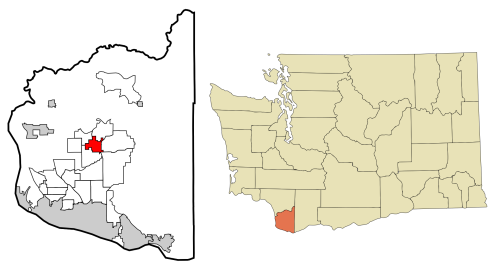
An investigation by Oregon Public Broadcasting (OPB) revealed that more than 30 Battle Ground properties have been purchased over the last six years by corporate entities controlled by Camden Spiller, CEO of Maddox Industrial Transformer. Maddox, which manufactures electrical transformers, is one of the town’s largest employers, and one of the fastest growing companies in the country.
Spurred by their success, OPB found that the Spillers have been on a spending spree: the town’s bar has been shuttered, a former convenience store is now a bakery (which prints Bible verses on its order buzzers), a cigar shop named for the preacher Charles Spurgeon has opened its doors, and construction is now underway on a convention center, as well as a 16,000-square-foot stone chapel for the First Presbyterian Church.
First Presbyterian belongs to the "Presbyterian Church in America (PCA)", an evangelical denomination distinct from the larger, more progressive "Presbyterian Church (USA)" that you are likely familiar with. The PCA holds to traditional Reformed theology – it ordains only men as pastors and takes socially conservative positions on sexuality, divorce, and abortion.
The Spiller family influence reaches city hall as well: the mayor works at Maddox, the deputy mayor is married to a Maddox employee, and another Maddox employee sits on the school board. The town’s new leaders, OPB reports, don’t seem at all reluctant to incorporate their religious beliefs into their decision making. In recent months, they have approved a National Day of Prayer and are considering (over one councilmember's objection that the body was withholding the legal advice it had received on the matter) incorporating a prayer before city council meetings.
On the other hand, the council voted to remove a proposed Pride Month proclamation in 2024, and similarly declined issuing both Pride and Transgender Day of Visibility proclamations this year.
Many of the controversial proclamations issued by the new council, which also include statements in support of ICE and decrying “Antifa-associated violence”, have been met by protest from community members.
Battle Ground's local paper, The Reflector had covered the proclamations and the backlash extensively. On June 10, the Spillers announced that they had also purchased The Reflector, saying it would go on hiatus as they undertook a six-month review of its future.
The mayor plans to issue another proclamation next week, in “recognition and celebration of Battle Ground’s traditional nuclear families”.
A Blessing for the City?
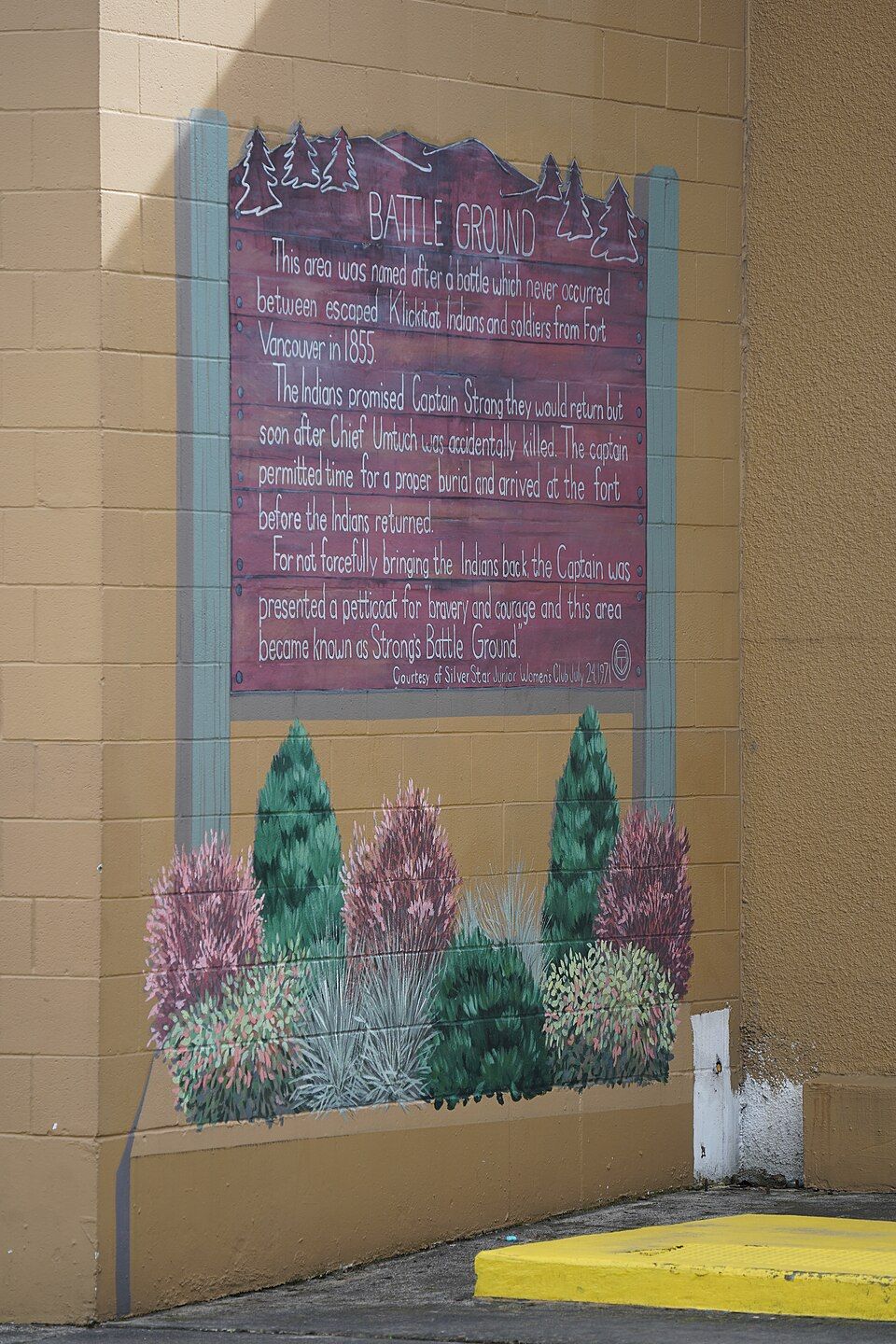
The family behind these investments describe their motives as stewardship. In a letter published in The Reflector prior to his purchase, Spiller rooted his family's spending in the prophet Jeremiah's command to “seek the peace and prosperity of the city to which I have carried you" for believers and nonbelievers alike.
And the investments are real: OPB notes the city manager has praised the Spillers' renovations across the community. They also sponsor the town's fireworks celebration, and Maddox, projected to surpass $1 billion in revenue by next year, employs 125 local people. While protests have been staged at city council meetings over some of the apparently Maddox-led new initiatives, several locals have also spoken out in support of the Spiller family and have argued that incorporation of Christianity into their various businesses is not a violation of any law.
Who Gets to Belong?
Spiller's new chapel will house Pastor C.R. Wiley's congregation, and that has some residents concerned. Wiley has professional ties to Doug Wilson, a controversial pastor based in Moscow, Idaho who has expressed his open desire that town, county, state, and even national governments should be controlled by Christians and run according to Christian values. Pastor Wiley, for his own part, has himself been quoted in favor of increasing the influence that Christianity has outside of the church, and has spoken about the critical importance of “governing unbelievers.”
Notably, some of the sharpest cautions have come from fellow Christians. A Mormon Battle Ground councilmember expressed their feelings to OPB that scripture specifically warns against seeking power itself, and that faith should not pursue dominance.
One resident, perhaps hoping to heal the rift, drafted a unity proclamation mentioning sexual orientations and gender identities. The mayor returned it with those phrases removed.
That edit lands hard on neighbors already watching Pride recognitions disappear while prayer advances. As resident Simon Graves told the council, "Your opinions should not determine my level of inclusion, recognition, or rights."
Another Christian resident who has worked to unwind the web of property records said she fears that the Spillers' version of the faith seems to treat its way as the only way. She hopes she is wrong.
A Question Older Than America
Battle Ground is one chapter in a long argument about faith and public power. Federal workers recently sued over what they called religious coercion in government emails, and faith leaders have debated whether devotion to political strength has crossed into idolatry. The question of who truly belongs in American public life has been asked of Muslims, Catholics, Jews, and atheists alike.
Can a community be revitalized by one faith without being closed to others? Where is the line between religious investment and religious control?
34 comments
-
 Leslie A. Hulberg Née Tomasura
Well, didn’t the Hare Krishna’s do that in VA? The Rashnishes in WA prior to this sect? How about the Mormons in Utah? However, I believe they must follow the Constitution of the United States if they want to continue living within its borders. Then again, I think, about what is happening in Israel. And how the Jewish people of Israel and America are there are treating the Muslim and Christian Palestinians (which is what Israel was before it became Israel). I think if you want a segregated society based on the doctrine of your faith, you must make sure to confine it to a town where only others of your faith reside. But there again, you can’t deny someone buying property who isn’t from the same faith because that leads to segregation on a much larger scale. I don’t think segregation is the answer in any way. I think inclusion is the only way that we as a society will thrive and become any better or safer. It seems the only way that harmony and respect for one another will evolve.
-
 Patricia Ann Gross
As a "best of all worlds," I agree with you, but realistically, when somebody is "different" they somehow get demonized by our society. A single Muslim living within a community like this would be ostracized, bullied, and heaven help them if they had children, and what those children would go through at school. Muslim, Jewish, and immigrant communities crop up like they have across the country primarily for the purpose of safety in numbers and the ability to obtain culturally needed items locally, particularly food and clothing.
-
-
 Rolando Couce
GOD WATCHES AND RECORDS EVERYTHIG WE CANT HIDE ANYTHING FROM HE SEES AND KNOWS ALL WE WILL BE JUDGED ONE DAY I HOPE IT WAS WORTH IT BECAUSE HELL AWAITS
-
 Rev. Dr. Robert Allan Roush
I'm not seeing where people can't elect who they want because of the preponderance of one particular view in owning things there. This type of Christian takeover is happening despite NOT having on eChristian family seemingly owning everything. I don't see any laws being violated either. I don't agree with their stances but I don't see that it's wrong either.
-
 Kevin Joseph Kervick
This is unfortunately a necessary counterweight to the harmful secular insurgencies that have taken over many other places.
-
 Steven Ferrell
Those complaining seem to have no issue with muslims taking over entire cities in America and trying to force islam and sharia on everyone.
-
 Michael Hunt
Which cities are you referring to?
-
-
 Janice L Service
They are giving Presbyterians a bad reputation.
-
 Jacqueline Louise vanderEnde
Absolutely!
-
 Dr Dennis Chevalier PhD, DDvin
ditto
-
-
 Michael G Doyle
Sounds like a wonderful place to live. Better than Seattle
-
 Ari Joseph Bertine
The problem is when it extends into government. They can own all the assets and business they want, but our government is not either of those things and cannot legally be controlled by anyone's faith.
-
 Bishop William Dusenberry, DD
To teach public school kids, that there is “freedom of religion” (or that the USA is a democracy) is a lie; there’s never any freedom of religion as long as it’s OK to religiously brainwash little kiddies; and the USA is a plutocracy — not a democracy. There’s only one provable God, and that provable God also happens to be Nature — Nature that always has been, and always will be, maker of all things, both visible and invisible. And, best of all, all that Nature expects — is respect and understanding (aka, knowledge).
-
 Cameron Lewis
GROWING UP IN WA, all I can say is battle ground has always been wierd...keep in mind there are many faith owned plots...and dont get me started on Doug Wilson and Moscow Idaho...
-
 James Riggle-Johnson
If any other religion were doing this, Christians would be up in arms. Religion does not belong in government.
-
 Michael Sharp
Ever been to Utah? The LDS church dominates many cities. In 1986 my family moved there. My family was trying to find a place to rent. It was very difficult because my parents both smoked and were obviously not LDS. My father, after being asked about his religion for the ? time from a prospective landlord, lit up a smoke and told him he was renting the house or suing him for discrimination. We moved in that same day and had no issues with the landlord after that.
-
James Riggle-Johnson
The guy shouldn't have asked anything about religion. I'm glad your dad stood up to him. For the record, I was fired from a bank in 1992 for being gay. I went to the Christmas party with my boyfriend and had the audacity to dance with him. And I was a VP. Lol
-
-
-
Dr Dennis Chevalier PhD, DDvin
knowledge of the Lord is wisdom.!
-
 Alexander Clarke
Which brand of the Lord?
-
Dr Dennis Chevalier PhD, DDvin
Jesus, God and the Holy Ghost (the trinity)
-
-
-
 Colleen McAllister
You can omit the religious references and you still have a bad situation where one rich family is buying.out a single small town to rule over it. This should not happen in America. Adding the religious component simply adds to the situation. This is wrong on so many levels. It is definitely not the Christian way.
-
 Rev. Miche'al Yosef Dixon
"incorporating a prayer before city council meetings." This statement strikes home, as two days ago I was in the county District Court for Jury Duty. We had to raise our right hand and swear before "God" the police office holding a King James Bible like a priest. the Judge Then after the "Oath" then she said, "Bow our heads for a prayer" and proceeded to pray to Jesus. I grew up in a world this is normal everyday routines. However, the above article is clear the family through its company has bought up most the properties of the town. Therefore the town has become by law a cult community and like it or not they have the right to control the people members of the cult, regardless the religious name given. Texas just had a similar problem with a Muslim only community, the government officials issued a ban, Blocking a community from being controlled by their religious beliefs. Any religion that professes to follow the Hebrew Scriptures whether it's the original without the so-called "New Testament" or includes the so-called "New Testament". The books by and about Moses give specific instructions to separate ourselves from the rest of the world. "Lest you be led astray to follow gods your fathers did not know.". So, if that's what they are doing they have a first Amendment right to do it. They will put pressure on the non Presbyterian citizens to convert or leave, buy their lands and become one big cult community. That's obvious.
-
 Lester
I must admit, this boils my blood. If I had jury duty, and they tried this, I would end up in jail...
-
 Joseph Grieco
May I ask where, EXACTLY, this took place? What County? What State? When someone swears an oath in court in the US, the court is required to provide the sacred text of their choice. Does an oath on a Bible mean anything to a Hindu, Muslim or Sikh? Would the Tanakh hold the same strength to a Presbyterian? By the way, in US Courts, no prayers to any deity are offered by any court clerk.
-
Patricia Ann Gross
What you are describing is legalized loan sharking, extortion, even slavery if the "oligarch" doesn't pay a fair wage and insists on using its housing. Putting it under a "religion" umbrella should never work, and most of the time hasn't. The Muslim and Jewish communities were doing it for safety, and the ability to consolodate the market for their religious requirements for clothing and food, making shopping more convenient. This has no "holy" objective from anything I can see.
-
-
 James Richard Munro
More power to the people. Sounds like a wonderful community to live in. Sounds like my Nabor hood.
-
 Susan Colmenares
Theocracy is an inate threat to minorities. Iran is a good example.
-
 Douglas Robert Spindler
Why pick on Iran when there's are theocracies in the US. Ever been to Utah or Lakewood, New Jersey?
-
Lester
She said Iran is an example. That's not "picking" on them.
-
-
Dr Dennis Chevalier PhD, DDvin
no its not. stop the lies and prove it!
-
 Rev. BH
Dr. Dennis, please clarify: who or what is is "no its not. stop the lies and prove it!" referring to?
-
Dr Dennis Chevalier PhD, DDvin
The "person" I was responding to was deleted. I do not control the post structure or order.
-
-
-
Bishop William Dusenberry, DD
There are two categories of people on this Earth— those who must worship something, and those who don’t.
And, for those who must worship something, worship the Sun, for the Sun, besides being provable (demonstrable), is the source of all life. If everyone were socialized to use Nature and God interchangeably, and/or to worship the Sun, what a wonderful world it would be. “No more man-created Gods to worship— above us only what we might be able to see with our most powerful telescopes.
-

Worship of the Sun didn’t work for the Egyptian people. The Sun is a star made out of gasses etc. ☀️ The sun is not a deity. How about water? Water is life & we can’t survive without it. Do we discount it? Worship it? Thus, all above positions are why we must have (or supposedly have), ‘Separation of Church and State’ in Our Constitution. Battleground WA has had its issues like any other small town. This however, sounds insidious & is very unconstitutional.