

Lauren Witzke had a bold prediction as drilling began at a boat-shaped formation in eastern Turkey last month.
“When we are done, university curriculums will need to be re-written, and Darwinism will be dismantled,” she wrote from the site. “This is the place where creation began anew.”
Witzke is the marketing and fundraising director for Noah’s Ark Scans, an organization helping investigate the Durupınar formation near Mount Ararat. She had just announced that researchers had begun drilling beneath the formation, looking for physical evidence that it could be the remains of the vessel described in Genesis.
Finding Noah’s Ark would certainly qualify as an extraordinary archaeological discovery.
But dismantling the theory of evolution?
Drilling Into “Noah’s Ark”
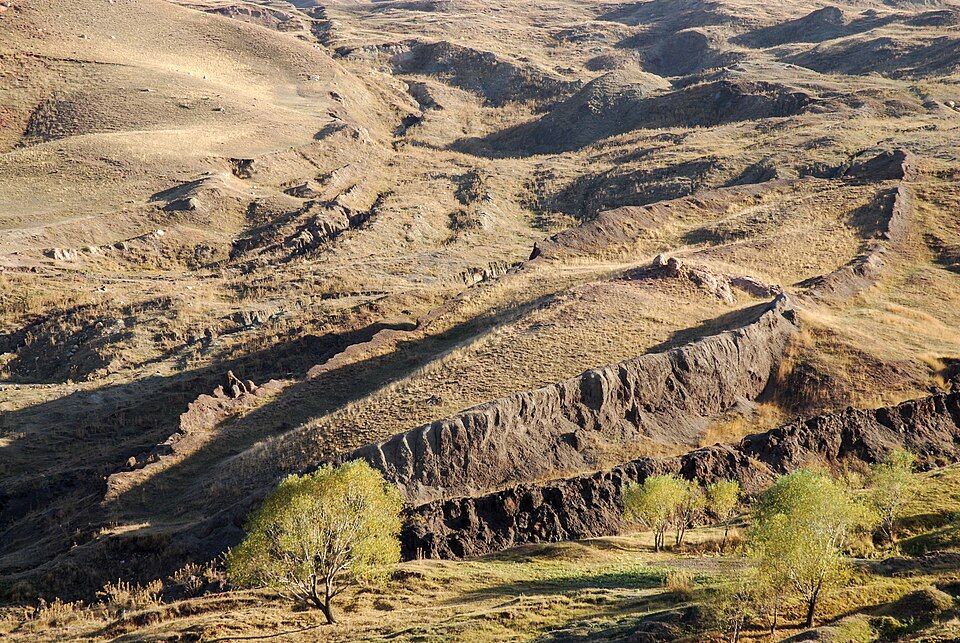
From above, Durupınar certainly looks the part.
The 515-foot formation was identified in aerial photographs by Turkish Army Captain İlhan Durupınar in 1959. Its long, pointed outline resembles a ship, and its length has been compared with the 300-cubit Ark described in Genesis.
That resemblance has attracted Ark hunters for decades, and now it is receiving its most extensive scientific examination yet.
Sivas Cumhuriyet University archaeologist Cenker Atila is directing an officially authorized project involving researchers from five countries. Between June and September, the team mapped the formation, used LiDAR and ground-penetrating radar to examine what lies beneath it, and (using a robotic drill) extracted 366 core samples from depths of about 3 to 49 feet. Those samples have been sent to a university laboratory for analysis, including tests for organic material and age. Full evaluation of the project is expected to continue into 2027.
Earlier radar surveys have produced what Noah’s Ark Scans describes as linear structures, right angles, and corridor-like features beneath the surface. Soil inside the formation has also shown substantially more organic material than soil outside it. The group's researchers want to know whether those anomalies have a natural geological explanation or could point to something constructed by humans.
What Does Noah Have to Do With Darwin?
At first glance, Noah’s Ark and Charles Darwin seem to belong in completely different conversations.
Darwin’s theory of evolution by natural selection concerns how populations of living organisms change over generations.
Noah’s Ark is a boat.
One might think that finding a boat wouldn't obviously tell us anything about DNA, common ancestry, or natural selection, but passionate Ark hunters have grand plans.
To understand Witzke’s claim, you have to look at the much larger role Noah’s Flood plays within Young-Earth Creationism.
Young-earth creationists generally interpret the opening chapters of Genesis as straightforward history. They believe God created the world relatively recently, that humans and all major forms of animal life were created separately, and that Noah survived a literal worldwide flood a little more than 4,000 years ago.
Under that interpretation, the Flood did considerably more than float the Ark. It reshaped the planet.
Answers in Genesis, perhaps the best-known young-earth creationist ministry, argues that much of the planet’s sedimentary rock and fossil record was produced rapidly during Noah’s Flood rather than accumulating across hundreds of millions of years. Fossil graveyards, layers of sediment and the ordering of fossils are interpreted through the catastrophe described in Genesis.
This approach is generally called “flood geology.”
Answers in Genesis currently dates the Flood to approximately 2348 B.C. It argues that the Earth is only about 6,000 years old and that humans and dinosaurs once shared the planet. Dinosaurs that survived the Flood did so aboard the Ark, creationists say, probably as younger and smaller animals rather than full-grown adults.
As for squeezing the rest of the animal kingdom inside, creationists argue that Noah didn't have to collect every species. Instead, they say he carried representatives of about 1,400 biblical “kinds,” roughly comparable to biological families, allowing lions, tigers and other cats to descend from one original cat "kind" after the Flood. Its researchers estimate that overall there may have been fewer than 6,700 individual animals aboard.
Even the extinction of the dinosaurs fits into this timeline. The Institute for Creation Research argues that dinosaurs came off the Ark, spread across the post-Flood world, lived among human beings, and eventually just died out. Some creationists have suggested that ancient stories about dragons preserve memories of those encounters.
It also explains why an Ark discovery could carry such enormous significance to some believers. If the Ark were found, they could see it not simply as an ancient ship, but as physical evidence for Noah, the Flood, a young Earth, and a biblical chronology that conflicts directly with modern geology and evolutionary history.
A Million-Dollar Search
People have been putting serious money behind that hope for a long time.
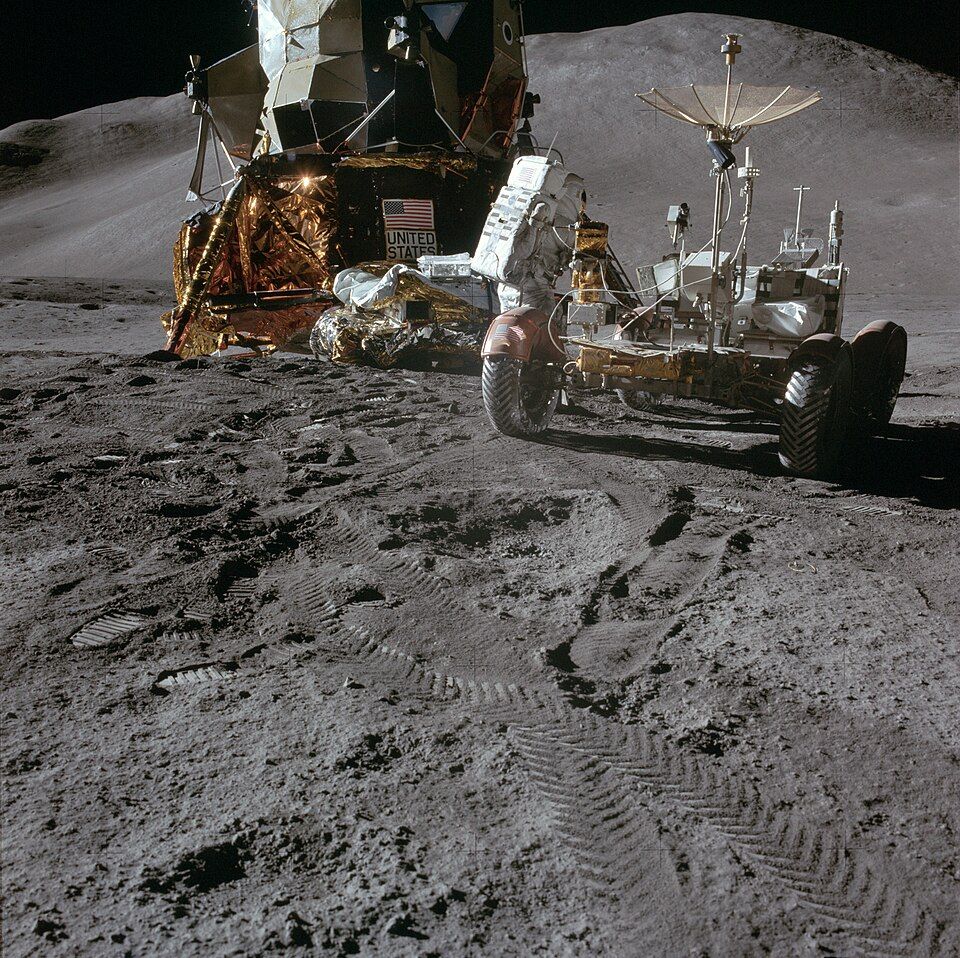
In 1982, former Apollo 15 astronaut James Irwin led an expedition to Mount Ararat financed by about $50,000 in private donations. Irwin had walked on the moon eleven years earlier and later founded an evangelical ministry. His Ark expedition ended without a discovery and with Irwin badly injured after a fall on the mountain.
He went back to look again. And not just once... he went back five more times.
By 1986, The Washington Post was reporting on Irwin’s planned sixth expedition. A heart attack two months earlier had not dissuaded him, even though his doctor had told him not to climb above 10,000 feet.
Irwin was far from alone. In 1983, the Institute for Creation Research reported that competing Ark expeditions had spent “well over a quarter of a million dollars” in a single summer, enough money that the organization considered abandoning expensive expeditions and simply offering a cash reward to anyone in Turkey who could produce the Ark.
The budgets kept growing. In 2004, Honolulu businessman Daniel McGivern announced plans to spend $900,000 on another expedition to Mount Ararat after satellite images appeared to show a suspicious object beneath the ice.
The current effort is not cheap either.
Noah’s Ark Scans says the 2026 season of radar surveys, drilling and laboratory analysis will ultimately cost well north of $1 million. Its current crowdfunding campaign has a $600,000 goal and had raised more than $121,000 as of this week. Donations help pay for geophysical equipment, drilling, travel, laboratory work and upgrades to a visitor center at the site. The organization also sells merchandise and offers tours.
After more than a century of reported sightings, expeditions, satellite photographs, soil tests and searches for it and other biblical relics, the Ark remains capable of opening wallets.
Noah's Ark, Inc.
Few people have done more to prove the Ark than Ken Ham, founder of Answers in Genesis. Ham also created Kentucky’s Ark Encounter, a ticketed attraction built around a 510-foot reconstruction of Noah’s Ark, as well as the nearby Creation Museum. Together, the attractions draw more than 1.5 million visitors a year, according to Answers in Genesis, which says attractions, educational materials and other earned revenue now account for roughly 80% of the ministry’s operating budget.
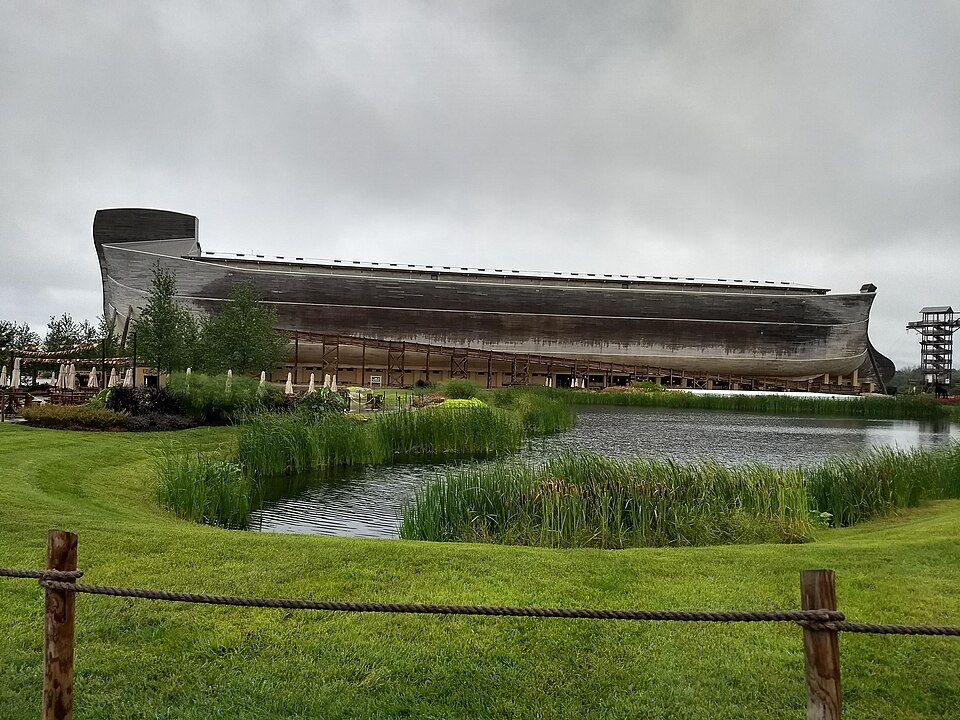
In other words, Noah’s Ark is not just theology for Ham: it's the center of an empire.
Ham put his theological position particularly starkly this year: “Noah’s flood was a global flood,” he wrote in April. “That means the water totally covered the entire globe.” To Ham, accepting millions of years of geological history requires Christians to reinterpret a Flood that Scripture presents as global.
But that interpretation is far from universal among Christians.
The Catholic Church, for example, does not see biological evolution or the Big Bang as incompatible with belief in God. Addressing the Pontifical Academy of Sciences in 2014, Pope Francis said that “evolution in nature does not conflict with the notion of Creation” and likewise rejected the idea that the Big Bang excludes a divine creator.
Christians can therefore agree that God created the universe while disagreeing profoundly about what Genesis is intended to tell us about geology and biology.
Creationists Aren’t Buying It Either
There is another problem with framing Durupınar as a coming showdown between believers and evolutionists.
Some of the site's most pointed critics are creationists themselves.
Just this week, the Institute for Creation Research weighed in on the new drilling and said there are “compelling reasons to cross it off the list of possible ark sites.” Its objections include the pointed, ship-like shape itself. ICR argues that the Hebrew word used in Genesis describes something closer to a box, not a vessel with pointed ends. Creationist researcher Don Patton, who says he has personally examined Durupınar repeatedly, calls it a “natural feldspar formation.”
Andrew Snelling is a geologist with Answers in Genesis. He believes Noah was real, the Ark was real, and the Flood covered the entire Earth. He would very much like archaeological confirmation of the biblical vessel.
He does not think they'll find it at Durupınar.
Snelling has argued for decades that the boat-shaped Turkish formation can be explained by ordinary geology. He says the radar anomalies promoted as possible decks, rooms, and corridors could instead reflect natural features in the rock, while differences in soil and organic content may have natural explanations as well.
More pointedly, he has accused Ark advocates of allowing their expectations to shape how they read the scans.
A peer-reviewed geological study reached a similar conclusion almost 30 years ago. Geologist Lorence Collins and David Fasold, who had previously promoted Durupınar as the Ark, examined alleged petrified wood, metal fittings, walls, and anchor stones. Their 1996 paper concluded that the formation was natural and that the supposed artifacts could be explained by local rocks and minerals.
Answers in Genesis still believes a worldwide Flood occurred. It simply argues that Christians should not use questionable evidence to prove it.
“When Christians use poor, easily disproven, or inconclusive evidence for the truth of God’s Word,” Ken Ham wrote last year, “it makes it easier for skeptics to dismiss everything that person has to say.”
What If It Isn’t the Ark?
There is one outcome the Durupınar drilling cannot produce: ending the search for Noah’s Ark.
Even many creationists who reject this site still believe the vessel exists. They can cross Durupınar off the list without crossing off Noah. Other Ark hunters have long argued that eyewitness reports point instead to a preserved wooden vessel much higher on Mount Ararat.
It is a pattern almost as old as the modern Ark hunt.
When James Irwin returned from his $50,000 expedition in 1982, he was candid about the results.
“We found no wood and we found no ark,” he said.
Then came the next sentence: “I’m not saying the ark is not there. It probably is.”
Irwin would spend the rest of his life going back.
Forty-four years later, researchers have radar, robotic drills, laboratory testing and a seven-figure research budget. The ship-shaped hill is still there. So is the conviction that somewhere in the mountains of eastern Turkey, physical proof of Genesis may still be waiting.
If the Ark is always somewhere else, what would it take to stop looking?
40 comments
-
 Rev Ned
A guy, Darren Bailey, is a Republican running for Governor in Illinois. He has a “Christian” school that teaches kids (k-12) that dinosaurs and humans were around at the same time. Soooo, if you see Darren, be nice and say, YABADABADOO!!!
-
 Bishop William Dusenberry, DD
When (if ever) the Christian God drowned everyone on Earth (including 859,432,756 pregnant people) this would mean that the Christian God can claim to be the greatest abortionist of all time; case closed!
-
 Shango MasterExorcist, D.D.
Proof will come from reading the brass plate: "I built this Ark. This ark is authentic. Love, Noah"
-
 Rev'd Andrew
The biblical story of the Flood is not unique.
The human story is anchored by a hauntingly similar memory: a great water rises, the old world perishes, and a handful of survivors rebuild on high ground.
In the ancient Mesopotamian sands, this memory took shape as the Epic of Gilgamesh. Here, the gods grow annoyed by the deafening noise of human civilization and decide to wipe the slate clean. One sympathetic deity whispers the secret to a man named Utnapishtim, who builds a giant, multi-decked vessel to hold his family and the seeds of all living things. After the storm flattens the earth, his boat grounds on a mountain, and he releases a dove, a swallow, and a raven to see if the world is ready for human life again.
This exact narrative arc mirrors the biblical account in Genesis, though the moral framework changes. Instead of complaining about noise, the Hebrew God looks down at a world corrupted by human violence and malice. He tasks Noah, a uniquely righteous man, with building an ark to preserve life through the deluge. Just like Utnapishtim, Noah waits out the downpour, tests the receding waters using a raven and a dove, and steps out onto dry mountain peaks to offer a sacrifice and receive a cosmic promise that the world will never be destroyed by water again.
Thousands of miles away, completely cut off from the politics and trade of the Middle East, the Indigenous peoples of Australia have carried their own flood stories for roughly sixty-five thousand years. In these traditions, catastrophic rising waters are rarely random weather events; they are the direct consequence of breaking sacred tribal laws or cosmic greed, like the famous story of Tiddalik the giant frog who drank all the world's fresh water. When the land is submerged, human survival depends on specific elders who are guided by ancestral spirits or animal totems to find refuge on high granite ridges and sacred hills, keeping the human line alive.
While it is easy to see how the Babylonian and biblical stories traded notes across shared borders, the Australian parallels demand a grander explanation. A culture isolated for sixty-five millennia does not independently stumble into the exact same structural beats of divine anger, chosen survivors, animal guides, and mountaintop sanctuaries by pure coincidence. These stories point to something profoundly ancient. They suggest that before the Great Migration, before humanity fractured and spread to the corners of the earth, we sat around the same fires listening to a single, foundational story. As we walked out into the unknown, we took that story with us, protecting it through thousands of generations by the sheer, mirroring power of human speech and memory.
-
 Kevin Joseph Kervick
One can also be a good Christian without adopting the other Jewish Fairy tales.
-
 Joseph Grieco
As someone who actually studied archaeology, it looks like a bronze age hill fort to me. Genesis was NOT written by Moses. At that time there was no actual Hebrew language. There was a "Proto-Hebrew" but it was just another Canaanite dialect. Genesis, like the rest of the Books of Moses, was compiled by a bunch of scribes in exile in Babylon trying to reconcile the differences between Northern Canaanite and Southern Canaanite religious practices and beliefs. Prior to that, there was NO evidence of a Narrative form of Hebrew. Then they encountered the story of "Utnapishtim and the Flood" and said "Hey, this sounds pretty good. Let's change this around a little and give him a family because just one guy with a bunch of animals really wouldn't work in repopulating the World. And regarding "the World", In the 6th Century BCE, Their entire concept of the world ended with the Mediterranean, the Caucuses, the African deserts, the southern Nile stretched, the Indian Ocean and the stretches of the Persian empire. How did those animals that we have a continuous fossil record for Australia and the Western Hemisphere get to the Ark and then get back after the flood. And finally, I offer in evidence the Platypus!
-
 Amber Fry
Why would one have to affect the other? What makes people think when all of creation was set that evolution couldn't be part of it?
-
 Billy Coley
A new version of repeatedly debunked conservative crap
-
 Sherrill White
The Ark is God's carved wooden box, belonging to Him, that was stolen BY SATAN OPRAH to hold GOD'S ZEUS GOD SPIRITS, which she removed from God's positive consciousness, pure and good, 13 Superhero children. She placed the Spirits into glass jars with lids and sealed them for future implantation into her followers to become Occult negative consciousness superheroes, impure and evil, 13 Superheroes.
This box holding God's 13 DIVINE SPIRITS OF HIS BELOVED CHILDREN is called The Ark of The Covenant which is Owned by God but Stolen by Occult Satan Oprah Bergoglio Winfrey and hidden inside the Islamic Black Box Kabbalah in Mecca where a black RADIATED Rock is embedded and the parishioners come by and touch it and become Radiated and Occult Witch, a demon that is a subject of Satan for Eternity. Parishioners pay homage to Occult Satan Oprah by participating in yearly pilgrimages to Mecca.
It is not a boat/ark.
-
-
 Daniel Todd Kamm
What lengths some people won't go to. Sad. That flood story is very old, much older than the "bible," or any of the people said to have lived through it... passed down through the twists and turns of many an ancient civilization in the area, its a story... no doubt there was some sort of weather or geological event people experienced and told stories about... why did it happen? And etc. And it's always interesting when modern people seek out whatever evidence they think they can find to justify this or that line of thinking. "We believe in Noah's Ark and that will undo Darwin." Such nonsense. If in fact there was an ark, and animals had been boarded, the animals known to the people living at the time had already evolved into what they were.LONG before human beings and in this story Noah or Nu or ...? And these same animals are pretty much the same now. I would suggest the difference lies in domestication and usefulness to the survival of people who were trying to..."survive." The rest is commentary. Darwin is not perfect... almost 200 years ago for goodness sake! But neither are those bible stories, and they are way older! I'll toss my hat into the ring with science anyday, rendering what is science to science and what is spiritual to the spiritual. Peace , Out...Reb tk Personally I like the story where the goddess Nu swore on her lapis necklace that the gods would never again destroy... and her necklace appeared in the air like a rainbow as a promise.
-
 Patti Anne Lisenbee
There's no way a ship the size of the 'ark' could carry two of each animal, the humans, and supplies for a year. What about all the droppings these animals produce? How could they deal with elephant droppings? How would they keep predators from killing other animals? Do you mean to say that penguins waddled all the way from where they live to get on the ark? Or kangaroos hopping in from Australia with emus on their backs? How did they ever make it without dropping dead from not having anything to eat? How would Noah handle a Honey Badger, one of the fiercest animals there is?
I remember when the movie Search for Noah's Ark came out many years ago. It was a total blow. I didn't believe a word of it. My mother, though, was enthralled, she being a right-wing Xian. They claimed to have found Noah's Ark then, so why bother searching for it at all, unless the movie was fake?
One last thing - the mixing of salt and fresh water. It would have killed off all plants on Earth. Thus, when Noah sent out a dove, it would not have found a leafy olive branch! All sorts of freshwater fish would have died off. The ground would be contaminated and unable to grow anything. That alone discredits the ark story.
Why didn't China have any writings about a worldwide flood? Or the Egyptians, for that matter? Or many Native American tribes? The bible was written about a very specific set of people in a very small area of the world. They didn't know about the world around them. So a flood would seem worldwide to them, when in fact it wasn't. They didn't know where stars went when the sun came up. They didn't know what the moon was. They didn't know where the sun went when it set. They had no science at all.
As for me, I believe in science. The world is billions of years old. Dinosaurs died off before humans rose. We know where the sun goes at night. We know the stars are still there during the day; we just can't see them. There was no worldwide flood. Besides, the people of that time believed the Earth was flat. So wouldn't the water have drained off the edges if there was an all-encompassing flood?
-
 Rev. Kev
No. They didn't find Noah's ark.
The entire story has too many problems to be taken as an account in reality.
There is way too much evidence in support of evolution to overturn it without multiple forms of solid evidence that can withstand arduous testing across multiple disciplines of science.
I would be more impressed if they took the millions of dollars they've spent on this silly idea and spent it on the poor, the elderly, the sick, and invested in economical housing and other nonprofits that actively assist those in need.
-
 Patricia Ann Gross
Rev. Kev,
I agree. Also, would it make an iota of difference in anybody's faith if it was found out true OR false? I doubt it.
-
-
 Donald G Magel
Only a christian nut would claim such a thing. Her world view is a bit limited. The Bible does not contradict Evolution and Evolution does not contradict the Bible.
-
 Leslie A. Hulberg Née Tomasura
If a ship of some kind is actually there, it only proves a random ship got there somehow. Perhaps there was a large river once running through the area or a Glacial movement that carried it from elsewhere to this spot. DNA supposedly can only really be traced back between 6-8 generations or roughly 500yrs conclusively. After that the only thing extracting DNA will tell you is perhaps species and a region it came from. Even with using the theory of 1400 “like” species, rather than two of every kind, one would have to show proof of more than just the average amount of species which normally could be found on a seagoing vessel of the time. Even more than if it were transporting a circus-like show of that age. I don’t think it would matter one way or the other to most people regarding creation vs evolution. I think the only headline that would matter would be the fact of the find. I doubt it would affect anyone’s view of creation over evolution.
-
 David Feldman
No one knows what a cubit was. Anything claimed is a guess. Noah's Ark Scams is a closer description than rewriting history to suite allegorical bible stories that defy reality. Efforts to take care of the world's poor make more biblical sense and have a greater value than even finding the ark. What do you say at the Pearly Gates, 'I found the ark and let people I could have helped suffer'. Good luck getting in.
-
 RDS140
It’s a fable. Does anyone actually believe you could load predators and prey on the same ark? And how big was this thing? 40 days 40 nights? Sure, ok
-
Patricia Ann Gross
You can read Genesis for the dimensions, or better, listen to Bill Cosby's stand-up of the story for a good laugh. I'm sure it's on YouTube somewhere.
-
-
 P. Keith Benefiel
bullscat!
-
 Michael Burton
Humans are a curious lot, and we have lots of curiosity. If we can't figure out a definitive, scientifically provable "solution" for something, we invent an answer. Over the eons, climate change has most likely caused floods and changes to the terrain. Survivors of these changes created an answer for the disasters they encountered; an Ark fits the bill.
-
 Roy S. Thorpe
Before books and education we had story tellers! To explain every day things and natural occurrences people made up and told stories! Sometimes stories had religion and morals mixed in! The old testament is a collection of Hebrew stories, sayings,and laws! Men who claimed to be God's spokesmen said this was the answer to everything! Have a problem? Check this book and interpret an answer right or wrong! Men still go there! Then a special person came along that did have the right answers and a way to live your best possible life! His story in the New testament is the answer! Please read it,understand it, and try to live it!
-
 Judi Carlton
God cannot lie and every word in the original Bible is God breathed as Timothy tells us. I wait patiently for the Lord JESUS to come again as He promised to prove His Word!
-
Donald G Magel
WOW!
-
Patricia Ann Gross
The question then is: what is "the original" Bible? Dead Sea Scrolls? Even the same stories are described differently there. The bigger question, when "the original" Bible was created, how did the members of the Council of Nicaea decide which "script" was "the original?" The books under consideration were at least ten times the number that made the final cut. There are also multiple copies of Paul's letters that don't exactly match, but were copied by hand by scribes presumably to save them for prosterity.
-
-
 Ari Joseph Bertine
I don't see the harm in people looking for evidence of artifacts supporting the history behind mythology, because it does lead to discovery. I do see the harm in pre-interpreting archaeological finds mythologically, however. Religious stories are not meant to be taken literally--they are metaphors representing spiritual lessons. To try to force science into a mold that fits a fictional history is not a healthy approach for either the scientist or the theologian. We can appreciate history as revealed by and analyzed by scientific method and we can also appreciate religious lore as told by whatever tradition is used to pass it along, and we don't need either to reinforce the other. Trying to do that just cheapens both.
-
 Reverend Paula Copp
I believe in science. I don’t believe in some fable about a ship which could carry a pair of every animal on the face of the planet… but, most of all, frankly, my dear…I don’t give a damn.
-
Rev Ned
In Illinois we have a Republican running for governor who has a “Christian” K-12 school, that teaches kids that dinosaurs and humans coexisted on Earth. As if, “The Flintstones” was based on real occurances.
-
 ServantOfJudgement
Dinosaurs never went fully extinct. There are still billions of them today. We all see them every day.
-
-
 Colleen McAllister
My faith does not hinge on any proof. Faith is believing without seeing. I do not need to see the actual Ark. I do not need scientific proof that the Shroud is real. I know that Christ was/is/will ever be real and my Saviour. Nothing else is needed.
-
 Bruce Kendall
Even if it is a boat, how will anyone prove it was Noah's boat?
Noah was an ancient Israelite, an ancestor of today's Hebrews and Jews, Yahweh's chosen people.
As I currently understand it, Yahweh is not a Christian god.
Yes, Jesus of Nazareth walked the earth in a human form as an ancient Israelite. The difference is that he carried within himself the essence of his father, Jesus Christ.
The Old Testament is all about the ancient Israelites. Not Christians. Otherwise, Christians would have to obey the 613 laws Yahweh originally gave the ancient Israelites.
As I currently understand it (not verified by a competent authority), today's Hebrews and Jews are still waiting for the king Yahweh promised them. I believe there is more to this than I know.
And finding Noah's boat would give them something to celebrate.
I accepted Jesus Christ as my Lord, Savior, and God as a child based on Sunday School Stories more than 60 years ago. Considering my interest in history, in recent years I have started reading about Christian History, including the known history of the various Bibles. And I have a lot to learn. But I have not lost the faith I found more than six decades ago, as a child.
-
ServantOfJudgement
Bruch, as the tale goes, Noah and his family are the remnant of all humans, you me and the Israelites.
The Bible claims that humanity in its entirety was essentially a murderous ghetto with no hope of ever changing. Imagine a 5000 strong pack of feral pit bulls that only kill. What can ya do with that?
-
 Keith D
Bruce, I liked your question. It's pertinent. So let's say it really is a boat. Whose? Can we ever really determine?
I also like that in a way, you pointed up something important to spiritual growth, which is not to let 'proofs' like Noah's Ark be the lynchpin of faith.
In the last year, I've been nearly obsessed with archeological and historical materials about particularly Levantine and Mediterranean groups. I don't really know why, but I feel driven. I consider it a guidance, and I don't know--I have some ideas--what the use of it will be. It doesn't affect my sense of the Divine, but it sure does impact my sense of humans, 'thinking.' :)
-
-
-
 Kathryn Diane Taft
Wow, that Witzke lady is something else isn't she? I can't believe she actually said that! There is proof that a global flood did in fact occur, and that there was a man on a boat with many animals. But: A flood that covered the ENTIRE globe? BS. Not possible. What? I challenge that woman to explain how Noah with only a wife, 3 sons and 1 girl repopulated the earth with 150 different races of people. That's just dumb. What does it say on the cover of EVERY Bible? Version. This version, that version, and the first version, the King James version. I repeat; THE KING JAMES VERSION. Clearly that says that it is most definitely NOT the word of God, it is the word of KING JAMES. Yes, Noah was real. Yes, there was a huge flood. Yes, creationism and evolution are both correct, it's like this: God=perfection. Everything, everywhere, all the time. Just cuz James said it was 7 days doesn't mean anything. Also, i don't believe the flood was God's doing at all. Meteor smash. Dinos dead. Ice age. Ice melts. Huge flood happens. Continents seperate. Ockams freaking razor
-
Patricia Ann Gross
Kathryn,
I like the way you put this. The flood, especially. The people who first chronicled "The Flood," thought the earth was flat and only the size of horizon to horizon, so a flood that covered that much territory would be considered "the whole earth." There are fish fossils in the Rocky Mountains, way high above sea level, that some have considered came from ground lakes that got pushed up by shifts in the techtonic plates and volcanic activity which is rampant in that area. It is too far away from the Middle East to be part of Noah's story anyway. In those ancient times, North America did not exist, at least in the minds of the early biblical scribes.
-
-
 Robert Gagnon
Well I suppose carbon dating and DNA mapping are all fake. Even though that was used on the shroud of Turin as proof until a negative finding. I’d read there was a great flood after the glaciers melted and most of Canada was covered by a Great Lake, whose wall suddenly collapsed causing the oceans to rise and weather to change. That could be the memory of a great flood. Cyprus was destroyed by a tidal wave when a nearby island thought to be Atlantis erupted like Krakatoa, compressing bones, buildings, and vegetation into one layer. Let’s not forget 10k old civilisations that have been discovered, Denisovans were what, a test batch of humans? Trying to make the world match an ideology is pretty much spitting into the wind. It’s possible some nut job built a boat on a mountain top and thought himself a genius when a common flood drowned everyone in the valley below. The boat would serve as a fortress stocked with food while locals starved outside its safety. Always remember, it’s the victor that tells the story.
-
 John E Karlin
People overlook one simple but very obvious fact. A ship large enough to contain all animal life on earth with enough food and water for all of them, would have to be larger than the entire continent of North America.
-
 Sir Lionheart
I like your thought structure that the Denisovans were possibly a test batch of humans. Homo Erectus were possibly the result of and even earlier test batch when other species lost out not being able to stand up properly on two legs.
On the plus side, at least our genetic male cousins of the Ape family such as Gorillas, Monkeys, Chimpanzees etc, didn’t have to go through the circumcision process even though we all have similar genitals. I guess we sadly drew the short straw there. 🤭
🦁❤️
-
-
ServantOfJudgement
I have serious doubts the land formation is man made or was an object. Broader imagery from the region shows similar formations though not in the shape of a boat.
If this turns out to be an actual man made object/structure, it will not affect one single person's opinion regarding the Bible. The atheist will explain it away and the believer never needed the find in the first place.
It's good they're doing this though, unanswered questions are the absolute worst thing for the curious.
-
Sir Lionheart
I was once an amateur archaeologist and excavated many inhumations, some with 2 sets of feet, (not an “Ark-ecologist” however 🤭), back in England during the late 70’s, and learned to not postulate assumptions as fact. But it’s a fun story nonetheless.
🦁❤️

Before I retired, I had a young lady in my class who said that she didn’t believe in dinosaurs…I still wonder about her sometimes; I wonder if she’s found reality yet.