

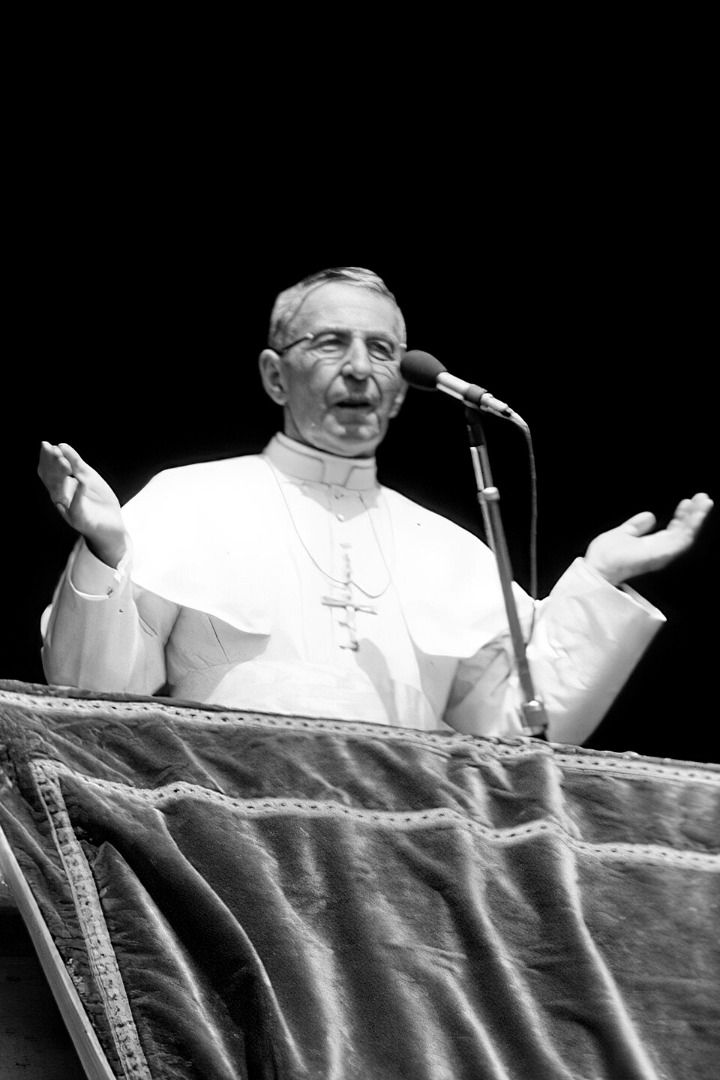
On the morning of September 29, 1978, a nun named Sister Vincenza Taffarel noticed something unusual. Pope John Paul I still hadn't collected the coffee she left outside his bedroom each morning.
She knocked on his door. No answer.
Inside, she discovered the pope lying dead in his bed, his reading lamp still illuminated. Another nun, Sister Margherita Marin, rushed in to help. Only hours earlier, the pope had smiled and told them, "Until tomorrow, sisters; if the Lord wills, let us celebrate Mass together."
A few hours later, the Vatican announced that John Paul I had died of a heart attack after just 33 days as pope. But the official account contained a peculiar detail: Vatican officials claimed his personal secretary had discovered the body. The nuns were ordered not to reveal what had actually happened.
That seemingly minor deception would help fuel decades of speculation that the pope had been murdered.
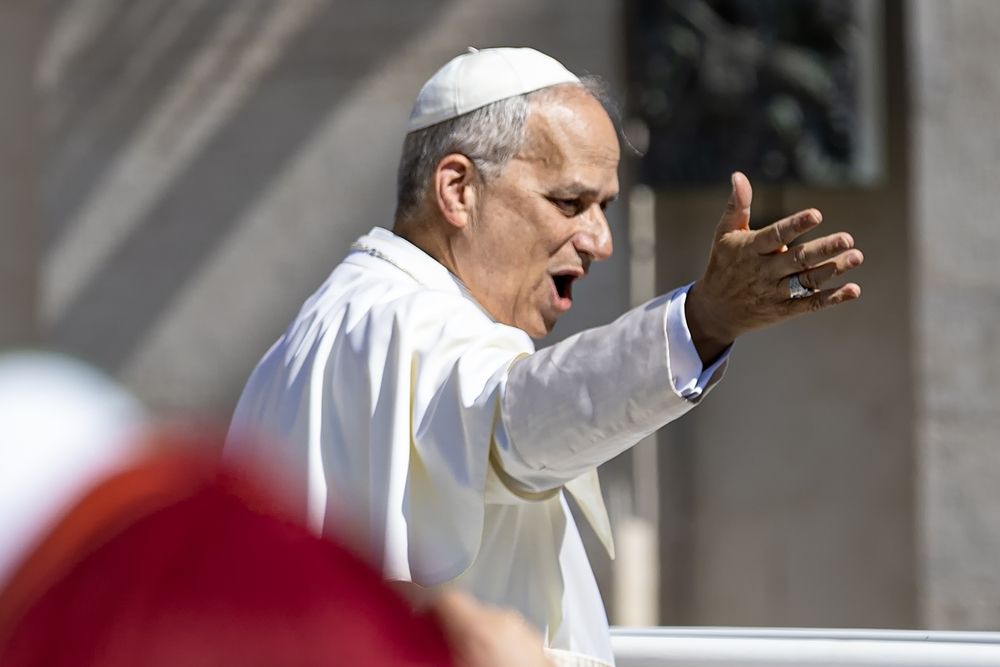
Nearly half a century later, Pope Leo XIV has taken a considerably different approach to his health.
On October 11, the 71-year-old pontiff (the first American to hold the office) publicly announced that doctors had discovered a small nodule in his lung and recommended surgery. Two days later, surgeons removed the lower lobe of his right lung, confirming that the growth was adenocarcinoma, a form of lung cancer.
The Vatican has since released regular medical updates. As of October 16, Leo's recovery is progressing well. He has resumed some official duties and can carry out normal daily activities independently. Doctors are still determining whether additional cancer treatment will be necessary.
In the Chicago area, where Leo grew up, worshippers gathered to pray for his recovery. Gail Spreen, whose husband died of cancer, offered a sobering observation: "If the pope can have cancer, anybody can."
Leo's candor contrasts with a Vatican tradition of concealing papal illnesses. Yet the Church still lacks clear rules for what happens when a pope becomes incapable of governing.
Did the Vatican Murder a Pope?
No autopsy was performed on John Paul I, although autopsies weren't customary for popes. Rumors of poisoning spread almost immediately, and the Vatican's misleading account of his death did little to dispel them.
In 1984, British journalist David Yallop published In God's Name, alleging that the pope had been poisoned before he could expose corruption inside the Vatican Bank. He identified six men who, he claimed, "had a great deal to fear if the papacy of John Paul I continued."
Among those accused in Yallop's theory were Archbishop Paul Marcinkus, who headed the Vatican Bank, and Italian financier Roberto Calvi. The theory also implicated Propaganda Due, or P2, a secretive Masonic lodge whose influence over Italian public life became the subject of a genuine political scandal.
Then there was Calvi's fate. Nicknamed "God's banker" for his Vatican connections, he was found hanging beneath London's Blackfriars Bridge in 1982, with bricks stuffed into his pockets. Authorities initially ruled his death a suicide, but it was later investigated as murder. No one was ever convicted.
In 2017, journalist Stefania Falasca published an investigation drawing on previously unavailable medical records, eyewitness accounts, and Vatican archives. It supported a natural cause of death, including evidence that John Paul I had experienced chest pain shortly beforehand. The absence of an autopsy leaves some medical uncertainty, but investigators uncovered no credible evidence of assassination.
For Sister Margherita, the rumors overshadowed the memory of a kind man whose final goodbye she still remembered decades later. When she spoke publicly in 2022, she even suggested that the devil had played a part in spreading the speculation.
A Papal Physician With a Price List
If John Paul I's death inspired a murder mystery, the death of Pius XII in 1958 produced a scandal stranger than fiction.
Pius's personal physician, Riccardo Galeazzi-Lisi, arranged for photographs of the dying pontiff to be taken and kept detailed notes about his final hours. Afterward, he offered them to newspapers... for a price. According to TIME, his grim menu included $13,320 for an article about life with the pope and $3,200 for photographs of the pontiff on his deathbed.
And the photographs weren't the worst of it. Galeazzi-Lisi helped oversee an experimental embalming process involving herbs and resins, which he claimed resembled the treatment of Jesus's body. It failed, and Pius's remains began visibly decomposing during public viewing. The unseasonably warm weather reportedly accelerated his decomposition, causing his body to swell grotesquely from internal gases. Some accounts even describe his nose and fingers falling off. The public viewing was subsequently ended early.
The Vatican expelled Galeazzi-Lisi, and Rome's medical association struck him from its membership.
But secrecy had become a habit even when no unscrupulous doctor was involved. In May 1963, with John XXIII gravely ill, Vatican officials finally acknowledged an "abnormal growth" in his stomach, but stopped short of ever publicly calling it cancer. The Vatican also waited until 2003 to acknowledge John Paul II's Parkinson's disease, despite years of increasingly visible symptoms.
As religious historian Christopher Bellitto told Reuters in 2025, the old Vatican saying was that a pope was never sick until he was dead.
As St. Peter's successor, a pope's declining health could prompt political maneuvering among cardinals. But secrecy often fed the very rumors the Vatican hoped to prevent.
Two Popes, One Vatican
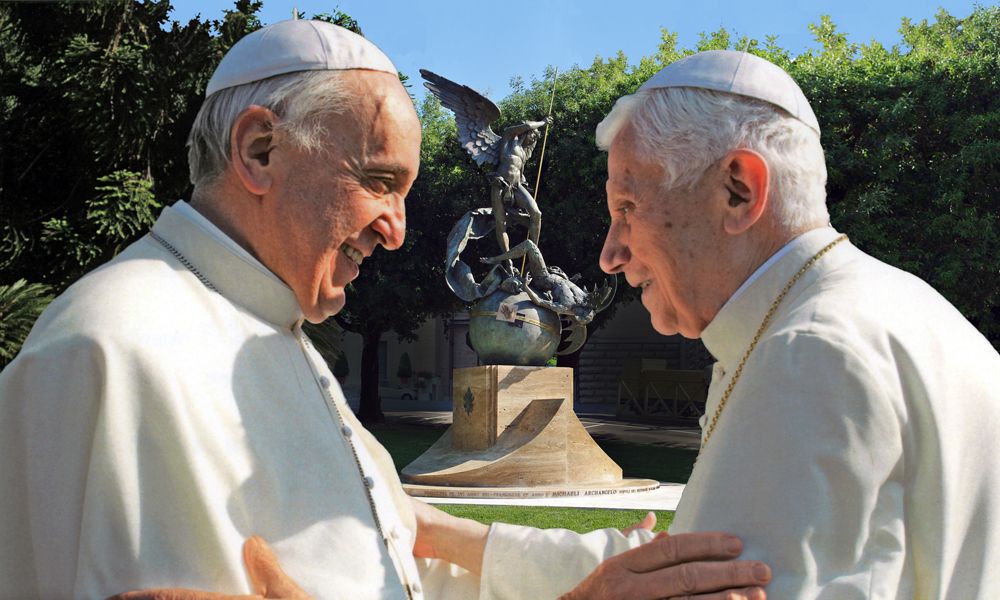
In February 2013, Pope Benedict XVI stunned the Catholic world by announcing his resignation. He said his advancing age had left him without the strength necessary to lead the Church. No pope had voluntarily relinquished the office in nearly 600 years.
What happened afterward was arguably even stranger. Benedict retained his papal name, adopted the title "pope emeritus," continued wearing white, and moved into a monastery within Vatican City.
Francis now shared the Vatican with another man in papal white, although only Francis held governing authority.
Some Catholics alleged that Benedict had been forced out or that flaws in his resignation left him the legitimate pope, making Francis an impostor. The theories found an audience among conservative critics of Francis. Benedict dismissed them as "simply absurd."
Nevertheless, the shadow-pope fears occasionally erupted into real controversy. For example, in 2020, Benedict's name appeared as co-author of a book defending priestly celibacy while Francis was openly considering whether some married men could become priests. Benedict's secretary later said he hadn't authorized the co-author credit, and his name was ultimately removed.
Benedict died in 2022, but his resignation left another question unresolved: What happens when a pope can no longer lead but is unable to resign?
The Pope Who Was Supposedly Already Dead
During Pope Francis's hospitalization for double pneumonia in February and March 2025, the Vatican released unusually detailed medical updates. Conspiracy theories spread anyway.
Online accounts claimed Francis had already died and that the Vatican was hiding his death. Fabricated images circulated, supposedly showing him gravely ill. Two Italian TikTok personalities even went to Rome's Gemelli Hospital to investigate the alleged cover-up. Both ended up in the wrong ward. One took the absence of heavy security as evidence that the pope wasn't there at all.
Eventually, Francis released an audio message from his hospital room thanking Catholics for their prayers. He left the hospital in March and died the following month, on April 21.
What Happens if Pope Leo Falls Into a Coma?
Here's a surprising fact about the Catholic Church: it has detailed procedures for replacing a dead pope (have you seen Conclave? It's fantastic!), but no clear process for replacing one who is alive and permanently incapacitated.
A pope can resign freely under canon law. But what if he suffers a stroke or falls into a coma first?
Technically, he's still the pope.
The Vatican's secretary of state, Cardinal Pietro Parolin, could keep ordinary administrative business moving. Cardinal Kevin Farrell, the camerlengo, has special responsibilities when the papacy is vacant, not when the pope is ill. Neither could simply assume the pope's powers, and the College of Cardinals couldn't vote to replace him.
The pope is also Vatican City's absolute monarch, effectively an elected king ruling nearly 1,000 residents. His incapacity would pose a governmental problem, too.
Unlike the United States, which can temporarily transfer presidential authority during medical procedures, the Church has no comparable process. An incapacitated pope could leave major decisions in limbo.
Some popes have tried to privately head off potential problems. In 1965, Paul VI secretly signed a resignation letter to be used if he became unable to govern. Francis did likewise. Neither letter was used, and canon lawyers dispute whether such documents would be valid once a pope became unconscious.
In 2021, canon lawyers proposed medical evaluations and a way for cardinals to assume some responsibilities during a "totally impeded" papacy. The Vatican hasn't adopted their proposal. Canon 1404 states: "The First See is judged by no one." The canon concerns judicial authority, reflecting the pope's independence from any higher earthly authority.
Allowing a group of cardinals to declare a pope incapacitated might prevent a leadership crisis. But it could also create opportunities for factions within the Vatican to challenge a pope they disagreed with, particularly if his medical condition were disputed.
In 2022, Cardinal Gianfranco Ghirlanda, a prominent Vatican canon lawyer, acknowledged the problem. Speaking to an Italian newspaper, he asked: "The problem is, who declares that the pope is in a situation where he cannot govern?"
Leo is recovering well, but his diagnosis has brought an old dilemma into focus:
Does placing ultimate authority in one spiritual leader protect a Church's unity, or leave its future dangerously dependent on a single human being?
4 comments
-
 Dr Dennis Chevalier PhD, DDvin
The tones of the article has left me thinking that attempted assassination is being actively contemplated towards the Pope according to the story writer; Is that your intention here?
-
 Sandi Davenport-Geddie
Thank you for enlightening me on the Vatican Canon laws. I had no idea on all of this, Rev.Sandi Davenport-Geddie .
-
 Najah P Tamargo
Najah Tamargo-USA
Maybe the Vatican needs to update their cannon laws. It is long over due!!!

I'm no stranger to cancer as it runs on both my sides of my family Mum had it and passed in 1998 and ky dad passed in 2002 I have had 2 lymphoma and a brain tumour My best friend of 30 years had lung cancer through working on cars that had Asbestos in its parts anyone can have a type of cancer even The Pope as it does not care who he/she is no-one is immune