

Last week, a Tennessee congressman posted a blunt declaration on social media: "Muslims don't belong in American Society. Pluralism is a lie."
The message provoked outrage from across the ideological spectrum, prompting House Speaker Mike Johnson to distance himself from the comments. However, Johnson still suggested the underlying sentiment resonated with many Americans.
“There’s a lot of energy in the country and a lot of popular sentiment that the demand to impose Sharia law in America is a serious problem,” Johnson said.
While the United States has a strong tradition of freedom – including freedom of worship – there are clearly those who feel that not all religions should enjoy equal treatment. Apparently, some would even prefer that Muslims be exiled entirely. As of this publishing, over 50,000 people had "liked" the congressman's tweet.
Such extreme declarations merit a short history lesson. For example, when and how did Muslims come to America in the first place?
The First American Muslims Didn't Choose to Come Here
Did you know: many of the first Muslims on American soil did not come here by choice, they were enslaved.
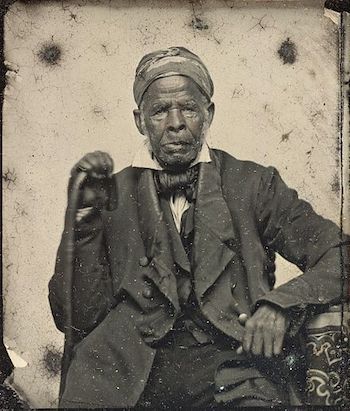
Scholars estimate that somewhere between 15 and 30 percent of the Africans brought to North America during the trans-Atlantic slave trade were Muslim. They were well educated and came from West African nations with deep Islamic traditions: places like Senegal, Gambia, Guinea, and Mali.
A few of their stories have survived. Omar ibn Said was an educated Muslim scholar from present-day Senegal who was enslaved in the early 19th century and eventually settled in North Carolina. Said later wrote an autobiography in Arabic detailing his experiences.
Job Ben Solomon, enslaved in Maryland in the 1730s, reportedly memorized the entire Quran from memory and was eventually able to return to Africa after his story attracted the attention of British abolitionists.
Islam Helps Shape America
The first significant wave of voluntary Muslim immigration began in the late 19th century, primarily from Greater Syria (modern-day Syria, Lebanon, and Jordan).
Many were entrepreneurs and merchants who spread across the country, eventually saving enough to settle down and build communities. In 1922, their descendants built the oldest existing mosque structure in the United States, the Al-Sadiq Mosque in Chicago.
The civil rights movement added a new dimension to the story. The Nation of Islam was founded – a distinctly American movement blending Islamic principles with a direct response to the racism and oppression faced by black Americans.
Popular figures like Malcolm X and Muhammad Ali embraced these ideas, further cementing Islam in the mainstream consciousness.
The Long Shadow of Terrorism
The attacks on September 11, 2001 were a clear turning point. They prompted a wave of anti-Muslim sentiment that touched virtually every Muslim American in the country, regardless of background or how long their families had been here.
Then-president Bush sought to improve relations, telling his fellow Americans that “Islam is peace” and urging them to keep some perspective: "No one should be treated unkindly because of the colour of their skin or the content of their creed. No one should be unfairly judged by appearance or ethnic background, or religious faith.”
Despite those efforts, mosques were vandalized, individuals were attacked, and communities were placed under surveillance.
That anxiety has never fully dissipated. If anything, it’s gotten worse in recent years, as the reaction to Zohran Mamdani’s election showed.
Anti-Islamic fears is also popping up in local zoning disputes – like the Oklahoma town that rejected a mosque in its community, and in school controversies like the investigation prompted by Quran and hijab handouts at a Texas high school.
Is “Sharia” Coming for You?
Because much of the anti-Muslim feeling stems from fears about “Sharia law,” this phrase is worth a quick explainer.
Sharia means "the path" or "the way" in Arabic. It refers to the ethical and moral framework guiding how Muslims should live, covering areas like prayer, fasting, business ethics, and personal conduct. It functions as a religious guide for daily life, similar to halakha in Judaism or the moral teachings of the Catholic Church.
Genuine tensions do exist between some interpretations of Islamic teachings and traditional Western freedoms.
In some Muslim-majority countries, apostasy (leaving the faith) and blasphemy carry severe legal penalties, a concept fundamentally at odds with American religious freedom. And women being expected to submit to their husbands obviously runs antithetical to advancements in women’s rights.
But “Sharia” is interpreted in many different ways. Just because certain conservative Islamic countries impose a draconian law, that doesn’t mean the same interpretation will be applied in America.
Does Islam Belong in America?
Since Muslims have existed here as long as America has been a thing, many people will answer unequivocally: yes.
But religious and cultural tensions clearly still exist, and some critics of Islam aren’t shy about sharing their view that Muslims should leave.
Muslim allies, however, point out that such views are antithetical to the American project, which has quite remarkably brought people of many faiths and cultures together (if imperfectly) under one roof.
What do you make of the controversy? Is “Sharia” law a legitimate threat, or a convenient bogeyman?
Your Premium trial has ended
123 comments
-
 Jannetje Eleanore Van Went
When it's called prejudice I believe the answer is clear, the question should be put more auspiciously...Are the rich white industrial leaders of companies like Laden Construction and other large industries and companies in the Middle East and Muslim Communities going to continue to be Christian and support a faith that is making them look dangerous to the Muslim communities?...I am not sure if fanaticism actually does research or reads before they make claims for the rest of their communities...there are Christians in every country in the world and not one faith has pressured them out with fanaticism blown out of proportion by government mismanagement and influence...only the Christian are allowing their memberships to be used and abused this way. I said it before Christians have an open faith policy anyone can put their hand up and claim Christian, or love for Jesus...every other faith has process to prove commitment and honor the belief of the faith...Christians biggest position in their faith is love thy neighbor...they neighbor is now Muslim the rule doesn't change for ones prejudice, the world changed to challenge your belief...those who use fanaticism to promote religion are not up to this challenge and do not support the Christian faith.....when will Christians clean up their unruly memberships?
-
 Brien
Brien
Give me your tired, your poor, Your huddled masses yearning to breathe free, The wretched refuse of your teeming shore. Send these, the homeless, tempest-tost to me, I lift my lamp beside the golden door!".
Just a reminder of the words that are proclaimed to the world. A reminder of what BUILT THIS COUNTRY. Note that there is NO mention of beliefs of any kind.
If you live your life judging the world by the actions of a few then you diminish us all.
Fear and ignorance is the battle we must all fight. What is at stake is our freedom. Peace ✌️
-
 Cam Kirmser
The moslems I know are very nice people; they are very good friends and they have taken great pains to assimilate into US society. But, they are from Bangladesh, not the Middle East, where I believe their nomadic roots and the traditions developed from that, make them entirely different.
However, Islam, the quasi-religion, I believe should not be allowed a foothold in the US. It is not just a religion, it is also a system of government and rigid laws. Further, the United States is a part of Western Civilization; Islam is not and it has no place within it. I see no conflict in barring Islam any place in the US. Moslems, as individuals, I have no problem with, as long as they assimilate. If they refuse to do so, they need to leave.
Of course, I apply that protocol to any immigrant; assimilate or leave, regardless of your origin. If you do not wish to become an American, then you have no business coming here.
-
 Max Peter Grilly
How small is your world? Based on your misguided view of the Islamic faith, I'm guessing your "great friends" are not really "moslem", but merely immigrants from a Muslim-majority country who felt compelled to convert to Christianity in order to feel safe among neighbors such as yourself. That is not being a good friend or a good Christian. Both require acceptance, kindness, and a genuine curiosity of others. It seems you lack these qualities or else you would not be so quick to insult the belief system of a billion people. Being an American truly means having the freedom to worship however you like, or to be free from religious influence altogether. Suggesting anything else goes against our founding principles.
-
Cam Kirmser
My world is about 25,000 miles, the same as yours.
Nah, they're not moslem; they only observe Ramadan, refuse to eat pork, pray accordingly and the woman never displays her arms or legs. They worship as they please, according to Islam. I guess they were lying to me.
They chose to assimilate because they came here to become US citizens and believed it was the right thing to do. Just as I would do, if I chose to move to another country and take citizenship there.
You may want to guess again, Max.
-
-
-
 Stephen R Smith
Perhaps we should read the sermon on the mount. Christians and Moslems both. Also a number of moslems have only spot read the Koran,but really liked the 87 page introduction,which in itself tells quite a story. But when monothism is stressed over and over against polythiest christians ( Since they follow the trinity) Therein lies the problemm.
-
 Joseph Grieco
Muslims have been here since before we were a country. The first country that recognized us as an independent nation was a Muslim country. Washington and Jefferson promised they have a place here. People like Congressmen Ogles and Fine are hate mongers. Ogles wants his version of Evangelical Christianity to be the only religion in the country, while Fine doesn't care as long as Jewish people are free to worship.
-
 Bridget Kielas-Fecyk
Yes, they belong here the same way Christians and Catholics do. The vilifying of the Muslim community in the way the politicians have been doing is not unlike how Hitler and his Cohorts taught the German nation to hate the Jewish population, spreading lies and vile rhetoric about them. And we ALL knew what happened when they were whipped up to full steam of hate. People can deny it all they want, but Holocaust happened.
Now these hate-mongers are screaming for a second Holocaust, but now targeting their new boogeymen, the Muslim community. People can scream about "Murderous muslims" all they want and scream of how "Islam is evil" and all the other B.S. they want. But this is the "Pitbull Effect" in my book.
If a Christian / Catholic group massacres a bunch of people which happens WAY too often, with some of the highest rpe, abuse, and murder of children being from that group, esp. young women, here in the USA, it's barely whispered about and those that do it often are protected.
If someone who's Islamic does it, it's splashed ALL over the newspapers and blared in headlines and a bunch of talking heads scream about it from the rooftops.
The Pitbull Effect is this:
A mutt - not a pittie, attacks someone and mauls them badly, potentially killing them. It barely warrants a blurb in any newspaper or more than a brief 4 minute mention on the news before people move on. Dog is put down, and people basically put it out of their minds.
BUT, if a pitbull, or a dog that looks like one, or is a mix with one, attacks and mauls an individual, potentially killing them, it's screamed all over the headlines. Talking heads on videos shriek about "vicious pitbulls" and haters come out of the woodwork screaming how the animals are "vicious at birth", bombarding news media and video, over and over again about the vicious attack.
Then breed bans are brought in with more people beating and killing the dogs on sight and vilifying anyone who owns them saying they're just "gangsters and murderers waiting to happen".
The people screaming of Islam and it being "evil" is the same thing. Same kind of haters. Except they hate anyone who happens to worship a religion.
What people IGNORE is that there are BILLIONS of people around the planet who are Muslim, and the only ones we seem to hear about are a SMALL section of extremists. But for some reason, those who absolutely HATE Muslims, and anything that resembles Islamic worship, absolutely IGNORE this one tiny fact. Why? Because it goes completely against everything they scream about.
-
 Leslie A. Hulberg Née Tomasura
Just as much as any Christian, Jew, Quaker, Hare Krishna, Taoist, Pagan, Buddhist, Zoroastrian, or the million other faiths who live here. Don’t be guided by hate and do not fear the unknown. This is a perfect example of why we have a separation of church and state. You are free to practice your faith (whatever it is). You are not free to prevent others from practicing theirs. Remember, the people who came to this land aboard the Mayflower were also fleeing religious persecution. This is why it is written in the Constitution of the United States of America. Another thing to keep in mind is the species survives when they are able to live side by side with other species and they learn coexistence and adaptability. They only become extinct when they cannot or will not adapt. So diversity is the key to strength and survival.
-
 Rev. BH
Do Americans belong in Iran?
Trump left them there. No plan to bring them home before his latest blowing up stuff.
-
 Ellen Fox
Planet Chaos in full swing. As in everything, there are both sides that exist. One of good & one of evil. Fighting to get points across is exactly what the 1% thrive on! Division.
-
 Frank Leogrande
THEY WILL WAIT FOREVER TO SEEK REVENGE, YOU WILL NOT KNOW WHO,WHEN,OR WHY ,THIS IS WHY THEY CAN NEVER BE TRUSTED
-
 John A Carreiro
Hi All, Sharia law has no place in the United States as it is not provided for in the U.S. Constitution. Anyone living in America is bound by the founding fathers start up country outlines. People who immigrate here and become naturalized citizens do not get to keep their homeland laws and government. They need to assimilate to their new homeland that they profess, under oath, to be their new homeland promising their allegience to it. That means by oath of promise that once naturalized as a citizen you not get allthe rights as a citizens and all the duties owed as a citizen of America. You pledge to defend and keep safe for you and your all your family here as well as all citizens you share living in America. The real problem is that the radical Muslims have hijacked that faith and now all Muslims are seen as a threat to America. As with that the true Muslim faith has been codemned for all Muslims. Not that they have not earned it by their steadfast refusal to call these Radical Muslims who war 24-7 in killing and attacking anyone who is not Muslim with no regard to age or man, women, or child with cutting off their heads babies included. They treat women, of any age, as being a tool fo their sexual pleasure. On October 7, 2023, Hamas-led militants launched a massive, coordinated surprise attack on southern Israel from Gaza, killing over 1,200 people, mostly civilians, and taking roughly 250 hostages. The assault included rocket fire, ground breaches, and attacks on communities and a music festival of men, women, children, and babies. The key word is surprised here. Or as we called it, sneak atacked, when Pearl Harbour was sneaked attacked. Either way allowing anyone born here or naturalized here who does not live up to their pledge to it's allegience to America given any mercy and be deported to the country they support. Any American should never put their former nationality or faith, when asked, as say "I am a Portuguese-American. This is why by longer pledging or allegiance to the flag of the United States of America we have forgotten who are allegiance belongs too. Any one who commits any acts against our allegiance to our nation should be charged with treason and f found guilty be imprisoned, deported, or face the death penalty. REV J
-
 Lester
What you said is exactly the Crux of the problem. RADICALIZED Muslims. There are radical Christian groups as well. Should we ban Christians from the country? I urge everyone to stop and think. Put your emotions aside. Ignore the talking heads, for a moment. The enemy seeks to divide.
-
 David Douglas Winters
Islam is violence radical by definition.
-
Lester
Have you read the Bible? It's just as bad as the Koran...
-
Bridget Kielas-Fecyk
Yes, they belong here the same way Christians and Catholics do. The vilifying of the Muslim community in the way the politicians have been doing is not unlike how Hitler and his Cohorts taught the German nation to hate the Jewish population, spreading lies and vile rhetoric about them. And we ALL knew what happened when they were whipped up to full steam of hate. People can deny it all they want, but Holocaust happened.
Now these hate-mongers are screaming for a second Holocaust, but now targeting their new boogeymen, the Muslim community. People can scream about "Murderous muslims" all they want and scream of how "Islam is evil" and all the other B.S. they want. But this is the "Pitbull Effect" in my book.
If a Christian / Catholic group massacres a bunch of people which happens WAY too often, with some of the highest rpe, abuse, and murder of children being from that group, esp. young women, here in the USA, it's barely whispered about and those that do it often are protected.
If someone who's Islamic does it, it's splashed ALL over the newspapers and blared in headlines and a bunch of talking heads scream about it from the rooftops.
The Pitbull Effect is this:
A mutt - not a pittie, attacks someone and mauls them badly, potentially killing them. It barely warrants a blurb in any newspaper or more than a brief 4 minute mention on the news before people move on. Dog is put down, and people basically put it out of their minds.
BUT, if a pitbull, or a dog that looks like one, or is a mix with one, attacks and mauls an individual, potentially killing them, it's screamed all over the headlines. Talking heads on videos shriek about "vicious pitbulls" and haters come out of the woodwork screaming how the animals are "vicious at birth", bombarding news media and video, over and over again about the vicious attack.
Then breed bans are brought in with more people beating and killing the dogs on sight and vilifying anyone who owns them saying they're just "gangsters and murderers waiting to happen".
The people screaming of Islam and it being "evil" is the same thing. Same kind of haters. Except they hate anyone who happens to worship a religion.
What people IGNORE is that there are BILLIONS of people around the planet who are Muslim, and the only ones we seem to hear about are a SMALL section of extremists. But for some reason, those who absolutely HATE Muslims, and anything that resembles Islamic worship, absolutely IGNORE this one tiny fact. Why? Because it goes completely against everything they scream about.
-
-
-
-
-
 Rev. Lindsay
I would say yes if they denounced Islam, otherwise no. They are so deeply brainwashed by false doctrine 99% of them will stay that way. I've known some that live here with wonderful sprits toward me but they are too set in their ways and can be a threat to our country in some rare cases.If they can't accept the gospel which 99% can't that's the biggest reason they shouldn't be welcomed.
-
Lester
I will not accept your "gospel." The United States may be primarily composed of Christians, but it is NOT a Christian country. This way of thinking is evil and wicked.
-
Max Peter Grilly
You, sir, apparently have no sense of irony.
-
-
Lester
I was reading the comments posted here, and I must admit, they make me quite sad. There is nothing about Islam that is fundamentally worse than Christianity or Judaism. Need I remind you that the Bible says that a wife should be submissive to her husband. The Islamic world was the center of science, literature and philosophy for over 500 years. Is Islam in a dark place right now? Absolutely! But please, let us not confuse the religion with the actions of lost and evil minded individuals. If we were to do that, Christianity would be condemned twice as fast. As for "Islamic invaders" not belonging in America, I would like to remind you of how the Israelites came to "their" "promised land". And need I bring up Christianity's LONG history of persecuting and murdering others?
Sincerely, Not a Christian Not a Jew Not a Muslim
-
 Douglas S Dobrzynski
When you hear death to America and Israel, Big Satan and Little Satan that is a BIG warning. No Muslim should be in America as they want their way and they will not assimilate to western way of life. The muslim want Sharia Law which dominates over females so it should never be allowed in the USA.
-
Rev. BH
So do Christian Nationalist men, Doug.
-
-
 Gary. Collins
I see what they do in other countries and I Hear them saying Death To America so ya they need to be gone. Burning the American flag is and was an action that would bring the death penalty and considered an act of a traitor punishable by death so ya they need to be gone. Traitors are not welcome here.
-
 Martin S
I hear many Republicans say "Death to Democrats". Does that mean they don't belong here? I hear White Nationalists say "Death to Blacks, Hispanics, Asians, et". Do they also not belong here? More often, I hear "Christians" saying "Death to ". Do we toss all of them out? It wasn't always so, but The United States, has evolved (until the election of a certain POS) into a place for all races, sexes, sexual orientations, and religions. The Constitutional Rights of all Americans boiled down to "If it doesn't hurt someone else, be yourself". Yea, we had bad people...but if you claim that ALL of a certain race or religion are "the bad ones", then you need to go study some history. Christians have killed more people in the name of religion than any 3 others combined. Also, no... burning the flag does not "bring the death penalty". If you can find a case of a single American being sentenced to the death penalty for burning a flag, I'll design an entire website dedicated to you. As for your comment of "Traitors aren't welcome here", if that were true, we would currently have the first woman President and an orange billionaire sitting in prison.
-
-
 Mark P. Bender
It's good we can still all agree God should be in America.
-
 Sir Lionheart
Yes, and in particular Dionysus the god of wine. I’m all for it. 🍷 Other gods seem to be quite brutal at times needing anger management training.
🦁❤️
-
-
 Herbert Edward Trice
I don’t think anyone is against Muslims as a whole. It is more along the lines of which Muslims practice Islam. Islam is not in anyway compatible with the US and any of our religious beliefs. There is absolutely no room for Islam in our country. They need to go for that reason alone. To each their own, however I am not wrong. Not even a little.
-
Lester
You say "not compatible with any of our religious beliefs" from the point of view of YOUR religious beliefs. It is reasonable and valid to reject extremist Islam, the same as it is reasonable and valid to reject extremist Christianity. There are many peaceful Muslims living here. I say this from the point of view of a non-christian/non-muslim/non-jew.
On another note, I find it interesting that you say "to each their own," and yet maintain the position that an entire religion "has no place" here.
-
 Margaret Grigor
I agree the haters need to be banned.
-
-
 Minister Holly B Lovey
Sooo, who decides where the "bad" people that are in America as Americans already be? Those that aren't Muslim but any other religious identity? Should they not be allowed to stay in America? Should they go back to where their religious identity came from? Who decides that? I keep seeing remarks that are not so nice here. Which one of you are the genius of what is correct? From early biblical times there has been many here in what is called America and there are some bought here so, what is the correct answer to that question? Should most of us here not be here in America? I understand the difference in cultures and their religious beliefs, I also know that America has allowed the cultural ways in that have other beliefs so why are we picking and choosing and not saying none of the others belong here and why is it specifically Muslim? Any legitimate answers that make sense with some proof?
-
 Robert S Collins
Religious freedom was the reason this country was founded. Muslims belong in this country as much as you do.
-
 Stephen A. Cunningham
You 'christian' people are the reason that our forefathers were correct to separate church and state. WOW!!
PeopleWhoLiveInGlassHousesShouldNotThrowStones
-
 Therese M. Boehlert
I welcome them as long as they don't think America should become a nation of Islam, if they want to live like that, stay where that is practiced.
-
 Migdalia Pizarro
This is why this country less and less religious. The fact that you had to say "as long as they don't think America should be one a nation of Islam" says a lot about you. You think America should become a country of Catholics? Evangelicals? Buddhist? Jews? What should it become? And who are "THEY"? Islam is not a people or a country. Just like the other faiths, practices or religions are not countries. Like this article said, the first Muslim didn't come here by choice, they were forced here as slaves. Remember what Malcolm X said ....We didn't land in Plymouth Rock. The rock landed on us! I welcome everybody practicing what they want as long as they don't think America should become the religion they choose!
-
Therese M. Boehlert
Oh Please, Your ignorance on understanding my comment is really sad. I have Muslim friends and I welcome them into my community, being Muslim is not the same as becoming the nation of Islam. If you are a devout Muslim you would understand what I mean.
-
-
-
 Walter Stanley Grudzinski
The United States Constitution guarantees freedom of religion in the First Amendment and protects practice of religion. The United States was largely begun due to religious persecution. A review of the Pilgrims and other groups that came to the United States is necessary to truly understand the freedom of religion in the United States. The U. S. Constitution remains the law of the land and NOT any religion. Religious communities practice their various religions freely but must abide by U.S law. What I find interesting about this dialogue is that it's all politics which doesn't belong in a religious information publication. Finally, I wonder how many of the commenters have actually lived in countries where Sharia Law governs the daily lives of the residents! That experience might change some of these comments and observations.
-
 Rev Ned
Yes! However, no Sharia law!
-
 Darlene Katherine Aiello
Yet, America is trying to enact it's own form of Sharia law. Thinking that limiting women's medical rights and then calling for prison or death sentences if women go out of state for medical care, declassifying certain professional careers no longer professional because they are dominated by women, limit voting rights, or call for only males to vote in the house hold, to name a few, is not a form Sharia law. Or maybe we should say NO Christian law.
-
-
 PKBW
PKBW
How do you know if they are good or bad until it's too late. What are they here for? No I believe they do not belong here.
-
 Elizabeth Jane Erbe Wilcox
How do we know if YOU are “good or bad?” What are YOU or anyone here for? I don’t believe YOU belong here. What are YOU willing to do for America? What are YOU willing to do for those who are hungry, poor, sick, unhoused?
-
 Keith David Harry
And other than shoot your mouth off on these posts to foment dissension, exactly what do YOU do. We’re all waiting for your prevarications and fairy tales making yourself feel better.
-
-
Lester
That is called xenophobia
-
 Joe Stutler
That's because you're inherently evil. You make poor choices.
-
-
 James Riggle-Johnson
Sharia law is not unique. Religious legal traditions exist in Judaism and Christianity as well. Many Christians still believe that women should be subservient to men—and in some households, that is exactly how they live. The church our Secretary of Defense belongs to teaches this model. In a documentary I saw, their wives openly said the man of the house makes the decisions. The wife’s role is to raise the children, and major decisions are made with the husband’s approval.
None of that changes the laws of America. Regardless of what a household believes, everyone still lives under the same civil law.
So, if some Muslim families believe their wives should be subservient—and the wife agrees with that arrangement—who are we to dictate how they live? They are still bound by the laws of this country just like everyone else.
I will never understand how some Americans think freedom belongs only to them. They act as though they should get to decide which Americans deserve equal treatment under the law.
It’s the same thinking that once told Black Americans to “go back to Africa.” They were Americans then, and they had every right to be here.
Some Americans seem to think freedom belongs only to them—that they should be allowed to decide which Americans deserve equal treatment under the law. I doubt they would accept someone else deciding whether they belong here.
You don’t get to decide which Americans deserve freedom.
-
 Patricia Ann Gross
You said it well. There is a difference between civil situations and what the Federal Government has control over. Mormans still believe (and some practice) polygamy, but even though the church recognizes what they do, the laws of the land still prevail. In order to make all wives equal according to inheritance and custody laws, the man has to spend thousands of dollars to provide trusts and an iron-clad will.
If the husband speaks for the family in the voting booth and the wife is ok with that, she has the option of not registering to vote or driving past the polls on election day.
-
-
 Pastor Jim
One need only to see what has happened to Europe and the Iranian people, and the threats Iran has perpetrated on the rest of the world for the past fifty years to know what would happen here in the USA if Islam takes hold. Our American values simply cannot coexist with the values of Islam.
Iran's story since nineteen seventy-nine shows what happens when political Islam grabs the wheel: women lost rights overnight—mandatory hijab, unequal laws, morality cops beating protesters.
The revolution promised freedom but delivered clerical rule, mass executions, and a brain drain of millions who fled. It's not just history, it's proof that theocratic control immediatelt crushes personal liberty.
Meanwhile, Iran's been punching outward: funding Hezbollah, Houthis, Hamas—attacks on U.S. troops, shipping lanes, even plots against officials. "Death to America" isn't rhetoric; it's policy. They chase nukes while exporting jihad. That, plus internal repression plus global aggression, comes straight from seeing Islam as total law, not private faith.
America was built on secular equality: no religion runs the show, everyone gets a shot at free speech, women's rights, dissent. Islam as personal practice? Fine. But push the Iranian model here; Sharia courts, blasphemy rules, gender rollback, and those values snap. The clash isn't hate; it's math. We've seen it play out. Integration works if we demand it. Otherwise, Tehran and Europe becomes the blueprint.
-
 ServantOfJudgement
Islam is diametrically opposed to American Society and the constitution that protects it.
Even in the comic books of America, the most moral of all heroes, Superman fights for Truth, Justice and The American Way.
Islam demands the opposite. It permits men to lie to their wives, lie to others, kill jews and christians, kill former Muslims, mary little girls, blow up night clubs and sky scraper, kill gays, slap their wives around, cut heads from coworkers, rape anyone they want, shoot up universities, carry out honor killings, burn churches, forced marriages, blow up trick or treating kids, drive cars into synagogues, blow up marathon runners, torture hostages on camera, crucify christians and ultimately force their religion of death upon anyone they get a leg up on. Doing these things in their gods name is applauded and draws wicked people with murder in their hearts. These things are good to their god and is their mantra. You can trust it.
Anyone who defends Islam is of Islam, filled with putrid hate in their heart or so incredibly foolish it's awe inspiring. Dare I say foolish to the point of knowingly putting their neck under a falling axe and not reasoning what will happen.
To my atheist friends that don't believe in the nonsense of religion and don't care. You don't need to, the islamists believe enough and care enough for you and your family. Your fate will have nothing to do with your beliefs when the islamist is holding it in his hand.
-
Elizabeth Jane Erbe Wilcox
In trump’s America there is no longer a Constitution that protects anyone. Are you not reading, watching, or listening to the news?
-
Lester
You are correct, in that the constitution means little to nothing. You are wrong that it happened under Trump's watch. It happened long ago. Most people are just now realizing it.
-
Sir Lionheart
What makes you think we no longer have a Constitution? We are still a Constitutional Republic determined to secure safety for its citizens. Thank goodness we have someone at last that loves this country intent on making America great again. 🇺🇸
🦁❤️
-
 Christopher Chasse
that is an absolutely ridiculous comment. Do not confuse politics with reality.
-
-
-
Rev Ned
Someone in the mid 20th C. predicted “When fascism comes to America, it will be draped in the flag and carrying a cross.” Guess what? It’s here Mousketeers. Christofascists should have no place in America.
-
Sir Lionheart
Yes we have Religious Freedom here in the US, but when a religion spews hate, revenge, and death by its leaders it no longer becomes a religion but a revolutionary organization that removes itself as a peace loving religion and needs to be dealt with for it’s ideology and the safety of our citizens. Some countries, and I think China is one of them, sees Islam as a revolutionary organization and has banned Islam and have been demolishing Mosques.
Even though Khamenei's is dead, it’s being purported his vengeful son has said “The revenge we have in mind is not just because of the martyrdom of the illustrious Leader of the Revolution,”…… “Every member of the nation martyred by the enemy is a separate case that demands we seek revenge.”
Judging by recent news reports, revenge is already happening here in the US and elsewhere by sympathizers, some linked to ISIS, fueled by Islamic ideology. So, to answer this blogs question: Yes, Sharia Law should be banned here in the US, and there’s a possibility the world of Islam could come tumbling down if it doesn’t get its deadly act together.
🦁❤️
-
Patricia Ann Gross
Sir LH,
It's actually refreshing to see you spewing some "woke" rhetoric for a change.
Think about what you have said and the recent what the US leaders have been saying in the past week, in partacular our POTUS and "Secretary of Defense," and tell me how what they are saying is any different than those you admonish in your first paragraph.
-
 Dr. Zerpersande, NSC
Sharia Law can’t be ‘banned’ just ignored. Kill someone bc Sharia Law says it’s okay? Convict them and sentence just as any xtian. Google says that 70% of the population is xtian and that about 70% of the prison population is xtian. Seems that they are as likely as any other religion to commit a crime.
-
-
 Dr Asha Sharma
America is a country that use to except all people who contribute to her growth. As a religious leader religion should stay free and not judge others for their preference of worship the ONE Almighty omnipresent One . If America continues to judge others base on religion then Americans will not be able to travel to other non Christianity countries.
-
ServantOfJudgement
In part your right Sharma. We were once a melting pot. USA once required assimilation into its culture. That's what a contribution to the Nation was and is.
Unlike the God of the Bible, the god of Islam requires assimilation into it. The two systems of government are therefore incompatible.
We are no longer a melting pot nor will we ever return to it. Our melting pot has become a pressure cooker filled with explosives at a Boston marathon run.
Islam is not judged because it's a religion. Its judged for what the religion produces as we would judge a murderer or child molester that has produced the same.
-
Dr. Zerpersande, NSC
Three religions are under the umbrella of Abrahamic gods. Each is kooky in their own way. Just a bunch of delusional cousins.
-
ServantOfJudgement
I must agree Z, all current explanations of how we humans arrived are awful kooky. None are possible yet here we are.
There are actually four religions that spawned from the Bible. The most dangerous, nobody thinks about which is satanism.
Of the four there are two sets of two that are similar. Christianity and Judaism being one set where God has the same characteristics in both. Islam and satanism is the other set where Allah and Satan share the same characteristics.
-
-
-
-
 robert
Let’s see here, Muslims practice a religion that advocates child marriages , they cut off the heads of anyone who does not follow Islam, and each other by the way , yeah, they need to be removed from America as it’s not about religious freedom but just being able to libve one’s life without some idiot wanting to kill you for not following or converting to their way of life! So they need to go
-
 Michael Hunt
An extremist, repressive version of Islam practices those things, but the majority of Muslims are kind, peaceful people who do not wish to harm anyone.
-
Elizabeth Jane Erbe Wilcox
Sounds so much like the christian nationalists vs genuine Christianity.
-
 Brian Hand
Will you guarantee with your life that the “peaceful “ muzzies aren’t practicing taqiyya and will not follow the rest of the terrorist in the future? No one can because it’s part of their pedophile prophet cult teachings.
-
Michael Hunt
Will you guarantee with your life that the "peaceful" Christians aren't pretending to be peaceful only to follow the rest of the Christian Nationalists (KKK, Patriot Prayer, neo-Nazis) if they gain power or rise up in future?
You clearly don't even understand taqiyya. Taqiyya is not a tool to deceive non-Muslims and spread Islam, but instead a defensive mechanism to save one's life when it is in great danger, such as when experiencing religious persecution or violence.
-
-
-
James Riggle-Johnson
Robert, do you have data on the percentage of crimes committed by Muslim Americans compared to other groups? Also, there are Christians who think 14-year-old girls should be able to marry. That doesn’t happen because it’s illegal. The same law applies to Muslims in this country.
-
Joe Stutler
Islamophobia is a potentially fatal, yet easily treatable mental health issue. See the services of a licensed mental health care professional, the life you save may be your own.
-
ServantOfJudgement
Your full throttle correct about islamophobia Joe.
Did you know people are so afraid of criticizing islam that they'll say anything to avoid getting hurt. They can watch the Islamic bloodbath on the news and remain too terrified to say anything. Their wives and daughters can get groped and raped by islamists while they keep quiet about it and even blame their own woman for it. It never ends well. -See Iran.
I wouldn't put any stock in psychological help, they're also suffering from Islamophobia. I couldn't imagine living in fear like that but some do.
-
Sir Lionheart
I think you spelled the word wrong at the beginning of your sentence. I totally understand you meant to say that “Islam is a potentially fatal, yet treatable mental health issue” and I totally agree with you. One could in fact say that about all religions. 🤭
🦁❤️
-
-
Dr. Zerpersande, NSC
What you describe is the Old Testament. Christians had their Inquisition and Crusades. The bible says you can sell your daughter.
People who live in glass houses shouldn’t sling sh*t because then everybody can see their hypocrisy.
-
ServantOfJudgement
All ancient cultures bought and sold slaves. Thank God western civilization abandon that nasty habit and thank God for his Son for showing us the way.
I wonder what it will take for the rest of the world to catch up.
-
-
-
Patricia Ann Gross
If I was to answer the question, "Is “Sharia” law a legitimate threat, or a convenient bogeyman?" I would have to say a convenient bogeyman. This dates back to long before 9/11/2001. When the OKC Federal building was bombed, people jumped immediately to the conclusion that it was somehow related to one of the Muslim countries, particularly either Iran or Saudi Arabia (an ally, but they were named as well), to the point people were clammoring for retaliatory strikes before they knew the bombing was carried out by a REAL domestic terrorist who got his training at Fort Riley, Kansas. In my lifetime, the anti-Muslim dates back to both the Civil Rights Movement (Malcom X and Mohammad Ali), and the hostage taking in Iran in the late 1970s. Now the two "bogeymen" seem to be Muslims and the LGBTQIA++ community, even when it is proven that different idologogies (if you want to call them that) actually carried out the crime.
-
 Merlin
No more than political Christians. More souls were released in the name of God than any other organization. Used righteousness as their excuse.
-
 Nicholas J Page
Racism rears it's ugly head once again There is good and bad in everyone. Look at POTUS He's your worst example I think when he was shot and the bullet nicked his ear that scrambled his brain I want this i want that a very dodgy person being friends with Epstein say no more
-
ServantOfJudgement
Islam is a religion, not a race of people. It's butchered a few million Christians so far this century Christian friend. Is that ugly or is that attractive? Definitely uncomfortable right?
I never could figure out why the abused defend the abuser. It happens though.
In an English pub I made a dude stop slapping his girlfriend around. While the young mad collected himself in the restroom his gal stood next to me. When the woman beater finally reappeared, the gal walked out the front door with him. I presume so he could finish the job. The English are very polite. They'll hold still for ya and pretend nothing is happening.
-
Patricia Ann Gross
SOJ,
By your logic, then, all "dudes" who frequent a pub with their girlfriends ought to be slapped around because they slap their girlfriends around, just because of your experience with this one "bad dude."
It ain't true. Like she said, every religion has a few bad seeds. Remember the KKK, David Karesh and Jim Jones? Those were really bad Christians who killed in the name of Jesus Christ, and many people who you call "Christian haters" are doing the exact same thing you are proposing about Muslims, because of those few "bad actors." The only reason there [at least] seems to be more Muslims, is that in most areas that are predominately Muslim, it is a state mandated religion (i.e., no separation between church and state), and when you force a religion down someone's throat, you can only expect the worst of the worst to happen. Also, when you mandate a religion, the practice of another religion becomes a capital offense (aka, heresy), in which many people over the years have been executed for by every state sanctioned/mandated religion (and some freedom of religion countries as well: Salem Witch Trials, for example).
-
-
-
 John Alex Paxson
As long as religion is practiced privately and kept separate from Government. If everyone does not assimilate to whatever country you wish to become part of, the I think, eventually that country becomes divided and falls apart. (My opinion).
-
Patricia Ann Gross
John,
So, do you agree or disagree with the separation of church and state and the free practice of religion? I didn't quite catch that from how you answered the question. For religious individuals, their religion is a significant part of their identity and community.
-
-
PKBW
No they don't. But our native Americans do.
-
 Destiny Marie Morgan
I just want to say I am an ordained Muslim minister through here and there are many other Muslims that are here as well ordained because we want to have unity with all religions . Again I must add that in all religions there is inappropriate people that do bad things but it is not the entire religions . We must remember God created everyone to be treated equal without judgment only God can judge anyone . We are all in different life journey that is why no one has the same finger prints . God created good and evil for many reasons . God also created people to forgive over and over and love your enemies because it’s the right thing to do. So I question those people that judge others and I question people that don’t forgive anyone even those they don’t like . No one is here to point fingers at anyone or any religion and in fact no one has superiority over anyone else . There is not higher religion to be the best or the worst . We all were created by the same God we just all call God a different name and worship differently . Yes there is difference in sharia law but in other side of world their shariah is not from sunni it’s from government and culture and is different in each country how they chose to operate and went against what is actually from God in the Quran . There is many Muslims that don’t follow shariah law but they only follow the Quran . Many Muslims are modernized now and not following ancient times when stoning took place and other things . Just as in Christianity many Christian’s are modernized and don’t follow the bible and the Ten Commandments . Everyone has their own mind and chooses and instead of following a religious book of any religion these days people only want to do the right thing and be faithful to God and pray and fast and stay away from anything bad . People pick and choose what they feel they can handle for self discipline in any religion . For example may Muslims in America don’t pray five times a day because there is freedom here . Over seas there is no freedom it’s not a choice it’s mandatory . The adhan sounds and everyone goes to the mosque to pray all five prayers and stops what their doing to go it’s how life is there . Here in America although it’s still required to pray five prayers if you miss it you can make it up soon as you remember without being scolded . So in America it’s same but no one is forcing anything your volunteering to fulfill your religious obligation yourself and remain self disciplined. I am a Muslim convert now 17 years I was Christian before . I have one Christian son and one Muslim son . One each marriage . I had my reasons to become Muslim because of how the church and people tested me during my divorce and did not help and then here came these Muslims that didn’t know me and gave me a home and a job and helped me get my divorce and change my life and brought me hope . It was not forced on me but it made me realize that complete strangers helped me without judgement and without anything in return and that changed my life . If it wasn’t for them at the time my life would have been so different and not in a good way . Everyone has different thoughts and different interactions same as me . I had some bad encounters overseas in all Muslim country and had no help as an American citizen and was in a hostage situation . When I came back I needed time for myself to understand what I was taught in the Quran said if your not treated well in your own county leave and go somewhere else . I did that and was still treated bad in a Muslim country . There is Muslims around the world and they all treat you different based off how their government teaches them . The Muslims in USA are the mixes you will ever meet before they came from places where they were harmed theirselves and left their countries to come here to be free but still live as a good Muslim . Then there are converts who become Muslim by freedom of choice usually because other religions made them feel not welcome or pushed them away for different reasons . So this is why Islam is fast growing . Unfortunately the situations that happened in USA with terrorism was horrifying I agree . However that was not the religion that caused that it was individuals that went against God and abused it in the name of God . So i just want to say everyone has freedom to think and feel but be mindful that in the end we all are judged only by God and that is the judgement we should be mindful of how we treat others in this life and how we show ourselves to the world. Are we showing ourselves as a reflection of God in everything we say and do in a positive way or are we spreading hate and negativity and gossiping and mocking and creating more of the problem instead of finding solutions to bring love and peace to all .
-
Sir Lionheart
Thank you for telling us what you like to believe is true, however, there is still no demonstrable evidence to support your claims that any god is real, hence the reason why this planet of ours has so many religions, and gods. It’s what human beings have been doing since the beginning of time.
🦁❤️
-
-
 Lori-Ann Neeb
Ask a Native American.
-
ServantOfJudgement
No, ask Omar Mateen, the Muslim that shot up the gay bar, Pulse Night Club. According to Islam he earned his 72 virgins for killing those 50 people.
Yall are defending your executioners.
-
Dr. Zerpersande, NSC
How aboutvall them thar white boys shooting up schools? You better check the body count. Add in the attempts by (sadly) inept, disgruntled, white guys that tried (admirably) to solve the Trump situation. I think you should address the murdering whites before worrying about a few Muslims.
-
-
Dr. Zerpersande, NSC
👍
-
-
 Reverend Paula Copp
This nation was founded on RELIGIOUS FREEDOM! All religions are theoretically allowed to be practiced anywhere in this country. Whether or not that’s a reality or merely wishful thinking is the question… Oh, but why should we care about the Constitution? Our country is falling into fascism, so I guess freedom of religion has to be revoked along with the rest of our rights…
-
Sir Lionheart
Your comment about Fascism is typical of the far left and not one of reality. Did you say the same thing when Obama was President? For instance, here are his stats on deportation that earned him the nickname of “Deporter-In-Chief”.
3 Million+ deported
67 illegal aliens killed
114 deaths while in ICE custody
Over half deported without major criminal records
500,000 parents deported while children remained in US
We do still have a Constitutional Republic here in the US, and long may it continue, despite fear mongering leftists trying to cause division implying it’s crumbling under fascism. The USA is as strong as ever, led by someone who truly loves America and honors the flag 🇺🇸, making America great again. I’m so sorry you can’t see that. Other countries are now starting to follow his lead by attempting to make their own country great again. Italy for instance now has its own MIGA movement. England is now working on creating its own MEGA movement. They are all seeing the havoc that Liberalism has caused and can’t move back away from it fast enough to get back to normality.
🦁❤️
-
Michael Hunt
Thirty-two people died in ICE custody in 2025 alone compared to 114 over 8 years. I'm no math expert but I'm 32 people per year is more than double the per year rate of deaths under the Obama administration.
https://www.theguardian.com/us-news/ng-interactive/2026/jan/04/ice-2025-deaths-timeline
Regardless, there are lots of people on the left who are and were at the time critical of the Obama administration for their actions around immigration.
Tell me, was ICE roaming the streets of US cities stopping anyone they wanted and demanding proof of citizenship under threat of detention? Were there overcrowded detention facilities where detainees were treated like animals and even killed by guards? Were people picked up off the streets and deported without any notification of their deportation to family members?
If you genuinely think Trump loves America, you probably have TDS: Trump Delusion Syndrome. This syndrome prevents people from recognizing the massive levels of corruption by the Trump family and the direct enrichment of his circle at the expense of American tax payers.
https://www.citizensforethics.org/reports-investigations/crew-reports/trumps-properties-remain-an-epicenter-of-his-conflicts-and-corruption-in-second-term/
-
Sir Lionheart
Correct, you are no mathematician. If the 32 is correct it doesn’t mean to say that it will be 32 every year. It might only be 32 in 4 years in which case it will only be an average of 8 a year. It might be 114 in 4 years, we just don’t know do we?
We have no idea if ICE was roaming the streets when Obama was President because few on the left, if any, ever questioned his Modus Operandi (MO). What we do know is that he was extremely pleased with Tom Homan enough to award him as a Distinguished Executive for his work with returning illegal immigrants back to where they came from. It’s extremely doubtful Tom Homan has changed his MO under Donald Trump.
I can see it’s very difficult for you to even contemplate Donald Trump loves America, but that’s okay, let’s see how he does during the rest of his term of office.
🦁❤️
-
Merlin
Current administration has demonstrated its genius for creating hate, anger and emotion. It’s obvious by the severe divide. They appear to believe hate is more powerful than love. People tend to hate what they don’t know.
-
Sir Lionheart
You obviously haven’t listened to the verbal diarrhea from Ilhan Omar, AOC, Nancy Pelosi, and Chuckie Schumer 2.0. They appear to be masters of creating division. 🤭
🦁❤️
-
Michael Hunt
Such as? I'm sure you have plenty of examples.
Oh, do you mean saying of former U.S. Representative Liz Cheney, “She’s a radical war hawk. Let’s put her with a rifle standing there with nine barrels shooting at her, okay? Let’s see how she feels about it ... when the guns are trained on her face.”
Oh wait, that was Trump.
Maybe, “We pledge to you that we will root out the Communists, Marxists, fascists, and the radical-left thugs that live like vermin within the confines of our country, that lie and steal and cheat on elections … The threat from outside forces is far less sinister, dangerous, and grave than the threat from within. Our threat is from within.”
Oops, Trump again, this time echoing the words of Hitler when referring to his political opponents as the "threat from within."
Or, “They’re poisoning the blood of our country," in reference to "illegal immigrants?'
Trump again.
Saying of potential judicial nominees by a hypothetical president Hillary Clinton: “If she gets to pick her judges, nothing you can do folks. Although the 2nd Amendment people, maybe there is - I don’t know.”
You probably guessed by now that this is, once again, Trump.
https://www.theatlantic.com/politics/archive/2024/10/trump-violent-rhetoric-timeline/680403/
https://ny1.com/nyc/all-boroughs/politics/2024/07/17/war-of-words--in-aftermath-of-trump-shooting--republicans-and-democrats-duel-over-who-s-been-more-divisive
https://pt.icct.nl/article/donald-trump-aggressive-rhetoric-and-political-violence?#
Then there's all of the racist, anti-immigrant things he says: https://www.politico.com/news/2024/10/12/trump-racist-rhetoric-immigrants-00183537
I'm not naive enough to claim that no one on the left is divisive or saying divisive things, but the literal head of the conservative political movement in our country regularly says incredibly hateful, divisive things that should have no place in political discourse and he is praised for it by those on the right.
-
Sir Lionheart
Did you have fun researching to support your cognitive bias? That’s right there is typical of those struggling with the Dunning-Kruger effect.
It’s really sad how many are still really deeply struggling that President Donald J. Trump won the election. Even Kamala Harris still hasn’t been unburdened by what has been. 🤗
🦁❤️
🦁❤️
-
Michael Hunt
Did you have fun making things up out of thin air and doing zero research at all?
How is providing you comments made by Trump, "researching to support [my] cognitive bias?" I'm just pointing out the hypocrisy of calling Democrats "masters of creating division," especially without providing any examples of them doing so, when the person you support has a long history of vile, divisive rhetoric.
It's really sad how some people are still struggling to recognize how they've been conned by Trump and instead doubling-down on their support of him while he breaks promises about war in Iran, uses tax-payer money to enrich his family, and hide his involvement with Jeffery Epstein.
Also, I don't think you actually understand the Dunning-Kruger effect, nor do you realize that many theorists challenge the claims made by Dunning and Kruger.
"The Dunning-Kruger effect is a phenomenon illustrating that those who are overconfident in their ability may not actually be the top performers, whereas those who believe they are average, or even slightly below, often demonstrate great skill. It is also important to keep in mind that the Dunning-Kruger effect has been brought into question, and many academics now believe it is a statistical artifact rather than a real psychological effect."
https://thedecisionlab.com/biases/dunning-kruger-effect
I'm not trying to claim I'm an expert on this, or any, topic. I am trying to find supporting evidence for my beliefs, as well as criticisms of them, which I think everyone should do when forming a belief or opinion. I welcome evidence that runs contrary to my beliefs because it is important to challenge your own beliefs and change them when necessary. Can you say the same?
-
Sir Lionheart
https://www.instagram.com/reel/DVbfPymDS80/?igsh=NTc4MTIwNjQ2YQ==
Democrats are so upset with Trump that you would think he stole 90% of the Hatian relief fund, sold 20% of our uranium to Russia, deleted 33,000 emails, left innocent Americans to die in Benghazi and botched the Afghan withdrawal.
🦁❤️
-
-
-
Michael Hunt
You're right, it might not be 32 every year. It could be less, it could be more. Currently there's already been 11 in the first 2 months of 2026 so we're actually seeing more deaths per month in 2026 so far than we did in 2025.
https://www.reuters.com/world/eleven-people-died-us-immigration-custody-this-year-ice-says-2026-03-09/
"We have no idea if ICE was roaming the streets when Obama was President because few on the left, if any, ever questioned his Modus Operandi (MO)." This is absurd. I was alive during the Obama administration and I never saw people of color being randomly stopped on the streets until the Trump administration. Many on the left were critical of and questioned Obama's MO during and after his administration. If you actually cared to look into this claim, you'd find plenty of critical articles.
https://www.npr.org/sections/itsallpolitics/2012/06/11/154782404/immigrant-advocates-obamas-deportation-policy-a-failure
https://www.aclu.org/news/human-rights/ones-obama-left-behind-and-deported-without-chance-be-heard
https://www.pbs.org/newshour/politics/democrats-furious-over-obama-administration-deportations
https://thehill.com/homenews/house/192275-house-dems-hammer-obama-on-deportations/
https://bipartisanpolicy.org/article/comparing-trump-and-obamas-deportation-priorities/
Tom Homan has taken bad Obama deportation policies and made them more draconian under Trump so, yes, his MO has changed.
https://www.cnn.com/2024/12/18/politics/tom-homan-donald-trump-barack-obama-deportation
If Trump truly loved America, why is he funneling millions of dollars of taxpayer money into the pockets of his friends and family members? He's even trying to get the DOJ to pay him billions of dollars as a settlement for past investigations against him.
https://www.npr.org/2026/02/18/nx-s1-5702503/trump-government-lawsuits-pay-himself-billions
https://www.citizensforethics.org/reports-investigations/crew-reports/trumps-properties-remain-an-epicenter-of-his-conflicts-and-corruption-in-second-term/
If you love someone or something, you don't take advantage of them for your own material gain. It's so incredibly clear that he's overseeing incredible amounts of corruption within his government right now and it amazes me that you refuse to even acknowledge the thousands of conflict-of-interest cases occurring.
-
Sir Lionheart
You might want to look at your cognitive bias by studying the Dunning-Kruger Effect. It’s very possible you might not agree with it. Thats what cognitive bias can do for many people that just don’t understand.
🦁❤️
-
Michael Hunt
Sounds like you're talking to yourself now, LH.
I'm not here claiming to be an expert on these topics, I'm simply providing evidence that discredits your false claims.
Your own cognitive bias has made you a Trump sycophant; you label any criticism of him or his presidency as TDS, you immediately dismiss any evidence presented if it discredits your claims and instead pivot to another point you think you can win on, you regularly chime in on topics as though you're the one who really knows the truth as though you're the expert on the subject.
Before you start accusing others of having a cognitive bias, you really need to take a long look in the mirror.
-
Sir Lionheart
There is no teaching those that cannot be taught. Thank you for letting me attempt to educate you about the Dunning-Kruger Effect. I hope you enjoyed researching it.
🦁❤️
-
 Pix Edward
When someone backs up their claims with multiple sources from a variety of center-oriented publications, those who understand the difference between fact and opinion have no need to learn from logical fallacies and opinion.
-
Joseph Grieco
Regarding your latest comment, your general comments prove you have fallen into that same trap.
-
Sir Lionheart
Thank you for your opinion. 🤗
🦁❤️
-
-
-
-
-
-
ServantOfJudgement
Even one that kills gays? I thought you were opposed to killing gays.
-
-
 Rev. Miche'al Yosef Dixon
“Sharia law,” yet as well as they explained it they still conveniently left out one major point. “Sharia law” and "Mosaic Law" are the exact same. Christians used it to justify murdering "witches", and "heretics" to keep the women in their place. Every moral and social standards we managed to throw away from the Holy Scriptures. The liberal/moderate Islamics have done the same. Americans descendants of those who stole this land from the Native Americans are scared of the extremist Islamics and pay attention to local problems the extremist (Fundamentalist) Christians that would bring back the witch hunts and control by torture while living in $billion homes and flying in $billion jets, wearing $thousand clothes and watches. And sex with $20 hookers.
-
ServantOfJudgement
Lol, you just said sharia law says it's ok to burn witches mr dixon! Thank you for the truth!
You witches better darned well be paying attention.
-
Rev. Miche'al Yosef Dixon
Yes, Sharia law is copied from "The Laws of Moses" yet the extremist "Muslim" (not following the Quran as written and not Islamic) act no different than the Pilgrims of New England 1692 murdering witches and heretics based on the exact same scripture law. Mohammed that founded Islam was a disciple of Luke the Apostle and originally a Arabic Christian. The whole hate Jews thing is hypocritical especially I Iranians (Persians) who's Royal Family is descendants of the Hebrew tribe of Benjamin through Queen Esther of scriptures.
-
-
-
Joe Stutler
I cannot imagine the severe degree of cognitive dissonance one must suffer from to believe one is a True American who loves our Constitution and also is saying {Brand X} does not belong in our nation. Our most sacred document - The Constitution of the United States of America - speaks only twice with regard to religion, both in opposing any state endorsement, requirement, etc. in other words, All or None. Yours isn't special, get over yourselves.
-
ServantOfJudgement
Be careful Joe, you just might be in that very category you described. Cognitively dissonance.
That sacred document we love so much is blasphemy to Islam. The two may not exist in the same space.
You see, that beautiful document we love so very much does have verbiage to protect itself from being overthrown by any person or group of people. It calls this Treason.
Islam by its own definition is a government that Must overthrow all global governments. It says it must and it does. You can track it and measure it. That means the precious constitution that we all love so very much has to go.
Does a different form of government belong in this nation of The USA Constitution?
Some will say yes as you've said. In fact, all leftists will answer as you have.
I know these things are uncomfortable. Reality in general is uncomfortable.
-
Joe Stutler
Do you prevaricate because your soul is evil, or because you're ignorant and arrogant? Regardless, you're antithetical to our American values. Trumpistan beckons you home.
-
ServantOfJudgement
We're all evil in the heart Joe. Some of realize that and some of us don't. The ones that don't are the dangerous ones.
Don't mistake extreme confidence for arrogance. The two are nearly indistinguishable. You can test it though instead of assuming with insults.
Am I wrong about Islam?
Am I wrong about the Constitution?
Please explain why I'm wrong and demonstrate your value to this American discussion.
Ps, even an idiot knows I'm right.
-
-
-
-
Dr. Zerpersande, NSC
There should be a ‘Sponsor a Muslim’ program. Donit just to piss off xtians.
-
ServantOfJudgement
That's a wonderful idea, you should set the standard and invite a nice family of 12 fighting aged Afghanistan men into your home. Let them bring their uncles too. How wonderful that would be. They love kids I hear, maybe introduce the nice family to your grandkids.
The left are so very wise and compassionate. Love is love.
-
Dr. Zerpersande, NSC
One of members of the installation at a company where I worked was a Muslim. Very nice guy. I remember once when the topic of terrorism came up. I said something about ‘Islamic terrorists’ and what he said has stuck with me.
He told me that there are no Islamic terrorist. That any terrorist had given up Islam and is no longer a Muslim. There are no Islamic terrorists.
Very similar to the the xtians that support the current policy, huh? What would Jesus do? It wouldn’t be to support ICE. It WOULD be to feel sorry for people like you. He’s probably say something that starts with ‘Verily….’ Something like ‘ Verily I say unto you, ya’ll people that support ICE be whack and my contract with you is null and void.’
-
Dr. Zerpersande, NSC
You don’t sarcasm much, do you?
-
Max Peter Grilly
Fyi, the "fighting age" of the Taliban can be as young as 10. So you're suggesting a complete stranger invite 12 prepubescent boys into his home because "love is love"?
Just saying.
-
-
-
 Stephanie A Willey
Free Muslims as well as those brought here enslaved were here before the Revolution. Look it up ...
-
 Robert Gagnon
The Anglos in the mid to late 1800’s had the same opinion of the Irish Catholics and later the Italians. As I recall this country once belonged solely to the native Americans. So exactly who gets to make this call? Considering Sharia law so closely resembles the 2025 beliefs and agenda.
-
ServantOfJudgement
Ahhhh, islam will be going into those reservations to do what they do and you'll know better than to criticize them if you're still alive by that time. You can kiss all those cool native American rituals and head dresses goodbye forever.
Ya see friend, Christians won't kill you when you make a painting of Jesus The Christ with human feces. Islam on the other hand, um, well, if you try that with aaah, um, you know who, well, you won't be around too awful much longer.
That's who you're defending young one. You're defending your executioner. I'm sorry about that.
You know better than to prove me wrong don't you? Go make a funny cartoon of You know Who and see what happens to you.
-
Martin S
Are there bad Muslims? Yes, there are...but Jim Bakkar wasn't Muslim. What about Jim Jones? Shoko Asahara? Tony Alamo? Fred Phelps, Adam Christopher Sheafe, Eric Robert Rudolph... there is a very large list of "modern Christians" who have committed horrific crimes in the name of their religion. More than a few because they saw offense to Christianity in various ways. Are you saying we need to remove Christians from the Country as well? Or are Christians the only religion who has some bad ones, but mot are good? Learn about the Muslim religion and you will see that the religion predominantly preaches peace...but the extremists who control the Nations who commit the horrid acts and who have brainwashed their followers, are the ones you see on the news.
-
ServantOfJudgement
Martin S,
Cults and kooks sucker punch and kill people all the time.
Islam is religious governmental system that Is Supposed To And Does Colonize. When colonization is complete there is only Islam and the dead.
-
-
Robert Gagnon
Not much difference from South Park making fun of orange people.
-
Pix Edward
The traditions that were all but erased by boarding schools? Or the treaties made, then broken? Or the slaughter of those who refused to give away their ancestral homelands?
-
-

No... Sharia law, the comprehensive Islamic legal and moral code derived from the Quran, Hadith, and scholarly interpretations does not belong in America as a governing or parallel legal system. It is fundamentally incompatible with the U.S. Constitution, the principles of individual liberty, equal protection under the law, and the secular framework that separates religion from state coercion.
The core incompatibilities are that the U.S. Constitution establishes a "republic" with limited government, where rights (speech, religion, due process, equality) are inherent and protected from majority or religious override. Sharia, in its classical and traditional forms, fuses religion, law, and state power. It treats divine revelation (as interpreted by scholars) as supreme, often subordinating individual rights to collective religious obligations.
Key conflicts include religious freedom and apostasy (leaving Islam)/blasphemy (speaking against their prophets... The First Amendment guarantees free exercise of religion and prohibits government establishment of any faith. Sharia, however, traditionally punishes apostasy and blasphemy with severe penalties, including death in many classical interpretations and still enforced in some Muslim-majority countries. This directly violates freedom of conscience.
The 14th Amendment requires equal protection. Traditional Sharia assigns different legal weights, e.g., a woman's testimony often worth half a man's in certain cases, unequal inheritance (women typically half of male shares), restrictions on women (guardianship, mobility, dress), and dhimmi status for non-Muslims (second-class with jizya tax or limits on worship/building). These clash with gender equality and non-discrimination.
Hudud penalties (amputation for theft, stoning for adultery, lashing, death for certain offenses) fail modern due process standards and Eighth Amendment prohibitions on cruel and unreasonable punishment.
LGBT rights and personal autonomy? Traditional Sharia views homosexual acts as punishable (up to death in extreme applications). This conflicts with evolving U.S. protections for privacy and equality.
More significantly, Article VI makes the Constitution the "supreme Law of the Land." Sharia, where implemented politically, rejects man-made secular constitutions as illegitimate if they contradict Islamic rulings.
However, private personal observance of Islamic rituals, prayer, diet, or voluntary family arbitration (like Jewish Beth Din or Christian mediation) is protected under the Free Exercise Clause, as long as it stays voluntary, does not violate public policy, or harm third parties. U.S. courts have long allowed religious contracts in areas like marriage or inheritance if they align with constitutional rights. But coercive or parallel enforcement crosses into establishment and undermines one law for all.
American Muslims are more integrated than global averages, with many rejecting theocratic imposition. However, recent polling (e.g., 2024 data cited in congressional discussions) indicates notable minorities—around 33-39%—support elements like making Islam the national religion, public Sharia holidays, or broader Sharia implementation over time. Earlier surveys showed divided views on Sharia as a source of legislation. A significant portion of observant Muslims worldwide (and some domestically) view Sharia as divinely mandated for society, not just personal ethics. This creates tension: individual belief is protected, but political advocacy to supplant constitutional order is not (and can be restricted if it incites imminent harm).
On immigration and integration: vetting for values compatibility (support for constitutional supremacy, rejection of supremacist doctrines) is reasonable national security, as with any ideology threatening the republic. High-fertility, low-assimilation communities risk parallel societies, as seen abroad.
Free speech or open debate on these tensions is essential. Labeling concerns "Islamophobia" conflates criticism of ideology/law with bigotry against people. Reformist Muslims who prioritize liberty over orthodoxy exist and should be supported.
America was founded on rejecting religious tyranny (monarchs claiming divine right, established churches). Importing or accommodating a system that merges mosque and state, especially one with doctrinal hostility to pluralism, erodes that foundation. Individual Muslims can thrive as Americans but political Sharia cannot, without transforming the country into something unrecognizable.
We have one set of laws: the Constitution.