

 Emma Joyce was 3 years old when she became sick at her family's farmhouse in rural Idaho. She vomited for days before she stopped breathing in her parents' arms in August 2009.
The next summer, her younger sister Ava Joan became sick too. The girl stopped eating, struggled to breathe and eventually began vomiting blood. She died at home from a complication of untreated diabetes.
Less than two years later, their toddler brother died from the same complication of untreated diabetes. Nine years after that, another brother died at age 4 following weeks of similar symptoms.
None of the four children had been taken to a doctor. Their parents told authorities that their religion forbade it.
They belonged to the Followers of Christ, a small Christian faith-healing movement with several congregations in Idaho. Members believe illness should be met with prayer and reliance on God rather than modern medicine. Idaho law gives parents who make that choice unusual protection from the child neglect laws that would normally apply when necessary medical care is withheld.
The four siblings are not isolated cases. In a new investigation, ProPublica obtained coroner and law enforcement records and had them reviewed by pediatricians and other medical professionals. The reviewers identified at least 15 children from Followers of Christ families in Idaho who died between 2015 and 2025 from conditions that appear to have been treatable. Antibiotics, insulin, oxygen and ordinary hospital care could have saved many of them.
The deaths leave Idaho facing a question that reaches far beyond one small church: Parents have broad freedom to raise children according to their faith. How far should that freedom extend when the religious decision could determine whether a child lives?
When Prayer Is the Treatment
The Followers of Christ emerged in Kansas in the late 1800s and today have congregations primarily in Idaho, with smaller communities in Oregon and Oklahoma.
Faith healing isn't their only distinctive practice. Followers traditionally use the King James Bible, practice adult baptism by immersion, engage in fasting and foot washing, and take literally the New Testament instruction to greet fellow believers with a "holy kiss." That last practice has earned members in some communities the sometimes-derisive nickname "Kissers."
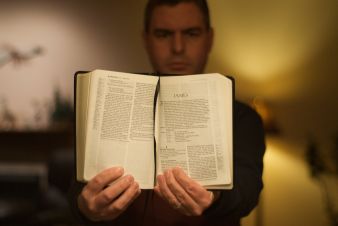
Their rejection of most mainstream medicine is rooted in biblical passages instructing believers to trust God when illness comes. One of the clearest appears in the Book of James:
"Is any sick among you? Let him call for the elders of the church; and let them pray over him, anointing him with oil in the name of the Lord."
For many Christians, passages like this are an invitation to pray alongside medical treatment. For Followers of Christ, the implications are much more demanding.
Nathan Kangas, a patriarch in the church's Caldwell congregation, told investigators that children should be kept from doctors partly so they learn to rely on God when they become adults. Turning to medicine, in his mind, represents a failure of faith. Kangas knows the consequences personally: his wife and their final child died during childbirth, and three of his grandchildren have also died.
However, Kangas does not view these deaths as proof that the practice failed. Human beings cannot know God's reasons, he said. Earthly life itself is temporary preparation for what comes afterward.
"It isn't necessarily that we're supposed to have a joyous life here," he told ProPublica.
Spiritual healing itself is hardly unusual. Muslims may practice ruqyah, Hindu traditions include numerous spiritual approaches to healing, and Christians across denominations pray for the sick. Even Christian Science, famous for prayer-based healing, says members today are free to choose medical care. What sets the Followers apart is not believing God can heal, but expecting believers to refuse medical treatment when a life is endangered.
Growing Up With Death
Linda Martin grew up in the Followers of Christ in Boise. As a child, she remembers friends appearing at church one week and disappearing the next. When church elders gathered at a family's house, she came to associate it with another death.
Some of those deaths occurred in her own family. When recounting her story, Martin has described newborn cousins dying and a 2-year-old nephew dying from pneumonia without medical treatment. She left the church at 16 and has spent years since urging Idaho lawmakers to change the state's religious exemption laws.
"I represent myself and the children in my family," she told lawmakers in 2016.
Laren Eells left another Idaho Followers congregation much later in life.
As a boy, he watched his father survive what Eells believes was a ruptured appendix without medical care. That experience, he said, strengthened his belief that prayer was the answer.
Years later, his younger brother developed an ear infection, which subsequently spread into his bloodstream. Eells stayed beside him, "praying and wringing my hands," until his brother died.
Former members have described social consequences for seeking medical help, ranging from disapproval and exclusion from community gatherings to outright shunning. Kangas, in his comments to ProPublica, did dispute that shunning was common, although he acknowledged that a member who sees a doctor may be expected to repent and not do it again.
For parents inside the church, those expectations have often been there since childhood. By the time their own child becomes seriously ill, calling a doctor can mean defying both their religious beliefs and the community that shaped their lives.
Why Does Idaho Treat Prayer Differently?
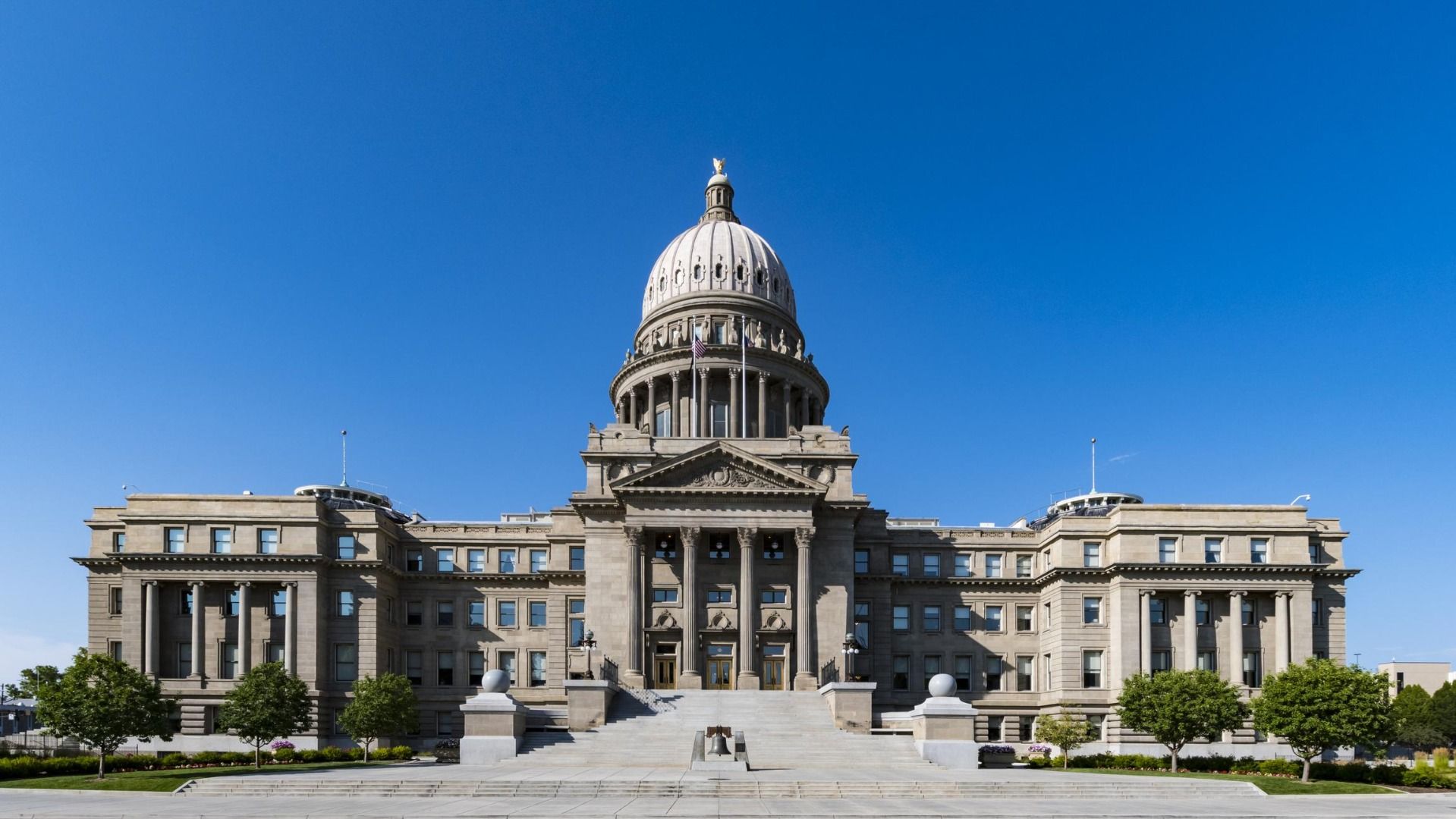
Idaho law ordinarily requires parents to provide necessary medical care, but its child protection and criminal statutes contain religious exceptions. Parents who choose "treatment by prayers through spiritual means alone in lieu of medical treatment" cannot, for that reason alone, be considered neglectful or to have breached their legal duty to a child.
An Idaho court can authorize emergency medical treatment when a physician says a child's life is greatly endangered and the parents refuse treatment, but even then, the statute directs the court to consider spiritual treatment being provided by members of a bona fide religious denomination.
It Wasn't Always Like This
In 1915, state authorities investigated Followers of Christ member Lewis Annis after his 13-year-old daughter, Pearl, became gravely ill. A doctor and police officer found her near death at the family's home. Her father was arrested for refusing to allow his daughter to receive medical attention, and Pearl was taken to a hospital, where she died.
For decades, Idaho authorities could continue to intervene in cases like Pearl's, when parents chose prayer instead of medical care.
Then, in 1974, Congress passed the Child Abuse Prevention and Treatment Act (CAPTA). The intent of the law was to compel states to improve the reporting and investigation of child abuse, but the intervention of one group would change everything.

For decades, the Christian Scientists had advocated on Capitol Hill for legal recognition of prayer-based healing. While they weren't successful in actually getting a religious exemption written into CAPTA, they were able to convince the Department of Health, Education, and Welfare (the agency in charge of implementing the law) that Congress had intended for that protection to be included. Remarkably, the Department would adopt a policy that if a state did not include an exemption within its own laws barring parents from being charged with neglect for relying on prayer-based healing, that state would be ineligible to receive any of the federal grant money set aside to help combat child abuse.
With big bucks at stake, a wave of legislation was quickly passed in state capitols across the country establishing these protections.
Less than a decade later, the federal government reversed course. New regulations adopted in 1983 stopped requiring the exemptions, noting that Congress had never included one in the statute itself. Some states later narrowed or repealed their protections, while others retained them in varying forms.
Idaho chose to keep its exemption on the books.
That history matters because the current law is not simply the inevitable result of the First Amendment. The U.S. Supreme Court has long recognized both parental rights and religious liberty, but it has also recognized limits when children are involved. In Prince v. Massachusetts, a 1944 case involving a Jehovah's Witness child, the Court wrote that parents may choose martyrdom for themselves, but do not necessarily have the same freedom to make that choice for their children.
Across the Border, a Different Experiment
If Idaho lawmakers were curious how different the picture would look if they did change their law, they wouldn't have to look far.
Followers of Christ also live in neighboring Oregon. After a series of child deaths and prosecutions, Oregon began removing its religious exemptions in 1999. In 2011, lawmakers eliminated reliance on spiritual treatment as a defense to several crimes involving victims under 18.
The religion did not disappear. Families remained free to pray, anoint the sick and believe that healing ultimately comes from God. However, they would now face legal consequences if they did not seek mainstream medical care for their children when it was needed.
Oregon prosecutors and investigators told reporters that after the change, more Followers began taking seriously ill children to doctors. The possibility of legal intervention also gave authorities more ability to protect surviving siblings after one child became dangerously ill or died.
That leaves two neighboring states with communities practicing the same faith. One changed the rules; the other didn't.
Children continue to die from treatable illnesses on the Idaho side.

Whose Faith Is Being Protected?
An adult member of the Followers of Christ can understand the church's teachings, reject a doctor's advice, and accept whatever follows. Religious liberty protects choices that outsiders may consider misguided precisely because freedom of conscience means little if it covers only popular beliefs.
A newborn cannot meaningfully make that choice. Neither can a 3-year-old with diabetes.
And while the Followers may hold real and sincere beliefs in this area, there are also real consequences.
At Peaceful Valley Cemetery near Caldwell, children from Followers families lie in graves beside siblings, cousins and other members of the church. In some families, investigators found two, three or four children who died after medical care was withheld.
For the adults involved, those deaths may represent submission to God's will.
For Idaho, they present a question the state has postponed for decades:
Where should the law draw the line between a parent's sincere religious duty and a child's independent interest in lifesaving medical care?
75 comments
-
 Henry Buehler
My wife said our daughter was sick because . my belief in her being sick made her sick/ I knew she had a temperature of 104. I took her to a hospital that had no pediatrician. She got into another hospital where her room mate tried to kill her. She had pneuomia but got better .
-
Henry Buehler
The hospital was torn down and replaced by a school and my grandchildren went to the school.
-
-
 Evone L Payton Banks (Minister/Rev non denominational)
Why it isn't against the law to raise children under a certain age under faith. Abuse of that right is something lawmakers need to be aware of. Proper life saving tools and first aid should be available to those that want it.
On a second note anything that leads to death should be investigated; to make sure these families aren't using faith for an agenda of hurtful nature. We have to be mindful of faith and medical science here. As I have used the Holy kiss for plant life and to end prayers while walking unto the sky. As a Reverend who is eclectic in spiritual practice we have to be careful of who we teach and what they use it for.
For example
Not everyone is qualified to perform expelling "spiritual activity",some may believe in spirits while others see it as "craft". So we need to post with love and high care the difference so people can learn but also understand some may be impaired from help. For those that want help.. let us teach.. for those that do not we have to learn to pull back and just keep prayerful eyes on situations. It's easy for someone to be blamed for hurting people in today's society climate. Vigilance is needed. And care in handling sensitive situations
-
 Amber M. Castleman
God gave up plants for our medicine that comes with the prayer we pray to God for his healing so he gave up plants with natural antibiotics in them example Deer meat known as venison natural antibiotic for illness of infections without venison we couldn't have penicillin mushrooms another antibiotics that God gave us marijuana an actual nature plant from God to help cancer and blindness caused by glaucoma these plants and foods of natural medicine were given to us by God because we prayed to him for healing you can pray and pray and pray all you want saying you claim God as healer but if you don't take what God has given us to heal from prayer then you don't really accept God they way you should accept Him and his ways of healing.
-
 Geoffrey C. Olive
Why can’t you just accept that science and other human achievements has created ways of healing and other things we humans depend on rather than prayers to a god or gods that have never been seen or proved to exist? If your god can do all this, why doesn’t it show itself in its real form and not just in things you claim it created - namely this planet, animals including humans, and plants, etc? Also who or what created your god or gods? Simple answer is that a god or gods do not exist therefore can never be seen!
-
 Keith D
Meantime, psyche is real, plant medicine is old and proven over millennia. Psychic phenomena are demonstrated day in and day out in thousands of ways, though, like 'Western medicine,' don't always work--some things work better than others for particular situations, and sometimes, it's just end of the road.
Allopathy--aka, the healthcare notions that supposedly root the AMA and Western medicine in general--was bloodletting and considered the ultimate quackery in healthcare until Rockefeller found his manner of turning mining and manufacturing (petroleum, in particular) into yet another 'necessary' market, and got the other approaches to care outlawed.
In a discussion of faith healing and 'alternative' (really traditional) care, it's a little demonic to compare it with RockeCare, which does not work as well or as fully. But it keeps manufacturers in business, and doctors and hospitals who depend on repeat customers--the same, 'treatment forever, cure never' market capture of PsychoDynamics, Freud's caustic psychological monstrosity.
I'll probably feel the need to say this a few more times in this thread, but I don't have any faith in just sitting around and praying, while not making other efforts. And these 'Evangelical' 'faith healers' who thump a person on their Ajna chakra and shout "cured" strike me as total con. But the criticism would be much the same if there were other efforts by the people we're discussing.
I really have a hard time not judging people who don't take other measures--Ayurvedic, Chinese medicine, Native Americas Naturopathy, Homeopathy, and so on. But RockeCare has the Western media and the US, at least, in thrall, calling all the others what RockeCare really is. A black magic for the record books.
-
-
-
 Lawyer John
Allowing a child to die for any reason is child abuse if not murder.
-
 Rev. B.D. Rees
Let me start this by clarifying my position: I am a follower of Christ and his teachings. Over my seven decades on this earth I have seen what I consider miricles in my life and in others. Now, we come to my stance and opinion on these so-called christians who believe in the healing of a God that allowes them to decide who lives and who dies from a misguided belief system. I am not a parent, I am a Gay man that believes God made the miricle of Science and Technology for us to use for the greater good of man and woman kind. NOT for those who choose to act as God to decide the mortality of children! If these misguided souls wish to as Adults choose to die and not seek medical treatment that is the business of an adult and their own choice, however, as a parent, choosing to allow ones child to die without the miricle of medical help is not only criminal but immoral and certainly not of God! Parents are to give their children care and nurturing until they have the knowledge and are of the age of consent to make their own decisions on the matter of their own thoughts of religion. That nurturing means making sure they have the medical help they need as a child. I know this from Personal experience, my Partner of 49 years was a product of such a religion, and as an adult chose to use his God given rights to medical help when needed. Thank God he did, because I have enjoyed a wonderful, loving relationship all of these years because of that decision. My friends, God doesn't make mistakes, and if these people think that Science and the related fields are a mistake then they worship a God that I will not follow or believe.....
-
 Sir Lionheart
Your God seems to have got very angry at times though judging by its genocidal activities of killing nearly everyone on earth, which if that mythical tale of the flood was correct it would have included babies, toddlers, children, and pregnant mothers….and gay people. If there was a God, I definitely wouldn’t worship that one. It seems to have anger management issues and a very weird fixation on killing children, like when it got upset with Pharaoh.
Anyway, interesting chat though. Thanks for your comment.
🦁❤️
-
Rev. B.D. Rees
To be truthful with you lionheart, I could care less who or what you believe in or don't for that matter. I know the stories of the Bible and the artistic license the writers took in order to make the story plausable. I know the God that made the covenent with Noah and the Christ that came to earth in order to fulfill all of the covenents God made with Moses.... I don't however believe that the God I know would want these people who I will not call Christian or believers in Christ, to in effect murder their children in order to satisfy their self destructive sudo-god!! Now... You can make fun of God all you want, and make light of the accounts in the Bible by the authors of each book, and I will agree with you that some accounts are quite fanciful, however, that does not and will not shake my faith in the Teachings of Christ I believe in.
-
Sir Lionheart
Thank you for your reply. Assuming Jesus was real, we actually don’t know what teachings Jesus ever taught. All we have is a New Testament book compiled by historians that never met him. Those historians that were actually alive during the time he was supposed to have lived never wrote about him. Don’t you find that kinda weird? So all we really have is a book of hearsay. I wonder how many of those writings, and handed down stories, were actually true?
I wonder who it was, that wasn’t there, that wrote in explicit fine detail about Jesus in the Garden of Gethsemane when everyone was asleep, or was it just a story made up by someone? 🤷
🦁❤️
-
 Pastor George Day
Rev. B.D. Rees
This past Shabbat was actually Parashah Noach.
There are no artistic liberties in the Noah's flood account. It all happened... and yes, the Nephilim were around!
-
Geoffrey C. Olive
To be truthful with you Rev B.D. Rees, I could care less who or what you believe in or don't for that matter.
-
Keith D
Rev Rees, I am always a bit confused by people who talk of the Old Testament god without a bit of malice toward that being. "Everybody must get stoned!" You too. 'cuz YHVH says.
You may find interesting thoughts, if you haven't already, by looking into the Nag Hammadi library and the Gnostic texts, which are hardly less proven than the suffocated canon post- 4th and 5th Centuries.
Yaldabaoth, the demi-urge, 'bastard' son of Sophia. Did not see past his own being and doing. Did not know of the Pleroma. This is who Gnostics see when discussing the God of the Old Testament that Jesus said to the Sanhedrin was not his Father.
So if YHVH was such a being... and now I play in old and left-behind-by-me territories that sometimes intrigue me nonetheless... the Mormons say that Jesus was YHVH. At least that was going when I was active 40 years ago. And they say that he was indeed the creator, at the behest of the Father. And then he came to Earth. ...and got a real eye-opener. And then fixed it.
So, from my understanding from my 40 years ago world, YHVH became Jesus and exemplified The Christ--the Anointed One--and did some very spectacular works. And learned empathy that YHVH seems to have been without... hence, we can understand the 'fulfillment' of the covenant, and why that regime was finished.
Yet, all that together leaves us wondering why the Mormons remain locked into a Zionist (Darby and Scofield, at the behest and benefaction of ... ? and then Herzl and Balfour, et al) perspective... but that gets hot, so I'll just kinda ... leave it there.
-
-
Pastor George Day
Sir Lionheart
What kind of dramatic ordeal did they put you through at that church you once pastored? You look like you’re still caught in the pews!
-
Rev. B.D. Rees
Mr. Olive and Pastor Day :
Thank you so much for your short and I must say typical remarks from the pea-nut gallery.... I'm not quite sure from your brief blatherings if you agree with these KOOKS or what, however, it certainly sounds like it..... My opinion stands and both of you proved my point..... So, gentlemen, I will simply say Thank You for your support.
-
Sir Lionheart
I’m not aware of any traumatic ordeal, quite the contrary, I became extremely elated knowing that my mind was at last free to use logic and reason, unlike the shackles placed upon me by religion for fear I might go to Hell. Thank goodness I have at last broken loose and can now think for myself.
🦁❤️
-
-
-
-
 Rev. Jason L. Petersen
Faith healing is such nonsense. Miracles can and do happen, but in accordance to our wishes.
-
 Colleen McAllister
No. Miracles and wonders happen in accordance with God's will, not our wishes.
-
 Brien
Brien
Since "God", any god is a man-made construct, then it is the work of man that can save or kill. Miracles are just actions without explanation. Since actions without explanation are real, you can't attribute them to mythical constructs. Peace ✌️
-
Geoffrey C. Olive
I really wish this site had a downvote as that’s what I would have voted for this comment by Coleen McAllister So here it is - 👎!
-
-
-
 Daniel Todd Kamm
I worked in the mental health field for 36+ years before I retired recently. After years working in the adult mental health system, in '96 I started working with kids and families... and child welfare has been my constant companion since. I still volunteer when there is a place I can make a contribution, advocate for a child and family, etc.
This prayer versus treatment is a tricky area, and I have my own ways of managing when these issues come up, but if put in the position of having to advocate for the best interests of a child? I will advocate for treatment.
Prayer is a great thing and it can help a child and family through awful things they may be going through. But like any other technique it has it's limits, and where that line is, gd has given other techniques, and in our modern world, that is science, technology medicines, better outcomes and in many cases life-saving outcomes... if parents/caregivers etc. are brave enough to cross the bridge into what else gd has to offer beyond the aspirations of prayer.
Which reminds me of the story of a flood and people sitting on their roof praying to g*d for rescue. They allow rescuers in multiple boats to pass by until finally there are no more boats, and the flood carries the house off and these prayerful people all drown in disbelief.
And the rest of the joke ? They get to heaven and ask gd why gd didn't save them...? And g*d responds: "I sent you....and all you did was...!"
Prayer is prayer. It has healing aspects, it can console and help us cope... but it is not a medical treatment. And it is NOT a "treatment alternative" to be enshrined in some statutory miscarriage of an out of control legislative body.
Glad I don't live there.
Peace, Out Reb tk
-
 Reverend Paula Copp
They don’t believe in medicine? Let them earn Darwin Awards…
-
 Rev. Kev
Guess not all believers are pro-life.
-
 Leslie A. Hulberg Née Tomasura
As much as I say the child should decide (of course they aren’t always in the position to be able to communicate their wishes) and some people say it is up to the parents. But then there’s The Who thing of “Body Autonomy” so if the parents can decide, what’s the difference between this and opting for abortion? Is it then up To The courts? Or the physician treating the child? What about the county’s child welfare system? Not being raised or a part of the community that does not support interventions from medical providers, I can’t say how it would affect me if my child fell ill. It’s the same as having an advanced directive. If the medical provider receives this prior to providing any life support services, they are legally bound to withhold the support or the amount of support they can provide in an attempt to save a life. Though I have known of at least one medical professional who personally didn’t believe in it and went against the wishes of the patient. Legally he should have been fined or had his license suspended. But the family (not the patient) let it go. The patient was furious and unfortunately died a few months later remaining in agonizing pain until she passed away at home. Had she been able herself, she would have had him up on charges. In that case I would have felt as she did. Angry for not allowing her to depart on her own terms. However, when it comes to children, I would like to say if the parents refuse treatment, and the child is too young to really have a say, I believe it a lot like child neglect to refuse treatment when the Medical professionals believe they would survive if there was intervention on behalf of the child. As a parent, I would be angry that the government stepped in to intervene. As a third party on the outside looking in, I would be inclined to go along with the doctor’s recommendations. Perhaps it should be the state having a decision until the minor is old enough to Dec for themselves.
-
 Patricia Ann Gross
Leslie,
You are absolutely correct with your assessment of the doctor who refused to honor an advanced directive, because months of agony are what the what the patient wanted, and had gone to some significant trouble to put it in writing before she needed to make the decision. Advanced directives, however, are only valid if the patient is terminal and the "treatment" only prolongs life. For example, physicians cannot invoke an advanced directive to terminate a respirator for a patient who has pneumonia, unless the underlying cause is terminal. Once when I worked in hospice, we receivied a patient who had full End-stage Renal Failure, was not eligible for a transplant (the only way to cure it) and had two options: Dialysis multiple times per week for the rest of her life, or dying. This patient chose the latter.
Advanced directives are different in different states. Where I live, for example, we can select what type of life support that can be terminated, including respirators, fluids, feeding tubes, and significant or painful treatments, such as chemotherapy.
-
Pastor George Day
Patricia Ann Gross
Good to hear you rambling again! How's you been, my friend?
-
-
-
 Rosemary West
These people are serial killers.
-
 RDS140
If people are supposed to believe in God as the creator of heaven and earth, doesn’t it reason that he played a part in creating doctors and medicine?
-
 Captjerry Tomas
COMMON Sense YOU CAN PRAY BUT IT WILL BE THE DOCTOR WHO WILL BE THE ONE TO HELP YOU
-
Keith D
Allopathy's philosophy distilled to an assertion. But even Allopathy (the concept of the human meatball) recognizes that the body carries forward and completes anything that the Allopath does.
There is wisdom in materia. But there is will in a mind. Will and wisdom combine well. At times, a true intervention is necessary. For instance, I was about to go blind from cataracts. If I'd known and had had time, I would have tried remedies that I didn't know then and only came to know years later. But I had the surgeries, because research wasn't giving results in a timely fashion, and I was about to be legally blind (my assessment, given the quick onset). This is an example of expediency and the need for a boost from a surgeon.
But once the surgeon did her thing (thanks, Doc), and we all saw to keeping it clean, the healing continued, materia and mind bringing will to healing.
There is magic--call it Divinity if you wish--in all things. Let's remember the magic and not get too overblown in the egotism of 'doctoring.'
-
-
 Rev. Roof
" ... the statute directs the court to consider spiritual treatment being provided by members of a bona fide religious denomination." This is the problem. The 'State' sees itself as arbiter of knowing that a religious denomination is 'bona fide' or not. The entire subject of healing should be exempted from State consideration.
-
 Rev. Deborah L. Halstead
I firmly believe that Death is not the enemy and medical intervention should be a choice. That said, I also believe that sometimes medical intervention is the answer to the prayer. What comes to mind is the parable of Two Boats & a Helicopter (text copied from Wilipedia).
A storm descends on a small town, and the downpour soon turns into a flood. As the waters rise, the local preacher kneels in prayer on the church porch, surrounded by water. By and by, one of the townsfolk comes up the street in a canoe. "Better get in, Preacher. The waters are rising fast." "No," says the preacher. "I have faith in the Lord. He will save me." Still the waters rise. Now the preacher is up on the balcony, wringing his hands in supplication, when another guy zips up in a motorboat. "Come on, Preacher. We need to get you out of here. The levee's gonna break any minute." Once again, the preacher is unmoved. "I shall remain. The Lord will see me through." After a while the levee breaks, and the flood rushes over the church until only the steeple remains above water. The preacher is up there, clinging to the cross, when a helicopter descends out of the clouds, and a state trooper calls down to him through a megaphone. "Grab the ladder, Preacher. This is your last chance." Once again, the preacher insists the Lord will deliver him. And, predictably, he drowns. A pious man, the preacher goes to heaven. After a while he gets an interview with God, and he asks the Almighty, "Lord, I had unwavering faith in you. Why didn't you deliver me from that flood?" God shakes his head. "What did you want from me? I sent you two boats and a helicopter."
-
 Kenton Sherman McManigal
The religious belief in government supremacy doesn’t outweigh other religious beliefs. I agree that they should seek medical care. I disagree that government should have any say in the matter.
-
 Lion on the Beach
I've had dozens of people from the 3 churches I tend to in the Bahamas who have not used doctors. I've witnessed homeopathic cures; Bibles being placed on injured parts of a body and vocal prayers with midnight ocean swims under full moons. At one time I would plead for these parishioners to visit a doctor. I now allow them their rights as they believe. And to be honest, I have seen individuals in these treatment arenas arise and carry on normally as if nothing had downed them.
-
 SDA
SDA
They did not have modern medicine in biblical times, but I have no doubt they did have doctors, nurses, midwives, apothecaries, etc., and that people availed themselves of those services. Nowhere in the Bible does it say to shun available medical treatment. These people are as stupid as the snake handling nuts.
-
Lion on the Beach
It is believed that Luke as a slave was trained to be a doctor. It was not uncommon for slaves of wealthy merchants to be trained for the master's household.
-
-
 Cameron Lewis
This behavior is child torture. The good news is the cult will die out. The bad news is people will suffer.
-
 Roy S. Thorpe
The anti science morons roll on! Let the uneducated people kill their offspring and maybe that strain of humans will die out from stupidity! Who am I to interfere with God's own way having intelligence prevail! It's hard to understand God's ways when the brain is wrapped up in primal urges! Watching these throwbacks in action in government and in the general population is at times humorous and sometimes a bit scary! Really comical when the wackadoodles join in! Life is a journey with a little humor thrown in at times! Enjoy!
-
Keith D
Roy, I'm just playing Devil's Advocate here, but what if they have a different, perhaps higher, understanding of the role of science in human health?
Ever since c'voodoo, and the very unscientific 'the science' that surrounded that debacle, and still surrounds it and justifies ongoing notions from what played out during the 'heat' of it, I really have to challenge those who talk of 'anti-science.' A different view of what the width of biology and so on, a different sense of utility of science, a different conclusion ... do not make a person 'anti-science.'
They may be anti-science, and whatever else I think, one of your conclusions is correct: the group doesn't seem destined to last long, unless they adopt a more holistic approach to health and healing. While they may be opposed to Ayurvedic or Chinese medicine ALSO 'because religion,' they are better suited to all aspects of health and healing than is 'Western Medicine,' except in those areas where Western Medicine really does well: cut, excise, close, sanitize and numb.
Don't let this comment seem to praise the choice of those people. I'm glad I'm not among them. But who am I to judge them? I am a scientist--applied science--throughout my life.
-
-
 Ari Joseph Bertine
Suppose that someone I respected told me that there was no need for me to medicate my child because if I set out milk and honey for the fairies and build fairy doors in my garden, and then put my child in a bower of elderflowers out during the full moon, she would be healed, and she instead died. How would the courts treat me? How would the public treat me? Why would this be any different from letting a child die due to a Christian-based religious belief? Am I legally allowed to set a child out to die from a treatable disease because I have notions that there is an alternative ritual based on traditional spiritual beliefs that says I can save them without medical intervention, if it's NOT based in a mainstream monotheistic tradition? I think that if we look at the actual mechanics of this, it all boils down to societal responsibility to preserve life. We are not allowed to abandon children's safety to the fancies of mythology, no matter how organized, traditional, or popular those fancies may be. It is lethally irresponsible and should be considered criminal neglect, possibly caused by parents being mentally compromised by cult conditioning, but that's still criminal.
-
 Merlin
Both. Each adds influence on outcome. We have been given valuable tools.
-
Pastor George Day
Merlin
Which post are you responding to? It’s tricky to follow your thread unless you use the POST REPLY feature and mention the person’s name. Nobody here is a mind reader, though some might enjoy pretending otherwise.
-
-
Colleen McAllister
Luke was a doctor and nowhere does it say that medical treatment is not allowed, only that prayer should be our first thought.
Children are not to be sacrificed to prove our faith.
-
 Rev Ned
^God works in wondrous ways.^
-
Geoffrey C. Olive
No it doesn’t because it doesn’t exist!
-
Keith D
GC Olive, your utterance is unscientific. So may be Rev Ned's, but you may have proofs in front of your face that you deny because of your ... 'faith' ... in zero.
You are invited to see, by the Universe and by your spirit who sees despite the workings of your 'body mind,' aka 'the devil' in some spiritual views--the ossification of thought into veritable mere algorithms.
-
Pastor George Day
Geoffrey C. Olive
The Bible addresses atheists only twice throughout its entire canon, and, amusingly enough, both times it calls them fools!
-
Geoffrey C. Olive
What else would you expect from a book of nonsense?
-
-
-
-
 Brother Peter
Good Wikipedia article about this church, if you're interested in more detail.
-
Brien
As I sit here at work, I am literally watching this very story in real life. A resident has refused any and all treatment for the reason of religious exemption. Nothing can legally be done except watch the resident die slowly. Treatment would relieve pain and extend life, but no, this individual refuses all. What bothers me the most is that we're the same age. I still have plenty of life, this resident would to except for some misguided beliefs in mythical beings. Very sad 😔
-
Keith D
Perhaps you need to examine your own viewpoint.
Evidently, you're speaking of an adult. That makes my view easier to present, because I believe it's a choice that one makes viz the meaning life in the context of the Cosmos. Children may (may) be understood to deserve a different approach to things--that one is tough for me, as I believe there is sense in the Common Law concept of "age of majority."
I'm repelled by self-flagellation as a religious notion, but I also recognize that incurred suffering and bearing it can beneficially change an individual. What you walk into, knowing you may suffer pain and loss, is sometimes just your calling. This is coming from me, one who has born significant suffering in many ways--as have many. What have I done with it? I've learned more about me. LOL, I'm looking forward to when all that learning turns beyond the sense of fullness that I've learned 'despite' suffering into a fullness of joy and clarity in a very prosperous life. I may end up waiting a while, or perhaps not. Time will tell.
I don't know what I'll do if/when I get to a stage where there is only medication to prop me up. I have a different attitude to holistic medicine than I do to the materialist reductionism of so-called 'medical science,' which latter has a nasty tendency to compound suffering on top of suffering, commercially motivated to offer and provide no cures but only 'treatments.'
Perhaps as you watch your subject reel, deal and perhaps even bloom through the process, you can see my point. I've cared for dying patients before, so I get your view. And I'm old enough to think about such potentialities in my own life. Meantime, the travails even in my days of youth and more seemingly reliable health are far less to me because of the perspective of gratitude that I have learned even through (not so much by, but through) suffering.
-
Brien
"My subject?" Your description is as offensive as watching someone incapable of making rational choices being allowed to SUFFER and die , yes DIE. This wasn't a debate, this was reality. Professional people tasked with care IGNORED the situation even though the person in question was delusional. I don't need to examine my position, what I need to do is try and find humanity. So far I am just not seeing it, present company included. I normally end my response with "Peace", but not this time.
-
Keith D
Brien, take a breath. There is no insult in the word subject. It carries all the respect that any person deserves.
Also, yes, people die. My subject died. 'Subject,' because 'patient' puts me in a weird position and so does using his name. He was a great guy, even lost in dementia. I was there, spiritually and in the usual caregiver ways for him, welcomed his family coming for him as he was on his way. His family, the 'dead people.' The living family were already there; they had hired me.
If I wanted to be angry, I could say with complete conviction that the doctors who stuffed two really vicious vaccines, one in either arm, killed him. He woke in pain and agony and terror... he never recovered from that, and his fade came fast. I could blame his family for letting the doctors talk them into getting those shots. I did express my point of view, and they ignored me, which is fine. Their right, and in keeping with his views.
That said, who are YOU to tell him what he should believe? ...to coerce him against his will indicated, no doubt, in documents when he was still cogent. Who do you think you are?
Yes, clearly, you DO need--you have just proven your overwhelming emotional state and will to coerce another--you DO need to examine your position, your thinking, even your values.
I'm not worried about you thinking I'm not the humanity you're looking for. Obviously, you 'know better for others than they know for themselves,' which is completely unacceptable, tyrannical, inhuman. And yet that's what you want to call humanity, and the lack of it 'inhuman.'
Think better. And yeah, I'll say peace to you. Why not? Geesh.
-
-
-
Pastor George Day
Brien
Is that a Jehovah’s Witness refusing blood? Apparently, they’ve recently tweaked their rules on blood, among other things. And now, believe it or not, they can even sport beards!
-
Brien
No pastor, we are talking about someone not capable of rational reasoning. We are talking about professionals that choose not to get involved. They base their decisions on a two sentence conversation and simply say there is nothing they can do. Even his own children gave up on him. I am talking about the worst example of humanity all the way around. Peace ✌️
-
-
-
 Elizabeth Jane Erbe Wilcox
I often wonder who these people think has bestowed the education upon the doctors and other health care providers that allows them to save lives? Do they think satan is at work in the medical universities and operating rooms? If so then they must admit he’s more powerful than whatever god they believe in.
I do not believe in any sort of “religious exemption” for any reason. There is nothing “special” about any religious belief.
-
 Dr. Zerpersande, NSC
Stupid is as stupid does. Really stupid kills.
-
 Robert Hauck, MD, FAAP
Speaking as a Pediatrician. . . . I'm appalled by this report. I've long known that Idaho is our most radically conservative state but didn't realize its laws openly allowed innocent children to die from treatable illnesses. Equally alarming is Idaho's bedfellow, Mr. Kennedy, who on a national level also allows children to die by a more subtle means: promoting the anti-vax movement and sowing mistrust of physicians. Speak out! Our vulnerable children need our protections.
-
Keith D
Robert Hauck, I take the same view towards your support for shots as you take towards faith healing and RFKjr's half-nuanced and actually hypocritical (reports are, his kids are vaccinated, including the fake vaccine, mRNA) assessment of vaccines. I think modern medicine is a 'religion,' and its avid practitioners as indoctrinated as religious fundamentalists. I have a great many reasons for this, though I am not a member of a religion that shames people for seeing a physician.
I'll nuance that a bit. AMA Allopaths who stay in their lane are usually excellent. When AMA tries to play into the philosophy of Homeopathy or Naturopathy, or really anything but 'sanitize, cut, break, excise, set, sew and numb,' the tools of a military field medic, it loses the thread. There are exceptions to this, as well. I've been exceedingly impressed with AMA licensees that explore in a serious way into the other philosophies of physicianing. "Heresy!!" A true holistic practitioner is something Divine.
The history of what I call RockePharma is turgid and nasty. It's an industrial cabal with a 'Vatican' known as AMA, created by a con man and supported by Rocketelller when the con man showed he had a good scam ... and it has several flavors of Pinkertons (FDA, DEA, even USDA) that protect it from competition and substitution. It is anti-free-market and even uses coercion as a 'marketing' tool--witness the 'mandates' of 'COVID' and the 'regulatory capture' that disallows cures that work but don't fit the RockePharma model.
But also witness the legal injury that can, in some states, come from refusing to have your child shot up with 'a million' vaccines. WItness what New York is doing to the Amish! It's frankly appalling, and we see science being twisted into a coercive tool viz 'herd immunity' dogmas. Yes, herd immunity exists and it's important. But 'everybody must get shots!' (to the tune of "Everybody Must Get Stoned"--Dylan) actually ignores chunks of science, and thus becomes fraudulent, pure dogma.
I don't support the level of dogmaticism evident in this group in Idaho. I'm not sure I could call for laws against it, because at least some of them believe it fully. I am a free markets and free people kind of man, one who supports the sovereignty of the individual (Ruling and ruled by none but Self)--I consider that the Divine inheritance. I don't like churches or ministers trying to rule congregations or individuals... pressure, shame, threats of 'eternal damnation,' etc. It's all appalling. So is AMA and its Medical Schools' hostility to everything not mined or manufactured by 'the right' producers.
-
Geoffrey C. Olive
Keith D, I don’t really understand whether you support modern medicine or not, but if you believe modern medicine is a ’religion’, then you should be thankful that it will be there when you may actually need it and how science could save your life. Praying and faith healing can’t educate doctors, drive you quickly to hospital, perform operations, repair broken limbs, create medicines, etc! Be thankful you didn’t live in the olden days when leeches, prayers and mumbo jumbo were used as cures, and awareness of bacteria, viruses, cleanliness and anaesthetics, etc, etc didn’t exist!!
-
Keith D
GC Olive, I'll de-word it a bit.
Dogma comes wearing a lab coat as much as a frock or leather and gold leaf. There is a TON of dogma in both the 'science' of AMA 'Western' medicine, AND in its business model. Yes, it IS religion.
I support all science, and I support forcing real scientific method on it and its practitioners, particularly the ones called 'professionals.'
The doctor to whom I responded took a pot shot from exactly one of those bunkers of dogma.
Immunology is far better served by many means beyond shots, but AMA / FDA won't push them, because not only are they low profit, but they CURE rather than treat, and some prevent rather than respond.
I have seen spiritual care in action. I've seen it work. However, what the group in Idaho is doing is justcas reductionist and ineffective as 4/5 or more of what I've seen from AMA outside the emergency medicine sphere of cut and patch. It might actually be as coercive as c'voodoo mandates and what New York is doing to the Amish, which I oppose aggressively.
-
Geoffrey C. Olive
Keith D, If that’s what you believe then no amount of scientific evidence will make you change your one track religious beliefs! And yes, I do think that certain health problems, particularly brain related issues can be helped, but NOT cured by spiritual practices. No doubt you’ll throw in a few examples, but a few does not mean anything either practically or statistically that proves the religious claims! Millions of religious people pray to their god or gods to no avail! So either the god or gods are incapable or don’t exist! Which is more likely? I think the latter is the most obvious to anyone who isn’t suffering from the religion virus!
-
Sir Lionheart
You are definitely correct Geoffrey. The “God Virus” is a great deceiver that affects the brain in many different ways, and mostly those infected by it will not even realize they have contracted it, even to the point of denying they have it. Sadly, many are infected at birth passed on to them by their parents.
There is a cure, but it often is very difficult to totally overcome from the effects of it. Many are scarred for life with remnants of it hanging around in corners of the cerebrum popping up from time to time when you least expect it.
🦁❤️
-
Pastor George Day
Sir Lionheart
Let’s separate scientific evidence from dramatic rhetoric.
Christian faith is not classified as a brain disease. There is no established clinical diagnosis that identifies belief in Jesus Christ, by itself, as a neurological or psychiatric disorder.
People of Christian faith have made significant contributions to science and society. Francis Collins, a physician-geneticist who directed the Human Genome Project, has openly discussed his Christian faith. John Polkinghorne was a theoretical physicist and Anglican priest. Martin Luther King Jr. drew on his Christian convictions in his struggle for civil rights, and Desmond Tutu drew on his faith in opposing apartheid. These examples demonstrate that Christian belief can coexist with scientific achievement, intellectual ability, and moral leadership. They do not, by themselves, prove Christianity is true.
Religious beliefs are often transmitted culturally. Children frequently adopt the religious or nonreligious beliefs of their families and communities. This is a recognized feature of social learning, not evidence of a biological infection.
The relationship between religion and mental health is complex. Psychological research examines different forms of religious belief, religious practice, social support, and individual well-being. Findings vary by context. Such research does not establish that Christian faith, in itself, damages the brain.
Calling belief in God a “virus” is a metaphor, not a scientific diagnosis.
Claiming that believers who disagree are in denial does not prove the original allegation.
Suggesting that religious belief inherited from parents is an infection confuses cultural transmission with biological disease.
Claiming that believers are permanently “scarred” neurologically requires evidence of identifiable neurological harm, not merely an assertion.
You are entitled to reject Christianity, just as Christians are entitled to reject atheism. But neither position becomes scientifically correct simply because someone expresses it confidently.
If you maintain that Christian faith is a brain infection, please provide peer-reviewed research demonstrating the infection, validated diagnostic criteria, and reproducible neurological findings.
Until then, the “God Virus” is an unsupported analogy, not an established scientific fact.
A claim about the human brain requires scientific evidence. Calling millions of people diseased because of their beliefs is not a substitute for it.
-
Keith D
Pastor Day, I'm appreciating your remarks to Lionheart. I didn't respond to him, because his comment was just so over the top.
What Lionheart and apparently others here don't grasp--maybe are desperate not to grasp, a la 'cognitive dissonance'--is that the (slight misquote of Socrates imminent) unexamined mind--whether filled with woohoo New Age, deeper meditative or magical systems, Christianity or the 'findings of science'' are all roughly equivalent: any system of thinking or belief that is ossified by a blind faith is at risk of leading one astray... 'being a virus.'
This is my point about the medical cartel as well as the people discussed in the article. And we have a lot of these cartels.
Buddhist faith speaks of the dangers of attachment, which, in this case, is the ossified belief system.
For reference, I'm not Buddhist, but I honor its wisdom, along with that of virtually every other system I've run across, especially any that revere the ongoing, live consciousness of Divine connection, the oneness of things, the Divinity that flows in and through literally everything. Science actually fits neatly into that, being a method--not findings, necessarily--of eternal exploration and readiness to adjust understanding to reality.
Meantime, what trots around as science is often not in tune with the very methods and explorative soul of science--it is like a Tower of Babel... sometimes mere babble.
Still, I'm really horrified at what the people in the article are putting one another through. As I said before, I can't quite call it illegal, though there's some 'wiggle room' about the kids: how much does secular law have any respectable position to impose a morality and coercion? Where would it get the authority? Who are these people's peers, that we could judge them in a secular court?
-
-
Keith D
GC Olive, Did you even read what I wrote? I dont think so.
You can deny forever, if you wish, that science gets twisted by money motives, ego motives, weak analytical skills and just plain cognitive disability. But that denial is worthless.
My whole attack on AMA isn't anti-science, which should be obvious to you, but you have the one track--no, actially it's more insidious than one track... it's actually false dichotomy mind. 'Either you're for MY scientific bias, or you're an atavist moron pushing only prayer healing.'
I'll say it again for the cheap seats: what the people in the story are doing is, to me, nuts. However, I have a problem with trying to outlaw it. And while I share the horror about the victims, I question all-knowing do-gooders who want the patents to hang.
I've said enough about AMA's roots and biases that you can learn about it if you can quit clutching your conventionalist pearls and quit freaking out about the cognitive dissonance that burns your mind when you hear 'heresy.' ...if you can de-emote and THINK and explore, you can benefit. Maybe you will lol, shoukd I hold my breath?
-
Geoffrey C. Olive
Keith D, From your comments it seems that you are the one calling names, not me! “Atavist moron” to quote you! Remember the old proverb, “Sticks and stones will break my bones, but names will never hurt me!”😂 FYI I am an atheist and very anti religion, so I am a little unsure where you actually stand on this! Pro or anti religion or science? Maybe I am just so uneducated I don’t understand your use of fancy words and phrases! Please try using words of one syllable more for us with lower IQs than you!😂
-
Keith D
GC Olive,
I'm gonna drag this back to the ranch where it started. ...and where it really belongs.
Hauck took us off topic for a pot shot at RFKjr and those of us who think vaccines are, at best, nefarious, a dangerous and poorly vetted 'solution.'
Hauck takes umbrage at the loss of faith {'FAITH') that people have in doctors that doctors themselves have caused, along with AMA, its medical schools, and all things RockePharma. RFKjr is symptom, not a cause. And the vaccine issue is quite real.
The disease that destroys people's faith in AMA methods is an out-of-control medical establishment that wrests markets, liberties, foisting a tainted understanding of health and healing, and sometimes, apparently, even wresting lives directly.
I think these prayer healing folks are a symptom maybe of that, but probably of something quasi related--a much older mistrust of 'authorities' who are barely more than 'the orthodoxy in a lab coat' instead of a frock. They may be taking a cue from the Amish, whose health despite defying AMA stated 'necessities' really gives a lie to the claim that AMA practices are valid or remotely necessary.
You take a 'wisdom dispensing' tone that is so ridiculously condescending that it should indeed offend. And it does offend. Yes I'm 'big' enough to 'take' it, but I'm also big enough to feed it back to you, creating, one hopes, a boundary. You suggesting that I'm merely too sensitive is gaslighting.
Your dispensing doesn't even respond to what was said. It 'responds' to a strawman that you conjured up in your own head. I question whether you mean to do that, exactly, but it fits the annoying propagandist model to a T. My guess is that you're just that indoctrinated in fallacy-laced 'argumentation.' ... an unconsidered mind...
If you don't like my vocabulary, I don't care. If you think it's so lofty, oh well. You can take it as a stab at you if you want, but it's not a stab. You could take it as a prompt to step up. My vocabulary is not even condescending. It's just me being me.
Here's something else for you: In my darkest anti-religion decades, I never could accept atheism. I considered it just as dogmatic and unscientific as any unfounded belief. Moreover, it defied things I had experienced myself, that could only be described as mystical. To each his own, but it's not scientific to claim that what you don't see as proven doesn't exist.
I will leave you with this: there is magic in hands and procedures that do not involve AMA methods. I can only hope that you have the shock of seeing for yourself that this is true. Reiki and other practices have power, and they don't even necessarily rely on the faith of the patient, but rather the focus of the practitioner. But I don't think the subject group is even slightly savvy enough for any of that.
-
-
-
-
-
 Kathryn Diane Taft
You're batso, and you totally skipped past the actual issue! This isn't about vaccines or the AMA, this is about kids dying bcuz their parents are deluded idiots who should be sterilized and/or jailed. Shame on you
-
Keith D
Thank you for the compliment, Kathryn.
No, I didn't skip over anything, but evidently, you skipped over where I pointed to a position viz the kids injured. It happens when emotion rules you, and not reason or real consciousness.
You need to pay attention. Yes, it was a long comment, and it stepped beyond the topic just as Hauck's comment did. But you undertook to respond, so at least know what it is to which you respond. That apparently is drastically missing from your assessment and definitely from your comment.
Calling me names is pointless; if I cared much about people's assessment of me, I wouldn't talk about spirituality, religion, or public policy.
-
-
-
-
 Richard James Holden
Surely that is neglect and manslaughter. How do people reach the conclusion that medicine is not allowed ? Really strange. In biblical days, when the quote was written, they did not have access to the healing powers of modern medicine. It is awfully sad that they are brainwashed into watching their children die and that must go against all human instinct. The authorities really need to get a grip of this and stop these needless deaths.
-
Geoffrey C. Olive
Ignorance in a belief that by praying to a non existent god or gods can cure something instead of medical science that has saved the lives of millions of people! These people are murderers by their non actions!

As an atheist, please tell me what is the point of believing in a god or gods and praying to it or them to do something for you! Isn’t that just being selfish like praying to win the lottery? When I was young and had xtianity forced on me, my prayers at Sunday school (which I hated!) all went unanswered! A new toy or whatever never materialised, so it was logical common sense to believe there was no god or gods listening to my prayers! How does religion explain that? Some made up nonsense no doubt, such as I’d been a naughty boy or answered back to my parents rudely, was a common reply! How does religion explain all the deaths caused by natural disasters like earthquakes, floods, etc, not to mention wars and other human activities?👎
Geoffrey (if I may call you by your given name.)
As a believer in Christ, what you have said here gives me a lot more insight into how you believe and think. I am sorry for my previous reply to you, since you do not believe in anything, we who do believe in a higher deity should remember that there are humans such as you.... In my mind I understand now how you may have the knowledge, but since you are atheist, may not have the understanding and the empathy we as believers have. These people who think that God's gifts to us of science an technology are so much bunk and that by prayer alone God will make the sickness go away are deluding themselves and their children into a false sense of belief. God has already answered the prayers of those who think in this manner. Medical Science has already given them the means to make their prayers come true. God did answer your prayers of a new toy, he gave your father and you for that matter a brain to think with and the knowledge to use said brain in order to make the money to buy the toy.... When I was no more than seven or eight I was out picking up pop bottles every day after school so that by saturday I had the money to go downtown and spend the day shopping and eating lunch and going to the movies. God did that for me. Yes people get killed in natural disasters, but, God gave us free will and never promised us never to get a scraped knee or a bump on the noggin.... God made us human, and that means everything that goes with it. It gets messy once in a while, but most of life is pleasurable, so we take the good with the bad.... That's just being who God made us.... I will pray for you Geoffrey that one day you too might enjoy the gifts that God has given you..... Until then, Blessings my friend.