

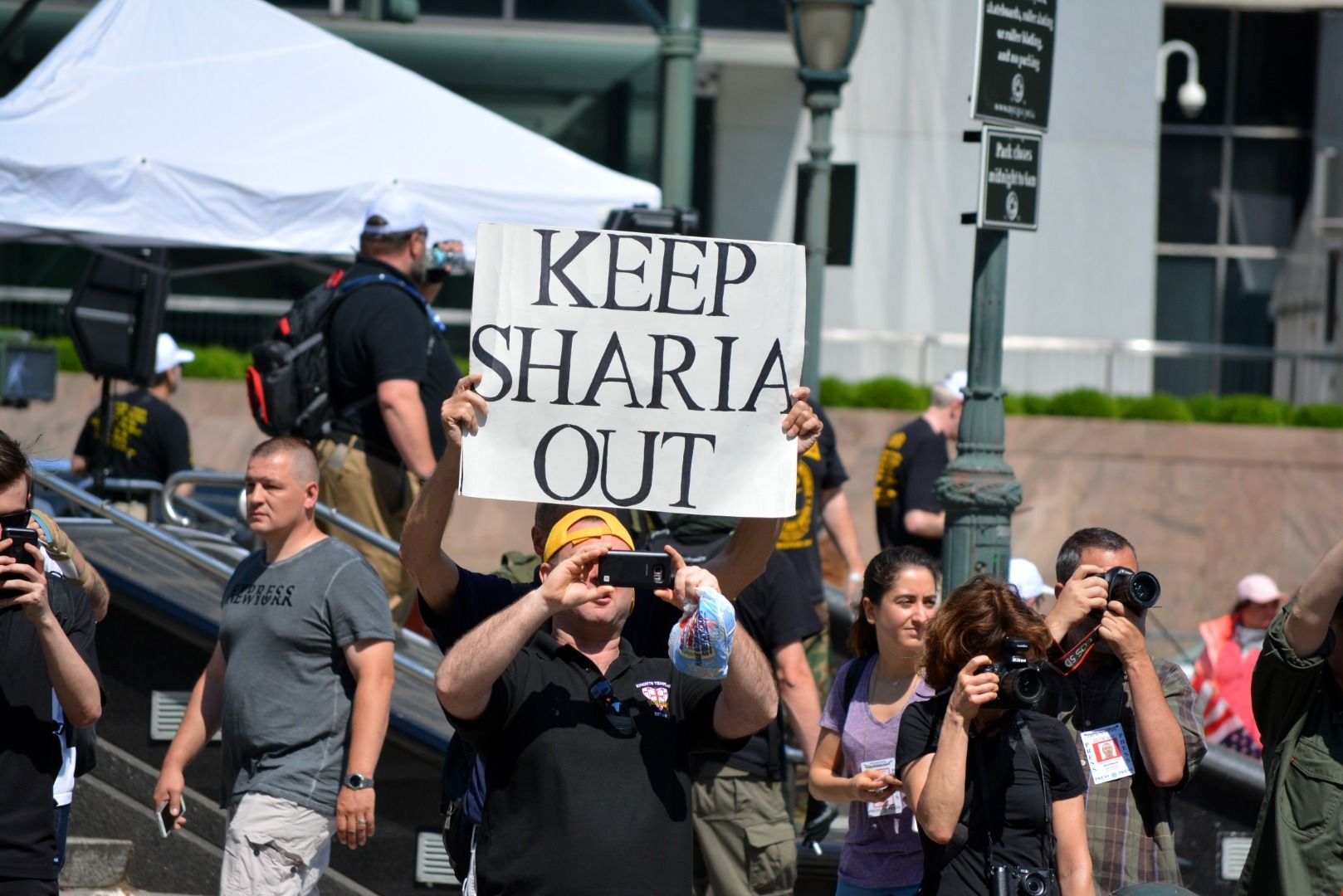
A concerted effort is underway to wedge religious values into American life. Devoted lawmakers are making room for more religious education in public schools, have begun requiring the display of sacred religious texts on public property, and have even begun encouraging children to recite a particular prayer. Supporters are hopeful that these efforts will restore and bolster moral values that they believe are lacking in America.
Specifically, we’re talking about the codification of Christianity across Texas. While this effort may not seem that surprising in Texas, the rise of explicitly Christian lawmaking in the state could appear incongruent with another simultaneous and rapidly rising effort in Texas and beyond: the movement to ban “Sharia law.”
What Is Sharia, Anyway?
When someone invokes the word Sharia, it isn't always clear what they mean. In Arabic, Sharia simply means “way” or “path.“ In Islamic belief, it refers to divine guidance for living properly, and draws on both the Quran (Islam’s sacred scripture) and the example of the Prophet Muhammad.
A Muslim fasting during Ramadan, avoiding pork, or making a charitable donation may be following Sharia. So might someone seeking religious advice about marriage or how to conduct business. It reaches into everyday life, including matters that Americans would never think of as government business.
For others, “Sharia” evokes state-enforced interpretations of Islamic law, including severe restrictions on women and punishments such as flogging, stoning, and amputation. These are most likely the interpretations of Sharia law that concern Texas legislators.
It is important to note that Muslims are not alone in following this “way” or “path” of religious observance. Christians also consult scripture when deciding how to marry, raise children, or use their money. Observant Jews follow Halakha, the body of Jewish religious law. For believers in each tradition, religious obligations can govern private choices about family, food, and worship.
Throughout history, religious authorities have used both Islamic and Christian teachings to justify placing women under men’s control. In the United States, the Southern Baptist Convention teaches that wives should submit to their husbands’ leadership and reserves the pastoral office for men. As we've covered, there have also been calls among some Christian leaders to deny women the right to vote. Many Muslim scholars read a Quranic verse as granting husbands similar authority. But, these more patriarchal interpretations remain contested within both faiths.
State enforcement of such religious interpretations is a different matter, and more commonly happens in much more closed and restrictive societies. The Taliban's 2024 morality law, which restricts women's dress, movement, and public speech, drew condemnation from UN human rights officials. LGBTQ people also face punishment under the Taliban’s interpretation of Islamic law, including imprisonment and flogging for same-sex relationships.
However, even In the United States, there are some who preach the same intolerance for disfavored minorities. Preacher Dillon Awes of Stedfast Baptist Church invoked the Bible in a June 2022 sermon calling for gay people to be executed. “We need to put these people to death through the proper channels of the government,” he declared. As such, the line between a religious teaching that adherents may choose, and a religious rule a government imposes, applies to every faith and every society.
What Exactly Are They Trying to Ban?
In Mississippi, Representative Timmy Ladner introduced House Bill 1479 to prohibit the enforcement of foreign law that violates state or federal protections. Its provisions reach into marriage contracts, divorce, child custody, adoption, and inheritance. The bill’s title identifies Sharia as its target, although its operative provisions address foreign law more broadly. However, it died in committee in February.
When he was asked for examples of people actually trying to impose Islamic law on Mississippi, Ladner couldn’t provide any.
“It’s preventative maintenance,” he explained. “We want to stop it before it has a chance.”
Lawmakers like Ladner increasingly describe a country facing an imminent Islamic legal takeover. Texas Representative Brent Money says Sharia “claims supremacy over all man-made law, including the US Constitution,” and accuses it of oppressing women and non-Muslims. In this telling, Muslim religious institutions are the beginnings of a rival government.
Representative Chip Roy, who co-founded the congressional Sharia Free America Caucus, alleges that refugees include “sleeper cells connected to terrorist organizations” seeking to replace America’s legal system. His prescription explicitly invokes another religion: “take charge in the spiritual warfare and defend our Judeo-Christian values.”
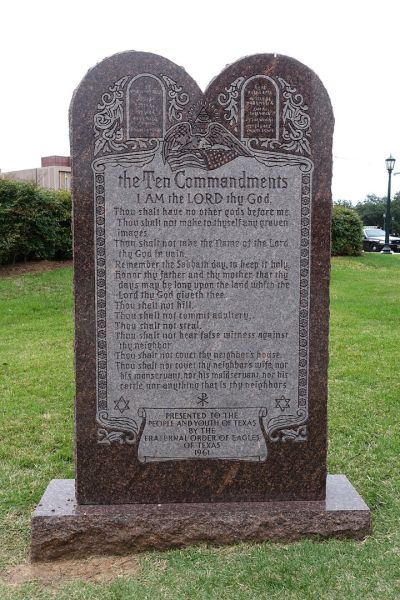
So what would a ban actually prohibit? Right-wing lawmakers in Texas adopted 2026 legislative priorities offer a striking answer. Under "Don’t Sharia Our Texas," the party calls for treating Sharia advocacy or implementation as “a seditious criminal act,” with criminal punishment and disqualification from public, military, and law enforcement service. It also wants the federal government to strip citizenship from and deport Sharia advocates, and would even extend so far as to prohibit public schools and taxpayer-funded institutions from providing meals or services that comply with Sharia.
That campaign has also reached airport bathrooms. In August, Governor Greg Abbott threatened grant funding to the DFW and George Bush airports over facilities used by Muslim travelers to wash before prayer. He called the accommodations “special treatment based on religion.” Houston Mayor John Whitmire said the washing and prayer facilities were open to everyone, regardless of faith.
In Congress, Representative Chip Roy’s proposed Preserving a Sharia-Free America Act would deny entry and immigration benefits to non-citizens who adhere to Sharia, and require the removal of those already here. Under the current wording, a person legally living in America could lose their visa and be deported because federal officials determined that they followed Sharia—even without trying to impose it on anyone else. The bill would prohibit a court from reviewing that determination.
Florida has already enacted legislation promoted as a Sharia ban. Signed by Governor Ron DeSantis in April, it prohibits courts and arbitration panels from applying foreign or religious law in ways that violate constitutional rights.
“Our state must operate under one legal system,” DeSantis said.
Whose Religious Courts Count?
Attorney General Ken Paxton demanded documents from the Dallas-based Islamic Tribunal, accusing it of attempting to replace civil courts.
“This is America, and we will not be governed by sharia law,” he declared.
The tribunal says it provides religious guidance and mediation, “does not issue legally binding judgments,” and refers matters requiring legal enforcement to Texas courts.
Christian institutions also resolve disputes through religious law. The Institute for Christian Conciliation offers biblically based mediation and arbitration, with arbitration decisions that can be enforced in civil court. Catholic tribunals apply church law to questions such as marriage validity.
Religious and civil judgments can indeed collide. Houston resident Hira Azhar learned that her husband had divorced her in Pakistan two years after it happened, through talaq, a husband-initiated divorce. Texas courts initially recognized it and rejected her marital-property claims. On September 25, 2026, the Texas Supreme Court reversed because she hadn’t received adequate notice or an opportunity to respond. Existing due-process protections were enough to reject the judgment.
Orthodox Jewish women in the New York City area can face the reverse problem: husbands who refuse to provide a get, a religious divorce document. Even after a civil divorce, a woman may remain an agunah, or “chained woman,” unable to remarry within her faith.
Azhar needed a civil court to reject a religious divorce. An agunah may need a religious divorce that a civil judgment cannot provide. Both situations expose the power a spouse can wield when religious and civil marital status diverge.
Living Under Suspicion
Across the country, an analysis of legislative records identified at least 39 bills and resolutions targeting Sharia in 2025 and 2026, with six passing. Pew reported in September that 51 percent of American adults now say Islam is more likely than other religions to encourage violence, compared with 25 percent six months after September 11.
That suspicion has consequences for where Muslim families can worship and educate their children. The Islamic Academy of Alabama abandoned relocation plans after local officials rejected its application and Senator Tommy Tuberville called for it to leave the state. In Broken Arrow, Oklahoma, a proposed mosque faced an attorney general’s investigation before city leaders denied its application.
“If the people who govern your state define you like that, what may come next?” Muslim scholar and Cato Institute fellow Mustafa Akyol asked.
Sabeel Ahmed, director of the outreach project GainPeace, has responded by traveling to Texas for mosque open houses.
“People should meet a Muslim, go to the mosque, reach out to us,” he told the Associated Press.
Why Is “Christian Law” Okay?
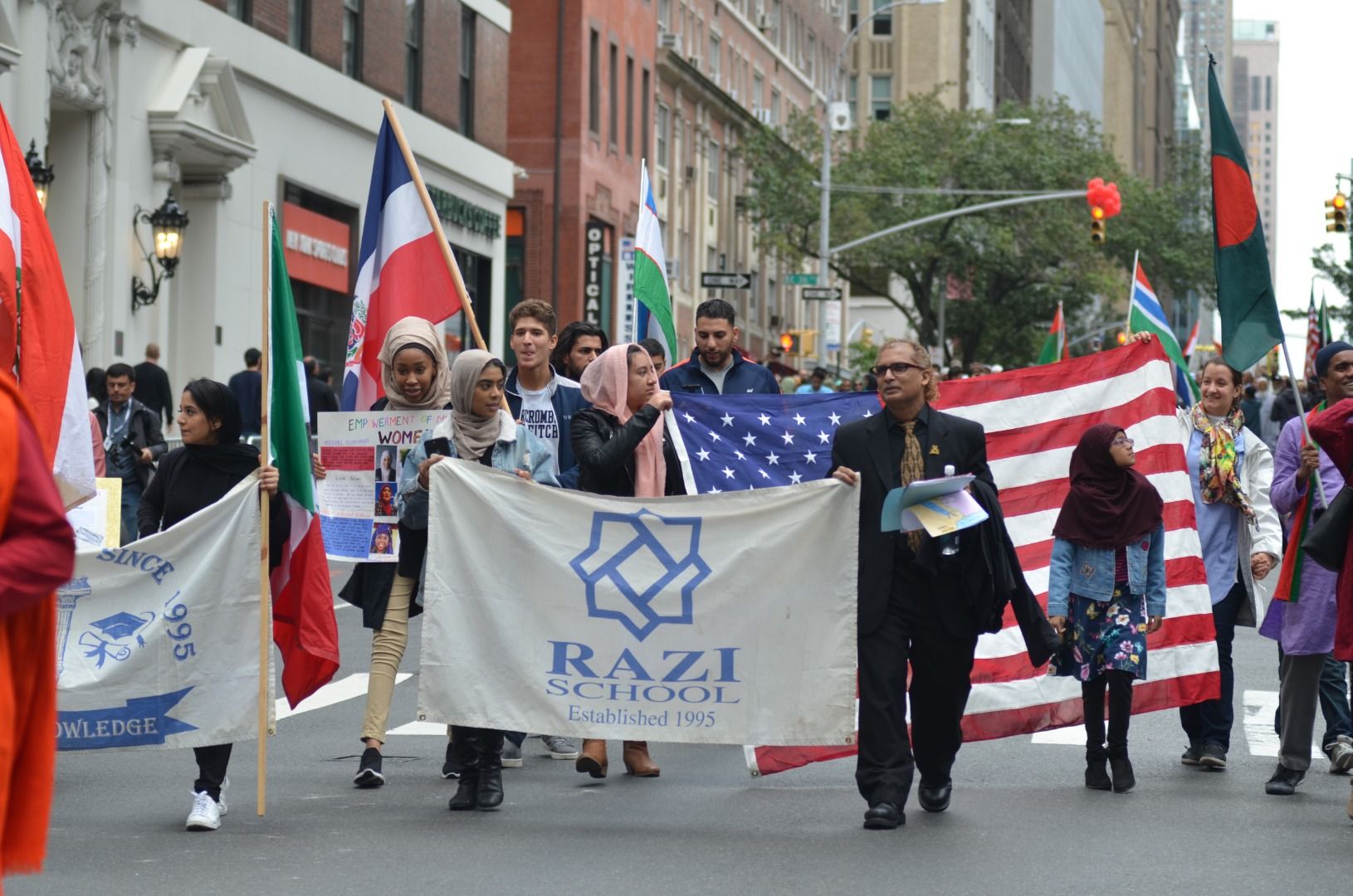
While Sharia is being described as a threat, Texas has been expanding the place of biblical teachings in public schools. Its 2025 Ten Commandments law requires classroom displays of a government-selected text. Another law allows school boards to establish periods for voluntary prayer and religious readings within local public schools.
Paxton encouraged students to use that time for the Lord’s Prayer. “Our nation was founded on the rock of Biblical Truth,” he declared in an official statement.
The ambitions extend beyond classroom walls. The same priorities that demand action against Sharia also instruct lawmakers to “Ban same-sex adoption.” For gay couples hoping to become parents, that would mean the government closing a route to family life.
Southern Baptist delegates likewise called in 2025 for overturning Obergefell v. Hodges, the Supreme Court decision protecting same-sex marriage nationwide, and other laws recognizing those marriages. Their resolution explicitly urges lawmakers to oppose laws that contradict “what God has made plain through nature and Scripture.” Gay couples would be subject to that religious standard whether they belonged to the church or not.
For LGBTQ+ Americans, the question of religious law is therefore already concrete: can someone else’s interpretation of scripture determine whom they may marry or whether they may adopt a child?
So how do supporters reconcile restricting rights on religious grounds with their warnings about Sharia? Congressman Keith Self’s explanation rests on Christianity’s place in American history: “Christian values form the foundation of our nation and the constitutional system that governs our daily lives.” He describes Sharia as opposed to those foundations. Christianity is presented as the basis of American government; Islam as a challenge to it.
In that framing, promoting Christianity preserves the country’s identity, while accommodating Islam threatens to change it. But how does a halal school lunch become evidence of a competing government? Or washing before prayer? Proposals targeting those practices reach well beyond preventing religious courts from overriding American rights. They put ordinary Muslim observance under suspicion.
Once the state selects sacred instructions for a classroom wall, students whose families reject those teachings must still attend school beneath them. Muslim Americans watching their own religious practices become a political target might wonder how that distinction works: When does following scripture become a threat, and when does promoting it become a public service?
Christian clergy have also challenged the push to make biblical teachings part of public education. In a March 2025 letter, Texas faith leaders urged lawmakers to reject mandatory Ten Commandments displays.
“The responsibility for religious education belongs to families, houses of worship, and other religious institutions,” they wrote.
Religious Freedom for Whom?
Oklahoma has already tested a restriction that singled out Islam. In 2010, voters approved a constitutional amendment barring state courts from considering Sharia. Muslim plaintiff Muneer Awad challenged it, and in 2012 the Tenth Circuit upheld a preliminary injunction blocking implementation.
Officials ultimately acknowledged that they were unaware of any instance in which an Oklahoma court had applied Sharia. As a result, the court found no concrete problem sufficient to justify the amendment’s discriminatory treatment of the religion.
Fourteen years later, Muslim communities are still being asked to defend their religious practices against warnings of a takeover. Ahmed’s response is to invite people inside a mosque. “Islam is not to be feared,” he says.
If religious law is a threat to America, why are so many of the people worried about it trying to write their own beliefs into law?
5 comments
-
 Nicholas J Page
No Sharia law in any context should be in The USA Or anywhere else globally This law has only surfaced recently I was born CoE And I will die CoE
-
 Robert Gagnon
As long as their religious beliefs and customs do not conflict with American laws and individual rights of citizens, you can practice as you like. Harassment and physical harm of others and family members shouldn’t be tolerated.
-
 Jimmy Moon
If we start dropping enough, maybe they will go back where they are appreciated. But not in the USA.
-
 Keoni Ronald May
Sharia Laws are already within the USA. NYS & NYC has pockets of Muslim populations, who have started to practice Sharia Laws, and it is reinforced by their mosques. Sharia Laws, contained within their Koran, has no room for other religions. Death to Infidels is a part of Sharia Laws.

Evangelical Christian Nationalists are already trying to bring about the legalization of their particular form of Christian beliefs in the US. I'd trust true sharia, like true Christianity, over people wanting to wield religion as a club to control others and get their own way anyday.