

When Harmonie Perrone arrived at her local hospital, she already knew what was wrong. A 28-year-old with a history of ectopic pregnancies, including one that had ruptured and led to her losing a fallopian tube, she recognized the symptoms immediately. She knew the standard treatment was methotrexate, and she knew that in ectopic cases every minute counts.
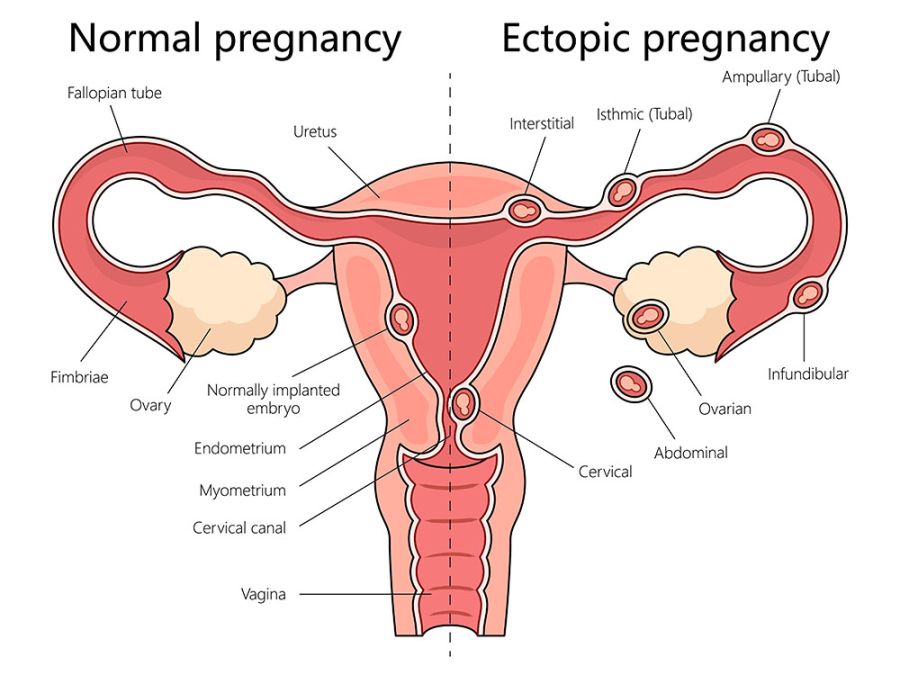 In a normal pregnancy, the fertilized egg travels to the uterus and implants there. In an ectopic pregnancy, it implants somewhere else – most often in a fallopian tube. That tube cannot stretch to accommodate a growing embryo, so without treatment, it will rupture, causing internal bleeding that can be fatal. There is no procedure that can move the embryo to the uterus or allow it to develop. An ectopic pregnancy can never result in a live birth. The only options are methotrexate, a drug that stops cell division, or surgery to remove the pregnancy.
Ectopic pregnancies affect roughly one in 50 pregnancies in the US and are a leading cause of death in the first trimester.
Perrone explained her situation. Tests confirmed it. The hospital told her to come back again the next day.
The following morning, Perrone alleges, the on-call OB/GYN she saw declined to treat her. According to a lawsuit she has since filed with the ACLU of Illinois, that doctor, Dympna Coll, told her: "There is a 1% chance that there is a baby in there. I cannot, in good faith, intervene at this time." Perrone was sent away, first to a nearby faith-affiliated clinic that couldn't help. That clinic directed her to another nearby hospital, which did not provide OB/GYN care. She and her husband then travelled 30 more minutes to Northwestern Medicine Huntley, where she received the drug a day-and-a-half after her symptoms began.
Unfortunately by then, it was too late to save her remaining fallopian tube. If she wants to have children, Perrone will need to have IVF treatment. Dr. Coll, who alleges that she did offer options to assist with the ectopic pregnancy, has since filed a defamation lawsuit against Perrone for the TikTok videos she posted describing her experience.
When Conscience and Emergency Care Overlap
This case has drawn national attention for good reason. It sits at one of the most contested intersections in American law: the right of healthcare providers to act on religious conscience, and the duty of those same providers to stabilize patients in emergencies.
Advocate Good Shepherd, where the first interaction took place, is a faith-based hospital with policies on abortion similar to many religiously affiliated health systems across the country. Those policies generally prohibit abortion unless a patient's life is in immediate danger, an approach rooted in the belief that life begins at conception and must be protected from that moment forward. Defenders of religious healthcare argue that institutions like this are expressions of faith in action, founded specifically to bring a spiritual dimension to healing. Compelling a faith-based provider to perform any abortion-adjacent procedure, even in ambiguous circumstances, pits the institution's convictions against the state.
On the other side stands Illinois law, which explicitly names ectopic pregnancy as an acute medical condition requiring emergency stabilization. It also requires that when a provider objects on conscience grounds, they must refer the patient to someone who can help. Perrone's legal team argues neither obligation was met.
A Question Older Than This Lawsuit
The tension here is not new. Religious institutions have shaped American healthcare for centuries. The Catholic Church, in particular, has tremendous control over healthcare in the country. Today, roughly one in six U.S. patients receives care at a Catholic hospital, a share that rises sharply in rural areas where faith-based systems are often the only option available. As these religiously-rooted health systems have grown, the question of what happens when their theological commitments conflict with a patient's immediate needs has become impossible to sidestep.
Advocate Good Shepherd Hospital is affiliated with the Evangelical Lutheran Church of America and the United Church of Christ.
Scripture across traditions holds healing as sacred work. Most religious health systems would say, sincerely, that they are doing exactly that, upholding a vision of the sanctity of life that includes the unborn. The counter-argument is that sanctity of life must extend to the person already alive and standing in the emergency room. Neither position is easy to dismiss.
Those two convictions are not easily reconciled, and no one lawsuit will totally settle the argument. What courts will be asked to decide is a narrower but still urgent question: when a patient presents with a documented emergency and a provider declines to treat on religious grounds, what obligation does that provider bear to ensure the patient reaches someone who will? ULC ministers have wrestled with what it means when doctors weigh their faith against patient care, and whether medical refusals on religious grounds hold up under scrutiny. The Perrone case brings those questions into a very specific emergency room, but the decision rendered could have wider consequences for the future of care.
Where do you stand? When a religious health care provider says they cannot provide emergency treatment without violating their beliefs, what obligation do they have to the patient in front of them?
133 comments
-
 Cameron Lewis
In this case law beats MD and Hospital System. A young women with a known life threatening condition was denied emergency services. As health care professionals "physical" life care supports do no harm first. If i remember 100% of ectopic pregnancies end in some form of physical harm to female. The MD failed thier oath...period. The MD and Hospital system should pay for the pain and suffering and the loss of the individuals reproduction ability. This is clear.
-
 Brandon Reta-Cantu
If she is in danger in a life or death matter. The hospital is wrong to deny her due to their faith. Ectopic pregnancy can cost her her life as well. Isn't that what a hospital is for? To help those in need of medical help? Otherwise, what's the point?
-
 Rev. Kev
This story represents an all-too-common problem in our current world. A case of blind adherence to dogma over compassion and reason.
-
 Our Divine Spirit
It’s definitely one of those situations where everyone involved wishes things had gone differently. It’s a reminder that both personal caution and institutional responsibility really need to align, especially when it comes to health. It’s about recognizing caution on both sides—personal and institutional—so that no one has to bear that burden alone.
A.M . Ministry & Our Divine Spirit
-
Our Divine Spirit
It’s definitely one of those situations where everyone involved wishes things had gone differently. It’s a reminder that both personal caution and institutional responsibility really need to align, especially when it comes to health. It’s about recognizing caution on both sides—personal and institutional—so that no one has to bear that burden alone.
A.M . Ministry & Our Divine Spirit
-
 Rev. Matthew Mastrogiovanni
The way Christians force their beliefs on others is worse then sexual assault.
Dear Jesus, please protect us from your followers.
-
Rev. Matthew Mastrogiovanni
Today's claim is that the Bible condemns ending a pregnancy early.
No, Christians, the Bible doesn't say that.
There's not a single verse that forbids it.
Now, people love to quote Jeremiah or the Psalms, but those are poetry about someone's calling. They're not laws about ending a pregnancy.
The only place that the Bible ever brushes up against the topic is Exodus 21. And there, if someone strikes a pregnant woman and she loses the pregnancy, the penalty is just a fine.
It's not life for life.
That shows that the fetus was not treated as equal to a person.
And let's not forget, in Jewish tradition, which Christianity came out of, the mother's life has always been prioritized over the fetus.
So the claim that the Bible bans ending a pregnancy, that's not scripture. That is modern politics.
So if you quote the Bible to control a woman's right to choose, remember, no, Christians, the Bible doesn't say that.
-
 Jennifer Jo Bauman
I am terribly disturbed by some comments. What I hear from some is the tone “she got pregnant and must face the consequences even if it means death “. How odd it is to hear a woman’s life thought so little of. There is nothing in my bible that tells me this mindset is okay. My god is loving, kind and merciful. He is patient and forgiving. Many of these posts portray a twisting of scripture to support a highly toxic culture where women are chattel. God be with this family who no longer can conceive. Bless them in their life journey as they grapple with this catastrophic event.
-
 Dr Dennis Chevalier PhD, DDvin
Like I've said here before. There's incredible hate with the demons on this bulletin board.
Dr. D
-
-
 Rev. Deborah L. Halstead
Genesis 2:7 (NIV):"Then the Lord God formed a man from the dust of the ground and breathed into his nostrils the breath of life, and the man became a living being."
Life begins with the first breath, not conception or the heartbeat.
-
 Kevin Joseph Kervick
No health care provider should ever be compelled to provide any service to anyone for any reason. That is a moral imperative.
-
 Preston H. Wright
I've been a nurse for 35 years. If a provider feels they can't provide care due to their religious or any other beliefs, they are in the wrong profession. They knew was was expected of them when deciding to follow that career path.
-
Rev. Kev
In a sane world, any health care provider would feel personally compelled to help others.
But I guess my moral code comes from a place of compassion for others. Not willfully letting others suffer if I have the capacity to help.
Not sure from where you derived your "moral imperative" or why that position might be considered "good", ethical, or constructive.
-
 Michael Hunt
Should a health care provider be allowed to deny medical treatment to a person of color?
-
 Kerry L Gausemel
Kevin,
Within the law.
As for the individual Dr., his right trumps hers and does not violate the law.
As for the institution, they failed to follow the law and provide a Dr. who did not conscientiously object to the procedure.
I am curious, however, what religious basis this Dr. has for his decision considering the fetus was going to die anyway.
This Dr.'s beside manner is wide open for discussion and questioning, but her religious beliefs should not be questioned.
-
-
 Jacqueline Hayes
I am confused by how this article is written. It says "Perrone explained her situation. Tests confirmed it. The hospital told her to come back again the next day." When she returned to the hospital the on-call OBGYN said "The following morning, Perrone alleges, the on-call OB/GYN she saw declined to treat her. According to a lawsuit she has since filed with the ACLU of Illinois, that doctor, Dympna Coll, told her: "There is a 1% chance that there is a baby in there. I cannot, in good faith, intervene at this time."
Perrone had tests confirming the ectopic pregnancy. How is the OBGYN claiming there is a 1% chance that there is a baby? In what "good faith" are we talking, faith as in scientifically believing there is an embryo, or faith, religiously, that there is an embryo? Using the term "in good faith" does not automatically mean "in my religious beliefs."
This woman was denied immediate care and/or was not given sound medical advice to deal with her medical issue. She was put off for days and lost her ability to conceive naturally. All the medical personnel she encountered should be held responsible for her injury, pain, and suffering. A person enters the medical field to help people with whatever their needs are, not to pick and choose what is religiously acceptable to treat. In my opinion, this sounds more like they did not know how to handle the situation and sent her on her way. I call this malpractice, not religious ideology.
-
 Joseph Grieco
You sued me, so I'll countersue you! That's not how it's supposed to work, kids. An ectopic pregnancy cannot be saved! You can't magically move the embryo to the uterus! By failing to provide the medication necessary to terminate the pregnancy on time, you have rendered this woman effectively sterile. She has every right to sue that doctor for negligence.
-
 Lester
Personally, I do not believe hospitals should be affiliated with any specific religious beliefs. Their ONLY concern should be the timely and appropriate treatment of the patients. Leave religion to the churches.
-
Rev. Matthew Mastrogiovanni
Ashé
-
 Robert James Gordon
The first hospitals were Christian because they were not profitable. Often treatment was free and Christian donors contributed.
-
Rev. Kev
That all depends on how you are defining a hospital. There were healing centers in existence before Christianity existed in places like Greece, Rome, and Persia. There are mentions of institutionalized healing facilities ancient India and China as early as the 5th century BCE.
People have been healing others since before recorded history. There are signs of medical procedures done on the bones of ancient humans.
The origins of the public hospital in the modern sense did begin in the Byzantine Empire, with its precursor in the hospices established to treat pilgrims and messengers between various bishops. In Rome itself, the first hospital was built in the 4th century CE by a wealthy penitent widow, Fabiola. During the late Middle Ages (beyond the 10th century) monastic infirmaries continued to expand, but public hospitals were also opened, financed by city authorities, the church and private sources.
They were not "Christian because they were not profitable" however. They were built on an existing history and system of healing centers, and the teachings of their religion to help others. It was their duty to treat the sick and infirm.
Believe it or not, before the age of capitalism came along people did things for motives other than profits. Yes, there was a healthy amount of trade and merchants did seek profits. But there was also a system of patronage and support by people who just wanted to do the right thing for those involved in things like the arts and medicine. Plus the fact that only the upper class and religious orders had access to education and reading skills. The growing corpus of medical literature could only be found in the select libraries of those who could afford them, and the monasteries.
In fact, the influence of Christian beliefs took what started out as a productive movement and impeded its progress. While medical advances took place in other parts of the world, Christian influenced medicine was reduced to praying for demons to begone and bleeding out the evil "humors" (sometimes with fatal results to the patient). Medical knowledge of the Greeks and other "heathen" sources were deemed satanic and destroyed. Of course, we can see the modern equivalent of such backward thinking in places like the treatment of patients under Sister Theresa. For her order, not giving proper pain management or helpful medical intervention was considered good for the 'souls' of her patients as she said pain helped 'cleanse' them in anticipation of death to be better assured a place in Paradise. Her practises helped speed people to their unhappy ends.
During the Golden Age of Islam the Muslim world was clearly more advanced than its Christian counterpart with magnificent hospitals in various countries. The Muslims were able to collect and preserve the medical knowledge of earlier cultures that the Christians destroyed in their religious fervor and utter ignorance. Luckily they built hospitals in Europe over time and that knowledge was able to take hold in the West and inform our modern medicine.
-
Rev. Kev
Edit: that should have been Mother Teresa.
Mia culpa.
-
-
-
-
 Alan E McBride
Seems the Doctor has FAILED the very first basic pledge of the Hypocratic Oath; First, Do No Harm. A non-viable pregnancy clearly understood to have implications of fatal consequences not treated immediately constitutes either a negligence or @ the very least a failure on the part of the Doctor in this case.
-
 Nicole Corrado
I am personally pro life but an eptopic pregnancy is a very tragic situation where the embryo is dying and needs to be removed from the mother's body. Yes, the methotrexate euthanizes a living being. But they are dying and allowing them to grow until their mother's fallopian tube bursts is cruel to the mother, and a cruel death for the embryo. These complex situations are the few times I agree with a medical assistance in abortion.
-
Dr Dennis Chevalier PhD, DDvin
Also Amen!
-
Kerry L Gausemel
The most logical post so far, thanks!
-
-
 Roy S. Thorpe
I run the gamut of feelings and thought reading these comments! A lot of them are from ignorant people which has always caused conflict! A lot from hard core religious nuts also!No matter what answer you have its wrong! I just wonder at stupidity of mankind! He definitely needs a superior being to guide him!
-
Dr Dennis Chevalier PhD, DDvin
Amen!
-
Kerry L Gausemel
Isn't all conflict the result of ignorance?
We all need a north star to guide us whether is be material or religious, or both.
Many here now believe the government is supposed to be that star -LOL!
God is an idea, not a thing. Ideas are limitless, ubiquitous, extend forever, never leave their source, and, wait for it!!!!..................................they are INVISIBLE!
Yes, it's true! God can't be seen with the naked eye because the naked eye isn't large enough to contain God.
-
-
 Rolando Couce
GOD IS NOT GOING TO CURE ALL YOUR AILMENTS THERE ARE ALOT OF THINGS GOD COULD DO BUT DOES NOT BUT LET US MAKE IT TO HEAVEN BY FOLLOWING GODS' RULES THEN WE COULD ASK WHAT WE WANT
-
Dr Dennis Chevalier PhD, DDvin
ok.....maybe a little louder?... lol
-
 Dr. Zerpersande, NSC
Yeah, but yelling a prayer doesn’t make it any more or less effective. You’re just talking to yourself.
-
Dr Dennis Chevalier PhD, DDvin
No one was talking to you.
-
-
-
Rev. Matthew Mastrogiovanni
Direct healings by God in the Old Testament = 12 individual + 3 corporate = 15
Direct destructions attributed to god in the Bible = 2,476,633 to 2,559,449+
Ergo, the god of Abraham is a mass murderer, not a healer.
PS: the Bible does not clearly show Satan healing anyone, or killing anyone either. Sooo he's the better mythological figure.
-
-
 Patricia Ann Gross
If one of my loved ones or I are are bleeding out and refused a blood transfusion by an ER doctor who happens to be a Jehovah's Witness, the survivors would end up owning that hospital after the lawsuit is over. I see absolutely no difference in this case. This is definitely a clear-cut case where the exception for "life of the mother" has to be the priority.
-
 obere mchugh
100% keep your religion to your self if your in a profession keep to the strict defined rules of your profession and not your faith's it has no barring on your professional life if you want to put your religion into the workplace work for religion otherwise keep it out full stop!!!!!!!!!!!!!!!
-
Dr Dennis Chevalier PhD, DDvin
It is my profession!
Dr. D
-
Rev. Matthew Mastrogiovanni
Your oath, supercedes your faith.
-
Dr Dennis Chevalier PhD, DDvin
No, it doesn't.
-
Michael Hunt
If you take an oath of office to serve the people of your city/county/state, that oath does supersede your faith. If you are refusing to do the government job you have taken an oath to perform because of your religious beliefs, the oath is meaningless. You can't take an oath to serve the people, which means all the people, only to use your faith to refuse to serve some of them.
-
Dr Dennis Chevalier PhD, DDvin
My "Oath" is with Jesus Christ!
-
Michael Hunt
In that case, you shouldn't be a public official of the state. If your profession is being a minister, you don't take an oath of office, and this doesn't apply to you. If you're a judge who represents the people of their state, your oath must come first.
-
-
-
-
-
-
Kerry L Gausemel
obere,
By your logic when we are working, we should check our religious and personal principles at the door, correct?
That is amusing! And violates the spirit of freedom this country was founded on. There are plenty of Communist countries that would love to have you as a citizen.
-
Patricia Ann Gross
Kerry,
I get what you are saying, because I have been on jobs when I was asked to do things both unethical and illegal, and refused, but not because of my faith. In my case, others stepped in, unafraid to do so, and some of them ended up in jail for it.
If an oath of "first do no harm," can be superceded by a faith that does just that, what good is the oath? She's not being asked to do anything illegal or unethical. She's only being asked to do her job.
-
-
-
Dr Dennis Chevalier PhD, DDvin
I am reminded of Matthew 25: 34-46 "34 Then the King shall say to those who will be on his right: ‘Come, you blessed of my Father. Possess the kingdom prepared for you from the foundation of the world. 35 For I was hungry, and you gave me to eat; I was thirsty, and you gave me to drink; I was a stranger, and you took me in; 36 naked, and you covered me; sick, and you visited me; I was in prison, and you came to me.’ 37 Then the just will answer him, saying: ‘Lord, when have we see you hungry, and fed you; thirsty, and given you drink? 38 And when have we seen you a stranger, and taken you in? Or naked, and covered you? 39 Or when did we see you sick, or in prison, and visit to you?’ 40 And in response, the King shall say to them, ‘Amen I say to you, whenever you did this for one of these, the least of my brothers, you did it for me.’........"
At some point, being human and devine will collide. Stand for what you believe in. And accept the consequences of your actions!
Dr. D
-
 Keith D
The first hospital is a more appropriate subject of the lawsuit than the doctor. Evidently, it had no policy against proper treatment, and then didn't bring in a doctor who had no compunction about saving the woman's well-being.
How does a hospital let its policy be determined case by case by whatever dogmatic creature happens to be on dury at the time? This is their mismanagement, their culpability.
The doctor is a dope, but is entitled not to do what s/he feels forbidden by whatever venal deity s/he thinks is in his/her corner, but the hospital has a responsibility to know this about its practitioners, and make accommodations not only for the doctor, but also to assure proper care for those who need procedures that that doctor won't perform/commit.
On a personal note, the doctor is an idiot. But that's not rare. AMA is only actuslly good for matters tgat require cut, sew and set. That's Allopathy, and AMA should be stuck to stay in its lane, and not have any sway about Naturopathy, Homeopathy or other traditional care. But it ruies AMA, health insurance, and even criminal drug policy. It's a RockeEverything rogue industry and needs its claws removed. But that has little bearing on the case.
When people recognize their Divine sovereignty, ruling and ruled by none but self, this kind of atrocity will stop. That is the awakening that I work for.
-
Kerry L Gausemel
First, the Dr. is a human being. Secondly, she followed her principles and should be applauded for it rather than be criticized for her religious beliefs. Thirdly, we are ALL idiots. Fourth, I don't know enough about anything to evaluate the AMA, Insurance, or the healthcare system. What I can say is with Trump and Kennedy is that the status quo is being challenged, rightfully so.
-
Patricia Ann Gross
Kerry,
You said, "What I can say is with Trump and Kennedy is that the status quo is being challenged, rightfully so." What I can say to that, is it is for all the wrong reasons. The problem with our medical system is that there is no fiscal [the most important term here] benefit in curing diseases, as diseases are the reason why the medical profession exists, therefore as long as the "status quo" exists, people will get sick, hospitals and insurance companies will make their shareholders rich, and more people will suffer and some will die. What disease since Polio and SmallPox have we figured out how to cure? There is money in treating the symptoms, and the longer the symptoms persist, the more money for the hospitals and the pharmaseutical companies. Until healthcare companies (including pharmseuticals) become non-profit and health care becomes a basic human right, we will have what we have today. It won't happen because the entire healthcare industry is in the pockets of all the polititians that can make the "right thing" happen.
Last year, my husband was on dialysis. The Dialysis center billed over $4 Million to the insurance companies, but accepted their "member rate" at around a total of $350,000. That's less than ten percent. If we didn't have insurance, we would be filing for bankruptcy, and I would probably be a widow, because there is no way we could have afforded $4M in medical bills. The healthcare system is horribly broken by people profiting off of those who are sick, with absolutely no incentive to find a cure.
You can read my other response to you about how we should have "respected" the Dr's religion earlier in this page.
-
Kerry L Gausemel
Patricia,
That is a damning explanation of some of our systems values, but systems don't have feelings or thoughts, the people who run them and work for them do. Surely you are not saying that those people's values don't align with our culture's values?
Secondly, smallpox is the only disease that has been eradicated entirely. No other disease has been eradicated in a similar fashion.
I understand holding a system accountable by making changes or adjustments to how it operates, but demonizing the system because it hasn't eradicated other diseases since measles is like lecturing poor people because they should have already done something about it.
As for the billing, are you suggesting universal healthcare would have cost you less and the healthcare would be cheaper to operate than private healthcare? Are you saying that individuals that work for private healthcare are grifters? Are you saying the govt employees will work for less, care more, have higher moral standards to come up with cures?
I did read your previous comment and respect it. Like I said, I don't have all the info, but I cannot imagine a Dr. that would refuse assistance if it was urgent because the Dr. knows it is immoral and likely illegal in some instances. But this is why we have courts of law for this purpose and trust that system will apply true justice as opposed to the court of public opinion, HERE.
.
-
Patricia Ann Gross
Kerry,
I wish I had all of the answers, but all I know is that the system is quite possibly irreparably broken. Insurance companies run the entire healthcare system, and since they are the ones paying most of the bills, it is possibly the biggest miscarriage of justice since congress granted them that power, even though it is a huge conflict of interest to have the payors allowed to invest in the hospitals, pharmaseutical companies, and clinics and set the rates for everything.
About the cost of everything, at most, Universal Health Care would have cost me less than the $350,000 (if I wasn't enrolled), if that was the true "cost of doing business," and at the most, with todays plan no more than $2,500-$5,000, and not the $4 Million I would never be able to pay. What most people don't know, if they haven't been bitten by it, is even Medicare has been infiltrated by the insurance companies, and there is a huge marketing campaign for Medicare Advantage plans by private insurance companies. What they do not tell you, is that if you choose one, you end up being de-enrolled from Medicare with no way to get back on unless the Advantage plan is discontinued. What they also don't tell you is that the providers that take Medicare do not have to accept an Advantage plan, and those are individually negotiated (often mid-year) with each provider, so you may find providers suddenly refusing to accept you after you have gone to them for years (personal experience with two providers). Even though Medicare plus suppliments for dental, vision, and a drug plan is much more complicated to enroll in and navigate with providers, it can save you hundreds, if not thousands of dollars, in healthcare costs and in many cases not delay you getting the help you need.
I can't speak for the people who work in these industries, as they may not understand what they are doing and how it affects peoples' lives and their health. For them it is probably "just a job and a paycheck." They may have even drunk the company's "kool-aid" that they are providing a wonderful service, like the TV commercials say.
Healthcare has been looking for cures for Cancer (with a few successes, that aren't fraught with recurrences) for the last 100 years, and for AIDS since the 1980s. In the meantime, there have been hundreds of thousands of "treatment" drugs that have shown promise, but have not provided a cure. Even COVID and flu vaccines and treatments only lessen the symptoms rather than cure the diseases, and provide complete immune protection. By the way, last year when I got COVID, the PAXLOVID that was prescribed for me (a five-day regimen of three pill per day) cost over $600 with my prescription drug plan (since it was a tier 4 drug with no generic on the formulary), making the out-of-pocket cost around $2,500 for 5 days. While the symptoms would have been worse without them, possibly landing me in the hospital due to other health issues, it was still $500 a day for me to feel slightly better than wishing I would just die.Therefore, what is the incentive for finding a cure, when treatment is their "cash cow."
As for your comment, "But this is why we have courts of law for this purpose and trust that system will apply true justice as opposed to the court of public opinion, HERE." If the patient dies because or becomes disabled/disfigured because of what the doctor did, what would you consider justice? You can't get that back, and this poor young woman cannot get her fertility back without going through expensive, and for some, morally questionable, IVF treatments. Is the judgement going to cover those costs (both in money and time)?
I hope and pray that you are in good health and never have to navigate the healthcare system the way we have, because that is something I wouldn't wish on anybody.
-
-
-
Keith D
Kerry,
If you don't know enough to evaluate them, learn! It's not at all hard to obsrrve their business model, and to condemn it. This isn't really the place for me to lay it all out, but take responsibility: your healthcare is not your doctor's responsibility; it's yours.
And the medical business model is that there's money to be made off sickness and injury, and a patient cured is a client lost.
If you want a taste of what I'm chanting about, 1988, Eustace Mullins, "Murder By Injection." It discusses the creation and furtherance of AMA at the expense of traditional--and better--models, schools and means of care. It indicts the entire modern medical industry through insurance and the associations like American Cancer Society and beyond.
I do fault the doctor, but if you look, I faulted the hospital much more roundly. I do believe that institutions must accommodate religious exemptions--not by destroying patient health, but by assuring that a willing doctor is available to deal with emergencies that another won't handle.
The most profound problem of modern medicine is the illegal formation of 'regulatory agencies' that then illegally enforce a monopoly by cabal, aka oligopoly. Without that, and without the billed/accepted scam of health insurance, costs would drop. Side effects, too. And lousy 'trust the science' campaigns would not have the illegal force of law.
Getting back on topic, accommodate the doctor's religious exemption. Make sure care doesn't falter by that accommodation. The hospital failed.
-
-
-
Rev. Matthew Mastrogiovanni
You're religion controls you, and only you. Stop raping others with your religion.
-
Kerry L Gausemel
Raped by words, oh my! What next? Jail time?
By that logic, every politician has been raping American citizens repeatedly.
-
Dr Dennis Chevalier PhD, DDvin
What a vulgar thing to say and claim. Dr. D.
-
Lester
Only if you limit your understanding of the word "rape" to the modern western context.
-
Rev. Matthew Mastrogiovanni
Christians force their beliefs on others without their consent. It's an appropriate analogy.
-
Kerry L Gausemel
Rev. Matthew,
Which Christians, where? Please do tell! What about other faiths? That is like saying white people are racist. Which ones? What about the other races? That is like saying masculinity and men are toxic. Which ones? What about the other gender? Or genders as the dystopian crowd dreams of?
-
-
Dr Dennis Chevalier PhD, DDvin
Rape means the forced penetration of another against their will.
Dr. D
-
Rev. Matthew Mastrogiovanni
Rape has several meanings 1: unlawful sexual activity and usually sexual intercourse carried out forcibly or under threat of injury against a person's will or with a person who is beneath a certain age or incapable of valid consent because of mental illness, mental deficiency, intoxication, unconsciousness, or deception 2 : an outrageous violation 3: an act or instance of robbing or despoiling or carrying away a person by force.
Basically it revolves around consent which means a voluntary, freely given agreement to engage.
-
-
-
-
-
 ServantOfJudgement
This is what happens when you let legalism and liberalism into the word of god.
The legalist will let the innocent die and the liberal will let the wicked kill.
God help us all.
-
 Carter Patrick
What innocent died? The fetus was dead from the instant of conception because the pregnancy was ECTOPIC. Did you not even read the article? You are perfected example of everything that is wrong with modern Christianity. You want to know why people are leaving the church it's ignorance like this you're letting women hemorrhage to death in hospital parking lots because you'd rather thump a Bible and stand on a soapbox with the smug, arrogant satisfaction of ignorance than solve a medical problem. Teaching evolution isn't a threat to Christianity. Giving women necessary medical care isn't a threat to Christianity. The arrogant and willful ignorance of Christians is the ultimate threat to Christianity. Abortion has to be legal because sometimes it is the only option available to keep a woman from dying, and, yes her life takes precedence. This is why women are leaving the church in droves and believe me, where the women go the men will follow. Embrace reality, embrace science, toss out the criminals and the pedophiles, stop lying, admit to the mistakes the church has made, embrace faith, hope, and love, and step into the modern world. This is the only hope we have of saving Christianity
-
ServantOfJudgement
Carter,
I read the article thoroughly before I posted.
You've judged me in hypocrisy and quite harshly. Dare I say, you fit cloak of ignorance you've sewn for me.
The innocent dead I mentioned Would have been the pregnant woman who was refused medical attention by the Christian legalist. In the time of Jesus these were the Pharisees. Pure legalism.
Now onto the Christian liberal I mentioned who allows the wicked to kill the innocent...Mr Patrick.....
These are the old Sadducees, the liberals if you will. Those who disbelieve and distort Gods word to satisfy their own heart.
Anyone who supports the abortion of a baby from a healthy mother. That's murder of the innocent protected by the wicked.
Anyone who protects illegal aliens who would, will and do rape, rob and murder the innocent. The wicked employ anarchy under the guise of righteousness. Jesus forbids lawlessness.
Anyone who convinces a Christian that Jesus has no problem with homosexuality. A church that flys gay pride and denies the authenticity of the bible. This one is far worse for it's the murder of souls by the millions.
I hope your not in the Sadducees category Carter.
-
Michael Hunt
What does immigration have to do with this conversation at all? You could have just said, "Anyone who protects a person who would rape, rob and murder the innocent." There's no point of adding "illegal immigrant" to your statement except for demonizing a largely peaceful, hardworking community which makes great contributions to our community. Immigrants, regardless of legal status, are less likely to commit crimes than citizens. You should know this by now.
-
Lester
Your initial post was a bit... Ambiguous. I read it several times, trying to be sure I understood. Though I tend to strongly disagree with Christian beliefs, I agree with what you said.
-
-
-
-
Dr Dennis Chevalier PhD, DDvin
There is simply too much hate with this group of bloggers across the different topics I've read and tried to have intelligent conversations with. Good luck with all that self-made hell you seem to wish to live in.
Dr. D.
-
 Bishop William Dusenberry, DD
As the titular-leader of the Secular Humanist Pantheist denomination of the Universal Life Church in Oklahoma (in which some of my congregants just call me “bishop” because I am one) we all support a females full rights to reproductive freedom. Anyone who can’t— is referred to a Roman Catholic and/or the Southern Baptist misogynistic group, both of which force pre-teen rape victims, who become pregnant— to have their rapists baby — even after her pediatrician has told her she’s likely to die during the birthing process. Barbaric?
-
ServantOfJudgement
No, that's not barbaric. It's a fabrication.
-
Dr Dennis Chevalier PhD, DDvin
You keep saying you are a ULC Bishop but I posted proof from ULC you are a fraud so why insist you are? Did you run out of meds?
-
Michael Hunt
Looks like you can order a Bishop certificate here:
https://www.themonastery.org/catalog/honorary-religious-title
-
Dr Dennis Chevalier PhD, DDvin
Oh I know this, you can get those; but my screenshot of his comment says he IS THE Bishop of ULC (not my interpretation) and the email from the upper management here at ULC says they have NO Bishops as the corp. structure doesn't allow for it.
Dr. D
-
-
-
-
 Nicholas J Page
So let me get this straight 2 clinic's turned away this woman because of an ectopic pregnancy I thought all Dr's take the hippocractic oath and are trained and taught to save lives no matter what race,colour creed or religion they are .When I was taught first aid this matter never arose and I was highly trained for any emergency
-
ServantOfJudgement
That oath was forfeit during the COVID plandemic when doctors would refuse patients who hadn't take the trial heart killing vaccine that doesn't vaccinate.
No longer is that oat an oath. It's more like a cracker jack box plastic prize. Shake the box and see what ya get.
-
Michael Hunt
The vaccine absolutely vaccinates. Your lack of understanding of how vaccines work doesn't make you right, it makes you ignorant. Stop filling your mind with conspiracy and propaganda.
-
ServantOfJudgement
Michael, did you know there are several forms of conspiracy that are crimes? You can look it up if you don't believe me. People go to jail for conspiracy. Did you know the cdc and Webster changed the definition of vaccine during covid?
I know you've been led to believe conspiracy is something that doesn't happen.
Our president did after all tell us that if we got the vaccination we wouldn't get COVID during a town hall in 2021.
Doctors around the world refused the unvaccinated. That's also a true statement.
Conspiracy? Possibly. Probably.
-
Michael Hunt
The exact wording of the definition of vaccine was updated but the definition itself did not change.
https://historyofvaccines.org/blog/meaning-vaccine-same-it-was-1796-regardless-online-conspiracy-theories/
I've never said conspiracies are something that didn't happen nor have I been lead to believe that's the case. What I am saying is that you're regurgitating unproven (and even debunked) conspiracy theories.
-
-
 Michael Sharp
I have to respectfully disagree. There were many people who were given the shot and died from it. I have done my research.
-
Michael Hunt
I never said people have never died from complications or reactions from the vaccine. I said it vaccinates. Some people have died but the number of people who would have died if not for the vaccine would have been much higher.
-
Kerry L Gausemel
A political animal would say. Politic much?
As far as I know, SCIENCE has been WRONG numerous times. Prove me wrong.
-
Michael Hunt
Yes, sometimes science and scientific theory are proved to be wrong, but it's because scientists are regularly testing their theories and using new information that we have learned to ensure that we have the best understanding of our world.
The Covid vaccine vaccinates against severe illness and results in less hospitalizations and deaths. Prove me wrong.
-
Kerry L Gausemel
Sometimes! Sometimes, Michael? They are wrong a significant amount of time if not more than 50% of the time.
I'm trying to understand your logic, but it isn't making any sense.
You are a for mandatory covid vaccination which is a violation of everyone's body, but you are okay with abortion because it violates a woman's right to her body?
I had two employees, both women, refuse the vaccine at the risk of losing their jobs (thanks Joe Biden!). Both female, both POC, and one was pregnant. I defended their decisions to not vaccinate, I, however, caved and had two shots to avoid losing my job.
I don't have to prove you wrong, you do it yourself.
-
Michael Hunt
Science is wrong more than 50% of the time?!? Where are you pulling that nonsense from? If over half of science is wrong, give me some examples. Is science wrong about gravity? How about thermodynamics? Does the Earth really orbit the Sun? Is the Earth flat?
Abortion and vaccinations are not equivalent topics. We make vaccinations mandatory because they decrease serious illness and death which keeps hospitals from becoming overwhelmed by patients and can help keep others in your community safe from infection as well. The only person who is physically impacted by abortion, the only person whose health is at risk, is the mother carrying the developing child.
Mandatory vaccinations are not at all new. There have been vaccination requirements for children attending school for decades now and they have greatly reduced the rate of severe childhood illness and death. Getting a vaccine isn't just to protect you, it's to protect your community.
-
Kerry L Gausemel
Science is theory until is isn't. I know the difference between established science and experimental science and find it amusing that you believe I'm stupid because you have been indoctrinated to believe that ALL Conservatives and Republicans are evil and stupid. Your negative partisanship is on display here.
-
Michael Hunt
I don't believe you are stupid, nor do I believe that "ALL Conservatives and Republicans are evil and stupid" and I have never said such a thing so take that straw man elsewhere please.
You're claiming that "[scientists] are wrong a significant amount of time if not more than 50% of the time" without providing any evidence and I'm saying that statement is absurd nonsense.
You seem to be projecting on to me the image you have in your head of a stereotypical liberal, the same indoctrination you wrongly accuse me of. Your negative partisanship is the one on display here.
-
-
-
-
Lester
The "vaccine" does not prevent COVID infection. It does not prevent spread. Vaccines are supposed to significantly reduce both of those.
They claim it reduces severe illness, hospitalization and death. I claim that those who were more susceptible had already died. Leaving far fewer to meet with the same end.
-
Michael Hunt
It absolutely reduces severe illness. I, thankfully, did not catch Covid until after I was vaccinated and had mild symptoms. My cousin, who wasn't vaccinated when he contracted the virus, ended up in the hospital with pneumonia.
https://jamanetwork.com/journals/jamanetworkopen/fullarticle/2850668
-
Kerry L Gausemel
The lies of the political left are endless when it comes to claims of science.
-
Michael Hunt
Where have I lied?
-
Kerry L Gausemel
Michael,
Where did I say you lied? I spoke of your ideology, not of you. But thanks for confirming you are carrying water for Communist ideology.
-
Michael Hunt
"The lies of the political left are endless when it comes to claims of science."
This is in a direct reply to my comment proving the effectiveness of the Covid vaccine. You may not have explicitly said I lied, but you are accusing the political left of lying about science after I, someone on the left, presents scientific proof of the vaccine's effectiveness. You're suggesting that the evidence I am presenting is a lie yet you still haven't outlined what lies you are speaking of.
Also, accusing the current American left-wing of being Communist is comical. There are a few socialists further left but the majority of leftist politicians are pretty centrist compared to the rest of our nation's peers. The only people accusing the left of being communists are people who don't actually know what communism is.
-
-
-
-
-
Patricia Ann Gross
SOJ,
Where do you get your information? When and where was a doctor ever allowed to refuse a patient because they weren't vaccinated? What nonsence are you trying to spread about it being "heart killing?" I've taken it multiple times, and my heart is just fine.
-
ServantOfJudgement
Patricia, organ transplant candidates that didn't receive the covid shit were declined by many usa hospitals.
Not all people react the same to medication.
The CDC and FDA stated the mnra shot can cause heart problems. Lots of people got lots of heart attacks from the shot. So says the CDC. Because so many people got the shot so quickly there was no control group. Nobody really know for sure if the shot did anything at all for any specific person.
A lot of talking heads were mad at people like me for not getting the shot. I know something they don't know though.
From 2000-2020, over 10,000 medicine recalls have been issued for drugs that passed the mandatory 10 year study that the Covid shot was not subjected to.
The 10 year study will be concluded in 2031.
-
Michael Hunt
"Nobody really know for sure if the shot did anything at all for any specific person."
This is patently false. There is plenty of evidence that the Covid vaccine prevented severe illness and death compared to those who did not get the vaccine.
https://pmc.ncbi.nlm.nih.gov/articles/PMC8148145/
https://jamanetwork.com/journals/jamanetworkopen/fullarticle/2844612
-
 James Richard Munro
Why are we discussing Covid here? What does that have to do with the case? I think most people talking about covid here are missing the point of the article.
-
Michael Hunt
That's a great question for SoJ since they were the one to jump there.
-
Kerry L Gausemel
The answer is simple; it had to do with the Hippocratic oath and treating patients. Try to keep up!
-
-
-
Patricia Ann Gross
When you're in the middle of a pandemic with thousands of people dying every day, you don't have ten years to do a controlled study. I don't think the Polio or Smallpox vaccines went through 10 years of controlled study before children were vaccinated, because children were dying or becoming paralyzed.
Have you or a loved one ever had to go through the tranplant screening process? There are hundreds of reasons they decline a potential recipient beyond the need for current vaccines and blood and tissue matches, because they destroy the recipient's immune system to keep the organ from rejecting. This process can render a common cold deadly, which was why, in the middle of a pandemic, a COVID vaccination was necessary. My husband had to have six teeth extracted because there was an abcess, and that was the only way he could be cleared by the dentist. That single small abcess could have spread throughout his body and killed him if the transplant happened because of the depressing of the immune system.
Anything you put in your body comes with risk, and believe me I have taken some medicines where the "cure" was worse than the "disease," because of an adverse reaction. My husband (on kidney dialysis) just had four of the most significant side-effects and spent the day in an emergency room with out-of-control blood pressure and a migrane (two of the four side-effects) because he was given a "new and innovative" medication intended to treat his anemia, which he did not have (per his latest blood work) and he initially refused. So I get it. No pharmaseutical is perfect, but sometimes you have to do what is best for your own health and trust the scientific information that is available at the time. Sometimes your life depends on it. At the same time when there is a health emergency happening, practitioners have to make decisions "in the moment" to mitigate risk for their patients, and no place is this more subjective in this respect than within a transplant team due to the scarcity of eligible donors versus the needs of their patients.
-
-
-
-
Joseph Grieco
They were a faith-based hospital and faith based clinic. They were the closest medical facilities and they refused proper treatment.
-
-
 Rev. Miche'al Yosef Dixon
From legal point of view Harmonie Perrone is 110% in the right, regardless of the religious crossfire of the issue. She had history of the same problem and standard medical reasoning if look into that first. I have history of heart problems every time I enter an ER even when my leg was bleeding from being hit by a pickup and my on a bicycle they ran heart test and ran up the ER bill by $3000 when it only needed be $1200. So, if a patient came in knowing exactly what is wrong from history the hospital should have sent her to a hospital/doctor that will treat the problem. No where did I read the hospital itself would not treat it, it was a single doctor's opinion and belief. The same doctor stopped to a child's level "released a tik tok" about the defamation, which automatically by law cancels the law suit she filed, as you're not allowed to talk about the subject once it's filed in court. The judge will dismiss Doctor Coll's case. This wasn't health care vs Religion it's simply patient vs Doctor. "the lawsuit by Harmonie Perrone argues that Dr. Coll and the affiliated hospital violated the Illinois Reproductive Health Act and laws that require hospitals to provide emergency care for ectopic pregnancies." -from News article.
-
 Jeffrey Mark Felton
While matters of faith are very difficult to navigate where there is disagreement or conflict, I think that it is IMPERATIVE that each person RESPECTS the beliefs and convictions of everyone else - regardless of whether that belief is even UNDERSTOOD, let alone SHARED. To require or ask someone to act (under ANY circumstances) against something so sacred as their Faith is a HUGE ask - if not unreasonable altogether. To some, certain ideas may be considered merely OPINIONS. But to others, those same ideas are absolute TRUTH. Who is it that presumes to diminish another person’s TRUTH just because some others don’t believe it?! Who is right? Who is wrong? According to whom? I’ve expressed before that RESPECT does not require, imply or suggest agreement or sanction by the giver. Any idea may be challenged, but let us be mindful that we do not lapse into judgment and disrespect of others who may be very different from ourselves. DIFFERENT does not always mean EVIL or WRONG.
-
 Elizabeth Jane Erbe Wilcox
Some faiths require abortion under certain circumstances. I absolutely have zero “respect” for any faith that does not permit that person to have an abortion when they have met the conditions of their faith.
I can acknowledge that we have differences based on our faiths, but that’s as far as I will go.
-
ServantOfJudgement
Jeffery,
What if a faith requires living child sacrifice to make it rain? Do we dare judge a people for cutting the heart free of a human as the Aztec and countless others did?
Do we dare judge?
There is no limit to the depravity of man when guided by his own conscience.
There must be a universal truth outside and beyond our reach.
-
Michael Hunt
Why must there be a universal truth outside and beyond our reach? Universal truth of what exactly?
-
Kerry L Gausemel
Universal Truth = God
-
Michael Hunt
Okay, why must there be a god, or specifically the Abrahamic God, outside and beyond our reach?
-
Kerry L Gausemel
Michael,
Excellent question!
I don't believe God is a requirement anymore than being human is a requirement, it just IS.
The problem of God is that God is an idea which cannot be limited or defined. In other words, the idea of God cannot be contained -at least not in our world, the physical world specifically.
If you believe that all you are is a meat puppet, then a meat puppet you shall be.
Where is the proof that what you think or believe is manufactured at the body level?
Do you really believe that your SELF is limited to a body? Do you really believe our bodies and brains manufacture thoughts?
The mind, like God, is unlimited and can go and be wherever, be whatever, and be whenever it desires.
Why is suicide considered immoral and wrong in some faiths?
Because you can't kill an idea. Imagine destroying your body by suicide only to discover you still exist in thought. The joke's on you.
I apologize for my microwave response here, but my response is symbolic of the state of my being in this body, contained and limited by it's imperfections, but beautiful in it's attempts to escape it's boundaries.
Again, thanks for the question.
-
Michael Hunt
Thanks for answering the question!
I do think that our brains manufacture thoughts and ideas because we can see the electrical activity going on in the brain when someone thinks or dreams thanks to EEGs. I don't think God or any divine being creates thoughts for me.
I do think that it's very likely that our consciousness is limited to our bodies and I don't believe in the Christian idea of a soul. I like to think that there is some energy that connects us all because our universe is essentially, as far as we can tell, all held together thanks to electrical energy binding atoms, but that doesn't seem likely to me, nor does an afterlife. I wouldn't mind being wrong about this, to be clear, but the most logical explanation for existence to me is that we only have this one life to live in the physical world and we should make the most of it and not waste it.
I hope you know I do respect your beliefs, even if I disagree, as there's no way of us ever knowing what happens after our life in the physical ends. At the end of the day, we're just guessing based on what information we have and believe.
-
Kerry L Gausemel
Nicely said, Michael, nicely said.
I want to apologize in advance for expressing frustration during this wholly inadequate form of communication. The internet, like our bodies, provide a limited range of communication. Having said that, it would be preferable if we were able to discuss this topic in person and more fully.
I too respect your beliefs, or lack thereof LOL!
Back to the question of God.
Until recently there was no such thing as electricity in our awareness. It is invisible and silent, yet static electricity can raise the hair on your body.
In a similar fashion the fundamental properties of God are similar in many ways, invisible and silent, and will remain that way until, if ever, it is revealed to our awareness.
Like Love, it is hard to define an entity that, by definition, is infinite. There is no scientific evidence for Love beyond our physical bodies, but that doesn't stop scientists from around the world trying to prove God exists. Even Albert Einstien believed that God exists.
My personal experience with God, like anyone else's experience, is anecdotal. Those experiences, however, are all the proof I needed to confirm that miracles exist as an everyday occurrence.
In most cases, I was not aware of them because my mind wasn't open to receive (see) them. That doesn't mean they don't exist, it just means my humanity got in the way of my immortal awareness.
Yes, I agree, at the end of the day we are all guessing. Which is a good thing -it gives scientists a purpose, and generally we all seem to need a purpose.
Which reminds me of a podcast story of the most prolific serial killer in the U.S.
He was allowed to grant interviews while he was in prison and one interviewer wanted to know if he had asked for God's forgiveness. Mind you, he was serial rapist that masturbated on the women's bodies after raping and killing them.
He answer was stunning. He said "Forgiveness?! Why would I ask Him (his pronoun) for forgiveness? He made me this way!"
Anyway, I'll leave it at that. I hope you had a great 4th of July with your loved ones.
-
-
-
-
-
-
Patricia Ann Gross
So, you would support a Jehovah's Witness doctor if they refused to give a blood transfusion to a person suffering from a trauma and bleeding out when minutes or even seconds count? - even though they pledged an oath to become a doctor to "first do no harm?" Asking for a friend. Refusing to treat is causing harm.
-
Kerry L Gausemel
A single Dr. refusing treatment due to religious beliefs should be respected.
A whole system (or hospital) that refuses to provide treatment is a violation of the spirit of the Hippocratic Oath and most likely a violation of law respecting what we define as human rights.
Individual beliefs matter, that is this country's (Republic) highest principle. That principle is the root of freedom.
I don't know the whole story (details), so I will leave it to the attorneys, the jurors, and/or Judge to make that determination rather than the COURT OF PUBLIC OPINION which we see playing out here -just plain ugliness and hate.
-
Patricia Ann Gross
Kerry,
For the most part I agree, but if the Dr. "chooses" to refuse treatment due to religious beliefs causes death or disfigurement/disability because she did not or could not bring in someone who would or could in time should be held accountable for those actions. A religion that does not respect "life," in particular the life that is standing in front of them, then that religion deserves no respect. Even the Catholic church will endorse a procedure that is meant to save a mother's life, even if there is an "unintended" consequence of the loss of the life of the child. The importance of the way that it is worded, is so that the primary (i.e. priority) reason for the procedure is to save the mother, even if it is highly likely to cause the death of the child. This would be the classic ectopic pregnancy scenario.
-
-
-
-
 Reverend Paula Copp
There are no words for the harm that men continue to inflict upon women. This is merely part of for the course. It would be lovely if we treated each other as we would want to be treated. Shame. We could get so much good done if we just worked together.
-
ServantOfJudgement
The doctor is a chick with legit female genitalia straight from the gate. Not a dude.
Now what?
Stop the man hate please. You're right about the last bit. I'll be honest though sister, you ain't working together when you blame a brother for a sisters work.
The LADY doctor was wrong.
-
Michael Hunt
It was men who passed the ridiculous anti-abortion laws that leads to doctors having to turn away patients over fear of being jailed for aborting an embryo. The female doctor was trying to follow the rules set by men.
-
Patricia Ann Gross
Michael,
While you make a good point, I have to side with SOJ on this one. The doctor refused as a mater of conscience and the law stipulates, in this case, you have to refer her to someone who will, which she did not. Illinois law states that ectopic pregnancy requires stabilizing care or referral, which this doctor refused to provide, according to the article. The OB on call should have called in another OB she knew would do what was necessary.
-
Kerry L Gausemel
Michael,
Why the genderism outrage? What is your agenda against men and male politicians in general? Your political partisanship is petty and immoral.
-
Michael Hunt
Why do men feel the need to regulate women's bodies? I have no agenda against men, I just won't make excuses for men who use their power to subject their will on others.
I don't understand why allowing women to have bodily autonomy is political partisanship nor do I understand how I'm being petty or immoral. Are you suggesting that supporting women's rights is a partizan issue? If so, I'd much rather be on the side that provides women rights instead of restricting their rights.
-
Kerry L Gausemel
What men do you speak of, Michael? Does it matter the gender?
Have you not heard the expression "behind every man stands a woman?
I do support women's rights especially when it comes to sports and keeping men out of them which is a violation of title IX.
Sadly, folks like you want to divide our culture by gender and race for political purposes and power, not justice. Justice is a smoke screen used by the so called social justice movement to disguise their dystopian idealism.
-
Michael Hunt
The men in congress who are pushing and passing laws restricting the bodily autonomy of women and have been for decades.
I also don't think you realized it but "behind every man stands a woman" doesn't help your case. It's an admission that women are supposed to stand behind men, not be their equals.
I don't want to divide our culture over gender or race; that would be the American conservative movement today. The left says, "transgender people exist according to scientists" and the GOP comes back by passing laws that deny their existence and legalize discrimination against them. The left says, "we need police reform so people of color are treated as fairly as White people are" and the GOP comes back calling the left "domestic terrorists", denying the inequities in policing experienced by people of color, courting proud White nationalists, and demonizing immigrants with flat out lies. Liberals say "same-sex couples should have the same legal marriage rights as heterosexual couples" and conservatives have fought tooth and nail to restrict gay marriage and deny same-sex couples equal rights.
This is not a power grab, this is about seeking equality for everyone in America.
-
Kerry L Gausemel
The MEN in Congress? What about the women in Congress? Should we ignore them? Or do they all support abortion?
What you don't understand is what the expression means. I can only surmise your indoctrination does not allow conservative women now and in the past to be autonomous from their husbands. Is that what they are teaching these days? To be clear that statement suggests that a man is not successful without a wife. To take that statement literally and out of context explains you do not understand history, men and women together as a unit (marriage), or idioms due to your woke indoctrination.
If you don't want to divide our culture over gender or race then why are you bringing it up? Why do you proffer that MEN, white men in particular, are the oppressors of women or POC? Your ideology demands that you maintain an oppressor/victim screed no matter that scenario is about as small as the population of transgenders around 2% of the population.
Finally, you have been sold a bill of goods by the Left. You most likely don't understand that expression either from what I am reading.
Your mantra "equal rights" means what exactly? Should kids have equal rights as adults? Should pedophiles have equal rights to f**k anything they want? Should women be awarded penis' so they can FEEL equal to men?
Equal rights doesn't mean transgenders should be able to participate in women's sports. If that is your idea of equal rights then I know for sure you are in fantasy land.
-
-
-
-
-
-
 Markselot
Comment has been removed.
-
-
Dr Dennis Chevalier PhD, DDvin
Prayers for her and her future motherhood are in full swing. A Prayer for a Mother Grieving the Loss of a Child and the Loss of Future Motherhood
O Blessed Virgin Mary, Mother of Sorrows and Mother of Hope,
We entrust to your Immaculate Heart your daughter who mourns today.
You who carried the Son of God beneath your heart know the joy of motherhood. You who stood at the foot of the Cross know the agony of loss. Look with compassion upon this woman who has suffered the heartbreak of an ectopic pregnancy and whose future hopes for bearing children have been taken from her.
Gentle Mother, gather her tears into your hands and place them before your Son. When questions arise that have no answers, obtain for her the grace of trust. When sadness overwhelms her spirit, obtain for her the grace of perseverance. When loneliness enters her heart, remind her that she is never abandoned.
Lord Jesus Christ, Divine Physician and Good Shepherd, You know the wounds hidden within the human heart.
You know the grief she carries for the child she never had the opportunity to hold, to nurture, or to watch grow. Receive that little one into Your loving presence and grant the mother the peace of knowing that no life is ever forgotten by God.
Heal the wounds left in her body and the deeper wounds left in her soul. In moments of sorrow, remind her that her dignity does not depend upon what she can do, but upon who she is: a beloved daughter of the Eternal Father.
Sacred Heart of Jesus, wounded for our salvation, be her refuge.
When she feels empty, fill her with Your presence. When she feels broken, strengthen her with Your grace. When she feels forgotten, remind her that Your Heart beats with love for her.
St. Gianna Molla, wife, mother, and witness to the sanctity of life, pray for her.
St. Joseph, protector of families and comforter of the afflicted, pray for her.
Our Lady of Sorrows, who remained faithful beneath the Cross, walk beside her now and lead her always to your Son.
May the day come when every tear is wiped away, every wound is healed, and every sorrow is transformed by the joy of the Resurrection.
Through Christ our Lord.
Amen.
Dr. D.
-
Dr. Zerpersande, NSC
This is the sort of garbage that resulted in the problem in the first place. You’re part of the problem. This idiocy needs to stop.
The doctor needs to lose his/her license on a permanent basis. Be put in prison for the maximum sentence for aggravated assault/attempted murder, and have to pay all the damages awarded by a jury. If the funds for the damages are not immediately available then the ex-doctor becomes an indentured servant at minimum wage until all the funds are repaid.
Offer prayers and responsive. This situation should be charged with a crime, I don’t know make excessive stupidity, a crime.
-
Dr Dennis Chevalier PhD, DDvin
As the 1st to comment on this story, my first act was to offer/present an act of compassion with a prayer for her in healing. My personal feelings are and have always been to preserve life and health even at the expense of my own (40yrs police/Army/Security service) (31 yrs. clergy) Your response was to vomit a hate fueled diatribe at me.
WOW!
-
Dr. Zerpersande, NSC
Pray in one hand, crap in the other and see which fills up first,
-
Dr Dennis Chevalier PhD, DDvin
Well I guess we know which you prefer....
-
-
Lester
While I have no interest in the content of your post, it is not offensive in any way. The attacks are unfounded and offensive. I apologize for the intolerance of others.
-
Dr Dennis Chevalier PhD, DDvin
Lester I thank you for your Christian words. My God bless you.
Dr. D
-
-
-
ServantOfJudgement
We should also round up and "protect" all fools who think they came from a snail with gills on its foot.
All sounds good to me. You inform Congress and I'll tell trump to pass the new law.
-
Michael Hunt
What?
-
Dr. Zerpersande, NSC
There is no evidence whatsoever any sort of deities. Evolution on the other hand, well, all I can do is share a couple of quotes. i
Never try to teach a pig to sing. It wastes your time and annoys the pig.
I would find it much easier to refute your argument. If you use words that made any sense.
-
-
Lester
The post in question is inoffensive and only acknowledges the woman's suffering. I do not believe in the Christian diety, or the efficacy of any prayer, but your response is disturbing.
-
-
ServantOfJudgement
That's a fine prayer Dennis. Let the spirit of the Lord carry this to fruition. Let it even fill the heart of the passerby with love and compassion that they too might feel the grace of God.
-
Dr Dennis Chevalier PhD, DDvin
SOJ, Thank you.
Dr. D.
-
-

Christian hospitals do not perform abortions nor euthanasia. This should be well known by now. Christian hospitals often provide free medical care when patients require it. When the Medicaid cuts kick in, secular hospitals will once again turn away patients without insurance as they did before ACA. This woman should have gone to a secular hospital from the start. A 30 minute drive is not long. Policies are set by hospitals not individual doctors. Religious hospitals have the right to follow their religious directives.