

The children's room was packed. People stood outside the doorway because there wasn't enough space inside. On the sidewalk, supporters drew hearts, peace signs, and messages in chalk.
There were also three protesters.
This was the scene at Columbia Public Library in Missouri on July 25, where roughly 150 people showed up for "Rainbow Story Time," a free event for toddlers, preschoolers, and their families. Two picture books were read. Children sang "Old MacDonald," played with bubbles, and left carrying rainbow scarves.
What might otherwise have been a typical Saturday morning had become a statewide political fight. Missouri's attorney general warned the library about the state's pornography laws. The secretary of state threatened its funding. And state officials soon began talking about investigating the library and changing Missouri law so similar events couldn't happen again.
What Happened at Rainbow Story Time?
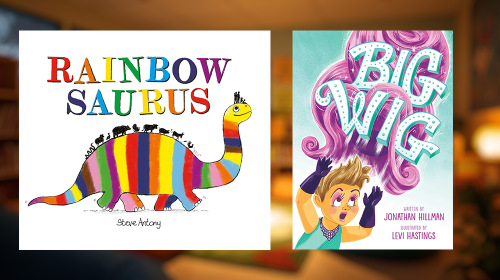 The event was advertised as "queer-led story time with an LGBTQ+ theme. We'll share stories, sing songs and do an activity with time to meet new friends at the end."
Steve Antony's Rainbowsaurus follows two dads and their three children as they search for a colorful dinosaur. Jonathan Hillman's Big Wig tells the story of a child who puts on a wig, becomes a drag persona named B.B. Bedazzle, and enters a neighborhood costume contest.
The books are written for children ages 3-5 and 4-8, respectively. Neither depicts sexual activity.
On July 23, Missouri Attorney General Catherine Hanaway sent a letter to the Daniel Boone Regional Library, which operates the Columbia branch, saying local residents had complained about the event. The letter reminded the library that providing pornographic material to minors is illegal under Missouri law.
The following day, Secretary of State Denny Hoskins went further. He called the event an attempt to expose young children to "adult material" and described it as "sexual grooming." If the library went ahead, Hoskins warned, he would do everything within his power to block state and federal funding for future events.
The library didn't cancel.
"We never wavered from holding Rainbow Story Time as planned," library spokeswoman Mitzi St. John later said. "We weren't doing anything illegal."
Records later obtained by KOMU 8 through Missouri's Sunshine Law cast doubt on just how local the initial outcry really was. The material that appears to have first caught state officials' attention included a Facebook post from a person listed as living roughly two hours from Columbia and an anonymous post on X.
KOMU also found that most complaints sent separately to Hoskins arrived after he posted publicly about the story time, suggesting much of the backlash followed the state's intervention rather than prompting it.
That is a different picture from Columbia parents flooding state offices with complaints about their neighborhood library.
What Did Families Actually Find?
For all the brouhaha surrounding the event, the scene inside seems to have been pretty uneventful.
Brandon Steele had never attended one of the library's story times. After seeing the controversy online, he went expecting trouble. Instead, he found a packed library and only a handful of protesters.
"I came here expecting there to be like a big crowd of people maybe causing problems," Steele told ABC 17. "And it was completely unnecessary. There was like one guy."
Mary Lamberton, a retired public school secretary and grandmother, came for a more personal reason. Her niece is transgender, and she wanted families attending to know they had support in the community. She recalled a positive atmosphere and an overflow crowd spilling beyond the children's room.
Library Executive Director Robin Westphal said this was the library's first story time specifically geared toward families with LGBTQ+ parents.
"These families have a legal right to exist in Missouri and in every other state," Westphal said. "Don't these families deserve to see their family represented in programming?"
For some parents, the answer will be an emphatic yes. For others, the books themselves cross a moral line.
When Does a Children's Book Become "Pornography"?
Hoskins's use of "sexual grooming" has a history. In 1977, born-again Christian singer Anita Bryant launched her "Save Our Children" campaign against a Miami-Dade gay-rights ordinance, warning that gay people were trying to "recruit" children. Jerry Falwell supported Bryant before founding the Moral Majority two years later, helping make opposition to homosexuality and pornography part of the emerging Religious Right's "pro-family" politics. The word "groomer" is newer, but the underlying accusation is not.
That history helps explain the baggage carried by the term. But not every parent who objects to LGBTQ+ themes in children's programming sees the issue that way.
Some religious parents sincerely believe young children should not be introduced to same-sex marriage, drag, or unconventional gender expression. Southern Baptist teaching, for example, defines marriage as the union of one man and one woman and assigns parents responsibility for teaching children biblical morality. A Baptist family might therefore see both books as carrying messages they do not want presented approvingly to their child.
Other Christians reach different conclusions. The United Methodist Church now recognizes Christian marriage between either a man and woman or "two adult persons," and in 2024 removed churchwide prohibitions on gay clergy and penalties for clergy who perform same-sex weddings.
But moral disapproval and pornography are not legally interchangeable.
Missouri's definition of material that is "pornographic for minors" requires more than something a parent considers inappropriate. Among other requirements, the material must depict or describe nudity or sexual conduct in a patently offensive way and, taken as a whole, lack serious literary, artistic, political, or scientific value for minors.
ABC 17 reporters reviewed both books before the event. Attorney Charles Hatfield, a former chief of staff in the Missouri attorney general's office, told the station the state's pornography laws are deliberately narrow.
"You can ban pornography, but it has to really be pornography," he said. "You can't just ban books or materials that you don't like."
At a July 28 press conference, Hoskins acknowledged that he had looked up the books but had not read them. State Sen. Rick Brattin, who joined him, repeatedly accused the library of sexualizing and grooming children. Neither official identified content in either book that met Missouri's legal definition of pornography.
"If it's not illegal, then we're going to be working with the legislature," Hoskins said, adding that other lawmakers had contacted him about filing legislation to prevent similar events.
Missouri Has Been Here Before
This isn't Missouri's first fight over what children can encounter in libraries. In 2022, the state enacted a law threatening school employees with criminal penalties for providing certain "sexually explicit" materials to students. A judge struck it down in November 2025 as unconstitutionally vague and overbroad.
Hoskins has also used library funding as leverage before. In March 2025, his office suspended a payment to OverDrive, which operates the Sora school reading app, after complaints about inappropriate books. After reviewing Sora's parental controls and safeguards, his office released the money the following month.
That April 18 announcement stressed that Missouri libraries and school districts operate under local control and encouraged concerned parents to work with local governing boards.
The Columbia controversy now puts that principle to another test.
Parents' Rights, But Which Parents?
Nobody was required to attend Rainbow Story Time. A Christian family that believes Big Wig contradicts its faith could choose another program or different books. An LGBTQ+ family could make the opposite choice.
That distinction echoes another recent fight over children's books. In 2025, the U.S. Supreme Court ruled in Mahmoud v. Taylor that religious parents could opt their children out of public school lessons involving LGBTQ+-inclusive storybooks. As we covered at the time, those parents sought permission for their own children not to participate. In Columbia, the disputed program was voluntary.
For Universal Life Church ministers, who encounter families with very different convictions about marriage, sexuality, gender, and Scripture, that's a familiar feature of religious pluralism. People in the same community can hold deeply incompatible beliefs and still share public institutions.
The difficult part is deciding what role, if any, government should play in policing the beliefs permitted within those institutions.
The Fight Isn't Over
Rainbow Story Time is over, but the state's scrutiny of the library is not.
Brattin has requested records concerning Rainbow Story Time and other LGBTQ+ programming dating back to January 1, 2025. The library expects to complete the request by September 21, a timetable Brattin has criticized as too slow.
On August 6, the National Coalition Against Censorship condemned the investigation and funding threats, arguing that state officials were pressuring librarians to censor themselves.
As of August 17, no criminal charges against the library have been announced, nor has Daniel Boone Regional Library publicly lost funding over the event.
When families in the same community hold sharply different religious and moral beliefs about sexuality, gender, and what children should be exposed to, how should a public library decide which programs to offer?
68 comments
-
 Shawn L. Rhodes
First off the library did nothing wrong in this situation. The parents are taking their children to an event at the library about books and the children seem to enjoy themselves. Be happy that in today's world there are still libraries and that children want to read instead of being involved social media and electronic media. This was blown out of proportion for no reason. SMH 😞
-
 Jodie C. Lenser
I work at this particular library, although am not involved in programming. The library attempts to be a safe and welcoming environment for everyone, including the LGBTQ community. Whether some people like it or not, lgbtq individuals exist, have always existed, and will continue to exist among us. Christians can try to keep their families from exposure to them and related topics, but are actually doing themselves and their families a disservice by denying the reality of gender diversity.
-
 Rachael Evans
There's an obvious logic to this.
First of all, I was born intersex, one of the very rare types, with MGD/ mosaicism. That's biological. I look and sound masculine; people think I'm Transgender (I'm fine with that; it's not an issue). It's a basic biological variation. And yet people try to beat me with their Bibles, claiming I'm unnatural, evil, satanic. Well, if you're one of them, your god (whoever he or she is) made me this way. I'm just as natural as you. Do you deny your god's creation? If so, you're a heretic in the eyes of your religion.
And now to the books, the point of the topic.
I'm married to my wife; we have a same-sex relationship, and I love her very much.
But I'm confused and angry because I was brought up reading books about straight people. About women married to men. I watched movies and TV programs that were only ever about straight people. All of our friends and family growing up were straight; there were no LGBTIQ+ people. There were no books about anything other than straight people. So, what happened? All that exposure to only straight material, it's still 99% of what I am exposed to, and here I am, anything but straight.
Books, movies, TV programs don't make you who you are when it comes to attraction. It's simple biology at play. And if you want to deny basic biology, are you not denying your god? They/ he/ she will be quite angry with you for doubting their creation.
But there is another way. It's called respect for others. It's caring equally for everyone without judgement or this crazy idea that you are somehow saving someone. In fact, I hope the darn rapture comes. That way, all the zealots will be sucked up into the sky to go and sit on some cloud playing haps whilst the rest of us live in a world of loving peace, respect for others, and compassion. And please, don't tell me about hell because, right now, thanks to the judgement of others, hell is where you and I are right now. In a world full of division, hate, and violence toward each other.
There are some simple rules to life: If you don't like Islam, don't become a Muslim. If you don't like same-sex marriage, don't marry someone of the same sex. If you don't like eating meat, become a vegetarian. If you don't like Trans people, just be as you feel comfortable. If you don't like other people. Become a monk or a nun. Simples.
Oh, and if you don't like me, that's fine. I'll still defend your right to pray to whatever you wish. Because I respect everybody, even if they disagree with me.
-
 Susan Patricia Gold
The library is a public venue and if a parent does not want their child to attend then they have that right. I think porn is in the mind of the beholder. We have gay couples with children and they, too, should be made to feel welcome. If Missouri injects funding into the issue then let's look at things we the taxpayer fund. There are things I do not like but my tax dollars are for all not just for a few.
-
 Dr Dennis Chevalier PhD, DDvin
To all,
I see a great deal of conversations ranging from mostly "justifications of a lifestyle" that biologically is not supportive, but more so of "don't tell me how to live my life" or tell "others how to live their life".
I want you to consider something...
When you are a parent the only thing you can do for your for child is to teach the best that you can based on your own life experience of what you believe in and what you profess.
Of late, many families. Have grown. To include only one parent, not two. And that the child is mostly on their own being raised around questionable content in a manner that less than 30 years ago would never be considered as acceptable.
Once the child has grown up they are free to choose their way. But when they are under your care and in your house, and is your responsibility there must be conformity.
It is really that simple and this is also what God teaches.
We play around with labels of how people are to be or how they have a right to be.
But when it all boils down to is justification. Quit making up excuses to be a certain way and just ..."be".
All actions have consequences. Remember that. You don't get this cry foul when you start to receive those consequences for your behavior, lifestyle or way of thinking.
Dr. D.
-
 Elizabeth Jane Erbe Wilcox
Are you suggesting that being a transgender human being is a “lifestyle?” It’s not a choice. It just …”is”.
And why must there be “conformity” in my household? My three children vary in many ways and always have. I would t want them all to be the same.
-
-
 Joseph Grieco
Missouri Secretary of State "Hoskins acknowledged that he had looked up the books but had not read them." This is typical reaction from those on the right. They will not read the books to determine what is objectionable about them except for the title or the publisher's blurb. They want society to be rooted in a "Leave It To Beaver", "Father Knows Best" America that only existed in 1950s television shows.
-
 Colleen McAllister
I pray thar one day people will be less judgy. There is no sex or pornograpy in these books. Let kids be kids and adults stop all the fussing over nothing.
-
 Rev Ned
Missourah is run by Christofascists who do not respect the wishes of their subjects. The legislature consistently negates statewide voter initiatives that have passed overwhelmingly. They rank low in education and high in crime. Several large businesses have left the greater STL area for safer digs.
-
 Tami Tabone
My thoughts are if you dont want your kids ecposed to.it, dont sttend. You have a choice. I remember growing up eith Flip Wilson, Bosum Buddies, and even the transvestite on All in the Family. It was never an issue then and shouldn't be now. I see no harm in it and from the description it does not appear that kids were exposed to anything pornographic.
-
 Bridget Kielas-Fecyk
This is sickening. People use religion to justify their HATE. And now they're trying to, literally, claim anyone, and anything, having to do with the LGBTQ+ community is "grooming". I.e. training kids to be sexually exploited. REALLY??
Books about a rainbow bug, or books about a boy who likes pink, are somehow "grooming??" What the actual eff?
It's bad enough SOME of these bigots are trying to get parents into prison for letting their little boys wear purple, or letting a little boy have a barbie without now threatening to murder librarians, burn down libraries, and slap FELONIES on library employees simply for teaching acceptance and having a story time.
I mean seriously, it's not like they're taking kids to BDSM dungeons and crap like that! It's a bloody library where kids are doing CHILDREN'S ACTIVITIES and being given rainbow scarves. '''oooh a rainbow, how horrific!""" - sarcasm -
There are some of these bigots that have gotten SO filled with hate, they scream about how "Satan's creating rainbows in the skies to encourage traffickers!"
-
 Ari Joseph Bertine
If people are going to call merely showing children that the LGBTQ+ community exists, without any sexual connotations whatsoever, "grooming," then the same term can apply to any religion in which there has ever been any member of the clergy or their congregations caught molesting a child. Especially since I know for a fact that many religious leaders teach people to keep it quiet if a kid is molested by clergy. That makes pretty much every accuser throwing stones from a glass house.
-
 Rev. Lindsay
Don't minimalize this. Years ago if you tried pulling this when I was a kid they locked you up on the spot. These people are depending on your complacency.
-
Bridget Kielas-Fecyk
Minimalize what? The hate-groups or the library? And no, they likely wouldn't. And who are "these people?" I'm in my 50's kid. I remember the Satanic Panic. If the librarians had an event like this, no one would bat an eyelash or be troubled by it at all. In fact, libraries had events like these all the time back in my day!
-
 Patricia Ann Gross
Rev. Lindsay,
What is "this?" Who are "these people?" Reading Little Red Riding Hood has a greater chance of traumatizing a child that either of these books: A story about a disosaur who likes bright colors and a kid who likes to play "dress up." That sounds pretty tame compared to a wolf eating a grandmother and then "dressing up" in the grandmother's clothes to fool the child into thinking he was her, just to be able to eat her. When I was a child I was so traumatized by Captain Hook when Robin Hood came on TV that I ran into my bedroom and hid under my bed. I never even knew what the story was about until I was an adult and Robin William's portrayal in "Hook" which I saw under protest.
Don't agree with the stories because of the characters? Simple. Don't take your children there.
-
-
 Kenneth Edwards II
just sad that people think they can control other peoples lives
-
 Kathryn Darcy Smith
STOP GROOMING KIDS TO BE AN ULTRA MINORITY! LGBTQ+ IS NOT A CHOICE AND THESE GROOMERS ARE INDOCTRINATING CHILDREN THAT IT IS! FYI, I AM "T" AND THIS IS STILL WRONG!
-
Joseph Grieco
You are correct in one area - it is NOT a choice. There is both a physiological and a psychological predisposition towards LBGTQAI+ . Not everyone is wired the same. The Talmud recognizes at least six gender classifications based on physical appearance alone. Early Christianity recognized same-sex couples marriages. Psychologists no longer consider anything other than straight heterosexualism as "mental illness". Part of the reason for the split in the Methodist Church was over the discussion of LBGTQAI+ as capable of receiving of G_d's Grace! I agree that YOU are YOU, and you have a right to your belief. However, you do not have the right to force others to conform to that belief. Just as I do not have the right to force you to change yours. What the Community is asking is for understanding and acceptance - not hostility and exclusion.
-
 Pastor George Day
Joseph Grieco
As a Messianic Jew, I find your assertions regarding the Talmud and early Christianity (also known as The Way) to be novel to me. Can you substantiate them with solid evidence?
-
-
Pastor George Day
Kathryn Darcy Smith
Why all the shouting?
-
-
 Susan Babette Allison-Diaz
If you want to talk about grooming it just hit me as a middle aged woman that since childhood I have been groomed through Disney. One day, my "prince" will come to be "awakened by a kiss" and "happily ever after". When my childhood should've stayed my childhood and not groomed me for older men's advances in hopes that "he" will be my prince and wanting to be a princess to be kissed. That is grooming.. When little children should've been more about Dora the Explorer and other non-romance educational tools like scientific explorations, world explorations without romantic references "kissing etc". Grooming little girls to be princesses. I think that leads more towards intentional actual grooming versus educating people on different cultures or not bullying people because someone might have a different structured family life.
-
 Brenda Seibert
My mother was ahead of her time. The message she objected to wasn’t really romance—it was the idea that a woman’s happy ending depended on finding a man.
For women who grew up in the 1940s and 1950s, that message was everywhere, not just in Disney movies. Girls were often taught that marriage and motherhood were the ultimate goals. At the same time, careers, financial independence, travel, education, and simply choosing a different kind of life were treated as secondary—or sometimes even undesirable.
What has changed is that young women today are much more likely to grow up seeing several possible versions of a happy life. They can marry or not marry, have children or not, pursue a career, live independently, or combine those things in ways that women of earlier generations often couldn't.
There are not enough opportunities yet, but certainly more than in the 1950s. The difference must be particularly striking when you've actually lived through both eras.
-
Jodie C. Lenser
Evangelical christians currently groom their daughters from birth to aspire to marriage and children as god's will and pleasure. I just attended my granddaughter's wedding, and it was more about their doing this for the glory of their god than for their own love for each other. Even having grown up in the church (not evangelical), I was somewhat shocked. My granddaughter just graduated summa cum laude from a public university, and does not question this mindset at all. I had been hopeful...
-
Pastor George Day
Jodie C. Lenser
... hopeful for what? Aren't you glad she's saved?
-
-
Patricia Ann Gross
Brenda,
My mother's "princess" story ended when she became a widow with three children before she turned 30 in 1959. She raised her three (and later five) girls with an expection that they go to college and get an education because she knew that "you never know when you might need it." It was the story I always heard, and it shaped the person I became. I raised my children the same way.
-
-
-
 Steven Ferrell
Stop pushing that sin lifestyle on children. It is time to remove that from children.
Stop pushing sex of any kind towards children. For pity sake, just let them be children.-
Patricia Ann Gross
Steven,
How is this in any way pushing sex towards children? Just because the story is about a child who has two dads? If the story said a mom and a dad you wouldn't consider it sexual, would you?
-
Joseph Grieco
Steven,
Would you rather those children live in a household where the mother and father are constantly at odds with each other, arguing over whether the sun rises in the East or the sky is blue? Because that is the alternative.
-
 ServantOfJudgement
Grieco,
Absolutely your fake standard nuclear family is better than teaching kids perversion is cool.
Did you know the CDC shows that when violence occurs in homosexual relationships, it's more brutal that in straight couples? That's a hard pill to swallow when you make up stuff like you just did I'll bet.
-
Bridget Kielas-Fecyk
Actually, that's very much not true. The only reason it appears true, and yes I DID look up the CDC information and the only way it APPEARS that way is due to the small number of incidents vs how many nonhetero relationships are known openly.
MOST non-hetero relationships are not mentioned, even to physicians, due to the very hate and bigotry individuals like yourself show so openly now. Even some trained physicians who normally would keep their professional demeanor have felt emboldened to show their hate toward the LGBTQ+ community.
This is not "perversion" in any way. IF you actually look up the CDC information, which I highly doubt you've done, it's more likely you deliberately went to sites that espouse hate and violence rather than tolerance, you'd know being LGBTQ+ is actually both 100% genetic AND 100% natural.
So having an event like this, an event that teaches children kindness and tolerance, is actually necessary. Also, it's part of the 1st amendment. So the threats of violence and being shut down in retaliation by the state is actually against the Constitution itself.
Btw, there's MORE violence in the "bible - normalized" version of relationships than there is in LGBTQ+ relationships. Also, in the "bible normalized" relationships, yes I've read multiple bibles, young girls are considered "Adult woman of marriable age" the moment they have their first menses. And if you go by that logic, than those saying that this event is evil because it's "grooming" and need to go by what their "bible" says, also is admitting they believe kids are sexual before they even turn 14.
-
Patricia Ann Gross
SOJ,
I agree that DV is an equal opportunity affliction, and no type of couple or family is immune from it. Same for divorce. Same for those that have been together as loving couples for decades. With only 10 or so years of legal same-sex marriages, and the fact that there are probably still more domestic partnerships than marriages amongst them, that the data can be compared appropriately. If it was published recently, it probably has the current administration's bias attached.
-
-
-
Bridget Kielas-Fecyk
Steven, you ARE aware being LGBTQ+ is GENETIC do you not? It's not a "sin lifestyle" it's just who people are. You can't FORCE someone to be attracted to the opposite sex. And no "Conversion Therapy" does NOT work. All it does is torture someone to the point they hate themselves and need years of ACTUAL therapy to recover.
-
Elizabeth Jane Erbe Wilcox
If they do “recover.” Sadly many will die from suicide.
-
-
Elizabeth Jane Erbe Wilcox
Steven, personally, I think that professional cheerleaders in skimpy outfits that show butt cheeks and breasts, along with kiddie beauty pageants that show little girls all dolled up in make up, coffered hair, high heels, and fancy dresses are far more sexualized than any drag queen reading children’s books to children is.
-
-
 CJC
CJC
Talk to your children. Be a parent.
-
ServantOfJudgement
These events are a much needed step to add MAP to the lgb2tqia++ acronym. All that support exposing children to this will be the same that defend Minor Attracted Persons when the day comes they finally get their place on the rainbow flag.
Here's how the left will behave: Deny, deny, deny, accept, defend, defend, defend.
The tip is just about in. The nation will jump a little at first but then will accept it in the end.
You got this!
-
Patricia Ann Gross
SOJ,
You need to back off of the MAP nonsense, because all you are doing is causing anyone who sees it to just keep scrolling when they don't stop to respond. How in the blazes can you connect the dots between taking a child to hear a story at a library with a MAP? I guess anyone who hangs out around a children's story room at the library can be equated with beeing attracted to children, whether they are parents or someone off the street. Straight white males are more likely to be MAP than anyone who is a member of the LGBTQIA++ community. Loving children and wanting to tell them age-appropriate stories does not make them perverts. It only makes them human.
-
 Michael Hunt
"The tip is just about in. The nation will jump a little at first but then will accept it in the end."
What a gross analogy.
Teaching children that some people are attracted to the same sex does not lead to accepting pedophilia. That's disgusting and has never and will never be accepted by the LGBTQ+ community.
As I've said plenty of times, engaging in sexual activity with minors is damaging to the health of the minor. Being LGBTQ+ hurts nobody.
-
 Chris
Chris
Are you deliberately clueless or are you just trolling? Nobody in the LGBTQIA+ community agrees with MAP. The only people trying to add it are MAP persons themselves and the ones who support the MAP members in the White House.
-
ServantOfJudgement
Chris, I'm perceived as a troll but I'm just stating the obvious that's too painful to digest.
We've got countless cringe videos of Biden creeping out every female he comes into contact with. We've got his daughter saying he took inappropriate showers with her as a girl. Somehow nobody and I mean nobody on the left can see it. Only Republicans are perverts to the left.
On the other hand, I can see it all clearly. I've got no problem calling a creep a creep. It's very nice to see clearly.
MAPs are attracted to children and gravitate towards them. That's why we see coaches, Sunday school teachers, doctors, school teachers and rainbow library drag queens groom and molest them.
You need not uncover your eyes friend and see. Keep yourself blissfully in the dark until the day comes when you do accept them. They are a marginalized community after all and why should anyone hate them with bigotry?
As I said. Deny, deny, deny, accept, defend, defend, defend. This is the future.
-
Michael Hunt
How many drag queens have groomed and molested children? How many church leaders have groomed and molested children? You do have problems calling a creep a creep because you continue to stand behind the creeps on the right while constantly attacking the creeps on the left. We on the left kick our creeps out of congress when they're accused of abuse, the right elected one to the presidency twice.
You're relying heavily on a slippery-slope argument to demonize the LGBTQ+ community as pedophiles. Pedophiles have never and will never be accepted by the LGBTQ+ community or our society writ large. Minor Attracted Person is a term used in psychology to describe people who feel attractions to minors but do not want to act on those attractions and become a pedophile.
MAP are not a marginalized community nor are pedophiles. Their actions cause harm to children but being LGBTQ+ doesn't harm anyone. There are no similarities between these groups of people.
-
Chris
Interesting. You equate "creeping out" women with molesting and raping children? Quite a bold statement. And as for the allegations from Biden's daughter, it was in her private diary that she thought it might have been inappropriate. No details as to what actually happened were given. Many people have showered or bathed with their children in order to conserve water and for convenience. Now, I'm in no way claiming Biden is innocent of all charges. Nor am I saying he's guilty of any charges. I'm saying there hasn't been any evidence given one way or the other. I'm also well aware there are Democrats who have been credibly charged with sexual misconduct. However, the majority of political figures facing such accusations are Republican.
As for MAPs.... you seem fixated on them. I can't help but wonder why. Yes, I know what it stands for and I know many people get positions of authority in order to have power over children. That doesn't mean they're accepted by the LGBTQIA+ community. That assertion is only made by people who use it to condemn one group of people they hate for the actions of another. Oh, but isn't it Republican led states that refuse to outlaw child brides? I wonder why that is....
Dude, you claim to have your eyes open and see clearly. Yet you seem to be focused only in one direction, and you tend to make a lot of biased comments. You should really examine that giant timber in your own eye before criticizing the splinter in mine.
-
-
-
Rachael Evans
Where in the world did the idea of MAPs being in any way aligned with the LGBTIQ+ community come from? Just because some dude behind a pulpit told their audience that this was the case does not make it a fact.
Let's look at the recent MAP scandal in the Catholic church (I'm Irish; this was part of my upbringing).
A John Jay College study examined records covering 1950–2002, with participation from 97% of US Catholic dioceses. It identified 4,392 priests/deacons against whom allegations of sexual abuse of minors had been made, approximately 4% of priests active during the period. There were 10,667 alleged victims, of which 81% were male. Allegedly, not all were tried or reviewed, but that's some statistic. Stop, and think about those numbers.
You see, the comparison doesn't stack up, as MAPs are not part of any community, apart from maybe residents of a segregation unit in a prison. They're certainly not part of the LGBTIQ+ community.
I remember the phrases aligning with the idea 'don't judge others lest you be judged yourself' and the other that 'some protest too much'. So, I'd urge you to be careful about who you take your guidance from, as they might just be protesting too much themselves.
-
ServantOfJudgement
Rachael,
Did you know when a man abused a boy, that man is gay?
Gay men enter the clergy and abuse boys.
Sorry about that.
-
Rachael Evans
What about adult males (or women) who abuse minors of the opposite sex? The arguments around MAPs are aligned with gay men only, ignoring that MAPs also harm minors of the opposite sex. It's not an LGBTIQ+ issue.
And to your point, which, let's say, is valid. The implication from your comment is that some people enter religious roles to gain access to minors. Therefore, it's clearly safe to assume that the clergy can (not will, but can) pose a threat to minors. Therefore, we cannot trust people who follow a religious path, as they might MAPs. The statistics show some of the astounding levels of abuse.
Can we not instead allow people to be people and not force judgement upon them based upon our individual religious interpretations?
-
Patricia Ann Gross
SOJ,
Some don't care, or are on the down-low. That doesn't make them gay, it just makes them confused (or closeted) as well as perverted. They will never be welcome in the LGBTQIA++ community.
-
Rachael Evans
Comment removed by user.
-
-
-
-
 James Riggle-Johnson
Parents who want to expose their children to these ideas should have the same rights as those parents who do not want their children exposed to them. The state has no right to tell parents what they can teach their children. They cannot force parents to teach children the Christian mythos.
As it said in the article, just because you don’t like a story for children does not make it pornography. A same sex couple with children who are searching for a rainbow dinosaur is not pornography unless one of the characters is participating in sexual acts. A child who puts on a wig is not pornography.
I lived through the Anita Bryant era, and it was ridiculous. It failed then, and it will fail now.
-
 James Richard Munro
Sounds like the perverts are as always, after the children. No self-respecting parent would allow their children to participate in this per versional garbage. Shame on the library for allowing it to happen in the first place. Jim M
-
 Religion as a Weapon is Wrong
No self respecting country would have a pedophile/rapist for president, yet here we are. No self respecting DOJ would hide (illegally) documents detailing the human trafficking, pedophilia, prostitution and money laundering of millionaires and billionaires, yet here we are. No self respecting political party would have spouse beaters as candidates, yet here we are. The "perverts" are right in front of our faces, but if the price of gasoline comes down, some people are okay with that. If I didn't like what the library was offering, I wouldn't go. But when I see our country breaking international laws and murdering civilians, I have more horror over that because I cannot control it. I can decide if I want to go to the library and so can my neighbors.
-
ServantOfJudgement
Are you talking about Democrats or Republicans RaaWiW?
-
Michael Hunt
Clearly Republicans. Anyone following along with reality can realize that.
-
Chris
I should think that was obvious, given the examples. I understand for some it's better to overlook the timber in their own eye while pointing out the sliver in another's. Sure, Democrats aren't perfect. I don't believe anyone says they are. But comparing the behaviors of the two parties, I'd have to agree the "perverts" are the ones in control. The Republicans. Specifically, the supporters of Donald John and James Donald.
-
-
-
Michael Hunt
Good on this library for sharing stories about different communities in our society, especially one that is demonized and attacked by people like you. I hope every parent can teach their children empathy and compassion for everyone in their community.
-
Elizabeth Jane Erbe Wilcox
James, I’m sure you are aware that the overwhelming majority of pedophiles are cisgender white males with evangelical/christian nationalist leanings. It’s exceptionally rare fo a drag queen, transgender human being or other member of the LGBTQ+ community to involved in such “perversions” as you suggest. If this comes as a surprise to you, please do yourself and humanity a favor and become educated.
-
Patricia Ann Gross
Rev. Jim,
Since you don't approve of this, you DO have the option not to go or take your children there. Children with same sex parents have the right to know, that this is something that is legal. If I did not approve of what your parents did for a living, and spewed publically called them out as "perverts," how would you feel about me? And then eventually how would you have felt about your parents? You are suggesting we torture the children who are in a loving and chosen family.
-
-
 Robert James Ruhnke
These are kids books. Written in a way for kids to comprehend potentially nuanced topics. The accusation of them being pornographic is bs. This coming from the party looking to create child marriage in Missouri is gross and ridiculous.
-
ServantOfJudgement
Here ha go again Robert. Missouri and all states follow the same pattern that also aligns with medical advancements such as penicillin and advanced biology. They moved from what we consider to be too young, excluding Islam, to what we consider a proper age today. Only Islam and sexual deviants want child marriage and sexual relationships with children.
I'll agree these books aren't pornography though they do teach perversion of sexual norms and will naturally influence young minds as the author intended. That's gonna have to end.
-
Robert James Ruhnke
Those “sexual norms” have been in place by force and aren’t natural SOJ. Even the concept of the nuclear family isn’t natural. Oh no. These books generally teach autonomy and consent to young children, the anathema to your regressive religious views. Your punch at Islam is a joke because in parts of the Muslim world and maga world they both want young children to become brides. The abrahamic religions are more alike than they are different, SOJ.
Only deviants? We agree. Republicans are deviant. Yes. The child marriage ban was barely passed in MO. But elsewhere in the country Republicans are trying to shorten the age of consent to marry 14. https://www.kcur.org/politics-elections-and-government/2025-07-10/missouri-child-marriage-ban-foster-kids-benefits
-
-
-
 Chaplain Shawn
If the libraries operate discreetly and use less obvious names maybe this is not an issue. Certain verbiage will draw unwanted attention. So, avoid using it and come up with more original names like the last names of the authors. I think there is so much backlash because when you look at what is worn by some marches it is borderline inappropriate to over the top inappropriate. There is nothing wrong equally representing each group in society. What is wrong is shoving your views in the faces of others. Your rights end here another person’s begins. However, in plutocracies where it is elite rule (globally & historically), injustices occur regularly. One only needs to go back to the 20th century to see the results of barbarically brutal rulers like Idi Amin, Pol Pot, Stalin, Mao, Hitler, and even government agencies in the US.
-
 Travis A. Lee
WHY? Why should the LGBT+ Community "operate discreetly"? What are they doing wrong? Really, What? They are having an event, just like any other Group would. They are teaching literacy,
-
Chris
Exactly. Requiring one religion to be forced into every aspect of secular life while condemning any other religion, set of beliefs, or no religion at all is shoving views in the faces of others. Nobody forced people to show up to the event. It was completely voluntary. Nothing was shoved in anyone's face. And yet haters were hating simply because of the subject material.
-
Patricia Ann Gross
Shawn,
Please explain how this is "shoving" anything "in the face" of those who had the choice to just ignore it? Semantics solves nothing. If they used some sort of semantics to "cover up" it was intended for families that were led by a same-sex couple, and someone got the wrong idea, then they would be accused of hiding and grooming. This is out in the open, where it should be. The straight couples "offended" by this had the option to refuse to go. Without the being open about who the intended audience the backlash would have been much worse.
-
-
Rev Ned
What do you expect from Missourah? They routinely negate legislatively things that a majority of voters have passed. Their Christofascist politicians think they know better that the voters.
-
Jodie C. Lenser
As a Missouri resident, you are absolutely correct. Unfortunately. Kehoe must go! (for one)
-
-
Dr Dennis Chevalier PhD, DDvin
Please don't poison our children!
Dr. D
-
Michael Hunt
This isn't poison. Bigotry is poison.
-
Robert James Ruhnke
Says the man who glitters his words with poison every chance he gets, man is many titles,
-

You can't do anything about asteroids, so we'll just stay focused on things that we do have some input on.