

Alonzo Lunsford was shot seven times during the 2009 Fort Hood massacre. Nearly seventeen years later, he wants to look the man who shot him in the eyes one last time.
"I'm going to be there," the former Army sergeant told the BBC, describing his plans to attend the execution of Nidal Hasan, the former military psychiatrist who murdered 13 people and wounded 32 others at the Texas military base.
Lunsford wants Hasan to know that he survived. "Dude, you failed, I'm still here," he intends to tell him.
But Lunsford has mixed feelings about the government's announcement that the execution will be broadcast live to the public. Watching a man die, he argues, is "not something you should view for entertainment purposes."
He's not alone in feeling that way.
The Return of the Public Execution
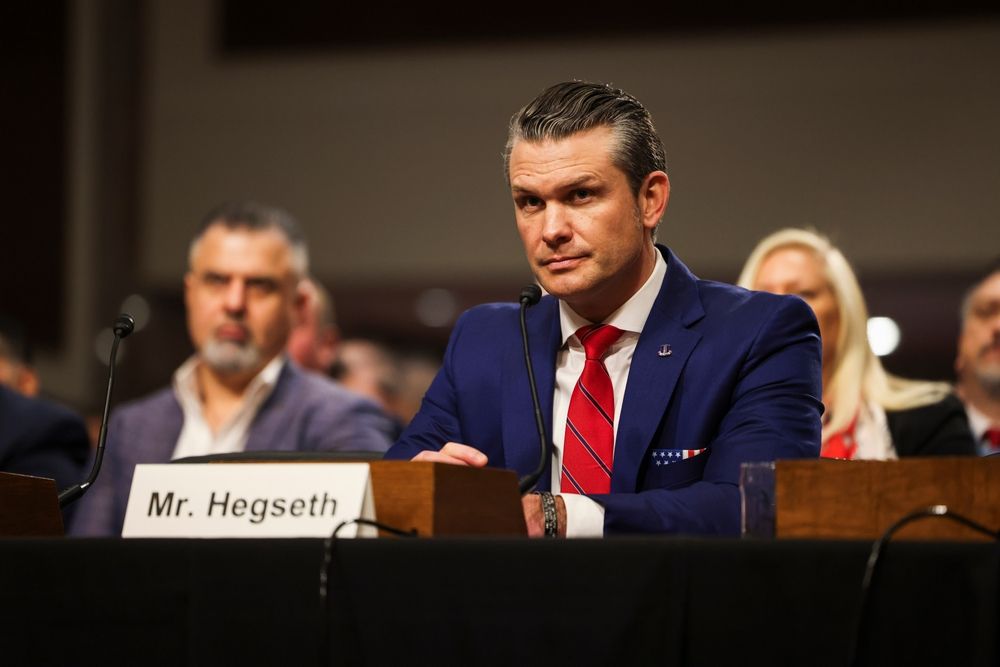
On October 8, Defense Secretary Pete Hegseth made the shocking announcement that Hasan's execution, scheduled for December 3 at Fort Hood, would be broadcast live for the public to view.
The method? A firing squad of American soldiers.
"He's gonna get a firing squad of soldiers, as it should be," Hegseth declared during an interview with conservative commentator Jack Posobiec.
"We'll make sure that people are able to watch it, that it's public, because people need to understand that there's serious consequences for these types of things."
If carried out as planned, it would be the first U.S. military execution since 1961 and the first American execution livestreamed to the general public ever.
The announcement immediately drew fierce criticism, including from one of the nation's most prominent religious leaders. Archbishop Paul Coakley, president of the U.S. Conference of Catholic Bishops, called the plan "a barbaric promotion of a culture of death."
"Our God is the God of life," Coakley declared in a statement released Friday. "The public execution even of one who has done grave harm will only further undermine the moral fabric of our nation and be a blight on the conscience of its people."
Coakley cited Romans 12:17, which instructs Christians not to repay evil with evil.
After all, a public execution is the event that sits at the center of Christianity itself.
Jesus Christ and the Roman Spectacle
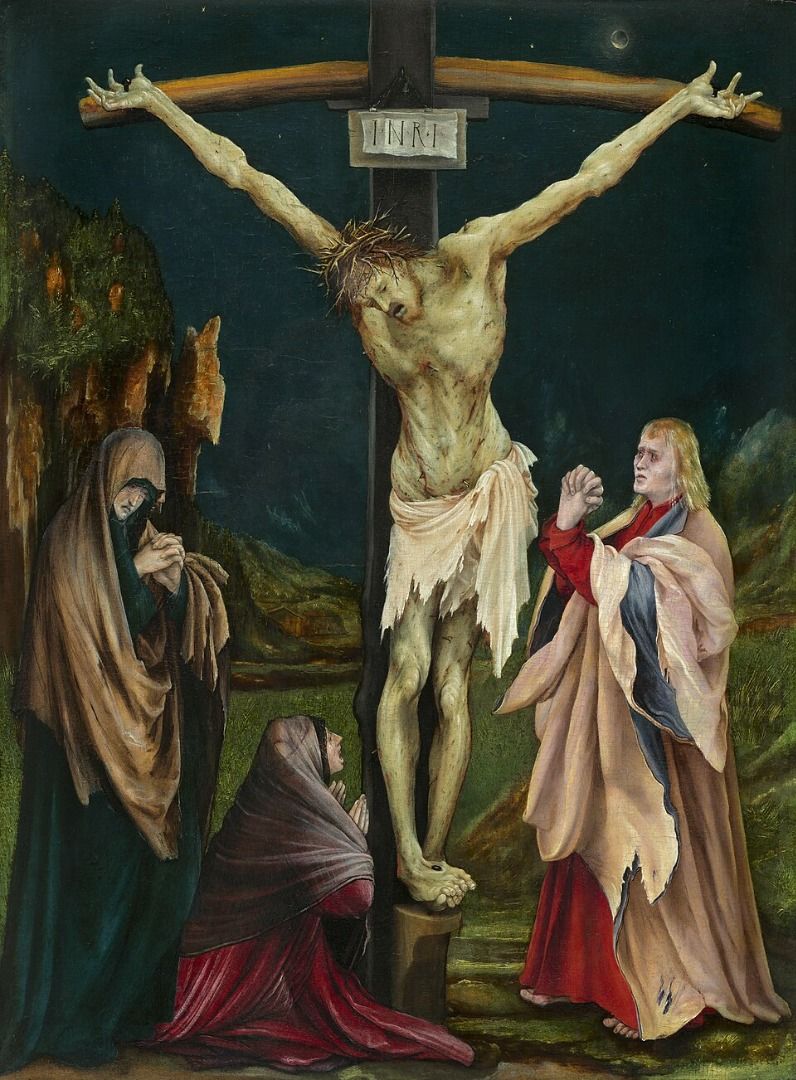
When Jesus of Nazareth was sentenced to death nearly 2,000 years ago, the Roman authorities weren't particularly interested in discretion.
Crucifixion was designed to be visible. Victims were displayed along roads, outside city walls, and in other prominent locations where passersby could witness their suffering. The Romans used crucifixion to punish enslaved people, rebels, and other perceived threats to imperial authority. Its brutality sent a message to anyone considering defying the empire.
The Gospels make clear that Jesus' execution attracted an audience. Luke 23:35 describes the scene in strikingly simple language:
"And the people stood beholding."
As Jesus hung on the cross, religious authorities mocked him, soldiers taunted him, and spectators watched. The public humiliation was an intended part of his punishment.
For Christians, of course, the crucifixion eventually became the central symbol of their faith. The Roman instrument of torture was transformed into a symbol of salvation, sacrifice, and divine love. Millions of them wear a depiction of that public execution around their necks every day.
When Christians Gathered to Watch People Die
For much of early American history, public executions doubled as religious gatherings. Ministers preached at the gallows, congregations sang hymns, and condemned prisoners were urged to confess their crimes and seek salvation. Crowds sometimes numbered in the thousands, with parents bringing their children to witness what they understood as an important moral lesson.
But religious beliefs could also help determine who was condemned to die in the first place.
Between the fifteenth and eighteenth centuries, tens of thousands of people, predominantly women, were executed as suspected witches across Europe. Many were burned at the stake, sometimes after being strangled or otherwise put to death. Catholic and Protestant authorities alike participated in witch hunts, fueled by fears that accused witches had made pacts with the Devil.
The Bible itself supplied justification. Exodus 22:18 commands, "Thou shalt not suffer a witch to live."
The infamous Salem witch trials of 1692 were part of this broader history. Nineteen accused witches were publicly hanged in Massachusetts, while another man was pressed to death with heavy stones. Contrary to popular belief, none were burned.
The influential Puritan minister Cotton Mather himself defended the Salem prosecutions and attended the hanging of former minister and accused witch George Burroughs. When Burroughs flawlessly recited the Lord's Prayer from the gallows (words many believed that witches were incapable of saying), spectators began to question his guilt, Mather himself reportedly intervened to ensure the execution proceeded.
Indeed, there was an explicitly spiritual component to these early American spectacles. Clergy saw an opportunity to save condemned souls before death, while the surrounding community received a warning about the wages of sin. The gallows effectively became an outdoor pulpit.
Why Did Public Executions Disappear?

Eventually, however, public executions became notorious for attracting unruly crowds and carnival-like atmospheres. Spectators arrived seeking excitement more than they did moral instruction. Religious reformers began to question whether these spectacles encouraged virtue at all, while government officials worried about drunken crowds, violence, and botched executions ultimately undermining respect for the law.
Beginning in the 1830s, states gradually moved their executions behind prison walls, where officials could exercise greater control over the proceedings. The last widely recognized public execution in American history occurred in Owensboro, Kentucky, in August 1936, when an estimated 20,000 people gathered to watch the hanging of Rainey Bethea.
Bethea, a young Black man, had confessed to raping and murdering a 70-year-old white woman. Yet prosecutors charged him only with rape, exploiting a peculiar Kentucky law under which murderers were electrocuted privately, while convicted rapists could still be hanged in public.
The execution became a national spectacle, drawing widespread condemnation and embarrassing state authorities. Kentucky abolished hanging in 1938, finally bringing the era of public executions to a close. Until now.
Ninety years later, Americans may soon be able to experience the same event from the comfort of their living rooms.
When Executions Go Wrong
Just days before Hegseth's announcement, a very different execution made national headlines.
On September 30, Tennessee officials attempted to execute 50-year-old Christa Pike, convicted of the brutal 1995 murder of 19-year-old Colleen Slemmer. Pike was administered two doses of the lethal injection drug pentobarbital. Yet she continued breathing, and after a prolonged and unsuccessful attempt to put her to death, she was rushed to a hospital.
She survived, suffering severe medical complications. As of October 9, Pike has reportedly regained consciousness and begun speaking, although she continues to experience serious medical complications. Tennessee Governor Bill Lee suspended further executions for the remainder of 2026 and ordered an independent investigation.
Slemmer's mother, May Martinez, had traveled from Florida and spent hours waiting to witness the execution of her daughter's killer. She described the state's handling of the ordeal as "a mess."
What happens when an execution goes horribly wrong in front of millions of viewers?
Does God Demand the Death Penalty?
The Old Testament prescribes the death penalty for numerous offenses, including murder, adultery, and certain religious transgressions. Genesis 9:6 provides one of the most frequently cited biblical defenses of capital punishment:
"Whoso sheddeth man's blood, by man shall his blood be shed: for in the image of God made he man."
For some Christians, the verse establishes a divine mandate for executing murderers. Albert Mohler, president of the Southern Baptist Theological Seminary, made precisely that argument in 2025 while discussing the federal government's decision to seek the death penalty against Luigi Mangione.
The justification for capital punishment, Mohler insisted, "comes directly from the Word of God."
Other evangelical leaders, including prominent Texas pastor Robert Jeffress, have actually argued that capital punishment affirms rather than contradicts the sanctity of human life.
Supporters also point to Romans 13:4, in which the Apostle Paul describes government authorities as servants of God who do not bear the sword in vain.
But Paul's letter to the Romans contains another passage worth considering... Just a few verses earlier, in Romans 12:19, Paul instructs believers not to seek personal vengeance, declaring that vengeance belongs to God.
Those two passages, appearing in consecutive chapters of the same biblical letter, have helped fuel centuries of disagreement about the distinction between divine justice, government punishment, and personal revenge.
Perhaps most notably, the Catholic Church itself has moved firmly against capital punishment.
In 2018, Pope Francis revised the Church's official Catechism to declare the death penalty "inadmissible," describing it as an attack on human dignity. Other Christian denominations, including the United Methodist Church, also oppose executions.
What Do Other Religions Teach?
Christians are hardly alone in wrestling with the morality of executions.
Nearly two millennia ago, Jewish rabbis were debating the morality of capital punishment. The Mishnah, a foundational collection of Jewish religious law, records their disagreement.
One rabbi considered a court that executed someone once every seven years excessively violent. Another extended that period to seventy years. Rabbis Tarfon and Akiva went further, declaring that if they served on such a court, nobody would ever be executed.
But Rabban Shimon ben Gamliel had a sharp response: eliminating executions would encourage murderers.
Islamic jurisprudence traditionally recognizes capital punishment for certain serious offenses, including murder, through the principle of qisas, or proportionate retribution. Yet Quran 2:178 also provides for forgiveness, allowing a victim's family to pardon the offender and accept financial compensation.
Buddhism approaches the issue through its First Precept, which calls on followers to refrain from taking life. Many Buddhist thinkers have interpreted that teaching as incompatible with capital punishment, although executions have historically occurred in Buddhist-majority societies.
Will You Be Tuning In?
Capital punishment is carried out by the government in the name of its citizens. Why should the public be shielded from seeing precisely what that entails? Keeping executions behind closed doors, some argue, allows supporters to advocate the death penalty without confronting its physical reality.
Some critics of capital punishment have themselves actually argued for greater transparency, believing that public exposure to executions might change people's minds about the practice.
But Hegseth's proposal introduces something new: a livestream that millions could watch on their phones, with footage potentially circulating long, long after the execution ends. Even some death penalty supporters find that prospect disturbing.
Lunsford plans to witness Hasan's execution in person, but he doesn't want strangers treating that death as entertainment.
If the government broadcasts an execution for everyone to see, do we have a moral responsibility to watch what is being done in our name, or a moral responsibility to look away?

0 comments