

If Jesus Christ came back tomorrow, how long do you think it would take for them to lock him up? Based on what's happening in In Ocean City, Maryland this week... that arrest may come more quickly than you'd think.
An Episcopal church in town, St. Paul's By-the-Sea, decided to open its property to homeless neighbors. This act of charity raised the ire of the town's leaders, and when the Church refused to stop providing shelter, Ocean City began fining the congregation $1,000 per day until the homeless were kicked back out. Now the church is suing, asking whether faith or zoning gets the final word.
What Happened in Ocean City?
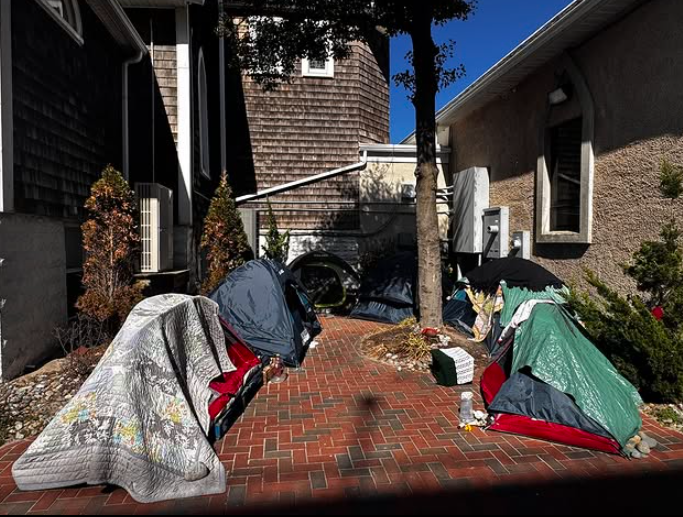
The dispute began outside, with people sleeping in tents on church property. When the town pushed back, St. Paul's moved the shelter indoors, opening Dewees Hall for overnight stays. Ocean City ordered the practice to stop by June 8, then issued a $1,000 citation that same day. Identical fines followed every day after, landing on Pastor Jill Williams. By June 16, the total had reached $18,000. Shortly after, the Church, through it's attorney Robin Cockey, delivered a letter that made their intentions to continue patently clear:
"Please inform [the City Planning Director] the Church has absolutely no intention of turning these folks out. Providing shelter for the homeless is a fundamental tenet of the social gospel espoused by the Episcopal Church of America, of which St. Paul's is a parish. The Church will not comply with [the City's] ultimatum, nor will it pay a nick of any fine [they] impose."
Pastor Williams, so far, has continued to hold the line.
Recently, she posted a video of an exchange between herself and city officials arriving at the doors of her church to deliver her another fine. In the video, she quotes Jesus's words from Matthew 25 and claims that since they've begun their mission to "live out the gospel" they've sheltered more than 1.5 thousand people.
In her regular videos, Pastor Williams has also made sure to share the phone number of Ocean City's town hall: 410-289-8221.
Why Is the Church Going to Court?
In its lawsuit, St. Paul's names the mayor and Town Council as defendants and rests its case on two pillars: the First Amendment's Free Exercise Clause, and the Religious Land Use and Institutionalized Persons Act (a federal law shielding congregations from discriminatory zoning). The filing asks the court to void the citations and permanently bar the town from obstructing the shelter.
The church grounds its stand in scripture rather than strategy. Caring for people "who are marginalized, poor, or oppressed," their legal filing states, is a long-standing tenet of the Episcopal tradition, one the pastor and congregation say they are bound to honor.
"Every evening our doors open to people who need safety, dignity and hope. We believe that serving our neighbors in this way is part of our calling as a church, and we remain committed to that work," Pastor WIlliams said. also expressed, in an interview with the Episcopal News Service, that she is "100% confident" that the Church will end up victorious.
Does the Town Have a Point?
Ocean City frames the issue as safety, not hostility to faith. Town Manager Terry McGean said the church converted an assembly hall into barracks-style housing without seeking the permits a change of use requires. Those rules exist so that buildings used for overnight stays meet occupancy, sanitation, and fire standards. The town gave more than 30 days' notice, McGean said, and acted only after the church declined to apply.
"These standards are not unique to this situation and are applied consistently to all properties in Ocean City in order to protect the health, safety, and welfare of both occupants and the broader community," McGean said.
Both sides can claim to be protecting people. The town points to fire exits and sanitation codes. The church points to the harsh conditions outside its doors. That overlap is what makes these cases so hard, and why they so often reach a judge instead of dissolving into compromise.
Where Does Compassion End and Code Begin?
This standoff fits a pattern across the country, where congregations caring for the unhoused keep colliding with local zoning. A Washington church ran up roughly $100,000 in fines for sheltering homeless people in RVs on its land, citing the same federal law St. Paul's now invokes. An Ohio pastor faced criminal charges for keeping his doors open around the clock through winter.
The friction reaches beyond Christianity. A rabbi fined for hosting religious gatherings at home turned to the same statute, a reminder that land use law touches every tradition that gathers people under one roof. Cities have increasingly treated homelessness itself as something to punish or push away where it can't be seen, and houses of worship are often asked to step up where society has failed with whatever resources they have.
Where do you stand? Should a town's safety standards give way when a congregation acts on its conscience, or would these people be better off back on the streets?
63 comments
-
 Bridget Kielas-Fecyk
Why are people screaming about the LGBTQ+? There are those among the homeless, there are addicts, and yes there are criminals. HOWEVER, the vast majority of homeless individuals are those who've simply fallen on hard times. Severe illness, injuries, job loss due to a stagnant economy, landlords deliberately jacking up rates beyond what people can afford to pay, these are the MAIN reasons people end up homeless.
Churches take in BILLIONS every year. These billions are SUPPOSED to be for funds to help the homeless, to feed the hungry, to heal the sick. You know, the thing they claim JESUS would do.
Then I see all these hate-filled morons crawling all over the comments here screaming about the LGBTQ+ community and their hate for the homeless individuals, and yet they have the cajons to claim to be ministers preaching "god's love?" If they feel THAT much hate for their fellow humans, then they should give up their ministry credentials.
Or do they prefer the idea of ministers taking in those billions and funneling it into living in mansions and having luxury yachts and telling those that donate to suck eggs because they don't actually care about the people they claim to be praying for?
Or rather, the ones refusing to use that money to aid others don't care about the people they're PREYING ON .
-
 Rev. BH
Here you go James. Copy and paste: LGBTQ+
-
 obere mchugh
these city code's and there made up rules boil down to them wanting there dime, in the end not withstanding the long history of churches of any faith supposed to be a shelter for the faithful and non alike, seek shelter within the religious houses point blank this is just city way of getting there pound of flesh that they want as its greed as the code rules are just there to make money off people its a scam really in the end cause fines fee's and the like are only there to pay the city and to finance it along with the taxes and other scam's governments big and small create against the people.
-
 Donna J Enneking
Help your fellow women, men, children. Pastor Williams and St. Paul's are doing God's work. Yes, there are rules, but negotiations before ridiculous fines & trying to work together to solve the city's issues would be a better solution.
-
 Dr Dennis Chevalier PhD, DDvin
I completely agree
Dr. D
-
-
 Rev. Carol M Anaski-Figurski
Interesting article, of federal & state laws " Per clergy law". It may need the DOJ Department of Justice to intervene on these disputes.
-
 Joshua Ondich
I agree with the Church, The Church is doing its mission. If the Church had an indoor shelter, maybe the city would have not created an issue over this. I believe a property rights arugement could be made for the Church. The Church probably owns the property, therefore it is not in the city's perview to micromanage what people do on their land. It reminds me of inner-city politics, the city will promise programs and relocation for the homeless, but let them sit out on the streets and give needles for drug use,but If a church brings the homeless in and try to rehabitiate these people, then the church is bad. It is very hypoctitical.
-
 Salvatore Antonio Rossano Jr
I sympathize with the church. However, the gospel also teaches: “Let every person be subject to the governing authorities” — Paul (Romans 13:1). Sounds like the church could have made an effort to comply with the zoning laws. The other unanswered question is were local residents affected in any way by the church's actions.
-
Dr Dennis Chevalier PhD, DDvin
Amen brother
-
 Kerry L Gausemel
Salvatore,
My sentiments exactly.
I feel that many do-gooders feel they are morally superior for some reason and do not need to obey the rules that society agreed upon. If you don't like the rules of civilized society, then vote for your representatives to change the rules. The alternative is to move.
-
-
Bridget Kielas-Fecyk
If Jesus were alive, the ones spewing hate at this church for helping the homeless, and making nasty remarks about political groups and the LGBTQ+ community, would be screaming for him to be put into prison. He could walk across the water and prove who he is, and they'd be shrieking, calling him "illegal", and a "terrorist" due to him being dark skinned, dark haired, and middle-eastern in appearance, and demanding he be treated the way the romans treated him in ancient times.
-
Dr Dennis Chevalier PhD, DDvin
My dear Bridget, I am sorry to say you are right. Keep him in your heart, voice him to all, and remember "...you are attending angles unaware..."
Dr. D
-
 Sir Lionheart
Yes, and even Angels, if they are real. 🤭
🦁❤️
-
-
-
 Rev. Miche'al Yosef Dixon
Obviously you don't know the United States government don't give a crap about our rights. Church or Private the government just takes your property as they please and everyone let's them. I had my house and property taken and put homeless because I couldn't afford their extortion money they call property tax for property you paid for. They'll be charging you air tax soon, already charged death tax for dying. 5th circuit Court of appeals ruled on record "the Constitution is nothing but toilet paper with ink blots."-Nov 2011 Dixon vs Louisiana.
-
Sir Lionheart
I believe it’s more local government in many states that’s causing these issues. Here in the blue state of California, it’s become the costliest place to live, and it seems to be getting worse. Millions are leaving California because it’s being run into the ground. We have the highest homelessness in the country, and they just don’t know how to manage it, despite the billions of dollars they asked for to correct the issues. This administration is looking at the tremendous amount of fraud that has been rampant here in California over the years at the cost of us tax payers. Hundreds have recently been arrested these last few weeks that have been accused of fraud that have bought luxury cars, homes, jewelry, and even a hotel in the Philippines, as a result of fraud.
🦁❤️
-
-
 Leslie A. Hulberg Née Tomasura
If it is possible they most certainly should be able to help their fellow man.
-
Leslie A. Hulberg Née Tomasura
If it is possible they most certainly should be able to help their fellow man.
-
 Donald G Magel
Ice would have arrested Christ and deported him ????to heaven I guess.
-
 James Richard Munro
He would be back in three days
-
Dr Dennis Chevalier PhD, DDvin
very bad joke.....now stand in the corner next to Judas... lol
-
Rev. Miche'al Yosef Dixon
What joke? Two years ago there was a CNN news segment ICE posted the requirements for foreigners entering the USA and Yeshua being Israeli would be on the restricted list being middle eastern.
-
Dr Dennis Chevalier PhD, DDvin
If you don't get it, I can't help you.
Dr. D.
-
-
-
-
-
 Kenneth Edwards II
yes they are doing gods work
-
 Roy S. Thorpe
Those with properties and money don't want the poor making "their" town ugly! "Sweep the poor to somewhere we don't have to look at them!" Having come from the "wrong side of the tracks" I have seen these people over and over in every town! They make laws to rid their towns of the poor and misfortunate! They will receive their "reward" when they move to the place that Jesus created for those unwanted souls! The church is right and the town is wrong!
-
 Rev. Lindsay
I don't think constitutionally you can tell a church what to do on their own property. Church property is almost like a separate country. I think though it would have been wiser to have them sleep indoors on stackable cots as not offend the community. It's also a necessity so they could access the church bathroom. The town should show a little compassion. The church owner could sue and win a case of violation of freedom of religion easily enough.
-
 Patricia Ann Gross
Gerald,
Church properties with kitchens that prepare meals for the public are required to be licensed and pass rigerous inspections, equivalent to local restaurants. This is as it should be, because, just because it is in a church, it can still serve contaminated food if it is not cooked, stored, and served properly. Church properties still have to abide by local building codes for construction, renovation, and demolition as well, as they can become a public hazzard. I do agree, that the city should have worked with the church to find a resolution to the problem rather than simply handing out fines.
-
-
 Rolando Couce
OF COURSE A CHURCH SHE BE ALLOWED TO SHELTER THE HOMELESS I KNOW THE DEMOCRATS ARE NOT ALLOWING THIS BECAUSE THE DEMOCRAT MAKE MONEY FROM THE HOMELESS WHAT A ROTTEN SHAME
-
 James Terry
Ocean City, Maryland is a non-partisan town, and the council members and mayor do not run under a particular political party as candidates for office. They are all at-large members, and most, including the mayor, are real estate agents or in the hospitality industry in the town, so they know the town well. The main requirement for being on the town council is that they are residents of the town and that they haven't been convicted of any felonies. Not everything is a political conspiracy in life, and people waste far too much time trying to create them.
Instead of fining them, a more responsible and non-confrontational solution would be to work with the church to make sure that the building is up to code. If the city doesn't have to pay for a homeless person's upkeep, then assisting and making sure that an organization, particularly one that is willing and able to do so, is up to code, then that seems like a win-win to me.
-
 Margaret Nadine Katona
This isn’t the first time something like this incident has happened here in Ocean City. There have been other organizations who have had shelters/soup kitchens within the town and have been closed down over the years. Evidently only the “money pocketed tourists” are welcome here: not the less fortunate residents that can’t keep up with the skyrocketing costs to survive! Yes, sometimes there are negative elements within the homeless, but isn’t this also true of the “normal” Mr/Ms Joe Public? We need to smile on our brothers and sisters and love one another.
-
Patricia Ann Gross
James,
Thank you. My thoughts exactly.
-
-
Rev. BH
Roland, how are the democrats making money from the homeless?
-
Bridget Kielas-Fecyk
Hate to tell you, but the democrats are supporting this church. It's the party that's not. And no, they're not making money by keeping people homeless. They've been fighting to put in shelters and free programs to help people get off the streets. And guess who's been fighting them on it?
-
-
Patricia Ann Gross
I have very mixed feelings about this. I have worked closely with the homeless population where I live, and have seen both abuses by under-code shelters that are overlooked by License and Inspection, and a growing need in our community. Recently we have had the homeless allowed to use a single park for camping, complete with shower and toilet facilities and case management by a local non-profit only to be evicted and fensed out a month after it opened. While this facility seems to be doing all they can to provide for the homeless, other "establishments" have probably taken advantage of grant money and public apathy toward the homeless to provide sub-par services and accommodations. While I agree that standards are important, public safety, including the safety of the homeless is as well. If the city wants to push the issue, they should work with the church to find a solution that will work for all parties. That would be better for the community in the long run.
-
 Bishop William Dusenberry, DD
If all the voters, who attend Christian churches regularly (and, who really believe that they are following the will of Jesus, by housing the homeless) were to vote for Democrats instead of fascists, a solidly Democratic Congress would support rehabilitating our aging military bases, to provide for everyone who’s incapable of providing for themselves.
-
Dr Dennis Chevalier PhD, DDvin
No, they would pocket the funds claiming to do a "study" on that possibility then say all the funds went to that and not do anything!
-
 A Michael Piper
if Haiti is an example - How many solar stations or community gardens or other means of public self sufficiency were implemented with the billions spent there?
-
Dr Dennis Chevalier PhD, DDvin
"0" that I know
-
-
-
-
 Keoni Ronald May
If a church has a very large acreage, 2 very large, industrial strength, all steel, different gender bathrooms with showers, washers & dryers, changing rooms, food facility, security-maintenance-counseling-management personnel, then you might have a chance.
-
 Alexander Arends
Church should be allowed to shelter the homeless as long as it meets local and state health standards.
-
 Nicholas J Page
So a church is no longer a safe haven for the homeless at least their off the streets and safe from abuse,Attacks etc if the church cannot protect them who can ?.Until they have been in that situation like I have living in a car after a relationship break down it's not fun I can tell you
-
 Colleen McAllister
As a Christian myself I applaud this church for exhibiting true Christian values. As long as they are able to provide shelter for the homeless then the city needs to back off and let them do so
-
 Douglas Robert Spindler
The courts have already ruled on this. The church like every other business must follow building code, fire code and sanitation requirement. Sadly these are services God does not provide.
-
 John Reddan
Uniform enforcement of laws and building code is important. Selective enforcement is a slippery slope that leads to further problems - it certainly is in my city, where laws are not enforced on homeless (only on those that can afford to pay the fines - even though that isn't the specific intent). Overall, this has not solved anyone's problems, since one night's lodging doesn't address the underlying problem. Given the amount of notice given the Church - the failure on both sides to negotiate a solution that works for all parties is the truly sad part.
-
-
 shiningwolf7
Though I am not Christian, I am Pagan and Witch, yes, they should be allowed to be of service to those in need, of whatever need is presentable, following the teachings of their book. As well, all religions should have this entitled right, if it is within their specific teachings. Also, Pagans, Witches, etc., though having no official writings for all, do have individual, and group beliefs which can fall under conscientious moral principles of doing what is right. Though I have my pet peeves of, if helping others, they should at least act like they are grateful by not destroying property, fight on property, trash property of person(s), or groups trying to be of service to them; personal experiences. With so many Towns, Cities, and States run by republicans who are so adamant poor people are trash, so not worthy of any type of help at all, I think every person of conscience should come together and try to, not only relieve immediate dire situations, but as well, work to abolish situations causing great burdens upon society which create, both, near and dire homelessness.
-
Dr Dennis Chevalier PhD, DDvin
I am reminded of Matthew 25: 34-46 "34 Then the King shall say to those who will be on his right: ‘Come, you blessed of my Father. Possess the kingdom prepared for you from the foundation of the world. 35 For I was hungry, and you gave me to eat; I was thirsty, and you gave me to drink; I was a stranger, and you took me in; 36 naked, and you covered me; sick, and you visited me; I was in prison, and you came to me.’ 37 Then the just will answer him, saying: ‘Lord, when have we see you hungry, and fed you; thirsty, and given you drink? 38 And when have we seen you a stranger, and taken you in? Or naked, and covered you? 39 Or when did we see you sick, or in prison, and visit to you?’ 40 And in response, the King shall say to them, ‘Amen I say to you, whenever you did this for one of these, the least of my brothers, you did it for me.’........"
At some point, being human and devine will collide. Stand for what you believe in. And accept the consequences of your actions!
Dr. D
-
 Lady Mutt Cat
The church’s actions should be covered by the Religious Freedom Restoration Act and the First Amendment. Unbelievable that a church would be fined for helping people.
-
Rev. Miche'al Yosef Dixon
So it's okay to house 12 prisoners in a fire Marshal rated 2 man cell. It's okay for the parish (county if you don't live in Louisiana) to evict a homeless person on threat of prison from a camping tent then a Garden shed on private paid for property. "Town Manager Terry McGean said the church converted an assembly hall into barracks-style housing without seeking the permits a change of use requires. Those rules exist so that buildings used for overnight stays meet occupancy, sanitation, and fire standards." From above do bh their own standards high schools and civic centers across the nation are required to pay ghost exact same fines every time they have a natural disaster and use high school gyms and civic centers (2005 the Superdome) as shelters without their precious code enforcement. Although it's not stated, but why does not the churches that have male pastors have to pay these fines doing the exact same thing? I'm suspecting the town leaders are targeting this church simply to Attack the female pastor not actually over codd violation. They not just Sons Of Belial but cold blooded Sons Of Belial. That's not just their tenants but Yeshua Messiah's #1 tenant regardless of the name you use on the front of the building. Helping the helpless is the primary definition of "Humanity", obviously this town leaders are not human.
-
James Richard Munro
Seems like the church is doing what the town has failed to do. Homeless have no place to go. They have to be someware. Why not a church? Pastor Jim
-
 PAMELA A Burford
Church is the one place that people can feel secure where they can get the positive feedback they need they can be offered food it is usually safe the church saves a lot of lives why can't it save the lives of those people who need a place to rest their head where there is shelter why should they have to suffer the people that are fighting this are people that are way too into politics and are very fortunate to not have to be in that situation. It's truly sad that the human race would do that to others but yet Jesus would have never left you out in the cold. I don't know what's wrong with people but they need to have a kinder heart. All these empty buildings that just sit there why can't a community volunteer to fix it up and and have it as a place for people to rest when needed during the hot during the cold during the times that are truly needed that is our right and it should be up to the congregation not to some mayor. God bless everyone that does need help may they find a place to rest their head and stay out of any bad elements may they find food to fill the void in their belly and may they find a friend to confide in and resources to help him along the way God bless the human race.
-
Sir Lionheart
It would be a very nice gesture of any community, religious or not, if they were to offer shelter for the homeless, IF they want it. I say that because there are some here in LA that have been offered places to live, but there are many that just don’t want it. I know of at least one person that actually has a place to live, but prefers to live on the streets in Santa Monica, but occasionally goes back to his residence, so there are possibly others. Other than those, and assuming they are not addicted to substance abuse, or are needing mental/psychological assistance, I don’t see why there should be any issues for any organisation offering help.
🦁❤️
-
Patricia Ann Gross
In my experience (eight years as a case manager for people who were homeless or at risk for becoming one), people "choose" to live on the streets for one of two reasons:
The shelters are all full.
The "rules" for the shelters separate families by gender, do not allow the four-legged family members, and/or they confiscate their prescription drugs and the person has to beg for a dosage when it is needed.
There are other reasons, but they mostly center around wanting to bring in weapons or illegal substances, or there is an incompatable mental illness that precludes the "shelter" environment. Also, some "church run" shelers can be cruel toward people within the LGBTQIA++ communitiy. Those are what have been happening where I live.
-
Sir Lionheart
Yes, it’s a terrible situation for those that you reference, and others. I’m not in that field of experience as you are, so I’m guessing drugs could be a major factor that has brought many to their knees like this. Let’s hope we can get to grips with illicit drug imports that have plagued us for so many years, especially Fentanyl.
Thanks for your input.
🦁❤️
-
Patricia Ann Gross
Sir LH,
While drugs are definately part of it, it's not as much as you might think. Unemployment in our area is horrible, and some people have been out of work since the pandemic, and have lost everything. There is no social service safety net here that allows for anyone to live any period of time, even on unemployment. When I was on unemployment, I was first granted EBT and Medicaid, but after I got my first check they discontinued my Medicaid and dropped my EBT from $200/month to $25.00 because I made more than $900 per month on unemployment in a city where the median rent for a one bedroom apartment is $1,100.00. Savings (if you're lucky enough to have any) don't last long that way, especially if you are paying for a car, and don't want to lose it.
I had one client that became homeless because she had a treatable form of cancer, if she underwent Chemo, etc. and when she chose to live rather than let the disease take her life, she couldn't work. But wait, it's even worse than that, she couldn't qualify for disability (at that time anyway) because her cancer wasn't considered terminal. This was just one of the countless people who are on the streets through no fault of their own, many of whom would rather be working somewhere, but because things like AI have taken over many customer service roles, the jobs just aren't there.
Once a person becomes homeless and is that way for more than six months, the odds of them ever being able to reenter the workplace are extremely slim, mostly because a shelter environment (if they can get into one) is not conducive to a job search. The only programs that seem to work in that regard are transitional housing programs that are few and far between, geared toward specific populations (like drug users coming out of rehab or people coming out of prison), and extremely expensive to run, as they require 24X7 staffing and a full set of case management services.
-
 Lester
I run a sober living home. We offer housing to people with mental illness and substance abuse problems.
You would not believe the kind of stress we are always suffering. I've had to deal with every insane situation you can imagine. I wake up multiple times every night choking on my own stomach acid.
I can tell you, at least 75% of that stress comes from parole, the local PD, state laws, etc ..
If a church will step up and help, I applaud them. It's one of the few things they do, that is actually worth doing.
As for the politicians/enforcers/dictators, the Christians would say they have a nice warm place waiting for them. I'm a pagan... I wouldn't be so generous...
-
-
-
-
 Dr. Zerpersande, NSC
Man, churches try to actually help someone (at the price of hearing the sales pitch?) and the friggin’ STATE stops them?
Maybe the conservative hypocrites don’t want homeless people milling around the neighborhood.
-
 Rev. Matthew Mastrogiovanni
Yes, a church should be able to shelter the homeless. It should be doing that instead of harassing LBGTQ+ folk or trying to control women's bodies.
-
Kenneth Edwards II
they are doing gods work
-
James Richard Munro
Chances, there are homeless alphabet people too. This has nothing to do with alphabet people. It has to do with the church doing what is right.
-
James Richard Munro
I'm sure the church would not discriminate. They would even let the alphabet people in. Pastor Jim
-
Bridget Kielas-Fecyk
They are not "Alphabet People" They are people who just happened to not be "straight". They are still just as human as the rest of us. To use that term is to state you do not view them as human, but something below human and, therefore, expendable.
-
Rev. BH
Bridget, and Jim also uses the the word "even". As, in OMG! even them! They'll let in anybody!
A revealing turn of phrase.
-
James Richard Munro
You are correct.
-
-
-
James Richard Munro
Comment has been removed.
-

No good deed goes unpunished, especially in a MAGA Christofascist world.