

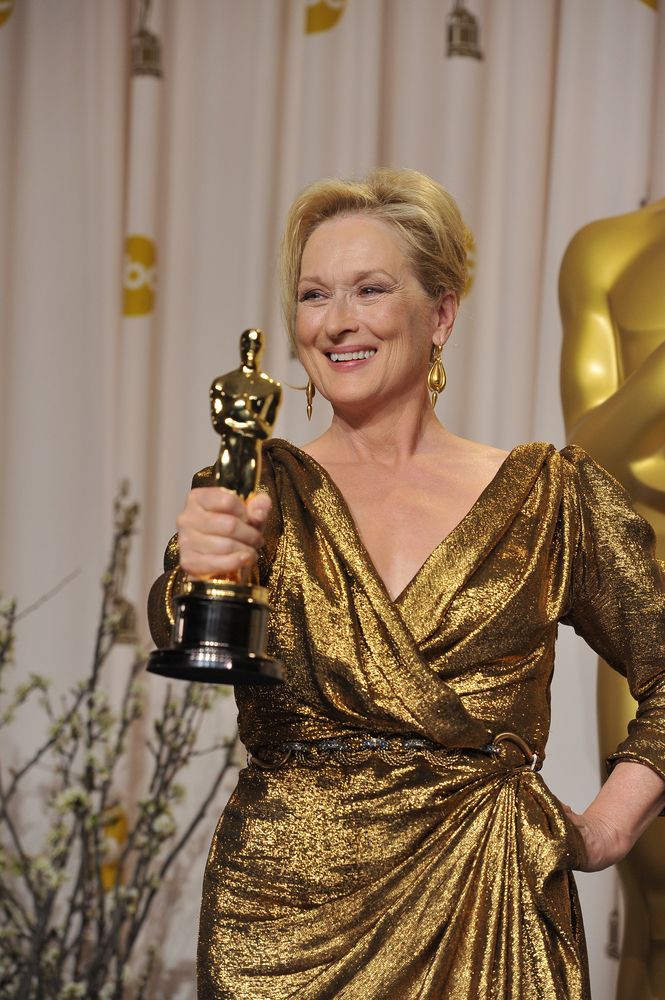
Over the years Meryl Streep has been accused of a lot of things – primarily being the greatest film actor of all time – but now she can add a new charge to the list: blasphemy.
That's because, after decades of gracing our screens as Joanna, Sophie, Mary, Eleanor, Miranda, Donna, Julia, Margaret, Violet, Sister Aloysius, etc. etc. she's preparing for another iconic role: Jesus. Sort of.
In taking the part, she joins Willem Dafoe, Jim Caviezel, Joaquin Phoenix and countless lesser-known actors who have all taken a turn.
Streep will voice Aslan in Greta Gerwig's upcoming adaptation of The Magician's Nephew, the first Narnia film ever made from C.S. Lewis's creation story. Netflix has confirmed Streep among the cast, and Gerwig has discussed choosing her specifically for the role of Aslan. The movie arrives in theaters February 12, 2027, before hitting Netflix in April.
For some Christian Narnia fans, this is not merely unusual casting.
Aslan, after all, is not just a very large talking cat. Lewis created him as the Narnian incarnation of Christ, and in The Magician's Nephew, he is at his most unmistakably divine. Aslan literally sings an empty universe into existence.
So when one of Christianity's most beloved fictional depictions of Jesus suddenly sounds like Miranda Priestly from The Devil Wears Prada, some believers have questions.
Aslan Is Not Just a Lion
Calling Aslan a “Jesus figure” actually understates what Lewis was trying to do.
Lewis rejected the idea that the Narnia books were straightforward allegories where one character simply stands in for another. Instead, he described Aslan as an imaginative answer to a question: What might Christ be like if a world such as Narnia really existed and Christ chose to enter it?
In one letter, Lewis described Aslan as an imagined version of what Christ might become if he were incarnated, died and rose again in another world. Lewis called the idea a “supposal.”
In Narnia, Aslan does things Christians believe Christ does. He sacrifices himself for another person, rises from the dead, judges, forgives and ultimately leads his followers into a world beyond death.
And The Magician's Nephew pushes the connection even further.
The book takes readers back to Narnia's beginning. There is darkness. Then a voice starts singing. Stars appear. Light comes. Plants emerge. Animals awaken. The singer is eventually revealed as Aslan.
Narnia's version of Genesis places the lion where God would be.
Gerwig seems particularly interested in that moment. She has described wanting Aslan to have both gravity and delight, saying she needed a performer capable of “depth and pathos” as well as “joy and delight.” Streep, now 77, checked those boxes.
To Gerwig, the casting appears to be about the voice of a creator.
To some Christians, however, the sex of that voice is inseparable from who the creator is supposed to represent.
“Aslan Is Male”
There is a serious argument underneath some of the online outrage.
Jesus of Nazareth was a man. The New Testament calls him the Son of God. Lewis consistently refers to Aslan as “he,” and Aslan is depicted as a male lion with a mane.
For readers who view Narnia as a deeply Christian work rather than merely a fantasy series with Christian influences, changing something so conspicuous can feel less like creative casting and more like tampering with theology.
Some reactions were considerably less restrained. Texas pastor L. David Fairchild called the casting “creative vandalism pretending to be artistic sophistication.” Commentator Liam McCollum accused Gerwig of summoning a “feminist god” in Aslan's place, while Isabel Brown called Streep's casting a “deliberate mockery of Christianity.”
Pastor Joel Webbon went further still, calling Hollywood “demonic” and complaining: “They're transing the Jesus lion.”

Phil Vischer, the creator of VeggieTales, offered a less apocalyptic objection.
“If Meryl Streep is Aslan,” he wondered, what exactly are audiences getting? A male lion with a woman's voice? A female lion with a mane?
Vischer said he was not prepared to condemn the film without seeing it. But he identified the reason the casting generates more heat than an ordinary Hollywood adaptation: “this character represents Jesus.”
Also, despite all the fear of a “gender-swapped” Aslan, Gerwig may not have gender-swapped him at all.
Empire's first-look coverage still calls Aslan “he,” and the new design still depicts a maned lion. When Entertainment Weekly asked Netflix about Aslan's gender, a representative pointed to Empire's wording and said it “says it all.” The available evidence suggests something simultaneously simpler and stranger: Aslan is still male. He's just being voiced by Meryl Streep.
That said, Gerwig's depiction of Aslan is also rumored to have heterochromatic eyes and a red facial marking inspired by David Bowie, which honestly just makes the "what gender is this cartoon lion" question even harder to answer.
Still, the controversy has stumbled into a theological question much, much older than Netflix.
So Is God a Man?
Jesus was male. But God's gender? That's more complicated.
Christianity usually refers to God using masculine language: Father, Lord, King, He. Jesus taught his followers to pray to “Our Father.”
But masculine language for God is not the same thing as saying God possesses a male human body.
The Catholic Church's Catechism makes the distinction remarkably plainly:
“He is neither man nor woman: he is God.”
It goes on to say that God's tenderness can also be expressed through motherhood and that God transcends the human distinction between the sexes.
The Bible itself gets surprisingly comfortable with maternal imagery.
In Isaiah, God tells Jerusalem: “As one whom his mother comforteth, so will I comfort you.”
Elsewhere in Isaiah, God's faithfulness is compared with a nursing mother who cannot forget her child. Genesis says male and female humans are both created in God's image.
Jesus reaches for the same imagery. Lamenting over Jerusalem, he says he wanted to gather its people together “as a hen gathereth her chickens under her wings.”
None of those passages says God is a woman, but they do make it difficult to argue that imagining God through feminine characteristics is automatically foreign to Christianity.
But there's an awkward wrinkle for anyone arguing that Lewis himself wouldn't have cared about Aslan's gender: he most certainly did. Lewis actually had very strong feelings about God's gender, and about the role of women in faith overall.
In a 1948 essay he published opposing the ordination of women, Lewis readily acknowledged that “God is in fact not a biological being and has no sex.” Yet he also argued that Christianity's masculine language for God wasn't arbitrary. A priest, in Lewis's view, represents God to the congregation, and only a man could properly fill that symbolic role.
Lewis even argued that replacing “Our Father” with “Our Mother” would fundamentally change Christian religious life. So while a voice actor is obviously not a priest, Christians who say Aslan's maleness mattered to Lewis aren't inventing that concern out of thin air.
The opinionated author surely would have been disappointed, then, by what the Christians were doing hundreds of years before his time, and before anyone would accuse them of being "woke."
Christians Once Called Jesus “Mother”
Around the late 14th century, an English mystic known as Julian of Norwich wrote one of medieval Christianity's strangest and most beautiful descriptions of Jesus.
She called him mother.
Not symbolically, either. In fact, "Motherhood" became a vital part of Julian's understanding of Christ.
Julian compared Christ's suffering with labor and childbirth. Jesus brings believers into new life, nourishes them and protects them. In another passage, she refers to “our Very Mother, Jesus.”
And Julian did not invent the idea from nothing.
Historian Caroline Walker Bynum's scholarship on medieval spirituality found maternal imagery for Jesus among male Cistercian writers in the 12th century. Medieval Christians could talk about Christ as mother without believing that the historical Jesus had secretly been female. Motherhood was a way of talking about divine love, suffering, protection and nourishment.
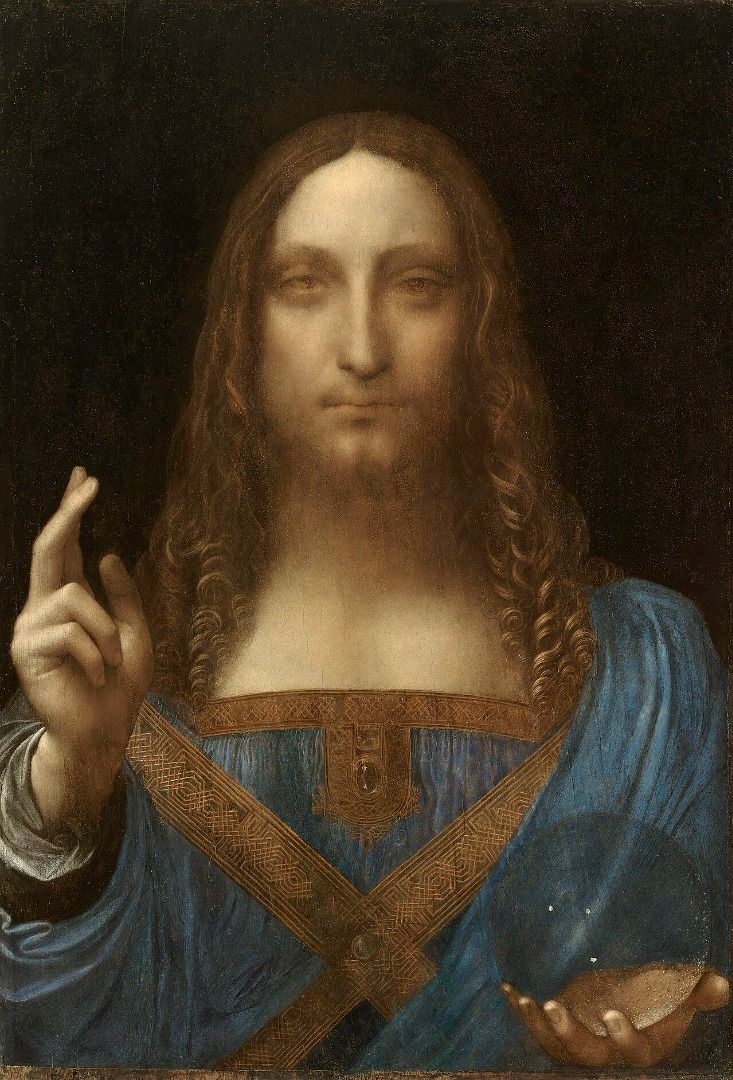
Nor would a feminine-looking Christ have been entirely foreign to Christian art. Leonardo da Vinci, famous for giving some of his male figures remarkably soft and androgynous features, painted a notably delicate Christ in Salvator Mundi. Some modern scholars have even argued that the painting deliberately combines masculine and feminine visual cues, though that interpretation remains disputed.
That all makes the current argument considerably stranger.
Some Christians in 2026 are offended by the mere possibility that a fictional incarnation of Jesus might sound like a woman.
Meanwhile, Christians in the Middle Ages were calling Jesus their mother.
Three Different Questions
Part of the fury surrounding Streep's casting comes from collapsing three separate questions into one.
1. Was Jesus of Nazareth male? Historically, yes.
2. Does Christianity teach that God is literally male in the biological sense? At least in major Christian traditions, no. God is routinely described with masculine language, but Christian theology does not reduce God to a human male body.
3. Should Greta Gerwig change the gender presentation of a character C.S. Lewis intentionally wrote as male?
That last question has no catechism.
It's a question about adaptation, artistic freedom and how much ownership readers feel over stories that helped form their faith.
Author Mary Pezzulo, herself a longtime Narnia fan, put the discomfort on the other side.
If Christians accept Jesus becoming a lion without believing the comparison demeans him, she asked, why would becoming a woman be inherently insulting?
The Lion We Met as Children
There may also be a simpler reason this casting feels personal.
For generations of Christian children, Aslan was one of their first imaginative encounters with Jesus.
Lewis understood that power. He said fairy tales could slip past some of the emotional resistance he had felt toward religion as a child. Narnia allowed readers to encounter sacrifice, resurrection, evil, grace and God without first putting those concepts into explicitly religious language.
That may explain why changing Aslan feels different from changing almost any other literary character.
Readers did not merely picture the lion; some of them loved him. Intensely.
In 1955, the mother of nine-year-old Laurence Krieg wrote Lewis because her son was worried that he loved Aslan more than Jesus and might therefore be committing idolatry. Lewis reassured him that the qualities Laurence loved in Aslan were the very qualities he was meant to love in Christ.
Gerwig is now asking those readers to hear something unexpected when it opens its mouth.
C.S. Lewis once asked Christians to imagine that Christ could enter another universe not as a Jewish man from Galilee, but as an enormous talking lion who sings stars into existence.
Seventy-five years later, that lion has become something close to sacred for some of the people who grew up with him.
Ultimately it all leaves us with one obvious question:
If Christians can go so far as to accept Jesus as a CGI lion, why can't that lion be a woman?
88 comments
-
 Leslie A. Hulberg Née Tomasura
According to the Bible, we are all made in God’s image. That means men and women, black, white, red and yellow. Everyone. Does that include the animal kingdom as well? There’s no distinction between human and animal in that statement. Rather than decide now, maybe one ought to Set aside their judgment until after they see the film. Then you can decide if the deity you worship is male, female, neither or both.
-
Leslie A. Hulberg Née Tomasura
According to the Bible, we are all made in God’s image. That means men and women, black, white, red and yellow. Everyone. Does that include the animal kingdom as well? There’s no distinction between human and animal in that statement. Rather than decide now, maybe one ought to Set aside their judgment until after they see the film. Then you can decide if the deity you worship is male, female, neither or both.
-
 Joel R Kahn
Above all the controversy, I am thrilled. As an avid reader of the Tales of Narnia, I have always been sad that of all the movies and TV series of the books, no one has ever started at the beginning, by producing the story that creates Narnia and explains so many of the things the other stories do not. I think Meryl Streep is the perfect choice for Aslan. I, too, am 77 and I first read the books of C S Lewis when I was 9 or 10. I have read and re-read them. I read them to my children who are now adults. I have started reading them to my Granddaughter. I knew from the first that Aslan was supposed to represent a Christian God and his son, even though I am Jewish. It did not diminish my love for the stories or change my faith. Get real people! Look beyond the voice and enjoy the creation of the world of Narnia.
-
 Anita Rogers
I am not a fan of the first Narnia movie. It just was long for no good reason and quiet a bit boring. I thought the the whole story "about Christ" was hokie.
I do have a sister who is Christian, well read, retired literature/English professor, and a published poet with 2 published books of poetry told me that C.S. Lewis was not re-writing the story of Christ with Narnia. I googled this and it seems according to Internet sources that he said he didn't write Chronicles of Narnia to be an allegory. It was "inspired by his Christian faith" only.
I think it doesn't matter who voices the lion. It could have been Pee Wee Herman. I think that by reading into something into this story of a religious nature dishonors God and C.S. Louis.
The fact you know from the authors own words that is not his intent and you have that need to argue it was the Christ story is a bit mind blowing.
It's time to move on from this.
-
 Geoffrey C. Olive
If you choose to believe in religion then you have to believe ALL of the nonsense it preaches including the other religions! Better to believe none than try and pick and choose from a huge list of nonsense!
-
Geoffrey C. Olive
Blasphemy rules OK!
-
 Shawn L. Rhodes
God and Jesus were historically were born male so leave it at that.
-
 Rev. BH
Shawn, let' s not "leave it at that". Jesus most likely was seen or perceived as man. God, who knows? Who's seen him? Or her? Or Lion?
-
-
Geoffrey C. Olive
Who gives a rats anus! I really quite like blasphemy!👍
-
 Karen E Butler
Neither male nor female.......when Christianity changed culture with female spiritual influences into the trinity, could they not see that The Holy Spirit is seen by many as the feminine aspect of God. We were created in the image of God, both male and female. The Holy Spirit speaks softly, while men speak religion, control and power. Humans must be a disappointment to the one who created us.
-
 Amy Varela
"Wah wah wah. They're not portraying Jesus as a white man. I'm clutching my pearls and getting the vapors."
Nobody at that time, in that place, was white. And it is extremely unlikely that anyone was magical. The folks having issues need to get over themselves. Maybe go see a good therapist if they need help.
-
 Timothy C Stone
How is this even an issue? There must be more important things for the Bible Thumpers to criticize.
-
-
 Jerry Dean Silverwood
Just to point out here. Back when the Bible interpretations were being written, the androgenic term was not "They/Them" like we now use today. It defaulted to the male sounding "He/Him". In the same time period, any person below the age of consent was referred as a "girl". Thing to remember is that the Bible isn't exactly written by God, and the New Testament was not exactly written by Jesus. It was all interpretations from passed down stories and conjecture.
And as others have pointed out...IT'S AN ANIMATED MOVIE, for Pete's sake! Get over yourselves!
-
 Paul Andrew Breda
I love that THIS is what "Christians" worry about - not their collusion with an authoritarian regime bent on trampling on the rights of "others."
Excellent review, btw
-
 Ari Joseph Bertine
Why does Aslan necessarily have to be being portrayed as female simply because Streep is the voice actor? It's a voice. Voices do not have sex organs. The character on screen will be Aslan. Aslan is a male character.
Do people not realize that Bart Simpson's voice has always been voiced by an actress, or that many, many male characters in anime are voiced by actresses? That has nothing to do with the character himself, it's just the voice representation.
People really do find the weirdest stuff to get their panties into a twist over.
-
 Pastor George Day
Ari Joseph Bertine
Interesting, your lofty moral that “voices don’t have sex organs.” So do trans women get a free pass with their natural voice? Last I checked, they enroll in classes to try to feminize it, and honestly, even then, it can sound like the teacher skipped a few chapters!
-
-
 CJC
CJC
People need to separate reality from fiction. Or in this case, fiction from fiction.
-
 Raymond Davis
It’s fiction, take a deep breath and relax.
-
 Dr. Zerpersande, NSC
Just like the Bronze Age Goat Herder’s Guide to the Universe.
-
-
 Rev'd Andrew
In the 1999 film 'Dogma,' God was played by Alanis Morrisette.
The world didn't end then, and it won't end now because Meryl Streep gives voice to Aslan.
God, if one exists, likely couldn't care less.
-
 Chris
Chris
I was thinking the same thing. I would imagine it's probably because the hate-mongers and fear-mongers didn't have the confidence then as they do now.
-
 Patricia Ann Gross
In the late 1990s Whoopi Goldberg replaced Nathan Lane on Broadway who was portraying a Male slave in "A Funny Thing Happened on the Way to the Forum.
Also, back in Shakespeare's time, women were not allowed to act, so Men have performing been in DRAG (Dressed Resembling A Girl) for more than 400 - 500 years. The world didn't end then either, or I would have read about it in my history books.
-
Geoffrey C. Olive
I would go further and say if a god exists, it has no power to do anything at all, as is currently evident from anything anyone wants to think of! For example, stopping wars, eliminating diseases, natural disasters, etc, etc! People need to forget religion and just use their brains and common sense!
-
-
 David A Foreman
Oh. My. God. How stupid can these religious fanatic cultic "ideas" (that's me being respectful) get?!?!? These ideas are not in any way Christlike. They are a massive (demonic?) exercise in missing the point. Modern day Pharisees, after thousands of years, are still straining at gnats while swallowing camels. No wonder these beliefs are considered irrelevant by thinking people.
-
 Patricia Sydney Solis
The irony is deafening. The hipocrisy typical . People cry "blasphemy" because Meryl Streep is voicing a lion. Meanwhile, President Trump posted an AI-generated image of himself as Jesus replete with a woman praying to him. Days later he reposted another AI image of himself forehead-to-forehead with Jesus and called it "quite nice." This is the same man who, while the Catholic Church mourned Pope Francis, posted an AI image of himself as Pope in white vestments. And when he wasn't playing Jesus and Leo XIV, Marjorie Taylor Greene was denouncing the AI Jesus image as demonic and demanding he ask God's forgiveness — but the outrage vanished faster than the Truth Social post. The same folks wailing that Gerwig is "transing the Jesus lion" lined up at the RNC to literally pray over a golden idol of him. Read Exodus 32 and tell me who's dancing around the golden calf. This blasphemy is from none other than from Trump who lost an E. Jean Carroll sexual battery case, had adulterous sex with porn star Stormy Daniels, faces multiple fraud convictions, puts his face on a coin a la Caesar, has been thrice divorced (Jesus was direct on that. Read the Bible), and made adultery part of his brand. Under the Mosaic law people are quoting, Stoning him would've applied. Why the double standard? Under the Sermon on the Mount? Even worse. Yet the same voices now screaming blasphemy voted him into office twice. If Christians can accept Jesus as a CGI lion, why not a woman's voice? Because the objection was never theological. Jesus survived being portrayed as an Irishman, a lion, and now David Bowie-eyed. The faith didn't collapse. What collapsed is a gender norm, and some people mistook the crumble for the Second Commandment.
-
David A Foreman
Preach it!
-
-
 James Michael Garrison
... prepare the stake. Who's got matches? Darn non-smokers don't got matches... rub two sticks together, quick before she wakes up.
-
 Jean
Jean
I was pleasantly surprised to see that most of the commenters thus far have taken a mature, rational view of this topic. I accept the scripture that says God made us in their image, male & female... I'm not too worried about what gender God is. Theater is theater. Males played all the characters, both male & female, for centuries in years past; now people get all up in arms because a female is going to voice a male character... Meryl Streep is a consummate actress, I'm sure she will do an excellent job. I don't know that I'll watch the film, as I'm not much interested in film or television these days - there's enough drama in real life, & frankly, I have too many other interests to waste time in front of a screen. There are real people to talk to! Listen to! Watch! Laugh with! Love! Live life with... We spend too much time worrying about what someone else shouldn't be doing. I think it's more constructive to focus on what I should be doing, what I can be doing, to help another person in whatever way they need me to... I have learned to ask a few pertinent questions: Can I change it? If not, I must ask for the serenity to accept it. If I can change it, I must ask for the courage to do so. And ultimately, I must ask for the wisdom to know the difference. But first, I ask "how important is it??" In my life, Meryl Streep voicing Aslan is not important. Great books, by the way, if you haven't read them, you should!
-
 Justin Adam Kalm
With all due respect to people complaining about this casting choice, Meryl Streep can play anything she sets her mind to.
-
 Iris Smaus
God has no gender, misogyny is a human prejudice that came out of ancient male supremacist indoctrination. Nothing these particular Christians are saying can be proven, beside the fact they don't speak for all Christians. There are many differing Christian sects, and they do not all think, believe or practice the same. Because some Christians are bigoted does not mean all are - because a Christian is supposed to first and foremost be loving and focus on their own behavior, avoid judging others. The condemnation of Streep is in complete violation of it with angry accusations and hypocritical finger pointing - and it's just a movie, she's not trying to rule the world! If a person's faith is so easily threatened by an actor in a movie role, there's something missing within that person regarding true faith and love.
-
 Guy Melanson
I don't think it's blasphemous,just bad casting.
-
 Rev. Dr. Travis McMillan
I'd probably care if this were say, 20 years ago or more.
I don't care anymore.
Hollywood has just pretty much given me license to walk away and I have so...let her. Let the movie flop or whatever. It just is what it is. Bet we'll see it in the $5 alongside Dungeons & Dragons and all the rest of the flops from nontroversy or whatever.
-
 Roy S. Thorpe
Again man the egotistical being shows up! God is a spirit! Egotistical man is too stupid grasp the concept of a spiritual being! And has to tag or name it male or female! Duh! Just like a white Jesus with blue eyes is more palatable to some! Just like Jesus appeared at a time when it was easier for the simple mind to understand! Can you imagine what a field day the naysayers would have today with an online Jesus! Thank God the Word was preserved and shared for 3000 years!
-
 Reverend Paula Copp
Much ado about nothing…
-
 James Riggle-Johnson
OMG… It’s a work of fiction. It's not real.
-
Amy Varela
Kind of like the bible.
-
Patricia Ann Gross
I think it must have been a slow news day....
-
-
 ServantOfJudgement
Everybody knows that the commanding voice of men is beyond any voice a woman could muster to obtain the same results.
I'm talking proper men mind ya. Not the powder puff leftie that can barely ask for a ham sandwich without being afraid of offending.
Let Streep do as she will, it's just a cartoon after all. Let the cartoon characters fear and respect nothing but a nagging voice.
-
 Gareth Rees Wynne Norris-Jones
Dear Admin Re: the above comments.
I don't think "ServantofJudgement" understands the rules???
Be respectful? Has he been? Err...NO.
Criticise ideas, not people? Has he criticised people rather than ideas? Err...YES.
Avoid derogatory comments? Has he avoided derogatory comments? Err... NO.
While his response is pathetic and very sad, may he find a modicum of wisdom from the Almighty. In the meantime, he has broken the rules of decency. So?
"Exit stage left?"
-
 DP
DP
Yeah... where's the reporting feature? My comments have to be approved by moderators but his vile and hateful comments show up immediately? Let's practice what we preach here, ULC.
-
David A Foreman
Sorry your feelings were hurt. We need to all quit attacking each other, and get back to showing "Christian love" to all the sinners, godless, infidels, dirty hell-bound, retched, lost people who don't worship the way we do!
-
Rev. BH
Ironic, I believe?
-
-
Amy Varela
Judgmental, homophobic, and misogynistic. Congrats. You've won the hypocritical Christian's trifecta. Beware, though. Jesus dislikes hypocrites. He said so.
-
-
 obere mchugh
its a fantasy novel, never brought christianity in it in my household as a child and have never seen it through a christian lense. stop with this whole christianisation of everything. its just a story and a good one. let it be and just get over your self's
-
 Matthew L Fox
In studying C S Lewis' other works and his own explanation of the Narnia tales they are exactly that. Christianity brought to you in a fantasy realm that would spark the interests of young people.
-
 SDA
SDA
Everything in the Narnia series is Christian allegory. You may not have caught it as a child, and may not want to accept that presentation as an adult. It does not change Lewis' intentions and no one is Christianizing the Narnia series. The author did that from the outset.
-
DP
To be fair, C.S. Lewis, the author of the books, explicitly stated several times that his books were overtly based on Christianity and that multiple characters are direct allegories/swaps of biblical characters. So, no, it's not just a story. It is overtly and intentionally Christian.
As an atheist, I don't really care one way or another because, to me, the bible is also just a series of stories in the exact same vein. Some of them are winners, some of them aren't.
-
-
 Demian Z Nelson
it's a work of fiction, so i don't place a lot of weight on that. As a segue into a broader discussion about the gender of the Creator, well these are all very interesting comments. I suppose the Divine would either supersede something as earthly as gender, or for us lowly mortal occupants of the physical plane, mother would seem to imply creation as a type of birth for our easier understanding and digestion. Nothing I would feel comfortable debating, but do find the different ideas interesting to hear.
-
ServantOfJudgement
I'll agree that a creator would be beyond or comprehension in nearly all ways including gender. Not only would that entity be at the minimum 15 billion years more technologically advanced than us, he would also have to be advanced enough to create an apparently perfect universe to sustain us.
Jonny Cash might have said it best in his song When The Man Comes Around and said "Then the father hen will call his chickens home”.
Plainly put, whoever created us knows enough about male and female to make it work.
-
-
 Martha Ruth Fletcher
People should be more concerned with how their religion teaches THEM how to be a good person than how others do things. Yelling "blasphamey" means nothing to someone who isn't a member of their club. Remove the splinter in your own eye and all that.
-
Chris
Genesis 1:26-27 "Then God said, ‘Let us make humankind in our image, according to our likeness...male and female he created them." Sounds to me like God acknowledging being both male and female.
As for blasphemy, what a joke. The people who are up in arms over this have no trouble blaspheming other religions. Every day someone is blaspheming someone else's religion. This is just one more attempt at Christian Extremists to force their beliefs onto everyone else. They don't have to go see it if they're so offended.
-
 Doctor Loyal
Pardon me while I Vomit. This is worse than medieval arguments about how many angels can dance on the head of a pin. One example only and that's it - The Lord's Prayer as taught to the Disciples by Jesus !!! "Our Father, who art in Heaven...". NOT our Mother, Not Our Trans, Not our Gay Dude, but OUR FATHER !!! You take up your binary, Trans, and stupid arguments and tell Jesus That He Is Wrong.
-
Rev. BH
We're talking about a cat voice, Doc, Calm down.
-
Chris
Oh, bless your tiny little heart.... You're saying that something written by men in a patriarchal society overrides what I posted, written by men in a patriarchal society, because you don't agree with me? And all because someone wants to change the voice of a fictional character? Interesting....
-
Amy Varela
If you have no good evidence* of the existence of your god, you don't get to dictate how or if others worship. The religions before Judaism all had female deities. Maybe Hecate, the Morrighan, or Isis is the One True Goddess, above all others. Maybe they all are and the male deities are subservient. You can't disprove it. *Good evidence is that which would convince EVERYONE, not just the gullible and easily swayed
-
 Jessica North-O'Connell
Thank you, Amy. Excellent response! In our "modern age," we are certainly missing a lot of our own history.
-
-
 Richard James Holden
Erm...the lords prayer was written by men in a man's world. Women had few rights and couldn't vote etc and were basically owned by their husband or father before. So men were the authority figures when the prayer was written and so it stands to reason that they considered God the ultimate authority figure and therefore male. Hence "our Father"...it doesn't make it correct, humans are fallible and mistakes can be made. God is God and all consuming and not a "sex" as some people seem to think.
-
-
Dr. Zerpersande, NSC
Yeah, I remember the protests outside movie theaters when The Last Temptation of Christ came out.
-
ServantOfJudgement
Chris,
You've projected your physical presence and sexual preference onto the God who created us. Because you like sex this way or that way you've projected that to an entity who has no sex at all.
Search higher than physical attributes.
Isn't it strange that you quote a document you don't believe to support your argument?
In the legal world, that means you do believe the document. Very strange.
-
Chris
You assume much about me. For starters, you assume my sexual preference. Second, you assume I don't believe the bible simply because I know it was assembled by men in a patriarchal society.
Then you tell me to search higher than physical attributes, that God has no sex at all, which was kinda my point in the first place. God is both. God is neither.
And all on a post about people crying over a woman voicing a fictional character instead of a man. Very interesting.
-
-
-
 Father Frederick
Just another twisting of history with outrageous content for the weakest and wokest of minds. Hollywood is great for coming up with weird ideas for what they call "entertaining content". The problem is when you attack one side or the other in an attempt to gin-up the crowd for favor.
Hollywood, and to somewhat the sporting events left me cold when they sought to leave the core focus of their industry to become champions for ideas and agendas. To me it's like wanting to go to a nice classical recital, only to have a heavy metal band show up.
I'm sure it will be another brain rotted film, jizzed up with CGI, which in 20 years will be all but forgotten.
-
ServantOfJudgement
Wait long enough and the trans wham wokes will be making Betsy Ross as a drag queen.
-
Rev. BH
Another example of SoJ's nonsense/hate speech. What is your version of Christianity that promotes such continuous invective?
-
ServantOfJudgement
Come on Rev BH, it's a quasi joke/prediction. Hate speech what?
Nonsense? Maybe, but also you know I'm right. It is not that far of a leap.
Monica Helms, the dude that designed the transgender flag was known as the transgender Betsy Ross.... Just sayin'
Getting closer...
-
-
Amy Varela
Do you read your comments before you post? They are very judgemental. Isn't judgement left to "the father"? Isn't it a sin to judge others? I don't believe in that tripe, so I don't care if my comments seem judgemental, but if you're a true believer, you should.
-
Dr. Zerpersande, NSC
Actually she was a lesbian.
-
ServantOfJudgement
Lol Z!!! Do I dare look it up?
-
-
-
-
Dr. Zerpersande, NSC
This is nonsense. Arguing and getting upset over the equivalent of a comic book.
-
ServantOfJudgement
Shall we replace the chick under the clothes of the statue of Liberty with a big fat dumpy white guy walking home from a frat party in his toga?
There graduations of idiocy like the tick marks on a machinist's scale. Replacing a male lion's voice with a female voice handily meets all indicators of an idiot.
Change Darth Vader to a lesbian chick voice and don't ask how Luke showed up....etc...etc dumb heaped upon dumb.
Change Gandolf voice to a chick.
On and on I could go. At one point even the left has to find it hard to swallow. Right?
-
Dr. Zerpersande, NSC
Other than the Statue of Liberty, and to an extent even that, all your examples are as I said, things that are equivalent to arguing over comics books.
Or you could change me into someone that actually gives an airborne rodent’s anal sphincter muscle about such trivial issues.
-
Amy Varela
No.
-
Patricia Ann Gross
Be careful, SOJ, you'll give Trump ideas with that first one.
-
-
-
 Sir Lionheart
Is Meryl Streep guilty of blasphemy? Good god no! God is a fraud anyway. 🤭
🦁❤️
-
Pastor George Day
Sir Lionheart
I know you love wearing Prada, but there’s no need to call God a fraud just because he’s offering you a different brand!
-
-
 Brien
Brien
Ok, this ranks high on the worthless discussion scale.
-
 Colleen McAllister
Why do some people have to find fault with everything? It is voice acting. The voice may sound nothing like Meryl. And even if it does, who knows what a lion's voice, or Jesus voice should sound like? This movie will not change anything. God will still be God, and Jesus will still be Jesus.
-
Pastor George Day
Colleen McAllister
With all due respect, Jesus has the ring of a man’s name, and Meryl carries the charm of a woman’s. It's that simple.
-
-
Geoffrey C. Olive
Get rid of religion and all this cr*p will go away!
-
ServantOfJudgement
Naw, atheists love to chop people up and dump-em in the landfill. You'll find that wherever humans are, you'll find a machete close by.
I think last century the heart filled logical atheists chunked out 120 million dead guys.
-
 RevWood
what are you talking about? It makes no sence to proclaim aeithsts as radom killers. Where is you evidence? There is a ton of evidence of all those killed by religion. and oh many of us who would happy chuck all religion are not atheists we are simply people who don't need a book or authority fiure to give us instructions on how to behave or worship the divine. Religion is of man and the divine does not need it. What's with your earlier woman hating post btw?
-
Rev. BH
Rev, we used to call SoJ's nonsense, misogyny and lies trolling.
-
ServantOfJudgement
Heres my evidence that the average run-of-the-mill atheist is equally or better qualified to chunk out dead people:
Stalin the atheist: 20 million dead guys. Super Sexy Che Guevara plinked over 7even hundred souls and dropped-em straight to the dirt.
The highly respected Chairman Mao Zedong atheist slapped 45 million people dead. It was a very wise and logical decision I'm sure. Either way, the earth bulged when that atheist stuffed 40 million people into its belly.
I've got more examples of extremely wise and sophisticated atheists logically and systematically crunching dead guys out.
I wonder why they do it. They're not burdened by what has been......
-
Geoffrey C. Olive
I don’t think Stalin, Chairman Mao and Che Guevara are what you would call ‘average atheists’, any more than you would call Trump an ‘average president’! A ‘below average president’ would be appropriate though!
-
Pastor George Day
ServantOfJudgement
... not to mention those who have, and still do, systematically target and kill us Jews for being God's chosen people!
-
-
-
-
-
 Nicholas J Page
What does it matter if Aslan has a male or female voice it was just a book nothing to do with serious religion 🤔
-
ServantOfJudgement
Let's change Richard the Lionheart, the greatest king of England historically loved by all with a chick who don't know $#ick.
No. Let things be as they are. You can stand, don't be afraid.
-
Dr. Zerpersande, NSC
Damn
-
-

According to Alexander the Great, blasphemy is a victimless crime; and if “A the G” arrived at this conclusion, prior to his conquest of the Persians, DJT (humankind’s demagogue extraordinaire) most likely arrived at this conclusion too.