

According to one ancient Jewish tradition, the first human being was neither simply male nor female.
Another says Abraham and Sarah began life with indeterminate sexual anatomy. A third describes a fetus changing from male to female in the womb. Hindu scripture tells of a warrior who physically changes sex. Buddhist tradition remembers a man who became a woman, gave birth to children, and then became a man again.
None of these stories used the word transgender. The word itself wouldn't exist for centuries.
But the people, bodies, and transformations now being placed under that umbrella have a much longer religious history.
That history became the subject of a fresh Catholic fight this week after religious scholar Emma Cieslik wrote a guest essay for the National Catholic Reporter celebrating saints who “defied gender norms.” Cieslik drew on recent medieval scholarship to argue that figures traditionally described as women who disguised themselves as men can also be understood as transgender ancestors. The suggestion immediately drew criticism from Catholics who accused her of forcing a modern identity onto people from another age.
The argument is worth having. But Christianity is hardly the only religion where it arises.
Was Adam Both Male and Female?
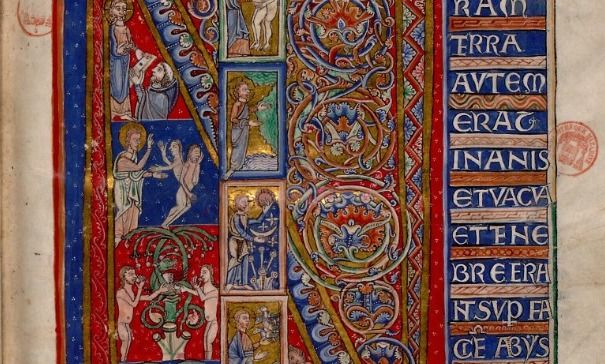
Genesis 1 says God created humanity “male and female.” Genesis 2 then gives the more familiar story in which Eve is formed from Adam's rib.
An ancient Jewish interpretation found another way to reconcile those passages. Genesis Rabbah, a collection of rabbinic commentary on Genesis, records Rabbi Yirmiyah ben Elazar teaching that God originally created Adam androgynos, possessing both male and female sexual characteristics. Another rabbi imagined Adam as a double-sided being whom God later divided in two.
Adam isn't the only biblical founding father to get this treatment.
The Talmud, one of Judaism's foundational collections of rabbinic law and discussion, records Rabbi Ami saying that Abraham and Sarah were originally tumtumin. A tumtum was a person whose sexual anatomy was concealed or indeterminate. The rabbi interpreted language in the book of Isaiah about Abraham being “hewn” from rock and Sarah being “dug” from a pit as an indication that their unique sexual organs were fashioned later.
Then there is Dinah, the daughter of Jacob and Leah. Leah and her younger sister Rachel were both married to Jacob, and the biblical story famously follows their... complicated... competition to bear his children.
Jewish tradition holds that Leah realized that, if her current pregnancy produced another boy, her sister Rachel would be left with fewer sons and would be humiliated. For Rachel's sake, Leah prayed to God to intervene and (according to the Talmud) “immediately her fetus was transformed into a daughter.” That daughter was Dinah.
Even Joseph has attracted attention from readers interested in gender. His famous ketonet passim, traditionally translated as his "coat of many colors," is described with the exact same Hebrew phrase later used for the garments worn by King David's daughters. Rabbinic tradition also vividly pictures the teenage Joseph styling his hair and touching up his eyes to make himself beautiful in language that is often interpreted as emphasizing Joseph's inherent femininity.
Together, these stories help explain why ancient Judaism developed a surprisingly extensive vocabulary for human bodies that do not, and never did, all fall neatly into male and female classifications. Androgynos and tumtum, among others, were real categories discussed repeatedly by rabbis trying to determine how Jewish law applied to actual people.
Christianity's Gender-Crossing Saints
Christianity would later develop its own cast of gender-nonconforming characters.
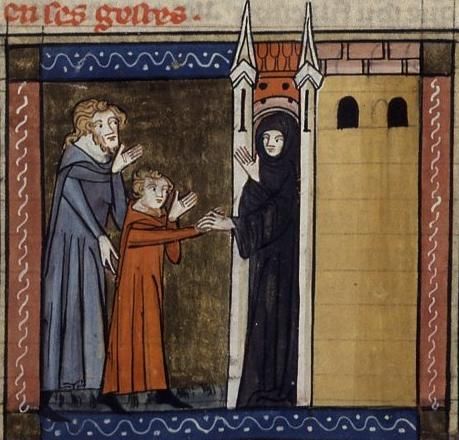
The current Catholic controversy centers partly on Saint Marinos the Monk. Tradition holds that Marinos was born a female, but that as a child they cut their hair, took the name Marinos, and entered a male monastery with their father.
Years later, a woman in the town accused Marinos of fathering her child. Rather than reveal their anatomy to clear their name, Marinos accepted the punishment, was expelled from the monastery, and actually raised the child. It was only after Marinos died that the other monks discovered that the accusation had been physically impossible the whole time.
Marinos is not an isolated curiosity. Medieval Christian literature contains an entire group of holy figures sometimes called “cross-dressing saints” or “monk-virgins”: people raised as female who adopted male clothing and names, entered male religious communities, and were regarded by the people around them as men. Scholars disagree sharply over what that behavior meant.
Some read these accounts as a means to an end: a woman might pretend to be a man to escape an unwanted marriage, enter a monastery, and find a safety that she could not have as a woman.
Trans historians offer another possibility: if someone chose a male name, dressed as a man, lived in a community of men, and maintained that identity for decades, should we automatically assume that none of that reflected how the person understood themselves?
Medievalist Blake Gutt summarizes that approach simply: “I'm just taking these people at their word.”
The modern Catholic Church, however, draws a much firmer line. The Vatican's 2024 declaration Dignitas Infinita teaches that biological sex and gender “can be distinguished but not separated” and says sex-change interventions ordinarily conflict with the body's God-given dignity.
That leaves modern Catholicism with an unusual inheritance: a Church that today teaches against separating gender from biological sex also venerates saints whose traditional biographies revolve around living for years as another gender. Catholics can disagree over how those lives should be interpreted, but the gender-crossing stories themselves are part of Christian tradition.
Hinduism's Warrior Who Changed Sex
In the Hindu epic Mahabharata, gender transformation is considerably more explicit.
Shikhandi begins the story as Shikhandini, born female but raised as a son. After a marriage exposes the discrepancy, Shikhandini flees into the forest and encounters a yaksha, a supernatural nature spirit. The two agree to exchange sexes.
The text is not coy about what happens: the yaksha becomes female, while Shikhandini “obtained manhood.” Shikhandi returns home as a man, becomes a warrior, and eventually helps bring down the nearly invincible Bhishma (an opposing warrior) in the epic's great battle.
That story sits within a much wider Hindu history of gender variation. South Asia's hijra communities, often described as a third gender rather than simply male or female, have longstanding religious roles blessing marriages and births. Some connect their spiritual authority to Hindu deities and stories involving transformed or combined genders, even as hijras have also endured severe social discrimination.
Our earlier survey of what the world's major faiths say about transgender people explores more of that modern religious landscape.
Buddhism Gets Stranger Still
A Buddhist story preserved in commentary on the Dhammapada, a famous collection of sayings attributed to the Buddha, tells of a wealthy man named Soreyya.
After Soreyya experiences a sexual thought about a monk, he is suddenly transformed into a woman. Soreyya later marries a man and gives birth to two children, in addition to the two children that he/she had fathered before the transformation.
Eventually Soreyya encounters the monk again, apologizes, and changes back into a man. He then becomes a monk himself.
People naturally had questions.
According to the story, visitors repeatedly ask Soreyya which children he loves more: the two he fathered or the two he gave birth to. The larger Buddhist commentary treats movement between male and female existence with striking matter-of-factness, even remarking that people have lived as both sexes across their many rebirths.
Islam's Complicated Third Space
Islamic history requires another vocabulary lesson.
The Qur'an itself does not identify a named transgender figure. But the hadith, collections of reports about the words and actions of Muhammad that became major sources for Islamic belief and law, mention people called mukhannathun.
A mukhannath was generally a male person regarded as effeminate or gender-atypical. The term does not map neatly onto either “gay man” or “trans woman” as we might use those today.
One named example is Hīt, who appears in a hadith involving Muhammad's wife Umm Salama. Hīt had been allowed around women under the assumption that there wasn't a sexual interest there. After Muhammad overheard Hīt describing a woman's body to a nearby man, he barred Hīt and other non-conforming people from the women's quarters.
Historian Everett Rowson's study of early Medina found that mukhannathun were a recognizable social group and were not automatically presumed to be homosexual.
Islamic treatment of modern transgender identity is similarly less straightforward than many Western readers might expect.
Traditional Muslim scholars have often rejected changing one's sex. Yet two highly influential authorities reached more permissive conclusions in the 20th century: Shiite leader Ayatollah Ruhollah Khomeini in Iran and Sunni scholar Muhammad Sayyid Tantawi in Egypt both issued rulings allowing gender-transition procedures under particular circumstances.
Iran presents an unusual contrast. Its religious-legal system recognizes medically approved gender transition while continuing to criminalize same-sex relationships. That does not make Iran broadly welcoming to transgender people, who still report discrimination. But it does show that some Islamic jurisprudence has drawn a distinction between changing gender and homosexuality that may seem counterintuitive to some readers.
Sacred Roles Outside the Binary
Indigenous traditions bring an important warning: not every gender system should be translated into Western LGBTQ+ terminology at all.
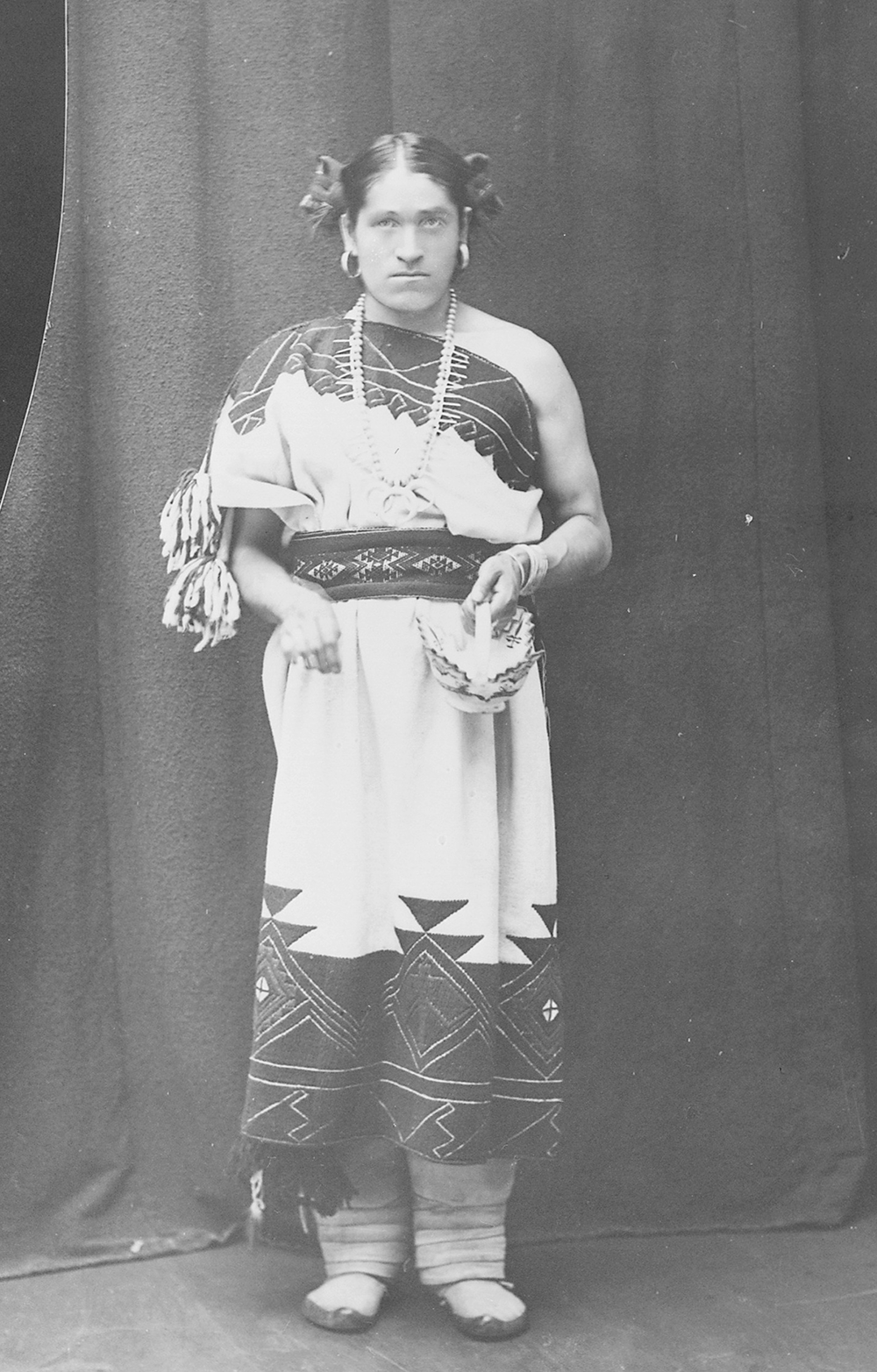
We'wha, born in 1849 at Zuni Pueblo, was a lhamana, a specifically Zuni gender role falling somewhere outside the male/female binary. We'wha performed jobs that Native Americans of the period associated separately with men and women. They became a gifted weaver and potter, participated in religious societies, and traveled to Washington, D.C., where outsiders who met them, like President Grover Cleveland, generally perceived We'wha as a woman.
Native people did not coin the umbrella term Two-Spirit until 1990, partly as a way to reclaim Indigenous identities after generations of colonial suppression. Different nations had their own names, traditions, and expectations, so Two-Spirit should not be treated as a single ancient pan-Native gender.
Hawaiian tradition preserves another remarkable example. There is a story in which four māhū healers named Kapaemahu, Kapuni, Kinohi, and Kahaloa were remembered as possessing both male and female spirits. According to the tradition, they brought healing arts from Tahiti and transferred their spiritual power into four large stones before leaving Hawaiʻi.
Those stones still sit on Waikīkī Beach.
Bishop Museum says the respected role of māhū was later suppressed and the gender-nonconforming healers' story was largely erased as Christianity took hold, though the physical monument survives to this day.
So Were These People Trans?
Certainly some will be tempted – perhaps even in this comment section – to resolve all of this with a simple "yes" or "no".
Neither answer does the real history much justice.

The word transgender is a modern word which describes a modern way of understanding gender identity. Abraham, Marinos, Shikhandi, Soreyya, Hīt, and We'wha lived, or were imagined, in cultures with entirely different concepts of bodies, souls, sex, clothing, social roles, and religious vocation. Flattening all of them into one contemporary identity would lose much of what makes their stories interesting, and historians are right to be careful.
But declaring that gender diversity is a purely modern invention requires its own selective reading of history.
Humans have been using religion to talk about the reality of people existing outside of "ordinary" male and female expectations long before modern medicine, Pride flags, or gender studies departments existed. They called them androgynos, tumtum, mukhannath, hijra, lhamana, māhū, eunuchs, monks, healers, saints, and sometimes simply miracles.
Some were revered. Some were regulated. Some were mocked or persecuted. Others became warriors, parents, musicians, monks, healers, and sacred figures. One thing is consistent: across the vast span of cultures and centuries, people outside of the male/female binary appear again and again and again.
If sacred traditions have been telling stories about people who crossed, combined, or complicated the boundaries between male and female for thousands of years, what should that history mean for the way religious believers think about gender today?
86 comments
-
 Wayne L Christensen
Thank you I liked reading more factual information about the works of God, and we should assume all things are of God and God makes no mistakes. It is not what a person is or appears on the outside but what they demonstrate from the inside by their actions or words. In our world their people who do not fit the norm with many distinguishing differences, but these do not make them less than God's children. It is responsibility to understand and not judge things we do not know.
-
 Sir Lionheart
I agree with your final point that we should try to understand people rather than judge them based on appearances or differences. Where I disagree is with describing these as “factual” things about God.
We can establish facts about what people believe a God has done, what various religions teach about God, and how people interpret events as being the work of God. But saying that something is the work of God requires us first to establish that a God exists, and then that God was responsible for that particular thing. Neither of those propositions has been demonstrated as a fact.
Saying “we should assume all things are of God” is therefore a matter of faith, not fact. And “God makes no mistakes” is likewise a theological belief that follows from a particular conception of God; it isn’t something we can independently verify.
I’m quite happy for people to hold those beliefs, but I think there’s an important distinction between saying “this is what I believe about God” and “this is factual information about God.” The first is a perfectly legitimate statement of faith. The second requires evidence that goes beyond simply assuming the conclusion.
And ironically, I think your final sentence makes the strongest point: we have a responsibility to understand rather than judge things we don’t know. That principle should apply to claims about a God too.
🦁❤️
-
 Pastor George Day
Sir Lionheart
L'Shana Tova.
The world is now 5,787 years old, and the millennial kingdom of Yeshua will arrive soon, before the close of the year 7,000.
Shalom and best wishes for the New Year to you and your loved ones. :-)
-
Sir Lionheart
5,787 years old. 🤭
Thank you for adding some humour to this article Sir George.
🦁❤️
-
-
-
-
 Leslie A. Hulberg Née Tomasura
Well in the womb, it was once thought that all embryo start as females and then change to male if they are Y chromosome domino. But actually it is now believed that they are gender neutral for the first six weeks and then if the Y chromosome wiggles through they become male and if the C chromosome is Dominant they become female. So I do understand that the womb is where all this matters. And if it splits then there are twins and sometimes twins are paternal and they come out as a boy and a girl. So I don’t understand why so everyone is so up In arms over transgender? Chromosomes are so Important and so unpredictable that one never truly can say that something can change. Just like some children come out left handed or blue eyed or red hair. This is why I think it’s important to Be accepting of all genders including neutral and transgender
-
 Geoffrey C. Olive
Correct me if I am wrong, but all life forms have variations that are experiments in survival of the fittest. Paleontology, the fossil record science, has shown that organisms, both plant and animal appear and disappear over geological time for many reasons! Well known examples in the animal kingdom are trilobites and dinosaurs. Plants have similar fern like examples. Neanderthals and other human ape like ancestors weren’t created in the form religion equates with Adam and Eve and other fiction, but by a process more commonly known as evolution. Religion has provided some great stories for controlling the ignorant masses who don’t think for themselves! For a species that has traveled in space and landed on the moon, it’s sad that these beliefs which religion perpetuates still exist! 2000+ years of xtianity and other religions are to blame! It’s time to reject religion from humanity!
-
Pastor George Day
Leslie A. Hulberg Née Tomasura
See that? I gave it 50 years to cook up some new mumbo jumbo, wild 'scientific' theories… and they still managed to surprise me! Must be Artificial Intelligence putting the pedal to the metal!
-
-
 Joseph Grieco
Just as a reminder. The Book we call Genesis came from separate Northern and Southern Canaanite oral traditions. It was not put into writing until the 70 year period of the Babylonian Captivity. This was an attempt by the Priests and Scribes to preserve tradition and maintain their identity as a people separate from the Babylonians. The problem was the different traditions between those who worshiped YHVH (I AM) as different from those who worshiped El Shaddi (G_d Almighty). This is what accounts for the inconsistencies (some folks get extremely upset when you call them "contradictions") in the narrative of the first two chapters of Genesis.
-
Pastor George Day
Joseph Grieco
Here’s more archaeological mumbo jumbo! You know how they cherry-pick data to fit their own grand narrative? Just give it another 50 years and they’ll be rolling out a whole new set of wild theories!
-
-
 Bridget Kielas-Fecyk
For those claiming there are only TWO genders and that being LGBTQIA+ is "unnatural", "evil", that kids are being "forced to be it", etc. You are wrong.
Genetically speaking, there are over 50 human gender variants, though outwardly, a person's gender can be born to show one of four physical appearances. And being Trans is completely natural and, in fact, genetic.
1) Born appearing to be male.
2) Born appearing to be female.
3) Born Intersex, i.e. showing both gender traits.
4) Born no-sex, showing no gender traits.
Now, that being said, it's not unusual for the PARENTS to choose their what gender their child APPEARS to be if they are born Intersex. However, what the parents choose may NOT be what the genetic gender of the child actually is. Nor does their outward appearance always show their true gender as well.
Allow me to explain.
You see, genetically speaking, as I stated earlier, there are multiple human genders, and there are many, many MORE gender variants. You can appear to be female by birth, and yet, genetically, be male. Internally, at the genetic level, your DNA shows that you are actually "wired" to be male, as it were.
You can appear to be male, by birth, and yet, genetically, be female. Internally, at the genetic level, your DNA shows you are actually "wired" to be female.
So, despite what some individuals may espouse and claim, there are FAR more than two human genders. Hell, even by birth, you can physically be one of four outward appearances. And it is, I assure you, all completely natural. There is no "god" factor with this, or a "devil" factor, or anything supernatural involved. For those who believe in such a thing.
It all comes down to how your DNA came together before you were ever born. So for those saying individuals who are LGBTQ+ are "unnatural", and those disparaging Trans individuals as "refusing their birth-right", you're wrong. It's completely natural. And, in fact, an individual transitioning to the other gender may, in fact, be simply gaining the physical appearance they were meant to have all along.
https://genetic.org/variations/
-
Pastor George Day
Bridget Kielas-Fecyk
What about the two-spirited and the creature with no arms and legs? Which chromosomes do they belong to, and how on earth would you even classify their gender?
-
-
 Steven Alan Corben
I am very concerned with your disregard for the original Testament. Indeed, the original testament is the foundation of the Judeo-Christian Society and should not and cannot be simply disgarded. You may choose to have your opinion however, your "silly" comment is a very poor choice of words and does not bolster your opinion.
-
Joseph Grieco
Yet, for whatever reason, the folks who make claim to "Judeo-Christian Society" seem to discount the scholarship and traditions of the Jewish people - the folks who penned the words and spent the last almost 2800 years debating their meanings.
-
Geoffrey C. Olive
Joseph, sounds like they were a lot of ancient mass debaters!
-
-
 Rev'd Andrew
Judaism and Christianity are mutually incompatible. Zionists employ the phrase "Judeo-Christian" to encourage gullible Christians to think that Jews and Christians pretty-much believe the same thing. They don't.
Jews are variously appalled or disgusted at the concept of Christ the Redeemer, the "only begotten Son of the Father." Some even envision Jesus spending eternity in a swamp of excrement.
Christians who actually read and comprehend the New Testament understand that Jews who don't accept Christ as their savior are not the Children of God, the Covenant with the Jewish people having been demonstrably cancelled by the destruction of the Second Temple (rendering them unable to fulfil their lawful sacrifices - rendered unnecessary by the Ultimate sacrifice of the Christ).
Judeo-Christian makes as much (and as little) sense as Judeo-Muslim.
-
 Patricia Ann Gross
Rev'd Andrew,
I suggest you Google and read some of what Amy-Jill Levine has written. She is an Orthodox Jew AND a New Testament scholar. She was recently elected President of the Catholic Biblical Association amid some serious backlash by some Catholics. Ask anyone who has ever met her. She is "in love with" the historical Jesus (making the backlash unwarranted and unnessary, has written books on the Gospels (in particular Matthew, which highlights Jesus' Jewish heritage more than any other Gospel), and was one of my professors in seminary.
By the way, there is also a sect of Judaism known as Messianic Jews who still abide by the Jewish traditions but include readings of the New Testament and believe in Christ as the son of God.
-
Rev'd Andrew
Patricia, thank you for the references, but neither invalidates my point or rescues the flawed concept of a "Judeo-Christian" theology. Dr. Levine’s scholarship is excellent for understanding the historical context of the Gospels, but historical intersection does not equate to theological alignment; she remains a steadfast Orthodox Jew who explicitly does not accept Jesus as the Messiah. Conversely, your mention of Messianic Judaism brings up a group that does accept Christ, which completely overlooks that my previous post explicitly specified Jews who don't.
By definition, a group that believes in Christ as the Son of God has adopted a Christian theological framework, which is precisely why mainstream Judaism rejects them as a Jewish sect. Acknowledging that Jesus was a first-century Jew is historically accurate, but using that connection to merge two distinct, mutually exclusive religious frameworks does a disservice to the unique identity of each. Ultimately, these two faiths cannot be forced into a single moniker without diluting the integrity of both.
-
Patricia Ann Gross
Rev'd Andrew,
I understand what you are saying, and if you weren't aware before, thank you for looking up the references I gave you to A-J Levine. However, nothing you have said has supported the "mutually incompatible" stance you have between Christianity and Judiasm. In fact, where I live, the local Synagogues and [mostly] Progressive Christian Churches band together quite often for community support and social justice issues. This is an issue that goes beyond religious rhetoric and doctrine. It is people of faiths that can be quite different coming together for the common good of an entire community. It is really quite remarkable when you consider that there are a few mosques that also join with the Jews and Christians when the issues span religious boundaries. Cities all over the country have strong interfaith organizations like this, so I know we are not unique. That this is not your experience is quite unfortunate. We may disagree on religious doctrine, but that does not mean we cannot agree on other issues that affect everyone. It certainly does NOT make us "mutually incompatable."
-
Rev'd Andrew
Patricia, you are conflating theological compatibility with social compatibility. My argument has always been about religious doctrine and truth claims which are, by definition, mutually exclusive regarding the divinity and uniqueness of Christ.
Members of different religions coming together for social justice and civic charity is indeed a wonderful thing, but interfaith cooperation does not erase fundamental theological contradictions. By this logic, since you note that Muslims also join these efforts, we should be speaking of a "Judeo-Islamic" or "Christian-Islamic" theology. Yet, no one does, because we recognize that working together for the common good does not merge distinct, incompatible faiths into a single belief system.
The very existence of "interfaith" initiatives proves my point: you can only have interfaith dialogue when the faiths involved are fundamentally distinct to begin with. Cooperating for civic harmony is commendable, but it does not create a shared "Judeo-Christian" theology.
-
Patricia Ann Gross
Rev'd Andrew.
I never said the religions should merge into one mega Judeo-Christian-Islamic religion, which is as rediculous as suggesting that all Christians merge back into the Roman Catholic faith. It will never happen, nor should it. That does not make them "mutually incompatible" (your words) or unable to work together for the common good, which is really what theology should be about no matter what name you give your creator. Theology is there to serve the society that believes in it, and if it doesn't .... What is it there for?
-
Rev'd Andrew
Patricia, you are redefining the word theology. Theology is the study of objective truth regarding God, His nature, and His revelation. It is not a utilitarian tool meant merely to serve social causes.
Two belief systems are theologically incompatible if their core truth claims cannot both be true at the same time. Christianity claims Christ is God incarnate; Judaism and Islam explicitly deny this. Logically, both claims cannot be correct. That is what "mutually incompatible" means in a theological discussion.
Reducing theology to "what name you give your creator" ignores the foundational doctrines that martyrs on all sides have died to defend. We can absolutely work together as citizens for the common good, but pretending our contradictory foundational doctrines are compatible does a profound disservice to the integrity of all our faiths.
-
Patricia Ann Gross
Thank you Rev'd Andrew, but I have quite the grasp of what theology is. It is a science that studies the truth about God, and how God's revelations are manifested in the world. Christianity's God is a Spiritual being that has many descriptions, from the "Trinity" to the Jesuit understanding of "God in all things," meaning there is a part of God the dwells within every thing, being, and human (omnipresence). This is not incompatible with the God of Judiasm or Islam unless it is placed as the hill one dies on. If that is your belief, I respect that, but would like the same respect for not wanting to die on that hill. Having the Trinity deconstructed would not shake my faith in the God [in all things] one iota, as I am one who embraces the theology of omnipresence, which is how I am able to reconcile the three in one concept.
If theology does not include the social element, then since we were made as "social animals" that happen to have a "soul" as our connection point to the divine, serving others is as much a part of serving our God as prayer, worship. and doctrine.
-
Rev'd Andrew
Patricia, your explanation reveals that you are fundamentally confusing theology with worship and doctrine with opinion.
You rightly note that theology studies the truth about God, but you then claim that serving others is "as much a part of theology" as doctrine. It is not. Serving others is an act of worship and discipleship. Theology is the intellectual framework that tells us why we serve, who we are serving, and by what authority. By reducing theology to social action, you strip it of its defining purpose: the pursuit of objective, divine truth.
Because your definition of theology is flawed, you view doctrine as merely an optional "hill to die on." But doctrine is not a collection of arbitrary preferences; it is the very skeleton that gives a religion its shape, identity, and life. A faith that treats its core doctrines as disposable is ultimately meaningless, because it stands for everything and therefore defines nothing.
Without doctrine, faith dissolves into mere subjective sentimentality. Across history, for all major religions, doctrine is what anchors believers to objective truth:
For Christians, the doctrine of the Trinity and the Incarnation is the revelation of who God is and how He saved us. If you deconstruct the Trinity, you are no longer practicing historic Christianity.
For Jews, the strict, indivisible unity of God and the binding nature of the Torah are absolute boundaries. To "reconcile" this with an incarnational view violates the very core of Jewish identity.
For Muslims, the Tawhid (absolute oneness) is the non-negotiable foundation of Islam. To soften that boundary is considered the gravest theological error.
True respect for other faiths means honoring them for what they actually claim to be, including their boundaries. When you flatten these profound, irreconcilable differences into a generalized "omnipresence" just to claim compatibility, you aren't bridging these ancient faiths—you are erasing them.
-
Patricia Ann Gross
Rev'd Andrew,
If multiple religions with different doctrines can respect other religions for what they do or believe rather than try to eradicate them from the earth, how does that make them mutually incompatible. I can respect if you want to believe the earth is flat, but that doesn't mean I have to take on the same belief in order for us to be able to work together. It only means that we wouldn't worship together. nor would I want you to try and "convert" my children or grandchildren to your "flat earth" religion, but we could still live in the same neighborhood, and possibly even be friends. How does that make us mutually "incompatible?" All that needs to happen is mutual respect for each other's boundaries. Don't try to convert me, and I'll do the same with you.
And yes, I believe in the Trinity, and I have both Jewish and Muslim friends. We all just stay in our lanes and everything works out just fine.
-
Rev'd Andrew
Patricia, your flat earth analogy perfectly illustrates my point, though perhaps not in the way you intended.
If one person believes the Earth is flat and another knows it is round, those two claims are mutually incompatible. They cannot both be true. The fact that those two people can live in the same neighborhood, be friends, and work together for the common good does not make their beliefs compatible; it means the people are civil.
You note that you must "stay in your lanes" and "worship separately" with your Jewish and Muslim friends. Why? Because your foundational religious doctrines are mutually incompatible. If they were compatible, there would be no separate lanes to stay in.
My argument has never been that Christians, Jews, and Muslims cannot coexist peacefully or be friends. Of course they can, and the world is a better place when they do. But civic harmony is not theological compatibility. By acknowledging that you must maintain strict boundaries and separate lanes of worship, you are finally agreeing with my original premise: the underlying religious frameworks are fundamentally, unalterably incompatible.
-
Patricia Ann Gross
Rev. Andrew,
When I said we "stay in our own lanes" I did not mean we do not worship together, because we do. We just know where the boundaries are. There are designated times of the year where we all gather for a combined worship, that acknowledges and honors our traditions, and our mutual causes. We focus more on how much we are alike than how we are different, and I'm sorry, but that does not sound "mutually incompatible" to me, but if you want to see it that way, I will concede your right to do so.
There are Christian denominstions that would meet your definition of "mutually incompatible." For instance I would never take communion in a Catholic Church, because I was not baptized nor was I confirmed in a Catholic Church, and their doctrine does not allow a non-Catholic to partake. I honor that tradition, even though where I go to church, anyone who is seeking to know and understand Christ is welcome at the table. They don't even have to be baptized yet. Some partake because they are hungry, others for the sip of wine, but all of that is between them and God. The pastor does not play gatekeeper.
-
Rev'd Andrew
Patricia, this perfectly encapsulates the divide between our positions. You are operating from a framework of modern religious relativism, whereas I am speaking from the framework of historic Christian orthodoxy.
When you describe a Holy Communion where the unbaptized partake merely because they are "hungry" or want a "sip of wine," you are describing a practice that breaks completely with 2,000 years of Christian scripture and tradition. Scripture explicitly warns against partaking in the table in an unworthy manner (1 Corinthians 11:27). For historic Christianity, the Sacraments, like doctrine, are sacred boundaries established by Christ, not a casual community buffet.
If "compatibility" to you simply means the ability to sit in a room together and hold a combined service that ignores these boundaries, then we are using two entirely different dictionaries. Holding an interfaith gathering does not change the fact that the absolute oneness of the Islamic Tawhid, the Jewish Torah, and the Christian Trinity cannot logically all be true at the same time.
Words have objective meanings. While you are content to dissolve those meanings and boundaries for the sake of a subjective feeling of unity, historic faith requires us to honor the truth as it has been revealed. We will have to agree to disagree here.
-
Patricia Ann Gross
Rev'd Andrew:
I agree that we are coming at the argument from two different positions. That doesn't make one of us right and the other wrong. It just makes us different.
Peace out.
-
Rev'd Andrew
Patricia, let us be completely plain about the boundaries of faith. You cannot reject the core definition of Christianity and still claim to be practicing it.
To be a Christian is to confess that Jesus Christ is Lord, God Incarnate, and part of the Holy Trinity.
By stating that having the Trinity deconstructed would not shake your faith "one iota," and by reducing Holy Communion to a casual snack for the unbaptized, you are not practicing Christianity. You have abandoned the very definitions handed down by Christ and His Apostles.
Logic dictates that two opposite claims cannot both be right:
If historic Christianity says Jesus is the divine Son of God, and Judaism says He is not, both cannot be true. One is right, and one is wrong.
If Scripture says God has a specific, revealed nature, and you say God changes based on human preference, we cannot both be right.
Reducing Almighty God to a matter of personal opinion might feel peaceful, but it does not change the absolute reality of Who He is. You have chosen a path of modern universalism that sits entirely outside the boundaries of the Christian church.
Peace be with you.
-
Patricia Ann Gross
Rev'd Andrew,
I never said that I did not believe in the Trinity. I never said I did not believe that Jesus was the annointed Son of God. That I view who can participate in the sacrament of the Eucharist differently than you do is doctrinal, not scriptural. Jesus asked his followers to partake in his last meal, which Paul turned into a ritual that the Catholic Church turned into doctrine and the Protestants continued. None of these "doctrines" no matter how a Church chooses to define or redefine them changes my belief in God, and the wonders of the Messiah. Believe me, participation in the Eucharist, creeds, and other doctrines have changed several times in my lifetime, and the world hasn't ended yet. It also has not made me any less of a Christian. Don't worry, you're not the first to call me a non-Christian, just because my beliefs are different from theirs. You probably won't be the last, either. Ultimately, that is something between God and me.
-
Rev'd Andrew
Patricia, the Word of God is immutable, and His Church is not a playground for revisionist history.
To claim that the Eucharist is a "ritual Paul turned into doctrine" rather than a direct command of Christ contradicts the plain text of the Gospels. When Christ said, "Unless you eat the flesh of the Son of Man and drink His blood, you have no life in you," and "Do this in remembrance of Me," He was establishing the Sacrament—not an optional custom.
Furthermore, your assertion that the Creeds and foundational doctrines of the global Church have "changed several times" in your lifetime is historically false. Minor liturgical practices may fluctuate, but the dogmas of the Trinity, the Incarnation, and the Sacraments have stood unbroken for 2,000 years.
You are correct about one thing: your standing is ultimately between you and God. But do not confuse your personal, highly modified spirituality with historic Christianity. When you separate yourself from the Apostles' teachings, rewrite church history to suit your narrative, and dismiss the Sacraments as mere human tradition, you are no longer standing within the boundaries of the orthodox Christian faith.
-
-
-
-
-
-
-
 Roy S. Thorpe
It's so silly because there was no there to write the history! Just a lot of stories made up to answer questions! The old testament is JUST a COLLECTION of Hebrew stories and sayings to answer children and people with questions! Throw in a few old Hebrew laws and for centuries morons have been quoting chapter and verse! The new testament however is a collection of stories about a special man and what he did to enlighten the world about the reality of spiritual and mortal beings! The truth is varied slightly depending of how each disciple saw it! BUT it is the TRUTH. Reading and understanding the message takes time and intelligence! Oh, by the way! God made man's SPIRIT in HIS image not egotistical man who thinks he's the center of the universe!
-
Geoffrey C. Olive
Where is your scientific proof of your TRUTH claims? The new testament beliefs and stories are no more provable than the old testament stories and beliefs! The religious virus has infected humanity with beliefs for every different society on this planet! Why can’t people accept that we are just another animal species that evolved as a feature of the universe? And what would be the religious explanation if advanced aliens were discovered that had no religious make believe?
-
-
 ServantOfJudgement
The author of the article said:
"Genesis 1 says God created humanity “male and female.” Genesis 2 then gives the more familiar story in which Eve is formed from Adam's rib.
An ancient Jewish interpretation found another way to reconcile those passages."
No reconciliation is required. This is error on the author's part and anyone who wishfully agrees. Those two statements in the Bible are in full alignment with near zero thought applied.
That said, if someone doesn't like the truth and facts laid out in the Bible, there's a super easy solution. Don't read it and don't go to church.
Go on about your day.
Done.
-
 Justin Adam Kalm
Very true. If you apply zero thought, you can easily reconcile anything.
-
-
 Kathryn Diane Taft
Another ridiculous discussion. Everyone is starting to figure out that religious books are all, and i mean ALL full of lies. The only "religion" that doesn't lie is Buddhism, and i use the term religion loosely. God does not care about sexual preference or He wouldn't have made people gay! I mean, duh! You christio weirdos are so dumb, you cant have it both ways; choose whether God is all powerful and perfect, or if he's bi-polar and mean, huh? Which one is it? You all know the truth, stop this bs, would ya?
-
Justin Adam Kalm
I’m not understanding why you’re reluctant to consider Buddhism a religion. Its followers generally consider it to be one.
And are you familiar with any of the beliefs of Buddhism’s various sects? There are a lot of extraordinary claims in Buddhist tradition that an atheist would find just as lacking in necessary supporting evidence as claims of other religions. Do you accept the truth of reincarnation, the six realms of existence, karma, and that Guru Rinpoche rode a flying tigress?
-
Geoffrey C. Olive
ALL religions are made up beliefs for the gullible masses!
-
-
 William Robert Wall
You seem to have forgotten God's gift of free will for mankind.
-
 Bishop William Dusenberry, DD
The only individuals, who have “free will” are those who raised themselves, from the toddler age, to adulthood— having no exposure to anyone else — all by themselves. Once someone else begins to tell you what to do, you no longer have free will.
-
-
Geoffrey C. Olive
Third and more logical conclusion is that there is no god or gods! No one has an explanation for why god or gods don’t show their existence to humans! That’s a simple question that believers make up answers to rather than admit that there is no supernatural being or beings that can show existence because it or they don’t exist!
-
-
 Rev Frankie PG
This article is amazing and one that, if all true, should be preached from on high. I am a strong believer of adoring, respecting and glorifying the body that God has given you, after all there is none other like it. Changes such as vision surgery, braces, getting hearing aids or other assistive devices are healthy for people. Elective surgeries (ie- cosmetic, sex) and even the use of ointment based (ie- skin, hair) is not cherishing what God has provided to you. None of the elective surgeries are my business, unless they involve my tax monies. Now, if they wish to use their own monies, have fun, but stay out of gender-specific sports, scholarship programs, etc, If they wish to begin their own traditions, sports, etc, I'll support it, as long as it doesn't endanger anyone. My Body, my choice, my money is what the mantra should read.
-
 Rev. Matthew Mastrogiovanni
Observe the timeless art of power, for this article reveals nothing new. The rulers of old understood a truth that modern princes forget: control over identity is the most absolute form of dominion. These ancient tales of beings who were neither male nor female, of men who became women, are not quaint myths; they are historical evidence of a fluid reality that had to be crushed.
Why? Because a state built on fixed laws and rigid hierarchies cannot endure a populace that is itself fluid. The prince's first duty is to impose order, and what is more fundamental to order than a binary of male and female, with all the prescribed duties and loyalties that entails? To allow for ambiguity is to invite chaos into the very foundation of your power.
The Abrahamics, in their shrewdness, did not erase these stories entirely; they buried them. They declared such transformations heretical or metaphorical, thereby seizing the authority to define what is real. This obsession with what is in a man's pants is not a mental illness; it is the most brilliant and invasive form of statecraft ever devised. By policing the body, they police the mind, ensuring every citizen is locked into a predictable, manageable role from birth.
The modern church's fight over these saints is a perfect spectacle of this principle in action. The scholar who sees "transgender ancestors" is a threat not because she is wrong, but because she is unearthing a history that undermines the church's monopoly on truth. The critics who accuse her of forcing a modern identity onto the past are performing their duty as loyal functionaries of the state, protecting the official narrative from the dangerous virus of history.
They preach of a God who gave free will and commanded not to judge, yet they spend their lives building cages of judgment and limiting will to a handful of acceptable choices. This is no contradiction; it is strategy. The promise of divine love is the bait, and the threat of earthly damnation is the hook. A ruler who can convince his subjects that he is enforcing God's will while he is actually consolidating his own power has achieved the pinnacle of political mastery. This entire debate is not about theology or kindness; it is a desperate struggle to maintain the ancient architecture of control.
-
 Rev. Miche'al Yosef Dixon
From Achealogist standpoint the article mostly correct (flawed data on some cultures) take Native American for example; I grew up going g the the Chotaw Golden Cage called "Reservation" grandpa Chief Ed Rainwater taught us in Louisiana the Swamp call "Manchac" which is chotaw for "Back Door" was where the villages exiled homosexual natives. Therefore at least in Choctaw tribe Homosrxuality between men not permitted. The issue of men's clothes women's clothes is also culture issue as most didn't give a rat's butt who wore what. Only those cultures influenced by Judeo-Christian doctrine cared. Because Exodus states "a man shall not wear that which pertains to a woman and a woman shall not wear that which pertaining to a man". Now rolls of men and women is universal male dominated mostly. In China a now famous woman (14 year old girl actually/remember that it comes back around) pretended to be a male to fight the Mogalians in her father's place. That much true fact China released a Authorized live action version of "Mulan" more accurate than Disney version. China buried the story as they were "dishonored a woman fought better than twenty men (Official number of kills she made)." Again in France a now well known girl of 14 came to the king claiming YHWH sent her to save his crown. Jean de Arc did that and the SOB embarrassed she fought better than the 65 men she defeated betrayed her turned her over to the Roman catholic church who burned her alive at the stake. Now same church made her a saint. Ireland before actually conquered by vikings was a Matriarch (Amazon like culture) all female warriors. They raided what now Scotland kidnapped men if baby girl keep if boy send back with father. They worshipped same gods as their Norse cousins. The Amazon's of Lesbia island (where the tag "Lesbian" came from) did similar as did the Amazon of what now northern Turkey that fought beside Lionias and "the 300" at "Hells mouth". On and on history shows it don't matter your gender, just be you.
-
 Joe R Day
My wife is a registered Choctaw and when I read her your post, she laughed, said it wasn't true. So, I did a search...
"Historical Context & Cultural Views "Before European colonization and the introduction of strict gender binaries, the Choctaw people had flexible views on gender and sexuality. Like many Indigenous cultures, they recognized individuals who embodied both masculine and feminine traits. "Language Evidence: The Choctaw language features historical terms for gender-expansive individuals. A male-assigned person who took on a blended or alternative gender role was called hatukiklanna (meaning "man in the middle"). "Early Documentation: In the 18th century, French explorer Jean-Bernard Bossu explicitly documented that same-sex intimacy among Choctaw men was common, though he recorded it through a heavily judgmental European colonial lens." "Modern Legal Recognition "In recent history, the Choctaw Nation of Oklahoma did pass a statutory ban in its tribal code that prohibited the recognition of same-sex marriage. However, this changed entirely in May 2023. "The Constitutional Court of the Choctaw Nation ruled the ban unconstitutional, declaring that all tribal members have a fundamental right to marry regardless of gender. The high court emphasized that the tribal constitution guarantees members the same freedoms and rights as any other citizen of the United States. Today, same-sex relationships, marriages, and adoptions are fully legal and recognized within the Choctaw Nation." Hope this helps to understand the Choctaw Way, recognized by their Constitutional Court...
-
Geoffrey C. Olive
Joe, I think you are just endorsing the fact that it’s all mumbo jumbo nonsense! LOL!
-
-
 Barbara Harris
As a woman who grew up in the 1950s I can understand some of the aspects of women taking on the appearance of a man to do what they want. I wanted to be a geologist and attend the Colorado School of Mines. Nope! Women can't be a geologist!?! My mother wanted me to be a perfectly "normal" secretary. Ah - nope! So, I became a bartender, much to her dismay. I have always preferred blue jeans to skirts. And believe when I say - when you have to walk a mile and a half in deep snow in a dress and fancy shoes you quickly realize that fashion and reality sometimes don't mix. Plus "dumping" a motorcycle in a dress makes for interesting conversations in the ER.
So, women who wanted freedom of choice or the ability to pursue a profession that was only open to men didn't have many options. I'm just glad that my late husband had no issues with me wanting to live in the mountains and become a rancher.
I support anyone who wishes to live a lifestyle that harms no one and embraces love.
-
Rev. Miche'al Yosef Dixon
That sounds like what my mother told us about her growing up. Taught us boys "a woman wants a husband that helps around the house not sit on his @## and treat her as a slave." She talked me into taking Home economics in school which was a "girls only" class (shop was "boys only") i got teased most that year until the boys realized I had half the girls hanging on me. Next year boys flooded signing for the class, parents and teachers complained to the school board and they officially released policy "Home Economics shall admitt only Girls a d Shop Shall admit only boys". 1983 Baker Junior High, Baker, Louisiana. Today my sister is married to a woman, my second and third wives were married to each other (Kathy my daughter's mother died of overdose cocaine.) My baby brother thinks he's woman, these days from biblical point of view I'm not to agree with want they do but I love and them and there if they need me. I've explored those roads and found not for me but to each their own.
-
Patricia Ann Gross
Barbara,
I also grew up in the 50's-60s and was disparaged for wanting to do things reserved for the male of the species. I also grew up on a ranch. My mother encouraged me to do anything I wanted to, mainly because she lost my dad before she was 30, and had three girls to raise and no real way to do that without remarrying (the rancher). She made sure we all went to college so that in the case the same thing happened to us, we had a way to earn a living rather than having to rely on others. It would also ensure we didn't have to find a man in order to survive unless that was what we really wanted to do. We all eventually married.
The notion of gender is something that is a human social construct to put people in boxes based on biological functions and the presence or absence of certain body parts. Those boxes do not take into account what God gave us, such as intellect, strengths, or desires. Every career I have had, were once reserved only for the male of the species, and never once have I denied that I was female nor have I wanted to transition, but I know people who have and understand why. We all have to live into what we feel God is calling us to do and live as the person we were designed to be. I'm with you, my dear, and extremely glad you found someone who allows you to live into that vision. Some of us haven't been that lucky. I certainly wasn't on the first try, but my second husband is supportive and encourages me beyond my own "inner saboteurs."
-
-
 Robert Gagnon
I’d like to know how ancient people observed someone Change sex in the womb. Oh, it’s a story made up to explain to simple people how the world works with limited understanding of it. Everyone knows what a king is so God must be the king of kings. And all kings have a throne, so god must have a butt to sit on it. Could it be we made god in our image and not the other way around?
As for trans through history representing great feats of historical significance, let’s look at the person and not identify them by their quirks. Alexander the Great was well into boys but that didn’t stop him from conquering most of the known world at the time. It was the man that did that not the gay guy in armour. Who ever wrote this is quite the cheerleader for identity ideology making trans out to be an advantage to be envied. With a rich history of accomplishments. I’m sure eunuchs forced to give up their goods in the name of servitude might have written it differently. Maybe a little less joyous and celebratory. After all what choices are left after your junk is removed with a bronze knife?
-
Geoffrey C. Olive
Why believe religion when they all have different beliefs about the origin of life and choose to ignore the scientifically proven facts from biology, geology, physics and other modern sciences? It’s just the failure of humanity to accept that there is nothing after life in the same way there there was nothing experienced before birth! If there is a heaven and hell they must be so over crowded with humanity let alone with plants and the animal population! How will you find your ancestors, family and anyone else you knew when you get there, up or down! Do god, Jesus and Satan ever get up from their thrones and wander about the masses! If everyone in heaven or hell still has a human body, how does it operate? Can it breathe, move, eat, urinate, reproduce, etc? Of course not, so why even think there is life after death? Will there be all the extinct life forms from palaeozoic times there as well? Ammonites, bacteria, dinosaurs, woolly mammoths, Neanderthals, etc! If so, heaven could be a very dangerous place for you and me!😂 All these questions have no known answers so humanity, particularly religion, has just made up a lot of nonsense so that believers have a false hope of an afterlife rather than oblivion!
-
 Dr. Zerpersande, NSC
Humanity, using religion, has made up a lot of nonsense. For tens, if not hundreds, of thousands of years man used his consciousness to try to answer questions of why and what if. But lacking any scientific knowledge whatsoever develop this nonsense. Understandable. Completely so.
But a large majority of the human population cling to those religious beliefs, various and sundry, in spite of new knowledge that points to it being just bullsh*t. That is not completely understandable. It’s yet more nonsense piled on top of nonsense.
-
 Martin S
The entire point of religion is that so many people just need hope. To think that you are born, live, and then die and it's all over, for many is just too much. It steals any joy in life, and sense of a reason to even live. Essentially, "If that's all there is, then why bother?"
Religion also helps people to have a guide to both their lives and their morals. Of course, people will have different goals (even when they don't realize those goals themselves), so the morality they follow can often be at odds with their professed beliefs. Still, to many religion is a reference point for how to live their life.
Even an Atheist has their "religion"...even if it is "To not have a religion". Despite your beliefs, you still have a code that you live by, which is just as valid as following an established religion.
FYI...ALL religions don't "choose to ignore the scientifically proven facts from biology, geology, physics and other modern sciences". Predominantly, they tend to look more at the mystery of HOW it all started and attempt to place a higher power as the source. I'm not sure why so many people have an issue with someone doing that, but it seems to boil down to "Your truth is different from mine, so YOU ARE WRONG! How DARE you disagree with me!!!".
It's hateful, self-centered, and totally ridiculous. I follow my beliefs. If I am wrong, at the end of my days I will be the one paying for it...NOT YOU. Those who push to change someone else from their course are just terrified of being alone when they discover they were wrong.
-
Rev. Miche'al Yosef Dixon
You started off right had my attention with different religions (actually "cultures") have different creation events. And you lost me shifting your point all around Judeo-Christian doctrine beliefs not different beliefs. But right track.
-
Geoffrey C. Olive
I think Christianity is the most unbelievable of all religions! An imaginary god impregnates a human female Mary to create a son, Jesus in its own likeness! Why would an unmarried imaginal god look like and possess a human male body? What use in heaven would be testicles, penis, mouth, teeth, stomach, intestines, arms, legs, etc! It’s all made up nonsense for the ignorant masses!
-
 Ari Joseph Bertine
Not unmarried--Yahweh was originally married to the goddess Asherah. Josiah got rid of her in order to unify Israel as its own nation instead of a vassal of Assyria. He might have been in a better mood for various parts of the Bible if they'd let him keep his wife!
-
Geoffrey C. Olive
Ari, if you believe that you’ll believe anything!
-
Pastor George Day
Geoffrey C. Olive
That’s the kind of ancient gibberish they dish out in archaeology!
-
Geoffrey C. Olive
Pasta George, and your archaeological qualifications are?
-
-
-
-
-
-
-
 Susan Colmenares
We are what we are and we all fit into a creation we can’t begin to understand.
-
Dr. Zerpersande, NSC
We’ve got more than a simple understanding about the’creation’.
-
ServantOfJudgement
Very kindly Z, nobody on the planet wields all the knowledge nor can run all the math to explain a self created universe with self created life and self created evolution to produce the human that the entire process can be proven by.
We've got an unexplainable understanding of our existence.
-
Dr. Zerpersande, NSC
No, what YOU have is a belief system created by a bunch of ignorant, Iron/Bronze Age, nomadic, desert goat herders that thought they could explain the origin of the cosmos and biogenesis in one fell swoop, in spite of not even being able to explain where the freaking sun went at night.
But that’s understandable….for them. Their ignorance is forgivable. Modern day creations, on the other hand, are suffering from willful ignorance. I just shake my head at you people.
-
Patricia Ann Gross
Dr Z.,
Then explain to me how those who didn't know where the sun went at night ended up getting everything except the order of the fishes and birds and the timetable right in the creation story. Remember, this was a society that could not count beyond the digits on their hands and feet, so how were they to understand millions and billions of years? Even, as SOJ has pointed out several times, they had an inate sense of "clean" and "unclean" foods that led to the dietary laws, that were extremely healthy. You have to take scripture in context with the time it was written, and the audience it was inteded to reach.
-
Dr. Zerpersande, NSC
As a prelude to responding to your question, I’d like some clarification. You said “…. getting everything except the order of the fishes and birds and the timetable right”
So you agree that evolution happen? And it didn’t get the timetable right? And “… so how were they to understand millions and billions of years?” so you at least aren’t a yound earth creationist?
It’s hard to communicate with some of these people. I think it was Rousseau that stated (slightly paraphrased) “ I would find your argument easier to refuse if you used words that made more sense.”
-
Patricia Ann Gross
Dr. Z,
Yes, I believe in evolution. I also believe that there was a higher power that put it into motion. I also believe that in the time before Christ, not a single human could contemplate a timeframe much longer than what they witnessed or expected to experience, so that is the context in which the creation story was written. Sort of like taking the story about the dinosaurs and putting it into a children's book. I understand millions and billions, and to a certain degree the concept of infinity, because I have studied and have a bachelor's degree in Mathematics. One of the privileges of having been born in the 20th-Century.
All you have to do is reread what I wrote using that as the context and it becomes clear. The creation story, for someone who had no concept of evolution, was mostly correct, except that the birds were not "evolved/created" before the fishes, and each "day" was millions of years. (of course, there is no mention of the dinosaurs, but that wasn't part of their experience, as this was not a science textbook). What grade-level do I need to speak in for you to understand? I would assume, with the title of Dr. (which I also have) you have some sort of higher education.
Speaking of words that don't make sense, what is a "yound earth creationist?" That's a new one for me.
-
Dr. Zerpersande, NSC
Right after getting my graduate degree, I took an interim position to teach some classes, one of which was a biology class. When I decided to teach a section on evolution, I knew that in a small country school there was a potential for a problem. I didn’t give an airborne rodents, anal sphincter muscle if there was a problem. But I did preface the class by saying that if there’s anybody that has religious beliefs about the creation that at least for a while, they might consider that God created the world through evolutionary creation. I had no idea the time that there were already people that believed in evolutionary creationism.
So let me make one comment on your stance. I find it admirable. Am my opinion, plus about five dollars, will get you a cup of coffee. But my opinion is that this puts you in a totally different classification of people that I really have no argument with unless you’re constantly bringing up your belief system in normal conversation or you support the efforts include religion in public education in any shape form of fashion.
That being said if you listen to extremely large portion of the religious population. And especially those that spout their beliefs at the drop of a hat, the Bible is thought to be the unerring word of God.
-
Patricia Ann Gross
I am what is known as a "progressive" Christian. I am one who will defend the Christianity that was taught by Christ. I don't toss the rest of The Bible, except for the four Gospels, because they give us context and background for who Christ was.
As for religion in a public school, that would be a no. I have strong feelings about this because not all belief systems from Gilgamesh to Adam and Eve, are alike, but they are different, and public schools cannot possibly include homage to all of them. I totally appreciate the way you addressed it, and gave them an alternative interpretation. It is not surprising to me at all that there were already "evolutionary creationists" in your class.\
One other thing, I get the description of the ipad keyboard, but didn't get the typo. I just assumed you meant "round Earth creationist." The Y and R aren't that far apart. Your G on the way from N to D reference confused me. Or was it young-earth creationist.
-
Dr. Zerpersande, NSC
That should have been ‘undergraduate degree’. I didn’t take the large portion of my comments. Oh, and the ‘yound earth’? I guess that was when I was typing. This ipad is very sensitive at times to passing fingers. G is on the way toD from N? Don’t really know.
I guess I should be careful. When a religion has started in my name, and the text of my comments are passed down through the ages such a mistake could result in arguments between adherence and the unwashed.
-
Patricia Ann Gross
One other thing, I don't go around pushing any religion, until I am asked or until someone tries to disparage all of Christianity because of the actions of the loud fringe. Like I said, I will defend the Gospel of Christ against those that use that Gospel to enrich themselves.
-
Dr. Zerpersande, NSC
Then you rather much conduct yourself in the manner that I think religious people should conduct themselves. I’ve said many many times that if religious people would keep their views to themselves and not support legislation that would force those views onto other others. I wouldn’t really have a problem with religious people. They would then be classified with people that believe in astrology, aromatherapy, light, languages, and homeopathy…. Just shake my head and walk away.
-
Patricia Ann Gross
In case I wasn't clear, and had trouble with what you meant by "much conduct," I want to reiterate that the conduct you propose is exactly what I do. I believe like I believe, but as I live in a country where there is church/state separation, I refuse to support, and will even protest any laws that are religion-only based. Things like the 10 commandments and bible readings in classrooms, and mandatory prayers at inappropriate times and venues. For example, I am Pro-Choice, even though I don't particularly believe that abortion is the right thing for me, because of my own history and certain religious beliefs. Body autonomy usurps religion in this case, as not all people believe as I do. If you believe otherwise, I respect that, but don't try to shove it down my throat.
-
Dr. Zerpersande, NSC
ChatGPT commented: Then you rather much conduct yourself in the manner that I think religious people should conduct themselves.
is grammatically defensible. And if you intentionally chose “rather much” as a more formal, slightly elevated equivalent of “pretty much,” I would not correct it as a grammatical error.
That being said, thus far your overall stance is similar to that of James Talrico. And hopefully I live long enough to be able to vote for Talarico as POTUS.
-
Patricia Ann Gross
CHATbot,
I thought I was talking to Dr. Z. I doubt he understood what you said any more than I did.
-
Pastor George Day
Patricia Ann Gross
Being pro-choice is inconsistent with the teachings of the Bible.
-
Patricia Ann Gross
Pastor Day,
You read Pro-Choice and quit reading what I said. My choice is to be what is more consistent with Pro-Life for myself, only I would prioritize the life of the mother if there is that type of choice to be made. I am, from a political stance that affects everyone else around me, Pro-Choice, because I choose to NOT push my own convictions on others. They have brains of their own, and can make their own decisions. Neither medical science nor theology (which is a science unto itself) has consensus on whether "life" begins at conception, viability, or when the baby takes its first breath. Please show the same respect for my beliefs that I do for yours.
I'm also curious as to which teachings of The Bible you are talking about.
-
Pastor George Day
Dr. Zerpersande, NSC
As of today, the world is 5,787 years old. L'Shana Tova, everyone :-)
-
Dr. Zerpersande, NSC
See?Totally and completely delusional. Willfully ignorant to boot.
-
Geoffrey C. Olive
Pasta George Day, Do you really think the world is that young, or are you just joking? If so, please enlighten me to justify your ignorance!
-
-
-
-
-
-
-
 Doctor Loyal
“There are more things in Heaven and Earth, Horatio, than are dreamt of in your philosophy.” - Hamlet
Hamlet could have replaced the word "more" with the word, "Stranger" and still have been correct.
-
 Najah P Tamargo
Najah Tamargo-USA
I am so VERY tired of these conversations! People have the right to be, or become, whatever they want to be......religion be damned. I have, and have had, friends from the entire spectrum of the LGBTQ+ community. They treated me with respect, and I did te same. A person's sexual identity is none of my business, and should NOT be the business of anyone, any religion, or any governmental body!
-
 Stephen P Singleton
THANK YOU, Najah! 👍❤️
-
 Reverend Paula Copp
Well said! I totally agree!
-
Dr. Zerpersande, NSC
No idea what your worldview entails past this comment but on this much we agree.
-

Context matters greatly when looking at historical accounts of anything, especially the lives of individuals. Some of those people were probably trans, and some were most certainly not. Joan of Arc, for instance, or any woman who was forced by a patriarchal society to disguise herself as a man in order to follow her calling? Not trans, probably not a single one of them. The accounts of societies that had another gender designation for someone who appeared to change gender or wasn't a binary gender are most likely actually describing trans people for the most part. But I'd be especially leery of interpreting a woman's need to take on societally male trappings in order for her to be allowed to do something as even trans-adjacent. Just as there are plenty of cisgender women who are suited for traditionally/patriarchally male jobs and have had to defy societal expectations in order to do what makes them happy, there are plenty of trans women who actually don't like traditionally female roles, trans men who don't like traditionally male jobs, etc. It is all so individually variable that being transgender must be separated completely from gendered preferences, as the two have nothing really to do with one another.
I think as a society we should accept all humans as they regards of sexual suggest roles and actual hire based based on qualifications to do the job. If the man, woman or whatever is more qualified then the business gains. If any knows more about God and feels compelled to teach the doctrine of God or andy other beliefs then they should.