

Vice President JD Vance spends a lot of time thinking about the end of the world.
During a recent appearance on Christian podcaster Bryce Crawford's show, the vice president recalled receiving John Hagee's Prophecy Study Bible when he was around 10 or 11 and absolutely poring over it. This edition is packed with notes and charts explaining how biblical predictions about the end of the world might unfold.
Asked whether that process might already be underway, Vance was less certain.
"Do I think that we're in the end times? I don't know," he said. But he added that he "wouldn't be shocked" if the Antichrist were already alive, and described some developments in artificial intelligence as carrying a disturbing spiritual darkness.
Vance is hardly alone in wondering. In a 2022 Pew Research Center survey, 39% of American adults said humanity is already "living in the end times." Among evangelical Protestants, that number reached 63%. About one in ten Americans thought Jesus would "probably or definitely return" within their own lifetime.
So, let's suppose they're right.
You wake up tomorrow morning and discover that the Christian end times have actually begun. What happens next? What would you see on the news? Would your Christian neighbors disappear? Where does the Antichrist come in? When do the Four Horsemen show up? And exactly how much time do you have left?
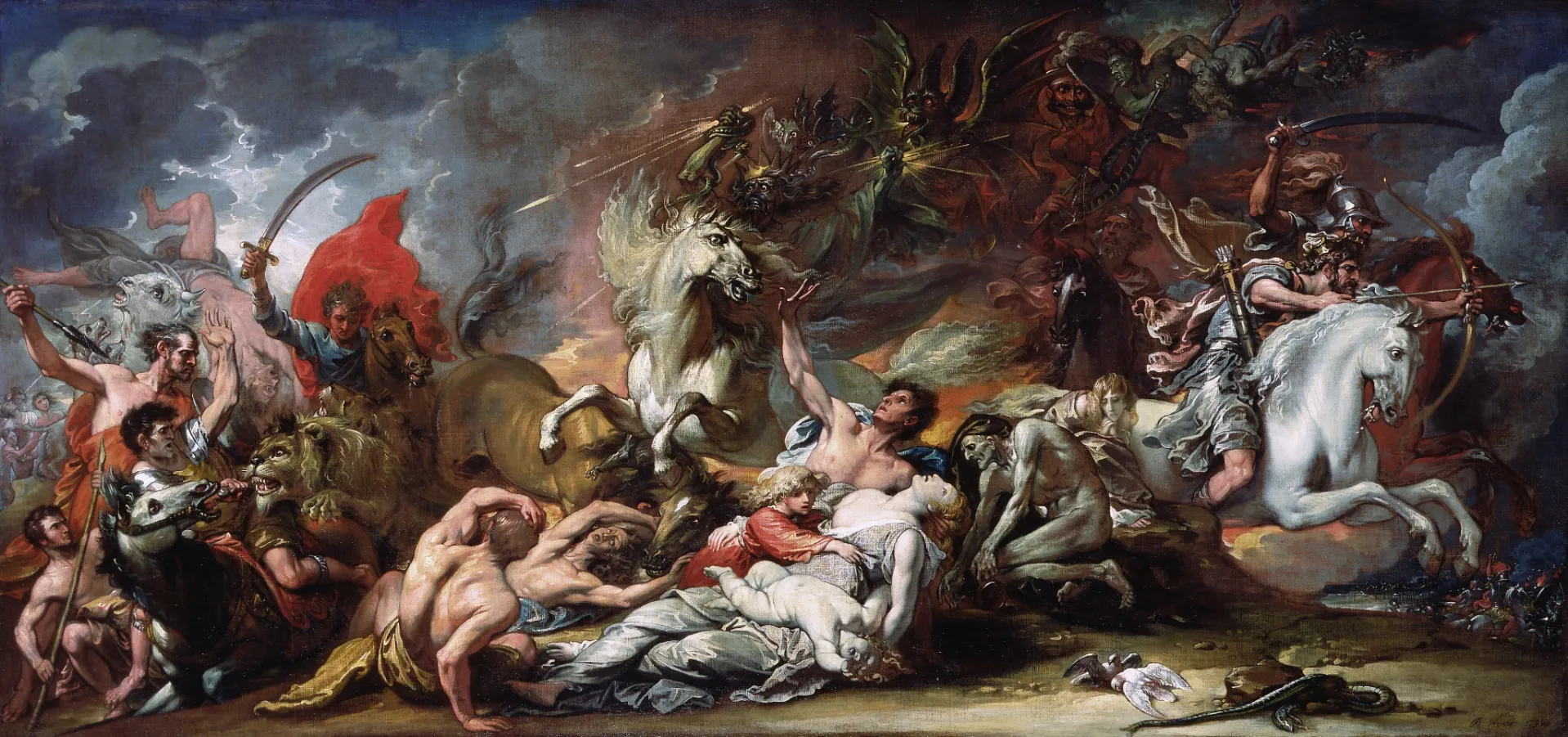
The answer depends heavily on which Christian you ask.
Before We Start, There Is No Official Timeline
The Bible never provides one neat chronological list labeled Instructions for the End of the World.
Instead, Christians build their end times expectations by combining passages scattered across the Bible: Jesus' warnings in the Gospels, Paul's letters to early Christian communities, imagery borrowed from Old Testament prophets such as Daniel and Ezekiel, and, most famously, the Book of Revelation.
Those competing interpretations belong to a field of theology called eschatology, the study of the “last things.”
For this thought experiment, we'll mostly follow premillennial dispensationalism, the framework behind Left Behind, the hugely popular apocalyptic novels by Tim LaHaye and Jerry B. Jenkins that fictionalize the end times. It also happens to be the framework taught by John Hagee, whose prophecy Bible first introduced Vance to the subject. Under this model, Christians are taken from Earth in the Rapture, the world enters a catastrophic Tribulation dominated by the Antichrist, Christ returns at Armageddon, and then reigns on Earth for 1,000 years.
Catholics, Orthodox Christians and many Protestants reject substantial portions of that timeline. We'll get to those disagreements when they make a real difference.
First, though: How would anyone know the end was approaching?
The Warning Signs
"And ye shall hear of wars and rumours of wars ... but the end is not yet."
Matthew 24:6
If you've watched the news recently, Jesus' description of the last days can sound unsettlingly familiar.
He predicts wars, famines, earthquakes, persecution, false messiahs and spreading lawlessness. Elsewhere the Gospels add pestilence and frightening signs in the heavens.
If these are the diagnostic criteria, humanity has been checking some of the boxes for a very long time.
Take war. One frequently cited estimate, popularized by journalist Chris Hedges, holds that humans have been completely at peace for only 268 of the last 3,400 years, about 8% of recorded history. That statistic shouldn't be mistaken for a precise scientific accounting of every ancient conflict, but the larger point is difficult to dispute. Pretty much since human civilization started, we've been at war. Earthquakes, epidemics, famine, charismatic religious pretenders, and badly behaved people aren't exactly rare either.
Jesus even seems to realize that he was spooking his audience. Immediately after his warning, he adds: “...the end is not yet.”
But those signs don't actually start the clock on the particular timeline we're following. In pre-Tribulation theology, the next decisive event is the Rapture, when Christ suddenly gathers living believers and resurrected Christians to himself while everyone else remains on Earth.
And importantly, believers in this tradition consider the Rapture “imminent.” No final war, earthquake or blood-red moon has to happen first.
Perhaps it will even happen before you finish reading this sentence.
The Rapture: Everyone Disappears
"Then we which are alive and remain shall be caught up together with them in the clouds."
1 Thessalonians 4:17
Still here? If the popular Left Behind timeline is right, the first event you absolutely cannot mistake for ordinary history may happen in seconds.
Millions, perhaps billions, of people will simply disappear.
HBO's The Leftovers offered a terrifying visualization of what something like that might actually look like. In its opening scene, a frazzled mother straps her crying baby into a car seat. Moments later, the baby is gone. Nearby, a child screams for his missing father. A car crashes because its driver has vanished. All in a blink of an eye.
Then the scale becomes clear: in the television show, 2% of humanity (~140 million people) disappeared simultaneously. Importantly, The Leftovers is not actually depicting a Christian Rapture; its missing people include believers and nonbelievers seemingly at random. But the mechanics are about right.
The scale, though, is way off. A Christian Rapture could be considerably larger.
Pew counts about 2.27 billion Christians worldwide, or 28.8% of humanity. If every one of them vanished, about 5.62 billion people would remain. Nearly two-thirds of Americans would disappear, while most people in countries like China and India would still be here.
Of course, Rapture theology holds that God is only interested in genuine believers, not everyone who checks “Christian” on a census form. Everyone else stays behind; Scripture never clearly addresses what happens to infants and young children.
One Very Strange Book
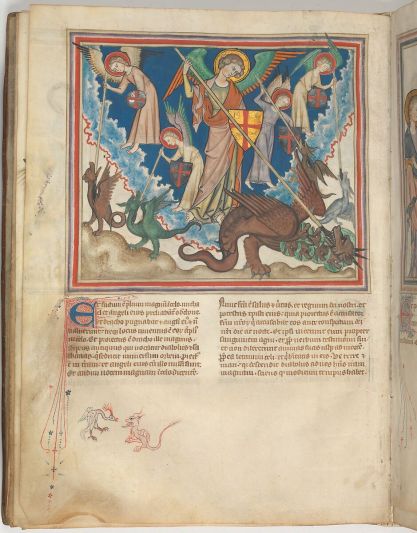
Before we go any further, we need to meet the book responsible for most of what's about to happen.
The Greek text of Revelation begins with the word apokalypsis, meaning an unveiling, disclosure or revelation. That's why the book was historically also called the Apocalypse of John. Our modern use of “apocalypse” for a world-ending catastrophe came later, largely because writings like Revelation disclose the future through spectacular images of cosmic destruction.
Its author identifies himself simply as John, a Christian on the island of Patmos describing a series of visions he says he had. He never claims to be John the Apostle, one of Jesus' twelve disciples. Some early Christians believed they were the same man; many modern scholars call the author John of Patmos precisely because his identity is uncertain.
Revelation was probably written in the 90s CE, though an earlier date has defenders. Its place in the Bible was unusually contentious: Christians debated its authorship and authority for centuries, and it gained broad acceptance much later in parts of Eastern Christianity than in the West.
And yes, it is extraordinarily weird.
One colorful online theory claims Patmos was covered in psychedelic mushrooms and John was simply tripping. Fun story, but there's no historical evidence for it.
No, John apparently didn't need mushrooms to see dragons, monsters and cosmic destruction. Earlier Jewish apocalyptic literature was already rife with disturbing symbols. Revelation repeatedly repurposes those older images and turns the Roman world around John into a cosmic struggle between God and evil.
John's audience lived under Roman rule in Asia Minor, where emperor cults honored Rome's rulers while Christians insisted that ultimate worship belonged to Christ. Revelation practically invites readers to see Rome behind its monsters: its decadent enemy “Babylon” famously sits on seven hills, just like Rome. On this reading, John transforms the world's dominant empire into a satanic monster destined for destruction.
With that disclosure, we can proceed.
Enter the Antichrist
"Little children, it is the last time: and as ye have heard that antichrist shall come..."
1 John 2:18
The word actually appears in First John, an anonymous Christian letter traditionally attributed to John the Apostle (who, again, most scholars do not believe is the John who wrote "Revelation"). The Greek word specifically used is ἀντίχριστος, or, antichristos. It combines anti, which can carry the sense of "against" or "in place of," with Christos, Christ or Messiah. "Antichrist" is therefore more transliteration than translation. Some modern Bibles render the idea more transparently as "the Enemy of Christ" or "Anti-Messiah."
And the biblical author who uses the word makes things more confusing. John says that believers have heard "the antichrist" is coming, but then immediately says that many antichrists already exist.
Over the centuries, Christians have nominated plenty of suspects:
- Nero: The Roman emperor notorious for persecuting Christians became one of the earliest suspects. We'll come back to him.
- The pope: Martin Luther and other Protestant Reformers identified the papacy with the Antichrist, while Catholics returned plenty of apocalyptic accusations of their own.
- Napoleon: His military conquests and apparent hunger for continental domination made him an obvious candidate to prophecy-minded Europeans.
- Hitler and Mussolini: Both dictators were predictably cast as possible Antichrists during the upheavals of the 20th century.
- Ronald Reagan: Prophecy enthusiasts noticed that Ronald Wilson Reagan contains three six-letter names. His former street address also included 666. That was apparently enough.
- Mikhail Gorbachev: His distinctive forehead birthmark inspired comparisons to the biblical "Mark of the Beast".
- Saddam Hussein: His effort to rebuild parts of ancient Babylon proved irresistible to end times watchers.
- Modern U.S. presidents: Franklin Roosevelt, Barack Obama, and even Donald Trump have all taken turns in Guess Who?: Antichrist Edition.
In the popular interpretation, the Antichrist emerges amid global disorder as a charismatic political leader, creates or exploits a system of enormous international power, demands allegiance, and eventually claims a status belonging to God.
At this point, it helps to separate Revelation's villains. Its Dragon is explicitly Satan, who gives his authority to a first Beast; a second Beast, later called the False Prophet, directs humanity to worship the first. Revelation never calls either one “the Antichrist.” Christians later combined this satan-backed Beast with Paul's “man of lawlessness” and First John's antichrist into the familiar single end times supervillain.
And then comes 666.
What Does 666 Actually Mean?
"Let him that hath understanding count the number of the beast: for it is the number of a man; and his number is Six hundred threescore and six."
Revelation 13:18
Okay, real quick let's get into why some folks were so scared of Ronald Reagan's street address.
Revelation says that in the end times nobody may buy or sell without the Beast's mark, placed on the right hand or forehead, and then gives readers a puzzle: "the number of the beast" is 666.
The puzzle uses gematria, in which letters also carry numerical values. Imagine A=1, B=2, C=3 and adding up the letters in someone's name.
When 'Nero Caesar' is spelled in Hebrew and the numerical values of those letters are added together, the result is 666. That is one reason many scholars think Revelation's Beast originally pointed toward Nero or Roman imperial power.
It also explains why 666 theories multiply so easily. Start with a desired suspect, choose a language and spelling, assign numerical values creatively enough, and an alarming amount of humanity can eventually be made to equal 666.
Curious if you might bear the Mark of the Beast yourself? You can check your own name here.
Does Someone Have to Rebuild the Temple First?
"He as God sitteth in the temple of God, shewing himself that he is God."
2 Thessalonians 2:4
There is one major complication for Christians expecting a future Antichrist.
Paul says the "man of lawlessness" will enter the "temple of God" and proclaim himself divine. Many prophecy-minded Christians interpret that as a reference to the Jewish Temple in Jerusalem.
Here's the big catch: that temple no longer exists. Rome destroyed the Second Temple in 70 CE, and it was never rebuilt.
For Christians who read Paul's prophecy literally, that means a Third Temple must eventually be constructed.
That expectation helps explain the intense interest some Christians take in efforts to prepare for renewed Temple worship. The Jewish Temple Institute has spent years creating ritual objects and studying the requirements for a future Temple, including the need for ashes from a biblically qualified red heifer.
That's proven to be a major impediment: even a few non-red hairs can disqualify an otherwise promising animal, despite years of effort, no heifer has yet been publicly confirmed as fully qualified (though another candidate was born earlier this summer).
Some evangelical Christians have taken an active interest in these efforts, even conducting a rehearsal red heifer ceremony last year in Israel.
But even if the right cow does come along, actually rebuilding the Temple would be tremendously difficult... not least of all because its traditional site is Jerusalem's Temple Mount, which today is home to the Dome of the Rock and Al-Aqsa Mosque, two of the holiest sites in all of Islam.
Some end times believers openly welcome developments they believe are moving biblical prophecy forward, though many Christian Zionists reject the idea that humans can force God's timetable. If a Third Temple ever is built, prophecy watchers will certainly be interested in who walks through the door.
Then Revelation Gets Weird
"Behold a pale horse: and his name that sat on him was Death, and Hell followed with him."
Revelation 6:8
Once "the Tribulation" gets underway, Revelation quickly stops resembling an ordinary geopolitical crisis.
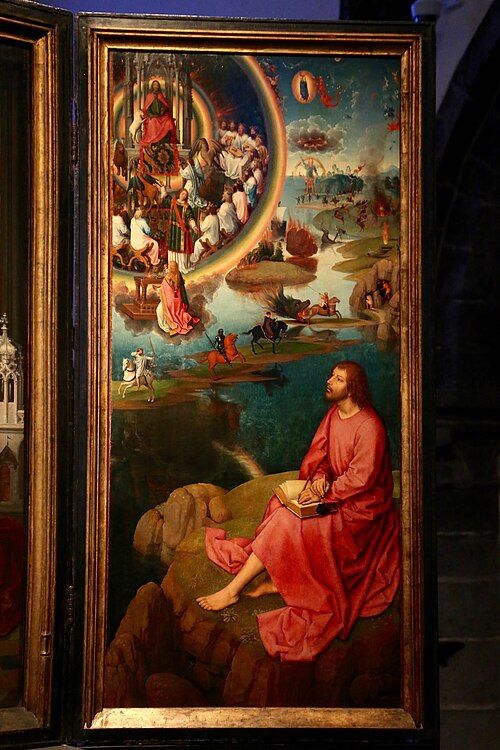
John sees God seated on his heavenly throne, holding a mysterious scroll sealed shut in seven places. Then a Lamb appears, looking as though it has been slaughtered. The Lamb represents Jesus, and he alone is deemed worthy to take the scroll from God's hand and begin breaking its seals, kickstarting the apocalypse.
The first four seals he breaks unleash the famous Four Horsemen...
The white horse carries the conqueror, armed with a bow and crown. The red horse brings war and takes peace from the Earth. The black horse brings scarcity and crushing food prices. The pale horse carries Death himself.
The fifth seal reveals Christian martyrs beneath God's altar demanding to know when they will finally be avenged. The sixth brings an earthquake, a blackened sun, blood-red moon and falling stars.
Before the final seal is broken, 144,000 servants of God are marked for protection, 12,000 from each tribe of Israel.
Then Jesus breaks the seventh seal, and heaven goes completely silent for half an hour.
After that quick break, seven angels pick up seven trumpets, and things get much, much worse.
One trumpet blast brings storms of hail and fire mixed with blood. Another sends something resembling a flaming mountain crashing into the sea. A great burning star called Wormwood falls from heaven and poisons the waters. As yet another trumpet is blown, a giant abyss opens.
And from that abyss, smoke pours out, followed by a plague of monstrous "locusts". Revelation describes them with humanlike faces, long hair, lions' teeth, iron breastplates and scorpion tails.
The locusts are followed by an army of two hundred million mounted troops.
Finally come seven bowls of divine wrath: painful sores, seas and rivers turning to blood, scorching heat, darkness and, eventually, demonic spirits resembling frogs that gather the world's kings for war.
And those are just the highlights! In sum... doesn't sound like the best time.
Whether it was meant to be literal truth or political allegory, John certainly knew how to hold an audience.
And he isn't done yet! Back to those frogs...
Armageddon
"And he gathered them together into a place called in the Hebrew tongue Armageddon."
Revelation 16:16
Armageddon is generally understood as being derived from Har Megiddo, “Mount Megiddo,” after the ancient settlement in northern Israel where major battles were fought. You can still visit Megiddo today; it's an Israeli national park.
Revelation's frog-demons gather the world's kings there. Then, a few chapters later, Jesus finally returns.
Revelation 19 presents him not as the infant of the Christmas story, or the suffering Jesus of the Crucifixion, or a slaughtered lamb, but as a terrifying victorious rider on a white horse. His eyes will shine like fire and he will be wearing multiple crowns. His robe will be dipped in blood, and he will pull a sharp sword from his mouth.
The Beast and False Prophet are captured and thrown alive into a lake of fire.
For all the buildup, Revelation spends surprisingly little time describing the actual final battle. The forces opposing Christ assemble, he appears, and apparently wipes them all out pretty quickly.
But the world isn't over yet.
The Millennium
"And they lived and reigned with Christ a thousand years."
Revelation 20:4
An angel descends carrying a key and a great chain.
He seizes the dragon (Satan) and throws him into the abyss, locking the door behind him.
For the next 1,000 years, the imprisoned Satan is unable to deceive the nations and Jesus himself will personally rule over a restored Earth with his resurrected followers.
Other biblical prophecies supply the imagery for this peaceful kingdom: weapons become farming tools, and predators live beside their former prey.
In one common premillennial interpretation, the resurrected and raptured Christians now possess glorified bodies and return to Earth. Meanwhile, any who manage to physically survive the Tribulation will enter the Millennium as ordinary mortal people. They will marry, have children and repopulate the world.
Then comes the thousandth year, when Satan will be released from his cell. Despite a millennium of Christ personally ruling the Earth, the dark figure will apparently find an enormous number of people willing to join him in one last rebellion. Revelation says their number is "as the sand of the sea." Once again, Jesus destroys the uprising almost immediately, and Satan finally joins the Beast and False Prophet in the lake of fire.
And then, the unavoidable appointment...
Judgment Day
"And I saw a great white throne, and him that sat on it..."
Revelation 20:11
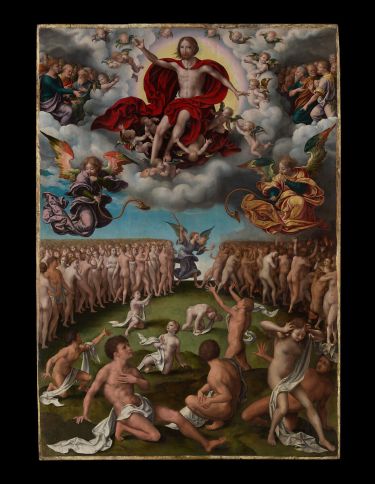
After Satan's final defeat, the dead stand before God, where the Book of Life determines their fate.
For the lucky and faithful whose names appear in the book, John sees a "New Jerusalem" descending from heaven. God comes to dwell with humanity. Death disappears, as do crying and pain.
The Christian apocalypse ultimately ends where Genesis began: with God and humanity together in a creation remade.
Which brings us back to Vance.
During his podcast conversation, he remembered a friend who became convinced that the end would arrive in 2007 and responded by running up enormous credit card debt.
2008 did end up happening.
So, after a lifetime of fascination with prophecy, the VP said he now tries to focus less on decoding the end and more on the responsibilities already in front of him: his wife, his children, and the country he's responsible for vice-managing.
And maybe he's right to stop fretting so much. Jesus repeatedly says nobody knows when the end will arrive. His instruction isn't to panic, crack the prophetic code or max out your Visa. It's just to live well and faithfully while you wait.
If you became convinced that the end of days really would occur within your lifetime, what would you change about the way you're living now?
144 comments
-
 Brien
Brien
I am not sure what is more disturbing, all of the religious zealots touting the end of the world or the actual people in power around the planet that can make it happen 🤔
-
 Rev. BH
Once again, gang the Big List of End Time Dates (all come and gone).
https://en.wikipedia.org/wiki/List_of_dates_predicted_for_apocalyptic_events
-
 Jack Badman
Oh, and by the way, GOD BLESS ALL OF YOU. I remain as always a servant and scribe of Jesus Christ.
-
Jack Badman
My final word on this subject is, no matter what happens DO NOT LEAVE THIS CHURCH. you are safe here.
-
 Steven Ferrell
Sadly I feel we are in the last days. I may not see the end, but I feel my grandchildren will.
-
 Wayne L Christensen
Thank you
-
 Alexander Clarke
The "end times" have been upon us since Man created religion. Religion is the root of all evil. Religion was created by man to control what we think, say do and to separates us from our wealth. Religion fills in where intelligence fails. One can have faith without the confines of religion.
-
Jack Badman
Sounds like you could use some religion in big doses, because there is not much intelligence going on in you.
-
 Rent-a-Rev
How quickly you resort to judgement and throwing insults. I think we should all remember that we are all walking different paths in life, working through our very own battles and hardships, and unless your are the living God of Abraham walking here amongst us, perhaps you keep your reflections inward and get your own house in order, hmm? Judge not lest ye be judged. And we all know that those of you who are the first to start throwing stones have much to hide in your closets!
-
-
-
Jack Badman
Remember how different the world was twenty years ago. Imagine if you were suddenly transported from that time, to be here in an instant. USA at war with Iran, Russia at war with Ukraine, China posturing For an invasion of Taiwan. Coved 19 Ebola and bird flu. You would look around and say, I am here in end of days. Because it is gradual, it goes Unnoticed.
-
 Cam Kirmser
Only God knows the time and place, not man.
Any man who claims otherwise is simply wrong regardless of his politics - which have no bearing.
For me, I'm not wasting a moment worrying about what any other man may say about the "end times."
-
Jack Badman
Perhaps there are some men who are more concerned for your future, than you are?
-
-
 Patricia Ann Gross
Every believer (and non-believer) disappearing in an instant is more and more possible considering the need to have nuclear codes and someone with the codes to unlock them. Just saying.
-
Jack Badman
Patricia GOD bless you.
-
Patricia Ann Gross
Jack,
And also you.
-
-
-
Jack Badman
Hope is here, the Church makes plans to visit me as I speak. There is a plan, and there is hope.
-
 Rev. Mark
For all who believe the bible BULL SHIT!!! ... WELL, once you get tired of waiting, the rest of us will welcome you with open arms!! .. First off, you must remember the bible was written 80yrs after the death of the alleged "Jesus". 2nd, they claimed the end of times was 2000, and then corrected to 2016 for calendar correction. The fact is.. they've had over 2000 years to refine their BS, so it's gonna look quite "polished". Truth is.. just live your life to the fullest, and when you take your last breath, just know that you did your best, had a great life (subjectively speaking) and leave this "chapter" of your existence knowing you had a good time on Earth, while you were here!!:-)
-
Jack Badman
Yes live without concern for others, and put down anybody that doesn't agree with you. Have fun in Hell.
-
Patricia Ann Gross
Jack,
Living life to the fullest does not imply living it without concern for others. Actually it means exactly the opposite. Being fully alive means living for others as well as yourself. Try it, you'll like it, and may even end up in heaven for it. Sorry, Jack, but you don't have the power to condemn anyone to Hell. That job is reserved for our Creator.
-
Rent-a-Rev
I think there's a great majority of 'Christians' who spend way too much time preparing for the afterlife and not nearly enough time and energy in the current one. If we all lived by what the bible teaches, and not constantly looking at our watch while we condemn, judge, prey on the innocent, etc., this world would be in a much better place, don't you think?
-
Jack Badman
I'm sorry but I didn't say not to live life to the fullest, I said consider your words and actions, in order to avoid hurting others. That is living life to the fullest, not abusing others for there beliefs.
-
Patricia Ann Gross
Jack,
I'm sorry I didn't grasp your hint of sarcasm right before you condemned Rev. Mark to Hell.
-
-
-
-
-
 Patti Anne Lisenbee
I've grown up with sermons of the Rapture every other week. They were terrifying to me, as a child. As I got older I got to where I could make predictions of my own about who was the Beast and Antichrist. I listened to people saying such and such a date the Rapture would occur and it never did. The bible itself says no one knows the day or hour, so why do people insist on dating it? Even here on the ULC site, people are naming the day and hour. NO ONE KNOWS! The signs are general. They have always been around. In the 1700's, one church sold everything they had and camped out on a mountain top waiting for Jesus. They died there. What a waste! Live your life like it's your last day. Be kind to one another. Love your neighbor as yourself. Treat the stranger in your land as if he/she were one of your own. This is what your Jesus wants.
-
Jack Badman
Then I dare you, test my words with the Tarot. Then come back and tell me that I am full of sh#t.
-
Rev. BH
"Test my words with the Tarot" How? What are you talking about, Jack?
-
-
Jack Badman
Dear Reverend Patti, I urgently need to contact you. Please email me at bigeyedbuggers@gmail.com
-
-
 Robert Berry
Only a total idiot believes in a rapture. Why all the dumb hyped up drama? The end times come for us all in due time whether we like it or not. Every generation must face its own end times as our lifetimes pass. That's nothing new and not likely to ever change unless we finally bring an ending upon us all with our gross arrogance and seemingly undying stupidity. We need to focus on making a better today for everyone and every living thing while we're still each able. That's the only way that God can work through us before we ignorantly end ourselves.
-
Jack Badman
Then what do you have to loose by trying a simple experiment, Except off course for your SOUL.
-
-
Jack Badman
OK let's put it to the test. It doesn't matter what deck or reader, but the Cartouche deck is ancient symbolism. You will consistently get the same results. Enter the following dates. 1st seal opens 20th January 2017. 2nd seal opens 24th February 2022 3rd seal opens 8th October 2023 4th seal opens 8th October 2026 MARK OF THE BEAST 19th November 2026 5th seal opens 22nd July 2028 6th seal start NEW YEARS EVE 2029 6th seal end NEW YEARS EVE 2030
Test now and save your soul.
-
 Walter Abington
False prophets abound! This is not the end of times. We have extremely stupid people running the USA making false claims so they can gain status with other morons.
-
 Rev. Lindsay
Jesus said that we wouldn't know the day of his return but we would be fools not to realize his coming is drawing near. There's also a warning that if you don't live believing daily he will return it will lead to a sinful lifestyle and miss the rapture of the church. The naysayers here don't realize they are throwing away their only chance at salvation by complete denial Jesus is coming back. The same comments must have come from the eight million souls who perished in the great flood in Noah's day. The bible actually speaks of this that in the last days it would be like in the days of Noah. I believe there are many signs of his coming right now. The conflict with Iran is one very big sign because it mentions hurt not the oil in scripture meaning not to hurt our oil supplies. Another is a moneyless system which points to the anti-Christ where it says you cannot buy or sell without a mark in your hand or your forehead which relates to memorizing a debit card number in your head or being in your hand, maybe crypto currency next. Trump is pushing for both crypto currency and for AI which scriptures say would bring life to the beast. Then there's the new immorality I can't post here I imagine. Russia rising against Ukraine, China against Taiwan possibly another sign. It fits scriptures talking about war and war rumors . Yes there's strong signs of the rapture of the church coming anytime soon.
-
Jack Badman
Amen brother. People think that the Rapture will take anyone that says that they are Christians. The Rapture is the accention of the 144,000.
-
 Lori-Ann Neeb
I like that the majority of replies say the best and most one can do is follow the simple spiritual life of believe in love God. Do good deeds. Then go back Home when your time comes. Revelations is the ramblings of a persecuted man at the time. It went along with the agenda of the corrupt church of the time so made their cut to be included in the book they were publishing. There are no "end times" as portrayed there. This world will end when it can't support life anymore. All those here at the time will be lifted Home. We do seem to be leading the world in that direction fast these days but it has nothing to do with any end of days prophecy. We are doing this ourselves with our actions. I personally give the credit to the choice of person claiming to be a president. I suppose everyone has a right to believe as they will and I respect that. But I wish they would restrict those particular beliefs to themselves and any other misguided people they can commiserate with in any company they keep. They are welcome to judge and hate all they want in their groups. They have no right to inflict their judgements on the rest of the world.
-
-
 Rev. Dr. Robert Allan Roush
We've been in the end times since my life began, and that was a long time ago. Oh, plus, the date of it ending has come and gone dozens of times. Could we please shelve this cr*p?
-
 Joseph Grieco
Does anyone else here remember James Watt? He was Reagan's Secretary of the Interior. He was so convinced that the Rapture would occur and HE would be carried off that he believed in exploiting every iota of resources we had. Strip mining to bare rock, drilling, pumping and burning ever drop of oil and natural gas, deforesting the entire country for wood, paper etc. Why? Because with the Elect gone, those who were left didn't deserve a planet that could sustain them. All this from the 19th century evangelical belief in the end-of-times that got carried on to the present. The Yuan who wrote the Revelations (that for centuries was referred to as "The Apocalypse") may or may not have been the Apostle, or the writer of the Gospel or Epistles attributed to him. He was likely a mid-1st Century CE Levite follower of Yeheshua al Nassori, who indulged in too many psychotropics. Eusebius even questioned whether this book should have been put in the New Testament. If he had known the furor it would cause over the 1700 or so years that have passed since he and his team decided it was Canon, he would likely have excluded it. Especially given its anti-Imperial sentiment, at a time he was trying to satisfy Constantine's desire for uniformity.
-
 Mrknowitall
The rabid Homosexuals who hate God can't stand this article, it makes them foam at the mouth....Jesus Christ lived and died, that is a historical fact, the issue is was he raised from the dead ? Logically he was, if he wasn't we would all have known about it and this wouldn't even be something to talk about. you have you lifetime to become born again, it's so easy to do, but if you don't you will die a second death. Good luck
-
 Lester
Wow. That was a hot mess of hate filled vomit. Jesus having lived is NOT a historical fact. And saying it is "logical" that he rose from the dead is rather amusing. That event (if it happened) would be the exact opposite of "logical."
-
Rev. BH
Mrhateitall, "the rabid Homosexuals who hate God ..." and you who hate homosexuals.
Such Christian love.
-
-
-
 Merlin
Dragon is Musk to gave the Beast of the Sea(Trump) power through his $250 million dollar donation. Beast of the Earth is Franklin Graham who continuously supports Trump as being the chosen one. It can all be stopped in the midterms.
-
 Roy S. Thorpe
It's so funny and/or refreshing to hear so many believers and non-believers discussing the end! Live your life to the fullest, enjoy it and I know how but I don't know when! All that gobbly-gook with all the 7 this and that is just that! Those who led a good life and helped each other with love as a basis will go to the big party and those of you who didn't will be just like scripture says be cast out into the darkness! Love, peace, harmony, and understanding makes it! All the rest is smoke and mirrors!
-
 Rev Ned
The Antichrist is already here. J D oughta know it’s his boss. There’s a meme out there that lists all the Biblical verses that explain that djt is the Antichrist.
-
 ServantOfJudgement
Very kindly rev Ned, only the greatest of faith in Jesus will be immune to the charm of the antichrist. All others will love and trust him.
Ya got a 50/50 divide. He's not the antichrist you want him to be. He's damned good on running the country though, I'll give him that. Kept all those wicked illegals from storming us until the next brain dead, idiot coached pawn gets appointed anyway.....
-
 Pix Edward
Remember the parable of the good Samaritan? Do you consider making the ultra-rich wealthier at the expense of the poor? Murdering fishermen in the Carribbean, who they've admitted they can't prosecute in a court of law due to lack of evidence? An illegal war that has wrecked the world economy and has more of our men and women in uniform filing for discharge because they believe they're being issued illegal orders (not new recruits, either) than ever seen? Outright bribery in exchange for pardons? I could go on, but that sick old man, a convicted felon and adjudicated rapist, encourages nothing but selfishness, hatred, and bigotry. He may not be the Antichrist, but he is an antichrist.
-
ServantOfJudgement
Pix,
Those fisherman brought fish to the nation that killed my nephew and niece.
Good job Trump but why haven't we heard about any more fisherman getting blown up? We know there's fisherman catching fish.... Just ain't any 'fishing' lately.....
-
-
-
Jack Badman
Yes he is, here you can test it yourself. Use Tarot (preferably The Cartouche, and enter the date of the rise of the Antichrist. It is 20th of January 2017.
-
ServantOfJudgement
Jack,
If you're using cards to predict the antichrist, you are trusting the Bible when it says there IS a Christ and antichrist.
The Bible says those answers you get from cards are demonic and therefore lies.
Enter your paradox impossible to reconcile.
Put your cards down, start in Genesis and pray for understanding. Enjoy the Truth God reveals.
Take care.
-
-
-
 Leslie A. Hulberg Née Tomasura
I would be very hard pressed to believe it. So I can’t say I would change anything. Especially since somewhere in the bible it says we are all born in or of sin. Therefore, no one is joining the 144000 anyway. But on the slim chance that there was a possibility that not committing any sins throughout my lifetime would actually allow me to ascend to wherever the other 144000 are going, I could not stand here and say after the threes score and six years I have been on this earth that I haven’t broken a single commandment. As did everyone else. We are all gonna be here anyway and it seems to me that I have had a pretty good and interesting life. And I wouldn’t change that for anything. If I will be judged, so be it. But judge me for my true self and not the self I present to the world.
-
Jack Badman
The 144,000 are are the ones chosen by God, and yes we are all sinners, that is the whole point of Christ's sacrifice. He said let he among you without sin cast the first stone. The 144,000 will be spared the hour of temptation, the rest must endure the remaining tribulations. The hour of temptation is almost upon us and the tribulations are sent to test if our words and actions are in line with GOD.
-
-
 Minister for the Kingdom
Minister for the Kingdom: There is no doubt that the king is coming. He is coming! (Revelations1:7). The spirit is saying; Speak to your children. Tell them to get ready! Speak to all you know. Family, friends, and all you meet. He's coming! He's coming! Remember despite all our differences, the note is that this is not a fantasy. This is for real. In verse (7): The Second Coming of Christ will follow the seven-year Tribulation period, which is marked by judgement upon the earth (Zech. 12:10). During the Tribulation, the Lord will pour out His wrath on those who reject Him, and although many will be destroyed, multitudes of people will be saved. LISTEN... Then the whole earth will witness His return as the King of Kings. He will finish cleansing the earth of ungodliness and set up His millennial reign (Life Principles; Revelations 1:7 pg. 2, Charles F. Stanley, Thomas Nelson) KJV I love you all. Hope to see you there. Minister R. Krebbs
-
Jack Badman
Check for yourselves here are the opening dates of the seals of revelation. 1st seal opens 20th January 2017. 2nd seal opens 24th February 2022,3rd seal opens 8th October 2023. 4th seal opens 8th October 2026, mark of the beast starts 19th November 2026, 5th seal opens 22nd July 2028, 6th seal opens NEW YEARS EVE 2029 6th seal closes NEW YEARS EVE 2030. Use the Tarot and enter the dates.
-
-
 Rev Frankie PG
Loyalty. Loyalty to God, loyalty to your family, loyalty to your country and loyalty to yourself. There are many reasons why people can believe that the end is near but if you actually study history it sadly is just a repeat of itself with better technology and different characters. To live life is to flourish, to embark on a journey and most importantly embark on a journey that will have hills and valleys of emotions sometimes by yourself and sometimes with others. Staying loyal to non-toxic relationships is one of the secrets to a successful relationship. To give onto others as you'd have them give onto you can be tangible or not. Here I lay with my husband as he falls into sleep the love of watching him is intangible but richness to my heart. I remember the days of struggle which I no longer have to worry about them, unless God has a plan for me.
-
 Lori Mongillo
If people truly want to believe this fiction, then I can only hope that the rapture will sweep them off to whatever their desires envision. What a peaceful world it would be. We have been immersed in this stuff for eons, and until a sane intelligence embraces humanity, it will continue. We (humans) cling to the strangest things. Our need for fantasy and drama is incredible. Perhaps, one day, each person will come to the conclusion that storytelling has always been a fantastic pastime.
-
Mrknowitall
For you who believe we came from a rock, best wishes because you only have your lifetime to become born again, if not you will die a second death
-
ServantOfJudgement
Mrknowitall, let's be fair. Nobody came from a rock.
They came from funky sea mud all jacked up on horizon beams struck by cosmic lightning.
There's absolutely nothing wrong for the most unique and powerful life form on the planet that has power beyond anything found in nature and has no apparent cap to think it evolved from a snail with two foots and a heart of gold. It's logical.
-
Lester
The interesting thing about this is that most creation stories (as far as I am aware) depicted man as having been made from such things. (Rocks, earth, clay, ash, etc...) Some stories (notably among native Americans) depicted man as having come from some animal or another.
-
ServantOfJudgement
I thought the same thing Lester.
That was deemed impossible until evolutionists painted themselves in the corner. Now science says it's possible though impossible to prove.
That puts us where we started. God created Man.
The fascinating thing is IF man ever creates life in the lab, he'll have proved outside intervention is required to do so. Deliberately and purposely.
-
-
-
-
Jack Badman
The words are, man was created from the sacred dust of the Earth. The whole solar system was formed from the same sacred dust. The sun emits every particle of matter in our solar system, including mankind.
-
-
 John Alex Paxson
The earth is a wonderful place, the evil ones should be taken during the rapture, and leave the earth to the good people.
-
 Father Frederick
We will never know the time nor date. But, it sure seems like it at times.
If it's not end times, it's something to do with a mass consciousness issue. It seems that people don't know right from wrong, and those in the wrong are fighting hard to remain in their position. One theologian who is also a student of astronomy suggests something to do with pole shift, or environmental facts noting the change in weather and severity. We know that magnetic activity does affect biological organisms, so could that be it?
But people have always "predicted" gloom and doom. In the 1980s there was a fellow who said he could predict earthquakes, and Ohio was supposed to have a 7.2 on a specific date. Many believed. And look at the many deaths and wars throughout time which were cult related, or lesser "cult" actions depending on politics or religion. Lastly, there was one scholar of a university who said that Putin's war on Ukraine was motivated by "end times" and his need to have a legacy of reunification of the old Soviet Block.
People have always tried to rationalize something as being close to End Times. When in reality it's fertile imagination, ignorance of other events, or just insanity manifesting.
-
 Nicholas J Page
If Vance contemplate the end of the world then he has a sad life no one is going to worry about it or even be around if and when it happens maybe God will build a better world than what we have now.
-
 Sir Lionheart
No need to worry, from an American perspective, we are slowly getting back to making America great again. It’s not being made easy, as you can probably tell. It’s taken a lot to get us in the mess we were in, so it’s not going to be an overnight thing getting us out of it, but we’ll get there. Having said that, November could put the brakes on. Let’s hope not! 🤗
🦁❤️
-
Brien
Sir, America has always been great. It is a shame that people think otherwise but that is your right...one of our many great things, individual rights. Peace ✌️
-
Sir Lionheart
In many respects, you are right, Brien, though greatness is of course quite subjective. Taking just “one” state, the Texas Department of Public Safety, they have recorded 1,132 homicide arrests of those who were illegally present in Texas since June 1, 2011 - July 31, 2026 I doubt the parents and families of those killed in that state would agree that America has always been great.
We’re slowly getting there though to lower that homicide rate caused by illegal aliens, by removing them from our country, but its a slow job with so many that have been freely allowed to enter our beautiful home totally unvetted. Alejandro Mayorkas, and Biden, have a lot to answer for, as I’m sure those grieving families would agree with, and I’m sure they would like some answers. ✌🏼
🦁❤️
-
Patricia Ann Gross
Sir LH,
You seem to forget, that your deity, djt, has not been the only one "in charge" during the time between June 2011 and July 2026. Two of the presidents during that time were Democrats. In Texas. How many murders committed by Texans or other than "illegal aliens" were also solved? If your information is correct, you would probably have to add a zero to your 1,100+ number.
-
Sir Lionheart
Yes, you are quite correct, Patricia, we have enough homicides being committed by our own citizens without having to add statistics of illegal immigrant homicides. The point I’m making is that one homicide by an illegal immigrant is one too many, let alone 1132 in Texas, and could have been prevented with better border control.
King DJT 👑 attempted to build the wall to improve border control during his first term of office, only to find that Biden tried to sell off unbuilt metal wall hardware that was laying around when he took office.
Fortunately DJT has continued to strengthen the border with reported zero immigrants getting in illegally over the last 18 months or so. Hopefully we can all give his administration credit for that….right? I’m sure those waiting in line who have been approved to enter legally are pleased.
🦁❤️
-
 Michael Hunt
LH, for someone who went through the immigration process, you're incredibly ignorant of how it works and the roadblocks that exist particularly for those from Latin America. There is no line to wait in. Undocumented immigrants aren't slowing down this line.
Building a border wall would have done more environmental damage to the local ecosystem than it would have actually reduced illegal boarder crossings and there are better, more affordable ways to secure the border than a wall. While illegal crossings are down significantly, the number is not zero.
The overwhelming majority of undocumented immigrants come here through legal means but overstay their visa, for example, which border patrol can't patrol.
Of course a homicide by an illegal immigrant is horrible and one is too many, but simply removing undocumented immigrants won't actually lower crime in America.
In reality, immigrants, regardless of legal status, are found to commit less violent crime than US born citizens and the communities they move into see their crime rates drop, especially violent crime, when the community is inclusive of the immigrant population.
https://www.migrationpolicy.org/explainer/immigrants-and-crime-united-states
No one here should disagree with you that homicide is horrible and we should strive to prevent every homicide we can. You're correct that if there were no undocumented immigrants in the US, logically that would mean no undocumented immigrant could kill someone here. However, your solution for dropping crime by undocumented immigrants would actually increase crime, make for less culturally diverse communities, as well as have a significant negative effect on the economy. We're already seeing that economic effect today.
https://www.npr.org/sections/planet-money/2026/05/12/g-s1-121493/the-economic-chilling-effect-of-trumps-immigration-crackdown
https://www.economist.com/finance-and-economics/2026/08/27/the-economic-costs-of-donald-trumps-immigration-crackdown
Immigrants make our country better and the restrictive immigration policies we have today creates more illegal crossings and undocumented immigrants by preventing them a reasonable path to citizenship.
-
Lori-Ann Neeb
It is sad that some support a nazi wanna be dictator. They are blinded to their mind washing. It is "how to become a dictator 101" to pick a group to persecute through any and all means with the help of so called law enforcement (ICE or trump goon squads as I call them.). It desentitizes the population to hate, bigotry, racism and violence as the norm. Hitler had the jews. trump choose immigrants.
-
Sir Lionheart
Comparing immigration enforcement in the United States to Hitler and the Holocaust is an historically enormous leap.
ICE, created in 2003 as a result of the 9-11 catastrophe used by many administrations is a federal law-enforcement agency established to enforce federal immigration and customs laws. Whether you believe its current policies are justified, excessive, or unconstitutional is a debate worth having. But calling every immigration-enforcement action “Nazism” trivializes what actually happened under Hitler.
If you have evidence that Trump is actually establishing a Nazi-style dictatorship, present the evidence. Calling everyone who disagrees with your immigration position a “Nazi sympathizer” isn’t evidence.
Please don’t get confused with “legal immigrants” and “illegal immigrants”. There is a significant legal difference, Lori-Ann. All administrations worked on removing illegal immigrants, even Clinton, Obama, and Biden. We have yet to reach the removal figures under Obama. Fortunately we don’t place them in cages like Obama did.
🦁❤️
-
Patricia Ann Gross
Yes Sir LH, and when it happened it was considered a "necessary" overreach that many feared that would turn into what has become commonplace today, primarily, the Feds spying on private citizens under the "umbrella" of "National Security" and "terrorist threat." Most of it was racially or culutrally motivated. Nobody abused those powers worse than djt when he put bans on Muslims entering the country during his first term and through his deportation purges in his second term using unqualified and minimally trained "agents" who round up without judicial warrants because SCOTUS told them it was okay to do it.
-
Sir Lionheart
Patricia, I’m sorry you see customs enforcement and deportation purges as being unwarranted, or a bad thing. This wouldn’t have been necessary if we hadn’t had the millions pouring across our borders totally unchecked, and visa holders overstaying their welcome.
Fortunately, over 2+ million illegal aliens have volunteered to return to their home. The sooner more do that the better. I hope the “purges” increase, and let’s hope that ICE agents get better training wherever it’s necessary. I’m sure it’s been very difficult finding, recruiting, and training the vast amount of agents required to remove these millions of illegal aliens. I’m quite surprised we have only seen a very small percentage of poorly trained agents. I thought there would have been much more than what we are seeing considering thousands of illegal aliens are being removed every day, aren’t you?
As for the Muslim aspect, I’m in total agreement with it. Islam has become so radical that I’m amazed they are still allowed to exists as a religion here in the US. Many of their adherents hate America and all it stands for. The Muslim Brotherhood who want Sharia Law for everyone has been deemed a terrorist organization in some countries. I hope that happens here for all of our sakes. China, a communist country, are now tearing down mosques. They have seen the light as to how radical, and how damaging to society, they are.
🦁❤️
-
Michael Hunt
The Trump administration absolutely puts detainees in cages. The "cages" ICE detained unaccompanied minors in during the Obama administration were chain link fences inside of detention centers and plenty of liberals were highly critical of the administration for doing so. The Trump administration put people in outdoor cages about 18 sq ft in size at Alligator Alcatraz. Your Trump Delusion Syndrome and Liberal Derangement Syndrome seems to blind you from the facts.
https://www.nytimes.com/2026/09/14/us/alligator-alcatraz-dhs-inspector-general.html
https://www.bbc.com/news/articles/cqrk37rrpk23o
-
Sir Lionheart
Michael: The DHS Inspector General reported that “79” difficult and troublesome illegal alien detainees at Alligator Alcatraz were placed in outdoor metal enclosures of about 18 square feet, some for nearly two hours while they were being processed. So I wouldn’t dispute that, but please don’t think that is standard procedure for all detainees living in them 24/7.
And yes, chain-link holding areas were also used for troublesome illegal immigrants during the Obama administration, particularly during the 2014 surge. The two facts aren’t mutually exclusive.
🦁 ❤️
-
Michael Hunt
You said "Fortunately we don’t place them in cages like Obama did" and now you're trying to move the goal posts to dodge the fact that you were wrong or lying.
You're also trying to downplay the fact that the use of these cages at all is inhumane. One person was put in a cage because they did not "comply with a lawful order" according to documents from the facility. Additionally, you also ignore the wealth of reporting on the terrible conditions all detainees were subjected to at Alligator Alcatraz to minimize the horrors committed there and make it seem like the cages used weren't all that bad.
Trying to make it seem like Obama's immigration policies were as horrible as Trump's is a laughable false equivalence.
-
Sir Lionheart
Try not to get too upset Michael if you don’t agree with peoples points of view, I’m sure we will eventually get up to Obama’s deportation quantities and then you can really get upset.
I was disappointed our President couldn’t match Obama’s deportation levels during his first administration, but hopefully he can beat Obama’s quota second time around. I wonder how many will be placed in “cages”? If they are, I bet they will wish they had self-deported to a place of their choosing, with cash in their pocket. I bet Obama wishes he’d thought of introducing that humane option when he was President.
🦁 ❤️
-
Sir Lionheart
When I immigrated and became Naturalised there were more from south of the border than anywhere else going through that process. It’s very possible that is still the case. Thank you for pointing out my ignorance. Obviously you know more about this than I do, even though you haven't gone through the legal immigration procedure with your family. 🤷
Immigrants overstaying their visa are subject to being legally removed, and I hope they are.
Your statement: “but simply removing undocumented immigrants won't actually lower crime in America” is as fallacious as it can possibly get. We know many illegal immigrants commit crimes, so removing them will of course lower the crime rate because among those being removed will be many that are used to committing crimes. How can you suggest otherwise?
Also, your statement saying: “immigrants, regardless of legal status, are found to commit less violent crime than US born citizens and the communities they move into see their crime rates drop, especially violent crime,..” may be correct, but there shouldn’t be ANY crime by them at all because they shouldnt be here.
Yes, immigrants can make our country better, and let’s hope those that are vetted, and approved, like myself, enter legally, and do just that.
🦁❤️
-
Patricia Ann Gross
Sir LH,
It sure sounds like you are painting ALL immigrants as illegal. This is what happens when their status gets stripped by a POTUS trying to boost justify his actions against all of them. If djt didn't vet the person, they are considered unwelcome, and therefore should be removed.
-
Sir Lionheart
No not at all, Patricia. Only those who entered the country illegally, or overstayed their visas without having them renewed, or who have had their privileged visa status changed by Homeland Security.
As an FYI, DJT does not vet any visas or applications for legal immigrants. That’s the responsibility of Homeland Security. You really knew that right? I bet you are testing my knowledge on immigration laws…right? 🤭
🦁❤️
-
Michael Hunt
Actually, if you'd actually paid attention to my full comment or read any of the content found at the links I provided.
Statistics show that, regardless of immigration status, immigrants joining communities results in lower crime rates in those communities. You seem so deranged towards undocumented immigrants that you can't accept any data or study that disagrees with your belief that undocumented immigrants are bad and need to be deported.
"[T]here shouldn’t be ANY crime by them at all because they shouldn't be here" is an incredibly short-sighted statement that ignores the overwhelming benefit immigration, legal and illegal, has for our country. Name one group of people in America that does not commit crime? I'd reckon that's an impossible task.
However, just because one group who is here without legal documentation also commits crimes, despite that rate being considerably lower than that of US born citizens, you feel the entirety of that group needs to be removed from the country. This despite not recognizing the roadblocks placed in today's immigration process that makes it incredibly difficult for many people to come legally. This despite research that shows crime rates decrease when immigrants, regardless of legal status, are accepted into a community. This despite the massive economic loss we would experience if every undocumented immigrant was removed from the country.
You've decided that a very complex problem can be decided with the simplest of solutions like someone who decides to fix their car engine by banging on it with a hammer.
-
Sir Lionheart
You still don’t understand why countries have law and order, do you. Michael?
Let me try and explain as best I can. I’ll try and keep it simple. We basically have law and order to protect people, and property, maintain public safety, and ensure that everyone is subject to the same laws. It really is as simple as that, even if the people that break our laws are very nice hard working people they have to abide by our laws.
I’m sure you will continue to search for your “statistics” to support your confirmation bias, but at the end of the day, we still have laws that need to be observed. All countries have law and order, even immigration laws. Sorry about that Michael.
Let’s hope that if there are any blocks in our legal immigration process they get resolved very quickly. That might then open up opportunities for some of those who have voluntarily removed themselves back to where they came from.
🦁❤️
🦁❤️
-
Michael Hunt
I fully understand why we have law and order. What I am pointing out is that the current immigration laws do not make us safer. You're resorting to another straw man argument which I want to think you're better than relying on but maybe I'm wrong.
Let me try and explain as best as I can. Evidence shows that when immigrants, regardless of their legal status, are welcomed into communities, crime drops. Immigrants don't bring more crime, they lower crime in the communities they join. Yes, if you remove all undocumented immigrants, there would be no crimes committed by that group. However, the number of crimes committed by legal citizens, naturalized or US born, goes down when immigrants are in the community so that the total number of crimes would actually be lower than without the immigrants.
What I am getting at is not that laws shouldn't be followed, it's that our current laws are flawed and ultimately do not benefit the country or its people.
-
Sir Lionheart
Michael, I understand the point you’re making, but I think there’s a basic mathematical distinction being overlooked here.
If you add 20 million people to a population and those people have a lower crime rate per capita than the existing population they are moving into, the crime rate per capita can fall simply because the denominator has increased. That doesn’t necessarily mean the newcomers have magically caused the number of crimes committed by everyone else to decrease.
So a lower overall crime rate after immigrants arrive isn’t, by itself, evidence that their presence actually prevented crimes that otherwise would have been committed by citizens. To establish that, you’d need evidence showing that causal effect—not simply a comparison of per-capita crime rates.
I’m quite happy to discuss whether our immigration laws are good or bad policy, but let’s at least make sure we’re comparing apples with apples rather than confusing percentages with actual numbers.
Also, I can see you’re arguing that the laws should be changed because you believe they produce a worse outcome for society. You might be right, but I’m saying that until they are changed, they remain the laws of the United States and should be followed and enforced.
That’s a policy debate—not a straw man.
Here is yet again another very recent death caused by an illegal alien who was arrested by Border Patrol and released by Biden’s administration. The family are grieving and won’t be at all interested in statistical analysis of immigrants lowering the crime rate per capita, Michael.
https://www.kcra.com/article/sacramento-panera-shooting-victim-mother-final-call/73680514
https://www.kcra.com/article/sacramento-stalker-panera-bread-execution-dhs-immigration/73690437
🦁 ❤️
-
Patricia Ann Gross
Sir LH,
First, the "wall" was not a deterrent, it was a monument to djt, something he tried to correct with renaming everything in Washington after himself, and everything outside after America. None of that did ANYTHING to stop people from trying to immigrate, so he literally shut down the borders, and only American Citizens and short-stay visitors are getting through. Who would dare report someone getting in without authorization, because who would know? DOJ and ICE are certainly not going to put out a press release saying that "this month, illegal crossings were down to xx percent," and nobody reported that during ANY administration, including his first one. Most who are here illegally actually entered legally on one type of visa or another, and then proceded to either overstay that visa or do something else out of bounds of what they were allowed (like work).
Did some resort to crime? Yes. Did some enter with crime as their stated intention? No, or we wouldn't have let them in, as you have so elloquently enumerated elsewhere. Did some enter with crime as their intended (not stated) purpose? probably, especially those that were part of the drug trade. The number of adjudicated criminals that have been rounded up pale in comparison to the numbers of people with misdomeanor or minor offenses. Then they are shipped off to a third-world country where they don't kknow the language or have any family. Now. There's a deterrent to immigration: Knowing that there is a police force willing to round you up without warning and against the constitutional protections for ALL PEOPLE, not just citizens, and then holding you in a hell-hole for months before shipping you off to some God-foresaken place. Welcome to the Good 'ole USA, Have a nice stay!! The tourism economy, especially in places that cater to international travelers has tanked.
-
Sir Lionheart
Obama and Biden changed names on forts, ships and mountains. They changed nouns and pronouns. But Trump changes names to promote America and people lose their minds! 🤷
Those who entered the USA illegally ran the risk of everything that comes with doing so. The blame lies with them and not those attempting to find them and remove them. Their best option is to voluntarily leave, like 2.2 million have already done during this administration. They are not only paid to leave, but can choose their destination, and are eligible to apply to legally immigrate back to the USA. Those still breaking the law by hiding are putting themselves, and their families, in a terrible situation.
🦁❤️
-
Patricia Ann Gross
Sir LH,
Gulf of Mexico was renamed Gulf of America because he was "mad" at Mexico. Lake Ontario, likewise to Lake America because he was "mad" at Canada. He tried add his name to a National Monument in honor of JFK, and now is threatening to tear it down if he doesn't get his way and have his name somehow erected on it. Then there's this Arch ...
It is terribly sad that you are so infuriated by those that are trying to circumvent the process. Perhaps you should seek out a little therapy to help you get in touch with what is causing all of this. Is it because of the trauma you faced going through the process yourself? Before getting so infuriated, just think about how you would have felt while going through that process, if six months before you were sworn in as a citizen, the president had had a feud with England, and decided that all people who were here on green cards or work VISAs from England were to immediately lose their status and eligible for immediate removal. How would you feel if that had happened? Trump was able to "manufacture" a half million "undocumented persons" by doing that exact thing for people from Haiti and a couple of other countries. At the same time, he was "selling" Gold cards that promise expedited citizenship to anyone with $5M USD, so long as they were white and from South Africa.
-
Sir Lionheart
There are several different issues being conflated here.
The Gulf of Mexico was indeed renamed “Gulf of America” for U.S. federal purposes, and Lake Ontario has now been designated “Lake America” for U.S. federal use. But neither change means the rest of the world has been compelled to adopt those names. Canada, for example, still calls it Lake Ontario. The claim that these were simply done because Trump was “mad” at Mexico or Canada is an interpretation of his motives, not an established fact.
The Kennedy Center claim is also inaccurate. It isn’t a National Monument; it is the John F. Kennedy Center for the Performing Arts, a living memorial established by Congress in honor of JFK. Trump’s name was put on the building, but a federal court ruled that the renaming was unlawful and his name was subsequently removed.
There is a separate dispute over the Kennedy Center’s proposed renovation. The administration has argued in court that the building could eventually have to be demolished if the renovation is blocked. That’s not the same thing as saying Trump is threatening to demolish a JFK memorial because he can’t get his name on it.
It’s perfectly reasonable to criticize Trump’s decisions, but criticism is much more persuasive when the facts aren’t embellished.
As for your statement saying “I am infuriated by those trying to circumvent the process” it is totally incorrect. I am all for law and order, especially immigration laws. I hope you are too, Patricia. I think you will find that those who really need therapy will be those thousands of families in mourning due to losing loved ones as a result of many illegal aliens being here.
🦁❤️
-
Patricia Ann Gross
Sir LH,
Now you're picking nits. You also don't get subtle attempts at satire. I was onl doing what you do when you get exasperated by an argument that goes nowhere, because somebody doesn't listen or back down.
-
Sir Lionheart
My humble apologies Patricia, I thought you were serious. I am guilty of falling into my own subtle satirical trap. 🤭
Interestingly, here’s an update posted today on how the Kennedy Center is falling into disrepair and also bankruptcy, and how DJT is attempting to save it for the nation. I hope he succeeds, with or without his name on it, don’t you?
https://youtu.be/5N8Rxyoyado?si=mga3UPkZZZ0AG1lc
🦁❤️
-
Patricia Ann Gross
Sir LH,
From what I hear, "saving it for our country" is contingent on getting his name put on it and the the news reports stated that the board (which djt put in place) is demanding that his name is a non-negotible condition for them starting renovations.
-
Sir Lionheart
It will definitely be interesting to see how all this plays out. I understand he’s willing to put £100 million into the renovations, but I could be wrong. There are, of course, many wealthy Democrats that could possibly put their hands in their pockets to help out, so let’s see what happens.
🦁 ❤️
-
Lori-Ann Neeb
I like that the majority of replies say the best and most one can do is follow the simple spiritual life of believe in love God. Do good deeds. Then go back Home when your time comes. Revelations is the ramblings of a persecuted man at the time. It went along with the agenda of the corrupt church of the time so made their cut to be included in the book they were publishing. There are no "end times" as portrayed there. This world will end when it can't support life anymore. All those here at the time will be lifted Home. We do seem to be leading the world in that direction fast these days but it has nothing to do with any end of days prophecy. We are doing this ourselves with our actions. I personally give the credit to the choice of person claiming to be a president. I suppose everyone has a right to believe as they will and I respect that. But I wish they would restrict those particular beliefs to themselves and any other misguided people they can commiserate with in any company they keep. They are welcome to judge and hate all they want in their groups. They have no right to inflict their judgements on the rest of the world.
-
-
-
Brien
Sir, Again I say, America has always been great. Is it perfect? No and it never was perfect. It has been the imperfections that has contributed to the greatness. For every problem there has been great people making solutions, most of whom will forever remain unknown. Humanity has many faults. As a whole we own them all. As problems are solved, new ones will arise. But this country will continue to battle all of it's troubles. Peace ✌️
-
Sir Lionheart
Thank you, and I love your logical statements, and so I’ll use them here:
I do of course agree with your statement that said “ For every problem there has been great people making solutions…..” And we now have a great person attempting to solve the crime of homicide cause by many unvetted illegal aliens, which should never have been allowed to happen, by attempting to find illegal immigrants and remove them.
And yes, I agree that we need to own the fault, and in this case it was created by the previous administration with their free border policy, and we need to admit who caused it, and remedy the issue, which is now being attempted.
Peace my friend. ✌🏼🤗
🦁❤️
-
Lester
If I may interject, I would like to point out that it is not immigrants in general, or illegal immigrants specifically, that are the problem. The problem is with what is slipping in among them. The majority of immigrants, legal or otherwise, are simply seeking a better life.
-
Sir Lionheart
Yes, you are quite right, Lester, and there is a lawful procedure for doing that, which I myself went through to immigrate to the USA in 1987
That procedure has a variety of checks and balances before being accepted. Just to name 9 things that I was checked for, among many others.
Did I have a criminal record?
Would I be bringing any diseases into the country?
Did I have a job waiting for me?
What was my quality of education?
How as my health?
What was my financial situation?
How did I think I could contribute the United States if accepted?
What did I know about the history of USA?
Could I speak English? (Coming from England that was a no brainer 🤭)
The mass influx of millions of illegal immigrants has put on the brakes for those who are standing in line attempting to do the right thing and immigrate legally. Those are the people I feel most sorry for.
Thank you for your comment, Lester.
🦁❤️
-
Brien
Sir, My friend, I beg you, please don't be brainwashed by political theater. The only difference between the mythical god beliefs and politics is that we get to watch politics on TV. It is not the make believe God, nor the make believe so called "leaders" that make our world great, it is regular people like you. Food for thought...peace .
-
Sir Lionheart
Comment removed by user.
-
-
Michael Hunt
America has had times of greatness but it is naive and privileged to claim it has always been great. America was founded thanks in part to the genocide of native American peoples and built upon the backs of Black slaves. This, at least in my view, is not a time of greatness for our country.
-
Sir Lionheart
Irrespective of our own internal conflicts over the last century, USA was seen as a great and feared nation around the globe. My first 40 years were not in the USA, but I remember how great and powerful America was seen by outsiders of other countries. You won’t have seen that, Michael, but living abroad, I did. That’s what we are trying to get back to that has been eroded by previous weak administrations.
🦁❤️
-
-
-
-
Michael Hunt
Was America great during the Jim Crow era?
-
Brien
Are we still in the Jim Crow era?
-
Michael Hunt
To quote you, "Sir, America has always been great." If you're agreeing with me that the Jim Crow era was not a time when our country was great, then America has not always been great.
-
-
Lester
Not from the perspective of people of color (and their complaints were legitimate). We have made major gains in that area, and taken major losses in others.
-
Sir Lionheart
Definitely not for African Americans, of which both major parties were involved in creating that issue. Fortunately, we have moved on from that era as Brien pointed out.
🦁❤️
-
Michael Hunt
But the effects of that era are still felt today and have not been addressed since the end of Jim Crow. People found other ways to discriminate against people of color since then. Look at how Louisiana is gerrymandering the voting districts to minimize the power of Black voters in the state.
-
Sir Lionheart
Yes, the Democrats and Republicans played a big role in what we know as “Jim Crow” and its associated segregation. Let me know if you’d like a history lesson on Jim Crow and how it all came about. It was terrible wasn’t it?
You can check out the time line history of Jim Crow on ChatGPT if you’d like to see the Democrats initial involvement getting the ball rolling to save me having to list it here.
🦁❤️
-
Michael Hunt
ChatGPT isn't a reliable source for accurate information, first of all. Second, I'm well educated on the history of Jim Crow, although I admit it's been a while and my knowledge might be a bit rusty.
Bringing Democrats and Republicans into this serves no purpose for your argument nor does it address my statement about how the echoes of Jim Crow resonate still today. All you're doing is changing the topic to "look how bad Democrats were" as though I'm ignorant about the racist, conservative history of the Democrat Party despite the fact that I have already on numerous occasions provided you with that history.
Ultimately, the point I'm really getting at is that "America has always been great" is an incredibly subjective statement that fails to recognize that this country has not always been great for all of its residents.
-
Brien
It saddens me to see what makes our society great has been lost to so many. It was not the gross mistakes that forms our greatness. Everyone everywhere has those to display. Rather it is the greatness of all those that fought against and continue to fight against the worst of us. All of those people have always been and still are what makes us great. No where has called out our very own stupidity more often then our very own. There are countries that CURRENTLY imprison people for less. I do not like any of our atrocities but I am comforted knowing that we still have greatness. Peace ✌️
-
Sir Lionheart
Yes I am aware that America has not always been great, evidenced by the last auto-pen, wandering off stage President, with it’s record high inflation, and no Border policies, which is why we have the MAGA movement to get it back to those better times when other countries recognised our greatness.
You won’t agree with that statement due to your TDS, but that’s okay. Enjoy the next 2 years as best you can.
🦁❤️
-
-
-
-
-
-
-
Sir Lionheart
I am now less convinced that the end of days will occur within my lifetime now that Iran has been prevented from building a nuclear bomb, which should have been done decades ago by other administrations. Now all we need to do is take care of radical fundamental Islamists from invading western countries with their crazy ideology and Sharia Law, and also prevent Communism from taking hold in the USA, who seem to be opposed to the American Flag 🇺🇸, and the Constitution. Other than those small items, 🤭, we might eventually be able to start getting back to having family picnics in the park, and boating on the lake, without having to step over needles, and people high on drugs. Is anyone old enough to remember those days, post KKK? 🤔
🦁❤️
-
Michael Hunt
I haven't been unable to take family picnics in the park or go boating because of needles or drug users or even unhoused peoples. You're making up a fantasy world that fits your bias and world view.
The reality is that while, yes, there is a drug epidemic in our country and we need to do more to fight it, cities are still largely safe. I've never felt in danger while living in my deep blue city.
-
Sir Lionheart
Next time you’re in California take a good look at Skid Row in downtown LA, and also try going down to Venice Beach. Be careful of the needles 💉in the sand, wear some good shoes.
🦁❤️
-
Michael Hunt
Who is going picnicking in Skid Row? I never said that there weren't problematic areas in cities, I said that the parks where I live are safe enough to have a family picnic. Knowing the So Cal area quite well myself, I know that there are plenty of family parks where people can gather freely. Of course, that's before ICE began sweeping parks in search of anyone who looks like they're an undocumented immigrant.
Regarding Venice Beach, the only thing I can find is back in 2019 when medical waste, including needles, washed up on the shore. Those weren't there because of drug users...
-
Sir Lionheart
That’s totally okay, Michael, I do understand your comments and I do realise you don’t live here anymore, but we do still have drug related crime in our parks and beaches. I will post you an editorial about the drug issue in MacArthur Park, and also another one about Venice Beach drug problems.
You will of course have to try and provide evidence to prove that ICE is sweeping parks in search of anyone who “looks like they’re an undocumented immigrant”. That’s a common logical fallacy used by the left, unless of course you can provide substantial data to back up your claim.
https://www.nbclosangeles.com/investigations/dea-federal-agents-drug-trafficking-macarthur-park-los-angeles-crime/3886418/
https://ktla.com/news/local-news/large-homeless-encampment-in-venice-continues-expanding-attracting-crime-drug-activity/
🦁❤️
-
Lester
The truth is that ICE spends most of their time in Home Depot parking lots.
-
Sir Lionheart
I think you would have to provide sufficient data to prove that claim, Lester. I think you will find that over the hundreds of thousands, and possibly well over 1.5 to 2 million, that have been detained and returned to where they mostly came from, only a very small percentage of them were detained at a Home Depot parking lot. I think you will find that is a false narrative that many on the left like to claim, but I haven’t seen any sizeable figures to back up that rhetoric.
🦁❤️
-
-
Michael Hunt
Thank you for sharing those articles. I've never claimed that there isn't a drug problem in our country, in fact I've actually stated the opposite, I'm simply pointing out that your depiction of the problem being so bad that you can't take a picnic in the park anymore isn't reality.
In fact, here's an article that not only shows that families do picnic in MacArthur park regularly and have done so less since ICE raids, it's also an example of ICE deploying to a public park to search for those who could be undocumented.
https://apnews.com/article/what-happened-ice-raid-la-macarthur-park-cc04479ed94ed68d11acf807d97914e6
Also, SCOTUS ruled that it's legal for ICE to racially profile while searching for undocumented immigrants so, yes, they are searching for anyone who “looks like they’re an undocumented immigrant” so they can meet the ridiculous arrest quotas set by DHS and the Trump Administration.
https://www.npr.org/2025/09/13/nx-s1-5507125/the-supreme-court-clears-the-way-for-ice-agents-to-treat-race-as-grounds-for-immigration-stops
https://www.aclu-wi.org/news/racial-profiling-rampant-after-supreme-court-ruling/
Stop accusing "the left" of commonly committing logical fallacies if you can't recognize the constant logical fallacies you heavily rely upon.
-
Sir Lionheart
Yes, MacArthur park had become a notorious place for illegal activity. As a result, few in their right mind would picnic there with family, especially with bringing it to the attention to everyone that wasn’t aware of its notoriety, but hopefully it will get better.
https://www.cbsnews.com/losangeles/news/macarthur-park-safey-targeted-police-enforcement/
And here’s an interesting article about the City Council in an attempt to encourage others to picnic there. Hopefully, MacArthur Park can eventually become great again, like in days of old.
https://www.nbclosangeles.com/news/local/macarthur-park-labor-day-picnic-hochman/3938573/
The Supreme Court did not rule that ICE may simply stop people because they are Latino or because they “look undocumented.” What it did in Noem v. Vasquez Perdomo, on September 8, 2025, was allow ICE to continue making immigration stops in Southern California while the underlying case proceeds.
https://www.supremecourt.gov/opinions/24pdf/25a169_5h25.pdf?et_blog=&mode=list&utm_source=chatgpt.com
Justice Kavanaugh’s controlling concurrence made an important distinction: apparent ethnicity by itself cannot provide reasonable suspicion. He said it can be one relevant factor when considered together with other circumstances.
That’s consistent with the older Supreme Court case United States v. Brignoni-Ponce (1975), which held that Border Patrol could not stop a vehicle simply because the occupants appeared to be of Mexican ancestry. The officers needed reasonable suspicion based on specific circumstances.
So basically, SCOTUS temporarily permitted ICE to consider race or ethnicity, “along with other factors”, when deciding whether there is reasonable suspicion to make an immigration stop. It did not authorise ICE to stop someone solely because of their race or ethnicity.
Your logical left leaning fallacy is “SCOTUS ruled that it's legal for ICE to racially profile while searching for undocumented immigrants” as though that’s all they need. See how that works Michael?
🦁❤️
-
Michael Hunt
Okay, let me amend my statement to correct my errors/misunderstandings: “SCOTUS ruled that, at least for now, ICE can use racial discrimination while searching for undocumented immigrants as long as they come up with a second reason to justify stopping them.”
It is still racial profiling even if there is supposed to be a second reason for reasonable suspicion. This leads to legal residents and US citizens being stopped and harrassed by ICE agents simply because of the color of their skin, as long as the agents can come up with another reason why they seemed suspicious. This has, in fact, already happened to multiple people.
https://www.pbs.org/newshour/show/u-s-citizens-detained-by-immigration-agents-describe-how-they-were-treated
https://www.aclu.org/news/immigrants-rights/we-documented-1200-actions-by-ice-heres-what-we-found
-
Sir Lionheart
- “This leads to legal residents and US citizens being stopped and harrassed by ICE agents simply because of the color of their skin, as long as the agents can come up with another reason why they seemed suspicious.”
Yes, it’s a terrible situation isn’t it that’s been created as a result of all these illegal aliens being in the country. Let’s hope it gets less and less as they are eventually located and removed.
🦁❤️
-
Michael Hunt
It's a problem that's been created by insane detention quotas set by the Trump administration which motivates ICE agents to target anyone they think might be undocumented for detention instead of the targeted arrests they're supposed to be doing. It's not going to get less and less, it's going to continue as long as undocumented immigrants are being targeted by this administration.
-
Sir Lionheart
To a large extent Michael, I agree with you. Detention quotas, which is very subjective as to whether they are large or small. Hopefully you are like me and believe the detention quotas are insanely small. I just don’t see how we are going to get 20+ million illegal aliens deported by the end of this administration. All we can hope for is that they ramp up finding them, detaining them, and deporting all those who have broke our immigration laws as soon as possible.
I am totally ok if I am stopped to prove my American Citizenship if it helps to increase the goals of Homeland Security finding and detaining illegal aliens. I’m sure Liberals will have a hissy fit if they are asked to prove their citizenship, but they have a hissy fit with anything anyway, especially if someone gets their pronouns 🏳️🌈 wrong. 🤭
🦁 ❤️
-
Michael Hunt
There has never been 20+ million undocumented immigrants in the country at one time. We saw a sharp increase during the pandemic to a total of around 14 million in 2023 and it's estimated to have been more in 2024 but it was never 20+ plus. That's nothing but fearmongering.
https://www.pewresearch.org/race-and-ethnicity/2025/08/21/u-s-unauthorized-immigrant-population-reached-a-record-14-million-in-2023/
If you're okay with the way that ICE is treating people they're detaining under the accusation of being in the country illegally and okay with having to show your papers to government officials to be allowed to walk freely in public, you're accepting and approving of our descent towards fascism.
You've got the fierce nationalist pride, government agents using violent force on protestors and anyone they suspect to be an undocumented immigrant, the executive branch being given more and more power and immunity by SCOTUS, and the government is legislating away the existence of transgender persons already. We're merely one, non-peaceful transfer of power away from full-blown authoritarianism.
You're giving up your freedoms for the illusion of safety which is the exact playbook used by authoritarians.
I am not okay with the government stopping me as they please while I walk in public because I am not okay with America becoming a fascist authoritarian state and the idea of normalizing "papers please" is another step towards that future.
-
Sir Lionheart
Oh joy! Only 14 million, that’s wonderful news if that really is a true figure. That’s 6 million less to locate and remove. Hallelujah, that might be actually doable in the next 2 years being as at least 2 million have already self deported over the last 18 months.
My saying that I would willingly establish that I’m a U.S. citizen if an ICE officer asked me is not the same as saying government agents should be able to stop anyone they please and demand “papers” without cause. The Fourth Amendment protects against unreasonable searches and seizures, and whether an immigration stop is lawful depends on the circumstances and the officer’s legal authority, as has been previously discussed.
I’m also not arguing that every ICE detention or enforcement action is justified. Those are separate questions that can be debated on their individual facts.
Jumping from my “willingness to identify myself” as an American citizen to “you’re accepting fascism” doesn’t logically follow. I do hope you can see that difference. Michael.
We still live in a wonderful free Republic under the Constitution of the United States despite the fear mongering of the liberal left suffering from TDS thinking the roof is going to fall in any time soon with “authoritarianism”. Hang in there Michael as best you can and take a deeeeeep breath. Everything will be fine.
🦁 ❤️
-
-
-
-
-
-
 Dr Dennis Chevalier PhD, DDvin
SL, I'm old enough
Dr. D.
-
Patricia Ann Gross
Sir LH,
Post KKK? Surely you jest. When did that happen?
-
Sir Lionheart
Yes, thats actually a very good point, I’m sure there are still factions hanging around in every state.
Thanks Patricia.
🦁❤️
-
-
Jack Badman
Iran doesn't need a nuke, Russia and China, both allied with Iran, have plenty.
-
-
 Douglas Robert Spindler
You are invited to the Day After the End of the World Party. Last one was on May 22, 2011.
Harold Camping of Family Radio gained international notoriety for using biblical numerology to predict that the Judgment Day Rapture would occur on May 21, 2011, and the end of the world on October 21, 2011. Like so many others I attended the Day After the End of the World Party on May 22, 2011.
-
ServantOfJudgement
No man will know when the end comes.
Anybody saying anything otherwise is the exact same as someone saying it's ok to chop up a baby in the womb or flying a pride flag from the steeple.
Liars.
-
-
Brien
I think "end times" is solely dependant on man. Man may use personal beliefs in creating a flash point, but in the end it will be mankind's fault. I think we are slowly building up to the point where a decision will have to be made, peace or push the button.
-
 Dr. Zerpersande, NSC
Skimmed this article like a uninteresting comic book, all the while thinking “What kind of twit actually believes such nonsense?” But I know what kind. Often well meaning, but overly socialized, individuals that blindly accept what they grew up hearing. Same thing happens with racism. You hear it enough as a child…monkey see/hear, monkey do.
-
Mrknowitall
Wow, you anti-Semites are so full of hate and pride its unreal....Sorry that billions of us are just to stupid for you...Good luck with that
-
Lester
There was nothing particularly antisemitic in the above posts. In fact, "Revelation" is a Christian book/story.
-
Dr. Zerpersande, NSC
From what a Jewish friend told me, being an atheistic Jew is an option. Wonder how that would fly in a Baptist church?
Actually I said nothing anti-Semitic. Do you even understand the term? I have no particular problem with the Jewish religion. The Abrahamic cousins are all based on the same comic book character that just wears different costumes in different time periods. Delusional is as delusional believes.
-
-
ServantOfJudgement
Patterns Dr Z. Patterns.
If you've got a nation that worships a man as God, that nation gets destroyed. Examine Japan Aug 6, 1945, Aug 9 1945, Aug 15 1945 and ultimately the day the emperor god signed the dotted line, Sep 2 1945 and was humbled into just a dude in a fancy suit with mustard on the collar.
Patterns. Ya don't have to like it but ya sure can trust'em.
The time is looking right for a harvest.
Patterns, the Bible is filled with them to the brim and boiling from its edges.
Keep a couple weeks of food and water, in case this twit is reading the landscape right.
-
Jack Badman
Why so much hatred for Christians, they are people just like you, doing there best to live life with a moral code of love thy neighbour. I thought that this Church accepted all belief systems, and every Reverend that criticise others for their beliefs, should not be here.
-
-
-
 Bishop William Dusenberry, DD
Nietzsche’s “eternal recurrence” is, without a doubt, the best explanation of the “end of times” that any human mind can comprehend. As eternity has no beginning, nor and end, and that everything that has ever happened— will happen over and over again— for eternity — because eternity never ends, ergo, there can be no end of times. Matter cannot be created, or destroyed— everything evolves, over and over again — so, enjoy the ride.
-
ServantOfJudgement
Nietz, the father of the Nazi went mad in the end, no doubt the harvest of mocking God. He palagerized the bible when he rephrased "There is nothing new under the Sun".
Science now knows that matter can in fact be created and destroyed.
Tisk tisk, a bible believing lunatic such as myself should not be put in the position to scientifically correct a DD, whatever that means. I'm supposed to be the ignorant one here guys.
God came from outside eternity. That's weird.
-
Jack Badman
It is a scientific fact that antimatter exists, contact with matter destroys it.
-
-
-
 Robert Gagnon
Same concerns happened in the year 1000 and Y2K. On Y2K the people I was renting from had about 20 people or more over to await the rapture together while myself, my family and some friends celebrated the new year. Midnight came and went, I watched the devout start to debate maybe it had to be at midnight in Bethlehem etc. At this point I made the announcement that neither God or Jesus would be bound by man’s measure of time, calendar, or math. That’s when half defected to our mixed drink station with two blenders. That was 26 years ago. Stop holding your breath, even the Mayan’s were wrong.
-
ServantOfJudgement
The Mayans were out of ink. They never predicted the end of the world. They were too busy chopping out hearts and sacrificing children to make it rain or stop raining.
God very predictably gave them the wicked conquistadors. Their blood lust got quenched until recently....
Our culture says the end. Not the end of times nessecarily, just our end. Who will God give us to quench our lust for wickedness I wonder. Someone really mean I'll bet.
The time is ripe.
-
Jack Badman
When China moves on Taiwan, the 4th seal of the book of Revelation will open. This is the year of the fire-horse.
-
Pix Edward
Thats an incorrect representation of several mythologies.
-
Pix Edward
Thats an incorrect representation of several mythologies.
-
-

Many people thought the world would end in 2000. No one really knows, but my faith prevails & I trust whatever happens will be the highest good for all. To fear anything such as this seems a waste of time. I prefer to enjoy the time I have on this earth & know that God is benevolent and omnipresent.