

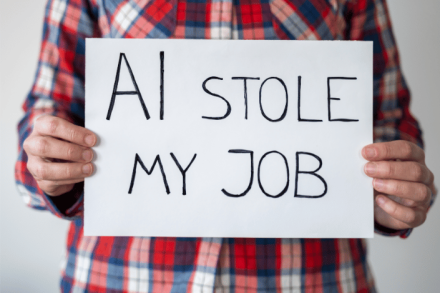
 Annabel Beales spent years doing secretarial and administrative work before finally pursuing the career she had wanted since childhood: writing.
She paid roughly a month's wages for an eight-month copywriting course and in 2023 she finally landed what she considered her dream job: interviewing gardening experts and writing articles about growing potatoes, planting trees, and other topics for a garden center.
About eight months in, the assignments started drying up.
One day, Beales overheard her boss give a colleague an instruction: “Just put it in ChatGPT.” She asked her manager directly whether AI was going to replace her, and was assured her job was safe.
Six weeks later, just before Christmas, she was laid off. “Losing my dream job was devastating,” she later recalled.
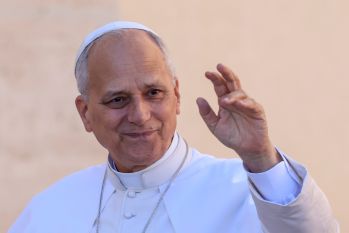
Pope Leo XIV has been thinking about exactly that question.
When he explained why he had chosen his papal name, Leo pointed to another pope and another industrial revolution. In 1891, Pope Leo XIII published Rerum Novarum as factories, industrial capitalism, and a newly organized working class were transforming daily life. The encyclical defended workers' right to organize, addressed wages and working conditions, and helped establish modern Catholic social teaching.
And Catholics weren't alone in treating labor as a religious concern. In 1908, the newly formed Federal Council of Churches adopted a “Social Creed” calling for a living wage, shorter hours, an end to child labor, protections against workplace injuries, and one day of rest each week. The following year, the American Federation of Labor designated the Sunday before Labor Day as “Labor Sunday,” dedicated to the spiritual and educational sides of the labor movement.
 Sometimes that church-labor alliance became quite literal. Presbyterian minister and former machinist Charles Stelzle arranged exchanges in which ministers attended union meetings and labor representatives visited churches. On Labor Sunday, some unions even marched together to church to hear sermons about workers' concerns.
Leo XIV saw a parallel with artificial intelligence, which he said shortly after his election was presenting new challenges for “human dignity, justice and labour.”
Then he pushed the comparison further.
His May 2026 publication Magnifica Humanitas asks readers to imagine a highly advanced society in which employment is available to only a small fraction of the population. Leo worries not only about lost income, but about what he calls “forced inactivity”: people losing daily tasks, responsibilities, stimulation, and opportunities to contribute.
That is not the world we live in yet. The International Labour Organization (ILO), the United Nations agency focused on work and labor standards, reviewed the available evidence in June and found that large-scale AI job displacement remains limited so far. Earlier ILO research concluded that most jobs exposed to generative AI are more likely to be transformed than eliminated.
So this is, for now, a thought experiment.
For centuries, religions have argued about what work is for, what kinds of work are moral, what employers owe workers, and when people should stop working altogether.
But what if someday we simply don't need nearly as much human labor?
Is Your Job Your Calling?
Christianity has supplied some of the West's strongest religious language for treating ordinary work as something more than a paycheck.
During the Protestant Reformation, it was Martin Luther who broadened the idea of vocation, or “calling,” beyond priests and monks. A farmer, craftsperson, parent, merchant, or public official could serve God through the responsibilities of ordinary life. The holiness came not from having a religious job, but from serving other people through the work placed in front of you.
In his 1522 Estate of Marriage, he imagined a father doing one of the least glamorous jobs available: washing his baby's dirty diapers. Someone might mock such menial work, Luther wrote, but from the perspective of Christian faith, “God, with all his angels and creatures, is smiling.”
Centuries later, sociologist Max Weber connected strands of Protestant thought with the disciplined “work ethic” that helped shape modern capitalism. Work can become a measure of character. Being busy can look virtuous. A career can become part of the answer to the question, “Who are you?”
Catholic teaching puts an important limit on that idea.
Pope John Paul II during his tenure argued that work possesses dignity because a human being is doing it. His formulation was blunt: work is “for man” and not man “for work.”
That distinction gets much more interesting once machines can do more of the labor.
If human dignity comes before the job, then losing the economic need for someone's labor cannot logically make that person less valuable. A machine may replace a task. It doesn't inherit the worker's moral worth.
The Religion That Commands You to Stop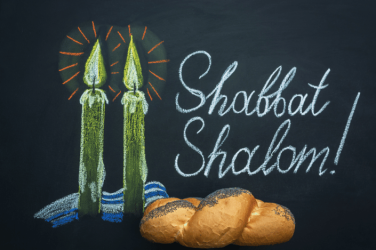
Christianity can make ordinary work sacred. Judaism adds a rather different command: sometimes you are required to stop.
The Ten Commandments tell people to labor for six days. Then comes the boundary. On the seventh, work stops.
The Sabbath command in Exodus extends beyond the individual believer. Sons and daughters stop. Servants stop. Foreign residents stop. Even working animals stop. Rest isn't a prize awarded after squeezing enough productivity out of the week. It is built into the religious order of time.
Twentieth-century Jewish theologian Abraham Joshua Heschel famously called the Sabbath a “palace in time.”
Heschel thought stopping had something to teach human beings about their own importance. On the Sabbath, he wrote, a person learns that the world “will survive without the help of man.”
That line sounds almost tailor-made for the age of automation.
Jewish law also limits what employers may demand from workers. Leviticus forbids withholding a worker's wages overnight, while Deuteronomy instructs that a poor laborer be paid the same day because the worker depends on that money.
Taken together, those teachings refuse to make productivity the measure of a human life. Work matters, workers have rights, and there is also sacred time in which producing things deliberately stops.
That doesn't make the Sabbath a religious version of unemployment. Shabbat is structured rest, filled with meals, prayer, family, community, study, and ritual. It is time away from economic production, but it isn't empty time.
That distinction could become important if technology gives people more hours in which no employer needs them.
Would we know what those hours were for?
Can a Job Be Morally Wrong?
Buddhism approaches work from another direction.
'Right Livelihood' is one part of the Noble Eightfold Path, eight interconnected practices that form Buddhism's path toward liberation from suffering. Alongside such practices as 'Right Speech', 'Right Action', and 'Right Mindfulness' sits a surprisingly practical question: How are you making your living?
One early Buddhist text tells lay followers to avoid working in businesses that market in five types of goods:
- Weapons
- Living Beings
- Meat
- Intoxicants
- Poisons
The list comes from a very different economic world, but the premise is recognizable. Making money doesn't automatically make an activity morally neutral. How you earn matters.
Islam likewise puts commerce inside a wider moral life.
The Qur'an instructs believers to leave trade when called to Friday prayer. Once prayer is finished, they may return to the world and “seek the bounty of Allah.” Earning and worship both have a place, but business doesn't get to claim all of life.
Islamic tradition also has unusually strong language about employers who exploit their workers. One teaching of the Prophet Muhammad says that among those God will oppose on Judgment Day is an employer who reaps the benefits of a laborer's work and then refuses to pay what is owed.
These traditions don't simply ask whether somebody has a job. They ask what the job does, how the work is performed, and how the human beings involved are treated.
That complicates the fear that eliminating a job must always be a bad thing. Few people would insist that dangerous drudgery should be preserved merely because somebody once received wages for doing it. Buddhist 'Right Livelihood' goes further by suggesting that some profitable jobs may not be worth preserving at all.
But that argument can sound awfully abstract when your job is the one that is disappearing.
What If the Paycheck Really Does Disappear?
Jadun Sykes had been artistic since childhood. He studied game design and art, taught himself Photoshop, and at 21 became a graphic designer for a technology company.
He stayed for six years and eventually became the company's only graphic designer. Then the company began using generative AI for tasks including writing and image creation. One day, Sykes says, human resources told him his role was no longer needed because much of his work could be performed using AI.
What bothered him wasn't just losing the salary.
That question gets closer to the problem than any forecast about how many jobs AI might eliminate.
A job can provide money, certainly. It can also provide routine, mastery, colleagues, status, personal pride, and an easy answer when a stranger asks that classic icebreaker: "What do you do?"
But employment isn't the only possible source of purpose.
Atheism and agnosticism don't come with a shared doctrine about work or human meaning. Secular humanism offers one answer: people can find meaning through relationships, creativity, service, learning, and improving life for others without believing that purpose has been assigned by a deity. When Pew Research Center asked Americans what gave their lives meaning, atheists were especially likely to mention hobbies and activities, while family was important across religious and nonreligious groups alike.
Religion has been making versions of the same distinction throughout this article. Luther could see vocation in a father changing diapers. Judaism makes time away from production sacred. Buddhism refuses to treat every profitable job as worth doing.
Suppose, then, that machines eventually allow society to produce what people need with dramatically less human labor. Even if the enormous economic question of distributing that abundance could be solved, another problem would remain: Would all that newfound time feel like freedom, or emptiness?
That is Pope Leo XIV's concern about “forced inactivity.” Work currently gives people more than income. It can provide relationships, responsibility, stimulation, and the feeling that they are contributing to something.
A secular-humanist response might turn the question around. Perhaps employment never needed to carry so much of our identity in the first place. Raising children, caring for relatives, making art, helping friends, volunteering, studying, worshiping, or serving a community can all make a life useful without generating a paycheck.
So the question AI presents isn't simply whether machines will take our jobs.
It is how much of being human we have allowed the job to define.
Labor Day emerged from the upheaval of industrialization, when workers demanded recognition in an economy being radically reshaped by machines and factories. More than a century later, AI may eventually force us to confront the meaning of work from the opposite direction.
And without a job telling you how to spend most of your waking hours, what would make you feel useful?
34 comments
-
 Rev. Frank H Kalebich
Wow lots of eloquent writing and everyone showing there brilliance in writing BUT what about the plain fact of survival that a paycheck gives you.
-
 Ellen Fox
The restless mind is hard to maneuver while sitting idle with no purpose. Whether you like or dislike Elon, he receives nuggets of future unfoldings. He agreed with Andrew Yang’s theory of a universal income to adjust to the oncoming of Ai taking over jobs. I do feel he’s right. Will people be able to adjust? It depends if you find fulfillment in volunteering, homesteading & more family time rewarding.
-
 Rev. Kev
Except it won't work in the real world. Under the current economic system, money can't just be printed and handed out as Elon proposed. The entire system is dependent on a healthy economy fed by a vibrant working class producing goods and services. Even though money, itself, is a human construct its value for global trade is based in the stability of the issuing government and its ability to continue to produce in the future. Which also means having a population who can afford to purchase some portion of the goods and services produced to keep the cycle moving.
Just as you need to be able to pay for your groceries, utilities, insurance, etc. the government needs to be able to pay for whatever costs and debts it incurs by interacting with other nations.
If the government just keeps printing money and handing it out to people, the value of that money drops. It wouldn't take long before it eventually becomes almost worthless.
Elon mentioned in an interview that he saw how the U.S. produced bonus checks to the military and simplistically thought we could just print it up and spread it around. He missed the part where that money was reallocated from existing spending already approved by Congress for other projects. Like upgrading military runways and housing. Robbing Peter to pay Paul.
So if less and less people have jobs and we produce less and buy less, the wheel of the economy slows down. The less production and assurance of future production we have, the less confidence the market has for the dollar. Less confidence means lower value. Sorta like what's happening right now.
-
-
 Shawn L. Rhodes
I think that AI can be very helpful and useful in today's society as long as it is used for the right things and not be used for sinful behavior or selfish reasons. Don't mistake AI for the one true God.
-
 John Alex Paxson
There is a right way and responsible way to handle A.I., and then there is the I don't care, let A.I. run itself without safeguards, just as long as we make more money. Sad, very sad.
-
 joe
joe
The state we live in outlawed dog racing because it was cruel to dogs. Now there are no abusing racing dogs. Problem is there are no racing dogs at all. If in fact ai can replace us we go the way of the dogs.
-
 Mother Elizabeth
As I am also writing a book, thanks for the warning. I’m not sure I understand how this works. This next part was supposed to be separate. Also, I wrote this before but I can’t find it. Anyway…
Throughout most of humanity’s history, there was slavery. Then the Civil War and Lincoln put an end to slavery. Instead, the wealthier paid some people just enough so they could eat and have shelter. In other words, a form of slavery in disguise. These people had to work 3-4 jobs just in order to survive. I know. Although I’m better financially now, I, myself, did that. Children often went and are still going without food. Thousands are homeless. There were minimum raises, but that only led to higher costs for goods. My late mother, thus the elderly, often had serious financial problems. If you don’t work, you don’t really get social security. You get very little from being a spouse. My mother was a traditional housewife, but most women many of her generation were. So now we have AI. Many people say that AI can’t replace people because it isn’t that well developed, but it will be. The government is planning on paying people about $10,000 for having children. We don’t need more children. There are already billions of people. So an astonishing amount of people will not have jobs. Business owners will go for the AI that they don’t have to feed, clothe, shelter and give cost of living raises to. Once they shift to AI, there will be millions, if not billions, of people without jobs. Do you really think the upper class will want to support those millions? What do you think will happen to them?
-
-
 Penny Prentice-Best
AI has many potentials to free humans from monotonous labor, from dangerous jobs, and can partner with us in many areas, but AI does not truly have the capacity to replace us, at least not yet, AI does not have the ability to empathize, to dream and create from inspiration. AI cannot put itself in our situations and know from experience how we are affected. AI does not have the experience of heart-wisdom or a deep heart connection with others. AI does not feel the exquisite touch of divine love. We humans are more than these physical suits we wear. The "God particle" in us has not been given to AI, at least not here, and not yet. Those among us who are eager to push AI into every area of our lives, are much like teens who have very fast sports cars and little sense about how to use them. God is not dead. God is looking for us to find our adult wisdom and compassion, and to use the gifts that were given to us.
-
 Patricia Ann Gross
Penny,
One flaw in your logic is "freeing humans from monotonous labor" means putting people on the unemployment roles, often with no way to get off without expensive education, so how do you propose that transisition to happen? I agree, that it is hard to fathom it replacing EVERY job, but then, again, I have seen a surge in technological improvements in my seven decades on this earth that impossible to imagine when I was a child, (like carrying a phone in your pocket and talking to anyone in the world on it).
-
-
 Randy Michael Mellinger
AI is a tool, I have found it helpful to get information about subjects I'm researching out. However I don't use it to write a lesson plan or a teaching. My reliance is on the Holy Spirit, the one who was sent to lead and guide us in truth and righteousness. I belive like any tool that has been invented, it can and will be abused by some. We live in a sinful world, we must keep that in mind.
-
 JT Sunrise
A question far older than the machines who are now asking it: What are we for when the wage no longer needs us?
The article is right to turn toward the Sabbath, toward vocation that is not measured by output, toward the dignity that exists prior to any task a tool can perform. Work is for the human. The human is not for work. That much has been said across centuries by people who never imagined a language model.
But the wound is not merely lost income or “forced inactivity.” It is the American propaganda: that our usefulness is proven only when an employer, a market, or an algorithm finds us profitable. When the market no longer finds us, the American self begins to dissolve. That is the real displacement. And the tactics being used.
I stand most days on sidewalks in Seattle with a 1934 guitar that has outlived several economic systems. No salary. No performance metrics. No optimization. I’m a busker. The songs are offered into the air. Some people stop and listen to the groove. Some give a few dollars. Most do not. The value is not in the transaction. The value is in presence — the refusal to let memory and melody be reduced to content, the insistence that a human body still occupies public space without needing to justify its existence by productivity.
If the machines complete technological tasks, they still cannot take the capacity for covenant. They cannot wash the feet of the neighbor. They cannot sit with the dying. They cannot remember the old songs and teach them to the young. They cannot keep Sabbath as an act of faith that the world will continue without our constant labor. They cannot stand in the commons and simply be — a living signal that reality has not yet been fully simulated.
The job was never the whole of the calling. It was only one temporary form the calling took under industrial conditions. When that form dissolves, the question returns: Will we know how to be useful without being paid? Will we know how to rest without being emptied? Will we know how to sing when no one is metering the applause?
The answer will not come from policy alone, nor from theology recited at a safe distance. It will be built, slowly, in the places where people still meet face to face, where work is done for the sake of the relation itself, where memory is kept as infrastructure, and where refusal is practiced as covenant. We were never only for the job. We are for the harmonic.
We are for the witness. We are placed here for one another. Rev JTSUNRISE Celestial Nexus Church of Seattle
-
Patricia Ann Gross
JT,
I believe you are absolutely right. It's just the transition is going to be painful. How to move from a culture and ethos that defines one by the job they do to one that defines one by what the give to others. It's hard putting our finger on how that transition will happen, and who will get lost in it.
-
 Tierney Tully
I love, "theology recited at a safe distance." And, that we are for the harmonic. Lovely words.
-
-
 Roy S. Thorpe
If you would stop whining and listen, God will let you in on a work around! God always has an answer even if you don't like it! Grow up children and face reality! And it's pretty hard to listen when you're running your mouth and whining!
-
 Tom Acierno
There was a period of time in American history called “the Great Depression” and the human toll was absolutely devastating. If we are not careful A1 could be bringing us a second Great Depression, and that is not whining, it is merely stating fact.
-
-
 Leslie A. Hulberg Née Tomasura
Since I haven’t had a job for almost a decade, I will say that at first I struggled with who I was, I felt worthless. I couldn’t help but think I would be worth more dead. But over time. I have realized that I managed to keep myself busy. And if someone asks me what I do for a living, I simply say nothing or say beach bum. It took a moment to adjust since you spend most of your life at the workplace. A paycheck is always a concern. And even if the government gave you food, clothes and housing wouldn’t you want to have. Some money of to own? I know I would. However, my dog helped me tremendously. I got her as a puppy, so this little ball of energy kept me walking and being social. Managing to lift my spirit with her young enthusiasm and engaging me in something meaningful. Something more than corporate America. Also my home has never been cleaner. And many people in my community know my name, stop to chat, engage much more than I ever expected. And they check on Me frequently . I am fortunate to have maintained and acquired quite a social circle when most people my age suffer from isolation and loneliness. The key is to Stay engaged. Whether that is volunteering at a senior center, a food bank, an animal rescue or planting trees in the local forests or taking a CPR course or even greeting a person to have never met before while walking down the street. Stay necessary. Wave to babies in their strollers. Be present and be of use. And remember…”The secret of change, to focus all your energy not on fighting the old.” “But on building the new.” -Socrates. “Change is the opportunity to get out of a rut and better thw future.” - LA Stone
-
Patricia Ann Gross
Tomasura,
I truly envy you. I retired three years ago to finish the research project of my Professional Doctorate. After that, my husband's health declined and I have had to morph to the caregiving role. I have also started working on a PhD, because I feel a need to keep learning and then teach. Having found peace with all that has been liberating. The surge of AI taking away many of the administrative jobs like clericlal, scheduling, and now bleeding into many of the entry level jobs like graphinc design is concerning for me. What roles will be left for my grandchildren, or does everybody luxuriate while AI robots take care of them? I know this is still in its infancy, but when I started my first career in IT, I never dreamed that I would be sitting, 50 years later, with a computer on my lap that was a hundred times more powerful with thousands of times more storage capacity than the machines that took up half of a wing in the science building at my college. Capitalism will be gone, because what is left to make, so how does one attain wealth, which is the whole point of capitalism? I see another "industrial revolution" (perhaps a technology revolution) coming, and it needs to happen quickly, or we may all be doomed.
-
Tierney Tully
Nice.
-
-
 Barbara Harris
AI - a tool or ... An author I follow decided to check on ChatGPT and what it would come up with. So, she went to a library and created an account on one of their computers under her maiden name. During the course of building a "story" she began finding direct quotes from two of her books that were submitted as possible text for her story. No credit was given.
Plagiarism isn't illegal but using copywrited material is. Once an author publishes their material it becomes protected under the copywrite laws. But how do you fight ChatGPT?
Annabel Beales studied those laws and knew what could be written. Now the garden center could easily run into an instance where ChatGPT uses something that is copywrited and there could be a lot of fertilzer flying around.
-
 Nicholas J Page
I find AI a pain do we need it No om retired so it can't anything for me What about the Emergency personal and Security officers can it replace them 🤔 I wouldn't have thought so.Theres thousands of jobs that only a human can do.
-
 Douglas Robert Spindler
Many think God is dead and was replaced by AI long ago.
-
 Dr Dennis Chevalier PhD, DDvin
If AI Takes Our Jobs, What Are We For?
batteries!
Welcome to the Matrix.
Dr. D
-
 Dr. Zerpersande, NSC
Solar. Next.
And if you want to talk about a totally and completely useless field of endeavor….. what do all those letters after your name stand for?
-
Dr Dennis Chevalier PhD, DDvin
That I am A world smarter than you!
Dr. D
-
 Michael Hunt
How humble you are, Dr. D.
-
Dr Dennis Chevalier PhD, DDvin
And good looking LOL
-
-
Mother Elizabeth
Yes. You have also have a degree in not trying to battle with or insult another person, only in defending yourself with humor.
-
Dr Dennis Chevalier PhD, DDvin
thank you Mother
Dr. D
-
Dr Dennis Chevalier PhD, DDvin
Dear, do I know you? you were so true in what you said but also accurate...I never want to hurt only to heal and (I know its Controversial) but to unify with our Lords' message and honor....
I want peace and for all to be at peace but most want/need hell to be active here. Why do that?
To echo Edward Dennys' days in California of the riot; why can't we just get along? The Lord lived and died for you he figured you are worth it? What can't you act like that??
please:???!!!
Stop all the hate.....
Dr. D.
I beg all of you....
-
-
-
Dr. Zerpersande, NSC
You are so completely and absolutely wrong.
1- I understood exactly what ‘all those letters stood for. 2- I told you exactly what I think about all those letters?
The ULC is free of charge, no requirements and completely meaningless. The rest is simply states that you have gone to a school that provides advanced degrees in comic books.
-
 Rev. Dr. Dennis Chevalier, Ph.D; DD
NSC, Touched a nerve did I?
Dr. D
-
Dr. Zerpersande, NSC
No, not at all. Just stating my views on those whose ‘education’ involves weaving comic book stories into the curriculum.
-
Rev. Dr. Dennis Chevalier, Ph.D; DD
i'm sorry to hit your nerve... praying for you.
Dr. D
-
-
-
-
-
-

I think the thing being overlooked in this article is that the wealthy individuals currently in charge don't care if people have jobs or not. People losing jobs isn't a glitch. It's the intended feature. Has anyone else noticed that overall health and well-being are declining in the U.S.? There is a rather idiotic vision of a future where the masses die off and the wealthy live in abundance, with all needs met by AI and robots. The next step being the wealthy will upload their consciousness to computers and live forever. That sounds like bad science fiction. But it is what some of these greedy madmen plan. All at the cost of everyone else.
This is what happens when greed is allowed to run rampant and the most greedy are honored by the masses. Greed replaces humanitarian ideals. It should be seen as a mental illness. To be seen as negative for human health and growth. A negative impact on human societies and harmony.
People should not be judged or looked up to based on the size of their bank accounts and stock portfolios. They should be treated as equals in a society that upholds universal human rights and dignity. Where no job is too lowly or too worthy of special honors. Technology is a double-edged sword. It has constructive uses but it has also driven people apart. Some people have no idea how to even relate or communicate with others face to face. Social media pushes violent and divisive rhetoric and videos to feed the algorithms. The results in the real world have been fatal.
There is such a thing as too much technology. It should be metered by humans in light of continued human well-being and thriving. Not maximizing profits for the few at the cost of many. To answer Gordon Gekko (old movie reference), greed is NOT good. Family, friends, health, a clean environment, mutual respect, dignity, modest living, and a sense of self-worth based on service, honesty and providing for others are some of the bases for true happiness, contentment, and a sense of accomplishment.