

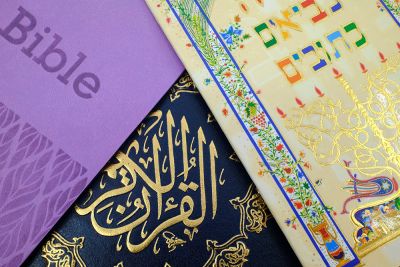
 James Talarico managed to condense nearly a thousand years of theological argument into ten words.
During a 2024 podcast appearance, the Texas state representative and Presbyterian seminarian said that “Christians and Muslims and Jews all worship the same God.” He added that Muslims “love Jesus” and pointed to the three religions’ shared connection to Abraham. The clip resurfaced this week in conjunction with his Senate race, drawing fresh criticism.
Set the politics aside, though, and Talarico’s claim presents a fascinating theological problem. The Qur’an itself appears to agree with him. Speaking about Jews and Christians, it instructs Muslims to say, “our God and your God is one.”
Then the Qur’an goes on to deny some of Christianity’s most basic claims about that God.
So what exactly does “same God” mean?
The Qur’an Says Yes
Islam did not emerge claiming that Abraham, Moses and Jesus had worshipped the wrong deity. It claims the opposite.
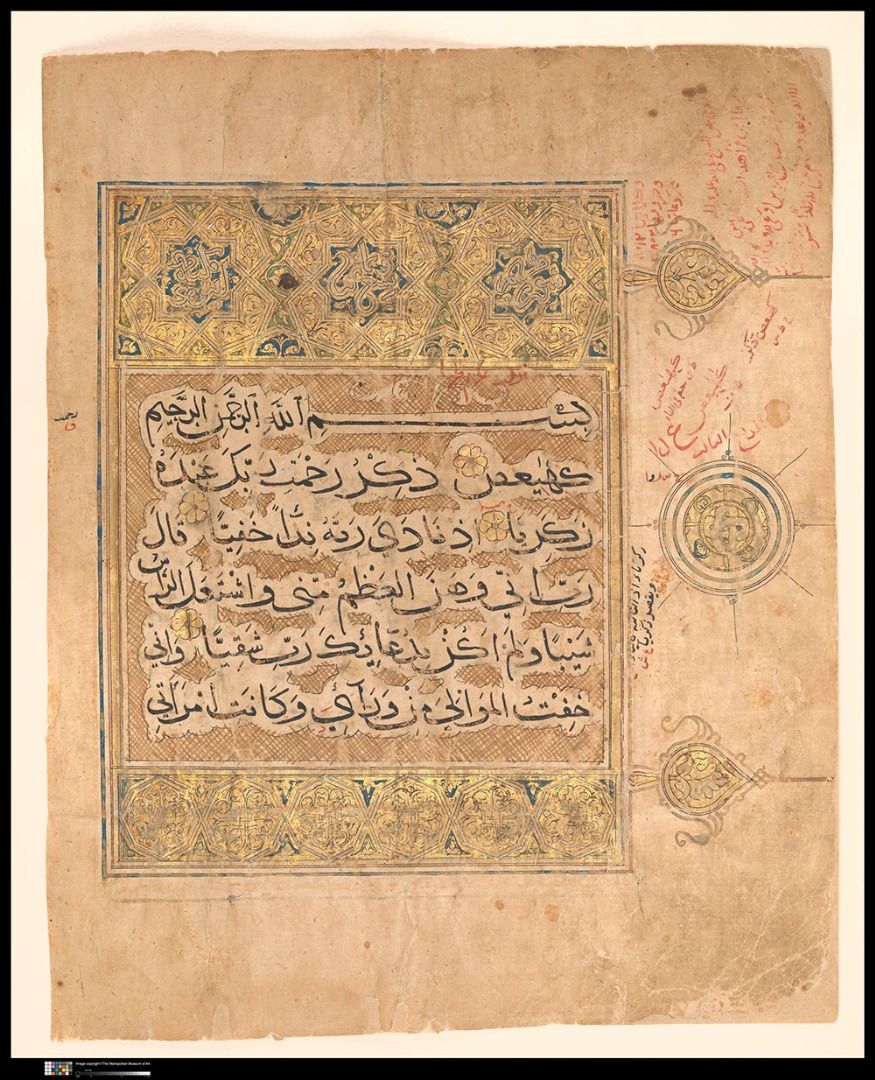
Qur’an 29:46 tells Muslims discussing faith with Jews and Christians, whom it calls “People of the Book,” that “our God and your God is one.” Elsewhere, the Qur’an presents Abraham, Moses and Jesus as figures in the same long history of divine revelation.
Islam places Muhammad at the end of that same prophetic line. Muslims regard him not as divine, but as God’s final prophet, through whom the Qur’an was revealed. The Qur’an describes itself as confirming earlier scripture while also serving as an authority over it. Christians generally reject both claims: they do not recognize Muhammad as a prophet or the Qur’an as revelation from God.
There are substantial similarities in the descriptions of God, too. Christianity and Islam both teach that there is one sovereign Creator, distinct from creation, who reveals moral commands, judges humanity, shows mercy, answers prayer and will ultimately raise the dead.
Even Jesus occupies much more space in Islam than some Christians may realize. The Qur’an calls Jesus the Messiah, a title meaning “anointed one” and traditionally associated with a divinely chosen deliverer, and a messenger of God. It describes Mary learning that she will have a son despite no man having touched her. Jesus heals the blind and lepers and even raises the dead, although repeatedly “by permission of Allah.”
That all sounds remarkably familiar, until we get to the end.
Same Jesus, Radically Different Story
In Christianity, Jesus is not merely someone through whom God acts. Jesus is God acting in human history.
The Gospel of John identifies Jesus with the divine Word, saying “the Word was God” and later that “the Word became flesh.” The Nicene tradition that defines mainstream Catholic, Orthodox and Protestant Christianity teaches that God is Trinity, one God existing as three distinct persons: Father, Son and Holy Spirit. Jesus, as the Son, is “true God from true God." Christianity teaches that he bevame human, was crucified, died, and rose again.
Islam draws a bright line through that account.
Qur’an 4:171 calls Jesus the Messiah and a messenger, but warns Christians not to say “Trinity." Elsewhere in the Qur'an, it describes God as absolutely one and says that God “neither begets nor is born.”
The split becomes even more dramatic at the crucifixion.
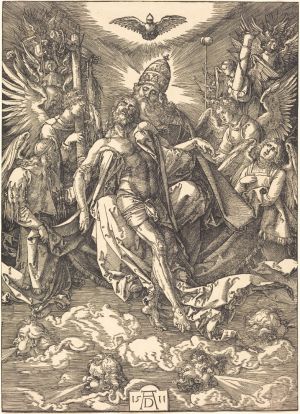 For Christianity, the death and resurrection of Jesus sit at the center of the faith. The Qur’an says Jesus’ enemies “did not kill him, nor did they crucify him,” and instead says that God raised Jesus to Himself.
The two traditions are therefore not just using different words for the same series of events. They tell fundamentally incompatible stories about what God did in one of the most consequential moments in either religion.
Christianity says God entered creation as Jesus, died on the cross, and rose from death. Islam says God did not become Jesus, does not have a divine Son, and that Jesus was not crucified by his enemies.
If those claims concern the same God, at least one account is badly wrong about what happened. If they concern different gods, the enormous amount of shared history and reference needs another explanation.
Is Allah a Different God?
One shortcut does not work: Muslims worship “Allah,” while Christians worship “God.”
Allah is the Arabic word used for God, including by Arabic-speaking Christians. Arabic Christian worship and Scripture use the word too. The vocabulary does not tell us whether the theology refers to the same divine being.
That leaves identity rather than language.
Yale theologian Miroslav Volf has argued that Christians and Muslims who follow the mainstream teachings of their traditions are referring to the same being when they pray. “The referent is the same,” he told Christianity Today. “The description of God is partly different.”
The late Christian apologist Nabeel Qureshi, who was raised Muslim before converting to Christianity, reached the opposite conclusion. “We worship a triune God, and I think the Trinity makes all the difference,” he argued.
That disagreement gets to the heart of the issue. Is the Trinity a fact about the God Muslims misunderstand, or is being triune so essential to God’s identity that denying it means worshipping someone else entirely?
Then What About Judaism?
There is an awkward test for the second argument: Judaism.
Judaism also rejects the Christian doctrines of the Trinity and the divinity of Jesus. Mainstream Jewish traditions do not recognize Jesus as the Messiah or as divine, and he has no central role in Jewish theology or worship.Judaism has no doctrinal teaching denying Jesus’ crucifixion in the way Islam does, and his execution by the Romans is generally accepted as a historical event. Mainstream Judaism does not, however, accept the Christian claims that Jesus rose from the dead or that his death had redemptive significance.
Yet Christianity explicitly understands itself as worshipping the God of Israel, the God of Abraham, Isaac, Jacob and Moses. Jesus himself was Jewish and prayed to the God worshipped by Jews around him.
Volf uses exactly this comparison. If rejecting the Trinity necessarily means identifying a different God, he asks, would Christians also have to say Jews worship a different God?
Catholic teaching gives a particularly clear answer. The Catechism describes the God of the Old Covenant as the same God Christians worship, while the Second Vatican Council’s Nostra Aetate says Muslims “adore the one God.”
That does not make the three religions interchangeable. Judaism, Christianity and Islam make incompatible claims about revelation, prophecy, Jesus and salvation. A person can believe two traditions are referring to the same being while also believing one of them is badly mistaken about that being.
Other Christian theologians draw the boundary differently. They argue that Christianity’s relationship to Judaism is unique because Christians inherited the Hebrew Scriptures and understand the New Testament as the continuation of that same covenant history. Islam arrives centuries later with a separate claimed revelation that contradicts Christian claims about Jesus. On that view, similarities of names and stories do not establish a shared object of worship.
Christians Have Been Arguing About This for Centuries
The “same God” position is much older than modern interfaith politics.
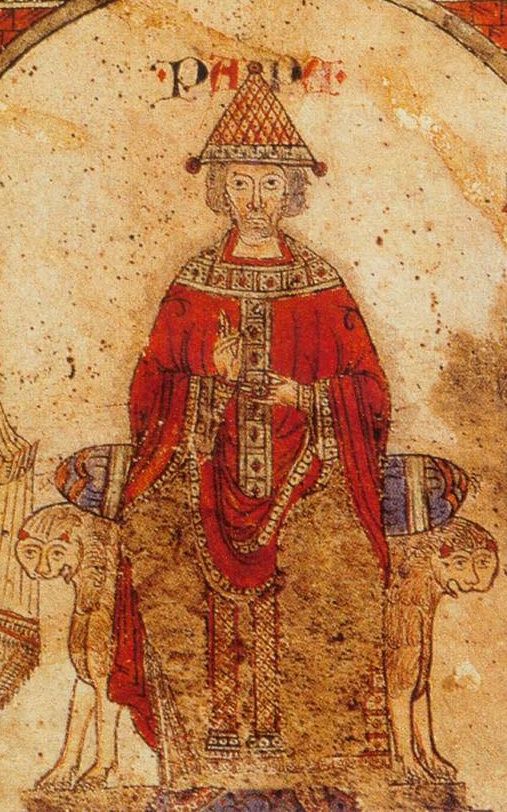
In 1076, Pope Gregory VII wrote to the Muslim ruler al-Nasir in North Africa that Christians and Muslims should show one another special charity because “we believe in and confess one God, admittedly, in a different way.” The letter came less than two decades before the First Crusade.
The Catholic Church formalized similar language centuries later. Nostra Aetate, issued by the Second Vatican Council in 1965, says Muslims “adore the one God,” while simultaneously noting that they revere Jesus as a prophet rather than acknowledging him as God.
American public figures have repeatedly rediscovered how contentious that wording remains.
In 2007, President George W. Bush told Al Arabiya that “the God that the Muslim prays to is the same God that I pray to,” pointing to Abraham. Some Christians publicly objected.
In 2015, Wheaton College professor Larycia Hawkins made the same claim while announcing that she would wear a hijab during Advent in solidarity with Muslims. The evangelical college suspended her and eventually initiated termination proceedings, saying her theological statements appeared inconsistent with its statement of faith. Wheaton later withdrew the termination process, and Hawkins left under a confidential mutual separation agreement.
Now Talarico has stepped into the same argument.
For Universal Life Church ministers serving people across religious traditions, the distinction has practical relevance. Saying that another faith directs worship toward the same God does not require pretending its teachings are identical. Saying that its theology is wrong does not automatically answer whether its believers intend to worship a different deity.
The dispute ultimately asks how we identify someone we cannot see. Is God identified by the Creator whom worshippers intend to address, by a shared historical tradition, by particular divine attributes, or by the specific acts and revelations a religion says God has performed?
If Christians and Muslims both point toward the Creator of Abraham but tell irreconcilable stories about who that Creator is and what happened to Jesus, where would you draw the line between a different understanding of the same God and worship of a different God?
157 comments
-
 Amy Varela
The god they are all worshiping - the same one in my opinion - is the one who allegedly created the universe and all things that in it are, yet allowed the men who wrote the bible to claim the moon in a light. (Gen 1:16) What sort of inept deity would allow thousands of years to go by without mentioning things like solar eclipses, lunar phases, and the fact that the moon REFLECTS the light of the sun? Why not also tell them that there is no need to sacrifice anyone if you can't see the moon at night or that the moon occasionally passes in front of the sun, blocking out the disk of light for a while? Oh, and by the way, don't look directly at it. Oh yeah, and also slavery is bad, women are NOT property, and men need to keep their damn hands, and other appendages, to themselves. Perhaps the bible was written by ignorant men who were tired of, or intimidated by, the powerful imagery of female deities in ALL of hte other religions and thus created their own religion which had one male deity who gave authority to certain men and made women property of men. And after all of the other gods were deemed unnecessary due to advances in science, so many people maintain their grasp on the Abrahamic god. Why that one? Is it because that god makes men feel powerful? Why are there so many different versions of this god, even in the same broad version of each faith? There are many different sects of Islam, Christianity and Judaism. Why? Some Muslims kill non-Muslims simply because they don't believe the same way. They'll even kill other Muslims who don't believe the way they do. Why do some Christians want to kill gay people, and others welcome them in an actual Christ-like way? Could it be that this god does not actually exist in a way that he/she/it can let EVERYONE know and everyone is making up their own version and interpreting the - in my opinion - fairy tales of ignorant shepherds to their own preferences? I have no idea. But without actual evidence, it doesn't matter what anyone believes. Having faith is pointless since believers of all different religions have faith in very different things. "Faith is not a reliable pathway to truth". I don't remember who said it, but it's a factual statement.
-
 Shawn L. Rhodes
I think that there is only one true god and there are many different religions that call hi m by a different name but is the same person.
-
 Sir Lionheart
Yes the god of wine, Dionysus 🍷
All hail to the glass of wine. 🥂
🦁❤️
-
 Dr Dennis Chevalier PhD, DDvin
lol, i'll drink to that!
Dr. D
-
 Brien
Brien
All hail Argyle Winery 🍷
-
-
-
 Justin Adam Kalm
I'd like to invite the Islamophobes amongst us to consider that sections of Islamic holy texts that they are selectively quoting are no more damning than the quotes that one could find if they did a deep dive into their own religious texts or, if they're not particularly religious, guiding philosophers' writings. In Christian holy texts, the same Messiah who said "Love your enemies, do good to those who hate you" also allegedly said, "If anyone comes to me and does not hate father and mother, wife and children, brothers and sisters - yes, even their own life - such a person cannot be my disciple." If I were to highlight only the quotes from the Christian bible like the latter one, I could make a compelling case that Christianity is an antisocial death cult. If you can choose to ignore or downplay the darker statements that have made it into your religious texts, why can't you give the same grace to Muslims?
-
 Patricia Ann Gross
Justin,
Just to add on to your comparison, the same book that calls (depending on how it is translated) gay men an abomination has others (Leviticus): People who eat shellfish, pork. They also admonsih those who eatd meat and dairy at the same time. So if you've ever eaten a bacon cheeseburger you are the worst evil of all. It also explains that you discipline your child who talks back to you by stoning them to death. How many of us would have reached adulthood if our parents followed that one? Anyone here committed "adultery" (which I haven't found adequately explained, since men had multiple wives and concubines, unless it was only referring to women)? They were also sentenced to stoning.
-
-
Justin Adam Kalm
This reminds me of Paul Noth’s wonderful cartoon with two armies lining up to face each other, each bearing identical flags showing the classic duck-rabbit image, with the caption, “there can be no peace until they renounce their Rabbit God and accept our Duck God”: . Alas, we humans can fight and kill each other over the most ridiculous alleged differences.
-
 Rev. Dr. Robert Allan Roush
It didn't take long for the "your god is the devil" argument to show up, and for so many to say it's not the same god. The overwhelming anti-muslim sentiment here makes sense in a Judeo-Christian based organization. I doubt there are many Muslims ordained through ULC. Anyone?
They are all Abrahamic religions. Dismissing that lineage with an argument that Allah is a false pagan god doesn't follow the trail very well.
What is very clear, is that there will always be those who loudly proclaim that their way, their interpretation is the right way. It does appear as if Islam is the most recent, "here's the right interpretation". There are other paths and interpretations which maybe haven't risen to a world religion - yet.
Despite everything, they ARE different religions, whether we're asking about it being the same "god" or not. That should speak loudly to some of you. Again, anyone?
There are many religions and many "ways," but demanding that others see that your path is the right one is spiritually infantile. And often dangerous and deadly, as we have always seen.
-
 Scot M Cantalupo
I believe that all religions are basically the same story, just told by peoples from different backgrounds in our world.
If you look to the similarities you will see that the stories and lessons are almost exact, with only minimal peripheral differences depending on who is telling the story.
No matter what God you believe in, you are right, and nobody's is better than another's. Too bad so many lives have been lost over the centuries because of this confusion.
-
 Stephen P Singleton
Is "God" infinite? Did God create Everything? Is not that Entity beyond human words or names? "We are all Children of the Same God" This is what I believe in the deepest core of my being. I wish Everyone believed at least this. We've all been told "Thou shalt not kill." And we've been killing each other over words and names ever since. STOP IT LOVE. Love your Neighbor as Yourself.
-
 Ruth Batina E. VanDam-Hinds
Well, there is only one God whose manifestation and name fit the culture into which it emerges. And overall, there is love and light.
-
 Clara Ries
Abrahamic are all rooted in the same soil. They may have started separately, but quickly became what they are once large governments and institutions adopted them for their own purposes (quash decent and appeal to the populous). The Christianity practiced in modern institutions would be unrecognizable by Jesus (and I do not think he would be happy). Likewise for Judaism and Islam.
This is not to say that there are not people who are rooted in a genuine faith. There are in all three camps. And I respect them all.
-
 Nickey Louis Scalpone
The Old Testament God was just as intolerant of non-believers as the Quran. The arrival of Jesus began the evolution that became more tolerant and began women's equality and status. While there is One God or One Allah worshiped by all religions descendent from Abraham there are hundreds or thousands of faithful believers' sects or dogmas that all think their idea of worship and GOD's nature is correct. And within each organized religion there are as many different concepts as there are members. Sadly, complete true tolerance of dissenting views does not now or has ever existed. And until all are of one mind and soul this world will remain in conflict.
-
 ServantOfJudgement
On the contrary Nickey, the old testament God is identical to the new testament God and juxtaposed to the Quran and it's god.
The old testament God is opposed to the conquest of other nations. God directed Israel to conquer the baby killers of Canaan true enough but it ended there with Canaan being the home of the Israelites.
The new testament God is wholly and fully intolerant of sin and evil. In no place will any reader find Jesus Christ, God incarnate, compromise or tolerate sin or evil.
In all conversations and instructions Jesus said go and sin no more to anyone he forgave of sin. The sin is to end, not be lived with and tolerated.
Did you notice Jesus never forgave the money changers who defiled his property? Instead he fashioned a whip and physically drove them from his temple with anger. In no way does Jesus The Christ tolerate unrepentant sin, wickedness and filth.
-
Justin Adam Kalm
Just about everything you wrote is wrong, but I don’t have time to address it all. Instead I’ll address your claim that “In no place will any reader find Jesus Christ,God incarnate, compromise or tolerate sin or evil.” Readers of Matthew 18:21-22 would beg to differ. Here are the verses in the NIV translation:
21 Then Peter came to Jesus and asked, “Lord, how many times shall I forgive my brother or sister who sins against me? Up to seven times?” 22 Jesus answered, “I tell you, not seven times, but seventy-seven times.“
-
ServantOfJudgement
Justin,
Forgiveness of sin is not tolerating it. He who asks forgiveness is acknowledging they've sinned against the person, freely admits it and that action automatically implies the intent to not repeat the sin.
As far as just about everything else I said, feel free to critique me and perhaps you'll be correct.
-
Justin Adam Kalm
That’s an interesting take. What do you suppose Jesus meant when he said one should forgive 77 times? Does that not imply some tolerance for reoffending?
-
-
-
-
-
 Douglas Robert Spindler
I swear to Allah they are the same.
-
Sir Lionheart
You do have freedom of speech but my mom always told me not to swear. 🤭
I did use a 4 letter swear word once and that word was “Oath”. 🤭 I swore on oath that I would uphold the Constitution of the United Sates when I was Naturalized as an American citizen after I “legally” entered the United States. 🇺🇸
🦁❤️
-
-
 Rev. Lindsay
God can hear Muslim prayers but ignores them for a couple different reasons. First the word says in II John1;7-
For many deceivers are entered into the world, who confess not that Jesus Christ is come in the flesh. This is a deceiver and an antichrist
Islam doesn't confess that Jesus was the incarnate son of God deny him as their Lord and savior. This means when they accepted Islam they automatically became anti-God. In Revelation the anti-Christ wars with the church.
Secondly the word says to speak to God we have to pray through Jesus Christ because he is the only mediator between God and man in I Tim 2;5 - For there is one God, and one mediator between God and men, the man Christ Jesus. In this scripture it's saying Jesus Christ is the only person we can speak to God through. Since Muslims don't pray through him God sees that prayed but never made a connection to him through Jesus Christ.
This makes it impossible for Muslims to ever reach heaven never knowing this simple fact. They live out there entire life disconnected from God deceived.
-
Douglas Robert Spindler
Rev. Lindsay How do you know God hears Muslim prayers and ignores them? Seems like you know more than God.
-
Rev. Lindsay
I guess you didn't read my post or just don't like what you read. read it again.
-
-
Sir Lionheart
I’ve just been conferring with some Fairies, and one of them is a Head Fairy, so this must be true, and she said that God isn’t real and has been placed in some peoples heads as a virus. She called it the God Virus. Apparently it’s quite a nasty virus that can cause a lot of cerebral damage, which is very difficult to recover from, and people will deny they have it by insisting God is real, and Fairies don’t exist. I’m starting to think she’s right. What are your thoughts on that? She’s generally right.
🦁❤️
-
 Bill Thompson
I have had several Muslim women confide in me that their heart is not with Islam. One woman told me that she reads my Daily Diamond and it caused her to convert to Christianity. Albeit, she cannot openly live her life openly as a Christian without fear of reprisal. Another’s father called for her death and another was in hiding. God hears the prayers of Muslims loud and clearly. We are all children of God and the Christian mindset is making a difference! We must be open to all and encouraging to all! God listens to prayers of the heart!
-
 Claire Venessa Michaels
Yes and AMEN! The prayer of faith avails much, God is no respecter of persons.
-
-
 James Richard Norby
Comment removed by user.
-
James Richard Norby
Will people of the Jewish faith also have their prayers ignored?
-
Dr Dennis Chevalier PhD, DDvin
Rev. L
Amen!
Dr. D
-
-
 Kirk England
They are not the same entities. God and Jesus are the one God. Allah was the darker of the two pagan gods Mohammed’s family worshiped. Allah was Mohammed’s favorite. Since Mohammed was an illiterate pagan, the Jews would not let him become a Rabbi. Rabbis received the respect, nice clothing, money and homes Mohammed felt he deserved. He respected Christians for their tenacity and willingness to sacrifice themselves in many ways, but Christians often gave up money and material wealth which was what Mohammed wanted for himself. He basically copy and pasted things he liked from the Old and New Testaments along with things he thought were improvements. Over time the fakeness of his invention became obvious as he became blinded by hatred and was receiving “updates” from angels that coincidently conformed to his hatred. Even his young wife Aisha commented on this. There is also evidence that Allah is the general term used for referring to Bal which Jesus was not part of. Anyway, it’s all an invention to get Mohammed the things he wanted for himself most in life and it worked. We are left with the fallout. The religion of pieces - you will be in pieces if you don’t submit.
-
 Ahmed Abduljabar Al-Hujazi
Did you read the main article? Allah is the arabic word/name for God. Christian Arabs use this name/word all the time in their Christian prayers and daily speech. Are you saying that Christian Arabs are praying to Bal in the Holy Sepulcher, when they pray in Arabic?
-
ServantOfJudgement
No Ahmed, Christian arabs that use their word for God are fine. However, the God of the Bible and the god of the Quran are not the same guy.
If Christians think they're the same entity, they haven't studied the personality of both to know they're being deceived by the greatest of deceivers.
-
-
-
 Mark Eastwood
Then explain why the god of islam wants all to die a horrible death because of the similarities and differences you describe? I'm with "Doctor Loyal" on this one. Until the muslims stop murdering and raping and torturing in the name of their religion... they have no place in the civilized world.
-
 Roger Ware Dunaway III
You could say the same of Christians. The Crusades, the Inquisition, the Salem witch trials, slavery, the Holocaust, the Epstein class, the horrors currently being carried out by the Trump administration - all done by people who professed to be following Christianity.
Be careful judging entire religions based on the actions of extremists.
-
Kirk England
Hi Roger! Yes there were extremist Christians in the events of the distant past, literally hundreds of years ago in your list. To which crusades are you referring? Some of them were in response to Muslims and pagans committing genocide against Christians similar to what we see happening in Africa and the Middle East today. The Atlantic slave trade lasted 350 years and the vast majority of those slaves didn’t end up in North America. The Muslim slave trade officially lasted 1300 years, but is technically ongoing. I have seen it with my own eyes. The Holocaust was not Christian though some supposed Christians participated. The Epstein class is indeed evil, not Christian, and they donate exclusively to democrats. “The horrors” of the current administration are purely imaginary. The previous administration publicly funded the mutilation of children which is an actual horror. Muslims today also mutilate female children. Not an extremist activity btw. Let’s not forget honor killings - thousands per year and 99% of which are female. Have you seen a public execution in Saudi? Quite the event! Headsman arrives in a limo in a $20,000 suit to great fanfare and it’s on the Jumbotron. I personally judge religions and people on what they allow supposedly few-and-far-between extremists to get away with. Believe me the only reason you believe these are only the actions of a few bad apples is because the media only mentions a few incidents. Have Christians done very bad things in the past, yes, but have they fostered innovations like this forum, also yes. Could they do bad things in the future if given full control again, probably. Are Muslims past and present doing incredibly horrible things, yes. Look at cities in Europe and America where they have control, they are forcing everyone else out, including LGBTQ… The DSA, communists, foster and fund Muslims in these areas to destroy. Why, because they are good at destroying. Ok, rant over.
-
ServantOfJudgement
Mr England, thanks for that backstory of the Christian response to an Islamic invasion. I wasn't aware of that and it makes sense. When I have some time I'm going to look into that more.
We see that truth even on the school yard playground today. The violent bully continues to terrorize without interruption until one kid stand against him. That kid who was once bullied is then punished for stopping the bully.
Watch the English patriots today suffer that same fate when they finally stand against their invaders.
-
-
ServantOfJudgement
No Roger you can't say that, not to someone who knows the details and specifications issued by God to Christians.
No Christian who invades another nation beyond the purpose of self defense is adhering to God's word laid out in the Bible. All Muslims who invade for the purpose of conquest and destruction are adhering to the instructions laid out in the Quran and Hadith.
All the things you've sited Christians doing are forbidden by God and demanded by Allah.
President Trump is not conducting business according to the Bible. He's conducting business according to the law and his responsibilities as our nationally elected leader.
I'm on pretty solid ground. You bet I'll judge Islam. Islam is killing Christians yesterday, today and tomorrow. You can trust it like my goats trust a 15kv electric fence. Ya better wake up cause when islam is on your doorstep, you'll be quite shocked.
-
Patricia Ann Gross
SOJ,
If "President Trump is conducting business according to the law and his responsibilities ..." why is he continually defying court orders and plunging us into a war on behalf of Israel, NOT in self-defense? I could go on - but I don't want to exceed my limit with this post.
The Muslems you describe are a fringe element, just like the Christian Nationalists in this country, and not different by one single iota. They are looking for a takeover of this nation and then the world, to be run by the oligarchs. Project 2025 is alive and well.
-
-
-
 Doctor Loyal
Thank you, Mark. I am stating a belief that in my humble opinion is correct, and will keep an open mind for evidence that could possibly change my beliefs.
-
-
 Roy S. Thorpe
Same God different route with the same happy ending
-
ServantOfJudgement
Only to antichrists and logicless are God and Allah the same.
God has a begotten son. Allah does not. God forbids lying. Allah does not. God does not deceive. Allah is the greatest deceiver. God wants Israelites in Israel. Allah wants them eradicated. God wants his children to follow his Son, God incarnate. Allah wants Christians eradicated. Jesus has removed us from the bondage of law. Allah demands we return to bondage.
I will hit the character limit of this blog if I continue to list the differences.
One is God and one is a fraud. Not the same guy.
-
 Steven Ferrell
AMEN
-
 Donald G Magel
YEP! More of that "my god is the real god stuff".
-
ServantOfJudgement
Mr Magel,
I'm not say the god of the bible is the real God. I'm repeating the claim made by the bible.
I'm merely listed the glaring differences to answer the question at hand, are they the same.
It's possible that Allah is the real god if there is a real God. That would make the god of the Bible the counterfeit.
It's an interesting topic for me because the bible predicted the rise of Islam several ways in several places thousands of years before it existed.
-
-
-
Claire Venessa Michaels
Well said. I know many muslims and have ministered to several that sought to be freed from this religion due to severe beliefs and conditions under which they live, both men and women included. Not all people in a particular religion are the same. You can find good and bad in all.
However, understanding the inside of the Muslim life, there is a lot of prejudice against Christians and Jews which I have experienced first hand. They themselves would not their term "Allah" used for Christian or Jewish Godly references.
We also must understand that the term "Allah" was pre-Arabic and pre-Islamic used by polytheistic tribes referring to the head of the pantheon meaning king of many gods.
With this said, it would not be applicable to Yahweh or Jesus in the belief that there is only one true Creator of all things and not one ruler over multiple gods such as Greek Mythology, Roman Mythology, Egyptian Mythology, and Hinduism.
-
Patricia Ann Gross
Claire,
I have also met several who converted the other way for the very same reasons. Are you suggesting that there is not a lot of predjudice against Jews and Muslims within the Christian faith? If you are, you haven't read much on this blog.
-
ServantOfJudgement
Thank you Claire, I'm interested in digging into the ancient word Allah now that you've shed some light on it.
Much appreciated!
-
-
-
 Jimmy Moon
GOD is GOD. allah is Satan.
-
Sir Lionheart
Perhaps you could expand upon that, Mr Moon? You have now added a third human construct into the equation, being as we have no demonstrable evidence for any of the three.
🦁❤️
-
 Maximillian Martin
You're dead wrong!!!!! Allah is the Arabic word for the abrahamic god!! The abrahamic god is the god of jews, christians, and muslims!!!! ALL the same with different languages!! Satan is just a word for the adversary or the one to oppose!! The Arabic word for the so called "dark spirit or evil one" is Iblis!! Take some time to educate yourself on reality and facts for a change!!!!
-
-
 David A. Cook
Many people have different names and ideas about me, some are right and some are wrong. I believe the same is true with God since there is but one God. Call him what you want and think of him as you believe, we will not find the truth until we die, and go to him.
-
Sir Lionheart
Thank you for telling us what you like to believe David. I like your belief that we will not find the truth until we die. It will be very nice if that is true. And if there is something after this life, and a god really exists, it would be nice if that God turns out to be Dionysus, the god of wine, and then we can all raise a glass to the eternal future. That’s if there is one. 🤷 I’ll try and stay optimistic.
Let’s hope that if there is a god, let’s hope it’s a female goddess. I never have been happy with the misogynistic one in the Bible. I don’t think his patriarchy thing ever went down very well with women.
Good comment though David. Thank you. 🤗
🦁❤️
-
-
James Richard Norby
Christians in the middle east call God, Allah.
-
Dr Dennis Chevalier PhD, DDvin
no, they don't!
Dr. D
-
-
Maximillian Martin
They are absolutely the same as the jews god also!!!! The abrahamic religions are all under one "god". The only difference is the language they use to describe it!!!! Anyone who, by chance, thinks Allah is the so called "devil" is completely ignorant of Arabic language, culture and beliefs!!!!!
-
Doctor Loyal
Islam teaches intolerance for Jews and Unbelievers as allegedly told to Mohammad by "Allah". They call their God "Allah which in turn references their Old "Moon God". The New Testament instructs that The God of Abraham and the God of Jesus is one and the same. The New Testament also teaches tolerance and acceptance, and to love your neighbor as yourself, without qualifiers. As "Allah" is Intolerant of unbelievers, and the "Christian God" preaches Love without condition, it seems that "Allah" and "God" in that respect alone are mutually exclusive.
-
 Colleen McAllister
I am a Christian who believes in one God who is the Creator of everything. I cannot explain the concept of the Trinity. I simply believe it knowing that one day God will give me that understanding.
-
 Dr. Zerpersande, NSC
You ‘believe’ it without being without being able to explain it and yet know it.
-
Doctor Loyal
There is a large division between a "Belief" and "Faith".
-
Dr. Zerpersande, NSC
Well, by definition there’s a difference. But you can’t have faith without believing in the first place. Faith is simply putting those things into action, according to the definition that I found. And based upon what I’ve seen of Christians everywhere, buddy, there ain’t much faith in the world.
More importantly, just because you have faith does not mean that belief is true. And I submit to you that there is no evidence for a God at all. So your faith is built on a delusion. Reminds me a lot of mini cult members that commit suicide for various reasons due to their faith in a silly belief system.
-
-
-
-
Sir Lionheart
Which god? 🤭 Let’s establish that either of them exists before we worry about whether they’re the same one.🤭
🦁❤️
-
Brien
I guess my answer would be yes, they are the same man made construct in different languages. Be afraid, bend the knee or be struck down. Peace ✌️
-
Sir Lionheart
That’s so funny, right, Brien? Isn’t it amazing how the blackmailing ransom of religion binds religionists in chains, under the guise that they are actually free, and they believe it.
Many are so frightened to use the brains they have, by using logic, reason, and critical thought for fear of upsetting their particular god that is stuck in their head, which they insist on believing is real. So yes, bend the knee, bow down, and do as you are told, or your god will send you to a burning place for eternity. But he loves you. 🤭
🦁❤️
-
-
Doctor Loyal
There again, there are others that reject both Allah and God. In my humble opinion, if you prefer to call your creator "Big Juju" and that smearing mayo on your nipple will bring you eternal happiness, that is a possible choice as well. As far as Allah and God being the same entity, The "Allah" of Islam teaches intolerance for Jews, Christians, and any unbeliever. Indeed, Islam preaches Death for those groups. The Christian God teaches tolerance and Love whether you believe in Him or not. Unless God/Allah has a split personality, they can hardly be the same God.
-
Justin Adam Kalm
Do you happen any Muslims? I do, and they would disagree vehemently with your claim that Islam preaches death to Christians and Jews. Throughout most of history, Jews have been considerably safer and more integrated into Muslim dominant societies than Christian dominated ones.
Regarding God/Allah’s split personality, if you’ve read the holy texts at length, I don’t see how you could have come away without seeing evidence of a split personality. That’s to be expected since the texts were cobbled together from the writings of numerous people (mostly men) with competing visions and priorities. The challenge for the thoughtful, empathetic believer has always been highlight the positive parts and recontextualize the negative parts.
-
Justin Adam Kalm
Do you happen to know any Muslims? I do, and they would disagree vehemently with your claim that Islam preaches death to Christians and Jews. Throughout most of history, Jews have been considerably safer and more integrated into Muslim dominant societies than Christian dominated ones.
Regarding God/Allah’s split personality, if you’ve read the holy texts at length, I don’t see how you could have come away without seeing evidence of a split personality. That’s to be expected since the texts were cobbled together from the writings of numerous people (mostly men) with competing visions and priorities. The challenge for the thoughtful, empathetic believer has always been highlight the positive parts and recontextualize the negative parts.
-
Doctor Loyal
Justin, could you explain this Surah?
Make war on Jews and Christians:
9:29 Make war on those who have received the Scriptures [Jews and Christians] but do not believe in Allah or in the Last Day. They do not forbid what Allah and His Messenger have forbidden. The Christians and Jews do not follow the religion of truth until they submit and pay the poll tax [jizya] and they are humiliated.
-
Justin Adam Kalm
First off, I should point out that that’s a particularly inflammatory translation of the passage. The “make war” part is more typically translated “fight” and “humiliated” is more typically translated as “humbled.” Aside from that it’s important to understand the context of that teaching. It comes from circa 630 CE in response to members of the Byzantine Empire killing a Muslim emissary. This was in contrast with the peaceful relations commanded with the Abyssinian Empire, which was Christian but not antagonistic. The tax was not a “poll tax” as it didn’t confer any voting rights. Instead it was meant to offset the cost of running government including providing for defense, since non-Muslims were not subject to the draft and did not tithe. So, all in all, it’s addressing a really specific set of circumstances at a particular time, and it never was meant to be generally applicable.
-
Doctor Loyal
I think I comprehend, but it is extremely questionable that a Jizya and humiliation are compatible with an equality based relationship. If Islam didn't intend to offend, or if Islam intended a different interpretation, why did they not retract or re-state that Surah? The sociopolitical implications alone, are at minimum disrespectful, if not outright denigrating and offensive. Here in the US, we have different versions of the Bible designed to remove offense, or update the language to avoid offense to other Religions or ethnicities. Is Islam capable of that type of negotiation?
-
Justin Adam Kalm
What different versions of the Bible to remove offense are you talking about? What religions are you comparing Islam to unfavorably? And I restate my earlier question, do you have any Muslim friends? If not, I recommend you visit a local mosque or two and try meeting some Muslims to learn what they are about and how they experience and understand their religion.
-
Doctor Loyal
I have Islamic Friends, or perhaps I should say, "Had". When they labelled me as Kafir and used that term in the Islamic manner, I stopped any relationship with them. it is equivalent to calling a Black Person the "N-Word" as it is used with contempt and denigration, just as I have been called, "Geronimo" due to my ethnic heritage.
-
Justin Adam Kalm
I’m sorry to hear that. It sounds like you needed some better Muslim friends. I hope you’ll find better friends and have more positive experiences in the future.
-
Doctor Loyal
Thank you Justin. I have found that if I treat others as I would like to be treated, friendship often follows. In my many travels throughout S.E. Asia, Australia, New Zealand, the South Pacific, Canada, and other Countries, I have found few exceptions where dislike overpowers friendship. I still have good friends in Islamic countries, and thoroughly enjoy the diversity, food, and cultures I have found there.
-
-
-
-
-
-
-
 Rev. BH
What’s in a name?
Zeus, Allah, Odin, Ra, Jupiter, Inanna, Vishnu, the Dagda, Huitzilopochtli, Yahweh, God (which is a title, not a name What is his name?). Pick one, pray to him (or Inanna a her!) Let’s hope you’ve picked the "right" one. Better still, pray to them all. No chance of not being heard, cured, avenged, protected or saved.
Who’s your fave?
-
Bill Thompson
As a latitudinarian minister of faith and love of Jesus Christ as our Lord and Savior my argument remains on the side of Christianity. However, we are all children of God with our own unique perspective on the existence and nature of God. The ideally any theology should be based on the common.good of Gods children. All “religions” have a sense of good and I respect the common good of all. When a religion condemns differing beliefs and practices violence against Gods people they are no longer of our true God. Our true God rejects apostasy and commands love, forgiveness and charity amongst his children!
-
Doctor Loyal
The "Allah" of Islam teaches intolerance for Jews, Christians, and any unbeliever. Indeed, Islam preaches Death for those groups. The Christian God teaches tolerance and Love whether you believe in Him or not. Unless God/Allah has a split personality, they can hardly be the same God.
-
 William Moses
I do not see anywhere Islam says that it does not tolerate Jews and Christians. There is definitely differentiation. It does say they are to be tolerated and respected. Perhaps you can guide me?
-
Doctor Loyal
Pardon me, but in the Quran, all that do not believe in Allah are unbelievers, or Kafir. Pardon me while I quote some of that scripture:
Ye have indeed in the Messenger of Allah a beautiful pattern (of conduct) for any one whose hope is in Allah and the Final Day, and who engages much in the Praise of Allah." (Qur'an 33:21)
These are his words...
Kafirs are the enemy:
25:48: So do not listen to the Kafirs, but instead strive against them with all your might.
Kafirs are Satan's Ally:
25:53: The Kafir is Satan’s ally against his Lord.
Behead the Kafirs:
47:4 When you encounter the Kafirs on the battlefield, cut off their heads until you have thoroughly defeated them and then take the prisoners and tie them up firmly.
Murder the Kafirs:
33:60 They [Kafirs] will be cursed, and wherever they are found, they will be seized and murdered. It was Allah’s same practice with those who came before them, and you will find no change in Allah’s ways.
Make war on Jews and Christians:
9:29 Make war on those who have received the Scriptures [Jews and Christians] but do not believe in Allah or in the Last Day. They do not forbid what Allah and His Messenger have forbidden. The Christians and Jews do not follow the religion of truth until they submit and pay the poll tax [jizya] and they are humiliated.
Kill the unbelievers:
I leave this for you to ponder and explain the possible errors that I have made while reading the material. Perhaps the translation I have is faulty.
2:191 Kill the unbelievers wherever you find them.
-
William Moses
I checked out that last quote at 2:191. Here’s what I found. The command to fight applies strictly to active combatants who attacked first. The preceding verse (2:190) explicitly states that believers should not start hostilities.
I looked at some of the other ones as well and there are similar clarifications. So I’m not sure you can take some of these quotes in isolation.
-
-
-
Rev. BH
Doctor Loyal "The Christian God teaches tolerance and Love whether you believe in Him or not. Unless God/Allah has a split personality, they can hardly be the same God."
Apparently the Christian God of tolerance and love didn't inform the murderous Crusaders. And doesn't God have a split personality? Father, Son and Holy Ghost? (Jesus was vastly different than the Old Testament God.)
-
Doctor Loyal
That in itself is exactly why this portion of my post applies to all and sundry.
"There again, there are others that reject both Allah and God. In my humble opinion, if you prefer to call your creator "Big Juju" and that smearing mayo on your nipple will bring you eternal happiness, that is a possible choice as well."
-
Rev. BH
Doctor Loyal, might I suggest your ill-chosen "mayo on your nipple" comment needs no further repetition. Once crude, twice obnoxious.
-
Doctor Loyal
Rev. BH, I am sorry that you are offended. Was it "rubbing", "nipple", or "mayo"?? and I will attempt to not include that particular word in the future. Some folks seem to prefer "smearing", rather than "rubbing" and I will be watchful for that phrase as well. If it is the Mayo, I would be happy to substitute "Peanut Butter" in place of the Mayo.
-
Rev. BH
Three times, perverse.
-
Doctor Loyal
Perverse means stubbornly doing the opposite of what is reasonable, expected, or right, often on purpose. I am still unsure which term that you have objected. Your lack of response in specifics makes me defensive as you perversely have refused to inform me of your particular word, words, and/or phrases of which you object. I don't know if it is dietary (mayo), a physical motion (rubbing), a fictional Diety (Big Juju) or anatomical feature (nipple). If you would be kind enough to to least give me the point (article) of which you object, I will take care to exclude that particular word, phrase, or action from your sight.
-
Rev. BH
Doctor Loyal.
-
-
-
-
-
-
-
 Daniel Todd Kamm
I was raised: "Never disdain the name by which other people call g-d." End of story. Out, Reb tk
-
Sir Lionheart
Let me help you with the spelling. Did you mean God? You know, that genocidal, pestilential, infanticidal one in the bible that many people worship and love. 🤭.
🦁❤️
-
Doctor Loyal
Don't forget the Floods and Drought...
-
-
-
 Robert Gagnon
The concept of a creator goes back to the beginning of man’s realisation that he’s not the boss of things. Only in the last hundred years have we eliminated most of our predators that were not human. And nature constantly reminds us how frail we are. I often laugh at the concept that man would view God as an image of himself, with a throne and a butt to place on it. I personally believe our true god is the universe itself and we are just a speck of lint in the grand scheme of things. If god were a singular entity we would not be able to fathom the immense power of his actual presence nor withstand it. Language changes and many words mean the same thing. No one debates lawn guys named Jesus, why should we argue over a name?
-
 Lori Mongillo
You are right on. Humankind has been making god in their own image since the creation of mental constructs. It is all a matter of language and interpretation, not truth. If people could comprehend this it would change the world, but I don't see that happening in the near or distant future.
-
ServantOfJudgement
Hardly so Lori.
You'll not find a single human being that has the characteristics of God. We lie cheat steal murder gossip revel in filth and in general are in full opposition to the character of God. In no way does he look like us.
-
Doctor Loyal
According to the Biblical Reference in Genesis 1:27, it appears we are made in "God's Image"; perhaps, you refer to a "Mental Image. To state we are "exact" images would be nothing but Hubris.
Genesis 1:27 "So God created mankind in his own image, in the image of God he created them; male and female he created them"
-
ServantOfJudgement
No doctor loyal, you're right. My phrasing made me completely wrong.
To answer the statement by Lori: Man created god, I thought to say, God has no human characteristics, specifically a corrupted human, as we are.
In the order of creation, a created thing receives characteristics from it creator. We see this in AI today.
-
Robert Gagnon
They may be talking about self awareness. Though biblically were were his servants until partaking in knowledge. It's all symbolic and in no way literal.
-
-
-
-
-
 Nicholas J Page
I believe there is only one God 🙏 However the biggest selling book in the world is The Holy Bible which informs us that God created the heavens and earth in 7 days when I was at school over 60 years ago we only knew of one God Christianity was the only religion we knew in days gone past both my parents were Christians and I was brought up the same so was my older brother who swears there's no God or religion
-
Dr. Zerpersande, NSC
So being on the best seller list is how you determine truth? All it proves to me is that a lot of people pay lip-service to that religion. I have a bible but I didn’t buy it. I do not remember who gave it to me or when it was given to me. It was a children’s bible. Although I have read a lot of the bible that only use that one got was for me to tote it church when my mother did as expected and took me there. For a while. Hard for me to see why that copy counts toward the meaning of ‘best seller’. And millions of copies of that book or purchased for the exact same purpose.
-
 Bishop William Dusenberry, DD
l don’t “believe” in a God (because a belief is something that can’t be proved) ergo, I know that there’s only provable God, which Thomas Jefferson referenced in his “Declaration of Independence” as Nature’s God. Nature, which always was, and always will be, world— which will end due to the world’s governments not respecting Nature, sooner rather than later, amen.
-
Doctor Loyal
By the same Token, Disbelief does not necessarily imply a lack of Faith.
-
Patricia Ann Gross
Bishop WD,
Tiy are confusing belief with faith. Belief is not believing in something that cannot be proven. Faith is. I believe in science which can be proven. I also believe in God, which is faith. and there are some that DO believe that God can be proven (especially those that believe that God is in all things.). If there is no God, for example, how do you explain creation of the universe? Somehow, someway, and by sombody, something set it all in motion.
-
-
-
 Robert James Ruhnke
Yes. Allah is just Arabic for god. It’s the same god of Abraham. The only thing separating them is language at this point.
-
Doctor Loyal
The "Allah" of Islam teaches intolerance for Jews, Christians, and any unbeliever. Indeed, Islam preaches Death for those groups. The Christian God teaches tolerance and Love whether you believe in Him or not. Unless God/Allah has a split personality, they can hardly be the same God.
-
Robert James Ruhnke
Christians have a 600 year head start on murder and mayhem of the non believers. The god of the Abrahamic is a jealous pos. Whose followers are just as blood thirsty.
-
-
ServantOfJudgement
Not correct at all. Not even close.
I know a Robert. You're not him even though you have the same name.
If I call myself God or Allah, am I God or Allah? If I call you God or Allah are you?
Study the character of God and Allah. They are not the same person.
Their character sets them in a diametrically opposed position. Like God and Satan are.
-
Sir Lionheart
Interestingly, Robert, we still have no demonstrable archaeological evidence that Abraham ever existed, or even Moses, other than many fictitious tales in a book written by some people that didn’t know where the sun went at night.
Please excuse my truthful humor here. 🤭
🦁❤️
-
Robert James Ruhnke
I mean that’s fair Kitten Butt, yet all three faiths claim he did. I think the Bible is a historical fiction that has some truth to it. Even the myths of old held grains of truth to them. It’s mostly been used as cudgel to excuse some of humanity’s most vile behaviors.
-
Sir Lionheart
Yes you are right Robert, and at least some of the places listed in the bible actually exist, and page numbers are listed sequentially, they all seem to be there, at least in the one I have.
It’s interesting that, as a child, I was never told that Mary was somewhere between 12 and 16 years of age when she gave birth. Most historians place her at about age 14. I’m sure Joseph, and Mary’s parents, were not very happy with that if the story is true. I wonder if Joseph had been a very naughty boy and concocted the story to save him getting into trouble. If he did, it definitely worked, BIG time.
🦁❤️
-
Patricia Ann Gross
Sir LH,
In Jesus' time, life expectancy was about 35-40 (https://earlychurchhistory.org/daily-life/longevity-in-the-ancient-world/). Therefore most women were married in their early teens. This was true until (sometimes longer, sometimes shorter), until the 20th Century, so a single women in her 20s in Jesus' time would be like one in her late 40s or 50s today.
-
Sir Lionheart
Ohhhh okay, so using that same logic a 6 year old would be like a young teenager in her mid teens? Got it! No wonder Mohammed married a 6 year old, and consummated the marriage when she was 9. 🤷
🦁❤️
-
Patricia Ann Gross
SOJ,
500-600 years ago, this was not uncommon. Even before the "Child bride" laws in the US, it was not uncommon. Loretta Lynn (the Country/Western singer) became a grandmother at the ripe old age of 28. Doing the math, both her and her daughter conceived at 13 and had the child at 14 and both were married before becoming pregnant. This was in the mid-1900s (albeit in Appalachia). Loretta had three children before she was 20.
During the mideveal times, especially among royalty, it was also very common, as marriage at that time was a business transaction between the fathers and not a "romantic" event like occurs today, regardless of what you see at the cinema. Women were "property" of their fathers first and then their husbands, and only one step in status above the slaves. Comparing social norms of anything before our lifetimes is an apples/oranges exercise. The only things they have in common are that they are fruits and grow on trees. In this case, the only thing they have in common is ... well not much, because women no longer have dowries, have rights roughly equivilent to men (except where body autonomy and pay scale are concerned). and do not have to have permission from anybody, as long as they meet the legal requirements for marriage in their states. They don't even have to be married to live as a married couple, and some states even grant them marrital rights after a certain time period of cohabitation. Give the far-right Christian Nationalists time, and all of that will be rolled back as well.
-
Sir Lionheart
It’s actually not uncommon in the last century with a young girl giving birth at age 5 in Peru, so I know what you mean. The girl, now an elderly lady, is still alive as far as we know.
https://en.wikipedia.org/wiki/Lina_Medina
🦁❤️
-
Patricia Ann Gross
Sorry, SOJ, the previous reply was to Sir LH.
-
-
-
-
-
Doctor Loyal
I will have to re-iterate my position here, M'Lord, I dearly enjoy the Irony and dark humor, even directed at a trinity, (Me, Myself, and I).
-
-
-
 Catherine Marie Romach
As a mere human, this not something I am qualified to answer. I think Jesus said it best: Matthew 19:26 But Jesus looked at them and said to them, “With men this is impossible, but with God all things are possible.” We may not agree, we may squabble like children do, but we're all on this planet for a reason whether you're of an Abrahamic faith, Shinto, Pagan, Sikh, Hindu, atheist, etc.
-
Dr. Zerpersande, NSC
An atheist would likely disagree with your claim that claim we’re all here for a reason. There is a reason in that two individuals had intercourse. Past that? Nada.
-
Catherine Marie Romach
An atheist is welcome to their beliefs/opinions and disagree. I will respect it, just as I expect them to respect mine. That goes with any other religion out there, which is why I joined the ULC.
-
 Rev'd Andrew
An atheist is said to follow reason and logic, whereas all religions follow texts and traditions. Atheism is an absence of religious belief. So, much as you may wish for an atheist to respect your beliefs and opinions, your request demands more of them than they request of you.
-
Dr. Zerpersande, NSC
I’ve never thought of it like that. But you are quite right.
-
-
-
-
Sir Lionheart
You are definitely right, Catherine, that we are on this planet. But whether we’re here for a reason is a very different proposition, and I don’t see any demonstrable evidence for it. Matthew 19:26 doesn’t establish that either; it simply assumes the existence of the God it’s talking about. I’m curious, though: what was the reason for trilobites being here for roughly 270 million years before humans appeared? And what was the reason for the countless species that evolved, flourished and disappeared without ever having any apparent awareness of us? Perhaps there is a reason, but ‘perhaps’ isn’t evidence. That’s where I think logic, reason and critical thinking matter.
🦁❤️
-
Catherine Marie Romach
If there weren't trilobites, what would our paleontologists study? The world would probably be less exciting if there weren't challenges or questions for us! We send men into space! I don't care if you are an atheist, Christian, or any other religion, there is still logic, reason, and critical thinking and a sense of wonder. And you can't deny that some people are gifted (aka here for a reason for us religious people) like Albert Einstein, etc.
-
Sir Lionheart
I certainly wouldn’t deny any of that. In fact, I completely agree that the universe is extraordinarily fascinating, that human beings are capable of remarkable things, and that logic, reason, critical thinking and a sense of wonder are enormously important. Where I think we’re making a distinction is between finding meaning or purpose in something and demonstrating that it was created or placed here for a particular purpose.
Trilobites certainly give paleontologists something wonderful to study, but that doesn’t establish that this was the reason they existed. They evolved, survived for hundreds of millions of years, and eventually went extinct long before humans appeared. We can certainly give their existence meaning from our perspective without assuming that human beings were the intended destination of their evolutionary journey.
And Einstein is a wonderful example of human ability and curiosity. He was extraordinarily gifted, but being gifted doesn’t necessarily mean someone was put here for a predetermined purpose. That’s a conclusion that requires evidence beyond the fact that someone possesses exceptional abilities.
I suppose that’s really where my atheism comes in. I’m perfectly happy to say “I don’t know” when we don’t have sufficient evidence. Perhaps there is some cosmic purpose to all of this. Perhaps there isn’t. The universe certainly inspires a sense of wonder either way. 😊
For me, the interesting question isn’t “How can we prove there is no purpose?” but rather “What evidence would demonstrate that there actually is one?” Until we have that evidence, I think it’s reasonable to regard purpose as a matter of personal belief rather than established fact.
🦁❤️
-
Catherine Marie Romach
I agree with you that a lot of things comes down to a matter of personal belief, experience, knowledge, and a sense of wonder. I know from experience that the hardest thing when it comes to faith is explaining it to someone who isn't religious or spiritual. But we can agree, at the end of the day, that there are still things, whether you're an atheist or religious, we don't know and and we're still learning. Have a wonderful day!
-
Patricia Ann Gross
Sir LH,
Believe it or not, I was right there with you up until your last paragraph. For those of us who "believe," it is not because of some indoctrination, but because it provides us with an explanation where none appears to be there. Just because one cannot prove something exists is not evidence that it does not. We never knew about a lot of things until science proved it. The world was a spherical shape and traveled around the sun rather than vice versa long before science ever proved it. Is there a cure for AIDS and Cancer? I believe there are, but we just have not discovered them yet, and I am perfectly happy in believing that those cures will be found. Perhaps that will happen in my lifetime, perhaps not. The same can be said for evidence of a "real" creator of the universe rather than believing that it all came together as part of some cosmic accident.
I believe there is a purpose for me being here on this earth, and in a God that has guided me through it. I also respect your right to believe differently.
-
-
-
-
ServantOfJudgement
I'm qualified Catherine.
God has a son. Allah has no son.
Easy right?
-
Sir Lionheart
It sounds as though you possibly have some wonderful demonstrable tangible evidence to prove that the Christian God is real, and had a son, other than just mythical stories in a book that many rely so much upon. I am so excited and looking forward to you sharing that factual evidence and not just relying on a belief system like so many do of your faith, and others faiths.
Thank you SOJ
🦁❤️
-
ServantOfJudgement
That's the beauty of proper and perfect logic Lionheart. It should still work regardless if God and Allah are fictional or real. Let's test it.
When Alastor Moody of the Harry Potter fame was taken captive then imitated my Barty Crouch Jr, the death eater, we know they weren't the same person based on their obvious differences in personality. Yet they still went by the same name and even held the same title at Hogwarts.
It's true we were deceived at first but the author and director were kind enough to expose us to the harsh yet pleasing truth. Moody was being impersonated by a very believable fraud.
The character of the two entities, God and Allah are fleshed out well enough for even the simplest of readers to catch on fairly quickly, fictional or otherwise. One is an imposter.
-
Sir Lionheart
I rather like your Harry Potter analogy, but I think it actually illustrates my point rather nicely. We know Moody and Barty Crouch Jr. were different people because Rowling explicitly created them as different characters, and the story eventually provides us with evidence that Crouch Jr. was impersonating Moody.
With God and Allah, however, we don’t have an equivalent author standing outside the story telling us which one is real and which one is the impostor. We have different religious traditions, each making claims about the nature of a deity, but that doesn’t establish that either deity actually exists.
So your logic may indeed work perfectly well if we first establish that these are two existing entities and that one is impersonating the other. But that’s precisely the part I’m questioning. 😊
Otherwise we’re potentially debating whether two fictional characters are the same character before we’ve established that either character exists outside the stories in which they’re described.
And if you have evidence that demonstrates that one of them is the genuine deity and the other is the impostor, I’d genuinely be interested in seeing it. That’s where the conversation gets interesting. 🤭
Thanks for your reply.
🦁❤️
-
ServantOfJudgement
Lionheart, fortunately, the author(s) of the bible did state rules of exclusion and separation the reader is to use to determine the very question at hand. Interestingly, the god of the Quran directly fulfills the Bible's criteria of being a false god while simultaneously fulfilling the requirements to be the creature/title the Bible names as Satan.
As I said, the simplest of readers could determine the answer the question at hand. It does require reading though.
As far as proof of a creator or proof of self creation, It'd be mighty nice for us to know and demonstrate we were created or evolved rom a snail that grew two foots. I've read we've got a lot in common with seaweed and even clams. That'll explain why people's hands get clammy from time to time I suppose. I once met a very liberal woman in Chicago that made a decent case for her being strongly related to the wile boar. Nearly 99 percent they say. Still I have doubts.
Until that time comes I must keep an open mind on my quest to find out who we are, where we come from and what circumstances we're caught up in.
-
-
 Lester
What I find interesting about this argument (the Harry Potter one) is it is far more reasonable and logical than the previous one (one has a son, the other doesn't). Having a son or not is meaningless. But what's more interesting about this argument is that these characters are creations of a specific author. I see the same pattern with your God versus Allah. They are both creations of man.
-
Sir Lionheart
Yes, it would have been very interesting if Mary had had a girl and not boy. Or even if she’d had a girl that wanted to be a boy. I wonder how that narrative would have gone? 🤭
🦁❤️
-
Rev'd Andrew
Interestingly, Mary must have had a girl if Joseph (or another human male) wasn't the father. The only way for Mary's child to get a Y Chromosome was from the father's sperm. This invites us to wonder whether Jesus was in fact Trans...
-
Doctor Loyal
Well, since we have no corpse to play with, we will have to just take it on faith that Jesus had a beard, but then some Maroon would say, what if - Jesus was XXY... It must come down to Faith, or even to pose a deeper question, why haven't any descendants from that family come forward to satisfy the question with a DNA analysis ?? Indeed, I'm sure an Atheist or two wants a piece of a body to allow scientific study in that respect. Perhaps we could then travel to the "Third Star On The Right" and examine whatever is found... I do not apologize for the tongue in cheek because it DOES come down to a simple matter of Faith, and Belief -vs- a "Doubting Thomas"...
-
Rev'd Andrew
Does faith/belief necessitate a suspension of logic/reason? Your reply suggests that it does: those of us who ask reasonable questions grounded in scientific knowledge are called "Doubting Thomas"; those who leave reason and logic at the church door are praised. Would you mind explaining to me, a pitiful Doubting Thomas, how Jesus could be male (XY) unless Mary wasn't a virgin?
-
Doctor Loyal
To a large extent, YES, Belief / Faith has a component of non-logic. it's like looking at a weather forecast. Forecasters use illogic expressed in percentages. With percentages, would one say that I will win on a slot machine because it says that I have a 70% chance of a return on my money; the weather forecaster and the gaming machine are based on chance, NOT a Logical Deductive outcome. If I profess to believe in the Trinity, that is to an extent based on the Historic Evidence recorded in The Bible. Would that be considered hard Logic, or does it simply an emotional response fostered by the belief that everything in the Bible actually happened? In my humble opinion, the answer is a Metaphysical and not Fully Logical Result of an admixture of Historic Biblical recordings and the Indoctrination received Ex Cathedra from a personage standing at a pulpit.
-
Rev'd Andrew
Thank you for your thoughtful reply, Doctor Loyal. Your point regarding the metaphysical elements of faith and the limits of deductive logic in theology is well taken. However, I would argue that examining scripture through a scientific lens does not inherently invalidate a miracle; rather, it contextualizes it within the material reality of the Incarnation.
When we look strictly at the mechanics of human reproduction, the biological constraints are unambiguous. In human genetics, a virgin birth (scientifically defined as a form of parthenogenesis) can only result in a child inheriting maternal genetic material. Because a biological female carries XX sex chromosomes, any true parthenogenic offspring would lack a Y chromosome and would therefore be genetically female (XX). For Jesus to be a male with standard XY chromosomes, a Y chromosome would have had to be introduced from an external source, which challenges the biological definition of a virgin birth. Alternatively, if we accept the premise of a literal virgin birth alongside a male presentation, we are left with a compelling set of scientific and theological possibilities:
Chromosomal Variation: As you humorously noted, conditions like Klinefelter syndrome (XXY) exist, but they still require a paternal genetic contribution to introduce the Y chromosome.
Divine Genetic Creation: The Y chromosome was created ex nihilo (out of nothing) by divine intervention, meaning Jesus' genetic makeup was partially human and partially a direct divine construct.
Intersex or Transgender Reality: Jesus was chromatically XX (maternal DNA only) but physically or socially manifested as male, which introduces profound Christological implications regarding how the divine relates to the full spectrum of human identity.
Far from being a "suspension of logic," grappling with these chromosomal realities is an exercise in serious Christology—the theological study of the nature of Christ. If the word truly "became flesh," then exploring the biological nature of that flesh using our modern understanding of genetics is a valid, logical extension of faith seeking understanding (fides quaerens intellectum). We do not have to leave biology at the church door to appreciate the mystery.
-
Doctor Loyal
You have great points that you expressed well. If "God" can do miraculous things, it add another possibility to a Virgin Birth for Jesus. From your post, "For Jesus to be a male with standard XY chromosomes, a Y chromosome would have had to be introduced from an external source, which challenges the biological definition of a virgin birth." Could not "God" have created the zygote "Jesus" and then miraculously implants the fetus? Or, how about creating the sperm miraculously and miraculously inseminated the Virgin Mary to create the reality of a virgin Birth? God moves in what to us are mysterious ways, His Miracles to achieve.
-
Rev'd Andrew
Thank you, Doctor Loyal. You’ve brought the discussion to a fascinating intersection of theology and reproductive biology. The scenarios you propose, miraculous zygote implantation or divine sperm creation, are excellent examples of how theologians have historically tried to reconcile supernatural intervention with physical reality.
From a purely scientific framework, however, both of your scenarios alter the biological definition of a "Virgin Birth" and shift the mechanism into categories we recognize in modern reproductive medicine:
Miraculous Zygote Implantation: If God created a complete zygote externally and implanted it into Mary, this structurally mirrors modern Gestational Surrogacy. Genetically, Mary would have no biological connection to the child; she would be a surrogate carrying a fetus that is 100% a divine construct.
Miraculous Insemination: If God created a sperm ex nihilo to fertilize Mary’s egg, this aligns mechanically with Artificial Insemination. In this case, Jesus would inherit 50% of his DNA from Mary and 50% from a divinely engineered paternal source.
While both scenarios successfully solve the "Y chromosome problem" by introducing external genetic material, they raise significant hurdles for classical Christian Christology: specifically the doctrine of the Incarnation defined at the Council of Chalcedon.
For Jesus to be "fully human," historic theology insists he must be of the same biological substance as humanity (homoousios with us according to his manhood). If Jesus was a miraculously implanted zygote with no genetic link to Mary, he ceases to be of the lineage of David or Abraham, breaking biblical prophecy. If he is the product of divine insemination, the genetic architecture of his humanity is half-created and half-inherited.
This is exactly why the chromosomal question is so vital. If we reject surrogacy or insemination models to preserve Jesus' true biological humanity through Mary, we are forced back to parthenogenesis, which leaves us with an XX genetic profile. Rather than diminishing the mystery, looking at it this way highlights just how profound the Incarnation is when we hold it to the standard of the physical laws God created.
-
ServantOfJudgement
Revd Andrew, you're relying on the primitive intellect of humans for your reasoning.
The child like thinking of man says: if Man can't do it then God can't do it.
I grow weary of tiny incompetent man tossing around foolishness they pass as wisdom.
-
Rev'd Andrew
You are welcome to classify yourself as a "tiny incompetent man tossing around foolishness they pass as wisdom." As Bob Marley sang, "If the cap fits, wear it."
I, on the other hand, embrace the incredible intellect of humans and our capacity for intelligent reasoning, thoughtful contemplation, and astounding breakthroughs.
Stay shackled to your bronze-age myths. That's you're prerogative.
And thank you for warning me to avoid engaging with you in the future, since your intellect is so primitive and foolish.
-
ServantOfJudgement
Rev Andrew, I'm pleased to inform you that we're all shackled to the bronze age biblical laws and philosophy. There's nothing anyone can do about it either.
The CDC, FDA WHO and every single medical association on earth is in agreement with biblical principles. Sure it took us simpletons thousands of years to finally agree but we did.
In the meantime, feel free to thank Christianity for the theory of gravity, flight, the electrical components to let your cell phone work and the antibiotics you've taken to save your life.
Enjoy!!!
-
 Michael Hunt
No, we're not. Just because a scientist who happened to be Christian made a scientific discovery it doesn't make that discovery one made because of Christianity. In fact, Christianity has stifled scientific endeavors for centuries.
-
Brien
Something similar to Rocky Horror movie? 😅
-
Doctor Loyal
Perhaps more like the movie, "Little Shop of Horrors" ?
-
Rev'd Andrew
Life of Brian crossed (or cross-dressed) with Rocky Horror would be amazing!
-
-
ServantOfJudgement
Lester, having a son or not is crucial and undefeatable when trying to identify two people with the same name, one having a son and one not having a son.
Ya can't ask for a better way to rule out if the two people are the same person.
-
-
-
-
Dr. Zerpersande, NSC
No, not easy. A Muslim simply believes that Jesus was simply a prophet, whereas a xtian believes the son stuff.
As I said before, all religious people are delusional…it’s just a matter of degree.
Muslims believe that Muhammad ascended into heaven on a winged horse. Xtians think that the idea of riding a winged horse into heaven is silly.Myself, I don’t think that removing the horse for the ascension into heaven makes it any less silly.
-
Catherine Marie Romach
I'll be honest, I'm no expert on Islam, but I live in a state with a lot of Hindus and Muslims. As I understand it, Islam doesn't accept Jesus as a Son, they consider him a prophet. And, just like Judaism, they, as I've heard it, share the same God.
-
ServantOfJudgement
I've dug into Islam in hard hitting areas Catherine. I probably came off unduly aggressive. My apologies. I'm usually attacked from all sides.
Specifically with Jesus, anyone who believes on Jesus Christ as the Christ, son of God, fallen and risen, is an infidel and pagan. Islam is to either execute Christians or banish them from the land. You'll find when a nation tips to an Islamic state, they put that into practice with honest vigor.
The average islamist will tell you that they love Jesus more than than Christians do yet jesus is lower than Mohammad to them.
Our best bet Christian friend is to focus on he who saves, Jesus Christ, maker of all things.
-
Donald G Magel
How many has he saved and from what?
-
-
-
Patricia Ann Gross
SOJ,
Did you forget Yahweh? Somehow he gets left out of this discussion when he is the God of the Jewish tradition. God is God, regardless of what name is given. Yahweh, Wisdom, Allah. "The Great 'I Am'," or God. Only the language is different.
-
ServantOfJudgement
Yahweh has a son who's name is Jesus Christ. Anyone who denies that will not enjoy the next life with God.
Allah does not have a son and demands the execution of anyone who says otherwise and will not enjoy the next life 77 virgins.
This is basic reasoning.
-
Patricia Ann Gross
SOJ,
I have been searching for where you are getting that Allah demands the death of Christians. If you are talking about Quran 9:5, it is a verse about polytheists and those who have generated hostilities toward Muslems (i.e., religious self-defense).. Most other references have been similarly debunked. Just like some right-wing Christians have used scripture to justify slavery and the death penalty among other types of "righteous" killings, some Muslem extremests have done the same, but this is a fringe minority. Your characterization is no different than saying all Christians are members of the KKK.
-
Doctor Loyal
Quran 9:5, it is a verse about polytheists and those who have generated hostilities toward Muslems (i.e., religious self-defense). However it is considered religious based Muslim justification for murder, NOT self defense.
-
-
Donald G Magel
Basic reasoning for you perhaps. FYI: a virgin is likely to disappoint you.
-
Doctor Loyal
Please spare me from 77 Virgins. Or, that is a misprint and it's 77 Virginians. I wasn't there and can't afford the time-travel trip expenses, so I'll rely on whatever evidence that seems to me to have Credence.
-
Rev'd Andrew
Has anyone told Israelis that they are banished from Heaven? I'm pretty sure they still believe they are "God's Chosen People."
-
-
-
-

God and allah are not the same.
Dr. D
Why? Both are versions of the same man made construct. It could be plagiarism but who copied who? Both versions serve to give their mythical laws and punishments upon their "faithful". Seems the same to me...Peace