

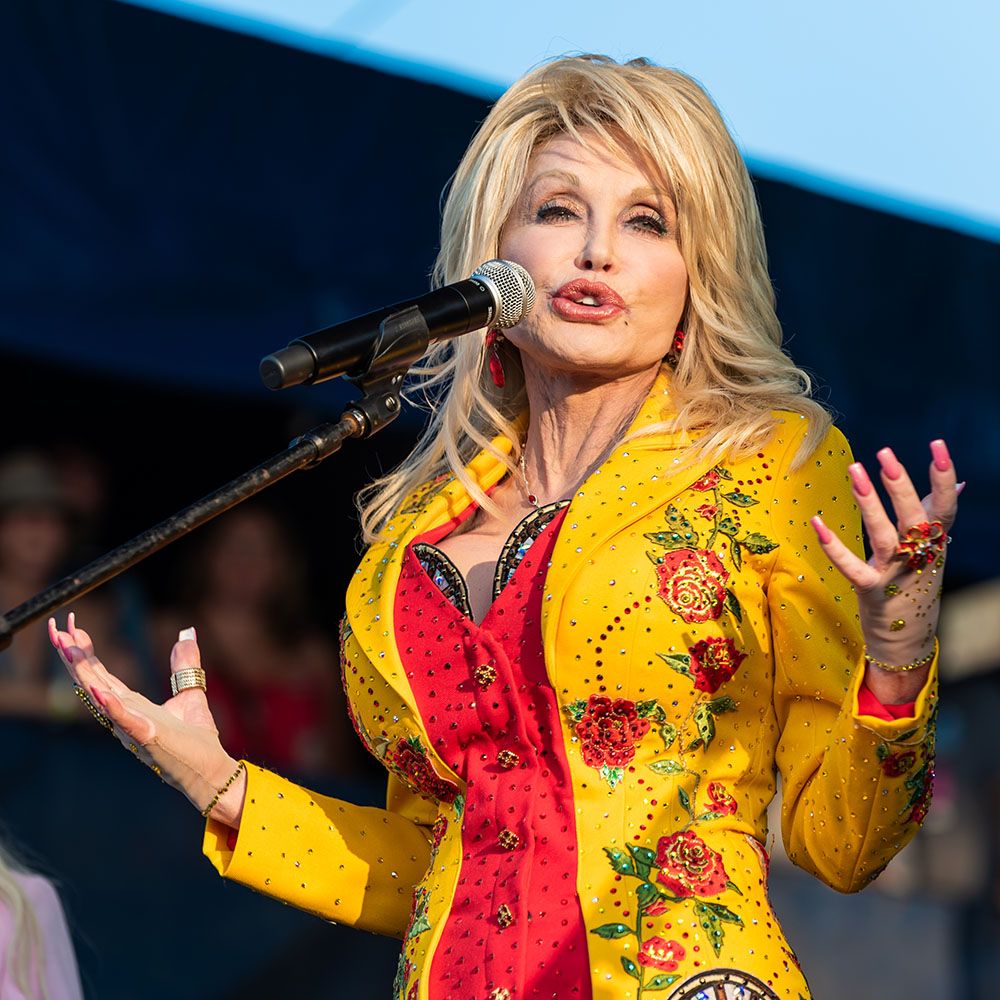
Andy Warhol thought he was paying Dolly Parton a compliment. He had underestimated her.
“You could be a great preacher,” Warhol told her during a 1984 conversation for his Interview magazine.
“What do you mean? I am a great preacher,” Parton replied.
Forty-two years later, after Parton’s death on August 25 at age 80, the line reads less like a joke than a job description.
Parton was never a Universal Life Church minister, or (as far as we know) ordained by any other church. Still, she spent decades talking openly about God, prayer, judgment, charity, sexuality, suffering, and what people owe one another. Her pulpit happened to be records, interviews, Dollywood stages, and occasionally a rhinestone-covered television set.
If we take her claim seriously, what exactly did Dolly preach?
1. Let Faith Be Bigger Than Fear
Parton grew up in a deeply religious family in rural Tennessee. Her maternal grandfather, Jake Owens, was a Church of God preacher, and as a child she absorbed the Pentecostal language of salvation, sin, heaven, and hell.
Some of it terrified her.
In her exchange with Warhol, Parton recalled being frightened by the “hellfire and brimstone” preaching she heard as a girl. Eventually, she said, she had to decide for herself what God meant to her. She could not reconcile the God she believed in with a deity who was mean and cruel.
That distinction stayed with her. In a 1989 interview, she described herself as spiritual rather than conventionally religious and said faith lived “in the heart.” Her simplest theology was even shorter: “God is love.”
Dolly’s first lesson might be this: faith should move you toward love, not trap you in fear.
2. God Doesn't Mind the Rhinestones
Parton’s spirituality was never especially interested in appearing "respectable."
In a 2023 CBS interview, she described spirituality as something you “just live” rather than something requiring constant religious performance. She also pushed back on the idea that devotion meant becoming so rigid that a person could no longer enjoy being alive.
That helps explain a Dolly Parton combination that never seemed contradictory to Dolly. She prayed every day and told dirty jokes. She sang gospel music in towering wigs and rhinestones. She spoke openly about God while building a public image around exaggerated glamour and sex appeal.
Dolly seemed deeply suspicious of the idea that holiness had a particular costume, vocabulary, or demeanor.
Her second lesson, then, might be: don’t mistake looking for being.
3. Love People You Don’t Understand
Few themes appeared more consistently in Parton’s public Christianity than her refusal to appoint herself God’s deputy judge.
Asked by Larry King in 2006 about her gay following, Parton said everybody should be allowed to be who they are. She described trying to see the “God light” in every person and said judgment ultimately belonged to God.
That put her at odds with many conservative Christians. Dolly never tried to resolve every theological disagreement over sexuality; she simply rejected the idea that those disagreements gave Christians permission to mistreat people.
The position was explicitly religious. “We are all God’s children” became one of her recurring explanations for LGBTQ+ acceptance. Her song Travelin’ Thru written for the film Transamerica, similarly approached a transgender character through spiritual language of identity, struggle, and redemption.
That mattered to people trying to reconcile Christianity with identities some churches condemned. After Parton’s death, theology professor Patrick Burrows told the Associated Press that Dollywood had helped teach him “how to be gay and how to be a Christian.”
The third lesson: it's not your job to judge, it's your job to love.
4. Be Yourself on Purpose
Dolly Parton did not accidentally become Dolly Parton.
The wigs, nails, rhinestones, exaggerated country glamour, self-deprecating jokes, and unmistakable voice were carefully, consciously constructed. Parton was remarkably comfortable acknowledging what was artificial about her appearance while insisting that the person underneath it was entirely real. She brought the same determination to her career, retaining control of her business decisions and creative life.
Her version of authenticity was active: you are in charge of your identity, and you should not surrender that power because someone else finds your choices tacky, strange, or even sinful.
Lesson number four: know who you are, and be who you are.
5. Turn Hurt Into Something Useful
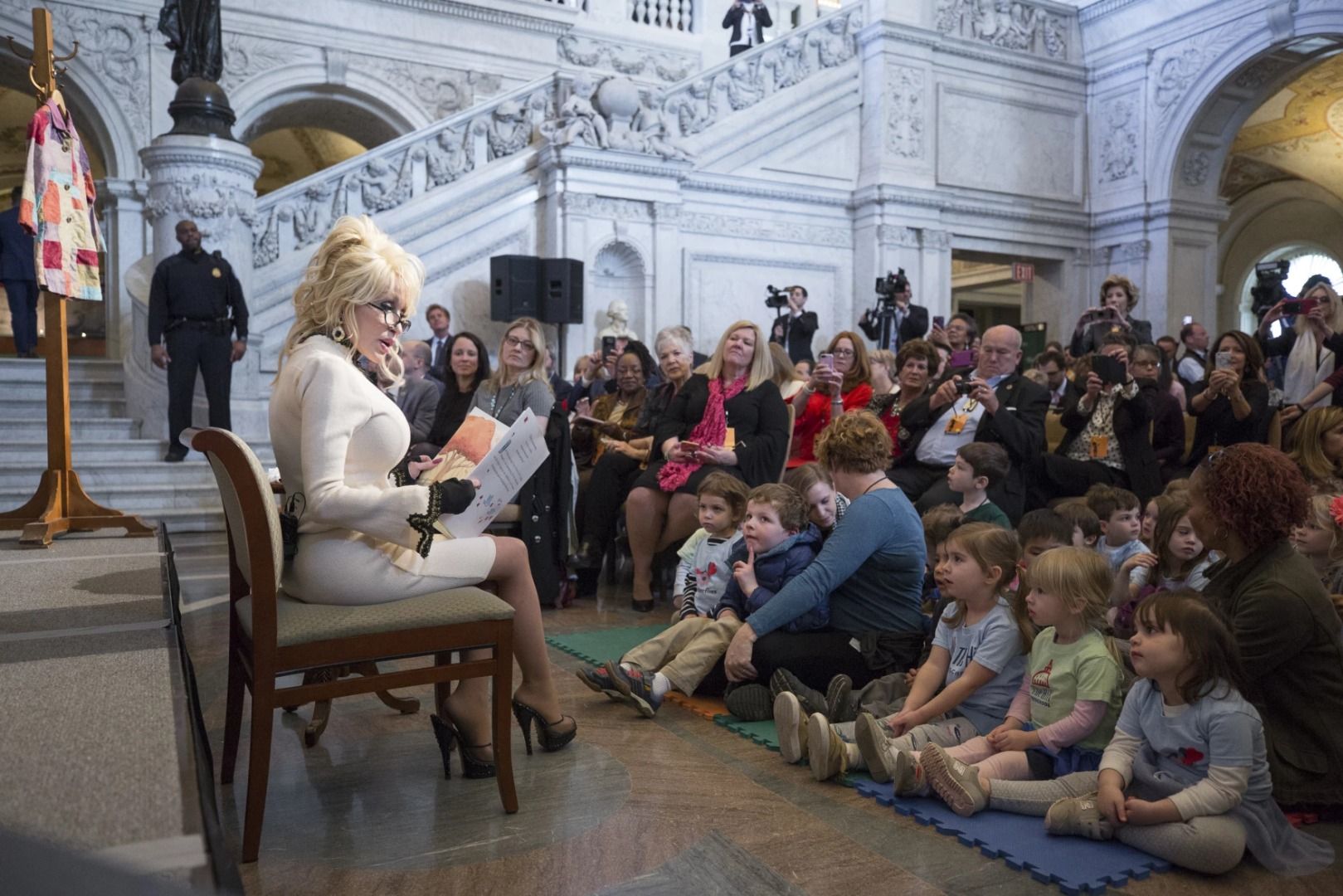
In Coat of Many Colors, Parton transformed a childhood humiliation into a song about dignity and family love. Her mother had stitched her a coat from scraps and connected it to the biblical story of Joseph; Dolly proudly wore it to school, where classmates mocked her for being poor.
She later did something similar with her father’s illiteracy. Robert Lee Parton, a sharecropper in Appalachia, could not read or write, a fact Dolly said embarrassed him. Rather than leaving that pain in family history, she made childhood literacy one of the major causes of her life. The Imagination Library, founded in 1995 in his honor, has now given more than 300 million free books to children around the world.
Her fifth lesson might be: You do not get to choose every wound, but sometimes you can choose what grows around it.
6. If You Can Help, Help
Parton once summarized her approach to charity with almost suspicious simplicity: “When you are in a position to help, you should help.”
She meant it.
After devastating East Tennessee wildfires in 2016, Parton’s My People Fund provided $1,000 per month to families whose homes had been destroyed. In 2020, a $1 million gift she made to the Vanderbilt University Medical Center supported the development of the Moderna COVID vaccine. In the early 1990s, she even promised Sevier County students $500 if they graduated from high school; the Dollywood Foundation later announced that the program helped cut the dropout rate in the county from 35 percent to 6 percent.
Parton did not usually talk about wealth as proof of divine favor. She talked about success as creating the capacity to do something for somebody else.
That puts her in an old religious argument about what people with abundance owe their neighbors. Dolly’s answer, her sixth lesson, was simple: if your hands are full, open them.
7. Work Hard, But Don’t Worship Success
Parton was generous, but she was no ascetic.
She wanted hits. She wanted money. She wanted control of her publishing. She unabashedly wanted to be a star. She built Dollywood, made movies, launched products, negotiated contracts, and became one of the most recognizable entertainers in the world. There is no convincing version of Dolly Parton’s gospel in which ambition itself is a sin.
What she resisted was allowing success to become the measure of a life.
In 1984, while discussing money and creative independence, she questioned what a million dollars was worth if a person was miserable earning it. It was a revealing distinction from someone who understood both poverty and enormous wealth firsthand.
Perhaps the seventh lesson is: work for what you want, but don't confuse what you earn for what you're worth.
8. Be Grateful for What You Have
While filming Steel Magnolias through a miserable Louisiana summer, Julia Roberts remembered the cast complaining about the heat while Dolly, despite her wig and heavy costume, never joined in. Roberts finally asked why.
Parton’s answer stayed with Roberts for the rest of her life. "When I was a little girl," Dolly explained to Roberts, "I wanted to be famous and I wanted to be rich. Now I'm both, and I'm not going to complain about it.”
Roberts recounted the exchange while sitting beside Parton on The Oprah Winfrey Show in 1989. She said that whenever she caught herself starting to complain, she could still hear Dolly sitting on that porch, reminding her how fortunate she was.
There’s a useful distinction here. For Dolly, gratitude didn’t mean people should accept genuine mistreatment or pretend hardship wasn’t real. Her own songs are full of poverty, heartbreak, loneliness, and unfairness. But she seemed unusually conscious of the difference between suffering and inconvenience, particularly when the inconvenience came attached to something she had once desperately wanted.
Dolly’s eighth lesson might be: remember the things you once dreamed for, and recognize when you’re living inside one of them.
9. Keep Looking for the Clear Blue Morning
Parton wrote “Light of a Clear Blue Morning” during a difficult transition in the 1970s, when she was breaking professionally from longtime collaborator Porter Wagoner and trying to imagine what came next.
Earlier this year, for her 80th birthday, Parton released a new version of the song with Miley Cyrus, Reba McEntire, Queen Latifah, Lainey Wilson, and the Christ Church Choir. Net proceeds were directed to pediatric cancer research at Vanderbilt.
It was one of the last things she did in this life, and it was an almost absurdly perfect Dolly gesture. Take a song written from personal pain, turn it into communal hope, then use that hope to help pay somebody else’s medical bills.
Dolly’s final lesson might be: hope isn’t pretending the darkness isn’t there; it’s believing the light can still come after it.
What Did Dolly Preach?
Dolly Parton was not a theologian in the conventional sense, and if she knew we had undertaken this effort to translate her complicated life into gospel lessons she probably would have laughed and returned with a fun Dollyism... perhaps something like: 'Well, honey, I don’t know about all that. I’m just a little country girl trying to do the best I can.'
But there is a recognizable theology running through what she said and did for decades. God is loving. Faith is lived. People possess a dignity that does not depend on wealth, respectability, sexuality, or somebody else’s approval. Judgment should be approached with humility. Success creates responsibilities. Pain can become service. Hope is something worth practicing.
Her family’s request after her death was fitting: instead of sending flowers, they asked people to donate to the Imagination Library.
Warhol thought Dolly could preach, and Dolly knew she'd been doing that the whole time.
Which part of Dolly Parton’s gospel speaks most strongly to you, and which part would you challenge?
51 comments
-
 Rev. Peter
Parton was a remarkable person. In her world there was always room for empathy and dignity.
-
 Michael Keith Williams
Wonderful read about a wonderful person! One of a kind.
-
 Shawn L. Rhodes
Heaven gained a wonderful angel in Dolly Parton. She always had a positive smile and attitude about everything. Her music inspired a lot of people and she put God first.
-
 Ronald A Sherwood
All of this was a wonderful read for me... Rest In Paradise, Dolly - I wish I could have met you down here, but perhaps I'll have another chance in 20, 30 or (?) years from now.
-
 Joseph Grieco
Dolly was an awesome person. In a world of Schmucks be a Dolly.
-
 Patti Anne Lisenbee
I donated to the Imagination Library. Have any of you? Show you love Dolly and Jesus and donate!
-
 Rev Sean
It seems to me that if anyone could be shown to be an example of a contemporary Christian saint is would have to be Dolly Parton. She certainly ticks all of the boxes for having done many miraculous works. Stories of the many ways she helped people deal with many difficult situations are legion and she stood as someone who definitely lived the teachings of the Christ in the truest way. I only wish that the many American multi-billionaires could learn to practice even a tenth of what she demonstrated and was able to accomplish with a lot less. She certainly showed what it is like to work and share with love in your heart.
-
 David Jarrdine Shannon Lee
And she was a vaccine death shot promoter. That evil outwieghed any debateable theorretical good some people thought she may have done with her well reimbursed songs. She created an image and the above article deludedly assumes that it was part of her true nature.
-
 Michael Hunt
You mean the vaccine that saved millions of lives, of course.
-
 Jimmy Moon
Don't forget the ones who died from the clot shot.
-
-
 Robert James Ruhnke
Keep that wonderful woman’s name out your friggin mouth. You backwards trog.
-
 Patricia Ann Gross
David,
If you've ever been exposed to, or gotten COVID-19, you might think differently. Speaking from experience. I've been jabbed every time I've needed it (according to the vaccination guidelines), and caught it last year right after I got the vaccination (before it had time to "kick in") from a health care worker that came into work sick. (Go figure). I'm getting ready for this year's dose, and will continue per protocol (along with the flu vaccine) until God calls me "home."
-
-
Patricia Ann Gross
I have loved Dolly Parton for more than 60 years. We all could take a lesson from how Dolly lived her life. She loved unconditionally and was generous beyond any expectations. She will be missed.
-
 Lia E Wilson
I grew up in East Tennessee, and Dolly has been a part of my life as far back as I can remember. Her compassion, empathy, love for others was a light shining from the Smoky Mountains. She never forgot her humble roots and shared her wealth to help the region, to support children and their overall health, to help all of us during the pandemic. She was authentic and genuine, and we don't see enough of that.
-
 Scott Smith
Dolly would be a better candidate for the new dollar coin in the US. Ah, they choose Trump instead...
-
 James Richard Munro
I don't think they chose Trump. I think Trump chose Trump. Jim
-
 Sir Lionheart
What a wonderful gesture though to have our President on the $1 coin celebrating our 250 year birthday.
🦁❤️
-
Rev Sean
I'm thinking a better fit would be the penny that they are phasing out!
-
Sir Lionheart
They actually saved that for Biden. Just giving my 2 cents 🤭
🦁❤️
-
-
-
-
 William M Buzanoski
Dolly seemed to truly embody the essence of The earliest Christians , her life , her ways and manners, her Spirit...we are a just a wee bit better as a result! Let us all give Thanks to the Highest Power for lending her to us all in our lifetimes!
-
 Penny Prentice-Best
Dolly Parton lived a very human life with all of its challenges and rewards, and she demonstrated a deep personal spirituality and a loving heart. I believe she provided a worthy example. She definitely earned her wings.
-
 Rev. Miche'al Yosef Dixon
Jake Owens and my father's mother Coral Jean Owens were 2nd cousins. When I was a child met Dolly at the family reunions, I grew up meeting famous people as family. Her and few others Didn't treat us from the poor side of family with stuckup noses. Dolly treated everyone equally regardless of who and what you are. If you recall Yeshua didn't have authorized permission to preach either, the scribes and pharasee asked him "by what authority do you say these things?" He simply countered there question with his own if they answer truthfully their corruption would come out. ULC uses Bible scriptures to authorize ordinance because Government butts it's head into Church business dictating who can preach and who can't preach. Dolly reminds us Yeshua ordained everyone to Preach His Love. YESHUA commanded "Love one another" Love is a command action not a fuzzy feeling you get for each other. That's a different "Love" the scriptures translates five Greek words into English word "Love" and Yeshua expects us to use all five "loves" in our life toward others.
-
Michael Hunt
We lost a true legend with the passing of Dolly Parton. Few people have done as much good in their lifetime as she did with her Imagination Library and numerous other philanthropic endeavors. She set an example for all of humanity to be kind and loving to your fellow human.
-
 Barbara Harris
Dolly Parton was a gift in the way she shared her life and love for all. Her humor is what made her someone who could take the worst and laugh about it. A few days before she passed she had posted on FB that she had to cancel travel plans because her doctor told she couldn't fly and you always follow your doctor's orders. Now she has her own wings and doesn't need her doctor's permission. If a person who is a Pagan can accept and love Dolly's music and where her heart was then I can't understand anyone judging her in who she supported and cared about.
-
Jimmy Moon
Was Dolly saved? I don't know. But GOD still hates sin and would not tell alphabet people to enjoy their sin, but to repent of it. Dolly did not seem to be able to tell someone about JESUS. Being kind only will still help send someone to Hell.
-
 Rev. BH
Dolly, forgive him ...
-
Jimmy Moon
Dolly can not forgive anyone. That is GOD'S role. Sorry bh, try again.
-
Rev Sean
Arrogant people who deign to speak for The Lord, usually have zero sense of what the heck they're talking about.
-
Rev. BH
So you, Jimmy, have never forgiven anyone? I pity your friends and relatives.
-
 Father Johnson
immy, first off, I want you to know I’m not against you—we are all on the same team.
However, what you said here isn't quite accurate based on the Word of our Lord. Jesus directly commands us to forgive one another in the Gospel of Matthew:
"For if you forgive other people when they sin against you, your heavenly Father will also forgive you. But if you do not forgive others their sins, your Father will not forgive your sins." (Matthew 6:14–15)
We are required to forgive others, which is why we pray in the Lord's Prayer: "...and forgive us our trespasses, as we forgive those who trespass against us." God is the ultimate judge, but He explicitly commands us to extend forgiveness to people in this life.
-
-
-
 Kimberly Kay Hyde
Dolly did not have to tell them about Jesus - she lived like Him. She showed how to love like Him. Less rocks - more hugs. She was wonderful and I know the Lord is proud of her.
-
Jimmy Moon
Only if she made it to Heaven is the LORD proud of her. We are not all GOD’s children. That is a lie from Satan. ONLY those who accept JESUS as their Savior get that title. And yes, we are commanded to go into the world and tell about JESUS. If we don’t tell people, they cannot see HIM in our actions if we don’t say whom we serve.
-
Patricia Ann Gross
Jimmy,
Dolly was not shy of telling anyone who asked about her inspiration for her kindness. She didn't have to stand on a street corner and tell everyone that went by that they were going to hell if they didn't bow down and accept Jesus as Lord and savior. She showed it through her ACTIONS!!
-
Father Johnson
Jimmy Moon, this message feels a bit contradictory. You mentioned that we are commanded to go into the world and tell about Jesus so people can see Him, but simply talking or doing good works without a true heart isn't what saves anyone—anyone can speak the words and still fall short.
I think it’s best to simply let Dolly rest in peace. She brought a lot of good into the world during her life, and she shared a deep bond with her dear friend Kenny Rogers. Let’s simply pray that God has welcomed her into His kingdom—or as my church refers to it, 'the life and world to come
-
-
-
 Alexander Clarke
I want to go where Dolly went. Sure as hell don't want to follow you.
-
Robert James Ruhnke
Not on Dolly’s green earth, you alphabet bigot. Take your message of hate and take a long walk off a short pier
-
Patricia Ann Gross
God forgive Jimmy Moon, at Dolly's request, and provided that Jimmy Moon repents.
-
Jimmy Moon
Pat you are misinformed.
-
Patricia Ann Gross
Not at all. Knowing Dolly, she has already asked for forgiveness on your behalf, as did I. It is your turn to repent for your sin of judging Dolly before God had a chance to. The Choir of God's Angels has a new and beautiful voice.
-
-
-
-
 Father Frederick
Be like Dolly, less like Jolene. It takes just as much effort to speak mean, that good, so choose the good. Remember with success and wealth comes burden, so always work to make sure success and burden are for the greater good. And set a small essential event each day which you know Jesus would smile and nod in improvement.
-
 Colleen McAllister
What made me love and appreciate Dolly was that she lived the gospel rather than overtly preaching it. Her smile lit up the rooms she entered. Her life has left this world a better place. I will always love you, Dolly.
-
Alexander Clarke
She lead by example.
-
-
 Dr. Zerpersande, NSC
Skimmed the content. Have heard her ‘views’ now and again. Just as religiously delusional as any hardcore xtian but as can be seen from these 7 examples, her heart was in the right place.
-
James Richard Munro
Heven's quire sounds a little bit better now. You are missed. God Bless.
-
Sir Lionheart
Yes, and even Heavens choir, assuming there is a Heaven of course. 🤔
🦁❤️
-
-
 Reverend Marika
Be like Dolly. It makes for a better world. <3
-
 Stephen P Singleton
Dolly's MESSAGE makes the World a Better place. Not a fan of the music, but "God is Love" is what I live and teach.
-
Rev. BH
Stephen, "Dolly's MESSAGE makes the World a Better place." a plus for that.
"Not a fan of the music." a minus for that. Why was that diminishing comment needed?
-
 Rev. Mike Eggleston
It's not diminishing, quite the opposite in my opinion. Dolly was a lot more than just her music. Regardless of whether one is a fan of that music genre or not, one can still recognise her as a thoroughly decent person.
-
-
-
 Nicholas J Page
Dolly has left behind a real legacy her generosity was incredible. She made country western music enjoyable sge was loved across the universe the world is a sadder place without her she had her own unique family of religion RIP Dolly Parton ❤️

Dolly was the epitome of Let those without sin, cast the first stone. She was above all else a God loving, generous of spirit, soul who had lived life from humble beginnings which grounded her into the bright bubbly star we all loved & adored. There will never be another Dolly, but even in death her legacy should be a shining beacon for other on the fame journey to reflect on, as the world needs legends who lived the life of God and his scriptures and not that shown on our TV screens every night, and mostly lewd, crude and unattractive.