

Lawmakers in more than a dozen states have introduced resolutions asking the Supreme Court to send marriage back to the states, and the pitch is always the same one: that one-man-one-woman marriage has been the unbroken, self-evident norm across all of human history until courts got involved.The problem is... that isn't true. Evidence has been unearthed of a much longer history of same-sex unions across the faith spectrum. The "tradition" being defended in courts right now turns out to be a lot newer, and a lot less universal, than its defenders are counting on.
Were There Gay Marriages in the Catholic Church?
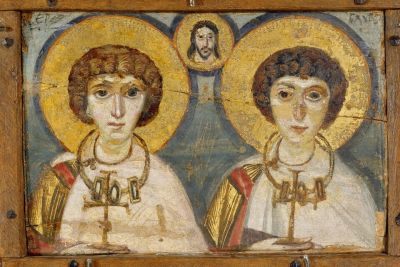 Historian John Boswell spent the last years of his life hunting through Greek and Latin church manuscripts for references to a forgotten rite called adelphopoiesis, literally "brother-making." What he discovered will shock you. In Same-Sex Unions in Premodern Europe, published the same year he died, Boswell argues that this rite was essentially akin to a wedding between men, blessed by priests in both the Orthodox and Catholic churches for over a thousand years.
And don't be mistaken, this was far more than a gesture of friendship. Surviving copies of the liturgy explain that during the ceremony the two men placed their right hands on the Gospel book (a traditional volume including the books of Matthew, Mark, Luke, and John) while holding lit candles, then a priest blessed them with incense and prayed for their "unashamed fidelity" and "sincere love." This same language was borrowed almost word for word from wedding rites of the same era.
The ceremony also invoked the story of two Roman soldiers, Sergius and Bacchus, as the model pair to imitate. Sergius and Bacchus were so devoted to one another that ancient writers used the word erastai (lovers) to describe them. When it was discovered that the two men were secretly Christian in a still-pagan Rome, they were forced to wear women's clothing and march through the streets before they were executed. Now considered martyrs, depictions of the couple still appear in churches across Europe.
The "brother-making" ceremony ended with the two men kissing the Gospel, the priest, and each other.
The earliest surviving manuscripts of the rite date to the 8th–9th century. The Catholic Church stopped performing it by around the 14th century. Formal prohibitions started entering Byzantine/Orthodox canon law (the Kormchaia Book and Nomocanon) after the 13th century, apparently because church authorities worried the rite was being misused. Despite that, priests in Serbia and Montenegro kept performing it anyway, and it survived on the ground in the Balkans into the early 20th century.
Boswell's discoveries landed like an atomic bomb within Christianity. Supportive clergy around the world cited it from the pulpit, while furious critics accused him of reading a modern love story into old paperwork.
Who Were The Couples Behind The Ritual?
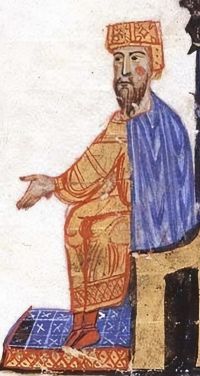 And Sergius and Bacchus weren't the only reported same-sex couple of their era. Another little-known story involves Basil I, before he became a Byzantine emperor. As a young man, Basil came to Constantinople completely broke and effectively homeless, carrying little beyond his own good looks. A cleric named Nicholas found him, took him in, and the two were also joined in a church ceremony, after which contemporary sources describe them living together as companions.
Basil eventually went on to seize the throne through a fairly ruthless murder plot, so make of his early piety what you will. But the detail that a future emperor's origin story includes being taken off the street by a man he was then formally bonded to in church is a crucial part of his story that often gets left out.
Does The Bible Point To Any Of This?
Boswell also pointed to the Old Testament, noting that intense same-gender love stories "figure prominently" there, citing the relationships described between David and Jonathan and Ruth and Naomi. Critics pounced on this claim specifically, pointing out that Boswell offered it almost as an aside, without much argument to back it up.
However, the text itself is genuinely striking. In First Samuel, the Bible explicitly says that Jonathan's soul was "knit" to David's, and after Jonathan's death David mourns that his friend's love for him had surpassed the love of women. And then there is Ruth's vow to Naomi:
"But Ruth replied, “Don’t urge me to leave you or to turn back from you. Where you go I will go, and where you stay I will stay. Your people will be my people and your God my God." (Ruth 1:16 NIV)
Sound familiar? You may recognize it because those words, a vow made between two women, are still read at weddings to this day, even weddings between heterosexual couples.
Why Do Historians Still Argue About It?
Unsurprisingly, the pushback against Boswell's argument came from every direction, including from historians who are themselves gay. Critics argue adelphopoiesis rites formalized a kind of spiritual kinship, not romance, pointing out that the ceremony was sometimes performed between more than two men, or even between a man and a woman, which makes any same-sex marriage interpretation harder to sustain.
Not everyone disagreed, though. Episcopal Bishop Paul Moore, reviewing the book at the time, wrote that Boswell's work "will be of great help to the church in dealing with gay marriages." Boswell's defenders still argue that dismissing every same-sex ritual as merely platonic says more about modern discomfort than about the sources themselves.
What Evidence Exists Beyond Boswell?
 Boswell's critics have a fair point: his case leans hard on one narrow set of medieval texts. However, if one zooms out to view the wider historical record, it becomes harder and harder to dismiss that gay marriages have existed for a very long time.
In Ming and Qing Dynasty China, for example, texts have been recovered indicating that men in Fujian province entered a recognized bond called qixiongdi, sworn brotherhood. The younger partner moved in with the elder, and the two ate and slept together like a married couple, sometimes for decades.
Parents on both sides treated the arrangement like an in-law relationship, with the younger man's family contributing toward the elder's eventual wedding to a wife, since the bond did not preclude either man from also marrying a woman and having children.
Long before European contact, more than 150 Native American tribes recognized what is now called Two-Spirit identity, and colonial journals describe men married to men in ceremonies their own communities considered entirely ordinary.
European missionaries were scandalized when they first saw these marriages, but the unions kept happening anyway, in some communities for generations, until colonial marriage law made them illegal.
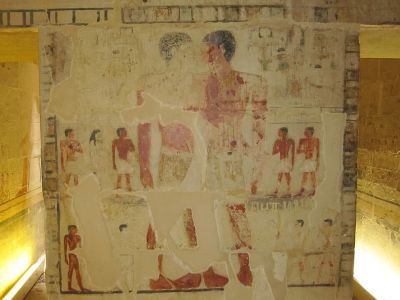
Further back still, a tomb built around 2400 BCE in Saqqara, Egypt, holds two royal manicurists, Khnumhotep and Niankhkhnum, carved embracing nose to nose in a pose Egyptian art otherwise reserved for husbands and wives. It should be noted that figures which could represent the wives and children of the men appear elsewhere on the tomb walls, which is exactly why scholars still argue over whether the two men were husbands, brothers, or something else entirely.
None of this proves any single interpretation. Taken together, though, it means societies on at least three continents, across several thousand years, kept finding formal ways to bind same-sex couples together, long before anyone had a separate word for "gay marriage."
Why Does Any Of This Matter Now?
This is not just an argument for classics professors. Ministers still hear opponents of marriage equality insist that one-man-one-woman marriage is the unbroken norm across all of human history, a claim the legal fight to undo Obergefell v. Hodges leans on directly.
That version of history turns out to be far shakier than the claim assumes, something the wave of state resolutions asking the Supreme Court to revisit the ruling will likely keep testing for years to come.
Queer history keeps turning up in places people do not expect it, the same way a symbol as familiar as the rainbow turns out to have roots reaching back thousands of years.
It's possible that not every claim in Boswell's book holds up to closer scrutiny. But he and the historians who came after him have established one thing: same-sex couples have existed for as long as recorded history has, and they very well may have wed.
Does it matter whether these ancient unions looked exactly like a modern wedding, or only that some form of formal recognition existed at all? If "traditional marriage" has already changed shape more times than most people realize, what does that mean for the argument that it can never change again?
47 comments
-
 Minister for the Kingdom
Minister for the Kingdom
Where is Zoar for those who practice the history of those who are in the dust no more? Bosswell let us explain: Sodom city on the plain, where Lot settled, (Gn. 10:19; 13:10; 14:11-12). Destroyed along with Gomorrah by God (Gn. 18:20; 19:24). The Destruction: (Gn.19:1-30). Zoar: For His people which honor and love Him. Jesus Christ our Lord and Savior, blessed are we. I love you all. Minister for the Kingdom; R. Krebbs
-
Minister for the Kingdom
Minister for the Kingdom As for me and my house: I will stand with what My God has done to correct this approach in this world. God is not slacked in his decision. But was correct in His decision. God righted a wrong committed among his people. (Gen.13:10 ; 13:13; 19:17; 19:24). I love you all. Minister R. Krebbs
-
-
 Brent L. Arneson
Spot on.
-
 Rae I. Duffy
Absolute nonsense🤔
-
 Leslie A. Hulberg Née Tomasura
People are people. Same sex couples have been around for as long as humans have existed. Hawaiian islands also had people of “two spirits.” As did several other cultures. Why is this such an issue? I find the people against this the most are people who are unhappy with themselves and/or are people who can’t admit they have had deep feelings for someone of the same sex but could not admit it to themselves. Or the partner they chose, left them for someone of the same sex. It seems to me if people worried more about how they are living their own lives and less about what others are doing, this world would be a much better place. I don’t believe there is only one type of marriage. I believe love between two people, regardless of gender is not wrong. I believe hatred of someone who has not wronged you in any way, is wrong. But I also believe that learning from each other and forgiving is all a part of growing and growing up.
-
 Florencio Guevara
This notion that same-sex relationships are out of the norm needs to be erased from humanity's collective soul. Every religion, culture, and familial group has had same-sex members. Indeed in many societies it occupies a high standing. Most indigenous Indian tribes refer to "berdache" individuals who were even in the chief's inner war party. The names Crazy Horse, Sitting Bull, etc., had to be whispered into the recipient's ear DURING intimacy with the berdache, Only they could give these warrior names of spiritual power, and only through intimate relations. Read The Spirit & The Flesh, by W. Williams. It is literally a textbook on global same-sex traditions. Research cannot only view Christian documentation. The world consists of many more and older traditions. In the world, Christianity is but a rookie...
-
 Joel R Kahn
In your comments about Ruth and Naomi you failed to relate that the rest of the text of the Old Testament states Ruth married one of Naomi's sons, and therefore was her Daughter-in-Law. The other son married Orpah, and soon both Naomi's husband and both sons died, leaving the three women widows. Naomi was determined to return to her land of nativity, and begged Ruth and Orpha to stay with their kindred and friends in Moab.
Ruth saw that Naomi was old and intended to return to Bethlehem on her own, and Ruth felt it was her moral duty to accompany and care for her aged Mother-in-Law. There was nothing to suggest that a gay relationship was involved. Near the end of this story, Ruth married Boaz, who was related to Naomi's family.
-
 Steve Allen Coomes
Jesus made the following statement to the Pharisees about a man putting away his wife:
Matthew 19:3–6 (KJV)
3 The Pharisees also came unto him, tempting him, and saying unto him, Is it lawful for a man to put away his wife for every cause? 4 And he answered and said unto them, Have ye not read, that he which made them at the beginning made them male and female, 5 And said, For this cause shall a man leave father and mother, and shall cleave to his wife: and they twain shall be one flesh? 6 Wherefore they are no more twain, but one flesh. What therefore God hath joined together, let not man put asunder
Jesus states it clearly that God made a male and female and that the man should cleave to his wife! He did not state that a man can marry a man or a female can marry a female. God also showed just how he felt about homosexuality when he destroyed Sodom and Gomorrah. The very name of that ancient city has given us the term sodomy! The scriptures are written as a guide for mankind! We can choose to follow or suffer the consequences.
-
 Steven Ferrell
The Bible is clear, same sex marriage is an abomination to God.
-
 JPrime
Please give me the Scripture where Jesus denounces homosexuality in any way. I’ll wait.
-
-
 Harvey Jay Friedman
Let us not confuse fraternal love for homosexual sex. Good friends bonded together as “brothers” for many non-sexual reasons. This applied to women as well. The homosexual community would have you believe that Native Americans rituals of making blood brothers was for sexual reasons. They couldn’t be more wrong. The reasons were more political than sexual. It created a groundwork for peace not sex. This article is completely out of context.
-
 Rhonda Irey
Are ye pure and without sin? Does Jesus not say, "Love all, do not judge." Go ahead, I'll wait. Cast the first stone...................
-
 Roy S. Thorpe
Maybe just loving God and forgetting all the religion baloney is the answer! Was the song"Imagine" really the way? A thought for those who can think freely!
-
 Michael Burton
Marriage is a contract between two people. If the contract was made under the provisions of some authority, then the people making that contract should abide by it. Christianity has a number of counterintuitive beliefs, and some of its sects enforce them vigorously. Simple solution: leave Christianity, adopt your own faith and beliefs, and stop ther Christians from bullying you.
-
 Lester
If Christians would leave others to their own beliefs then walking away would be the ideal solution. Unfortunately, Christians are one of those groups that insist on forcing everyone and everything into their little box. In general anyway.
-
 Dr. Zerpersande, NSC
Those are examples of walking up to ‘the line’ yelling at another person. What these religiously delusional nitwits do is try to pass legislation to force their nonsense into the lives of others.
-
-
-
 James Riggle-Johnson
Here’s the story of Adam and David, a couple of 7 years. David’s parents threw him out at the age of 15 because he was gay. David gets sick in the 7th year of their relationship and is hospitalized. Adam is at the hospital every day supporting his partner. David’s parents find out he is dying and fly out to see him.
Technically, David’s hateful parents are his next of kin because he’s unable to marry Adam. David’s parents bar Adam from the hospital room. David dies surrounded by people who despise him. They tell him they are saving him from himself. That his lifestyle is a sin.
This story repeated itself throughout the AIDS era, and thousands of committed couples were treated as though they were nothing. The saddest part of all is that it was completely legal because these partners had no legal protection.
If you don’t agree with same sex marriage, then don’t marry someone of the same sex. Leave the rest of us alone.
-
Lester
Well... That's sad... Now I'm depressed....
-
Dr. Zerpersande, NSC
Same here
-
-
 Pastor George Day
James Riggle-Johnson
How did they contract AIDS?
-
 Patricia Ann Gross
He never said they had AIDS, only that David was sick and dying. The reference to AIDS was about other people whose parents came in and "threw out" the friends and partners their children had acquired since the time were effectively "disowned" by their parents. As a hospital chaplain, I saw this a lot, only in reverse, because where I lived, domestic partners were given familial rights. I ministered a lesbian couple from a neighboring state who came across the line because of this very issue. The one who was dying was not from AIDS, though.
-
-
-
 Colleen McAllister
Don't need to research all that ancient history. The issue is quite simple for a Christian. Yes or no, the gay lifestyle is a sin. If no then it doesn't matter. If yes then you must treat a gay person like any other sinner. Love them with no judging.
-
Pastor George Day
Colleen McAllister
It need not be viewed in absolute terms. Same-sex attraction and gender dysphoria are not conditions that individuals choose, and they significantly reduce personal moral culpability. From an objective standpoint, the LGBT lifestyle is considered sinful, while on an individual level, it remains a pastoral matter requiring sensitive attention.
-
-
 Rev. Dr. Dennis Chevalier, Ph.D; DD
Heavenly Father, please forgive them, for they know not what they do.
Dr. D
-
Dr. Zerpersande, NSC
Change the pronouns. Them/they to us/we.
-
-
 Samuel Tamayo
Sugar , candy , flowers rainbow coloring or whatever coding or covering mankind uses. it still an abomination in the eyes and against the laws of Almighty Father God . It is written in the book of Proverbs and among others the Laundry list of mankind despised behavior by our creator. Wow if we don't realize history is being repeated. It's shameful 😔. The detail of surrounding and environment is occurring once again which lead to fire to rain down from the heavens.But fear Not all these must take place. The Rise of Deception & Turmoil: Many will be misled by false claims, widespread warfare, and natural calamities.Tribulation & Betrayal: Believers will face severe persecution, and the rising tide of lawlessness will cause the love of many to grow cold.Global Proclamation: The gospel of the kingdom must be preached throughout the entire world as a testimony to all nations.The Final End: Only after these conditions are met will the final events—including the visible return of the Son of Man—take place. Peace be with you all brothers and sisters. 🙏📖🕊😊
-
 Rich Hudson
Lol.
-
 Jon E Dare
Wow, this is the most brainwashed statement. Homosexuality was never in the bible until the 1940’s. It’s been re-interpreted over and over to fit a political narrative!
-
 Rev. BH
Rich, there's nothing like a one word put down to a long, pedantic tirade! Well done.
-
-
-
 Lynnea Urania Kaylor
There was always polygyny and polyandry, even extended group marriages throughout history. Leah and Rachel was always unblinkingly accepted as wives of Jacob-Israel just as Bilhah and Zilpah were always unblinkingly accepted as surrogates with none of the sons declared "illegitimate". But what's particularly interesting to me is the description of Sergius and Bacchus as "erastai".Not "erastoi"? The former is feminine plural and the latter masculine plural, both referring to those "lovely" or "beloved" even to one another. Was this a gendering they preferred themselves? If so, then it may be understood why Romans compelled them to dress as women before marching to their execution, otherwise it would reflect the writer's bias as regarding them as what Romans thought to be shameful effeminacy.
It also brings to mind a peculiarity when studying the Symposium of Plato, in the speech of Pausanias. He speaks of "Aphrodite Pandemou" ("Aphrodite of All People" or "Aphrodite of a Commoner") pertaining to the Aphrodite as daughter of Zeus and Dione, with unions thereby as by chance, and necessarily heterosexual. He contrasts this with "Aphrodite Urania" (Aphrodite of Heaven) springing from the castrated member of Uranus after it falls into sea foam, and necessarily homosexual because no female brings her existence. then he describes something rather odd to modern eyes:
"ὁ δὲ τῆς Οὐρανίας πρῶτον μὲν οὐ μετεχυύσης θήλεος ἀλλ’ ἄρρενος μόνον· "But the one of the Heavenly first not partaking of feminine but masculine only:
"[καὶ ἔστιν οὗτος ὁ τῶν παίδων ἔρος·] ἔπειπτα πρεσβυτέρας, ὕβρεως ἀμοίρου· "[and this is the [erotic] love of the children;] subsequently elders, of licentiousness bereft;
"ὅθεν δὴ ἐπὶ τὸ ἄρρεν τρέπονται οἱ ἐκ τούτου τοῦ ἔρωτος ἔπιπνοι, "now from whence, on the masculine, the inspired ones are turned out of these [being] of the erotic,
"τὸ φύσει ἐρρωμενέστερον καὶ νοῦν μᾶλλον ἔχον ἀγαπῶντες. "they breathe this in, a vigorous thing, and a better measured mind, [they are] lovers." (Plato. Symposium 181c)
"Agapontes"? "Agape-lovers" conflated with erotic lovers centuries before the New Testament? It's there all right, but we might also argue that the desire spoken of in terms of "ero" isn't restricted to the "porne" (low level street prostitutes), but may also manifest in higher aspirations including those divinely inspired. To Symposium's Pausanias, Aphrodite is the divine inspirer for whom Socrates later describes as her communicating agent. To the Christian, Y'shua is the divine inspirer with the Holy Spirit as the communicating agent and Christians simply reapplied existing Pagan concepts like they have typically done throughout history.
-
Patricia Ann Gross
Yes, what you just posted is the definition of "biblical marriage." Not one place does it describe it as one man and one woman.
-
Lynnea Urania Kaylor
Even that may lack clarity so perhaps it's worth our amplifying its meaning. Looking at what was considered marriage in those times, the statuses of unions were more nuanced than what's typically offered today, especially among those who insist that if 2 people are sexually engaged, they're automatically married whether legal or not. Looking particularly at the "hetairoi" (irrespective of sex), A "hetaira" was typically less than a mistress, but higher than a "porne". Such may be a concubine or simply a companion of whatever sort. In fact, some of Alexander's elite cavalry were called, "Hetairoi". What, then, do we seek to achieve with marriage in the first place and where does it become heightened in a religious sense?
From a purely civil perspective, marriage does only 2 things: (1) provides an orderly dispensation of property, and (2) provides a stable environment for child rearing. It does not promise companionship. How many war brides never really formed a lasting marital bond with soldiers who would die in war? It doesn't guarantee love let alone sex. How many people talk about cherishing the spouse who discover too late that they cannot due to this or that? Looking back on Socrates and his horrid relationship with Xanthippe, there was certainly nothing that would prevent him from so cheerfully taking the hemlock and I've sometimes wondered whether it may have even secretly helped him to give impetus to his fatal decision. Worse yet, when spoken of strictly in terms of a legal contract, it opens to exploitation by others who intentionally use divorce to take advantage of the provider while ultimately offering abuse in return--something which has even invited some churches to get in on the gravy train by approving those divorces previously denounced so they could gain family units and a supply of church leaders. After all of that, when it comes to what a marriage should consist, we should ask a deeper question: "Why do you want to marry and go through all that trouble?"
If indeed, the intentions between the couple (triple, quadruple, or whatever-- the more there are, the more difficult) focused upon a priestly (hiereic) commitment, then the divinely inspired aspect of love is genuinely key. Erotic passion will always recede in time. Storybook weddings are just that... good for fairy tales and nothing more. Inevitable hardships ultimately break through those illusions. One cannot build lasting let alone priestly marriages upon such approaches. But if love is inspired of the Divine, and such love is true in both (or all), the erotic is simply the passing hurricane that one may devote to the wind turbines of procreation and relish it all with every turn of the wheel. This would be just as true for the Pagan as for the Christian. The only difference is who does the inspiring. No wonder that when we see in the epistles how one loves, it would be with "σπλάγχνα" (splanchna = guts), precisely because it takes real guts to love like that.
-
-
Lester
My impression, from what little I know of the story, as well as human nature, is that by referring to them using the feminine, they were being intentionally "misgendered." Probably more as a threat to others than a punishment inflicted.
-
-
 Nicholas J Page
Why has this taken hundreds of years to come out
-
Lester
It hasn't. The same sex marriage references are too vague to make any real arguments from. The polygamy issue comes up regularly and is well known. No one who has actually studied the Bible can seriously deny that marriage was not always 1 man & 1 woman. They generally just spring into a bunch of mental gymnastics to show how the old commandments allowed it, while the new does not.
In other words, "God changed his mind..." You know... The perfect, all-knowing, UNCHANGING "God."
-
Pastor George Day
Lester
I am well-informed about Boswell, having met in the US a now-deceased Courage clergy leader who knew him personally. According to his account, Boswell was an irate Jesuit and not at all a gentleman.
Brotherhoods have been used as instruments in his arguments. The Catholic Church has always highly valued same-sex commitments, yet the notion of sexual involvement was far from their intent.
Marriage in the Bible has consistently been defined as between a man and a woman, though it has often taken the form of polygamy, which remains tolerated in some contexts today. In such arrangements, there was typically a primary wife, along with secondary wives and concubines, akin to contemporary extra-marital affairs.
True polygamy demands equal treatment of all wives, a standard virtually impossible to achieve, which is why the Church prohibits it.
-
-
 Ari Joseph Bertine
It didn't, that information has always been available exactly where it was found. The question we should be asking is why this information has been deliberately suppressed in some cultural arenas.
-
-
 Reverend Paula Copp
Here’s an idea… Jesus instructed christians to “judge not, that ye be not judged.” and to “get the log out of your own eye before you try to take the splinter out of your brother’s.” It seems to me that accepting others, especially when their actions have no impact on your life, is the christian thing to do.
-
 Douglas Robert Spindler
Unfortunately that's not what Christians like to do. They are always finding topics to make controversial to spread hatred. This is why young people today are turning away from Christianity and want nothing to do with Christians.
-
James Riggle-Johnson
Yep... and they blame same-sex marriage as one of the reasons. They never think to look at their own behavior.
-
-
 Bishop William Dusenberry, DD
Rev Copp; merely a suggestion, not just for you, but for all other Revs, including me. When you quote anyone who’s actual existence is questionable, at best, (as per your quote) use the word “allegedly” or, better yet, introduce any Jesus quote with “according to Christian mythology…” — that way it’s clear that you consider Christian mythology is in the same league as Greek, Hebrew, Roman and every other religious mythology.
-
Lester
I am not a Christian, but a pagan. Personally, I think it is fine to just say, "Jesus said." So long as the person in question is not pushing their beliefs on others. Though I expect the same respect if I say, "Aradia said," or "Wotan said."
-
Dr. Zerpersande, NSC
Nope, all three are in the same leaky boat and the “according to ancient mythology ‘mythical person’s name’ said (whatever)” need to be added.
-
-
Ari Joseph Bertine
Any reference to things said by Jesus are clearly from the Christian Bible, and that is understood exactly as any references to things Darth Vader said are clearly from the Star Wars franchise. One need not remind everyone that Darth Vader is a fictional character when quoting him; the source is known, and anyone choosing to believe that Darth Vader is a historical figure will do so whether anyone specifies his origin or not. Someone quoting Jesus is under no obligation to make any statements about historical accuracy, as the source is known already.
-
Pastor George Day
Ari Joseph Bertine, what about Flight 828 and the Church of the Returned? Probably best to let Netflix unravel that mystery with a dramatic flourish and a popcorn chaser.
-
-
-
Dr. Zerpersande, NSC
If you do what Jefferson did and snip out all of the irrelevant, religiously delusional, stupid and hateful segments of the New Testament there are quite a few pieces of good, albeit self evident, pieces of advice.
-

Minister for the Kingdom As for me and my house: I will stand with what My God has done to correct this approach in this world. God is not slacked in his decision. But was correct in His decision. God righted a wrong committed among his people. (Gen.13:10 ; 13:13; 19:17; 19:24). I love you all. Minister R. Krebbs