

Every Sunday morning, two groups gather to pray on opposite sides of a fence on Wyoming's Wind River Reservation.
Inside, Pastor Sarah Lucas of Foundations for Nations Church leads a Christian service. Outside, Northern Arapaho protesters hold signs and pray in their own way, with coffee and sweetgrass in the air. The weekly demonstrations began after Lucas used her July 5 sermon to condemn the Arapaho Sundance and the sacred pipe as idolatry. The Northern Arapaho and Eastern Shoshone tribes, which share the reservation, have since told the non-Native pastor and her church to leave.
Lucas says she is entitled to preach the Bible as she understands it. Tribal leaders say an outside ministry operating within their homeland crossed a line when it condemned Arapaho religious traditions. Caught between them are Arapaho Christians who do not believe they should have to choose between Jesus and their own people.
For protester MiRae Yellowbird, the sermon echoed an era when Native religion was not merely condemned but criminalized. “We weren't allowed to practice our powwows, our Sundances, any type of ceremony,” she told Wyoming Public Radio. “They would throw us in jail.”
“A Pipe Cannot Hear Your Prayers”
The Northern Arapaho Sundance is a weeklong period of prayer, sacrifice, renewal and connection that coincides with the start of a new year in Arapaho tradition. Ceremonial leaders regard some of its details as private. On the final day of this year's Sundance, Lucas spoke about participants praying with the pipe and to their ancestors. She told her congregation that Jesus alone could free and heal the community.
“A pipe cannot hear your prayers,” Lucas preached.
Those words came from a pastor who says God called her to serve Wind River. Lucas and her husband, Jason, founded Foundations for Nations within the reservation nine years ago. The church grew into a 21,000-square-foot complex with an indoor playground, community rooms, and programs that supplied food, clothes, childcare and home repairs. Its congregation included both Native and non-Native worshipers.
Lucas's sermon asked Native Christians to renounce the Sundance, sweat lodges, the burning of cedar during prayer, and other practices she considers idolatrous. Her argument draws on an exclusivist form of Christianity: There is one God, salvation comes through Jesus, and worship directed anywhere else violates the first commandment.
That conviction is neither invented for this dispute nor held only by Lucas. Some Arapaho Christians agree with her theology. Tearany Black, a congregant who considers Lucas a parental figure, told the Associated Press that Native Christians should leave traditional ceremony behind. Black nevertheless considered the sermon racist and said Lucas did not understand how it sounded to Arapaho people.
When Ceremony Was a Crime
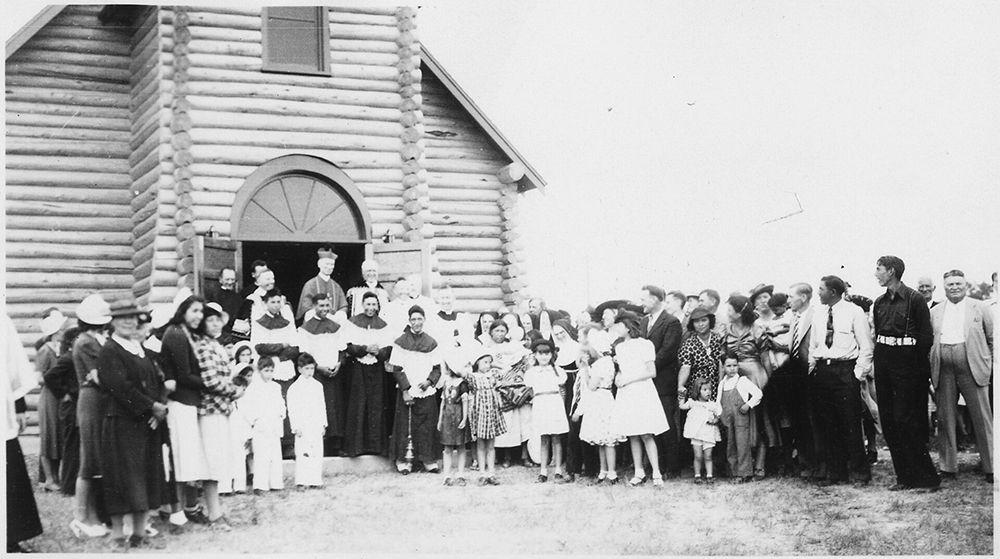
The United States did not introduce Christianity to tribal nations through persuasion alone. Beginning in the late 19th century, federal agents prohibited the Sundance and other Native ceremonies. The American Indian Religious Freedom Act did not make protection of traditional Native worship an official federal policy until 1978.
Churches were also deeply involved in the federal Indian boarding school system. A 2024 Interior Department investigation identified 417 federally supported boarding schools that operated between 1819 and 1969. Religious organizations ran 210 of them. Within these facilities, Native children were separated from their families, discouraged or forbidden from speaking their languages, and taught to reject their religions and cultures.
That history does not make Lucas personally responsible for schools she never ran, nor does it make theological disagreement equivalent to government coercion. But it explains why a non-Native pastor's call to abandon Arapaho ceremony cannot be heard at Wind River as theology in a historical vacuum.
Yellowbird recalled that people could be jailed for the practices Lucas now condemns. DJ Gardner, a 28-year-old former member of Foundations for Nations, grew up both reading the Bible and praying in sweat lodges. His grandfather survived an assimilationist boarding school. Gardner joined Lucas's church believing both sides of his religious life would be welcome, then left after hearing the controversial sermon.
Other relationships have frayed as well. Mary Rose Goggles once appreciated the church's children's activities and assistance while she was raising grandchildren. Jenea Mandan, an Arapaho traditionalist, relied on its summer camp when she was a single mother who needed affordable childcare. After the sermon, Mandan told the Associated Press she felt the church had taken advantage of her circumstances.
At Wind River, food, childcare and home repairs built the relationships that brought families into Lucas's church. For some former participants, the sermon changed how they understood those years of help.
Can You Be Christian and Arapaho?
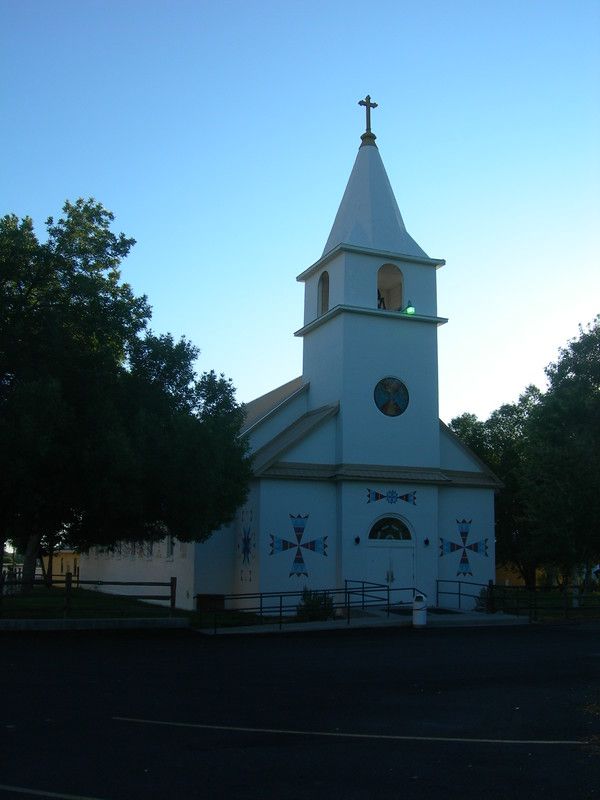
Wind River's answer has never been limited to a clean yes or no.
Catholic and Episcopal missions have operated on the reservation since the 1880s, and both have their own histories within the assimilation era. St. Stephens Indian School, still in operation, acknowledges that its early students were discouraged from speaking Arapaho or practicing their traditions. Today the school teaches Arapaho language, history and ceremony. At the nearby St. Stephens Catholic church, Arapaho designs fill the sanctuary, cedar may be burned and the altar and baptismal font resemble drums.
This approach is often called inculturation, meaning that a faith takes root in a local culture and is expressed through its language, art and customs. Christians who believe local practices compromise essential doctrine may reject the same adaptation as syncretism, or the blending of religions. Those terms describe the question now dividing Wind River's churches: how much of their cultural traditions may carry into Christian worship?
The answer also depends on who gets to decide. Generations of Native Christians at Wind River have interpreted and practiced Christianity for themselves rather than simply receiving it unchanged from missionaries. A similar dispute erupted in New Mexico in 2024 when an image of Jesus depicted as an Apache medicine man was removed from a Catholic mission, then restored after an outcry from parishioners.
Lucas made her own decision clear: she has said Christianity cannot be mixed with the Sundance, sweat lodges or prayer with sacred objects. Gardner eventually reached another conclusion, returning to the Catholic church of his childhood, where he can practice Christianity without leaving his Arapaho spirituality at the door.
Who Controls Ministry on Tribal Land?
The church sits within the Wind River Reservation, but the Lucases own its parcel as private “fee land” rather than land held in trust for the tribes. Such parcels are part of a checkerboard created when the federal government broke up collectively held reservation land and opened portions to non-Native ownership. The policy weakened the land base that makes tribal self-government possible.
The Northern Arapaho and Eastern Shoshone councils responded to the sermon by adopting rules requiring outside religious organizations to seek approval before operating on the reservation. The rules have already limited Foundations for Nations beyond its own parcel. The church suspended youth programs because it could no longer transport children across tribal land.
Lucas and her attorneys at Liberty Counsel argue that the tribes cannot banish a church from property it owns or punish a pastor for expressing a constitutionally protected Christian belief. That claim carries weight.
Across the country, conservative Christian groups have spent years arguing that government must protect believers whose teachings offend the surrounding culture. At Wind River, the shoe is on the other foot: Christianity is the outside faith asking a Native government to protect its right to denounce the community’s sacred practices. The reversal tests whether the national religious-freedom movement’s principles survive when Christians are the outsiders rather than the cultural majority.
Tribal governments are separate sovereign entities, not counties or states directly governed by every provision of the Bill of Rights. The Indian Civil Rights Act nevertheless prohibits tribes from restricting the free exercise of religion or abridging speech. How those protections can be enforced differs sharply from an ordinary First Amendment case.
The tribal claim begins with sovereignty. A tribe's power to govern its homeland means little if an outside ministry can enter, run programs for children, condemn the tribe's central ceremony, and then invoke federal law to place itself beyond tribal authority. The dispute resembles conflicts in which missionaries attempt to reach Indigenous communities that have chosen isolation, placing a missionary's call to preach against a people's right to protect its community.
Federal Indian law offers no simple answer. Tribes generally have broader civil power over nonmembers on tribal or trust land than on privately owned fee land. The Northern Arapaho council's August 31 decision recognized the Lucases' rights as private landowners and did not claim authority over otherwise lawful conduct on the church parcel that falls outside tribal jurisdiction. But the council denied Foundations for Nations permission to initiate or expand organized activities elsewhere within the tribe's jurisdiction. The unresolved questions concern the church's activity beyond its parcel and whether any enforcement will reach tribal or federal court.
The Lucases have also reported receiving death threats and threats to burn their church. Those allegations have not been independently substantiated in public reporting. The demonstrations documented by local and national journalists have been peaceful.
Tribal leaders have stressed that Arapaho Christians remain free to attend services at the church. “We don't ostracize any of our people,” Northern Arapaho Chairman Keenan Groesbeck said. Their demand is directed at the ministry and its leaders, not at Native Christians in the pews.
An Apology Without Agreement
The distinction between belief and delivery has shaped Lucas’s response. “Words matter, right? Delivery matters,” she told the Riverton Ranger, saying she felt repentant and was sorry her remarks had come across as mocking. But she immediately qualified that apology: God’s word, she said, remained unchanged, and she could not apologize for the faith to which she had given her life.
Organizer Nicole Wagon called the apology hollow, and said the weekly demonstrations would continue.
There may be no wording that resolves the deeper conflict. Lucas can apologize for mockery without affirming the Sundance. Tribal members can defend her right to be Christian without accepting that an outside church has an unlimited right to evangelize within their homeland. Each side believes yielding the central point would betray something sacred.
Gardner is trying to decide what his faith asks of him now. At his new Catholic church, he has been praying about forgiveness while holding onto the boundary that sent him away from Foundations for Nations.
“In order for me to strive to be like Jesus, I would have to forgive,” he said. “But there are some lines you just don't cross.”
Does religious freedom protect a church's right to call a tribe's sacred traditions demonic, even on the reservation where those traditions were once outlawed? Or does tribal sovereignty include the right to say: You are no longer welcome here?
70 comments
-
 Keith D
This article has given me pause to consider my own thoughts critical of, mostly, orthodox and post-orthodox Christianity. I wander somewhere in Gnosticism and go rather syncretic across many systems, including ceremonial magic.
This matter is a challenging matter, especially given the property issues and the adherents to the church.
I question her use of the word, 'idolatry.' 'Magic' would be more aligned, I think. I laugh a little about magic-averse religions that nevertheless have ceremonial magic flowing throughout the belief. Prayer, baptism, confirmation, services in general, with invocation, stand up, sit down, sing a hymn, chant after me, eucharist, benediction, and so on. It's all ceremonial magic, but usually so rote as to be powerless, almost a sacrilege.
I just think that church people often don't bother to comprehend much about what their faith is, how it works, where its power is centered.
Meh, that's rather aside. It seems to me that legally, the church has staying power. The people of the land can speak and recognize the dividing influence, and help their Christians syncretize even as the minister opposes it. And the ones willing to go Catholic have the option in a syncretic-friendly atmosphere.
If I have any awareness of the sun festival, I can see where soft people could be kinda horrified. But honestly, it's like an extra extreme version of self flagellation (but not for that purpose) and wearing a hair shirt. But if I 'intuit' correctly, the Natives aren't hating the flesh. They're showing devotion to its use to Spirit. To me, that's a lot more meaningful. ...even if I--a soft person--don't understand the means of expression. 😂
A person who has beliefs and has taken on a task of sharing that has to act, within rights, according to that--and it's necessary for her to stand her ground on what she teaches, but also properly to understand the thing she advises against. And yes, she can lose a lot of points if she's abrasive about it, even from within her rights.
But what hangs me up is that so many Christian beliefs seem to have nothing to do with the message of the alleged Jesus/Yeheshoah. Then again, what I'm seeing from the academics suggests that no one really has any idea what he taught or did. I tend to lean into the Gnostic gospels and writings. Why? They emphasize one thing very centrally: your spark of Divinity. ...and of course what that means for our relationship in Divinity.
-
 Amy Varela
The only ones who hear your prayers are the ones standing next to you while you pray out loud. If there was a being who was concerned about humanity, it would have let everyone know of its existence, not just a few crackpots over the millennia since before humans figured out how things actually work. The only reason - in my opinion of course - that people continue to hold onto the monotheistic religions is that they give men authority and women have to do what men say. It's really stupid that the god of these three religions inspire followers to kill everyone who doesn't believe the same way - I know, not all followers are psychotic. It's as if the god is too stupid to tell all of them the same message.
-
 Lorraine Kathleen Chapdelaine Dite La Riviere
My aunt, many years ago, was a nun with the St. Stephen's church. We visited the reservation in 1976, and were invited to their bonfire and pow-wow. As kids, my brother and I played with the kids that were there, while we stayed. It is one of my favorite memories. My aunt was honored by their tribe and giving a Native name by them. When I became an adult-after she left the Wind River reservation and went to an Alaskan reservation where she was also honored-we had a long conversation about Christianity invading Native People. I was very much against it. She said that her position was to teach those that were interested, but that she also learned their spirituality-that she never forced her religion on others. But, I know that not every religious leader believes in that and it disturbs me intensely, especially since I am pagan. That is my aunt's fault as she taught me the Native spirituality as she learned it! I still firmly believe that the Native People should not have to choose between their spirituality and Christianity.
-
 Joseph Grieco
The issue here is one of land "ownership" vs. Free Speech/Worship. At some point, a member of the Arapaho Nation sold a tract of his land to this person. It was his legal right to do so under both Arapaho law and the BIA regulations regarding land sales on assigned native lands. So, she has a deed filed in both the Tribal Council offices AND the local County government. Here she is, in the Church she built on land she bought from a member of the Arapaho, and what does she do? She denounces the spiritual practices of the Arapaho as "Demon Worship". For the last 200+ years, Tribal Leaderships of Recognized Native American Nations have been dealing with private land ownership on their assigned reservations lands, and trying to restrict their use. It would be interesting to see what the previous owner was paid for his "Fee" lands and what coerced him to sell. Now let's look at why it's likely located here. Scope of the Church Project - This would have required the purchase of a significant amount of land regardless of where it was located. If it was NOT on Reservation land, they would have had to go through all sorts of permitting for it. This would also mean they would have to get the county to waive the property taxes as a religious institution. That is a major legal fight alone. Putting it on Reservation land meant they needed neither the permits nor the tax abatements. Construction - Have any of you ever attempted to build anything larger than a house and for other than residential needs? You need all sorts of permits from the county, including water, sewer and utilities hookups. On tribal lands, if the Tribal Council balks, they go to the local Congressman and the BIA and suddenly they have permission to do whatever they want on the land. If she had built this off the tribal lands, she would have spent a lot more money to do so. So, she has effectively become the type of Squatter that makes all non-Native Americans look bad. She invited herself on to their lands with money, built something the Tribes didn't want, and proceeds to denounce her hosts. And unless the Tribal Council can bring her to court for some legitimate reason, there is nothing they can do about her or her ministry. And if they Young Bloods try anything, it will bring the BIA and FBI investigators down on them.
-
 Lisbeth Kieran Bushey
She was dead wrong. Ms. Lucas should be banned from tribal lands and the congregation should look for an Indigenous preacher who will respect their culture.
She is a racist and her beliefs are rooted in genocide (as cultural genocide is included in the legal definition of genocide). She wants to eliminate their cultural practices in favor of hers. She intends harm on the people of Wind River and shouldn’t be allowed near them, their kids, or their property anymore.
-
 Rev Ned
If, out all the religions in the world, only one is true. Then, logic dictates, that none are true.
-
 Rev. BH
Explain please, how that logic works. I don't follow. If only one religion is true, then it is true.
-
-
Rev. BH
Native Americans, those who were here long before the multitude of other nationalities and religions arrived, have long been subjected to racial cruelty, even today. The white colonists were the original immigrants. Maybe ICE should send them all back to Europe and return this country to its original occupiers. Just sayin'.
-
 Warren Calvin Wall
4 cases of fire water and a bonfire can solve this problem. They could even "count coup" and hang a few scalps to dry. Simple.
-
 Shawn L. Rhodes
I think that it is not up to us to Judge ones religious beliefs or tribe. That is God who is the ultimate judge.
-
 Rev. Miche'al Yosef Dixon
This Lucas woman is wrong on so many levels. FYI; Lucas is i assuming her married name but that would make her husband a biological Jew. This story hits personal as when I was a child I was exposed to multiple "religious" beliefs. Jewish, Baptist, Methodist, Catholic, Pentecost, and native American. My uncle Chief Ed Rainwater brought me and my brother and cousins to the Choctaw Reservation (Federal Prison camp he called it) to teach us our native American heritage and religious culture. I found that the Spirit Tent of the tribe was designed awful similar to the tent Moses had in the wilderness. The rites also followed Jewish rites i did every Fridays and Saturdays (Sabbath). The sweat lodge was in same area of tent as "The Holy of Holies" where only PRIEST go. Then as time passed I discovered "The Book Of Mormon" and learn the Native Americans are actually a lost tribe from Jerusalem fleeing the Babylonian conquest. And then it's discovered through DNA science that's true. And scrolls of the Dead sea scrolls support it. In the 1970s and '80s I was insulted and attacked on the Reservation because I was too white to be native, and hated because the Reservation was seen as a Prison as it was, now people come in telling them how to live. Jesus said if they don't want to hear it "wipe the dust from your feet" not attack like the Spanish "convert or die".
-
 Lester
One word:
OUT!
-
 ServantOfJudgement
If the village doesn't want the gospel, dust off the shoes and move on.
Watch in pure amusement when Islam comes. Lol, they won't need no stinking pipe no more.
-
 Chris
Chris
You appear to be missing a couple of points here. First, it's their land. The preacher may own the land the church is on, but it's inside tribal boundaries. The tribe doesn't need to move on. Second, you criticize Islam in advance of a potential invasion, yet Christianity has done the exact same thing all through history, including the history of the US. This woman now is trying to remove the very same pipe you seem to claim Islam would remove.
-
ServantOfJudgement
Chris, you're reading my message with your angry ideology.
Try reading from what I literally said.
If the village won't hear the Gospel, then he who's preaching it should move on and leave. That a proper biblical perspective I'm quoting.
I'm also quoting the Quran when I say they definitely WILL be throwing those old pipes in the landfill. When Islam comes all things not of Islam get destroyed.
-
Chris
Fair enough. I misunderstood your point about kicking dust. Regarding Islam, however, your statement is assuming we will be invaded by Islam. That seems rather fatalistic, not to mention unlikely. Given the number of extremist Christians in this country, I fear them more than Muslims.
-
-
-
-
 Bonita Morales Medlin
Coming from Sioux lineage and knowing the hell that ppl who called themselves "righteous" "christlike" "chosen",etc.. I had extremely difficult time with the trauma of the church you know and finding my path as a Medicine Woman .. People under the aspect of the church and I'm not saying all of them but a majority look at us as if we're less and it's funny because we can become one with every element that surrounds us and we don't have to be within 4 walls to do it..
-
 Brutus
Christianity: The popular belief that an invisible sky daddy sent a celestial Jewish baby who is also his own father, born from a virgin mother, died for three days so that he could ascend to heaven on a cloud and then make you live forever only if you symbolically eat his flesh, drink his blood, and telepathically tell him you accept him as your lord and master so he can remove an evil force from your spiritual being that is present in all humanity because an immoral woman made from a man's rib was hoodwinked by a talking reptile possessed by a malicious angel to secretly eat forbidden fruit from a magical tree. Sounds perfectly plausible..."
-
 P. Keith Benefiel
Brutal, Brutus. And on the mark.
-
ServantOfJudgement
Alternatively, there's another popular belief that Nothing, which can't be seen, heard or handled nor can be scientifically proven to exist because it's Nothing, created everything from itself which never has, does or will exist.
I can't help but smile and wink at people who believe this. Cute little kids'll think the darndest things.
-
 Truebluebethy
Perfect
-
 Pastor George Day
Brutus,
This is outright blasphemy against the Holy Ghost—you could end up like Lilith, Adam’s rebellious first wife, who took a dive to the ocean’s depths and reemerged as a demon with a flair for dramatic entrances!
-
-
 James C Clements
I agree with the native people because church itself is defined in many ways and we are not to judge it
-
 Lady Mutt Cat
There is little more disgusting than a missionary. The absolute evil of someone who tells others that their religion is wrong is unfathomable. I was born and raised in Hawai’i. I KNOW the evil that missionaries bring to indigenous populations. The expression in Hawai’i is that the missionaries came to do good and did well. Missionary families like Dole and Baldwin stole land and made fortunes while trying to convince the Kanaka Maoli that Jesus was a better choice than Tutu Pele.
-
Pastor George Day
Lady Mutt Cat
Aren’t you thankful they showed you the true God and rescued you from the devil’s fan club?
-
-
 Rev. B.D. Rees
It never ceases to amaze me, the amount of ignorance and bigotry so-called Christians have as those who are the believers in religions that condemn people because they dont practice their brand of faith.... They instead practice a pure and innocent faith in what they call "THE GREAT SPIRIT". Same God we all pray to, Same teachings as Christ taught, forgivness, compassion, and equality for each of us. This particular tribe practices their religion with smoke, dancing, and sweatlodges. The Christian practices their beliefs with a pulpit, a chalice filled with wine they call the blood of Christ and bread they call the body given up to the Cross for the forgiveness of sins. All of this around a central symbol of Christ on th Cross. Are these symbols to be abandoned because the American Indian doesn't recognize them in their religion, since this church is on tribal land? Mr. and Mrs. Lucas may indeed own this parcel of land yet, they have NO RIGHT to condemn the tribal religious practices that were instilled in this land thousands of years before Christ ever exsisted.
We must realize that WE as white europeans and their decendents are the guests on this land..... NOT THE OTHER WAY AROUND....We are the immigrants from across the sea.... No one has the right to shove their brand of religion down anyones throats.....
-
 Rev Rick
Who are we to judge another, the God I serve tells me not to boast about anything but through prayer and petition to bring my concerns or issues to him and he will guide me. Unless it was failed to be mentioned or I missed it, the pastor here gave testimony based upon what she thought was right or wrong. I saw no mention of going to God with it through prayer. I Believe Psalm 82 shows God addressing other Gods who are under his authority and of his own family. Scripture says do not put any other Gods before me or to create idols to worship. Unless they created their pipe as an idol to worship above the creator of all things I would suggest teaching their beliefs in their church and pray privately before judging or condemning what others do. We are to convince with the God’s word not condemn someone for cultural beliefs
-
 Merlin
Modern Christianity has been redefined as hypocrisy. Christianity began in Judea as a community of Jewish believers. In the Greek-speaking world, it developed an increasingly philosophical theological language. In the Roman Empire, it developed into a powerful institution. In Europe, it became deeply embedded in culture and civilization. In America, it entered a competitive religious marketplace in which faith, institutions, media, politics and commerce sometimes became intertwined.
-
 Rev Sean
Lucas is wrong in so many ways. Just the shear arrogance of some three-dimensional thinker presuming to speak for a multidimensional Creator is always wrong to me. And then to tell a tribe whose beliefs are older than christianity that you know how to pray better than they do is also stupid. If Lucas had even a modicum of understanding of Native religion, she would understand that the Sacred Pipe is as valid as any christian object to speak to the divine. The Pipe in and of itself is not the thing being prayed to, it focuses the prayers and sends them through the smoke to the Creator. The Sun Dance, which is an ancient ceremony is an enormous act of worship which few white folks would be able to handle. They would have trouble with the many days of fasting, going without water and endurance required. I agree that Lucas should pack up her ill-informed, arrogant self and leave. The First Nations People have been dishonored by ignorant people for too long.
-
Pastor George Day
Rev Sean
They choose to worship created beings rather than the Creator, and when they offer something in smoke, it is directed to demons. Read the letters of Paul in Scripture.
-
 Robert James Ruhnke
Get lost George. How dare you try to dictate other beliefs are. Paul was a misogynistic crackpot who only wanted to control the church. Nothing more.
-
Pastor George Day
Robert James Ruhnke
So, who’s wearing the crown of hate now? I was just tossing out some fun-sized facts.
-
Robert James Ruhnke
Still you, it will always be a Christian wearing that crown no matter how passionate or angry I seem. You’re tossing out racism and bigotry. You’re being patronizing and pedantic, like most right wing christians thinking they have a clue about the gods.
-
-
-
-
-
 John Richard Schlank
If this lady who is chastising people for practicing their own religion on their reservation, is a guest there and not a member of the tribes, the solution is simple. If I invite her into my house (not likely) and don't want her preaching her brand of religion, I tell her to stop or leave. Same with the lady on the reservation. She can practice her brand of religious control all she likes, just not on the reservation if that's the solution the leaders of the reservation choose. Freedom of religion and freedom from religion - same protections.
-
Pastor George Day
John Richard Schlank
Reservations are like VIP countries within the USA—they have their own rules and don’t follow the First Amendment playbook. Time for a crash course in civics, no textbooks required!
-
-
 Maximillian Martin
If just running them out doesn't work, then use the old ways and burn them out!!!! If the tribe says go, you go!!!! No questions!!!!!
-
 Gregory Jack Prickett
The comments of Lucas are no different than the beliefs of the whites in the 1890s that were the root cause of the Wounded Knee massacre and other atrocities, where 19 soldiers were award the Medal of Honor for killing unarmed Lakota Sioux, including women and children.
Second, SCOTUS has held that tribal governments have the authority to banish non-members from tribal land, which includes violations of tribal laws and social order. The later would include denigrating tribal ceremonies and traditions. The Wind River Reservation tribes have an absolute right to banish Lucas, and further have a right to prevent her organization from operating on reservation land.
-
 Howard Randall Bechler
To me, believing your way is the only acceptable one is pure arrogance. Do you really believe God cares what religion you follow? That would be self centered, selfish and egotistical. God is none of these. Give your version and if it is accepted, fine. If not, discuss it when you meet in heaven. In the spirit of Pele and Lono. And so it is.
-
 Ari Joseph Bertine
This depends entirely upon how the tribal government defines "freedom of religion". In any nation, there are forms of religious practice that are prohibited if they break existing laws of the land. Some examples are female circumcision, polygamous marriages, and denying health care to minors. Religions practicing within a nation are subject to the laws of that nation, and if the law defines the public denigration of someone's cultural practices as harassment or intimidation, then that practice will be prohibited. If not, then it will be allowed.
-
 William M Buzanoski
You are very much on point, well thought out! It is up to the tribe and it's tribal laws not up to someone from outside the tribe!
-
-
 Najah P Tamargo
Najah Tamargo-USA
Indigenous Peoples have survived all the hatred and genocidal acts committed against them BECAUSE of their belief systems. Their faiths have helped them endure. Leave them alone!!!
-
ServantOfJudgement
Especially their own. For 30,000 years after migration to America they raped murdered and pillaged themselves with slavery as a tender mercy. And they did indeed survive all that blood thirsty barbarism.
They can hand a chick preaching salvation easy enough.
-
Chris
I'm curious.... are you claiming that Christians are innocent of those things?
-
 Bond Wright
What does "hand a chick" mean?
-
ServantOfJudgement
Chris, no human tribe or kingdom is innocent of any crime. Most certainly, the immigrants who've been named Native American are definitely not innocent of crime against their fellow man. As Mr Tarmargo indicated, the natives endured 30k years of self abuse and genocide before Europe ever even showed up.
-
Chris
Then what was your point in bringing it up? Nobody is claiming they're innocent of any crime. If we're going to hold a people responsible for what they've done in the past, there would be no room for improvement. Europeans were just as guilty as self abuse and genocide. As you said, no human tribe or kingdom is innocent. But we all have the ability to advance. That has nothing to do with a preacher condemning Native traditions.
-
-
-
Pastor George Day
ServantOfJudgement
Exactly!... You can make a blind person see in Jesus' name, but you can’t convince someone who’s stubbornly perfecting the art of looking away!
-
-
-
 Roy S. Thorpe
More people have died in the name of Christianity than in all the wars combined! The problem is a large group of " Christians " believe that theirs is the only religion! When you use force to make people to follow your religion you are the sinner! ANY religious group doing that are sinners! God gave you forcers ears to listen! Gently listening without Bible thumping a good way to start! Understanding is part of God's way! I have won more people over by listening first!
-
 Marvin Glen Sault
Blessings to all in God's great universe. Prayers means to think. May we all think more as we all pray to God.
Little Bear; Pike Tribes Ohio River Valley
-
 Nicole Corrado
At my local churches in Tiotiakhe (Montreal) we often have Indigenous traditions inculturated into Christianity. It’s not idolatry and the majority of Indigenous people are monotheistic already.
-
 John Casillo
ALL RELIGION IS IN NURSERY SCHOOL....GOD MUST BE VERY SAD
-
-
 obere mchugh
i say kick out the church and all christianity from native land and let the tribes return to there ancestors and there ancestrial practices in peace.
-
ServantOfJudgement
So...if the Christians are native American you say kick the native Americans off the land of the native Americans...?
The brother said native Americans should kick native Americans out of their own land!
The liberal hive mind is no match for pure God given logic.
I think I'll have a cigarette after that one
-
 Reverend Paula Copp
Nonsensical logic, but that seems to be a common occurrence. Please have as many cigarettes as you want…
-
Joseph Grieco
Servant, look at the history of Christianity among the Native Peoples. They had our G_d forced down their throats with whiskey, bullets and lynching. They had their hair cut, their names and religions forbidden, and were forced into poverty living on the government's charity. Their children were kidnapped and brought to "schools" where they were beaten (often to death) if they tried to act like anything other than good little Episcopalians or Catholics (depending on the schools). For the past 200+ years we, as a nation, have tried to eradicate them. That they are still here speaks for the resilience of their spirits. That they are fighting back means they have found their voices. Nothing says someone cannot be an Arapaho and a Christian. Just like someone can be an Irishman and a Christian, or an Italian and a Christian, or a German and a Christian, or Japanese and a Christian, etc. The only people who the country has effectively denied that right to by law was the Native Americans. The Tribal Councils of the Arapaho and Shoshone want her and her ministry removed. They do not want all Christianity removed. They want to be able to continue their form of worship, and not be denounced by a religion that still practices what is effectively "ritual cannibalism" even though we substitute bread for the body of Χριστός. in our services.
-
-
-
 Father Frederick
It's pretty simple to answer. There are those who are good with their religion and beliefs, and then there are those who believe only their "church" is the true church, and all others must die because of their non-belief.
I'm talking the extreme, but let's be honest with each other. There are some who take their church feelings to a level which is militaristic at best. As someone who was raised in an urban setting with dozens of religions peppering a 12 mile radius, there was contentious language spoken.
Baptists told me I had to be "born again" otherwise I was damned. One group spoke of God as being Yahweh, which brought up angry discussions between the Jewish who took great disrespect to the definition. We had Catholics who said their religion was the true church of God, and everyone else was just pretending. And the topper to this, back in the 1950s and 1960 it was seldom heard that a couple was married coming from two separate religious background.
Much of this prejudices still remain, and dare I say that many Muslims look at others with contempt and anger, as do some other religions look at the Muslims in the same way. The problem in a nutshell is what I believe, may not be what you believe, but it's our actions which define the sin. Again, going back to my neighborhood, because we as kids grew up around each other, we knew of different practices and faiths, but we never let it get in our way. That was until 2001.
To me, there was a change, and it was more tribal, as well as where individual church elders may up rules on the fly to accommodate their personal opinions, while catering to some in their church who believed as they did. In fact, it was why I came to this organization to start my path, and eventually took classes outside of the The Monastery for credentials.
You see, a lot of people I knew were coming back from Gulf 1 and Gulf 2 with both physical and mental injuries. In some cases our churches ignored them as they were "the aggressors". The defining moment for me came when a priest refused to do a burial for a fellow I knew, because he committed the ultimate sin after being changed in the wars. I stepped in, and I hope he in the afterlife knows that while not perfect he was buried with honor. And for the family, it meant a lot to them. Yet the church stood-fast said they did the right thing.
Let me just say this in closing. Too many people make decisions contrary to God and Jesus. They do so for many reasons. To appease a congregation, or to send a message about their agenda. Some do it to show off their ignorance on social media. Still others do it to cover for their own sins or transgressions. Either way, it's not God's way. They are making up what they feel is comforting.
-
 Robert Hauck, MD, FAAP
Same old, same old story for many religions throughout human history. A bit of power, a bit of dominance leading to arrogance and authoritarianism. This pastor has forsaken the basic teachings of the founder of her religion, Jesus. How sad, when she could be the welcoming bridge between cultures and religions. Especially sad because her declared adversaries are Native Americans who have been abused for centuries.
-
 Dr. Zerpersande, NSC
First, talk to the tribe’s xtians and tell them they can believe as they wish. But get one of their own to lead the services. Kick the woman off the land.
-
Robert James Ruhnke
Let the tribes worship what gods they will. That lady should mind her own damn business.
-
 William C Bardoff
Amen,
-
Pastor George Day
Robert James Ruhnke
Let them deal with the spooky bill for dabbling in evil worship! Did you see what Pazuzu did to Regan in The Exorcist? Turns out, the real-life tale says it was actually a boy in St. Louis—plot twist worthy of a horror sequel!
-
Robert James Ruhnke
Shut your mouth, George. Their gods and spirits aren’t even evil. Unlike the abrahamic fire devil yall worship. Their gods and my gods are the same. Your murderous god is responsible for slavery, misogyny, homophobia, and racism.
-
Pastor George Day
Robert James Ruhnke
There you go with the classic cliché ranting—our God has stood the test of time, while your gods are merely grumpy fallen demons. Give them a proper dose of grace, and they’ll take off like startled pigeons, disappearing into the desert!
-
Robert James Ruhnke
George There you go with classic arrogant patronizing. Your god has only been around 2000 of the 300’000+ years humanity has been on this planet. It has only stood because your god is enforced by lies and violence. It is fading as humanity sees your pathetic excuse for a god for what it is. A scam built on blood and exploitation.
-
Pastor George Day
Robert James Ruhnke
Here comes the scientist crafting the tale that we’re all just monkeys in disguise!
-
-
-
-
-
-
 Bishop William Dusenberry, DD
There can never be religious freedom— as long as those responsible for raising a child(ren) are free to indoctrinate (aka, brainwash) their children into the same supernatural-based mythology which they were — religiously brainwashed kids, never experience religious freedom - and that’s that.
-
Rev. BH
WD, if not the parents, who would you choose to "brainwash" their kids?
-
 Rev. Deborah L. Halstead
Rev. BH ... Children do not need to be "brainwashed", just given the freedom to explore and decide what feels right for them. Using my Grandmother's words as she spoke them to me when I began to question the divergence between "turn the other cheek" and "hellfire & brimstone of a jealous God", she told me only three things were important: 1) Believe in "God" 2) Say your prayers every day 3) Go to "church", any church, which one doesn't matter. I believe in a Creator I pray with tobacco every day I attend ceremony (sweat lodge, sundance) whenever possible,
Wicked Jester (Tshirt company) said it succinctly, "You Tell Me I Sin "You Say I Am Going To Hell "When Your Judgement Condemns You "I Will See You There"
-
Rev. BH
Rev. Deborah, I appreciate the concept of letting the children choose their own path. But at what age do you start hauling kids from one of many churches to another? "Sit, listen, learn. Next week a different church. We've many to visit to help you choose." At 5 years old? Ten years old? Are they ready for this inundation? And what if the child who is "given the freedom to explore and decide what feels right for them" decides God is a myth and church/religion is irrelevant?
-
-
-

A wise man, [Roman Catholic] Archbishop Peter K Sarpong of Kumasi, Ghana, who I had the pleasure of meeting on a trip there during seminary, told us, regarding evangelization: If the indigenous people's method of reaching their highest power is through song, dance, beating of drums, and pouring libations on the earth, what better way to bring them into an environment that can invoke the Holy Spirit by introducing singing, dancing, beating drums, and pouring libations on the ground within the liturgy. There is nothing idolitrous aobut it. You gather more flies with honey than with vinegar, and by meeting them where they are and acknowledging the spiritual nature of the ritual, it allows you reach more people that chanting in Latin will. Many Christian customs and doctrines allow for the burning of incense, and almost all burn candles, so what is so special or evil about cedar? Especially if they are using a familiar ritual to summon the Grace of God?