

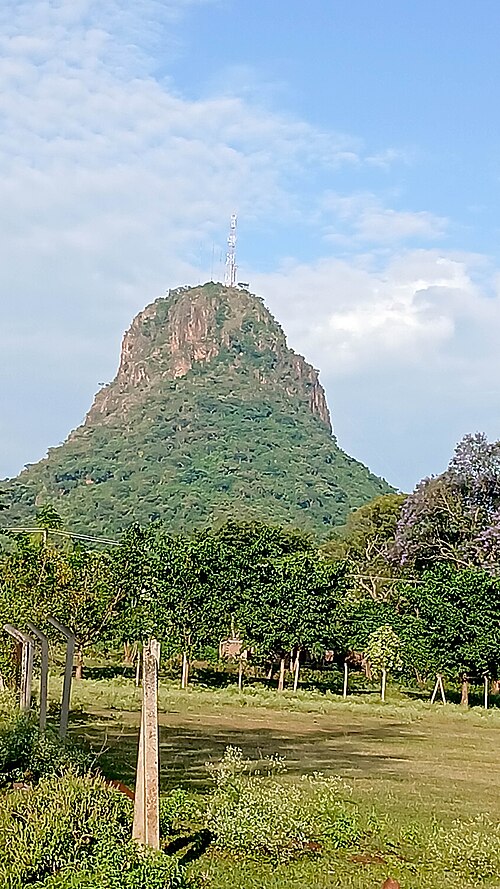
The farmers had paid David Nabutsilili to bring rain. They were furious when they got it.
Too much fell on their vegetable gardens in eastern Uganda, flooding the crops they had hoped the rain would save. The farmers chased Nabutsilili through the hills until he fell on a rock and broke his femur.
Sixteen years later, the rainmaker still feels pain in his leg.
“People beat us because sometimes the rain is too much, or there is no rain,” Nabutsilili told the Associated Press.
Rainmaking has always been risky work. Droughts and floods existed long before anyone spoke of climate change, and no religious ritual has ever been proven to make weather totally predictable. But across eastern Africa, climate change is making an already unpredictable relationship with rain even harder to read. Dry spells can stretch longer. Heavy downpours are expected to grow more intense. Rainy seasons themselves are changing.
Reading the Sky
Nabutsilili is one of several rainmakers in Namatsokha, a village in the hills of eastern Uganda. The Associated Press describes African rainmakers as spiritual leaders who perform rituals asking deities for rainfall, although practices and beliefs vary enormously from community to community.
Anthropologist Walter E.A. van Beek, who has studied rainmaking traditions across Africa, describes rituals in which communities explicitly ask God for rain. In one community he observed, a rainmaker sacrificed a rooster while calling out to “God in heaven.” Other traditions invoke ancestors or spirits believed to connect the community with the divine.
It is also a mistake to assume that ritual was historically divorced from practical knowledge of the weather.
Rainmakers and traditional forecasters often accumulated generations of close observation about the natural world around them. Across East Africa, researchers have documented people watching the direction of winds, the shape and color of clouds, nighttime temperatures, lightning, stars, flowering plants, insects, birds, and even the movement of frogs and ants for clues about coming rain.
Among the Nganyi people of western Kenya, that knowledge became useful enough that modern meteorologists decided to test it. Researchers compared forecasts made by traditional Nganyi forecasters with data from a nearby weather station and found considerable agreement. A subsequent climate project brought the two groups together to produce seasonal forecasts combining meteorological data with the Nganyi's local knowledge.
Religion and observation do not necessarily cancel one another out. The combination has deep historical precedent. Maya calendar specialists could predict eclipse windows while treating eclipses as religious events; Babylonian scholars likewise forecast lunar eclipses while performing rituals in response to them. Prediction did not make the events less sacred.
That history makes climate change especially disruptive to traditions built around the weather. A bird may migrate at a different time. A plant may flower earlier. Familiar winds may no longer reliably announce the same rains. Researchers studying traditional forecasting elsewhere in East Africa have already found communities reporting that old indicators are becoming harder to rely on as drought and climate variability intensify.
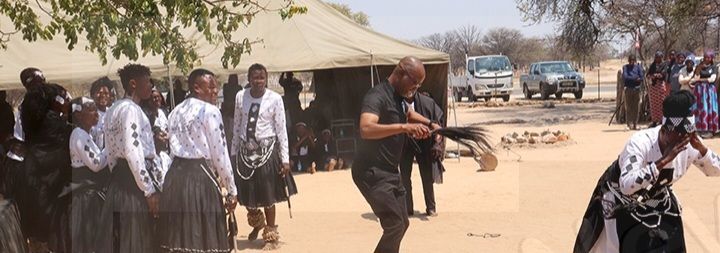
In Namatsokha, Nabutsilili and another rainmaker, Kilindon Simiyu, recently descended toward a waterfall, chewed herbs, and appeared to pray. The village had gone weeks without rain.
On that day, their prayer went unanswered.
“We are having difficulties because, sometimes when it is supposed to rain, it doesn't rain,” Simiyu said afterward. “So we use our powers to try and bring it, but it doesn't come as it used to come in those days.”
When Rainmakers Pay the Price
The Intergovernmental Panel on Climate Change has found that eastern Africa is already experiencing substantial rainfall variability. Its projections are not as simple as “everything gets drier.” Some parts of the region may actually receive more total rainfall. Heavy rainfall events are expected to become more intense, while parts of the region, including South Sudan, face increasing drought risk.
Sometimes, the danger can be fatal. Rainmakers among the Lopit have sometimes been blamed when drought persists, and in multiple documented cases they have been buried alive.
In 2024, rainmaker Solomon Oture fled the village of Lohobohobo after repeated dry seasons damaged his standing in the community. Men eventually brought him back. Witnesses said he was forced into a grave and buried alive.
He was not an isolated case. Al Jazeera found reports of at least five other rainmakers buried alive in the Lopit Mountains over the previous four decades. Another, Albino Lobillia, was reportedly abducted and buried alive this past June during a prolonged dry spell.
“There was no food, and animals began dying in large numbers because of the drought,” Lobillia's relative Madelina Tito told the AP.
Researchers studying the Lopit say rainmakers are believed to retain dangerous spiritual power after death. If one person delivers the fatal blow, the rainmaker's spirit may know who killed him and seek vengeance against that person or their descendants. Burying the person spreads responsibility across the community instead, sparing any one person from spiritual revenge.
One recent study of 24 recorded killings of Lopit rainmakers found that live burial was the most commonly documented method, used in nine cases.
Oture's killing allegedly also involved personal and political disputes, but the broader record shows that rainmakers can become targets when drought devastates a community.
What Happens When Prayer Fails?
Americans know something about that uncertainty too, even if religious leaders here rarely pay such a high price when the weather fails to cooperate.
By April 2011, drought and wildfires had become so severe that Texas Gov. Rick Perry issued an official proclamation setting aside three “Days of Prayer for Rain.”
“I urge Texans of all faiths and traditions to offer prayers,” the proclamation read, asking for “the healing of our land.”
Texans prayed. The drought got worse.
By early October, 97 percent of the state was experiencing extreme or "exceptional drought," the latter being most severe classification used by the U.S. Drought Monitor.
Texas climatologists ultimately ranked 2011 as the worst single year of drought in the state's recorded history.
Fifteen years later, American believers were still asking.
Just this past July, roughly 200 Christians gathered on a farm near Zeeland, Michigan, after a dry spring and summer. Five Christian Reformed congregations joined in a service asking God for rain.
This time, the rain arrived before the group had even begun to pray.
“You have shown your mercy to us in advance of our even asking,” Pastor Mark Neymeiyer claimed.
Nabutsilili has a simpler way of accounting for the times when the rain does not come.
“In life there are always things that fail,” he told the AP.
Religious traditions have always had to make sense of both apparent answers and apparent silence. Climate change makes the conditions surrounding those prayers increasingly unstable.
Not Just Rain. The Right Rain.
Prayers for rain have rarely been as simple as asking for water to fall from the sky.
The traditional Church of England prayer specifically asks God for “moderate rain and showers.” Jewish Tefillat Geshem, the Prayer for Rain recited on Shemini Atzeret, asks that rain come “for blessing and not for curse.”
A farmer needs enough rain to keep crops alive, but not so much that the fields flood. They also need it to arrive at the correct point in the growing season. A downpour after harvest cannot repair months of drought.
Nabutsilili knows that problem intimately. He was chased down that hill not because the rain failed to come, but because too much arrived.
With the consequences of climate change in the picture, the problem is no longer simply whether rain comes. It is when it comes, how much comes, how hard it falls, and what happens in between.
When Prayer Meets Adaptation
Some religious communities are already confronting the challenges of climate change by pairing prayer with attempts to change human behavior.
Last month, the Church of Jesus Christ of Latter-day Saints addressed continuing drought concerns and the declining Great Salt Lake by calling on Mormons to pray and fast for precipitation.
But prayer was only part of the response. The LDS Church has also started to advocate for water conservation efforts, including the use of more efficient irrigation techniques. It also donated tens of thousands of acre-feet of water to help refill the dying lake.
Utah's secular government has taken things even further.
The state now operates the largest remotely controlled ground-based cloud-seeding network in the United States. When suitable winter storms arrive, generators release particles of silver iodide into the atmosphere, giving supercooled water droplets something around which to freeze. Utah officials say that the cloud-seeding has increased precipitation by up to 15% in some areas. "Rainmaking" is beginning to look a whole lot different.
Humans have always tried to influence weather with whatever tools were available to them. Sometimes those tools have been prayers, sacrifices, rituals, or processions. Today they also include satellite forecasts, irrigation systems, and even complex machines releasing silver iodide into the sky.
But at what point does stewardship become an attempt to play God?
And perhaps more importantly, what happens when neither prayer nor technology can restore the climate people remember?
31 comments
-
 Leslie A. Hulberg Née Tomasura
I believe that weather follows a pattern, not seasonally like the patterns we see to determine the seasons. But patterns over the course of decades and millennium. I also believe that climate change, due to our global pollution affects those patterns. We are our own worst enemy. We must learn that the almighty finances are the catalyst of the cause. And we must learn to live better, cleaner lives or all will be lost. I believe once a decade we have a change in the fabric of the pattern and it lasts from 1-3yrs. Before righting itself and becoming a familiar pattern once again. I also believe that once in an age we have some catastrophic change that the earth does in an attempt to rid itself of the toxicity and renew itself without those who have done such damage. Think of it as a flea bath for the earth or the solar system. When it’s done, most of the fleas are dead and gone, those left behind will either die not long afterwards or will continue to bite the earth here and there but will not send it into a traumatic event with catastrophic consequences.
-
 Rev. Lindsay
It was terrible this man was hurt for praying for rain though most likely he had nothing to do with the rain that came because the word says God only answers prayers prayed in faith. In the bible and in the course of history no one has ever successfully prayed for rain except for Elijah and Samuel. The scriptures say that God sends the rain. When rain comes from cloud seeding may have some success when all the conditions are conducive for rain anyway. If this rain was from God this man prayed for then it would have been in the right measure because the word says every gift God gives us is good and perfect for our situation and this rain didn't come in perfect measure for their vegetables. God can't send rain in certain amounts for everyone and sprinkle a little here and an outpour there except through letting rain pass through favoring different areas he sees need it.
-
 Brian H. Miller
If you kill a so called "rain maker" for not making rain, you do not deserve the rain. Period!
-
 JaZe
JaZe
Perhaps some reasons are not being taken into account regarding climate, the core of the planet has been slowing down for a long time, its effects also take a long time to manifest since they have to come up from the very depths of the planet. Also, the solar system moves through different space fields in its 25,000 year journey around the galaxy center. Or it may just be mankind's cruelty saturating the soul of the planet.
-
 Ari Joseph Bertine
Anyone who is properly trained in the approach to magick knows that it is not something to be casual or unspecific about, and that it is never guaranteed to work. If one's reputation hinges upon appearing powerful or successful instead of teaching his community that they aren't guaranteed to get what they want and all that magick does is sway probability, that practitioner is setting himself up for disgruntled clients. However, I have to say that if you believe enough in a rainmaker's value to hire him in the first place, how stupid is it to kill him off just because it didn't work? Did these people never hear of practice? Or human empathy, for that matter. IMO anyone who would bury someone alive deserves a death curse.
-
 Patricia Sydney Solis
Carl Jung used the story of The Rainmaker for why the world won't rain There was a drought in a village in China. They sent for a rainmaker who was known to live in the farthest corner of the country, far away. Of course that would be so, because we never trust a prophet who lives in our region; he has to come from far away. The drought is not just a lack of water. It is a lack of soul. The village stands for our world that is parched by a civilization ruled by the head alone: intellect, control, analysis, force. What has gone missing is the feminine balance of the earth: moisture, feeling, the body, intuition. The world is out of balance because it has lost its soul. Nowhere is this clearer than in man himself. The lack of the anima—of soul—in man is the core issue. The anima is the feminine within a man, the living image of soul that gives him feeling, relatedness, tenderness, and connection to life itself. But masculine drive, cut off from her, suffocates its own humanity by denying the feminine, first in himself, then in women, then in the world. The woman a man fears most is the woman inside him, to paraphrase Jung. And so he wages war against her (his own soul.) This backlash of testosterone, this warrior culture of toxic masculinity, is a death sentence. It dries up everything it touches. The cattle die, the vegetation dies, the people suffer: this is what a world looks like when man has exiled the very thing that gives him life. Without the anima, man has drive but no soul, power but no feeling, conquest but no love. He becomes the drought. T.S. Eliot named it The Waste Land: a modern myth of desolation. "What the thunder said" spoke of drought and spiritual aridity, the same barrenness that haunted the Grail legend. In the myth of Percival and the Fisher King, the king was wounded in the thigh, the generative, life-force center of the body. A wound to the seat of creation, of sexuality, of vitality. And the consequence was not merely his personal suffering. The land itself turned to wasteland. Rivers dried. Fields fell fallow. The kingdom grew cold and silent. The wound in the man became the wound in the world. This is the pattern we forget at our peril: the outer condition mirrors the inner one. When the king's generative power is blocked, the earth stops raining. When the anima is denied, the world turns to dust. The rainmaker comes from a place still in Tao, a place of balance, where rain and sunshine, masculine and feminine, still flow together. Like the unconscious itself, he lives far from the ruling center. That is exactly why he can be trusted. And what does he do? Nothing. He asks only for a little hut and solitude. He doesn't fight the sky, engineer a solution, or seize control, the very moves that caused the drought. He withdraws and sets himself right. Because he knows the secret at the heart of this story: to heal the outer world, you must first come into balance yourself. When he is out of order, the world is out of order. When he returns to wholeness, the rain returns. Rain is the feminine pouring back into life—water, feeling, the body, the flow that the rational mind cannot command. The anima cannot be forced. She arrives on her own, once a man stops fighting her and makes room for her within. "We are now in Tao," he says. This is what Jung calls individuation: a psyche no longer ruled by intellect and dominance alone, but reunited with its feeling function, its intuition, its soul. Nothing is missing anymore. And since the rain was missing, now it rains. The message for our world is direct. Our collective drought will not be healed by more of the same head-dominated, warrior-minded problem-solving that created it. The anima gives man life and soul. Deny her, and everything dies. Welcome her home, and it rains. Balance starts within, and the world follows.
-
 Andrew Oster
I really enjoyed reading that, thanks for sharing.
-
Patricia Sydney Solis
You are very welcome! Thank YOU! The kingdom of God lies within!-- Jesus. Who looks outside dreams, who looks inside awakens.-- Carl Jung.
-
-
 Nathan Dillon O'Hara
Recently, I’ve been rereading Jean-Yves Leloup’s translations and commentaries on The Gospel of Mary Magdalene and The Gospel of Thomas.
In my opinion, Ms. Solis’s explanation of Jung’s concept of individuation fits beautifully with Yeshua’s teaching in these Gnostic gospels that we are called to become simple, whole, and fully human—the Anthropos. This includes recognizing, developing, and integrating the masculine and feminine principles within ourselves.
-
Patricia Sydney Solis
That's wonderful your readings. Yes, for sure, this resonates deeply. Gnosis is related to the Sanskrit jnana, the yoga of self-knowledge, and jnana yoga is the path of knowing one's true Self through direct inner experience, not borrowed belief. The word yoga itself means yoke—union—and ha-tha yoga is literally the union of sun and moon energies, the masculine and feminine within one body. What Jung calls individuation, the ancients were pointing to all along. So many are looking outside themselves, projecting their shadows onto others—and getting hooked unconsciously—demanding the world change while refusing to do their own inner work. Bodhidharma said to know one's own mind. The Oracle at Delphi says Know Thyself. Jesus says to pluck the mote from your own eye before attending to your brother's. Working on oneself rather than meddling in the business of others is precisely the task of individuation. And it protects you from falling prey to wolves in sheep's clothing—to demagogues and gurus claiming to possess the "truth" for you—rather than you taking responsibility for your own life by knowing and integrating your shadow and withdrawing outer projections. The rainmaker didn't preach to the village; he went into the hut and set himself right, and the rain followed. And Mary Magdalene holds all of this together. She is the beloved disciple who understood when the others did not. The Gospel of Philip says she was the companion of Jesus and that he used to kiss her often on the mouth, a clear reference to her unique intimacy with Yeshua, unlike any other disciple. The union of masculine and feminine in the bridal chamber is the very image of restored wholeness: two becoming one, the original unity regained. Her union with Christ is the inner hieros gamos, the sacred marriage: the feminine principle rejoined to the masculine, soul wedded to spirit. Without her, the circle stays broken. With her, the Anthropos—the whole and fully human being—becomes possible. The Church, however, became the original authoritarian censor. Only four gospels made it into the canon out of the dozens that circulated. Thee Gnostic texts (Thomas, Philip, Mary, Judas, Peter, and others) were buried until Nag Hammadi was rediscovered in 1945. What got suppressed tells us who held the power. And power is the great issue of the Sermon on the Mount: where there is power, there is domination—not partnership and true union, but imbalance.
-
-
-
 Roy S. Thorpe
I thought the political talk should be absent from the comments, but someone brought it up! A quick comparison between the antichrist description and Trump shows that indeed he fits very closely to the word for word!
-
 Patricia Ann Gross
I really don't know for sure, but recently I've been wondering if it was time to build another Ark (and I'm not talking about the Arch in DC). Then I remember God's promise given by the rainbow and I am encouraged that we will survive even this.
-
 ServantOfJudgement
Why can the most studied scientific phenomenon in the history of man still be a mystery? How is it that even today the thinking machines can't predict where it will rain and when? Even today the very best man or thinking machine can only see what it's doing in the west and roll the dice to guess what it will do in the east.
Billions of humans and millions of quadrillions of transistors simply do not nor can not know.
Why?
I'll tell you why. Ecclesiastes 1:6.
The wind follows circuits to where it will. Man can not know the choice of a thing when he will not realize that thing is choosing.
It's delightfully crazy and it's truth experienced by all humans is undeniable.
-
 Colleen McAllister
"That ye may be the children of your Father which is in heaven: for he maketh his sun to rise on the evil and on the good, and sendeth rain on the just and on the unjust."
Rainfall, indeed all weather, is random unless there is a lesson to impart.
-
 Rev. BH
SoJ. But if another 75 million voters went for Kamala (fact), then how did your god decide which block of voters' prayers to answer?
(Trump got 77 million votes - pretty close, I'd say,)
-
ServantOfJudgement
Rev BH, the Bible says God won't answer prayers of those who don't believe in him.
If the Bible is true and it's God is the real only God then that would answer your question. Most K voters don't believe in God. It's a huge gap. It's also possible that even though they may have prayed for KH to take the office, God might not have let them destroy themselves with more years of her without giving folks like me time to prepare for what's coming to the nation.
No matter what friend, I trust you see it's getting weird outside. Please take steps to at least be prepared for some kind of serious break in the supply chain and temporary power loss.
Exciting times!
-
Rev. BH
SoJ - "God in His grace and mercy, God can intervene in the lives of unbelievers in response to their prayers. For example, the people of Nineveh prayed that Nineveh might be spared (Jonah 3:5-10). God answered this prayer and did not destroy the city of Nineveh as He had threatened."
Yes its getting weird outside but Ms. Harris had nothing to do with it. The far-reaching war in Iran was caused by one man breaking an established treaty and plunging us into economic chaos. Does you god support trucebreakers? Do you?
-
ServantOfJudgement
Rev bh, good call on Nineveh, those guys turned from sin and towards God. They openly repented. That's how the prayer was heard.
Unfortunately, Nineveh eventually returned to sin and was destroyed hundreds of years later as prophecied in the Bible. It's ruins can be found in Iraq.
No, God doesn't support deception and I agree. What Trump is doing with iran is biblically unjustified even if the regime is evil. God will use evil people to punish evil people then punish the evil people he used for being evil. Cortez(spain) and the Aztec is a good example.
The USA and it's people match the biblical pattern of being under judgement. Even down to crap in the streets, drug use, kings who are so mindlessly feeble they can't utter a sentence and grown old men who act like children.
-
Rev. BH
SoJ, Nineveh "repenting" is like the evil man who has constantly abused and tormented his family until finally ending up in court sniveling how sorry he is. This is not repenting. Its hoping to con the jurors. And like your story, going back to being an abuser if he gets off.
The problem with annihilating Iran (as Trump keeps threatening) is 1.You destroy the evil regime and the millions of decent citizens (who parenthetically, had it better under the Shah who the U.S. helped overthrow) and 2. You start World War III.
-
-
-
-
-
 Bishop William Dusenberry, DD
In my (our) SHP denomination of the ULC, as a ULC minister I guarantee that 100 % of the prayers offered up to Nature (aka, God) will be answered— if those offering up the “right” prayer make certain that they do so. What type of prayer needs to be prayed? I’ll provide just one example. If your daily paper includes the time the Earth, will rotate away from our Sun — and the person prays that the Earth will rotate away from our Sun, at that precise time — such a prayer is guaranteed to be answered: ditto, the return of Haley’s comet, sometime in the next millennium. Ergo, it’s not the prayer; it’s how much the prayer knows about astrophysics and what’s predictable about our solar system, the Milky Way Galaxy, and the rest of the entirety of the Cosmos. If one knows enough stuff— their prayers (if based on astronomy and the right telescopes) will be accurate to the ent- degree.
-
 Merlin
Heavenly Father,
With grateful hearts, we thank You for the gift of rain already received.
Thank You for refreshing the earth, nourishing the soil, and renewing the plants, trees, fields, and all living things that depend upon Your provision.
May every drop remind us of the abundance and beauty of Your creation and of the blessings we too often take for granted.
Today we ask for nothing. We simply receive Your gift with gratitude and say:
Thank You, Lord, for the rain.
Amen.
-
 Sir Lionheart
Yes, Heavenly Father and we will do our best to forgive you for the devastating floods recently in Nepal with its heavy loss of life, and other meteorological catastrophes that the earth regularly receives. Try and do better, it would really help.
🦁 ❤️
-
-
 Father Frederick
I found this topic of interest, as what one person sees as a problem, another sees as a solution.
After starting the year with beastly heat, we've had an abundance of rain to the point where we may have to pray and ask God to turn off the spigot! Another storm rolled through, and my rain gauge shows .85" of rain. That was on top of the 2.11" several days ago.
At times I wonder if drought, flooding, snow, winds, are God's way of testing us. Last winter we received a total of 277" of snow, (which of course packs down much lower in depth), but following the epic snow and cold, we had a quick thaw and flooding. Remnants of winter hung in there until May. Flooding stopped in late May, and all was good again. Although we don't know what God will send is this winter, the locals say it will be another hard winter.
Which brings me to the point. All the way back to the time Jesus walked Earth, civilization has had to deal with feast or famine. Some took it as God's punishment for something when times were hard, an on the other side a good year of farming was God's approval for our society. And there are those scholars who point to events in history where the weather determined an outcome, which was thought to be God's intervention into battle, or protection from an enemy's conquest.
Personally, it's belief in how much the Almighty is responsible for. Take for example when I grew up in Ohio in the 1950s, we would Trick or Treat in cold temperatures, and three times we had snow on the ground when we wandered house to house. But since the 1970s, winter in northern Ohio never came until January. So, what changed? Was this God acting on prayers of relief from the cold and snow. And what did we do last winter (2025-2026) for God to send 277" of snow to Michigan's Upper Peninsula? Did we do something wrong, father?
Climate Change is sparked with debate, as is God smiting us with bad weather for punishment. For me, belief is one thing, but belief without evidence is suspect.
-
 Nicholas J Page
Rain dancers bringing rain i don't think so even weather forecasters can get it wrong So I don't believe rain dancers can produce rain sorry Rain dancers no offence.
-
Sir Lionheart
As mentioned in previous posts here, the efficacy of prayer has been studied since at least 1872, generally through experiments to determine whether prayer, or intercessory prayer, has a measurable effect on the health of the person for whom prayer is offered, with no discernible evidence whatsoever to show they are effective.
https://en.wikipedia.org/wiki/Efficacy_of_prayer
🦁 ❤️
-
ServantOfJudgement
Yet against all odds and outcomes the impossible happened. Prayers of millions upon millions were answered when President Trump was elected the first time. To show off, God answered with a Yes again in 2024, once Trump learned the dilly-o.
One must admit, the way everything played out these last 4 presidential election cycles was very unusual.
Prayer? Maybe. Funny? Absolutely!
-
Sir Lionheart
But did the impossible really happen? It was made easier by the Biden/Harris administrations policies, especially opening our borders, and championing men playing in women’s sports. The writing was on the wall as soon as they did that. It became a no-brainer by the electorate.
🦁 ❤️
-
 Douglas Robert Spindler
ServantOfJudgement what about all of the billions upon billons of prayers asking God to make sure Trump did not win the first time or the third? Why did God only answer those prayers for the second time he ran? Why is it God answered everyone’s prayers who wanted Biden elected and not Trump in 2020. If you were praying for Trump to be elected in 2020 God didn’t answer your prayer. Why was that?
-
ServantOfJudgement
I wish I could say directly what and how God thinks Douglas. Somehow both sides of the debate got the president they wanted. Seemingly punishing and rewarding each side simultaneously.
Let's admit, Trump's replacement will likely be a socialist Democrat(communist). The border will be back in business with a vengeance which would then punish Trump voters and the Next Guy's voters simultaneously without them realizing it.
Trump winning 2020 would have given us a different Trump than the one we see today. This one is extremely aggressive with his agenda.
Either way friend, me thinks a rough road is the norm from here on until we close the doors.
-
Douglas Robert Spindler
You think God must be man created if you think God has to think. Isn’t your God all knowing, like psychics? You make it sound like God likes to fuck with Christians. Giving them what they want, then taking it away and giving it back. Not a very nice thing to do.
-
-
-
-

At this point, we have averted the next scheduled ice age. Serendipity perhaps, of course balanced with the fact that it could get much hotter. We should take the necessary steps along with our prayers to keep our world habitable, and warm, if possible!