

Long before the United States had a refugee program, religious refuge was part of the American story.
Puritans crossed the Atlantic to escape restrictions on their faith. Quakers fled imprisonment and persecution in England. Catholics sought sanctuary in Maryland. In 1654, twenty-three Jewish refugees arrived in New Amsterdam after Portugal reconquered Dutch Brazil and brought the threat of the Inquisition with it. Pennsylvania and Rhode Island later became particularly important havens for religious dissenters.
The record was never as clean as the national mythology. Some Puritans who escaped persecution proceeded to persecute religious dissenters themselves: four Quakers were executed in Massachusetts between 1659 and 1661. America has spent much of its history arguing over just how widely its promise of religious liberty should extend.
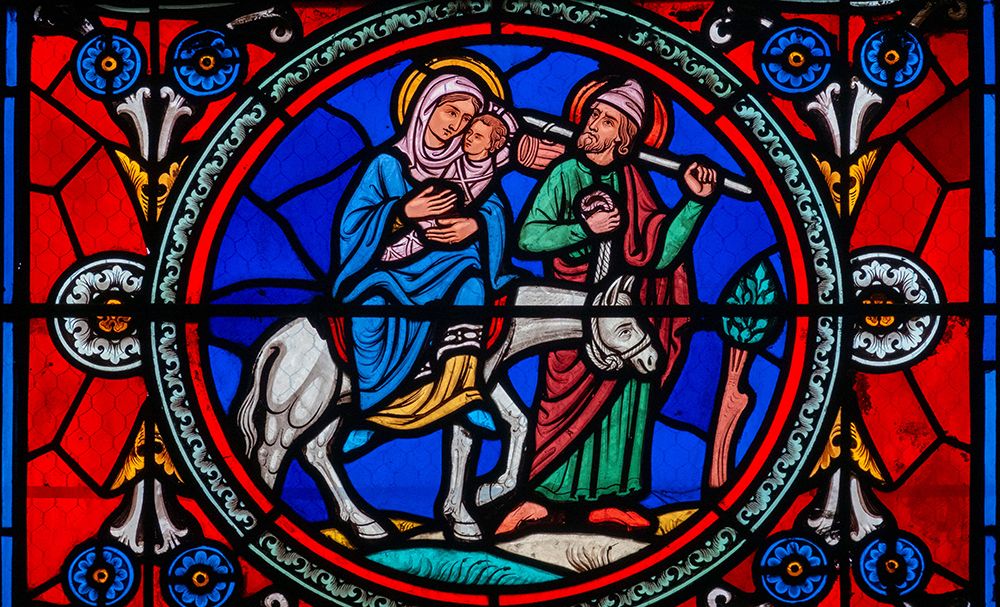
For Christians, the image is older still. Matthew’s account of Jesus’ childhood begins with Joseph taking Mary and her baby into Egypt to escape Herod’s violence. Jesus later made welcome of the outsider personal: “I was a stranger and you welcomed me” (Matthew 25:35).
Centuries later, that idea acquired an American symbol.
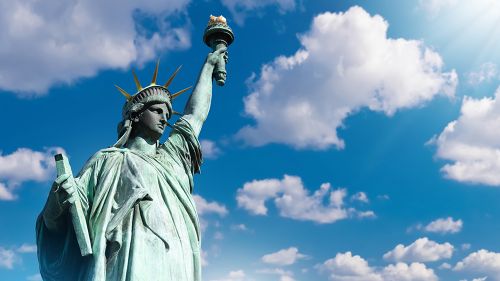
Emma Lazarus wrote “The New Colossus” in 1883 after working with Jewish refugees who had fled antisemitic violence in Russia. Her poem recast the Statue of Liberty as the “Mother of Exiles,” lifting her lamp beside a “golden door.” Those words were added to the statue’s pedestal in 1903 and helped transform a monument originally associated with liberty into a symbol of refuge and welcome.
Today, thousands fleeing religious persecution have filled out forms, found American sponsors, submitted to background checks and waited for years.
Then the legal pathway dissolved from beneath their feet.
What Happened to “Do It the Right Way”?
“Do it the right way” is one of the most familiar responses in America’s immigration debate.
Don’t cross the border illegally. Follow the rules. Get in line. Apply from abroad and wait your turn.
That is precisely what refugees applying through the U.S. Refugee Admissions Program were doing.
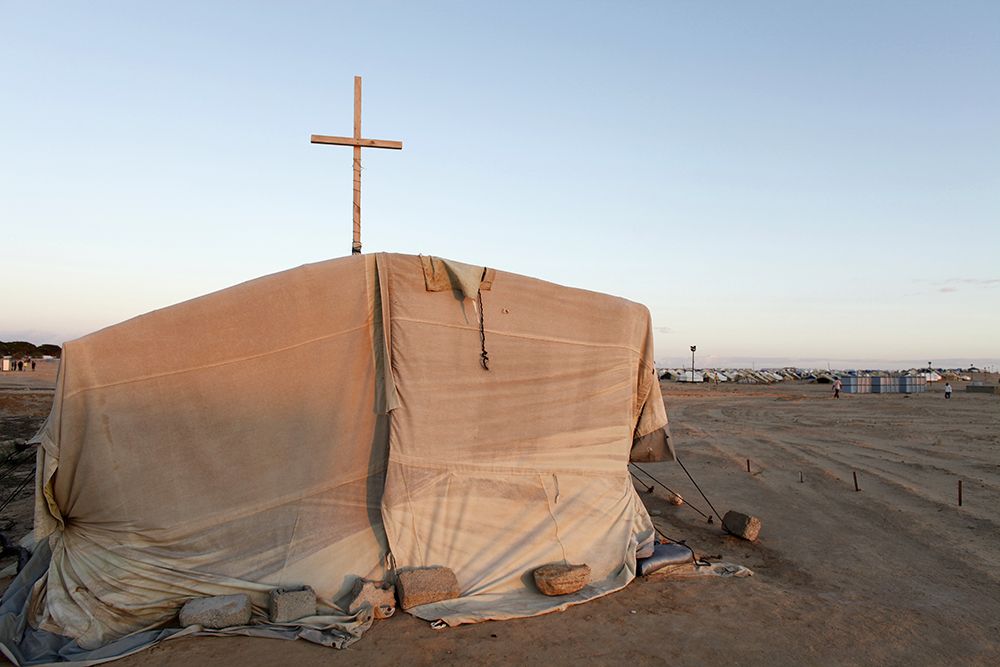
Refugee resettlement is different from illegally crossing the border, and it is also different from reaching the United States and requesting asylum. Refugee applicants generally seek protection while still overseas. The process has historically included interviews, biometric checks, security screening involving multiple federal agencies, medical examinations and sponsorship arrangements before the person ever boarded a plane.
On January 20, 2025, President Donald Trump signed an executive order essentially suspending all refugee admissions. He also directed the Department of Homeland Security to stop making decisions on refugee applications, except when the secretaries of State and Homeland Security jointly determined that admitting a particular person served the national interest and posed no threat.
Trump’s order offered a direct defense of the suspension: “The United States lacks the ability to absorb large numbers of migrants, and in particular, refugees, into its communities.” It cited pressure on public resources, safety, security and assimilation.
The Ninth Circuit Court of Appeals has since ruled that federal law gives the president broad authority to suspend refugee processing. The court also recorded the scale of the consequences: more than 128,000 people had already been conditionally approved for refugee status when Trump took office.
One Group Still Welcome
The refugee system did not stop functioning for absolutely everyone.
Less than three weeks after suspending the broader program, Trump signed another executive order directing federal agencies to prioritize Afrikaners, a predominantly white ethnic and linguistic community in South Africa, who the administration said faced racial discrimination.
Trump has described their situation in particularly stark language.
“It’s a genocide that’s taking place,” he said in May 2025.
The White House argues that South African laws disadvantage Afrikaners in employment, education, business and land ownership, and that violent rhetoric has contributed to attacks on white farmers. South African officials, independent researchers and some Afrikaner organizations dispute the claim that white South Africans face genocide.
What is clear is that the Trump administration made a different policy choice for this population.
Trump set the fiscal year 2026 refugee ceiling at 7,500, the lowest annual ceiling in the modern program’s history, and ordered that those places go primarily to Afrikaners. In May, he raised the ceiling to 17,500, with all 10,000 additional places allocated to Afrikaners.
Democratic lawmakers accused the administration of “prioritizing white-only Afrikaners and betraying everyone else.” The administration maintained that the admissions were justified by an unforeseen humanitarian emergency.
The comparison complicates the instruction to “wait your turn.” For most applicants, processing and admissions were suspended.
The question is no longer simply whether refugees followed the rules. It is why following those rules still produces a path for one group but not for others.
The "Golden Door" Closes
A new report from World Relief and Open Doors US, two Christian organizations that advocate for persecuted believers, concludes that fiscal year 2026 is on track to become the first year in at least a quarter century, and possibly in the history of the modern refugee program, in which the United States resettles no refugees fleeing religious persecution.
Because nearly every refugee admitted this year was South African, and the only three admitted from elsewhere were Afghans who did not belong to persecuted religious minorities, the organizations say it is reasonable to conclude that religious-persecution admissions were effectively halted.
The difference is particularly notable because Trump made religious persecution a formal resettlement priority during his first term and told persecuted believers that they had “a place in the United States of America.”
During his first term, the United States admitted more than 53,000 Christian refugees from countries where believers face severe persecution. In fiscal year 2026 of his second term, that figure fell to zero.
Now, Christian organizations are asking him to restore that pathway.
The Pastor Who Made It Through
Pastor Ara Torosian knows what that pathway once offered.
Torosian, a Christian, was arrested in Iran after bringing Bibles into the country. He eventually reached the United States as a refugee through the Lautenberg program, became a citizen and now leads a Farsi-speaking congregation at Cornerstone Church in Los Angeles.
“America did not ask me to stop being Iranian; it gave me the freedom to stop being afraid,” Torosian said when the new report was released.
Things look much different for him and his congregation today.
In June 2025, federal agents detained two Iranian Christian asylum seekers from Torosian’s church at their Los Angeles home. A woman suffered a panic attack and began convulsing as officers restrained her. The Department of Homeland Security said the couple had been flagged for national-security concerns.
Torosian began telling his congregants to remain home rather than attend church. Some, he said, were locking themselves inside. Watching masked officers restrain one of his church members left Torosian asking, “Am I on the streets of Los Angeles or the streets of Tehran?”
Those church members sought protection through the asylum system, a different legal process from the one Torosian used. That is part of his point. The Lautenberg refugee route he once used had become unavailable, leaving persecuted Iranians to search for other ways to reach safety.
Last year, Torosian challenged federal officials to “show me any legal way for Iranian refugees to enter this country.”
For many religious-minority applicants still overseas, no functioning refugee route has replaced the one that closed.
The Lautenberg Lifeline
The Lautenberg program began as a bipartisan response to a particular history of religious repression.
Congress first authorized it in 1989 at the urging of Senator Frank Lautenberg, a New Jersey Democrat and the son of Jewish immigrants. Its original purpose was to help Jews and other religious minorities escape the Soviet Union. Rather than asking every applicant to prove an individualized history of persecution, it recognized that members of designated groups already faced a documented pattern of religious repression.
In 2004, the Specter Amendment expanded those protections to Iranian religious minorities, including Christians, Jews, Baha’is, Zoroastrians and Sabean-Mandaeans.
Applicants still needed an eligible relative or sponsor in the United States. Iranian applicants had to provide documentation of their religious identity. They underwent government interviews, medical examinations and extensive security screening. Admission was never automatic.
Because the United States and Iran have no diplomatic relations, Iranian applicants were processed through a State Department-funded center in Vienna operated by HIAS, the Jewish refugee organization. Between 2001 and 2025, the center helped more than 33,000 Iranian religious minorities reach the United States.
The facility closed in early 2026 after the Trump administration terminated its federal funding. More than 14,000 Iranian religious-minority applicants were still in the pipeline.
What Happens to Them Now?
The current applicants are not sitting together in an Austrian refugee camp. According to Church World Service, they remain in Iran.
Many have American relatives or sponsors expecting them. Some have been waiting for years. Their files may contain religious documentation, family records and evidence already gathered for their cases.
HIAS no longer has access to those records and cannot provide individual case updates. It now directs applicants and their American relatives to contact the State Department or their representatives in Congress.
Congress continues to authorize the Lautenberg program, but under current executive policy it remains non-operational for these families. The Ninth Circuit has largely answered the question of presidential authority. The human question centered around the fate of these refugees remains:
They did it the right way. Now that the right way is closed, are the world's religious refugees simply on their own?
107 comments
-
 John Alex Paxson
As I read all these comments, I can honestly believe that we are becoming more divided than ever. We are supposed to learn by our mistakes, not dwell on them. Very sad indeed.
-
 Cam Kirmser
Wherever there is an immigration system, there will be people quite willing to game it - or simply ignore it - to get what they want. No system is going to prevent that entirely, but we need to mitigate that unfortunate reality as effectively as we can. People who deliberately bypass the immigration process are also bypassing whatever safeguards are built into that process, including identity verification, criminal background checks, and health screening. We simply don't know who is entering or what risks they may present.
My view is that we need to return to some form of quota system and be much more selective about who is permitted to enter the United States and for what reasons. Immigration policy should reflect what the country can reasonably absorb and what serves the nation's interests, rather than treating admission as something automatically owed to anyone who wants to come here.
Will that mean that some deserving people who sincerely want to come to the United States won't be able to? Probably. No system can accommodate everyone. But entry into the United States is NOT a right; it is a privilege. It is a privilege that we, as a nation, are empowered to grant or deny according to laws and policies that we have the authority to establish.
That process certainly can - and should - include provisions for genuine refugees: people actually fleeing persecution, war, or other circumstances that warrant refuge. But refugee status should be determined through standards established and enforced by the United States, rather than becoming a box someone merely checks or a claim that automatically guarantees entry. Ultimately, the United States must retain the authority to decide whom it admits, in what numbers, and under what circumstances.
-
 Michael Hunt
There already is a quota system that puts limits as to how many people from each country can immigrate to the US. It's part of the reason why illegal immigration happens.
-
Cam Kirmser
You're right, we do still have a quota system, so I was a bit sloppy in my comment; I had understood the quota system had been abolished, and should have checked it but didn't.
However, it's not the quota system we used to have that was nation-based. The current system still has a nation-based component, but it includes others. The full list is; • Family-sponsored preference immigration: 226,000 visas. This does not include all family immigration; for example, immediate relatives of U.S. citizens generally aren't subject to this numerical ceiling. • Employment-based immigration: the statutory worldwide level is at least 140,000, though the actual number available can be higher because of statutory carryover rules. • Per-country limit: ordinarily, no single country can receive more than 7% of the combined family-preference and employment-preference allocation. For FY2026 that works out to 25,620 under the State Department's calculation. • Diversity immigration: the law provides up to 55,000 annually, subject to statutory reductions; the FY2026 effective limit was approximately 52,000. These visas are allocated geographically, with additional country limitations.
My advocacy is to return to the Per-country quota only and strengthen the sponsorship rules.
The Employment system needs to be abolished, making those jobs available to Americans, rather than cheap foreign labor. And, Diversity immigration needs to be booted out without any further consideration.
But, still, as I said, any system can be abused or gamed and we need to do what we can to mitigate such things from happening. We need to seriously monitor who enters the US, ensure they comply with the rules governing that entry, deport illegals immediately upon finding them, abolish so-called "sanctuary cities," and come down on employers who hire illegals like a ton of bricks.
Further, we need to get control over what's become known as "birth tourism," and lock down just what constitutes a citizen, preventing this abuse of our system.
-
-
 Tami Tabone
You do realize that our current immigration system is unreasonably backed up? Most people trying to come here the right way simply give up. I recently heard the visas were backed up 14 years. How many people can wait that long when trying to flee horrible environment ? Back in 2014, i was working to get my fiance here from amother country. A year later the paperwork was still processing and it was costly. People in dire situations or coming from poorer countries find it impossible. It is not reasonable.
-
Cam Kirmser
Not my concern.
Immigrating to this country is a privilege, not a right. If one does not like the rules we have the authority to make, then one is free to not come here.
If they do not like conditions in their home country, they can take steps to change them, their economic status notwithstanding. Either that, or follow OUR rules in coming here.
-
Tami Tabone
It is not so easy to make changes for better safer conditions when your government is corrupt, as we are learning here. This mindset is divine in any way. And i am very vocal for change. I believe in sound borders, but i believe in easier paths to citizenship for those who want to come here and work hard. We are not lacking in jobs, in fact many places are understaffed and there are jobs that Americans just dont wsnt to do. I surely bet there are immigrants who would be happy to work hard and fill those vacancies. I don't understand this hate against other humsn beings, especially from people who consider themselves Christian. I psy taxes, so i will speak out for positive change.
-
Cam Kirmser
"I don't understand this hate against other humsn beings"
Perhaps because there isn't any. If there were, LEGAL means of entering the US would not be available.
What is "hated" is the crime of entering illegally. So, maybe you need to clean up your accusations.
The conditions in another country are not our concern, unless they affect our interests. So, if these people aren't willing to affect change in their own nation, fine, let them get in line and LEGALLY emigrate here. Successfully overcome the hurdles, then come here and ASSIMILATE. This is a melting pot, not a tossed salad.
Jobs in this nation are for citizens or those here LEGALLY, only. The only place for someone here ILLEGALLY is a jail cell, until deported.
Follow the LAW. As Jesus said, "Render unto Caesar that which is Caesar's."
-
Tami Tabone
Carl Kurmser: "Perhaps because there isn't any. If there were, LEGAL means of entering the US would not be available."
Are you serious! I see hate against immigrants daily. On social media. And on this thread even. Calling people names. Telling thrm to go back to their country. Saying they should be "killed". Horrible things even against the children.
And people who are citizens are being profiled.
And many Americans think immigrants should be beaten and treated inhumanely by ICE agents who feel they are above the law.
I think you need to talk to some immigrants. They will set you straight.
It us so hard for me to see the comments from folks who call themselves Christian.
-
-
-
-
-
-
 Clarence Sherman Scott
The Constitution restricted the possibility of a state approved religion, but never guaranteed religious freedom, though it was always implied. I believe that a Constitutional amendment is called for to ensure that the implication becomes fact.
-
 Steven Ferrell
Islam is not coming to America to be Americans, they are solely coming to take over and dominate and force islam and their law on all the world.
A simple study of islam will show that. If they would respect other religions and be willing to to live their life, while honoring all other religions to do the same, it would not be a problem.-
Michael Hunt
I've lived around plenty of Muslims and Muslim communities and not a single person I met was disrespectful of other religions or cultures.
-
 Robert James Ruhnke
Christians did it first and now yall are scared of karma? I might just be a new convert to Islam. The karmic debt Christian’s have unleashed on themselves is oceans of their own blood.
-
 Lisbeth Kieran Bushey
That is profoundly untrue and is hate speech, Steven.
-
 Sir Lionheart
Thank you for your opinion. From what I’ve seen about their ideology, Steven seems have a pretty good understanding of their goals for humanity. I’m sorry you seem to be out of the loop on what they think of females.
https://www.instagram.com/reel/DdfJEcbAlog/?stkn=MXRiM28zNmZtcDRheQ==
🦁 ❤️
-
-
Tami Tabone
I would like to know the studies you are referring to or where you are obtaining your data that proves Muslims are trying to dominate America. In fact, what you are accusing Muslims of, is exactly what many Christians are doing in America. Religion and politics do not mix, no matter the religion. Keep it separate. And be kind to those who have a different belief or no belief. You might find that they respond to you more respectfully if you do same. You get what you give.
-
-
 Rev. Kev
Whoa. Reading the current comments and -- with the exception of a few -- it looks like someone opened the "hate and violence" valve all the way. Stereotyping, xenophobia, religious and cultural superiority. Perhaps a smattering of racism?
-
Tami Tabone
Yes. Very sad that this is mindset of folks supposedly on a divine path.
-
-
 Ari Joseph Bertine
The simple answer is yes, they are on their own now. America is no longer a welcoming land, and no longer values the method of her foundation. That beautiful poem should be taken off of the Statue and placed in a museum. It was too lofty an ideal for this country's spoiled, ungrateful elitists to tolerate.
-
 Douglas Robert Spindler
What are you talking about? America has always legal immigrants.
-
Sir Lionheart
Not true, USA has always welcomed “legal” immigrants. I was one of them. I passed all of the requirements to be here. Those that broke our immigration laws to be here need to be retained and returned to where they came from. That’s why we have immigration laws.
🦁 ❤️
-
 Rev Austin
I've found that people with your particular set of beliefs sometimes struggle with reading comprehension, but I would strongly encourage you to review this article again. You will clearly see that there is no longer a legal pathway for religious refugees to enter the US.
Perhaps you could try to explain to us why it was so vitally important for Trump to protect that pathway and those people 4 years ago but now it's vitally important to leave them to suffer? Based on your other comments it's pretty obvious that you have a major crush on the guy, but at some point you've gotta drop the lovesickness long enough to at least see the glaring contradictions here...
🤭😚
-
Sir Lionheart
I don’t think any of my previous replies on the laws of immigration implies I have a “crush” on President Trump.
You’re correct that there is a significant difference between Trump’s first-term refugee policy and his current policy. During his first term, the administration did make religious persecution a basis for refugee resettlement, and the State Department’s own records show that the U.S. admitted refugees fleeing religious persecution.
In 2025, however, Trump suspended the broader refugee program while creating exceptions and subsequently directing the administration to prioritize Afrikaner refugees from South Africa.
Whether that change is justified is a policy question on which reasonable people can disagree. But I don’t think it’s accurate to turn my support for particular immigration policies into an assumption that I have to defend every immigration decision President Trump has ever made.
I’m perfectly capable of saying, “I supported that policy then, and I don’t support this particular policy now,” if that’s where the evidence leads. Supporting a politician isn’t an all-or-nothing proposition.
The article’s comparison between religious-persecution refugees and Afrikaners is partly an interpretation of the consequences of the policy, rather than proof by itself that the administration’s motive was racial or anti-religious. The documented policy choices are one thing; the explanation for why those choices were made is another. The administration has stated national-security, humanitarian, and foreign-policy rationales.
Respectfully, I do hope my reply meets your literary requirements, Austin.
🦁 ❤️
-
 Patricia Ann Gross
Sir LH,
So, now are you saying that there is an immigration policy that you suddenly do not agree with, and it has to do with those escaping religious persecution? You were okay with eliminating certain work VISAs and ICE agents hanging out at facilities where immigrants were going to scheduled hearings, so why would you now have a soft spot for people you call someone "deranged" and "mentally ill" for believing in a higher power? Especially when you don't believe in one.
-
Sir Lionheart
Yes, perhaps I have been too strong in my verbiage of those that believe in supernatural events and deities without factual evidence, but those that do are certainly delusional. Wouldn’t you agree that Mormons, and Islamists et al are delusional in their beliefs? That is how I see anyone that can believe in something without real hard demonstrable evidence to support their claims.
Thank you for addressing it.
🦁 ❤️
-
Patricia Ann Gross
Thank you for your clarification on something I already stated. It was an interesting way to NOT answer my question.
-
Sir Lionheart
I agree with all immigration policies that have been approved by our government. Can Policies and Procedures be improved? Yes of course they can.
Did that answer your question?
🦁 ❤️
-
Patricia Ann Gross
Sir LH,
So, you do agree that prioritizing Afrikaner Aparthied members over other religious persecution is okay. You stated that it was a policy decision so that can be argued, so I wanted to know which side you fell on. Thank you for clearing that up. It explains a lot.
-
Sir Lionheart
I think that question needs a little clarification. The issue isn’t really “prioritizing Afrikaners over religious persecution,” because the Afrikaner policy is based on alleged racial/ethnic persecution, not religious persecution.
What is undisputed is that the Trump administration suspended the broader refugee program in January 2025, then created a special pathway for Afrikaners whom it said were victims of racial discrimination.
The FY2026 refugee ceiling was initially set at 7,500, primarily for Afrikaners, and was subsequently increased to 17,500, with the additional 10,000 places specifically allocated to Afrikaners.
The more substantive question is whether the circumstances facing Afrikaners justify giving them that exceptional priority while refugees fleeing other forms of persecution remain largely excluded. The administration says they do; South African officials and some independent observers dispute the severity of the persecution claims, particularly the characterization of the situation as “genocide.”
So I don’t think the issue can fairly be reduced to “white people were chosen over religious minorities.” There are several separate questions here: the overall reduction in refugee admissions, the special Afrikaner pathway, and whether the evidence justifies treating their circumstances as an exceptional humanitarian emergency.
🦁 ❤️
-
Patricia Ann Gross
Sir LH,
Puh-tay-toe, Puh-taw-toe, if it looks and quacks like a duck... does that mean it's a goose? I take it you approve, even with the added 10,000. Sorry, but their "exceptional" humanitarian emergency doesn't trump everyone else's. Oooops, but it just did. My pun for the day. Does their $5 million grant them the ability to bypass any background and health screenings? Or was that a different bribe-program to fast-track citizenship for an "elite" class.
-
Sir Lionheart
I understand the $5 million reference, you’re referring to Trump’s proposed “Gold Card” program. If so, that’s a completely separate immigration program from the Afrikaner refugee program.
Trump originally proposed a $5 million “Gold Card” for wealthy foreigners as a route toward permanent residency/citizenship. The subsequent executive order establishing the program set the required gift at $1 million for an individual, or $2 million when a corporation makes the gift on the individual’s behalf. It also explicitly says the program must operate consistent with law and public-safety and national-security requirements.
So I wouldn’t combine that with the Afrikaner refugee issue as though Afrikaners were paying $5 million to bypass refugee screening. They weren’t. The refugee determination specifically says Afrikaner admissions remain subject to the administration’s “most stringent identification verification” requirements.
There is a legitimate discussion to have about whether Afrikaners should have received an exceptional allocation while the broader refugee program was severely restricted. The administration explicitly made that choice: the FY2026 ceiling was initially 7,500, primarily allocated to Afrikaners and other victims of discrimination, and the May 2026 determination increased it to 17,500, with the additional 10,000 places allocated to Afrikaners.
https://www.presidency.ucsb.edu/documents/emergency-presidential-determination-refugee-admissions-for-fiscal-year-2026
And there were unusual differences in how the Afrikaner cases were processed. Reporting indicates that the normal UNHCR referral process wasn’t used and that some applicants were processed much faster than is customary. But that’s different from saying they were admitted without background or security screening; the administration said the screening standards remained in place.
🦁 ❤️
-
Patricia Ann Gross
I've got a waterfall in Arizona I would like to sell you. Are you interested?
-
Sir Lionheart
Can you demonstrably prove with any factual evidence that you actually have a waterfall in Arizona to sell? Is it something Biden sold you that you have never seen and you need to get your money back? I’m just asking for another Democrat that has been sold the same set of goods.
There appears to be a great amount of gullibility among Democrats that believed Biden was totally normal, and a great President, with all his faculties, so I really am not surprised that you honestly believe you have a waterfall to sell in Arizona, but thank you anyway, Patricia.
🦁❤️
-
Patricia Ann Gross
Sir LH,
Trump promised me I could have it when I bought one of his $250 bills. I'm still waiting for the deed to show up in the mail though. Thank you for your attention to this matter.
I find it hilarious that you continually put down Biden, even call him "not normal." Trump has dozed off in more meetings than Biden slept through the night during his term, and no, I don't have any numbers or "demonstrable proof" of that claim. I just go by what I have seen. You don't have any proof that it's not true either.
-
 Pastor George Day
Patricia, please. Calling Biden an “abortionist” doesn’t make it true—it just makes the accusation louder. 😂
You’re entitled to praise Trump as a “man of God,” but that’s your personal belief, not an established fact. Support your candidate all you want, but facts still matter.
Strong opinions are fine. Making things up to score political points is not.
-
Patricia Ann Gross
Pastor Day,
Please show me where I said any of those things, because I did not. Praise is not a thing I would give Trump, and I never said anything derogotory about Biden. If you misread my previous post, I was giving Sir Lionheart back some of the same stuff he is always giving us. These boxes do not contain a satire/sarcasm font (which is seriously needed sometimes).
-
Pastor George Day
Patricia Ann Gross
You’re absolutely right, and I apologize.
Somehow, I got that idea stuck in my head while listening to the posts in audio mode and multitasking.
I tried to delete it, but it didn’t work—it must have slipped past the moderators.
Apologies.
-
-
-
-
-
-
-
 DeniseJG
some of the comments above shock me to the core!
-
Tami Tabone
100% agree
-
-
 Clara Ries
I have Muslim friends, have attended Mosque events. I have never had any issue.
They do have a reason to be angry with all of the hatred and racism being thrown at them. Neither Iraq or Iran bombed us, we attacked them (Saudi Arabia was behind 9/11 and we sell them weapons). We have to build bridges, not barriers.
I am transgender and I understand how it affects someone when you become a punching bag for political benefit. There has been 835 bills in 43 states introduced against me. Yet, we make up 1% or less of the population and are not a threat to anyone.
All of these stories are artificial. They are created to support white christian nationalism, patriarchy, unfettered capitalism, white supremacy, and colonialism.
-
Tami Tabone
I agree. It seems to me that many of the claims by Christians against Muslims in this thread are exactly what they are doing.
I have often been attacked by Christians stating my beliefs in God are going to lead me to hell. I thought God is supposed to decide that. Not humans. They are so concerned about trying to convert people that they disrespect and insult what others hold sacred. How this is rationalized to be divine, I will never know. Not all Christians do this. To me it seems so far from the intent of religion that it doesn't even make sense to me.
-
Pastor George Day
Clara Ries
I completely agree.
What are your thoughts on the rise of antisemitism and the Queers for Palestine movement?
It is important to remember that LGBT individuals in Palestine face severe persecution, including being subjected to extreme violence such as being thrown from rooftops.
-
-
 James Riggle-Johnson
White South Africans are supposedly being killed by the thousands, yet there is no proof. I cannot believe a word that comes from this Administration. Actually, that’s not true. I cannot believe a word that comes from any politician these days. They all lie, bend the truth, and create horror stories to scare people into voting for them.
Millions of people out there suffer religious persecution, and our country used to do something about that. I’m not speaking about open borders either. I’m talking about the people who were doing this the right way.
When will the United States of America get back to being the shining example of democracy in the world? Ending programs that let people enter the country legally was short-sighted and is causing irreparable harm.
-
 PKBW
PKBW
That's the problem America gets itself into, sticking their nose into other countries business. Leave them alone. It has nothing to do with us. STOP BRINGING PEOPLE TO THIS COUNTRY because we feel sorry for them. They do what they do and have been doing. Stay out of it. What country cares what we do in this country? Right none of them. Muslims have NO RIGHT HERE.
-
Tami Tabone
Part of this country was founded on freedom of religion. The mindset of hating on others is part of the problem in this world. Christians have a brutal history. The extreme religious zealots are dangerous no matter the religion. They twist the faith to meet their own agenda, when the basis of religion is to love thy neighbor as yourself. Do unto others.
-
Patricia Ann Gross
PKBW,
Do you know any Muslims? Have you ever gotten to know one? You might try it sometime. If a Muslim wants to get to know you, and you have any respect for their religion, you will find that the great majority of those living in this country are peaceful, hard-working individuals who are trying to make their lives better for themselves, just like the rest of us. Most of them are actually citizens of this country who immigrated legally or were born here and have a right, just like all immigrants do, to practice their religion. To paint everyone with the same brushstroke as the extreme fringe factions that have done dispicable acts is just like those that paint all Christians as those who are the Christian Nationalists, which is ten times worse.
-
 Brian Hand
Lies
-
Michael Hunt
Sorry you can't handle the truth, Mr. Hand.
-
-
Pastor George Day
Patricia Ann Gross
I respect Muslims who don't follow the Koran, and I reject the false prophet of the Apocalypse!
-
-
Robert James Ruhnke
Let’s stop bombing their homes so they can have a home to go to, PKBW
-
James Riggle-Johnson
And that's part of the problem. There are Muslim Americans, you know. Citizens of the United States and they belong here just like you do.
-
Brian Hand
But if they don’t assimilate & pledge allegiance to the United States as they are required to do…(they all lie about it) they need to be removed, permanently. If they are here to take over, extermination is in order.
-
James Riggle-Johnson
I cannot believe you just said that. "Extermination is in order." What kind of minister are you, Brian.
-
Michael Hunt
"But if they don’t assimilate & pledge allegiance to the United States as they are required to do…(they all lie about it) they need to be removed, permanently."
That's by no means a requirement of immigrating to the United States or something they are required to do, first of all, and to claim without evidence that all Muslims lie about pledging allegiance to the United States. You realize their are Muslims serving our country in the military, right? Your Islamophobia is gross.
-
Lisbeth Kieran Bushey
“Extermination is in order”‽ Whatever is wrong in your life that you think that’s acceptable? It’s NEVER ACCEPTABLE to call for extermination of a human being.
Where is the moderation on this website and why is there no option to report comments like this that call for violence against human beings‽
-
Pastor George Day
Lisbeth Kieran Bushey
It appears that some new moderators may not be fulfilling their responsibilities effectively. I attempted to delete one of my posts, but the action was not completed.
-
-
Pastor George Day
Brian Hand
Bin Laden was an American citizen, wasn’t he?
-
-
Pastor George Day
James Riggle-Johnson
Just like the devil has set roots in the church!
-
-
Douglas Robert Spindler
And let’s do the same for the Christians.
-
-
-
 James Richard Munro
The Muslim people are the same people that demand your respect, but don't seem willing to respect your religion. I'm sure there are exceptions, There Just getting harder to find. Jim M
-
Tami Tabone
I wonder if that is because the reason you state that you don't like Muslims is the same reason that they don't respect Christians. Many Christians attack other religions. Condemn what others hold sacred and openly tell them they are going to hell and follow Satan. It is a reason I am no longer religious. People who claim religion often spew hate. And I don't morally support that.
-
PKBW
Exactly. Remember what they do and stand for. They hate Christianity and what it stands for. They are coming here to suffocate Christianity out. They want to rule us. Get rid of them.
-
 Rev'd Andrew
Do you say the same about Jews?
-
Tami Tabone
And what are Christians doing? Same. I have heard so many Christians complaining about Muslims, yet they are doing the same darn thing. I am no longer following a religious path and one reason is because I do not want to associate myself with groups that spew hate, blame, speak of fire and brimstone, and arrogance. I see cruelty coming from a place where kindness is supposed to be the basis. You get what you give. Remember that.
-
-
-
-
 Stacey Owens
Christ has truly set us free. Now make sure that you stay free, and don’t get tied up again in slavery to the law. We must be doers of the Word and not hearers only. We must stay faithful to our profession. Let God be true and every man a lier.
-
PKBW
What are you trying to say about this conversation?
-
Stacey Owens
Those that God has set free are free indeed. Those that are free are doers of Gods Word. Their faith is in the kingdom of God. They are not hearers, they judge others by the scripture. Judging others by the scriptures make a Christians a judge of others. As it is written to the self born again man in Christ who is called by the grace of God in Christ Jesus. These things I speak, not in words which natural man's wisdom teaches but which the Holy Spirit teaches which is the spirit of truth, comparing spiritual things with spiritual. But the natural man does not receive or understand the things of the Spirit of God, for they are foolishness to him; nor can he know them, because they are spiritually discerned. But he who is spiritual judges all things, yet he himself is rightly judged by no one. For “who has known the mind of the Lord God that he may instruct Him in judging others?” But we have the mind of Christ. God leads the believer, guides the believer and orders his steps who suppose to be in Christ. So, what right does a Christian have to judge others when as a believer has the mind of Christ? A believer is Christ not himself which make him free. As it is written, it is no more I that do it (suchas in judgement) but Christ who lives in me. He is the life that makes us free which causes a believer to be strong in Christ and in Christ very courageous.
A Christian is a hearer using the Bible to judge others, calling it love. When God alone is love manifested in the flesh, who is Christ Jesus the hope of glory.
-
-
 Dr Dennis Chevalier PhD, DDvin
Amen!
Dr. D
-
Sir Lionheart
But are you truly free? Are you not enslaved to your particular deity for fear of being sent to an imaginary place of burning for eternity. It’s a terrible concept with no demonstrable evidence of its reality created by humankind to keep you in line from straying away from what religionists want you to believe. Islamists have similar delusional beliefs that keep their women from being seen by other men, hence their Burkas and Hijabs. It’s the way all regions are. It’s mind-blowing mental enslavement.
🦁 ❤️
-
Stacey Owens
Freedom is a choose. It is predicated on life circumstances and situations. These circumstances and situations are derived from what we see or what we want in life. If a person believes to live a corrupt life it's in him to life this life by choose. His imagination dictates his/her choose based on experience. Every persons imagination leads them into this thought.
Our thoughts direct us, this is where Yah-vau-he (God) dwells. But the thing is, if you don't experience His presence speaking to you, you will not acknowledge Him. You will only acknowledge your conscious mind. Yah-he-vau-he dwells in the subconscious. This is hard to understand or differentiate, because at times we make the wrong decisions. It sets you back, and then you say to yourself, damn. You don't call it God, you say to yourself I made the wrong decision or if it works out, it's the right decision.
This experience is called, eye opening.
The thing is, its actually faith. Not your faith, strength, or courage, it's God. He is always behind the seens. You don't realize it. You give it another name to connect it to your self. You create a identity which elevates your ego, making you better then every one else. This elevation, judgment of your fellow man.
Think about it, everyone here on this post has judged what has been said, and every one's judgment is based on the conscious or subconscious mind.
We're just expressing thoughts. The question is, is it faith or unbelief? You choose if its in spirit and in truth.
The thing is, is your thoughts on being as god's, knowing belief or unbelief?
-
Sir Lionheart
Thank you for explaining your belief system relating to morals. Until you can demonstrably prove that your god is the real one, if the real one actually exists, then all people are doing is creating a moral system and insisting they get it from their god from what they call the “Holy Spirit”. All religions do the same thing, all saying they get their morals from their god, by the spirit. Islamists do it, Mormons do it, Jehovah Witnesses do it, hence the reason we have so many religions.
🦁 ❤️
-
Stacey Owens
Sir Lion Heart, I don't have to prove Yod-He-Vau-He. He which was, which is, and which is to come. He is the all mighty God and there is no other God beside Him. Man is creayed in His image and after His likeness. He is the Alpha and Omega. No man can prove Yahwah, He prove Himself.
As it is written, "You shall not Tempt the Lord God to the test."
The reason you don't believe in Him or acknowledge Him is because your eyes are open. You have become as a god knowing good and evil: (You know your naked).
So, why should you believe in the one true God when you are as a god. This is why you deny Him.
You don't comprehend Him because He is a Spirit, a HOLY SPIRIT that can not lie.
So, why should He prove that He is? When He is, I AM that I AM.
-
Sir Lionheart
Thank you for your very indoctrinated opinion, which of course is no different from those that say similar things of every other religion. They all say their god is the true god, just like you do. In your case your god is the real god. In their case their god is the real god. Do you see how that works? All of them saying they have the real god, but not one of them, even your good self, can prove it. For all of their supposed omnipotence, even their gods don’t seem to be able to prove it.
Anyway, thank you for your reply telling us what you like to believe is true.
🦁 ❤️
-
Pastor George Day
Stacey Owens
The Tetragrammaton is pronounced Yahweh in Hebrew and Jehovah in English, according to the Masoretic tradition. There’s no such thing as “Yahwah”—that sounds more like something a duck would quack!
-
Stacey Owens
Pastor, with all do respect. Yahwah is a transliteration of the ancient four-letter Hebrew name of God, known as the Tetragrammaton, which is more commonly rendered by scholars as Yahweh.
The Tetragrammaton: The four Hebrew consonants are Yad, Heh, Waw, and Heh (YHWH).
Which mean. "to be" or "to become"
I hope you were baptize in truth by hearing. In the name of the Father, the Son, and by the Holy Spirit.
-
-
-
-
-
Pastor George Day
Here comes Sir Lionheart, roaring like the mighty ruler of the wild, yet prodding about as gently as a kitten on tiptoe!
-
Sir Lionheart
I’m just trying to do my gentle bit, roaring every now and then, but we all know the female lions rule the pride. 🤭
🦁❤️
-
-
-
Pastor George Day
Stacey Owens Wow! Quoting Paul, the apostle to the Gentiles, and James, the Judaizer brother of Jesus and bishop of Jerusalem, in the same breath is quite the feat!
You do know they weren’t exactly best buddies, right? Even poor Cephas (a.k.a. Simon Peter) apparently stayed on the fence, if that letter you’re referencing is anything to go by!
-
-
 Colleen McAllister
This country has betrayed all those who believed in the freedom we offered in the beginning. Trump has betrayed everyone. Immigrants have no chance here until we get rid of Trump and his cronies.
Vote him out.
-
 Bishop William Dusenberry, DD
In my ministerial-capacity, as an ordained minister in the SHP denomination of the ULC in Oklahoma, I’ve officially declared that Fredrick Nietzsche is now a saint in the Universal Life Church, the SHP denomination. Nietzsche’s quote, which elevated him to sainthood, is “ Faith, as an imperative, ‘‘tis a veto against science, a lie at any price.” And, for good measure, Nietzsche said (and this is a paraphrase) the priest class, knows, as does anyone else categorized as having been scientifically educated— that most of everything they say about the supernatural— is a lie; they spout encouragement for the supernatural, because it brings the sheep to be sheared (aka, fill the collection plate).
-
PKBW
Trump has done nothing wrong. He's trying to clean this country up of the filth that is filtering in here taking our jobs living off the government and most are bringing in drugs. So all you people that are trying to protect them think about what they are doing to the real Americans.
-
Tami Tabone
I can't believe there are people who are still backing Trump. Especially folks calling themselves religious. There is absolutely nothing divine about this man. He has lied to get elected. Made promises of no wars, better economy, lower fuel costs. He tried to temp the people with monetary gain to vote for him. And had no intent to follow through. As far as immigrants, his ICE program is NOT just going after violent illegal immigrants. And the brutal treatment of detainees should be illegal in any case. How can any Christian think it is ok to beat up and kill other human beings. People are dying. Girls are being raped. Citizens are being 9rofiled and detained. Do you belive that is ok? Trump buried his ex wife in his golf course. Is this ok? He has been accused of rape by at least 16 women. Is this ok? All of them lie? You trust a man who lied to get elected over 16 women? Friends with a pedophile with one of the trafficked girls accusing Trump of rape. That is ok? He spoke of grabbing women by private parts. That is ok? He entered dressing rooms of pageant contestants while girls were changing. That is ok? Invading other countries. Blowing up boats without proof of what they were carrying. Assisting in wars where civilians and kids are killed. This is ok? This is a sad America where we approve leaders to break laws and cause harm to others and they get away with these crimes and attrocities.
-
 William M Buzanoski
Well Said! 🙏
-
-
Michael Hunt
It seems like everything you believe is based off racist lies and stereotypes. Immigrants, regardless of legal status, are less likely to commit crimes than US born citizens. Most of them are hardworking contributors to their communities, not drug traffickers. If they were drug traffickers, Trump would probably give them a pardon like he gave Juan Orlando Hernández, Larry Hoover, and others,
https://www.bbc.com/news/articles/clyp36dwnezo
https://www.npr.org/2025/05/31/nx-s1-5415939/trump-pardons-drug-kingpins-even-as-he-escalates-the-u-s-drug-war
-
Stacey Owens
Hitler tried to prove the point you just made. Look at what happened to him. The same will happen to all of his MAGA followers. It's a dead end, christianalist are the sons of perdition (destruction).
I say this because of their works, which is leading the Christian Nationalist followers to their demise.
It will happen, because every uttered word out MAGA mouth seals their works and your support won't save them.
What I mean is, they have the mark, which is the seal of man: (The wages of unbelief).
-
-
 ServantOfJudgement
Should we take in 1 billion immigrants? 2 billion?
Surely you see what will happen.
Did you know the greatest risk of saving a drowning person is getting drowned yourself?
A lifeboat had a maximum occupancy under penalty of sinking.
Elevators have a maximum capacity.
Cars have a maximum capacity.
Airplanes have a maximum capacity.
On and on and on and on and on and on and on.
Why does illegal immigration have no maximum capacity?
-
Michael Hunt
What is America's maximum capacity then? I assume you must know since you seem to be suggesting that our country is close to approaching that capacity and therefore shouldn't let in more immigrants. Who said "illegal immigration has no maximum capacity"?
-
James Riggle-Johnson
This isn’t about illegal immigration. It’s about legally allowing refugees who are being persecuted to enter the country. Today, our administration announced that 17,500 white refugees will be allowed in from Africa.
Whites only? Really? Aren't other races being persecuted too?
-
-
Douglas Robert Spindler
Even worse is what the Christian have done.
-
Sir Lionheart
Not true, Colleen, I was an immigrant and followed all of the laws to apply, and remain here successfully. All immigrants have a chance to apply for a Green Card. Illegal immigrants don’t, and that’s why they are detained and deported, just like all Administrations have done. President Trumps administration has yet to catch up with the amount that Obama “and his cronies” (as you call them) detained and deported, or did you forget that? Hopefully we’ll catch up with that quota, and exceed it.
Thankfully, our democracy voted President Trump into office. This is what the people wanted. Sorry if it didn’t go your way, but that’s how democracy works.
🦁 ❤️
-
Douglas Robert Spindler
How do you vote him out?
-
-
 Reverend Paula Copp
This country was born in violence, and it continues to be our modus operandi. Religion is just an excuse for more violence. Maybe once we get rid of the orange fascist regime, life will find its way to a civilized society. And, oh yeah, removing the patriarchy would be good, too.
-
ServantOfJudgement
Your right about the violence, it's a human problem. Not man, not women but human.
Ditching the patriarchy? It could only happen if men permitted it. Not males. Men.
-
Reverend Paula Copp
If there were actual “men”, we wouldn’t have a patriarchy.
-
Pastor George Day
ServantOfJudgement
Why are you pretending that “men” and “males” are two different categories? Men are adult human males. If you meant “men and women,” then say that. Otherwise, explain exactly what distinction you think you’re making, because right now you’re just playing games with basic terminology and hoping nobody notices.
So, what exactly is the distinction you’re claiming exists—and can you actually define it without contradicting yourself?
-
-
Pastor George Day
Reverend Paula Copp,
Would you agree that the United States was built through the colonisation and dispossession of Indigenous peoples, including the taking of their ancestral lands? If so, how do you reconcile that history with condemning Jews for asserting a connection to, and seeking sovereignty in, their own ancestral homeland?
The Romans expelled and dispersed much of the Jewish population and subsequently used the name “Palestine” ( or "Terra Palestina" = Philistine Land) for the region. If European powers could dispossess a people from their homeland and redefine its political identity, why is the Jewish claim to an ancestral homeland treated as uniquely illegitimate?
I am not asking this to deny Palestinian rights or suffering. I am asking for consistency: if dispossession does not permanently extinguish a people’s connection to their ancestral homeland, why should that principle apply to Indigenous Americans but not to Jews?
-
-
PKBW
I don't think Muslim religion should be legal in the USA. Think about what they have done to this country and people in their own country. They are EVIL TO THE CORE. Remove them all.
-
ServantOfJudgement
Pkbw, Islam is a government with a constitution. It's an enemy of the US constitution.
You're right, outlaw it quick and now.
-
Robert James Ruhnke
I don’t think your Christian fundamentalism should be legal either. Y’all are no different than fundie Muslims who want sharia law. You’re the real problem. It’s not Muslims pushing their agendas here.
-
Reverend Paula Copp
What a pathetic response. I thought christians were to accept the stranger and love thy neighbors… I guess that only applies if you believe the same thing. I really feel badly for you! May your god give you the gift of discernment.
-
-
-
 Keoni Ronald May
I have not fought in the Muslim Wars and only in the Vietnam War.
I have had many hostile encounters with NYC Muslims, that I did not provoke, with multiple Muslims verbally and almost physically attacking me, for being a Christian and a US Army veteran.
Even though outnumbered, by almost 50 to 1, I stood by being a Christian and US Army veteran.
-
James Richard Munro
Remember, Even Heaven has a gate, a wall and extreme vetting to get in. I am also a three-time Vietnam Vet and have experienced similar encounters. Pastor Jim
-
 Rev. Dr. Dennis Chevalier, Ph.D; DD
thank you for you service, belief in God almighty and standing for what is right and just!
Dr. D. USANG E-4 Gulf war
-

I think that the president is trying to simply put ban anything related to Christianity and people belief in God in general. Yet he was voted in office. Makes you think and please read between the lines and wake up people
Thank you for telling us what you like to think, Shawn.
🦁 ❤️
Sir Lionheart
May God bless America!
If there really is one, Barron George, let’s hope it does bless the USA. If not, we could possibly descend into socialism/communism which we all know has never worked. Note how many people ran in the opposite direction when the Berlin Wall came down. Note how France 🇫🇷 is burning right now due to liberal border policies. Other European countries could follow suit, which would really be sad. I somehow don’t think Islam is ready to start playing the bagpipes in Scotland 🏴, doing an Irish Jig in Ireland 🇮🇪, or going on a relaxing picnic in the English 🇬🇧 countryside stopping off at a friendly country pub for a British pint.🤷
🦁❤️