

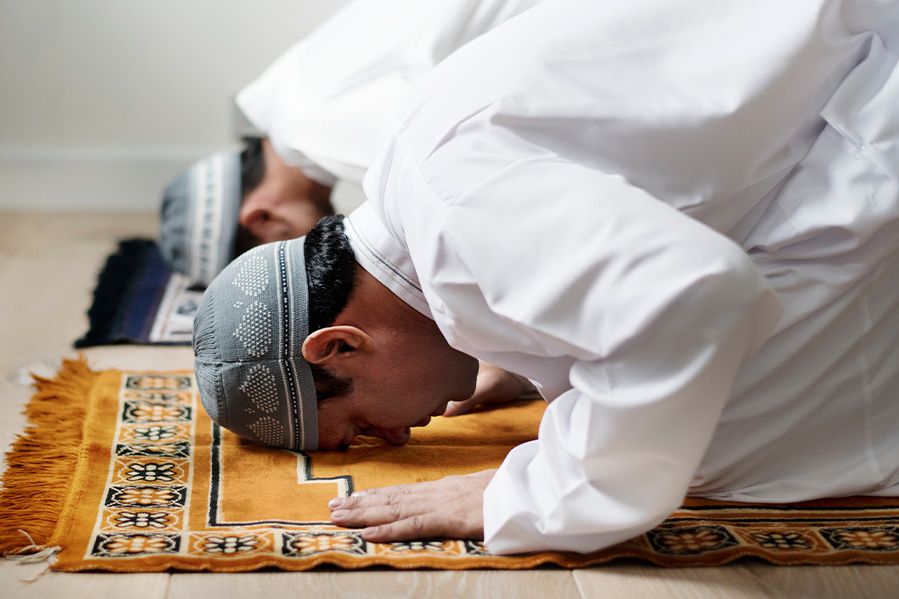
The city council in Broken Arrow, Oklahoma has just rejected construction plans for a proposed 20,000-square-foot mosque in the heart of their community. The incident marks the latest development in a religious freedom debate now sharply dividing this sleepy Oklahoma suburb.
Local Muslims said they are simply seeking a place to comfortably worship, citing severe overcrowding at a nearby mosque in Tulsa – the closest Islamic house of worship – as the primary reason the construction is necessary.
Hundreds signed up to speak at a recent city council meeting addressing the issue, and even more showed up to observe. Many in attendance at the often-raucous town hall cited everything from floodplain concerns to increased traffic congestion as justification for their opposition to the mosque.
However, the nitty gritty intricacies of residential zoning don’t tend to bring hundreds out of the woodwork to attend their local city council meetings. As it happens, there were some deeper factors at play; several speakers plainly explained that they opposed the mosque for a more direct reason: they do not want Muslims in their community.
Now, the mosque’s financial backers are claiming they may pursue the issue in court, as questions linger over whether the rejection was truly based on legitimate zoning complaints or anti-Islamic bigotry.
Is Bigotry to Blame?
It all started when the Islamic Society of Tulsa sought to rezone 15 acres of land in Broken Arrow into an Islamic Center – plans which were approved last year by the city’s planning commission. But local outrage began to swell after the commission sent the proposal to the city council for final approval.
The city council turned over the conversation to the public, and after a marathon four-hour meeting with more than 50 speakers, they voted 4-1 to reject the plan.
Many of the complaints centered strictly on land use. One local golf course owner stated that increased traffic in the area would negatively affect his business. Others stated that increased street parking would negatively impact their way of life. As one local man put it, "the greater concern is neighborliness."
But others were far more candid, making it clear that their opposition had little to do with parking and water drainage.
"This is about ideology and identity. Islam is not about peace," said one local woman. "I have a daughter who is 15 years old," another resident stated. "I don't want this ideology imposed on her."
"We have been at war with Islam for 40 years," stated another man. "I love the Muslims, but they must assimilate like we did."
Similar comments flooded social media sites like X, with one local resident (whose bio reads "Oklahoma • Follower of Christ") posting a celebratory video conflating Islam with terrorism:
“We Are Not Strangers”
What happens next?
Broken Arrow’s Muslim community – along with a number of Christian allies – were devastated at the ‘no’ vote. "I thought Broken Arrow was better than this," said Aliye Shimi, director of a local interfaith nonprofit. "I understand that unfamiliarity creates fear – I get that. But, I implored them to rise above that fear."
"We are not strangers,” she explained, “we are Okies."
Some Christians in the audience also expressed disappointment with their fellow citizens. "In 20 years, I don't know that I've heard as much hate and division in one place," stated one attendee. "Scripture shows Jesus loved those who others hated," explained a local Christian minister. "I'm here choosing to stand with my Islamic neighbors."
Now, the development’s owners are weighing their legal options, and a lawsuit appears increasingly likely. They say that the city violated their right to religious freedom, alleging that if the project had been a Christian church, it would have been approved without controversy.
As one local Islamic leader put it, “Oklahoma, we should not have to sue you to be seen as fully American."
What is your reaction? Does this decision reflect legitimate local concerns, or something far more troubling?
178 comments
-
 Rickie Lee Sands
That is a very large area for a very large center. More information on where it is in relation to the city layout would lead to a better choice. I remain neutral at this point.
-
 Geoffrey C. Olive
Why do humans need religion and belief in supernatural sky daddys?🤔🤔🤔
-
 ServantOfJudgement
I suppose for the same reason you need to believe you grew from funky mud struck by cosmic lightning all jacked up on horizon beams.
Did it hurt to grow from a piece of slimy sand into a better than flawless self replicating life form superior to all other forms of life?
Can you show me some of the goo you evolved from? I'd like some for my garden.
-
Geoffrey C. Olive
Just go to any beach, lake, river, land, soil, etc and you’ll find primitive goo with life forms that evolved into multi cellular organisms like us! Nothing to do with a god or gods as the same questions can be asked about their creation, if of course they actually existed!
-
 Michael Hunt
"Flawless self-replicating life form?" You have heard of birth defects and cancers, right? I don't think anyone has ever seriously claimed that human cells self-replicate flawlessly without being completely ignorant of biology.
-
Geoffrey C. Olive
Who said anything about “Flawless self-replicating life form?” Nothing is flawless and it’s the basis of survival of the fittest which is part of the theory of evolution. Single cell organisms divide into two which then divide again and so on! It’s how all multi cell life forms grow and reproduce! It’s what starts in humans when a single sperm cell fertilises a single egg cell which then divides eventually producing millions of cells that have characteristics of the male and female parents. The genetics of the parents determine which properties the offspring will have. There’s plenty of biology textbooks about this process if you’re not familiar with it. Birth defects and cancer are just issues and failures caused by many known and unknown system reactions of cell development. Hopefully one day medical science will solve these!
-
Michael Hunt
SOJ appears to be suggesting that. You and I are in agreement here.
-
-
-
-
-
 David Buck
Islam is not just a religion. It is also a legal and political system. The religious aspect of it, I suspect few would have an issue with. Sadly though, too many adherents do not stop at religion and attempt to push for more. There is, I believe, an old adage from the Middle East about once a camel gets his nose under the tent flap it being impossible to stop the remainder of the camel from entering (and no, I am NOT making a racist comment - it is an old Arabian fable where a man lets a camel stick its nose in his tent for warmth, only for the camel to insist on bringing in its head, then its hump, and finally pushing the man out). "Sharia for Belgium", and its like in all countries in Europe, scares the living heck out of the rest of us. One only has to look at Britain, where many of our ancestors hail from, to see the problem. In case you were not aware, in cities in Britain where there are significant Muslim populations they have gangs of young Muslim men roaming the streets trying to tell young women how to dress and act, and harassing people for eating during Ramadan, forcing schools to take ham off the menu, taking over entire city councils, putting an end to Christmas lights and Nativity scenes, and etc., etc., etc., to understand where this fear comes from. I do not have a solution, but if Muslims in the US could find some way to reassure people that all they are interested in is worshipping in their own way and not interfering in any way whatsoever with anybody else; a lot of this angst could be dealt with. Don't know what that way would be, but I am hoping somebody finds one.
-
 Lady Mutt Cat
So is Judaism. Are we ready to ban Judaism, too? In Kyrias Joel in New York State, there are signs entering town telling people to separate by sexes. These are signs on public streets paid for by taxes. This town has its own "gangs". And huge numbers of welfare kings and queens. I find the fact that my taxes support this drivel extremely offensive. If you hate religious gangs roaming streets and telling people how to live, start with Kyrias Joel or huge parts of New York City.
-
 Bridget Kielas-Fecyk
Christians do that in many Muslim areas, up to, and including, burning their bibles, destroying their religious icons, deliberately disrupting their holiday services.
I know of one "gang", more like brutal mob, that has taken to doing crap like throwing buckets of pig blood on women who wear their head scarves. How is that activity any better?
-
Geoffrey C. Olive
Ban religion and belief in supernatural sky daddys!🤣🤣🤣
-
 Kenneth Kling
Wow! Bigotry has raised its ugly head. “Sky Daddy?” That wasn’t even remotely clever.
-
Geoffrey C. Olive
Considering how bigoted all religions, particularly Christianity, have been over the centuries (eg Spanish Inquisition!), referring to a “sky daddy” is pretty mild in comparison! Actually it is quite clever!
-
-
-
Lady Mutt Cat
Comment removed by user.
-
-
ServantOfJudgement
Muslim Nationalists will never stop their efforts to claim all nations of the earth. All Muslims must be Muslim Nationalists according to their own doctrine. Anything less is blasphemy. Only muslims and fools will say otherwise.
It's good that the people of Oklahoma have prevented the call to prayer from blasting them 5 times a day. It's good that the illegal marriages and forced marriages can't happen from the proposed complex.
Oh how the European nation's girls and women suffer from islamists. The islamists are confused by laws of decency and customs of respect. They do not understand a woman or girl who resists sexual abuse and dominance. It angers them.
Men, protect your wives and daughters against such evil. Let your sons be strong and unafraid against the law bound smothering effects of islam.
Learn form other nations who currently are experiencing the wholesale murder of Christians and erasure of all culture not of islam. Even now as I type Christians are murdered, girls are groped and women are raped and stoned.
-
Bridget Kielas-Fecyk
Christian Nationalists are just as bad. What "illegal marriages" are you talking about? I know of Christian cults that force girls as young as 8 and 9 to marry men in their 40's. How about we rescue girls from them? It's the Christians that started the whole BS of "Female Circumcision". I.e. brutally cutting out parts of a girl's privates and sewing her closed.
Christian Nationalism is just as bad.
-
ServantOfJudgement
Bridget,
There aren't any Christian nations.
Stop defending evil.
-
Michael Hunt
Yes, there are Christian nations. Here's a list of countries on Wikipedia that claim to be Christian states:
https://en.wikipedia.org/wiki/Christian_state
-
-
-
-
Bridget Kielas-Fecyk
This nation is attempting to make anything that is not "Christian / Catholic" listed as Terrorists. It's now been put out by the government's DoJ that ALL atheists are to be viewed as terrorists as they are against "christian values". Along with Muslims, Wiccans, Pagans, Buddhists, Taoists, Shamanic practitioners, etc.
Apparently anyone not following a "Christian Belief" is now to be officially listed as a potential terrorist.
-
 Susan Rich
Can you cite your source for this information?
-
Bridget Kielas-Fecyk
Of course Susan. In this - it lists anyone who is not Christian as "Terrorists" and "Potential Terrorists"
https://www.whitehouse.gov/presidential-actions/2025/09/countering-domestic-terrorism-and-organized-political-violence/
-
-
-
 Glenn Day
We had the same situation with an established school in Birmingham, Alabama in the past three months. A pattern?
-
 Dr. Zerpersande, NSC
Yeah, there’s a pattern . The pattern is that religiously delusional people all over the world want a building where they can gather in a circle and pat each other on the back in circle-jerk fashion and tell each other their non-evidenced based beliefs are true.
-
-
Lady Mutt Cat
In my lifetime, "good" Christians shot at a gathering of Witches in Georgia. Bigotry from Christians is nothing new.
-
 Br. Joshua
You should see what "good" muslims habe done in my lifetime, Habib.
-
Lady Mutt Cat
So you're fine with Christian bigotry but not fine with Muslim bigotry?
-
-
-
 Rev. Donut
It's simple.
They look at Minnesota and say nah, not for me.
The people in Oklahoma don't want their state to turn into a "Minnesota Mess"
If they get the Mosque, the next thing they get, because give them an inch and they will take five miles, will be whiling loudspeakers five times a day and men throwing down rugs (not usually the woman because they are obviously not as worthy as men) wherever they are.
People in Broken Arrow Ok. and I'm guessing the rest of the state want to live, as much as they can, the same way they have for decades. There's nothing wrong with that.
-
Lady Mutt Cat
There's everything wrong with that when the result is bigotry against any religion.
-
 Cynthia Wilson
so lets just say its not bigotry, just for the record but how about creating day cares that do not exsist and getting Gov. money ? That is Called Fraud and it has been reported they are sending money to Islaic terrorist. Lets just say 10% of this is true. that 10% becomes 30% then 50% and now you have 60% it keeps growing until again they take over not incorporate but take over
-
Michael Hunt
The Minnesota fraud case with Somalis was being orchestrated by a white woman. We're demonizing an entire community because a white woman took advantage of Somali immigrants.
-
-
-
-
 Cullen Graeff Phillips
Islam is not a religion. It looks like one, and has may hallmarks of an organized religion, but it is not. It is a military tactic, a method of slow growing control that may take decades but it is effective, especially is zealots are behind it. The USA has a rich growth medium for Islam, allowing it the same status as organized religion. It is not. Usually there is a migration brought on by war or famine. This leads to refugees settling in foreign lands bringing their Islamic beliefs with them. They grow and prosper, eventually rising to positions of leadership or prominence. The mosque goes up. The weak minded are coerced into belief and submission as it has tangible practices. It offers the activist an outlet for protesting. It offers many such family-like comforts and sense of belonging. As innocent subjects are slowly indoctrinated and radicalized, the ugly side of this military tactic appears....restictive clothing for women, women's rights stripped away, sharia law instituted, freedoms afforded and guaranteed by our Constitution become clouded and stripped away. Then like a festering and infected wound, it spreads until the entire body is consumed. Islam is not a religion and should not be treated as such. It should be erradicated from our country and treated as an invasion tactic that is practiced with patience over the course of decades until there is no turning back. Those who are the bleeding heart liberals in this group should recognize the danger that Islam presents. Islam subdues and makes women second class citizens at best, and property at worst. Islam purges homosexuality by putting them to death. It is not a religion. It is not "Abrahamic". I have seen it first hand, studied it for decades, lived in those countries. Their goal is assimilation....you and everyone else assimilating into their culture, their beliefs, and being under their control.
-
 Ahmed Abduljabar Al-Hujazi
First, who are you to say what is or is not a religion? From where did you get this authority? From your reactionary and clearly ignorant rant, you know next to nothing about Islam. Are you saying that 2 billion Muslims are out to take over the world? If that was the case, then it would have been done by now. That's like saying the KKK represents the entire white Christian community across all of the United States. You've allowed the actions of a relative few radicals to guide your views, rather than the other 99% of Muslims who lead peaceful regular lives. And by the way, Islam guaranteed many women's rights, when Europe and their Christian churches still considered women property, even up to the late 19th century. Islam forbade infanticide of female babies like many far east cultures were wont to do. Muslims have been in the United States since before we were a nation. Thomas Jefferson owned a Quran, which he bought to study. Shout all you want about Islam, which is your right under our country's freedom of speech, but just because you say it, doesn't make it the truth.
-
ServantOfJudgement
Ahmed
Jefferson owned a Quran to study the enemy who was sacking usa merchant ships off the coast of Africa. They were Muslims. He knew the Muslims would not stop after studying their doctrine. He dispatched the Marines to put down the Muslim pirates.
Today, Muslim pirates are sacking merchant ships in African costal regions
I'd think with 99% of Muslims being peaceful, we wouldn't have the 600k souls slaughtered this century by muslims.
Do you think you could get your friends in africa o stop butchering christians and burning their churches? Asking for a friend...
Ps, can we have our 15k girls that were abducted during the same time?
-
-
 Wesley Richard Hunt
Totally agree. Let them build out of town.
-
 Dawn
Dawn
Or out of country
-
-
Br. Joshua
Exactly. As an "intolerant Christian" (let these liberals convert to Islam and find out how "tolerant" they are) I say get them the heck out of our country by any Lawful (Biblical) means possible.
-
Geoffrey C. Olive
If I were an “intolerant atheist” I would say the same about Christians, but I am a tolerant atheist and you can believe whatever nonsense you want, but don’t try and push it onto anyone else!🤣
-
-
-
 John M. Endress
Are followers of Islam any more or less tolerant of Christians, Jews, Hindus, or Buddhists? We could all do better.
-
 Bruce Vrana
In the U.S., Muslims communities have lower violent crime rates than the national average and are among the most law-abiding religious groups. It is amazing that many Christian believers (not all obviously) through their history, act counter to the basic teachings of Christ, just like many Muslims act counter to the core (nonviolent) teachings of their faith. Try some loving kindness, you may gain some wonderful neighbors and friends.
-
Dawn
The ‘sleeper cells’ stay out of trouble until told it’s go time. Their goal is not about petty theft-it’s invasion and takeover. Remember 9/11 and all the people interviewed who knew the attackers? They were so surprised! Not unlike Jeffrey Dahmer or the pedophile pastor.
-
Br. Joshua
And in Nazi Germany American spies pretended to be Nazis. So what? You are a mudslime.
-
-
 Roy S. Thorpe
When any religious group that doesn't fit into that area's "religion" wants to set up a different religion it always meets with opposition! My little town didn't like those Catholics having a church there. A larger city next door fought to keep Buddhism out! Now a section of Pittsburgh doesn't want a Evangelist megachurch in its neighborhood! The antis will cite anything to keep it their way! Good luck!
-
Cynthia Wilson
If you look at Michigan and other states where they are growing in thousands of numbers and taking over cities and creating their own government I would question this myself. This isnt about just religion anymore its about taking over the US . Their numbers are growing by the thousands and more. Take at good look at UK and how they took over look at Sharia Law and womens rights - Women think they are loosing their rights what till Islam takes over their areas. You wont feel safe walking down your own streets. This isnt about religion its about taking over starting with neighborhoods, then counties, then states look at the Europe
-
Lady Mutt Cat
Just like some Jewish and Christian neighborhoods.
-
Br. Joshua
Mudslime confirmed.
-
Cynthia Wilson
and what is that referring to ?
-
-
-
Dawn
Exactly, Cynthia.
-
-
 Thomas Edwin Peterson
Many religious groups turn violent. There are many here in the States who when groups turn violent will help the USA stand tall. Be it as support personnel driving trucks , busses , or as previously trained armed volunteers to keep the peace. Many Americans highly dislike the noise factor aka noise pollution of the Muslim call to prayer. The amount of traffic that conflicts with normal flow of traffic. Also as an employee (salesman) of a person of Muslim faith I was ripped off of 12k 2 weeks pay by the individual. My percentage was 5 % of sales made by me. That aside , Americans don't appreciate someone coming in their businesses with their face covered. The essential attitude of many Muslims puts off many Americans. The twin towers attack has forever alienated Islamic people's in America as well , that is an enormous factor in your people not being accepted. 🙏
-
 Joseph Grieco
It seems that in certain parts of the country Synagogues, Mosques, Hindu Temples, even LDS and Jehovah's Witnesses have all sorts of problems with zoning, parking requirements, access, etc. Catholic and Episcopal churches are denied expansion of parking lots. But let the local Lutheran or Baptist Church decide they need to level historic properties to expand their parking lots or put up an education building, and they are rubber stamped and eviction notices sent out.
-
Lady Mutt Cat
Absolutely correct. Bigots abound everywhere.
-
Dawn
How much of that is ‘pay to play’?
-
-
Dr. Zerpersande, NSC
Years ago when I worked in Tokyo I worked with a guy from Iran. One day we were talking about terrorism and I said something about Islamic terrorists. He responded by saying there are no Islamic terrorists because one cannot be a terrorist and still be Islamic.
I guess the same might be true for Christian MAGAs.
-
 Kenneth Jay Meyer
Great comparison, it had to be said.
-
-
 Rev. BH
Christian, if the countries you named had the same Constitution as the United States, you argument would apply. But they don't. Non sequitur.
-
 Donald J Rothschild Jr
Organized religion has been responsible for more deaths than any war ever fought. And the 3 biggest of these are the Abrahamic religions. And each of the 3 hav3 been in conflict for millennia.
-
 LORD RICHARD WELCH
Did you denounce and remove your name from the rolls of the ULC Church then? If not, you would then be classified into the hypocrite files!!
-
Geoffrey C. Olive
If you think the ULC Church website is “serious” religion, then you are very much mistaken!🤣
-
-
-
 James Riggle-Johnson
The First Amendment guarantees all citizens the freedom to practice any religion — not just Christianity. Denying a mosque because it isn’t Christian is a violation of that principle, plain and simple.
The United States is not a Christian nation. The founders were explicit about that, which is why the First Amendment protects religious freedom for everyone.
Islam has extremists, just like Christianity does. Judging an entire faith by its worst actors is wrong — unless we’re willing to apply that same standard to ourselves.
Lastly, many Christians believe theirs is the only path to heaven. I’d like to think we’ll be judged more by how we treated one another than by whether we perfectly followed instructions from a book written by human hands. Just my two cents.
A society should be judged by how it treats those who are different, not by how loudly it claims moral superiority.
-
Joseph Grieco
We're talking about Oklahoma here. The State Legislature refuses to recognize that clause in the 1st Amendment. Remember, we're talking about a government body that attempted to ban the Cherokee native religious practices, until the Cherokee reminded them that they control something like 55% of the land in Oklahoma, and the State Government has no say on what happens on Cherokee land. And as they control the oil rights leases, too, they state had to listen to them.
-
 Patricia Ann Gross
There are as many people on this board that paint ALL Christians with the same Evangelical Extremist brush as those that paint the Muslims with the Radicalized brush. In both cases, the extremeists are a very small minority that gives the rest a bad name. I lived near Broken Arrow (just across the border into Kansas) and it was a nightmare being moderate there, so this does not surprise me in the least (I've become more liberal since then showing that even one's ideology can be fluid).
-
LORD RICHARD WELCH
Did you denounce and remove your name from the rolls of the ULC Church then? If not, you would then be classified into the hypocrite files!!
-
Patricia Ann Gross
I don't understand your comment. I was agreeing with James' statement, "Judging an entire faith by its worst actors is wrong — unless we’re willing to apply that same standard to ourselves."
Being here gives me a forum to set the record straight, unless you're suddenly inclined to deny me that.
-or, was that comment meant for someone else?
-
Dr. Zerpersande, NSC
Cheeses Crust get a new gig. How many times are you going to yell this on the street corner?
-
-
-
Br. Joshua
If they need a mosque to practice their religion then they wouldn't pray in the streets. As an "intolerant Christian" (let these liberals like you convert to Islam and find out how "tolerant" they are) I say get them the heck out of our country by any Lawful (Biblical) means possible. And I don't care what you think about that, praise Jesus.
-
Lady Mutt Cat
🤣🤣🤣 restrictive clothing for women? Tell that to Mrs. Mamdani. And then go at look at the women of Kyrias Joel with their awful clothes and wigs. Or is it okay if Jews do it?
-
 Gary. Collins
Go read their Quran then come and tell us more and If you haven’t … well read The Bible preferably read the KJV. Then come back and tell us what you think.
-
-
 Herbert Moore
As solitary Wicca I happy I don't require a mosque or church.
-
 Colleen McAllister
The situation is a sad one. People fear what they do not understand. Jews, Muslims, and Christians all trace back to the same beginnings. Abraham. Let the center be built. Show love to others.
-
 Douglas Robert Spindler
And what about the Mormons?
-
Dr. Zerpersande, NSC
Aw, Mormons be whack.
Seriously, all religious individuals are delusional, it’s just a matter of degree.
-
Br. Joshua
This coming from an ordained minister 😆
-
Dr. Zerpersande, NSC
It’s word on a piece of paper. Actually not even that bc I’m not paying for the piece of paper. I think it is hilariously to watch these wannabe preachers waving their plastic badges around,
-
-
-
-
Br. Joshua
Show love to your rapist when the time comes.
-
 Sir Lionheart
The very illusive, and possibly fictitious “Abraham” has a lot to answer for. There is still no demonstrable evidence that Abraham, and even Moses, ever existed. He seems to be as illusive as Adam and Eve, all mentioned in that book of fiction that people like to believe is totally true, and that’s where the problem is.
🦁❤️
-
-
Geoffrey C. Olive
If in doubt of any beliefs, then assume they are all wrong if they cannot provide provable evidence! Many, particularly children, believe in Santa Clause or fairies at the bottom of the garden because it’s a nice fantasy but we all grow up to learn it isn’t true! The same logic should be applied to all religions and the existence of a god or gods! Unfortunately it’s not practical for provable evidence to be available to all. For example, we have to accept that astronauts have actually walked on the moon from what is shown on the media which could easily be faked in a studio like in the movies!
-
 Christian
Let Me Know when USA can build a Southern Baptist Church and India can build a Hindu Temple, both in Mecca. Also, The Roman Catholic Church would like to put a 30 meter tall statue of Holy Virgin Mother MARY, Mother of God, Queen of Heaven, ON TOP of the Kaaba. The Kaaba can be her stand & everyone can circle around her, dance for her, and bow down to Her. It's only fair...
-
 Dr. Darryl G Dykes
Oh my, your statement is so wrong! This is the United States of America not Mecca. We have a Constitution that favors NO specific religion. Our Constitution allows for freedom to worship how we desire which includes Islam. The United States is not a Christian nation it is a nation of free people of many religions and beliefs. To say that Islam is a hate group of terrorists is wrong, just like the Christians of the old KKK there a a few bad seeds in every community but doesn't mean everyone in a community is a terrorist. Think of what Jesus commanded love thy neighbor as thyself. He did not love only thy Christian neighbor he meant everyone.
-
Dawn
Send women & lgbtq friends you love to any extremist Muslim country. It’ll be a one way trip. I am sharing facts. Gay men in these countries are not free-thru are terrified which is why they help inform. They don’t want to swing from bridges (yup-happens everyday). We in this country live in a fantasy world-these countries & their people do not abide by our paper documents. Our sheltered ideals & ignorance will be our demise. It’s already begun.look at what they do to their own people. Wake up before your children & grandchildren pay.
-
James Riggle-Johnson
That is not happening in the United States. The LGBTQ community here has much more to worry about from Christians.
-
LORD RICHARD WELCH
You are seriously so lost in your "WOKENESS" that you can't wake up for the love of GOD!!!!
-
James Riggle-Johnson
Wokeness? No, I’m arguing for the Constitution of the United States of America. It has nothing to do with right-left, liberal, or conservative views.
-
-
Br. Joshua
"That's not happening in the United States..." YET. Because there aren't enough of them. Aren't you listening? Or actually, are YOU Muslim practicing taqqiya?
-
James Riggle-Johnson
I am listening. I’m reading statements that have no basis in reality when it comes to Muslims taking over our country. Let’s break it down. And no, Joshua, I am technically a Christian.
Christians 62% – 69% Agnostic 6% Atheist 5% Jewish 2% Muslim 1% Buddhist 1% Hindu 1%
-
-
-
-
-
James Riggle-Johnson
The difference here is that these Muslims are US citizens, and the US has a constitution that protects religious freedom. It does not say Christian religious freedom. ALL Americans have the right to practice whatever religion they choose.
-
LORD RICHARD WELCH
YOU DON"T know that "fact" that ALL Muslims in this country are citizens! You an absolute genius to have that "knowledge" !! LOL!!!
-
-
Joseph Grieco
There is a big difference between the USA and Saudi Arabia. The US has traditionally been a representative democracy under the Rule of Law, as described in our Constitution and it's subsequent amendments. One of those is the freedom to worship as they pleased. This despite the efforts of Christian Nationalists to rewrite things so only certain flavors of Christianity are acceptable - all others either leave or take up 2nd class status. Mecca is the spiritual capital of Islam in general (Think Vatican City in the desert) and Saudi Arabia in particular. It has been under the protection of the House of Sa'ud since before the Vikings explored Iceland, Greenland and Vinland. Thanks to the British, since 1921, the rulers of Hejaz and Nejd have had absolute control over all of the Arabian Peninsula, except for the coastal nations. They rule as absolute monarchs and have decided that Islam is the only religion allowed public practice. Now, at the same time if you were to look at the number of Christian Churches in Israel, you would find fewer in the whole country (outside of Jerusalem) than you would find in some place like Boston. However, they are all over the West Bank, due to the heavy Christian population among the Palestinians. But US based news and information services like to ignore their existence. Many of those churches have been in existence since before the Prophet Muhammed (PBUH) had his visions. Understanding differences between countries and their laws would answered your question before you even thought you had to ask it.
-
Patricia Ann Gross
Those countries all have a state religion and not religious freedom. Try being in India without being a Hindu or Iran without being Muslim. It doesn't work well for you. You can be discriminated against, and possibly jailed for your beliefs and religious practices. Do you want that here?
-
-
 Barbara Harris
It is sad to see this. Over the years I have spent a lot of time in Oklahoma. Most are kind, loving people but then there are still the ones who see anyone who isn't like them or doesn't believe like them as a threat. They are few but can be very vocal, and in some instances down right dangerous.
Don't forget the Tulsa Race Massacre a mere 104 years ago or the murders of members of the Osage tribe in order to steal their land. White men would marry and Osage woman and then the woman would be murdered in a way to "look" like an accident. The man would now inherit her property, much of which was oil land. This also occurred roughly 100 years ago. There are still decedents from those original whites. Many who shudder at what their ancestor did. But there are some who harbor those ancient feelings and I have met them.
-
Lady Mutt Cat
My experience of people from Oklahoma is that they are raging bigots. Very kind as long as you’re a fellow Christian.
-
Patricia Ann Gross
Barbara,
True story: I was living in the Dallas area when the OKC Federal building was bombed. One of my co-workers was so certain that the perpatrators were from Saudi Arabia or Iran that he made a comment that "we ought to find where they trained and nuke them off the map." The minute I found out they had arrested Timothy McVeigh and he had gone through boot camp at Fort Riley Kansas, I called my co-worker and asked him if he still felt that way. It was dead silence when I told him he had just wiped Kansas off the map.
-
-
Geoffrey C. Olive
Yet again religion raises its ugly head and creates more division! You would think that humanity in the 21st century with all the science, medical and technological knowledge would have got rid of religion and all its nonsense of believing in an all powerful sky daddy! Ignorance rules OK!🤣
-
Patricia Ann Gross
Geoffrey,
Religion has a foothold for two reasons: One is history and tradition. The other is that science, as wonderful as it is, still falls short of explaining everything. If you want to believe that the Universe was created by a "big bang," what set it off? Also, how do you explain everything aligning so that we would have the intellect to develop the scientific theories, rather than being comfortable as other animals living in the wild. This is way too random to have happened by chance, there has to be a higher power at play, and I will believe that until it is proven differently.
-
Geoffrey C. Olive
Just because it can’t be currently proved by science doesn’t mean it’s a sky daddy! History has shown that many beliefs that were god based have been shown to be natural physical phenomena such as lightning, storms, heatwaves, earthquakes, etc! These are not a vindictive god’s anger at some human disbelief or bad behavior! As human knowledge develops many other phenomena will be explained that have absolutely nothing to do with a non existent god or gods! Just look at disproved ancient theories that have been proved to be nonsense, eg phlogiston, flat earth, sun goes round the Earth, etc! Believe in a higher power if you want to remain ignorant!
-
Patricia Ann Gross
Technically true, but it still doesn't explain everything, not can you prove the non-existence of a higher power that is an instigating force. If it's a high/low pressure front, what is guiding that? Keep going back. For every question answered, there is a "How did that happen?" question that emerges.
-
Geoffrey C. Olive
Although I haven’t looked it up, I think that meteorology, geography, oceanography, climatology and other sciences have answers to the origins of pressure fronts linked to many of the Earth’s physical structures and systems which have nothing to do with a god or gods!
-
Geoffrey C. Olive
Of course, that question can go back as far as who created the creator! Nobody will ever know!
-
Geoffrey C. Olive
It’s not possible to prove a negative!
-
-
-
-
Br. Joshua
Yet you're an ordained minister?
-
Geoffrey C. Olive
I only joined to have a good laugh at what some of believers think!🤣
-
-
-
 Mary Haviland
I say good for them. This moscs are send of evil, and once the Muslims gets one. They are so noisy it is heard for miles around. Yet they won't like or allow Christian church bells. And once they get one misc in, they keep pushing for more, esp very close together. We need to make the Muslims as uncomfortable as nec so they would leave. And yes you will try to call me names. I don't care. I know about what I'm talking. About, and we don't kneed not even one in this country. So if a community, city. Or state and country wants to ban them and deny them anything g, I'm for it, along with any other evil and satanic churches or religious worship sites.
-
Dawn
Agree
-
-
 Michael Arthur Lueras
"All will submit (accept Islam) willingly or unwillingly." (Isaiah 45:23) (Romans 14:11) (Quran 3:83) Jesus is highly praised in The Quran: Read The Quran 3:45. In fact Jesus foretold 2000 years ago what is happening in Broken Arrow Oklahoma right now: "In the End Times there will be strife...wars and rumors of wars...nation against nation..." (Matthew 24:6-8) But "Earthly life is not The True Life." (Quran 29:64) Religion (and Irreligion) are a fact of Earthly life. In The True Life there is no need of Religion and therefore no temptation to fight with others over it. In the True Life you have The Desire of Your Heart with no distractions. Earthly life is one Big Distraction and is in reality a form of Slavery and an Imprisonment that is harder to see and therefore harder to escape than anything that human beings have imposed on each other in Earthly life. If you die in prison you have escaped that prison but if you die and reincarnate into another life on Earth you are still a Prisoner and you might not even be aware of it. But The Quran tells you all about it in one sentence: "Earthly life is not The True Life." (Quran 29:64) Amen?
-
Br. Joshua
No.
-
Cynthia Wilson
Reincarnate into another life?? No - if you look back into history, this isnt new American Revolutionary war, WWI and WWII etc. Also God says no one will now the end of times not even Jesus Himself Jesus stated that no one knows the day or hour of His return, not even the angels nor the Son, But on the Father. Matthew 24:36 and Mar 13:32
-
ServantOfJudgement
I notice you quote the Bible and Quran Mr Lueras.
Do know that the new testament says Jesus is divine and anyone who says otherwise is of antichrist.
The Quran says anyone who thinks Jesus is the son of God is of Satan.
With this light, the Quran does not highly praise Jesus. It's quite insulting in fact. It diminishes his ultimate sacrifice for our sins to nothing.
Both books call the followers of the other book blasphemous. Both books paint the opposite sides as the enemy upon the return of Jesus.
The bible warned against rewriting the events and facts revealed in Revelation which the Quran does.
The two books are in opposition. Centuries before the Quran was written, the Bible claimed it was false doctrine. Centuries after the New Testament was written, the Quran claimed it was false doctrine.
One could be right, both could be wrong but both can't be right.
-
-
 Rev Ned
I fear all religions. Evangelicals are just as hateful and violent as Muslims. Jews?!? Just look at Gaza. AIPAC has been quite successful equating antizionism with antisemitism. They are in NO WAY related!!!
-
LORD RICHARD WELCH
Did you denounce and remove your name from the rolls of the ULC Church then? If not, you would then be classified into the hypocrite files!!
-
Dr. Zerpersande, NSC
This site isn’t a church. Just opinion here but I think this site was made for the purpose of getting around the laws that limit clergy as being able to perform marriages. And likely unbelievers themselves. Secondarily it’s a money making machine for the religiously delusional who are here to get their plastic badge as a preacher/pastor/clergy member. My name is on here solely to thumb my nose at the religiously delusional population of the world.
-
Geoffrey C. Olive
Ditto!
-
-
-
 Ben
Ben
The Abrahamic religions tend to be the worst by far with Muslims taking first place and evangelical Christians coming in at a close second. Then again their ideologies are derived of Judaism which promotes the idea that there's a chosen people of the Lord. That's despicable.
-
-
 Samuel Tamayo
Ditto , hope people are listening to Dawn as he speak / text the reality of this religion. They will without a douth kill off any Rival religion christian catholic propades etc . One million + military veterans from around the world can attest to this fact. No mercy even to their fellow countrymen. Willing to die to overthrow any kingdom or government to Impose its own religion rule upon the Inhabitants of the earth . Read any history book research is the best way to find facts .
-
Dawn
Thank you for listening to veterans. What they’ve experienced is just awful and it’s no wonder many have trouble re-assimilating back into their country its own people are allowing to be destroyed . Suicidal empathy. 😞
-
Lady Mutt Cat
I wouldn’t pay attention to anything Dawn says.
-
-
 Najah P Tamargo
Najah Tamargo-USA
Organized religion is the BANE of the world! But I guess they have also forgotten the Constitution...???
-
LORD RICHARD WELCH
Did you denounce and remove your name from the rolls of the ULC Church then? If not, you would then be classified into the hypocrite files!!
-
Dr. Zerpersande, NSC
4 times???
-
Geoffrey C. Olive
Lord Richard Welch, are you really a Lord? Lord God, Lord of the Rings, Lordy Lordy, or some fake title bought on the InterWeb?
-
-
-
 Clay Serenbetz
Irrational fear is ugly
-
Dawn
IMO the problem is religious extremists. The love of my life fought them for 20+ years. Prisoners would say to them ‘we will win because you have one or two children, we have four or more-it’s all numbers. & where you think in terms of months and years, we think in terms of generations and millenia. The world will bow to Allah’. It is estimated there are 2 billion muslims & 10% are radicalized. 200,000,000 radicalized Muslims who will slit your throat or cut your head off if you won’t convert & use women & GIRLS as baby factories & sex slaves w/ ZERO rights. In an Iraqi village being patrolled by American military(to protect the villagers from extremists who were doing to their own people what I just said), a serviceman helped a little Iraqi girl up who’d tripped while playing & he continues walking. 1/4 mile down the road they heard gunshots & went into high alert. Want to guess what it was? That little girl’s father had gone into their hut, gotten a gun, came outside & murdered his daughter. Why? A non-muslim man had touched her & so no muslim man would have her-she was a lifetime expense to him now & no good to him. In NYS we had a muslim man who murdered his wife according to sharia law a number of years ago-illegal here yes but she’s still dead. Until there is a way to determine who is an extremist & who is not, I applaud this town. Islam ideology does not mesh with US ideals.
-
James Riggle-Johnson
“Islam ideology does not mesh with US ideals”? I must have missed that line in the First Amendment. I thought it was about religious freedom, but I guess I was wrong. It must say religious freedom except for Islam. Thanks for pointing that out.
-
Cullen Graeff Phillips
Islam is not a religion. It looks like one, and has may hallmarks of an organized religion, but it is not. It is a military tactic, a method of slow growing control that may take decades but it is effective, especially is zealots are behind it. The USA has a rich growth medium for Islam, allowing it the same status as organized religion. It is not. Usually there is a migration brought on by war or famine. This leads to refugees settling in foreign lands bringing their Islamic beliefs with them. They grow and prosper, eventually rising to positions of leadership or prominence. The mosque goes up. The weak minded are coerced into belief and submission as it has tangible practices. It offers the activist an outlet for protesting. It offers many such family-like comforts and sense of belonging. As innocent subjects are slowly indoctrinated and radicalized, the ugly side of this military tactic appears....restictive clothing for women, women's rights stripped away, sharia law instituted, freedoms afforded and guaranteed by our Constitution become clouded and stripped away. Then like a festering and infected wound, it spreads until the entire body is consumed. Islam is not a religion and should not be treated as such. It should be erradicated from our country and treated as an invasion tactic that is practiced with patience over the course of decades until there is no turning back. Those who are the bleeding heart liberals in this group should recognize the danger that Islam presents. Islam subdues and makes women second class citizens at best, and property at worst. Islam purges homosexuality by putting them to death. It is not a religion. It is not "Abrahamic". I have seen it first hand, studied it for decades, lived in those countries. Their goal is assimilation....you and everyone else assimilating into their culture, their beliefs, and being under their control.
-
Dawn
Well said. Let’s hope the blind see before it’s too late.
-
-
Dawn
Let me know how it goes when they demand you convert or die and you quote the Constitution. Oh wait-you won’t be able to. All of our LGBTQ friends & family will meet the same fate. You ONLY being upset about one sentence I wrote & none of the facts I stated is a problem. Your not wanting to see it does not make it go away I wish it did.
-
James Riggle-Johnson
Dawn, I was dismayed by everything you wrote. I chose the first line because it states your opinion best: “The Muslim faith does not belong in the United States of America”. Did I interpret that wrong? American citizens who are Muslim will not be coming for the LGBTQ community and their families, no more than Christians do. You are talking about things happening in other countries, and I believe those Muslims are perverting their religion.
-
Dawn
Those extremists’ goal is to have the world under Allah. They are already here and more move to ‘western’ countries everyday. They are playing the long game and clearly it’s working. There are ‘no go zones’ in western-value countries(eg UK) where even the US military are told to not go because the police will not go in to help. Those places are specifically where street signs are in Arabic. I know people don’t want to believe this-decent people never do. We want to believe the best of everyone-and that’s good. But it’s also deadly. These violent religious extremists don’t care about or respect our laws-they laugh at us. I implore you yo speak to veterans who really were in country-who were face to fave with them. Who helped and were helped by terrorized gay Muslims. It is heartbreaking & maddening to know what is being done while millions of Americans open their doors to them. It truly is suicidal empathy. And please know-I don’t want this to be true-it just is unless we can stop it.
-
Lady Mutt Cat
Just like some folks decided that the entire world should be Christian. Remember the Crusades? Or what is going on in Occupied Palestine today. There, if you’re not Jewish, you don’t belong. Religious exclusivity is always wrong and has no place in the U.S.
-
Br. Joshua
We're talking about right now today, Sharon.
-
-
-
Dawn
9/11/2001 a friend in Queens told me his brother was driving hone and the Muslims were dancing and celebrating in the street. I also know there are Muslims from a particular country who are taught how to circumvent our tax system. They are in business AND on public assistance- the state govt will not enforce/collect the taxes because they don’t like the ‘optics’. (I was a govt tax auditor) .
-
Joseph Grieco
They weren't. Most of the Muslim community in Queens were mobilizing support to help Emergency services get to Manhattan to help. Your "Friend" was probably watching the same video Donald Trump claimed to watch. The video that was actually from Tripoli in Libya when Ghedaffi was overthrown. And please explain what the difference is between Radical Islam and Christian Nationalism? According to the former, as long as I am willing to pay my tithes to the Caliphate they want to establish, I am free to live, study and worship as I choose. Those were the rules set up by the Prophet (ABUH) According to the latter, if I don't comply with THEIR version of Christianity - the one that says the Beatitudes and the Sermon on the Mount are WOKE BS - I lose all my rights.
-
Dawn
No-that’s incorrect. This was experienced live and in person on 9/11/2001. Oh and I’m a 45 yr democrat. I deal in facts and not propaganda from one side or the other. Comparing one extremist group to another doesn’t make either better or worse (but I do know one will kill and/or rape me). That is poor logic. I have no idea why you believe the rest of your post as I’m not religious so I subscribe to none of their propaganda. But if pushed, I’d never choose radical Islam as I’m a free woman(for now) and they don’t allow that. I hope you and your loved ones enjoy a vacation in Iran, Somalia, etc. Let us know how it goes.
-
 Jonathan Arthur Horn
Comment removed by user.
-
Dawn
Exactly. I cannot say it enough: SUICIDAL EMPATHY
-
-
Lady Mutt Cat
How to circumvent our taxes??? Just like every capitalist billionaire in the U.S. is taught.
-
Dawn
Again with poor logic. Your ‘logic’ supports murder because it happens. Clearly our education system is a failure.
-
-
-
-
Patricia Ann Gross
Dawn,
Do you understand that Anti-Constitution = Anti-American? I might suggest you start a movement to repeal the First Amendment and see how far that gets.
-
Dawn
The democrats already did that during the Biden administration - ‘canceling’ people, censoring the truth & facts, blacklisting & shutting down social media accounts…
-
Patricia Ann Gross
I think you confused it with Trump's first term. Who did they cancel, censor, and blacklist? Sounds more like Trump's 2nd term first 100 days.
-
Lady Mutt Cat
Dawn lost her MAGA hat and is very unhappy.
-
Dawn
Please review my prior posts before commenting inaccurately. Thanks.
-
Dawn
Were you asleep 2020-2024? Have you not watched all of the congressional hearings? Did you not see Zuckerberg et al (i.e. Facebook, Twitter, Youtube...) admit to being coerced by the previous administration to remove and de-monetize accounts that didn't agree with their propaganda and outright lies? It is all on the record - you merely need to go find it.
-
Patricia Ann Gross
Dawn,
Are you talking about the hearing on Jan 31, 2024 where Zuckerberg was under fire for not helping to protect children from exploitation and bullying on the Meta platforms? While Free Speech is a basic right, there are limits and consequences for what is spoken. This is why it is illegal to Yell "Fire" in a crowded venue and cause a panic that can potentially get people hurt or killed. This is also why there are civil penalties for llibel, and ethical codes protecting confidentiality for what is said by a vulnerable person to a person in power (priest, doctor, therapist, etc.) Do you actually believe that a person can troll and bully someone online to the point of driving them to suicide with no consequences? (I guess that is a silly question, considering your responses to most of what has been posted on this topic.)
-
Dawn
No I’m talking about when Ll of them were brought before a congressional subcommittee (hearing?)and they all admitted that they were threatened with losing their protected legal status if they didn’t cancel/ban/remove/censor statements, people’s experiences, scientific statements by nurses/doctors/pharmacists that the administration didn’t like. It’s on record but since I watch so many live hearings, I don’t recall which one or the exact date. Likely 2025. In fact Zuckerberg pit out an official letter about his regret at having done it. Also there’s an entire book that contains what is now known as ‘the twitter files’ which is a data ‘dump’ pf everything uncovered on twitter dueing the same time period.
-
Dawn
- LI s/b ‘all’
No idea how my typIng came up with LI . I don’t know how to edit a post
Also since the answer to your original question is ‘no’, the rest of your statement is irrelevant to my post.
-
Patricia Ann Gross
No help, I still don't understand what "hearings" your talking about. I Googled Zuckerberg Congressional Hearings and the one I asked about was the only one that came up.
-
-
-
Br. Joshua
"religion" in the Constitution means "denomination " some when it was written, the only people who could be citizens were Christians. If the Fathers knew you idiots would openly welcome people hostile to your religion they would have made Christianity the national religion. And the constitution is only for White male land owners; the "posterity" of which it speaks.
-
Patricia Ann Gross
Plus, the Supreme Court, which interprets laws based on Constitutional language and criteria, has on many occasions indicated that "freedom of religion" mean exactly that, not "Christian denomination." It also includes freedom from religion, meaning the same rights are given to athiests and agnostics as to any other religious group.
-
Patricia Ann Gross
What history book did you read? Must have been writen in the early 1800s, because the Constitution has been amended may times since then, giving rights to women and people of color, making citizens of anyone born here, including those who were native before the Europeans invaded and took over. Plus establishment of a federal income tax, and don't forget the sale and consumption of alcohol was prohibited in the 1920s and then that amendment was rescinded. Swearing an oath to the constitution includes all of the amendments.
-
-
-
 Mike Patrick Davey
Dawn is right
This comment. "And please explain what the difference is between Radical Islam and Christian Nationalism?"
Umm let's look
The Nice Attack = Muslim The Paris Attacks = Muslims The Shoe Bomber = Muslim The Orlando attack = Muslim The Beltway Snipers = Muslims The Fort Hood Shooter = Muslim The Underwear Bomber = Muslim The Westminster Attack = Muslim The 2005 Bali Bombings = Muslims The murder of Lee Rigby = Muslims The U.S.S. Cole Bombers = Muslims The London Bridge Attack = Muslims The Madrid Train Bombers = Muslims The Charlie Hebdo Attacks = Muslims The San Bernardino Attacks = Muslims The Surabaya bombings = Muslims The Minnesota Mall stabbings = Muslim The 7/7 bombers = Muslims The Moscow Theatre Attackers = Muslims The Boston Marathon Bombers = Muslims The Ankara Airport Attack = Muslims The Manchester Arena bombing = Muslim The Pan-Am #103 Bombers = Muslims The Iranian Embassy Takeover = Muslims The Air France Hijackers = Muslims The 2002 Bali Nightclub = Muslims The Batta Meena Attacks = Muslims The Beirut Embassy bombers = Muslims The Libyan U.S. Embassy Attack = Muslims The Yazidi Massacre of 2014 = Muslims The Beheading of French priest = Muslims The Buenos Aires bombers = Muslims The Israeli Olympic Team = Muslims The Kenyan U.S Embassy = Muslims The Khobar Towers Bombers = Muslims The Beirut Marine bombers = Muslims The Besian School Attackers = Muslims The First WTC bombers = Muslims The Beheading of Daniel Pearl = Muslims The Achille Lauro Hijackers = Muslims The Bombay Attackers = Muslims The 9/11 hijackers = Muslims
-
Dawn
..and so many more. Those are just the public ones…veterans have seen and know so much more. I don’t recall the 2 African countries but one is muslim the other Christian. The muslim men were invading the Christian country to murder the men and rape the women(every baby will then be Muslim by their belief). Our military was sent to their borders to stop it from happening. No military women in case anyone was captured-they did not want rapes. I can’t make the blind see but they can never say they weren’t warned.
-
Patricia Ann Gross
Mike
Attrocities perpetrated by Christian Nationalism:
Murder of Renee Good= (Not sure of Mr. Ross' ideology, but the Christian Nationalists are cheering him on), Nazi Germany, KKK (US), Timothy McVeigh (OKC Federal Building) and the Crusades to name a few. I could probably pull in others like the Stonewall Riots, Tulsa Wall Street Massacre, attack on Nancy Pelosi's husband, the Trail of Tears, and Pulse nightclub shootings as well. All of them are attrocities, should be condemned and the perpetrators brought to justice. I think your point is moot, because nobody is condoning violence. They aren't condoning denying people the right to exist because of their faith either.
-
Dawn
And look at what the extremists have done to Afghanistan and Iran!! They were magnificent! Now the extremists took control and are murdering their own people who disagree with them.
-
-
James Riggle-Johnson
Comment removed by user.
-
-
-
Sir Lionheart
That is absolutely crazy and very sad, but you are right, they will cry minority, and will insist on inclusion, because they see us as weak with our stupid woke ideology that many have here in the US, but if they had the majority, and power, all of us infidels wouldn’t be around very long. I’m sure the trans woke infidels would be first on their list to eliminate if they could do it. Am I wrong? 🤷
🦁❤️
-
Patricia Ann Gross
Yes, Sir Lionheart, the entire Constitution is a severely WOKE document, it even gives women and black people rights. Don't like it? I'm sure there are other countries that would welcome you as an immigrant.
-
Dawn
Again with thr America. constitution. Why so you believe the conquering people abide by any law? Newsflash: murder is illegal; theft is illegal; rape is illegal; and on and on. They don’t happen, do they? And by the way, this OK town said no to the mosque not to them practicing their religion. I’m sure there’s an app for the ‘call to prayer’ that they can use so they can assimilate into our country, not disturb the neighbors and abide by town ‘quiet time’ ordinances. Besides, the muslims can build a mosque in your town-I’m sure all will welcome them.
-
Patricia Ann Gross
We already have several Mosques. Plus a very peaceful neighborhood that is primarily Muslim. There are also neighborhoods that are primarily Irish, Polish, and Italian immigrants and their descendents that run festivals every year, along with the Native Americans that have yearly Pow Wows. All of these are some of the most peaceful neighborhoods in the city.
-
-
Sir Lionheart
I am totally OK with females having the vote, and with people with dark colored skin, that you refer to as Black people, so what makes you think I wouldn’t be happy with that? I have no problems with a constitutional republic, and with everyone being held accountable to uphold the law, do you?
🦁❤️
-
Patricia Ann Gross
I was responding to your comment about how the US ideology is "woke," when Dawn was complaining that we put too much "faith" in our documents, and you were on board with all she was saying. I suppose I mashed some of what the two of you were saying together, but I stand by my comment that the Constitution IS a woke document that defines our woke ideology. Love it, work to change it, or leave it. And yes, I do believe anyone who breaks the law to be held accountable. If the constitution is destroying our country (Dawn's words, not yours), then we have already lost and have nothing left to fight for.
-
Dawn
Never said that - you seem to be filtering through your bias.
-
Patricia Ann Gross
Just scroll back to the top of this box. you said, "they see us as weak with our stupid woke ideology that many have here in the US..." You don't seem to understand that our "ideology" is built on the constitution.
-
Dawn
Nope.
-
Patricia Ann Gross
Sorry, I initially thought you were Sir LH responding to my comment to him. but you did say, "The ignorance of Americans thinking all people in this country believe in our documents is what is destroying this country." just scroll down one message and you'll see it. Please enlighten me if you really didn't mean "believing in our documents is destroying this country."
-
-
-
-
-
Dawn
Sadly, you’re absolutely right. The ignorance of Americans thinking all people in this country believe in our documents is what is destroying this country.
-
Lady Mutt Cat
You clearly don’t believe in our documents.
-
Dawn
Incorrect. I don't believe in criminals and terrorists who are using our documents against us and the people who defend them. It's a slap in the face to every veteran who fought these people.
-
Patricia Ann Gross
If you ever get picked up or arrested for something you did NOT do, you would begin to love those documents when they save your a--.
-
-
-
-
James Riggle-Johnson
Comment removed by user.
-
-
Dr. Zerpersande, NSC
Nonsense like this makes me wish this site had a mute option to avoid seeing some comments.
-
Lady Mutt Cat
Or the ability to block people.
-
Dr. Zerpersande, NSC
Mute, block. Same thing. Just not see unwanted drivel.
-
-
-
-
Michael Hunt
"Religious practice for me, not for thee."
-
 Reverend Paula Copp
Religion is the bane of civilization.
-
 Lori Mongillo
BELIEF is the bane of civilization! As long as our beliefs are the focal point, and not simply our means of connecting with Life Force energy, ignorance will be in control and emotional intelligence will never learn to rise above self absorbed fantasies that place us at the center of all that is. We believe we know who and what God is, which is an arrogant posture to take. Religion divides, because we fall prey to the teachings humans have created, rather than embracing the pure essence of Spirit. No one can own Spirit! No one can manipulate it to their satisfaction! No one can claim it as a personal weapon! Only humility can show us a reality where all are equal within the fabric of Spirit.
-
LORD RICHARD WELCH
Did you denounce and remove your name from the rolls of the ULC Church then? If not, you would then be classified into the hypocrite files!!
-
 Donald G Magel
The ULC Church does not tell us what to believe.. ..or who has the true religion or who to hate. Rev. Helmsley only told us to care for the needy and the imprisoned. I believe that he meant to be as Christ-like as we can.
-
Patricia Ann Gross
He's trolling. He posted the same comment at least five times.
-
Lady Mutt Cat
Did you miss the word Church in the title of the organization?
-
-
-
 Oversure Overture
But without belief most good and beneficial things would also not exist... I agree that religion and other in-group thinking causes rifts, judgment, and resulting divide, not belief itself. Beliefs can change and co-exist with learning/growth; Pride/stubborn/self-righteousness however infantilizes one and does not stand a chance!
-
 Kerry L Gausemel
Spirituality codified is religion. Once codified (defined) it becomes corrupt because we are in the world, but not of the world. Anything that is not Love is fear. Fear is defined as the absence of Love. Is fear a sin or a mistake? Do God's children sin, or did they merely make a mistake?
-
-
-
Ben
That's especially true of the abrahamic religions with Islam being the most radical and exclusivist of them all.
-

The 2025 Census logged the population of Broken Arrow to be approximately 123K. Just how many residents are Muslims? There’s just not enough facts here to support this “news piece.” Can/do Christians have the “right” to block another man’s ability to worship without ridicule? This very same drama is playing out in Texas as we speak.