

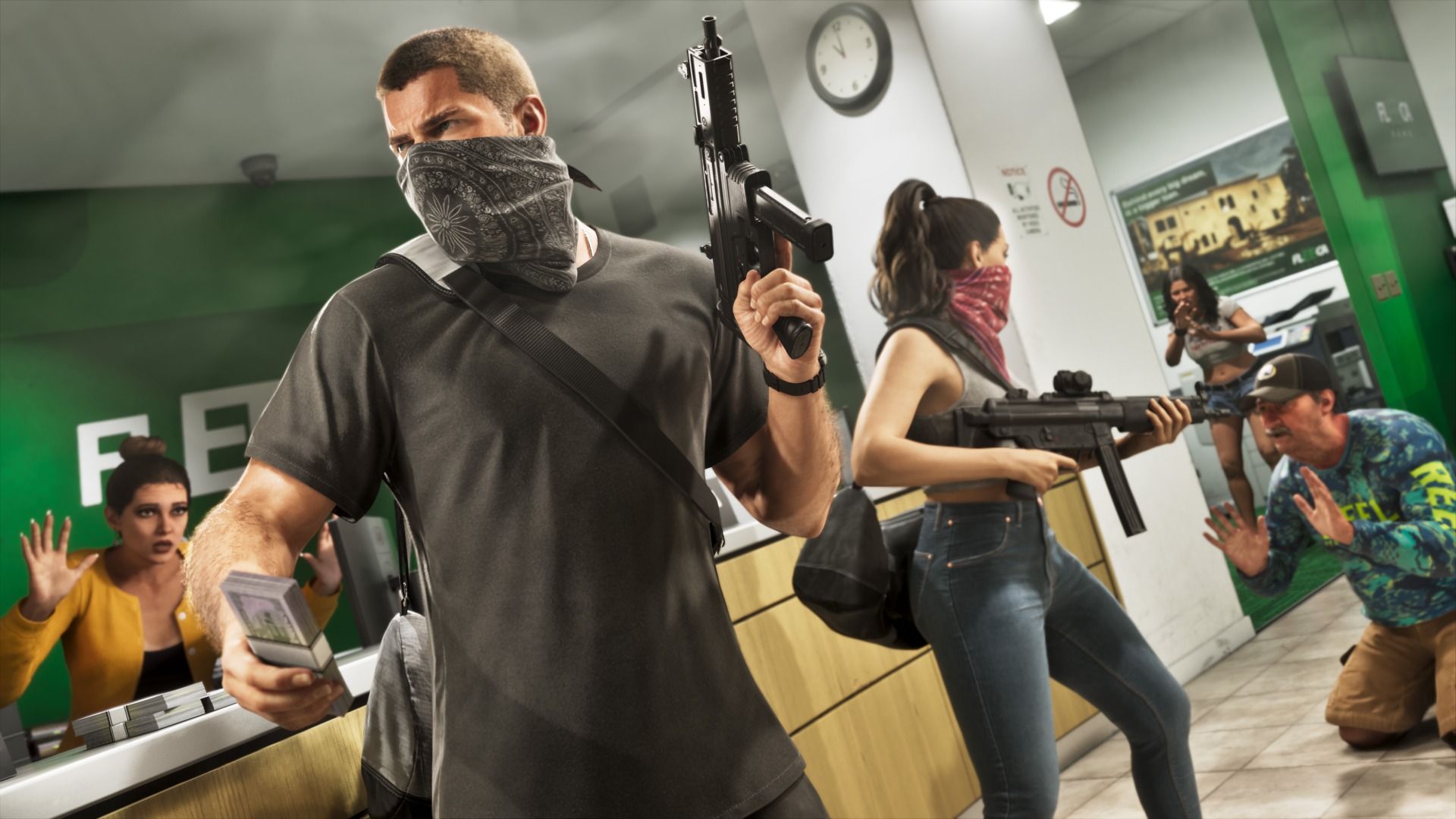
This Thursday, millions of Americans are planning a massive crime spree.
Carjackings, armed robberies, high-speed police chases, and possibly a few murders. The whole thing has been planned for years, and the perpetrators aren't even trying to keep it secret.
In fact, they're paying good money for the privilege.
Fortunately, the authorities have little reason to worry. The mayhem will take place entirely inside Grand Theft Auto VI, the long-awaited sequel to the world's most notorious crime simulator.
But while the police might be off the hook, religious leaders have a different question to consider.
If stealing cars and murdering strangers are sins in real life, what happens when you do them for fun in a video game?
Thou Shalt Not Steal (Unless It's a Video Game?)
For some Christians, the case against Grand Theft Auto is pretty straightforward. The franchise serves up a greatest-hits collection of forbidden behavior: theft, murder, prostitution, drug dealing, and enough colorful language to make a sailor blush. In GTA III, players could even hire a sex worker, kill her afterward, and recover their money. It was optional, but perfectly possible.
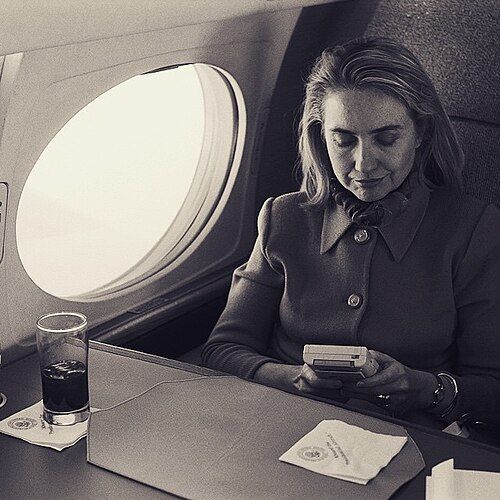
The backlash has been fierce for decades. In 2005, then-Senator Hillary Clinton condemned GTA for encouraging players to have sex with prostitutes and murder them, calling the resulting message to children "kind of hard to digest." Today, Alex Cooney of the child-safety nonprofit CyberSafeKids is equally categorical about GTA 6: "No parent should purchase this game for their child."
Pastor Matt Souza, founder of GodSquad Church, considers Call of Duty and Fortnite acceptable but discourages Grand Theft Auto because of its sexual content and gratuitous killing.
It's an interesting distinction. Shooting someone in a fictional war is one thing; shooting a fictional pedestrian because you want their car is apparently another. The worry isn't necessarily that virtual car thieves become real ones, but that enjoying cruelty might change our attitudes toward it.
In 2025, Islamic scholar Shaykh Zeshan Ahmed likewise argued that games promoting theft, adultery, and murder should be avoided. But Islamic scholars don't necessarily equate fictional crime with real wrongdoing.
Consider a question submitted to Britain's Darul Ifta Birmingham: A gamer who had looted virtual currency from others worried he'd stolen something valuable. Should he repay victims he could no longer identify?
Shaykh Umer Khan ruled that because the currency could be exchanged for real money, taking it constituted unlawful appropriation. He should estimate its value and donate that amount to charity on their behalf.
Stealing a fictional sports car from a computer-generated character is one thing. Taking something of real value from another person, even through a screen, is another matter entirely.
Buddhist monks have drawn distinctions of their own. When VICE interviewed monks in Thailand about violent games, one named Suttarchai explained that killing a fictional character doesn't necessarily create the same karmic consequences as killing a living being.
"It depends on your intention," Suttarchai explained. He argued that killing requires a living victim and a deliberate intention to harm. He once played Dragon Nest, but quit when it interfered with his studies.
Buddhist teacher Alexander Berzin takes a more cautionary view, arguing that even simulated killing can reinforce hostile mental habits.
Which brings us to a rather uncomfortable question: Is killing someone immoral when they aren't actually alive?
Can You Commit a Crime Against Someone Who Doesn't Exist?
Suppose you're playing GTA VI and decide to steal a sports car. The owner screams. The police give chase. You eventually crash into a palm tree.
In reality, nobody lost a vehicle. Nobody was injured. The pixels that made up the palm tree are doing just fine.
After all, actors pretend to murder people in movies. Novelists invent elaborate crimes. Nobody accuses the average mystery writer of being a serial killer. Why should a video game be different?
Australian philosopher Morgan Luck identified a particularly uncomfortable contradiction in a 2009 paper he called The Gamer's Dilemma. Most people don't bat an eye when someone murders a fictional character in a video game, Luck pointed out... But what if a game allowed players to sexually abuse children?
Suddenly, the whole "it's just a game" defense becomes a lot less convincing. Neither scenario involves an actual victim. If we excuse virtual murder because nobody really dies, shouldn't the same logic apply to other simulated atrocities?
GTA V allows attacks on adult pedestrians but has no interactive child pedestrians. Even Rockstar draws boundaries around virtual violence.
Philosopher Christopher Bartel offers another way to look at it. In Red Dead Redemption 2, another Rockstar game, players can encounter a woman campaigning for voting rights. Some gamers have posted videos of themselves brutally attacking her, complete with anti-feminist titles.
"The player’s actions may be fictional, but their attitudes are non-fictional," Bartel wrote.
A fictional character can't suffer. But attacking one because you despise the people they represent says something about the person holding the controller.
So where do we draw the line? Does simulated cruelty shape our character, or do games let us explore impulses we'd never act on? Nobody assumes Monopoly makes you a budding real-estate monopolist.
Do Violent Video Games Actually Make People Violent?
Researchers have spent years on this, but the evidence hasn't delivered a simple answer. Some studies link violent games to aggression; others find small or inconsistent effects. The American Psychological Association acknowledges evidence linking games with aggression but warns against blaming them for serious real-world violence, including mass shootings.
Aggression isn't the same thing as violent crime. Feeling hostile after a game doesn't establish a greater risk of assault. Declaring GTA responsible for real-world violence gets ahead of the evidence; claiming games could never influence anyone does too.
Meanwhile, some players have found a surprising use for a game famous for crime: attending worship services.
People Are Going to Church in Grand Theft Auto
Yes, really.
A June 2026 study in REVER: Journal for the Study of Religion examined evangelical worship in GTA roleplaying communities. One Brazilian group, Pastor do GTA, is led by a young man named Erick, who ministers to Assembleia de Deus G.T.A.—Geração Teocêntrica Avivada, roughly "Revived God-Centered Generation."
The virtual church has a pulpit, formally dressed worshippers, sermons, and prayers. It just happens to exist inside a game where the person sitting next to you might have committed a violent felony five minutes earlier.
Researchers observed Erick's livestreams for a month. Services typically attracted 15 to 40 participants, some of whom logged in specifically for church rather than crime.
The congregation also takes to the streets, singing hymns and sharing Bible verses with other players. When hecklers mock or disrupt them, members tend to offer blessings, pray, or walk away. In a game where disagreements can usually be settled with automatic weapons, that's a remarkable commitment to turning the other cheek.
One young participant reportedly credited Erick's preaching with helping them abandon thoughts of suicide and reconnect with their faith. It's a personal account, not a verified outcome, but hardly sounds like mere pretending.
In one corner of Los Santos, someone could be committing a spectacular armed robbery. Somewhere else, another player could be attending a virtual church service. Presumably, the collection plate is safe from anyone currently carrying a rocket launcher.
And it's not as though the franchise has avoided religion itself. GTA V features the Epsilon Program, a fictional religious movement whose mysterious teachings and expensive rituals parody real-world organizations. Rockstar has never been particularly interested in treating sacred cows gently. Yet real believers are building a community inside its irreverent world.
GTA VI Wants You to Have a Conscience
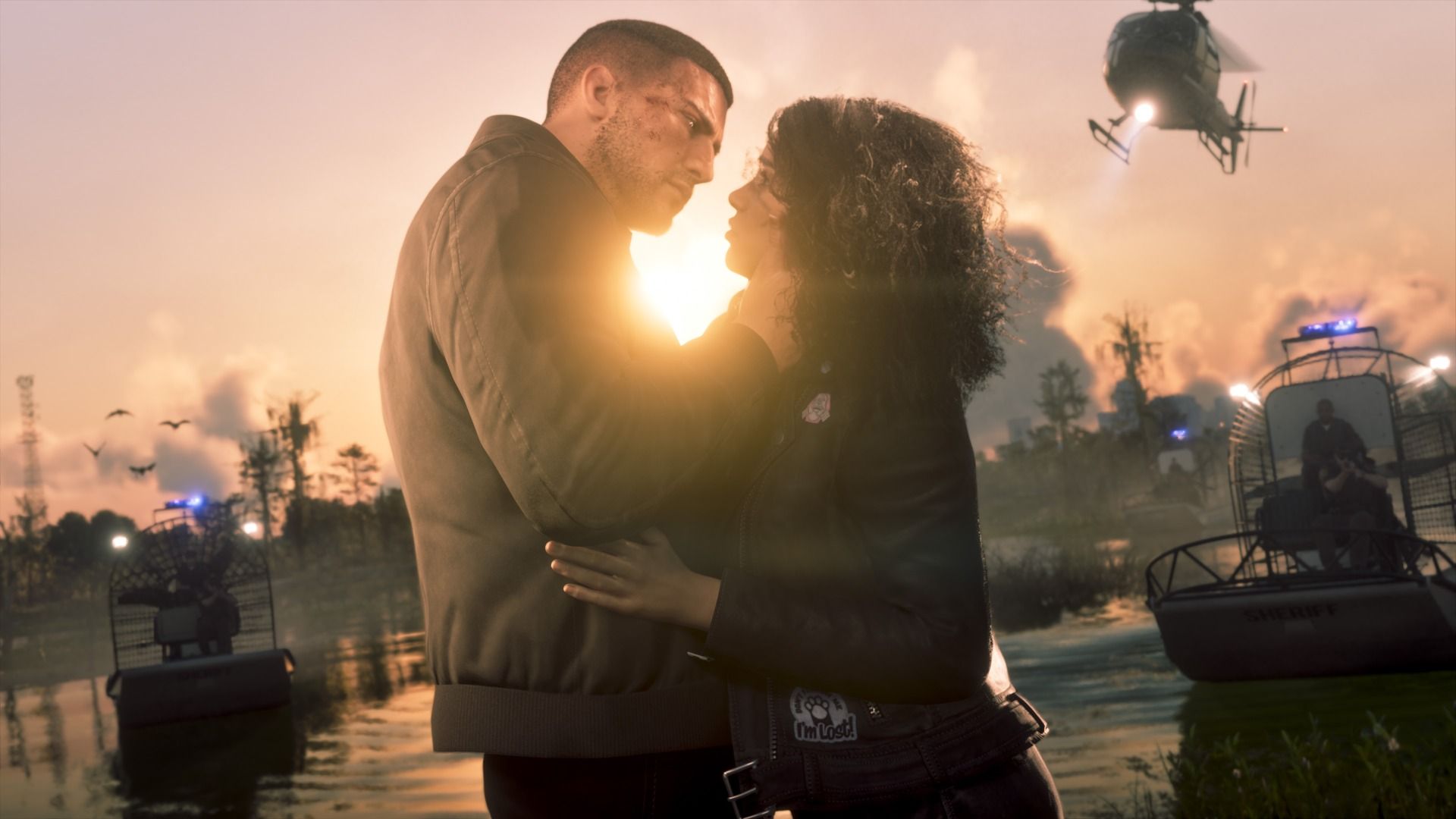
Here's a twist from the franchise that made car theft the linchpin of its success: Rockstar says Grand Theft Auto VI will introduce gameplay systems designed to encourage empathy.
In a November 15 Guardian interview, Rockstar North co-studio head Rob Nelson described protagonists Jason and Lucia, whose romance players can shape.
They can go on dates, dance, or hold hands. Neglecting the relationship will have consequences. "Whether it remains a romantic relationship is in your hands," Nelson said.
In one demonstration, Jason politely asks permission to pet a woman's dog. Elsewhere, the couple can visit a meditation retreat. Naturally, they can also rob a liquor store. Romance is complicated.
"We've tried for the first time in a GTA to provide mechanisms that encourage it, for those who want to," Nelson said of empathy.
Players can also scout targets and disable security cameras before robberies. In The Guardian's demonstration, a jewelry-store robbery went sideways, leaving Jason and Lucia fleeing police helicopters before changing clothes and lying low.
Of course, there's a certain absurdity in a video game encouraging empathy by teaching players to rob a jewelry store more thoughtfully.
Whether the systems encourage moral reflection remains to be seen. Still, if choosing cruelty in a fictional world can reinforce troubling habits, couldn't choosing compassion sometimes reinforce better ones?
Does What Happens in Vice City Stay in Vice City?
On November 19, millions of players will enter Vice City, where they'll undoubtedly do things that would earn them lengthy prison sentences in real life. Some will play for the story. Others will immediately test how many police cars they can attract before the whole situation becomes unmanageable.
Religious thinkers and secular philosophers disagree about what those choices mean. Some worry about taking pleasure in simulated wrongdoing. Others put more weight on intention and the difference between fiction and actual harm.
If nobody gets hurt when you commit a crime in a video game, is there anything wrong with enjoying it?

I'm not interested in games never have been i only play Solitaire and watch YouTube ans shop online