


It’s likely you’ll eat at least one gingerbread cookie this holiday season. The perennial holiday favorite is a fixture of Christmas parties everywhere, both for its rich mix of sweet and spice, as well as the iconic gingerbread man shape.
Few things taste more like Christmas than gingerbread, but did you know this classic holiday sweet harbors a dark secret hidden behind its icing smile? From origins in ancient Roman harvest festivals, to Queen Elizabeth’s court, to 17th century superstitions about witches, there's a fascinating tale behind how this holiday icon made its way to your Christmas cookie platter.
This is the shockingly dark history of gingerbread.
Ancient Pagan Origins
Let's start in ancient Rome, where man-shaped biscuits were a regular fixture during Saturnalia, the raucous seven-day harvest festival celebrated every year. During the celebration, the biscuits were eaten by the Romans as a cheeky symbol of human sacrifice common in harvest festivals of centuries past.
While it's unknown if they were made with ginger or not, the spice was readily available and popular in ancient Rome. In any case, this idea of a cookie shaped like a man dates back thousands of years.
Also on offer were edible versions of sigillaria, human-shaped wax or terracotta figures gifted by Romans to friends and family on the last day of Saturnalia.
Many historians believe that Christians later “borrowed” much of the Saturnalia traditions and imagery for Christmas – including the tradition of baked goods and gift-giving.
Queen Elizabeth’s Court
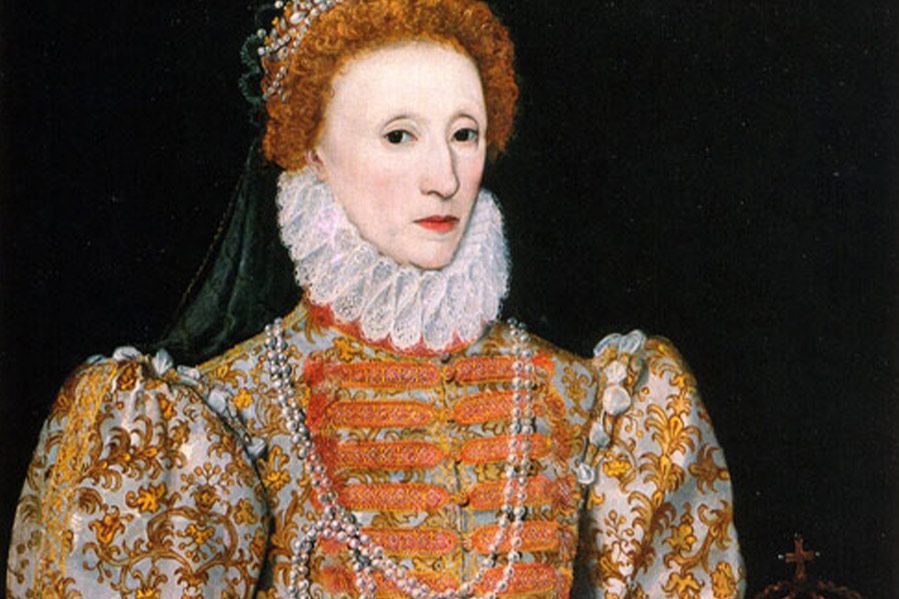
Though ginger fell into obscurity in Europe after the collapse of the Roman Empire, it enjoyed renewed popularity after being brought back over to the West from China in the 13th century. Soon, gingerbread became a fixture in royal courts.
However, history’s greatest gingerbread lover may just be Queen Elizabeth I, who historians believe is responsible for the gingerbread man as we know it today.
Queen Elizabeth reportedly asked to have the dough specifically shaped as people – a novel idea in 16th century England. Complete with elaborate decorations to resemble dignitaries visiting her court, these beautifully designed cookies served not only as dessert, but also as clever tools of diplomacy by flattery.
Use in Witchcraft
Perhaps inspired by Queen Elizabeth and her many suitors, practitioners of folk magic began making gingerbread men as love tokens for young women, who ate the cookies in the hopes it would inspire marriage proposals.
But at some point, gingerbread’s place in folklore became twisted. A different idea took hold: that witches baked the treats not as symbols of love, but death.
The upheaval came about swiftly, likely thanks in part to the Witchcraft Act of 1604 – passed by the paranoid King James I – which made it a crime to use witchcraft or engage in other folk practices like enchantment or divination. Of all things, gingerbread got swept up in the hysteria, as worried citizens came to believe that witches baked the gingerbread men as voodoo doll-style effigies, consuming them to cause pain or even death in their enemies.
The hysteria was so widespread that superstitious Dutch magistrates outlawed baking and eating gingerbread men entirely, citing their link to witchcraft and occultism. And in much of Europe, witchcraft “tests” were often administered to suspected witches – with deadly results.
In a few short years, gingerbread men went from a common fixture in English courts to a tool of the demonic in the court of public opinion.
Grimm Tale, Happy Ending
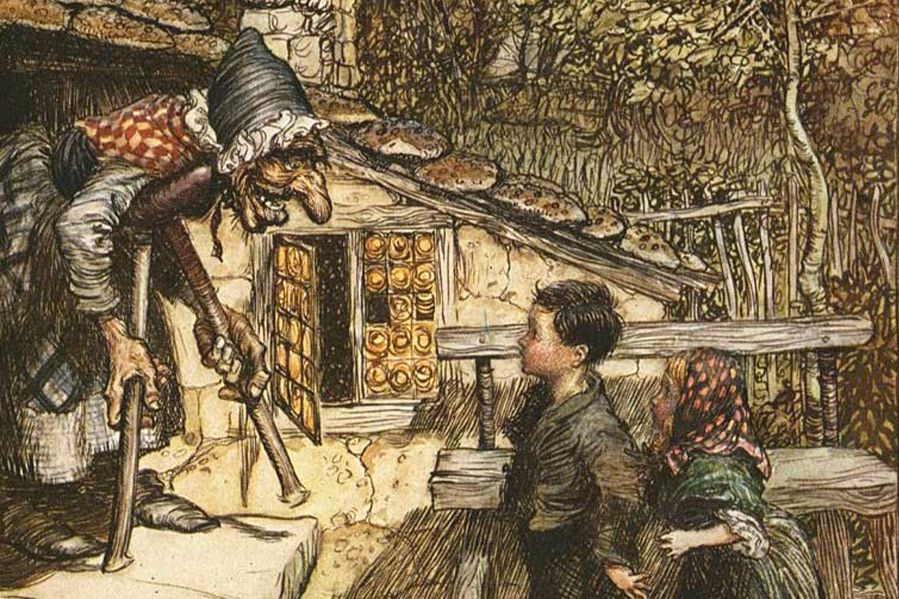
So how did we get from “executed on sight for baking gingerbread men” to “perennial holiday staple”?
Though the persecution of witches had ceased by their time, the Brothers Grimm used the link between witches and gingerbread in their fairly tale “Hansel and Gretel” – the sensitive story of a cannibalistic witch who lures two young children to her gingerbread house, only to meet her comeuppance when the precocious youngsters shove her into her oven.
The story ignited a resurgence in popularity across Europe and North America, inspiring other folk stories and fairy tales like “The Gingerbread Man” (this time, the dark overtones were replaced with a healthy dose of whimsy). The renewed popularity of gingerbread aligned with the ascendance of Christmas as a national holiday in the United States, and soon the two became intertwined.
As memories of the past faded and traditions solidified, gingerbread people (and their houses) evolved into indelible symbols of the holiday season.
It’s a surprisingly twisted tale for such a simple treat – from ancient Pagan origins, to Queen Elizabeth’s court, to being outright illegal in parts of Europe, to the pages of Grimm fairy tales, to the modern Christmas cookie plate.
So next time you eat a gingerbread man, remember that you’re biting the head off of a cookie with a whole lot of history!
25 comments
-
 Barbara Bliemetsrieder
Here in Germany, Gingerbread is called Lebkuchen and during the Middle Ages it was made by Pharmacists for sick and weak Patients. Because of its rich Ingredients, it helped to strenghten People. But not Everybody could afford them. Plus here they have always been in rund or square Shapes and never Figures. And never been Evil. Lebkuchen means Livingcake. A Cake for Living. Love from Germany ❤️🎄✨️
-
 Leslie A. Hulberg Née Tomasura
It always amazes me when “witches” and other non-Judeo/Christians practices are referred to as “dark.” It makes one wonder why they feel they need to reference something that they do not understand as dark. It seems like a subtle way to say only our faith is good and light and every other faith is dark and bad. To which I would argue, there is plenty of good and bad in every religious belief. Even within the deities of each faith there has been good and evil. Didn’t the God of Abrahamic religions cause a flood that killed millions? Or tell a man to sacrifice his son? Didn’t the God of the Abrahamic faiths even sacrifice his own son? I don’t think the people who were on the other side of those particular coins thought what was happening was good. But who am I to judge?
-
 Ari Joseph Bertine
I honestly think that the dark history they are referring to is the witchcraft hysteria that this cookie got swept up in. They're not blaming the gingerbread cookie, it just DOES have a dark history because it was made into a fake symbol of something that didn't exist, in order to help build up a big excuse to persecute and murder people. Very dark.
-
-
 Michael Patrick Ferrell
Kill pedophiles and their protectors
-
 Ben
Ben
That's not very love and light and rainbows and unicorns of you.
-
-
 Ryan
Ryan
I agree with you 100%. It makes no difference now. Why can't people just try and be merry around this time? It's supposed to be a time for family, loved ones, and being kinder to one another. Sadly some people also seem to only pick Christmas to be kinder these days. Either way, I say enjoy it while it lasts. Merry Christmas and Happy almost New Years, to you and yours.
-
 Merlin
It is amazing how fear can manipulate the mind to believe those who want to control. Proof how fragile our "souls" are.
-
 Joseph Grieco
The Gingerbread we enjoy(?) today is NOT the historical Gingerbread the Medieval and Renaissance era folks would know. Most folks today would take a bite of it, spit it out, and run for a glass of something to get the taste out of their mouth. They used raw honey instead of molasses, and were heavier on the ginger than most folks are used to.
-
 nicole irving
oh my lord i dont even know where to start with this it seems like this church is falling victim to the satanic panic when it is supposed to be a ministry that welcomes everyone, including pagans.
the history of gingerbread men, while used in olden times, can also be used as a symbol of healing an individual with stomach problems or pain Ginger has many healing properties
not to mention the symbol of joy as a traditional holiday treathappy holidays to all quit hatn !!!
-
 Pastor George Day
nicole irving
Would I use witchcraft for healing?
Darling, absolutely — but only the kind that won’t get me kicked out of Tesco.
-
-
 Patricia Ann Gross
How is this any more dark and sinister than Christians wearing an instrument of execution around their necks as a beloved symbol of the sacrifice of Jesus? Some even wear one with Jesus still hanging on it. Just because it was Pagan or that it symbolized a human sacrifice doesn't make it "dark and sinister." It is (perhaps) done as a reminder of what has happened in the past and needs not happen in the future.
-
Ari Joseph Bertine
I think they are referring to the hysteria that came out of left field when King James I started flipping out about imaginary witches--not pagans, he was imagining an exaggerated, fictional type of scary witch that never existed--and started making laws to persecute anyone who could be accused; outsiders, people who didn't fit in exactly, people too poor to buy a reputation, people on the wrong side of a wealthy coveter's attention, etc. It's incredibly dark that a simple cookie became a excuse to persecute and horribly torture and kill other human beings. Being associated with the witchcraft hysteria is indeed a very dark history, but they aren't blaming the cookie itself for that.
-
Patricia Ann Gross
I was referring to: "In a few short years, gingerbread men went from a common fixture in English courts to a tool of the demonic in the court of public opinion. ... So how did we get from 'executed on sight for baking gingerbread men ...'" sounds that way. It's like being arrested for wearing a cross. There are things that are certainly "dark and sinister," and most religious symbolism is NOT among them. They are often symbols of a dark and sinister time or event.
Please, forgive me if we are saying the same thing.
-
-
-
 Colleen McAllister
Some interesting history. All of our traditions came from somewhere. And how they were celebrated or not makes little difference. It's how we celebrate or use them now. Merry Christmas
-
 Dr. Zerpersande, NSC
Well, except that the entire Jesus-thing is just a collection/mish-mash of previous pagan beliefs/myths/rituals.
-
Pastor George Day
Dr. Zerpersande, NSC
And where did you get that from?
-
Dr. Zerpersande, NSC
Not where I got it from, where the Xtian religion got it from.
The Dying-and-Rising Savior Osiris (Egypt): Osiris was dismembered by Set, reassembled by Isis, and became king of the underworld, often cited as a parallel to resurrection. Attis (Phrygia/Rome): Associated with the Cybele cult, Attis was a fertility god who died and was resurrected annually in the spring. Adonis (Syria/Greece): Similar to Attis, Adonis died young and was mourned, representing the cycle of life and death. 2. Virgin Birth and Miraculous Origins Dionysus (Greece): Often depicted as being born of a mortal mother (Semele) and a divine father (Zeus), sharing the "son of god" archetype. Mithras (Persia/Rome): Though debated, some traditions held that Mithras was born from a rock or virgin, often associated with light and the sun. Buddha (India): Traditions of the Buddha's birth include miraculous, immaculate aspects that predate Christian narratives. 3. The Sacred Meal (Eucharist) Dionysian Mysteries: Rituals involving the consumption of wine, which was considered the blood of the god, and tearing apart a sacrificial animal to embody the deity. Mithraic Rites: Initiates shared a ritual meal of bread and water/wine, which early Christian apologist Justin Martyr claimed was a demonic imitation of Christian Eucharist. 4. Iconography and Symbolic Stories Hermes/Asclepius (Greece): Jesus’s role as a teacher, healer, and the "Good Shepherd" bears visual and functional resemblances to Hermes (as shepherd) and Asclepius (as the divine healer). Sol Invictus (Rome): The celebration of Jesus’s birth on December 25th was established in the 5th century, aligning with the Roman holiday for the "Unconquered Sun". Moses (Hebrew Tradition): The narrative of Jesus escaping the Massacre of the Innocents in Egypt echoes the story of Moses, where Hebrew male babies were killed by a pharaoh. 5. Mythological Themes 12 Disciples: Sometimes linked to the 12 signs of the zodiac that surround figures like Mithras in artistic depictions, representing a solar deity traversing the seasons. Baptism: Purification rituals existed in various mystery cults (e.g., Isis) long before the rise of Christianity.
-
-
-
-
 Reverend Paula Copp
I’m a pagan witch. It’s nice to see the old practices are still in place…
-
 Wendy Theriot
Blessed be
-
Pastor George Day
Your creed stands condemned and leads only to ruin, Paula. Repent now.
-
-
 Robert J Giammarco
Very interesting and intriguing story. Have a gingerbread man and have Merry Christmas!
Paganism and witchcraft have been around for centuries. It's alive and well today. Too much evil abounds.
Enjoy your Christmas and New Year.............
-
 Nicholas J Page
First time I have heard of this is don't eat ginger bread men at Christmas and Pagans were not the first Christians came first.We never heard of Pagans at schools or colleges its only just within the last 5 years i have heard of them and im 67.
-
 Michael Hunt
The fact that you weren't taught the history of Paganism by (I assume) a school in a Christian society doesn't mean the history doesn't exist. I wasn't taught about the Tulsa Race Massacre when I was in school but I learned after that it did, in fact, happen and was conveniently left out of American history books, likely for fear of making the country look bad because propaganda.
-
 Barbara Harris
I am older then you and I heard of Pagans when I was in junior high. It was when I first realized that was that path that I would walk.
Pagan first came into use in the 4th century Rome and was used to describe a someone who lived in rural areas. Around the 15th century it was used to describe anyone who was non-Jewish and non-Christian faith. So if you had never heard the word Pagan, even in college you must have been in a very secular school.
-

Well written.