

Imam Sajid R. Bhuiya got as far as “Good evening, everyone.” People in the audience were loudly reciting the Lord’s Prayer. He tried again, and their voices rose over his.
It was November 16 in Bartow, Florida, and the City Commission chamber was standing room only. Mayor Tanya Tucker had asked for respect and warned that people could be removed. City Attorney Sean Parker came down from the dais and stood beside Bhuiya. Police officers approached the audience.
After officers directed some of the people disrupting the meeting to leave, the Lord’s Prayer was still faintly audible from the lobby. Bhuiya read from the pages he had brought. Reporter Steve Steiner saw his hands shake. His voice held.
Bhuiya read in English from the Quran, quoting a verse about God making humanity into different peoples and tribes “so that you may know one another.” He asked God to give the commissioners wisdom, fairness, and compassion.
“Help us to treat one another with dignity, even when we disagree.”
Bhuiya finished with “Amen.” There was some applause. Then came the Pledge of Allegiance.
One Christian witness who recorded the confrontation was equally disturbed by the protesters' behavior. “As a Christian, it's mind-blowing to me,” Lauren Smith told Tampa Bay 28.
If you've ever attended a city council meeting, you know they're not usually this exciting. But the tradition of opening local government meetings with prayer has become a contentious question across America. Who gets to pray? Who decides? And what happens when someone offers a prayer the people in the room don't particularly want to hear?
Who Gets to Say the Prayer?
The controversy in Bartow had been brewing before Bhuiya approached the microphone. Commissioners reportedly received 214 emails about the scheduled Islamic invocation.
Christian prayers had opened nearly every commission meeting during Parker's 19 years with the city. He explained that a member of a local Hindu temple had previously expressed interest in giving an invocation, but scheduling hadn't worked out. He suggested inviting a local mosque instead.
"So if you want to be mad at somebody, you can be mad at me," Parker told the audience.
There are several ways cities select invocation speakers. Some invite clergy from local congregations, others maintain volunteer lists, and some leave the choice to elected officials.
In Boston, individual council members choose their own speakers. When The Satanic Temple sued over its exclusion, a federal appeals court upheld that arrangement in 2024.
Hailing Satan in Iowa
On October 6, the Ottumwa City Council in Iowa opened its meeting with a prayer to a "dark father."
Matt Dalbey, a former council member and member of The Satanic Temple of Iowa, invoked knowledge and freedom of thought before finishing with "Hail Satan."
Local Christian pastor Rick Bick was appalled. After the Pledge of Allegiance and roll call, he approached the microphone to ask the council to reverse what he considered a curse on the city. Mayor Ben Foote eventually called for thirty seconds of silence.
Ottumwa had adopted its invocation policy in January 2026 by a 4–1 vote. It allows city residents to volunteer through written requests, schedules speakers on a first-come, first-served basis, and prohibits proselytizing or disparaging other beliefs.
City Administrator Phil Rath explained the decision: "We can't discriminate based off others' beliefs or religions."
Dalbey returned to the podium on November 3, delivering a different invocation centered on religious liberty and freedom of expression. It still concluded with "Hail Satan."
In response, a man in the audience loudly recited the Lord's Prayer. When he refused to leave, police escorted him out.
The Satanic Temple, whose members generally don't believe in a literal Satan, frequently uses such opportunities to challenge religious favoritism. As the group's cofounder Lucien Greaves put it, “If they can't reconcile themselves to the fact that they may occasionally get Satanists giving invocations, then they should discard the policy entirely.”
For Christians who regard Satan as evil, hearing his name invoked over their community can feel like the opposite of a blessing.
As we previously reported, an Alaska borough assembly faced a similar controversy following a Satanic invocation in 2016.
But why invite religion into council chambers in the first place?
An American Tradition Older Than America
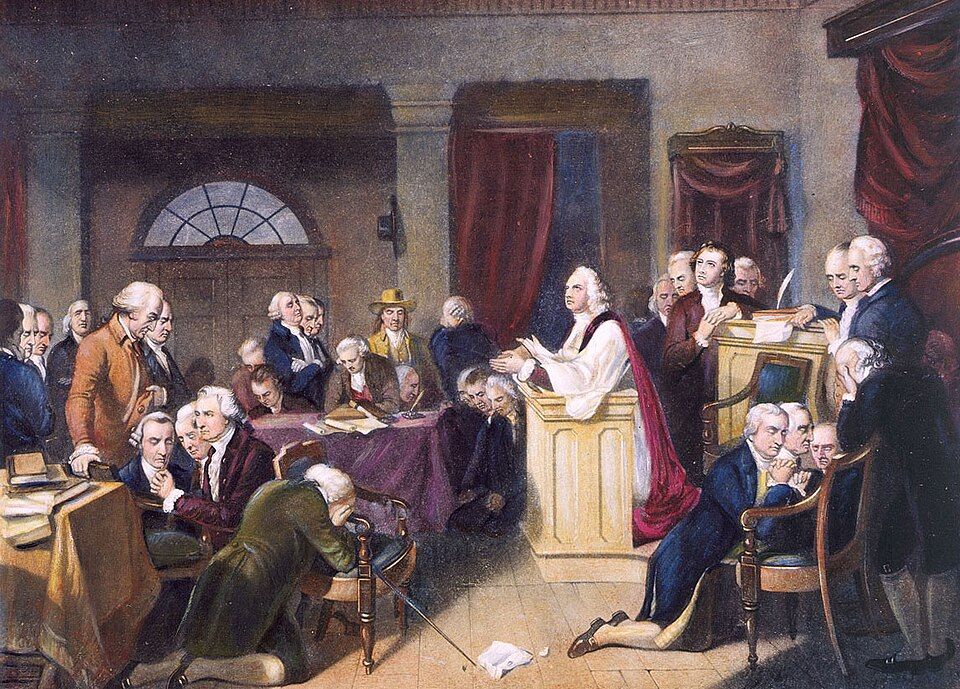
Prayer before government meetings in America is much older than the United States itself.
In March 1686, Boston resident Samuel Sewall recorded that Samuel Nowell opened a town meeting with prayer. The practice was far from consistent, though... Two years later, Sewall described the opening of another meeting in just two words: "No Prayer."
Nor was it a settled question. When delegates gathered for the First Continental Congress in September 1774, a proposal to open the meeting with prayer met resistance. John Jay and John Rutledge objected that delegates represented too many religious traditions to participate comfortably in the same worship. Samuel Adams disagreed: He said he could hear a prayer from a virtuous, patriotic clergyman even if they didn't share every religious conviction. He recommended Jacob Duché, an Episcopal minister.
Duché read Psalm 35 and prayed for Congress, Massachusetts, and especially Boston, which delegates had heard might have been attacked by British forces.
"I must confess I never heard a better Prayer," John Adams later wrote to his wife, Abigail.
America's founders were arguing about religious diversity and public prayer before they had even agreed on a country. Congress ultimately established legislative chaplains, and both chambers continue to open sessions with prayer. In 1983, the Supreme Court upheld Nebraska's practice of employing a legislative chaplain, citing the country's longstanding tradition.
But would the same reasoning apply to ordinary town meetings?
The Town That Took Prayer to the Supreme Court
For years, Greece, New York, began its town board meetings with a moment of silence. That changed in 1999, when Town Supervisor John Auberger introduced spoken prayers after attending county legislature meetings that opened with invocations.
From 1999 through 2007, every participating minister was Christian.
Residents Susan Galloway and Linda Stephens objected. They said they attended meetings to discuss local issues, but instead found themselves listening to prayers invoking Jesus Christ and Christian doctrine. Their 2008 lawsuit sought more inclusive invocations, rather than an outright ban on prayer. The town maintained that it welcomed all faiths and that its overwhelmingly Christian roster reflected local congregations, not deliberate exclusion.
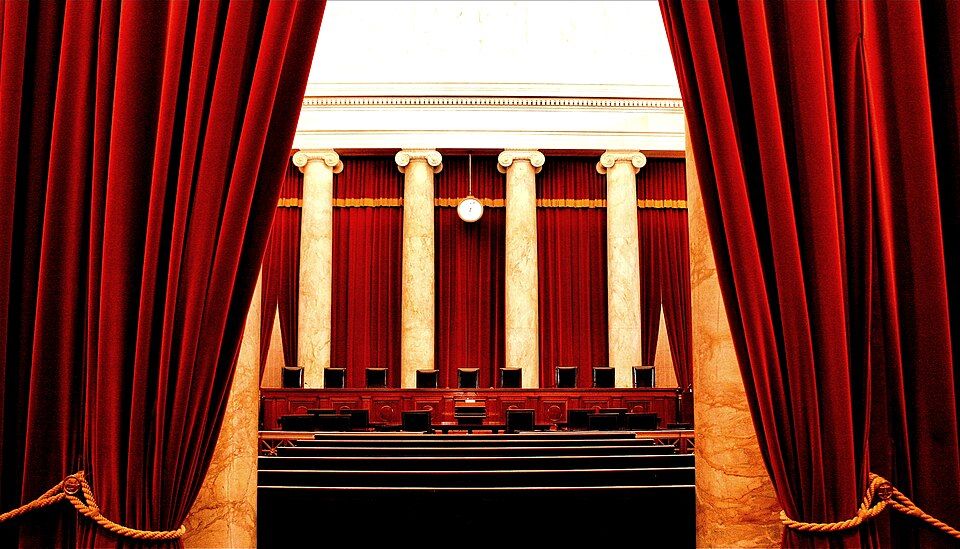
In 2014, SCOTUS ruled 5–4 in Town of Greece v. Galloway that the practice of prayer before town meetings was constitutional.
Justice Anthony Kennedy's majority opinion concluded that government could permit prayers expressing particular religious beliefs. Courts shouldn't require clergy to strip their prayers of distinctive language, although invocations couldn't be used to disparage other faiths or pressure citizens into participation.
Justice Elena Kagan dissented, emphasizing the difference between legislators praying among themselves and ordinary residents appearing before officials to request government action.
Even Christians disagreed over the decision.
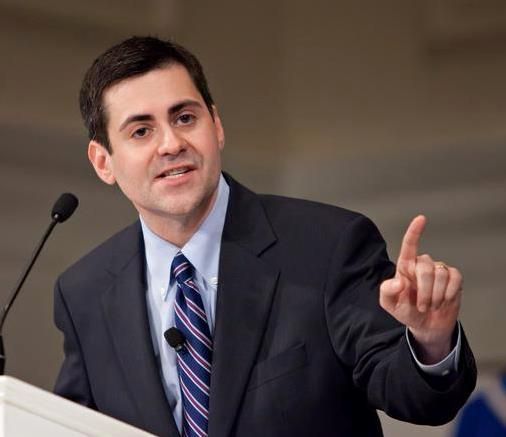
Russell Moore, then president of the Southern Baptist Convention's Ethics & Religious Liberty Commission, welcomed the ruling. For Moore, opening a government meeting with prayer serves an important purpose: reminding elected officials that they answer to an authority higher than themselves. "The State isn't ultimate," he wrote. Elected leaders may have the votes to pass a law, but that doesn't necessarily make it right. In his thinking, prayer encourages them to consider their obligations to God before exercising their power.
The Baptist Joint Committee for Religious Liberty sided with the challengers, arguing that prayer must be voluntary. The concern was that citizens seeking help from government officials might feel pressured to participate in those officials' religious ceremonies.
It's a familiar concern in disputes over prayer at school board meetings.
There's no reliable national breakdown of municipal invocations by religion. But one federal court record documented that 32 of Boston's 35 invocation speakers during a twelve-month period appeared to represent Christian organizations or churches.
What About Thirty Seconds of Silence?
Ottumwa Council Member Cara Galloway had opposed her city's invocation policy from the beginning, casting the sole dissenting vote in January.
"Accessing one's government should not require sitting through prayer," she wrote.
Following Dalbey's controversial November appearance, she proposed an alternative: replacing spoken invocations with a regular moment of silence. Residents could pray privately, reflect, or simply prepare for the meeting. The council didn't immediately vote on her proposal.
It turns out, her proposed alternative wasn't a novel one. Phoenix, Arizona, had actually tried to replace prayer with silence a decade earlier, with a rather revealing outcome.
In February 2016, The Satanic Temple was scheduled to deliver an invocation at a Phoenix City Council meeting. Some council members wanted to prevent it, but the city attorney warned that excluding the scheduled speaker could be unconstitutional.
Instead, the council voted 5–4 to replace spoken invocations with a moment of silence. That solution lasted only a few weeks.
Critics complained that the city had effectively eliminated public religious expression to avoid one unpopular prayer. In March, the council voted 6–2 to restore spoken prayer, this time delivered exclusively by volunteer police and fire department chaplains.
Mayor Greg Stanton opposed the reversal, warning that the departments could inherit the difficult task of deciding who qualified as a chaplain.
Controversially, Phoenix found a way to keep public prayer without reopening the microphone to everyone.
Back in Bartow
After the disruption in Bartow, Commissioner Trish Pfeiffer spoke about her own Christian faith while criticizing the treatment Bhuiya had received.
She argued that respecting another person's religious freedom did not require her to abandon her own Christian faith. She subsequently invited the room to join her in the Lord's Prayer.
Bhuiya later told a television reporter that he'd regarded the invitation as an honor. His message, he explained, was meant for everyone, regardless of faith.
"I'm a human, you're a human."
Bartow's commission had invited a Muslim to offer a prayer about dignity and understanding. Some of its residents tried to drown him out with a Christian prayer. In Ottumwa, the same prayer was used to protest an invocation to Satan.
Should city councils continue opening meetings with spoken prayer, provided every faith gets a turn? Or would a moment of silence better serve everyone who walks through City Hall's doors?

0 comments