

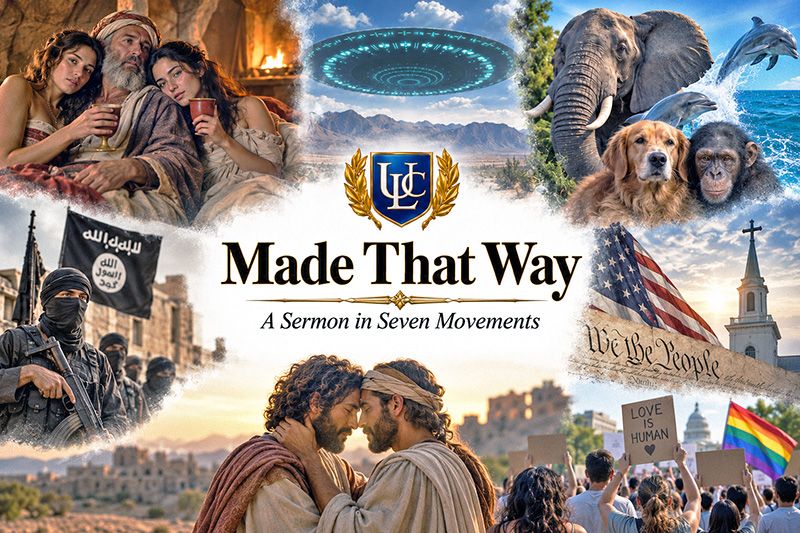
 The following guest sermon was submitted by ULC Minister George Freeman. All ULC Ministers are invited to contribute their own sermons for consideration/publication. To submit a sermon, please email it to sermons@ulc.org.
Before you turn this page, sit still for a minute.
Every one of us got a body we did not pick, a heart that turns the way it turns, and a book that somebody else taught us how to read. Most people die without ever checking that book for themselves.
I have carried that question through fifty years of ministry, and I have never once watched a man answer it without flinching.
What follows is not a request for anybody’s permission. It is a reading, done out in the open, with the book lying on the table. Seven movements: what Genesis actually says; the same story told again in another book; the witnesses the pulpits walk past; the whole animal kingdom; the sky over the desert in the summer of 1945; the countries that still kill over this; and the one weapon I will not pick up, even to win.
Read with the book open beside you, and check me line by line. Where I am wrong, the text will say so. And where I am right, it has been saying so the whole time, and we were the ones not listening.
Hold on to the question. By the end it will weigh more than you expect.
1. Lot and his Daughters
The Chapter Does Not Say What You Were Told
For almost fifty years I have been a minister. In that time I have watched men climb into pulpits, open Genesis 19, and tell frightened people that God burned down a city because two men loved each other.
Here is what that chapter actually says.
Two visitors come to Sodom. Lot takes them into his house. The men of the city surround the door and demand he send the strangers out. The Hebrew word is yada — to know. It shows up more than nine hundred times in the Hebrew scriptures, and almost every time it means exactly that: to know somebody, to find out who they are.
What that mob at the door wanted was rape. Not love. Not a relationship. The gang rape of two strangers.
And then comes the part no preacher reads out loud. Lot offers the mob his two daughters instead.
Stop and think about that. If the sin at that door was men wanting men, why offer women? A mob that wanted men would not take the trade. The offer only makes sense if desire was never the point. Power was the point. They wanted to break somebody — a stranger, a guest, anybody who could not fight back. And Lot, scared out of his mind, handed over the two people in his house who could not fight back either.
That is not a story about love. It is a story about a city that quit protecting strangers.
Do not take my word for it. Take the prophet’s. Ezekiel names the sin of Sodom right out loud in chapter 16, verse 49:
Pride. Too much food. Too much free time. And she would not help the poor and the needy.
That is the prophet’s own list. Arrogance and a closed hand. Same-sex love is not on it. It is not even hinted at.
And out of that city, men built a word. They hung it around people’s necks for two thousand years — and the city was never guilty of the thing the word accuses.
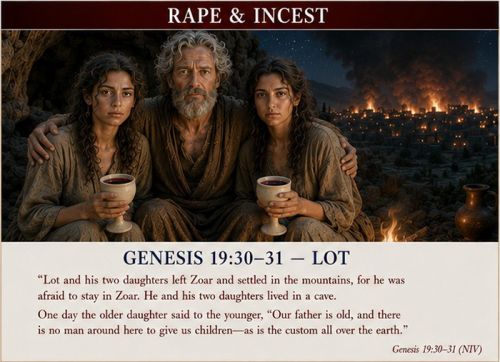 Now read to the end of the chapter, if you have the stomach for it. That same week, in a cave, Lot’s two daughters get their father drunk and have sex with him. Incest. The same daughters he had offered to a mob. The text tells it plainly and moves on. No thunder. No fire. Not one word of blame.
And out of that night, the writers tell us, come two nations — Moab and Ammon. Centuries later, out of Moab comes Ruth. Out of Ruth comes Obed, then Jesse, then David. The king. The psalm writer. The family line that Christianity claims as its own.
Sit with that. The bloodline to the throne runs straight through that cave.
I do not bring it up to shame anybody living. I bring it up because one chapter holds two terrible things — a mob that came to rape, and a father and daughters who committed incest — and the world built its slur out of neither one. It built a slur for two adults who love each other, which is not in the chapter at all.
Men made that choice. God did not.
2. The Quran and the Rooftop
The Same Story, Told Again
Now follow the story out of Genesis, because it did not stay there.
More than a thousand years later, the Quran picks up the people of Lot and tells it again — eight times over, and more. The messengers arrive. The city turns on them. The city is destroyed. Same story, carried forward. The emphasis moves a little: Genesis shows a mob at a door, the later telling speaks of men going after men.

But hear what is not there. Nowhere in that book is there a verse that says to stone a man, burn him, or throw him off a roof. The Quran tells the story. It condemns the city. It does not hand down a sentence.
The sentence came later. It came from reports collected more than two hundred years after Muhammad died, and from the legal scholars who argued over those reports afterward. The rooftop was their idea. It was not scripture’s.
Mark this, because it is the whole point of what I am telling you. When a young man is thrown off a roof today, he is not falling on the authority of Genesis. He is not falling on the authority of the Quran. He is falling on the authority of men who came along centuries after both books and decided that a story about a mob at a locked door was permission to kill.
And I say that as a man whose own house did the identical thing with the identical chapter. American pulpits never needed a rooftop. They had a word, and they hung it on children.
There are Muslim scholars today who throw those reports out as bad law. There are Christian scholars who have finally read Genesis 19 with clear eyes. In both houses the argument is alive. In both houses the killing was never the book’s doing. It was ours.
One line I will not let blur. Nothing I preach here excuses sex that is taken instead of given. Rape. Sex without consent, of any kind. A hand laid on a child. That was the sin standing at Lot’s door, it is the sin now, and no reading of any scripture will move me off it. The line was never between men and women. The line has always been between what is freely given and what is seized.
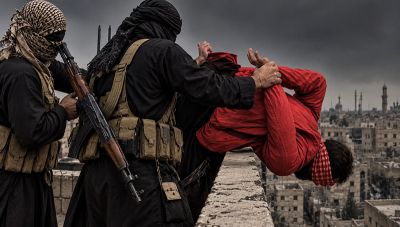
And this is not old history. In 2015 the Islamic State took men in Syria and in Iraq, accused them of sodomy, and threw them off the roofs of buildings. The Associated Press, reporting that December, counted at least thirty-six. In Palmyra the bodies hung in Freedom Square for two days, and a sign was pinned to each man’s chest:
He received the punishment for practicing the crime of Lot’s people.
Read that twice. They did not write the crime of rape. They did not write the crime of the shut door and the stranger turned away, which is what the prophet said the crime of that city actually was. They wrote Lot — and they had his chapter exactly backward, in the same way the pulpits of my own country have had it backward for four hundred years. One house nails up a sign. The other hangs a word around a child’s neck. Neither one of them is reading.
3. David, Jonathan, and the Eunuchs
The Witnesses They Skip
Open Second Samuel and hear David standing over the body of Jonathan:
Your love to me was wonderful, greater than the love of women.
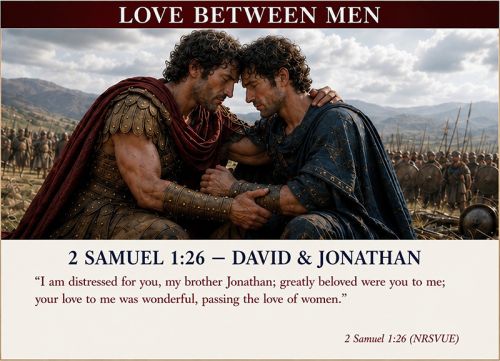 I will not tell you exactly what passed between those two men. No honest person can. But I will say this much. It is a strange faith that reads that line and feels nothing. A man stands over the body of the person he loved most in this world and says your love meant more to me than the love of women — and the church has decided that this is ordinary. Brotherhood, they say. Fine. Then let us be consistent, and read every love as generously as we read that one.
And while we are among the witnesses they skip, turn back to Ruth.
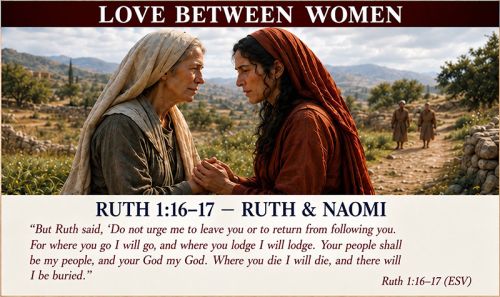
Naomi is her mother-in-law, and the marriage that tied them together is over — the husband is dead, the duty is finished, and Naomi tells her plainly to go home to her own people. Ruth will not go. Here is what she says instead:
Where you go, I will go. Where you stay, I will stay. Your people will be my people, and your God my God. Where you die, I will die, and there I will be buried.
That vow is read at half the weddings in this country, and almost nobody sitting in the pews knows it was not spoken by a bride to a groom. It was spoken by one woman to another woman, on a road, with nothing to gain by saying it. I will not tell you what passed between those two either. I will only ask how a church can hear that vow, marry its children with it, and still refuse to allow that a woman may love a woman.
 Then turn to Matthew 19. The disciples press Jesus about marriage, and he gives an answer the church has spent twenty centuries staring at its shoes over:
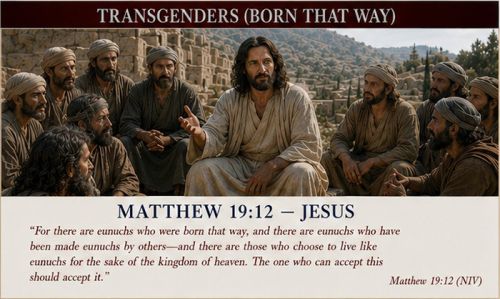
There are eunuchs who were born that way from their mother’s womb. There are eunuchs who were made that way by other men. And there are eunuchs who have made themselves that way for the kingdom of heaven. Let the one who can accept this accept it.
Born that way from their mother’s womb.
Hear it. From Jesus himself — that some people come into this world outside the usual arrangement of marriage and children. Not broken. Not cursed. Not fallen. Born that way. And his instruction about them is not correction, not condemnation, not a cure. It is: whoever can accept this, accept it.
The one voice in the New Testament that Christians call divine says plainly that some people are born outside the pattern, and then says: accept it.
And now one more witness, and this one is standing on the cover.
The Book that gets swung in this country is the King James Version. Forty-seven scholars, six teams of them, from 1604 to 1611, and the name across the front of it is the name of the king who ordered the work: James the Sixth of Scotland, James the First of England.
Look at what that king left behind in the record.
He had a wife, Anne of Denmark, and seven children by her. He also had favorites, one after another — Esmé Stuart, when James was a boy of thirteen; then Robert Carr; then George Villiers, whom he made Duke of Buckingham and raised higher than any other man in the kingdom. And the letters survive. James signs himself to Villiers your dear dad and husband. He calls Villiers his sweet child and wife. Villiers writes back to his king and remembers the bed at Farnham, and where the dog first lay. And at Apethorpe, when the house was restored in our own lifetime, they found a passage running from the king’s bedchamber into Buckingham’s.
When his own Privy Council let him know they were uneasy about the affection, James did not deny a thing. He told them: Christ had his John, and I have my George.
And do not imagine he was one strange accident under one crown. Go down the list.
 Hadrian, emperor of Rome, lost a young man named Antinous in the Nile and made him a god — temples, coins, statues in every province, and a city built on the riverbank in his name. In China, more than a century before that, the Emperor Ai found his sleeve pinned under a sleeping Dong Xian and cut the sleeve off rather than wake him; for two thousand years afterward, the Chinese phrase for love between men was the passion of the cut sleeve. Edward the Second of England and Piers Gaveston, until the barons took Gaveston out and killed him. Christina of Sweden, who wrote to Ebba Sparre with a heat that nobody has ever quite explained away, and who gave up a throne. Frederick the Great of Prussia, who built himself a palace and did not keep a woman in it. Ludwig of Bavaria, whose own diaries record the fight he had with himself, and lost.
Every civilization that kept records has this on the records. Emperors, kings, a queen. The thrones went on standing. The courts went on working. And the churches went on crowning them.
Now the honest part, because I promised you both columns.
The historians do not agree about what any of it means. Some read those letters and say the plain thing. Others answer that in that century a king could call a man his wife and mean nothing but favor, that men wrote to each other far hotter then than they do now, and that we are hearing what we came to hear. I cannot settle it from this pulpit, and neither can they.
But hear what does not depend on the answer.
For four hundred years, men have held up a book with that king’s name across the front of it and used it to tell people that some loves are an abomination. Not one of them ever stopped to ask about the man whose name they were holding. They did not want the letters. They did not want the question. They wanted the club.
So I ask the Baptist and the Evangelical, the Presbyterian and the Latter-day Saint, and every soul who has ever swung this Book like a club — on whose authority do you refuse to accept what your own Lord told you to accept?
4. The Animal Kingdom
What Nature Says
Now put the book down and look at the world that was made.
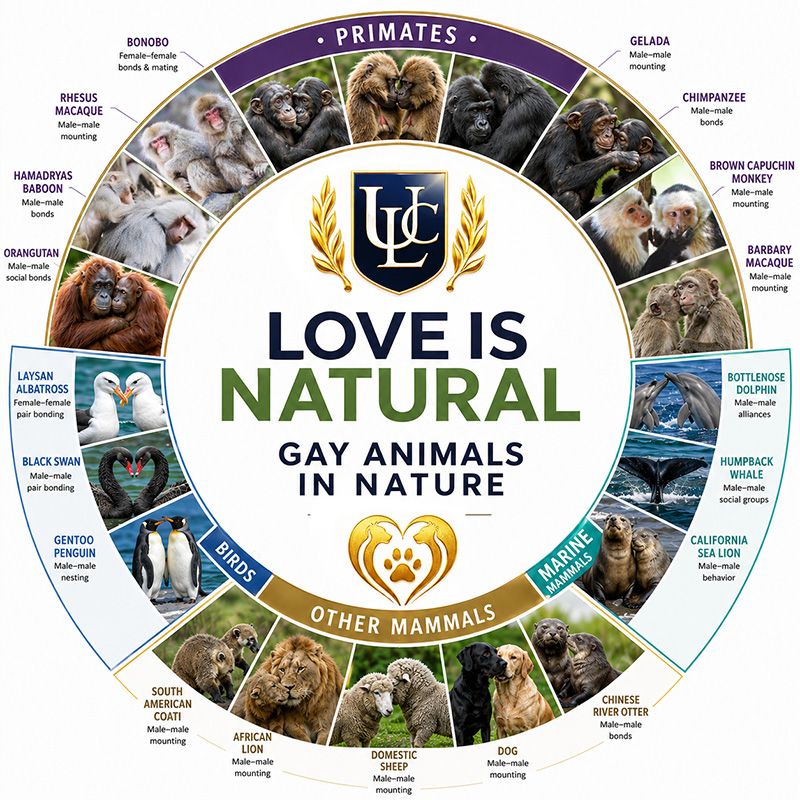
Same-sex courtship, pair bonding and the raising of young together have been documented in well over a thousand species — birds, mammals, reptiles, fish, insects. Bonobos, who settle most of their arguments this way. Bighorn sheep. Giraffes. Dolphins. Macaques. Albatross colonies where two females keep a nest season after season and nobody files a complaint. Penguins — and you know the pair I mean.
A survey of mammals published in 2023 found it in about four percent of the species examined, and found the most of it among the social ones — the animals that have to live together and keep the peace. Make of that what you like.
And it does not stop at two categories. Every arrangement we have a word for is already out there: animals that pair with the opposite sex, animals that pair with the same, animals that do both across one lifetime — which is most of the documented cases — and animals that never mate at all and seem perfectly happy about it.
Nor is it new. One camp of biologists argues that same-sex behavior was there at the very start, that the first animals were not particular, and that being choosy came later. Another camp says it developed on its own, many separate times. They argue about how. They do not argue about the record. It has been in the world for as long as there has been a world with animals in it.
Not one of these creatures has read Leviticus.
Now, I am a preacher and not a fool. Nature does plenty we would never bless — the lion kills the cubs that are not his. I am not arguing that whatever the animals do, we may do.
My argument is smaller than that, and much harder to answer. They told us it was unnatural. That was the word. Against nature. And nature has sent back its answer, across a thousand species, on every continent and in every ocean: no.
So here is the question again, and now it has some weight to it:
If a person was made that way — who made them?
You cannot have it both ways. You cannot preach a Creator who shaped every sparrow and counted every hair on your head, and then tell me that this one thing — found in every human society ever recorded, and across the whole animal kingdom — somehow got past him. Either the workman made a mistake, or it is in the design.
I know which one I preach. I have preached it for fifty years and I will preach it until they carry me out.
5. Trinity, Roswell, and the Dream State
Who Else Was Watching
 I have held one thing back, and it belongs here. The question I have been putting to you all evening — if a person was made that way, who made them? — has a companion. Who else was made?
On the sixteenth of July, 1945, in the desert at Alamogordo, a hundred and twenty miles from a town called Roswell, men set off the first atomic bomb. Robert Oppenheimer watched the light come up off the sand and reached for the Bhagavad Gita: Now I am become Death, the destroyer of worlds. Three weeks later, Hiroshima. Three days after that, Nagasaki.
Twenty-three months later a pilot named Kenneth Arnold reported nine objects near Mount Rainier — our mountain, the one out the window — and the newspapers handed the century the word saucer. Two weeks after that the airfield at Roswell announced it had recovered a flying disc, and took the announcement back the following day.
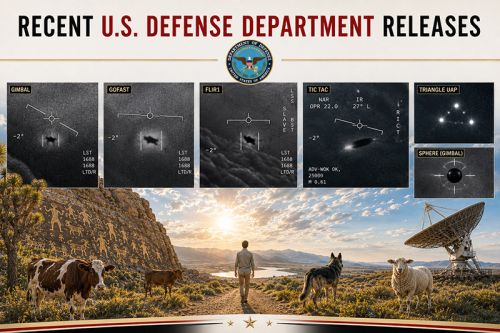
Then look at where the sightings went. Los Alamos. Sandia. Hanford, up the river from here. White Sands. Five hundred and ninety reports between 1945 and 1975, clustered around the atomic weapons complex — and on the Pentagon’s own maps, the heaviest marks fall over war zones, and over Hiroshima, Nagasaki, Fukushima.
Whatever it is, it goes where the fire is.
Now the same honesty I have asked of you all evening. That same Pentagon says it has found no evidence of anything from beyond this world, and I am not going to stand here and tell you that it has. What I will tell you is that something is in our sky, that the reports pile up around our weapons, and that the men whose job it is to explain that have not explained it.
And it is not only lights. In 1992 the Roper organization asked five thousand nine hundred and forty-seven American adults about waking up paralyzed with a presence in the room, and about hours they could not account for. Two percent said yes to enough of it that the men who paid for the survey figured three and a half million Americans. Not one of those people was ever asked whether they had been taken. The researchers supplied that part. But they are not lying about the experience: a Harvard psychiatrist named John Mack spent years with two hundred of them and was investigated by his own university for believing them, and the university cleared him. Later work there measured their bodies answering the memory the way a combat veteran’s does. The terror is real. What caused it is not settled.
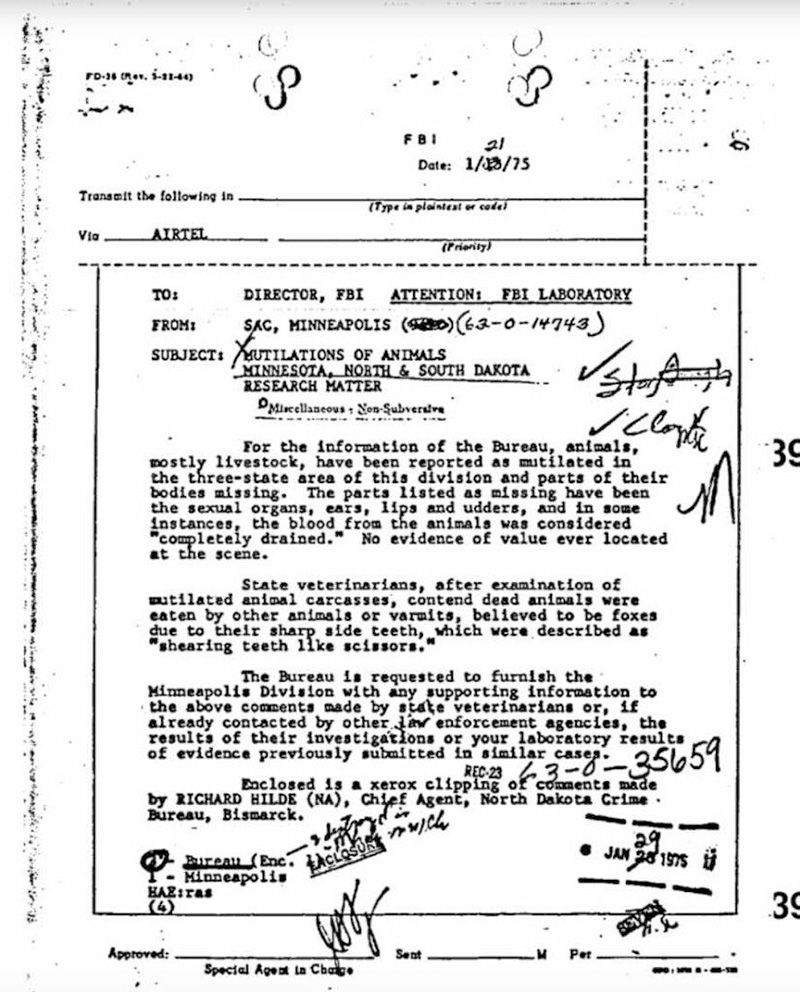
Then the animals. Since the early 1970s, something like ten thousand head of cattle have been reported mutilated across the American West — an eye, an ear, the tongue, the sex organs lifted out in clean ovals, the rest of the carcass whole and untouched by scavengers, and no blood on the ground. The word the ranchers keep reaching for is surgical, as if something had been taking samples. In 1979 the federal government paid a former FBI agent to find out. He worked ninety New Mexico cases and came back every time with predators and decay. The men who stood over their own animals have never accepted a word of it.
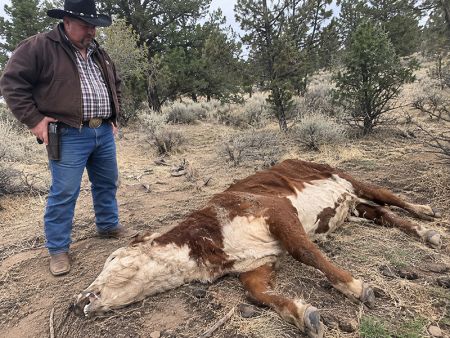
And it did not stop with the seventies. In April of 2015 a calf was found on the Vallejos ranch in Huerfano County, Colorado, two hundred yards off Interstate 25 — the tongue taken out with a straight, deep cut in the throat, both eyes gone, the sex organs removed. A sheriff’s deputy came out and photographed it. There were crows at the site and nothing else: no footprints, no tire tracks, and no blood.
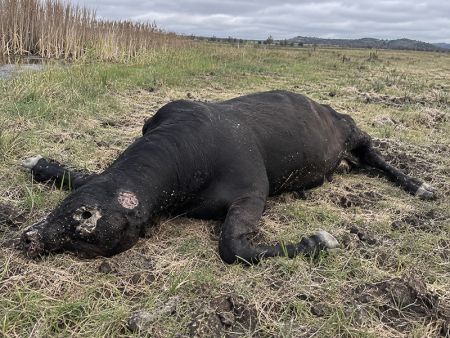
Five years later, in September of 2020, a rancher named Fee Stubblefield found one of his cows on Dixie Ranch Road outside Ukiah, in Umatilla County, Oregon. The skin around her mouth had been sliced away, and the tongue, the glands and the sex organs had been taken out clean. There was no blood on the ground.
I put these in front of you because a thing reported ten thousand times deserves to be looked at, and because the people reporting it got laughed at instead.
Nor is any of it new. Enoch has the Watchers come down and teach. Ezekiel sees a wheel inside a wheel come out of a storm. Jacob lies down on a stone, and while he is sleeping a ladder opens between the ground and the sky with traffic on it going both ways. Every age describes the thing using the vehicles that age knows how to build — chariots, then airships, then discs, now orbs.
And every serious tradition has treated sleep the same way: not as the place where a mind entertains itself, but as a channel where something gets handed down. Joel says it out loud. Your old men shall dream dreams. I am the old man in that verse.
So let me tell you what I was given. When I was a boy, “they” came out of the closet in my room. I pulled the blankets over my head and it made no difference; I could not move, and I saw them anyway. They never said one word to me. They left thoughts. And in the daytime, the field across the street from my house was a military junkyard — WWII airplanes, cockpits with the blood dried in them, trucks and pieces of tanks waiting to go up to Mead and be melted down for the next war. That was my playground. I was a child of the first years of the atomic age, and what I was handed to play in was the wreckage of the war the bomb ended.
I have been building things out of my dream state ever since. There is guidance in there, and it comes in the quiet places: showers, steam rooms, isolation booths, beds, and lately MRI machines. Ideas and memories get set down in me while I am still. Then I get up and go build them.
Some will tell us it was sleep paralysis, and it may well have been. I am not building doctrine out of my own closet. What I have is testimony, and I hand it to you as testimony.
But feel what it does to the account. Consider that we may not be the only ones, and that whatever else is out there took an interest in us — if it did — at the exact moment we learned how to unmake a world and then proved it twice inside of a month. That is how this species introduced itself in the summer of 1945.
And in that same century, under that same sky, the great moral work of the churches and the parliaments was to decide that the man in the next pew had been put together wrong.
So do not ask first whether we are alone. Ask what we look like to whoever is looking.
6. The Countries That Still Kill
Then What Are We Doing?
Now the hard part, and I will not soften it.
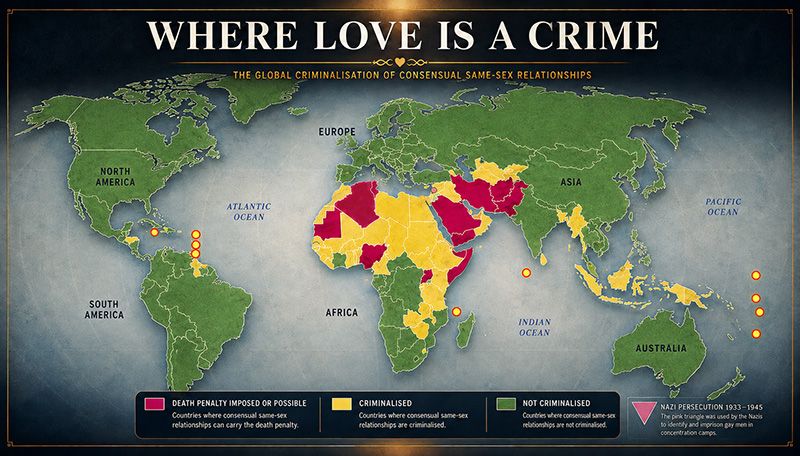
Today there are roughly sixty to seventy countries where two people of the same sex can be jailed for their love. In a small and terrible handful, the sentence is death. Not death as a figure of speech. A rope. A wall. A rooftop. A courtroom handing down an execution over the way a person was put together before they were born.
Understand what is being punished. Not cruelty. Not theft. Not violence. Not a promise broken with any neighbor. What is punished is something in the heart that the condemned did not choose, cannot change, and never asked for.
And here is what troubles me most as a man of the cloth. In nearly every one of those places, the killing is done with a holy book in hand — and as I have shown you, a book that never said it.
Let me speak plainly about the men who wrote those laws. I do not think most of them were monsters. I think they were small. They lived in small worlds. They knew nothing about biology, nothing about the animal kingdom, nothing about how a child is formed or why a heart turns the way it turns. They read a story about a mob at a door, they did not understand what they were reading, and they turned their confusion into a death sentence and signed God’s name to it.
That is not wisdom. That is a mistake so complete that it took centuries and cost more lives than anybody has counted.
And they can be pitied for it, because they did not know. We cannot. We know. We have the languages, the manuscripts, the history, the biology. Every tool they lacked is sitting on the table in front of us. When a court hands down that sentence today, it is not ignorance. Ignorance can be forgiven. It is knowing better, and going ahead anyway.
I have given my life to religion, and I will tell you plainly — this is the oldest sin there is. It is not desire. It is presumption. Sitting down in God’s chair and passing sentence on his handiwork. When you put a person to death for how they were made, you are not defending the Creator. You are correcting him. You are announcing to God, in the loudest voice a nation can raise: you got it wrong, and we have come to fix it.
And I have just spent a whole movement telling you how big the room may be. Whatever else is out there — whoever came looking when the desert lit up — we would not be its first stop for wisdom. A species that cannot yet admit that its own children were made on purpose has not earned the right to sit in that chair and sentence anybody.
That is the arrogance of Sodom. That is exactly the pride Ezekiel named — the closed hand, the shut door, the stranger turned away. The nations that kill their own children over this have turned into the very thing the story warned them about. And they cannot hear it, because they are too busy reading the story wrong.
Now let me say the other thing — the one that has been shouting inside me for fifty years — and let it have its say without me softening it.
Thousands are dead. Not as a figure of speech. Thousands, across centuries: hanged, burned, thrown from roofs, beaten in alleys, driven to do it to themselves. Every one of them killed for the way they were made. And what the world has offered them is a moment of silence and a change of subject.
Freedom is freedom. It is not a mood, and it is not a decoration. A nation that calls itself free and then opens its door without a word to men who would bring back the rope has not defended freedom. It has loaned it out.
So let the case be put plainly, and let it stand here in the open. Let the free nations of Europe and the free nations of this hemisphere ask one question at the door. Not what a man believes in the privacy of his own heart — no government can reach in there, and none ever should. One thing only, and in his own hand: that he will not raise a hand, or a law, or a rope, against a child of creation for the way that child was made.
Because the children of the universe were made. Not built to somebody’s order. Made — and every people that has ever looked up has said so in its own language, and given the maker its own name.
And only God, in the darkness of sincerity, brings light.
7. The First Amendment
What I Will Not Ask For
Now a word to my own side, and it will not be popular.
Some would have us answer all of this with the machinery of the state. Make them swear to it. Make every newcomer to this country sign an oath — that they respect all faiths, that they will not run down anybody else’s foundation, that they accept what we have come to understand about how people are made.
I understand the impulse. God knows I understand it. When you have watched people put to death for how they were born, reaching for the hard edge of the law is almost impossible to resist.
I will not ask for it, and you should know why.
The First Amendment is the only reason a church like mine exists. It is why I can stand here and preach a reading of Genesis that half the pulpits in America would call heresy, and no sheriff comes through the door. It bars the religious test. It bars forcing anyone to profess a belief. And it bars it in both directions — which means the same tool that would make a man swear to my theology is the tool that someday makes my ministers swear to his.
Whoever holds the pen writes the oath. And the pen changes hands every four years.
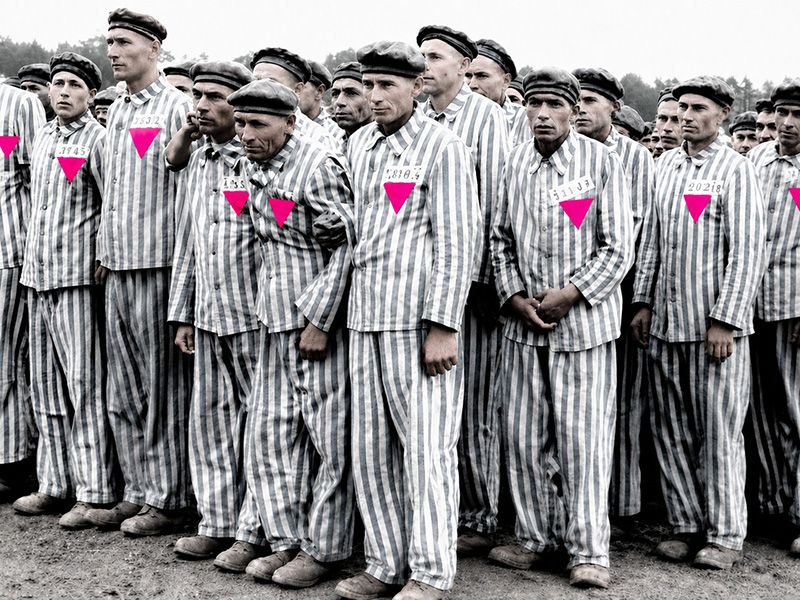
No. We do not need their oath. We need something harder and longer lasting. We need them to read the text again.
A man who signs a pledge under pressure has only been shut up. A man who reads Genesis 19 with clear eyes and sees, for the first time, that it never said what he was told — that man has been set free. And he does not go back.
The Establishment Clause is our shield. It was never meant to be our sword. I have lived long enough to watch religious people forget that difference, and I would rather lose an argument than win it that way.
So here is what I ask of you instead.
Go home tonight and read the nineteenth chapter of Genesis. All of it, to the end, cave included. Then read Ezekiel 16 and let the prophet tell you himself what the sin of Sodom was. Then read Matthew 19, and when you get to born that way from their mother’s womb — stop. Read it twice. Read it three times. Then ask yourself who told you it meant nothing, and what they wanted from you.
And then go outside and look up for a minute, the way I have been looking up my whole life, and let the size of it work on you.
And then look at the person sitting next to you and understand what you are looking at.
Something that was made. Deliberately. On purpose.
Made that way.
And what is made that way was not made to be destroyed.
Go in peace, and do that which is right.
7 comments
-
 Pix Edward
Thank you for sharing your thoughts, along with evidence to support them. I grew up with a boy who was different, I didn't know what that difference was until years later, but he was my friend, and I don't remember how many bullies I stood up to for him; I didn't use hateful words, or find a stick, I told them to leave, because my grandmother raised me to never tolerate a bigot. When he told me he was attracted to men, I wasn't surprised; it was years later, I knew, but he was so afraid I would hate him. I told him loved him even more, because he found himself. How can I hate someone because they happened to be born different, but still have kindness in their hearts, help those who are in need, and do their best to live a good life? A lot of pastors tell their congregations it's okay to be unkind to their neighbours, because they don't look like them, or love like them, or speak the same language... But Jesus didn't make exceptions, and neither will I.
-
 Scott Smith
One of the best thought out, organized, and expressed articles I have ever read. Thank you...
-
 Alisha Rodriguez
What type of God creates a person with a body one hates to the extent one would desire to cut off healthy sexual organs? God did not make a mistake with anyone He created in secret. Why would I ever agree with someone's hate towards one's own body, should I then thank God for not making a mistake with me? God made no mistake when created man and woman for a distinct purpose. Man's confusion or own desires for contradiction are not God's mistake.
-
Pix Edward
God didn't make the mistake. That person isn't confused, they're afraid of the mistakes other humans make.
-
-
 Mark P. Bender
And the Root of All Evil is Money. Isn't it Man's interpretation of God's Plan that's rooted in Evil and fueled by Money. Strip that away and you His Love. To me that is what is most evident. It's a Personal Journey to Love and Honor Him and through His Teachings, not Man's, is the missing link Man searches for. Thank God He left His Word with us (whatever Religion you choose to seek answers from). God's Word is always True, and Man's Word is His separation from us. Babylon will not be rebuilt if your seeking answers. Amen
-
 RUTH
RUTH
It has been said: As above, is below. Spiritual leaders should understand this concept deeply before calling themselves spiritual leaders, unless their only aim is to manipulate people to be and do whatever "they" want not necessarily caring for their spiritual wellbeing. It calls greatly my attention the lack of comments to this article or Sermon, I seldom write, but I read the articles and the comments. I found your research and point of view of much interest to humanity, and it is worth reading more than once.

I have read this over and over again. Is he saying that he is gay? If so, why make his sermon so cryptive? Why not just come out and tell us. I think god made all of us. I don’t think he would make us to be bad or wrong. The Old Testament served a period of time. The New Testament replaced the old. I don’t have the answer for the gay population. I think they have all the rights in Gods eyes. To me, it’s people that are trying to make decisions for God.