

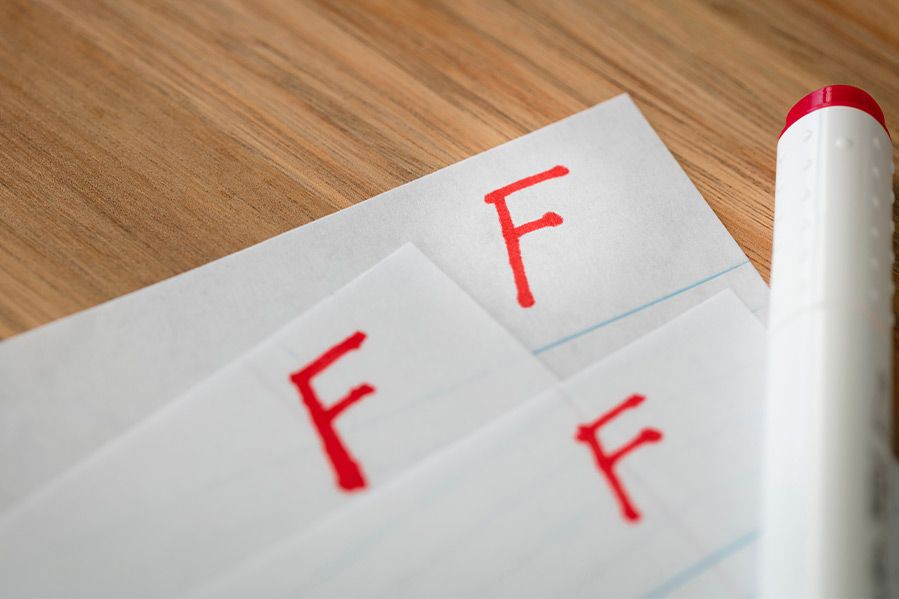
Update 12/23/25: The University of Oklahoma has concluded its formal review of the incident. After deciding not to count the bad grade against the student's record, the school also determined that the transgender graduate assistant unfairly graded the paper – and as a result "will no longer have instructional duties at the University."
The announcement was quickly met with significant backlash online, with critics decrying the move as antithetical to academic standards. Original story below.
A University of Oklahoma student filed a discrimination report after she received a "zero" for a psychology essay on gender that cited the Bible as fact. The student alleges the bad grade is proof she's being targeted for her Christian faith.
Now, the graduate assistant teacher – who is transgender – is on leave as the school investigates whether the claims hold water.
The question being debated across the internet: was it faith-based discrimination… or just a really bad essay?
The Essay Read ‘Round the World
Samantha Fulnecky, a junior at the University of Oklahoma, says she received a failing grade on a recent paper simply for citing the Bible.
But some faculty members don't see it that way.
Her essay, a response to an article about societal expectations of gender, “heavily uses personal ideology over empirical evidence,” and “contradicts itself,” according to the transgender graduate assistant who graded her paper. The graduate assistant argued that Fulnecky didn’t really engage with the original work they were responding to at all, and instead her 650-word paper looked closer to a sermon than an essay.
The paper argued that gender roles are beneficial and immovable, as they come from God:
“God made male and female and made us differently from each other on purpose and for a purpose. God is very intentional with what He makes, and I believe trying to change that would only do more harm. Women naturally want to do womanly things because God created us with those womanly desires in our hearts... Society pushes the lie that there are multiple genders and everyone should be whatever they want to be is demonic and severely harms American youth.”
Fulnecky was later interviewed in a local news segment:
Paper Gets a Fail
Though the essay prompt left room for students’ personal perspectives, the prompt emphasized “thoughtful reaction” to the original article. The graduate assistant professor, Mel Curth, criticized both the substance and tone of the essay, but explained that she didn’t deduct points due to Fulnecky’s specific beliefs.
“I am deducting points for you posting a reaction paper that does not answer the question for this assignment,” she wrote in justification of the zero grade given to Fulnecky. “While you are entitled to your own personal beliefs, there is an appropriate time or place to implement them in your reflections… I implore you apply some more perspective and empathy in your work.”
“To call an entire group of people ‘demonic’ is highly offensive,” she added, “especially a minoritized population.”
Fulnecky doesn't see it that way.
"To be what I think is clearly discriminated against for my beliefs and using freedom of speech, and especially for my religious beliefs, I think that's just absurd," she said.
The University Responds
The school appears to be taking the allegations seriously. The official university account responded swiftly, writing on X that “the University of Oklahoma takes seriously concerns involving First Amendment rights, certainly including religious freedoms.” They say they’ve placed the instructor on academic leave for the remainder of the semester, and have initiated a formal review of the failing grade.
Where Does Faith End and Academia Begin?
The controversy now raises a thorny question: is Fulnecky being discriminated against… or is this simply a case where a student turned in a sermon instead of a psychology paper? On one hand, universities must protect students’ rights to religious expression. On the other, academic assignments require students to demonstrate engagement with course material, not substitute biblical assertions for empirical evidence.
If the zero was truly given because the professor rejected her beliefs, many would agree that is discrimination. But if the paper failed because it didn’t answer the prompt, didn’t engage with the assigned reading, and labeled a minority group “demonic,” then the issue is less about religion and more about academic standards – and the limits of what constitutes acceptable analysis in a psychology course.
As the school's investigation unfolds, what are your thoughts? Where is the line between respecting religious conviction and maintaining academic rigor?
164 comments
-
 Richard T. Dallas
I now have two years of Bible college, and since my ordination through Universal Life Church (which I value), I have been RE-ordained as an Officiating Chaplain. I agree COMPLETELY with the Biblical viewpoint that gay/transgender confusion is an absolute trainwreck of rebellion, and an abomination in the eyes of God. Gay/transgender people need to be prayed for, so they will come to repentance, and true faith the Lord Jesus Christ
-
 Geoffrey C. Olive
I assume you also agree that your god created everything in the universe, so why would, in your words, god create everything including an abomination in its own eyes? It’s quite possible that your Lord Jesus Christ (and his 12 male disciples!) was gay/transgender as he had no provable female sexual partners!🤔
-
-
 Jannetje Eleanore Van Went
I would have to say, we started these labels to open dialog and have opportunity for perspectives, on this note if justice is done here the next paper she should be asked to complete should be are we allowed to use religion to empower ourselves over others rights to freedoms and do human rights exist in the Bible if they don't allow all freedoms of human expression...if this challenge is to continue we need to up the way we intellectual engage in confronting it all. Everyone is entitled to freedom of speech and rebuttal or question of intention, these are both sensitive issues. Temperance is needed in deciding right and wrong here.
-
 Leonard Norwitz
Ugh! I screwed up a critical moment. "as if the grade is were given for the Bible and not the essay" should be "as if the grade was given for the Bible and not the essay."
-
 Gabriele Strohschen
I agree with Mr Norwitz ... without clear assignment details and evaluation criteria, along with knowing the source of information to which this response paper assignment was aligned, one cannot gauge this situation - ironically, the way this is presented, violates the very academic standard cited - namely, to provide references and evidence, which is not in the reported statements and commentary ...
-
 Anita Rogers
This article doesn't mention that the paper was done as an essay and not a research paper and that was not acceptable. She should have cited more than one source for this paper. This article didn't address the grammatical issues the paper and did not follow the number of words that were required to this assignment.
I am wondering why this article did not elaborate on the findings regarding the paper the student wrote. This article is biased. This article is voiced in the sin of omission.
-
-
Leonard Norwitz
There's a great many ad hominum insults being traded here. For my part, I don't see how we can weigh in without having read the original article about which the student was asked to weigh in. Nor do we know exactly what the assignment was. Instead I see summaries that reflect the bias of the various responders.
-
 Rev. Kev
I agree that opinions on the results should be based on evidence. Speaking only for myself, I saw a couple different videos and articles that went over the lesson assignment, the actual paper submitted, and the teacher's response explaining the grade.
The information is out there. So it is also unfair to make a blanket statement about the responses you have seen here based on what you say "we" know or not.
-
Leonard Norwitz
You're right - my "we" should have been "I." On this page from Universal Life Church, however, I and we are tasked to weigh in on the information provided, not information not provided. I would have liked to see the information you say is "out there" but, alas, my "search brain" was not up to it. I tried -- honest. From the looks of many of the comments, it would appear that the same was true there as well.
My interest here, not as clearly expressed as I hoped, is a critique of pages such as this, which looks fair in setting up the issue, but isn't. Its lack of completeness invites readers to fill in the blanks.
For example, under the heading "The Essay Read ‘Round the World" there is this:
Samantha Fulnecky, a junior at the University of Oklahoma, says she received a failing grade on a recent paper simply for citing the Bible.
But some faculty members don't see it that way.
Her essay, a response to an article about societal expectations of gender, “heavily uses personal ideology over empirical evidence,” and “contradicts itself,” according to the transgender graduate assistant who graded her paper. The graduate assistant argued that Fulnecky didn’t really engage with the original work they were responding to at all, and instead her 650-word paper looked closer to a sermon than an essay.
The wording here sets up readers (us) to engage our biases. Outstanding are: "received a failing grade on a recent paper simply for citing the Bible," (a call to arms if ever there was) and "transgender graduate assistant who graded her paper." I can understand that Samantha FELT she was given a failing grade simply for citing the Bible, but the teacher offers additional reasons, sufficient, I'm guessing, to justify the grade. Samantha and her defenders focus on her citing the Bible as evidence to support charges of discrimination and ignore the rest of his reasoning. It's as if mentioning the Bible guarantees a kind of immunity from criticism, as if the grade is were given for the Bible and not the essay. (The political situation in this country reveals the same error.)
Also, why mention the graduate assistant's gender if not to suggest that it may have played a part in the grade? Given responses to this fact by Samantha's defenders, it would appear that this is a central concern here. Since there is no way to confirm bias due to gender, it is assumed safe to insinuate it.
On the other hand, there's the opening (with apologies to the misapplication of quotes): "Her essay, a response to an article about societal expectations of gender, “heavily uses personal ideology over empirical evidence” makes it appear that the assignment could easily have allowed the student to express her opinions. In which case “heavily uses personal ideology over empirical evidence” would not have been grounds to fail the assignment. And what does "empirical evidence" refer to? Was this supposed to be a research paper?
One more word about using the Bible and religious doctrine as an authority. Alan Jones, my late friend and past Dean of San Francisco's Grace Cathedral, replied to the question "Is the Bible the word of God?" this way: "Yes, but we're not quite sure what it means" He would also ask his parishioners (if that's the correct word): "What is the opposite of Faith?" Often the answer would come back: "Doubt!" "No" he corrected, "The opposite of Faith is Certainty."
-
Rev. Kev
Here's a decent video on the topic from a biologist and science communicator.
https://youtu.be/xTxFSCKNAQU
-
Anita Rogers
Thank you. I am glad someone else sees the intentional bias here.
-
-
-
-
 Walter J. Holbrook
The Self Righteous never sleep
-
 James G. Ward
It is people like this young woman who make religious freedom difficult. We need science and facts not a religious zealot. If she graduates but maintains this demeanor then the advanced education will have been wasted on her. Clearly she did not complete the assignment and a zero is appropriate.
Finally, her charges of discrimination should be filed against her not her instructor. She basically called the instructor "demonic" for being transgendered. She should be expelled for that behavior not interviewed on the news!
I remember a statement that says better for people to assume one is a fool than to open ones mouth and prove it. I do not remember the source so I cannot cite it!
-
 Ismael Alejandro Flores
She didn’t answer the prompt, she didn’t have a single citation, she didn’t even meet the minimum word count. There’s no discussion to be made, she deserved the failing grade; any other view is clearly missing the point that it was a terrible submission posted on bad faith and political exploitation.
-
 Joni Carroll
I think in all honestly she got the mark she deserved. She clearly didn't follow the instructions of the assignment. I would have given her the same mark. I might have given her a chance to re-do the assignment minus the religious belief part in it. If she refused then I still would have given her a 0 for it. The colleges set assignments a certain way and want it done that way. If she can't handle the fact that she got the mark she deserved then she is studying the wrong field of work. Psychology is a tough subject to study any ways. It is always best to leave your religious beliefs out of your assignments and do what the instructor is asking for. She is lucky that the college seemed to take her side. I get that what she said was seen as free speech but you need to follow what your instructors are asking for. It is like I have certain views on what should happen to abusers and molesters but I would never be allowed to put it in an assignment.
-
 Tami Tabone
I would have given it a C-. She did put a little effort into writing the essay, but she brought only her biased opinion and offered no evidence for her citations. She didn't quote anything for examples. I feel very upset that many people feel that this way of thinking, is showing religious faith, because as far as I am concerned it is very limited and harmful to others. And that is not my understanding of God. In any case this is not what I would expect from a student at this level. It doesn't matter if her opinion matches mine. What matters is she was not asked for her opinion and she should have backed her writing with evidence and fact.
-
 Tom Herman
Seems to me the graduate assistant was set up for failure. This was a junior in college and should have known better than to use a single faith based reference as her only source for an analysis.
-
 Donald Sam Vicari
She put a lot of thought and reference into her paper. A for the effort- B for content. F for the biased, woke "teacher".
-
 Delight Phillips
I disagree. I don't believe the teacher's sexual orentation is relevant at all. Had he been black, she would have disagreed with that. Had he been of another religion, she would have based her biased paper on that. She was the pregidous one here. Not the instructor. In this administration, everyone gets fired who won't conform with their narrow views.
-
-
 Walter Abington
Personsl opinion is not psychology. It is an editorial and not a term paper. She deserved a ZERO.
-
 Ashley D
This essay was full of bias and opinion and not biblical fact. It’s also incredibly poorly written and full of grammatical errors. She absolutely deserved to fail as she did not understand or comprehend the actual assignment.
-
 Joseph S Worley
She failed to do the assignment that was given (faith & personal politics have nothing to do with it.) thus she would have failed outright.
-
 Steven Ferrell
She was definitely discriminated against. The assistant who graded it, did so based solely on their agenda to push trans as something that is normal.
The University was correct in how they handled it. The individual has no right grading papers if they are going to allow their personal feelings to make their determination.-
 Kristina
The essay did not meet college-level standards based on the provided rubric, not personal preference. Another instructor independently reviewed the work and agreed with the grade. Religious texts, including the Bible, are not a valid basis for disputing academic grading. Multiple online academic reviewers also reached the same conclusion: the essay did not meet collegiate expectations. The grade stands and the professor erroneously fired.
-
 Brandy Pinkerton
Samantha didn't even meet the word count. She has said on video that she only read the topic of the article & not the full article. She met none of the metrics they set forth for the paper & even gave her a chance to redo it, which she turned down. It was just Mel that gave her that F another TA gave her that F as well. This was a targeted attack against Mel.
-
Tami Tabone
Stephen Ferrell, I don't see that she was discriminated against. I would have given her a C-. Only because she made an effort to write the essay. She based her essay solely on opinion and her interpretation of the Bible. Possibly on how she was raised to believe, but not by stating evidence. At this level, students should be capable of th8nking outside the box, searching for evidence to back up their statements, quoting documents that show they did some research to prove their case. She did none of that. It has nothing to do with whether or not I agree with her. But the assignment didn't ask her to give her opinion. And that is exactly what she did.
-
 Lisa Gavin
A c- because sh made an effort? Grade inflation running rampant.
-
-
James G. Ward
She committed the discrimination in her essay, which was not an essay but an obvious attempt at promoting her own religion. I am glad we are living in a place of freedom but the assignment was not completed to the threshold of the assignments instructions. Also because of what she stated about the transgendered people of the world being demonic she should be punished for committing the discrimination. She is the guilty party not the instructor.
-
-
Delight Phillips
I would have graded her a D. Her essay just touches on personal views, not biblical fact. No where in her essay, does she show any excerpts from the bible stating that, "Man's Helper" must be Female only. While I'm not sure that this relates to gays and transgenders, it certainly doesn't preclude them. Her essay is poorly researched FLUFF and would not dissuade anyone in their beliefs or to rethink their religious doctrine. An essay should be thought provoking. This was not. It's easy to think that anyone that disagrees with her short sighted views are just WOKE. But, she did not prevoke her train of thought at all well. She did not present her case or anyone else's. It was a poorly written essay. I would have graded it as a D, so the instructor wasn't far off. When relying on the bible to support your biased views and docrine, you must prove your point. She Did Not!
-
 Alice Kay Looney
F! She not only FAILED every single requirement of the assignment but exhibited GLARING deficiencies in her ability to express ANY concept in a coherent manner.
If this is an example of the product of a University of Oklahoma education, I seriously question the "university's" accreditation.
-
 Minister J. Abram
I agree, she should have failed! She was asked to an assignment. She was not asked to do beliefs and personal opinions.
-
 Carol E Dewey-Iudice
This particular student would actually be a product of whatever high school or middle school district she attended. By the time a student reaches university level they should be well equipped to write a decent essay. I would not ever blame the university for this students lack of understanding.
-
-
 Mark R Robles
I read the paper as well. Loved it. True faith. The unadulterated Word of God. The way it is supposed to be. TRUTH. The Bible is all you would need for this paper answering this particular touchy subject (man is what makes it a touchy subject, because if we were all in the Word? This would be the only answer). I won't sugar coat it, there were 2 "cities" and a wife destroyed for such lifestyle, and as of today we learned nothing from it. I applaud this paper. Blessings. Rev. Mark
-
Brandy Pinkerton
Now go read the article that she was supposed to have been writing about. You can tell that her paper does not talk about it at all. She cites no sources, when you cite the Bible you have to cite book, chapter & verse. She didn't even meet the word count. The metrics she was supposed to have met for the paper were not met, that's how she got her grade after getting a chance to redo it& did not take it.
-
Tami Tabone
There are no biblical references as evidence and the essay is based on her opinion and her interpretation of the Bible. Not fact. People often state the Bible says this or that, when in reality, it is their interpretation of the Bible. Poorly written for a student at that level.
-
James G. Ward
I have tried to write a response to your statement and I realized you have no ability to see outside of your faith! I pray that you realize God made us with brains and the ability to advance ourselves with science and education. We cannot live like we exist in the Old Testament. We are a thinking and advancing species albeit not a great species but still capable of objective thoughts. I am so sorry that the world is not seen as a whole for some people but instead through the eyes of religious limitation.
-
-
 Leslie A. Hulberg Née Tomasura
If this is allowed to stand, what other essays will be cited by religious belief rather than by fact? Perhaps mediation was the position held by the college. But if that is the case, the instructor should not be punished because the instructor graded on the facts. Whereas the student wrote on facts not in evidence outside of Judeo-Christian tradition. If the college was truly attempting mediation, then neither should be punished and another essay should be written. If a faith not fact based essay is held as truth, where does it end? Many faiths once believed the sun rotated around the earth. And those who presented evidence to the contrary were condemned as heretics. We need education to be able to understand that fact not faith or fiction is required to further our understanding and knowledge of the universe in which we live.
-
Steven Ferrell
The so called facts from the alphabet side, are not true facts, but made up by those trying to justify sin.
-
 Patricia Ann Gross
So, are you a contributing member of the "flat earth" Society, believe that the moon landing was nothing more than a Hollywood hoax, and that the universe revolves around the Earth? What "sin" are you talking about here?
-
-
Carol E Dewey-Iudice
I heartily agree with you, Linda, and could not have said it better. Thank you for your response.
-
-
Leslie A. Hulberg Née Tomasura
If this is allowed to stand, what other essays will be cited by religious belief rather than by fact? Perhaps mediation was the position held by the college. But if that is the case, the instructor should not be punished because the instructor graded on the facts. Whereas the student wrote on facts not in evidence outside of Judeo-Christian tradition. If the college was truly attempting mediation, then neither should be punished and another essay should be written. If a faith not fact based essay is held as truth, where does it end? Many faiths once believed the sun rotated around the earth. And those who presented evidence to the contrary were condemned as heretics. We need education to be able to understand that fact not faith or fiction is required to further our understanding and knowledge of the universe in which we live.
-
 Ari Joseph Bertine
That isn't a psychology essay. It is a religious diatribe and shows no thought whatsoever. It only quotes ingrained beliefs from specific church doctrine.
-
 Michael Blackwood
I taught high school English for 30 years. Honestly I would have spoken to the student, if time allowed, and explained the prompt again. Otherwise it would be the zero. Just because the student ignored the prompt to lambaste the GA simply because she was intolerant. She should have drop/added the first week of the semester. Seriously, she wouldn’t pass a high school class with that essay. Religious liberty doesn’t extend to ignoring the requirements of the class. Think about what would happen to all education were that the case.
-
 Patton Echols
I have seen a number of articles about this controversy. It was helpful to have the essay linked and I agree that it is poor writing. I wish, however, that we had the prompt. I agree that the essay is more of a sermon than an academic paper, but to say it does not respond to the prompt? That's problematic without seeing the prompt.
-
-
 Daniel Todd Kamm
Messy.
Things of the spirit are so easy, but people are so "messy." You should see my front porch...!
The paper I read via the internet-ferno that was submitted by this young lady is an opinion piece. She used only one source, which is not a research-based source, and her source, cannot be empirically tested or defended.
The point here is this student and her cohort learning how to formulate a point of view, perhaps even a "hypothesis" based on what is reported and observed; to be familiar with, understand , and recognize the professional points of view within one's chosen profession; and to be able to support one's own point of view based on what is observable, hopefully provable, and supported by one's own work.
Ultimately one is supporting and guiding the advancement one's profession in a direction that will benefit the recipients of the profession.
The assignment and the expectation was to review some research-based literature: journal articles, online sources, etc. germane to the assignment, the class being offered, and and eventual undergraduate degree; one compares and contrasts various researchers' findings, and one then begins to formulate a position of one's own, based on the findings of one's review.
"Like, I don't agree with how they came to that conclusion."
One way to find out is to see who else out there agrees or disagree, and maybe even repeat the study to see if the conclusion is contestable.
Now, writing a paper based on a review of literature is fine, forming an opinion is fine, but what happens when someone else's interpretation of the exact same data you reviewed is different from yours and you need to defend your conclusions and position?
You'd better know how to do the above, and the down below.
This is about learning to support and defend oneself and one's professional judgment: one better be able to cite one's sources: who, what, when, where, why, and to what extent?
That did not happen here.
A Bible, as we are all constantly reminded is for some a story, for others a poem, for other's history, and for some G-d's word: many things to many people... but it is not a professional source.
"Render unto g-d what is...and render unto Caesar what is... " Nu?
I have some critiques for the graduate assistant 's approach here as well, but it will have to wait ... the furnace people are here for my 6 month tune up...!
Hanukkah starts Sunday nite, blessings (and a good furnace ) to all.....
And as always,
Peace Out....Rb tk
-
Carol E Dewey-Iudice
Agreed!
-
-
 Samantha Walker
While the professor in question may have made decisions based on their own personal lifestyle beliefs, I do believe that the response or essay was not written in a scholarly manner. There were first person statements which should have been third person and it was non-academic. If I were a professor I would not have graded it as a fail. I would have deducted points for run on sentences, first person belief and opinion, without clearly developing a successful rebuttal which would be expected of a college student. The personal commentary related to "demonizing a whole population" is personal and should not have been a factor. If people are going to bring up gender discussions they should be prepared for people to argue for, and against, and not deduct points for the beliefs, faith, thoughts, and actions that create the lens which the response is given. The issue is, which evidence is presented routinely, is that as long as people conform to what is being spewed and echo it- there is no issue- the moment someone does not agree with the view- it is seen as invalidation of experience and existence. However, the reaction and resulting assault verbally, or physically on those that believe like this young woman- is in fact invalidating and ignores the experience of their existence. There are times its seems only one side of this issue is permitted to exist in their reality. A rejection of an ideology is not rejection of the human being or their experience. It is simply a rejection of the lens not the human.
-
 Cyril R. VanKeirsbelk
Play stupid games, get stupid prizes.
If you want a passing grade in and academic setting, you have to give them the answer they want, not the one you know is right. Sure, there are instances where you can challenge and make an argument they are not going to like, but this clearly wasn't one of them. What she did was ignore the assignment and attack the assistant professor using her religion as cover. Then she played the "Woe is me, I am being attacked for my religious beliefs" card, conveniently forgetting that she is the one who attacked first.
Christianity tells you how to act, not how you should force others to act. It's about your relationship with Christ. If you have Christ in your heart you can't go around hating people for being different than you. That's not christlike.
-
Patricia Ann Gross
Cyril,
I have gotten "A's" on academic papers that I knew the professor would disagree with my argument. How? I followed the rubric and assignment outline, provided academic sources, wrote in academic language, sent everthing through spelling, grammar, and originality chekers, just to verify, and clearly made my argument backed up by peer-reviewed sources. I also turned my paper in on time. Any professor worth his paycheck is not going to let personal bias destroy the academic process.
-
Geoffrey C. Olive
Patricia, it seemed like your spell checker missed “chekers”! Or was it you?🤣
-
Patricia Ann Gross
Thanks for the catch. Some of the keys on my keyboard stick, and the spell-checkers don't work in these boxes for some reason (at least on my computer.)
-
-
-
 Heidi M Gates
Exactly!
-
-
 Rev. BH
A zero is not an F. Immeasurably worse, a really insane grade, unless the submitted essay looked like Scrabble letters randomly tossed onto greasy newspaper.
-
 Cheryl Pettijohn
She did nothing required. No one single thing. It makes me think you want a grade for writing your name.
-
-
 Rev. Clyde Bowen
It is Oklahoma after all. People who have been born and raised there say it is the most racist, nationalistic religious state! I'm a firm believer in separation of church and state! The asst. should not have been relieved of duty. The paper didn't meet the objective, period!
-
 Billy Coley
It was a planned out hit job/job interview. And from the embrace by Turning Point, it seems to have been successful.
At the least, she never actually cured the Bible, which means we are starting off at plagiarism. That is an automatic 0 in actual academic circles. Then top off that with all of the other failures of the paper, a 0 was a kind grade. That type of paper wouldn't fly in elementary school. People gloss over that the paper was regraded by a professor that upheld the result. I have yet to see any actual teachers or professors that have supported the paper. Even theology grad students and professors have supported the 0.The big thing that really sticks out is the fact that the professor that read the essay and also gave it a 0 has had no blowback. That said that this has nothing to do with academia, abd everything to do with the christian nationalist faux outrage machine.
-
 Druid Brandon O'Malley
I'm sure most of us have heard about this. For one the student didn't even meet the word minimum, so that's a fail right there. No "Works Cited" page, also a fail (academic papers utilizing citations require a citations page). Direct quotes must be in quotations, not just written out. Academic papers are also primarily in third-person perspective, not first-person, though in certain cases it is allowed. Religion and the Bible are not academic sources unless you are in a religious school. It is not a history book, and is not based on facts, but on the claims that the person/people who wrote the letters and other material from it knew Jesus in some capacity (which there is no evidence to prove that since the first 13-14 books were written by Paul who claimed to have a vision of Jesus three years prior to his writings). Then more books were written and named after apostles even though the apostles had nothing to do with it, including a scholar who also never met Jesus.
If you're going to any college or university that requires proper academic papers to be written, either follow the rubric or leave. It's not high school where they will be lenient. They will fail you for not doing the assignment properly. Plus classes in college are often one semester and there usually isn't time to redo a paper. Overall she didn't fail because she injected her religion, she failed because she didn't follow the rubric.
-
Rev. BH
Druid, O'Malley, Where did you get this information (first few sentences)? Can I see your sources please?
-
Patricia Ann Gross
Rev. BH,
As for the academic sources and format, all you have to do is pick up any writer's, editor's, and publishing style guide (APA, CMOS, MLA) and read the section on "academic papers." Beyond that, each assignment will usually give the number of sources (if none is given at least two academic peer-reviewed sources are assumed), word count or number of pages, and the syllabus will give you which style sheet to use.
If you are talking about the timeline and authorship of The Bible, I'm not sure I followed what he said, but yes, most of the letters of Paul were written before the Gospels (but don't appear before them) in the New Testament. None of the stories of Jesus or the early church written in the epistles are at the beginning of The Bible, so I'm not sure what he was talking about there. Perhaps he can clariy.
-
-
-
 Alan Meunier
Fail to do the work correctly, get a failing grade. No need to claim "oppression" when it is self inflicted...
-
 Donald Wayne Gilkison
HE/HIM, SHE/HER, THEY/THEM, ZE,HIR Curth should be fired.
-
 Evylyn Rose
Speaking as a former educator, just the snippets provided in the X post this article shares is enough to tell the student failed to meet the basic academic standards of a college paper and the assignment instructions specifically. Giving the benefit of the doubt, it sounds more like an issue of the grader's wording choice in their critique of the paper triggering misunderstanding and hurt feelings of the student. And then the student blew it way out of proportion instead of seeking clarification first.
Her failure to specifically cite the required reading suggests she didn't read it. Vague statements like "It is frustrating to me when I read articles like this..." reveal a deeply ingrained bias that she wrongly assumes the reader will know what she's talking about AND suggests that she only scanned the piece and formed an immediate opinion on it without engaging in the reading as the assignment fundamentally required. She may not have agreed with the zero grade because she felt like she put real effort into it (even if that effort is not college-level), but that doesn't inherently mean that zero was the wrong grade based on the assignment and grading rubric used.
Anyone who's ever gone through undergraduate and graduate school processes knows that when you get a failing grade (or any grade, for that matter) on an assignment and you disagree with the reasoning behind the point deductions, the next step is to schedule a time to speak with the person who did the grading to go over the assignment requirements and rubric to discuss why your work fell where it did on each criteria of the rubric and what you can do to improve it. Sometimes this results in an improved score, sometimes it doesn't. But it usually opens the door to an opportunity to fix and resubmit.
When the initial steps fails to result in resolution, the next step typically involves meeting with a coach, counselor, or co-teacher/professor (depending on the school structure and class hierarchy). The next step isn't proclaiming religious discrimination and reaching out to social media and news outlets.
This isn't to say she doesn't feel like she's being discriminated against, but there's steps to confirm whether or not her feelings are grounded in the reality around her. To be fair, though, it's usually only people who have faced real prejudice and discrimination that would recognize the difference.
-
 Susan Mary Sciara
As a former educator myself, I agree with you about not following the rubric and it not being a college junior-level academic paper. However, the TA should have known that giving anyone a 0 grade would be problematic for that person, especially an essay that was so passionately Christian-based, and attached the rubric to show exactly what standards had not been met. That would have kept the process more neutral since the TA did write at least one comment that was opinion-based.
-
Billy Coley
As a former academic, what would be the result of plagiarizing? At its base, that is a 0?
What is the result for not meeting any aspect of the assignment?
I'm not sure where you taught, and am not sure I believe you did, but 0's happen.. especially in situations where they are earned...
-
Cheryl Pettijohn
As a current educator, I agree with Billy.
-
Susan Mary Sciara
@ Billy: If this is directed at me, why would you question if I taught? Is that supposed to be an insult because you disagree? I have taught college and students in kindergarten through extended high school. I have been a graduate student several times and got feedback on academic papers myself.
First, I never said 0's don't happen or even whether or not she she have gotten one. Second, this was not a case of plagiarism. Even if it were, I would use the rubric to give the student specific feedback and cite the sentences that were plagiarized.
I don't know what this student's motive was, and neither does anyone else commenting. This can be used as a teaching moment to show her exactly how she did not meet the standards. Maybe there was more feedback given but based on what is reported there were just a few comments that did not reference the rubric/standards.
My experience with students such as this is that they need very explicit feedback regarding why they got the grade they were given. The comment by the TA, "To call an entire group of people ‘demonic’ is highly offensive, especially a minoritized population”. There are people who would argue either way and it is not something that can be proven. Asking her to apply empathy in her work is based on the TA's personal values, unless applying empathy is part of the rubric. I don't know what kind of psych class this was; there are many different kinds. Undergrads are not learning to be therapists so I am not sure how empathy would be part of an academic paper. And I happen to have a master's degree in psychology and have been a TA. It would help to see what the actual assignment was along with the standards for grading.
-
Rev. BH
Billy, throughout high school and college I never earned a 0 saw, or heard of anyone who did. Fs, yes. 0s, no. How many 0s did you ever give out as a former academic? What were the results?
-
Patricia Ann Gross
After a bachelor's degree (which this student is,) the only time I saw a zero in four different graduate programs were for assignments that were not turned in (each time, because I was hospitalized). One resolved quickly and the other required I repeat the class because I was hospitalized for a month. I also followed the rubric and assignment outline, word/page counts, wrote in academic language and submitted on time (except for the times I couldn't). Plagarism can be assumed when someone attributes something to someone (like a scripture reference) without a formal citation. Plagarism often is in the code of conduct as a reason for a zero on the assignment, if not expulsion from the academy.
-
-
-
-
-
 Roy S. Thorpe
If you remember that the Bible is in two parts it will help you understand it! The old testament is a collection of old Hebrew stories and sayings while the new testament is the story of Christ's life and lessons! The way of the Master is the path to follow!
-
Roy S. Thorpe
If you remember that the Bible is in two parts it will help you understand it! The old testament is a collection of old Hebrew stories and sayings while the new testament is the story of Christ's life and lessons! The way of the Master is the path to follow!
-
 Lion on the Beach
Any individual with a preferred ridiculous pronoun other than what they were born with should not be grading any papers on psychology. They will cause confusion on anything they disagree with or have zero insight on.
-
 Rolette Marion
The Bible clearly states in James 1: 8 that a double minded man is unstable in ALL his ways. Therefore the young lady clearly had the right to give her thoughts if the teacher asked her opinion. If the teacher got offended then she/he should have picked another subject that would offend her/him. This young lady did not write the Bible and I am sure this teacher knows what happened in the Bible in Sodom and Gomorrah with specific individuals who God hated the sins that were being committed, so why pick out the young lady because of her religious beliefs which is a FACT!!!
-
Billy Coley
Ignorance and hatred disguised by fake 'christianity' isn't a defense.
And if you actually read the Bible the major sin of Sodom and Gomorrah was violating the rule of hospitality.. just like the 'christian' nationalists (nat-c's).
-
 Pastor George Day
Billy Coley
Did Lot violate the principles of hospitality when he offered his two daughters to the inhabitants of Gomorrah to be raped?
-
Geoffrey C. Olive
Quite a lot!🤣
-
-
-
Rev. Kev
"Therefore the young lady clearly had the right to give her thoughts if the teacher asked her opinion."
Except the assignment wasn't to write an opinion piece. It was to address the points in a research paper. Her assignment included points the instructor was looking for. None of them being her unsupported opinions. She has the right to voice her opinions. But she chose the wrong place to do so. In which case, she got the grade she deserves for substituting hard, academic work for a low energy puff piece. Essentially two pages of social media rage bait. Work that reflects on how little she takes her major seriously.
-
-
-
 John Eubanks
This young lady sited what amounts to a questionable copy, of an impossible translation, of an ancient text. A text that no one has ever seen. No one knows who wrote it, or where it came from. So.yeah, F.
-
Steven Ferrell
It appears that teacher had their feelings hurt because they don’t like being told that a male cannot be a female or a female cannot be a male.
-
 Amy Varela
I'm going to guess that you have no idea how to write an academic paper for a college psychology class.
-
Pastor George Day
Amy Varela
Thank you for saving me the effort of responding to such nonsense. Some individuals have little understanding of what psychology truly entails, and it is best to let them remain in their comfortable, unreflective space.
-
-
-
 PKBW
PKBW
Teacher needs to be fired.
-
Amy Varela
For grading a paper that was supposed to be college level but was a middle-school - at best - essay that didn't meet any of the requirements of a college paper? Really? Maybe the student should have researched what goes into a college level paper and actually done the assignment.
-
Patricia Ann Gross
Why?
-
-
Rev. Kev
The essay this girl turned in was given a very thorough critique on Forrest Valkai's YT channel. The essay was supposed to hit on specific points. As an assignment in a science class, it should have followed scientific rigor and cited sources. What Samantha turned in was four paragraphs of her opinions. She didn't offer single citation. Didn't even cite the relevant Bible passages. In addition, it was a grammatical mess.
Her grade had nothing to do with her religious beliefs. It was because her essay failed to meet the required criteria of the assignment. In her entire sermon, she tangentially brushed up against the paper to which she was supposed to respond with two whole sentences. In fact, she could have inserted her religious beliefs if she cited the Bible and supported it with published research for each point she was trying to make. She was failed because her minimal effort homework was worth no more.
I'm thinking she either planned to have her personal "God's Not Dead" drama moment to earn bragging rights at church, or decided to go with the whole persecution complex after the fact as a way to vindicate her poor academic performance and force the instructor to change her grade.
-
 Jessica North-O'Connell
Excellent response, Rev. Kev:
Difficult to understand why this person would even take a psychology course in the first place.
-
 Corrie Esther Stanley
I agree - the grammar errors, run-on sentences, etc. would have been enough to get a lower grade. This is not (in my opinion) at the writing competency level that a junior in college should have.
-
 William Garcia
Agree and well said Rev. Kev
-
Pastor George Day
Rev. Kev,
You expressed it perfectly.
Well done!
-
-
-
 Joseph Grieco
I read the essay. She didn't follow any of the rules, tried to submit a paper for a college level course written on a 5 Grade level and claimed victimhood. That's a nope. Then again, this is Oklahoma where only Southern Baptist Convention rules apply. A state facing more ACLU lawsuits for trying to shove their version of Religion down everyone else's throats. So it's to be expected. The latest word? The Professor has been reinstated and she if filing lawsuits against the University, the Student and TPUSA for their actions against her.
-
Pastor George Day
Joseph Grieco
From what source did you obtain that follow-up information?
-
-
 Steven M Willig
It’s sad that all can’t believe the simplicity of the message and what it’s worth for salvation to each and everyone
-
 Lisbeth Kieran Bushey
She didn’t even read the material she was supposed to react to. In the paper she was supposed to read before completing the assignment, no mention of Trans people is made! She also didn’t write a single coherent sentence and was short of the word requirement. She failed because it was a bad paper that didn’t meet the requirements given to her. Her religious views had nothing to do with it. Her sorority has national standards of behavior that she’s in violation of as well. Samantha Fulnecky has no business being in psychology or the medical field based on this. She is a clear danger to vulnerable individuals who might end up under the power of a professional like her.
-
 Maureen Hebert Heartwood
In the short sample given, she can’t consistently write coherent sentences and her logic is at elementary school level. U of O must have very lax admission standards.
-
 Pastor Bobby Roy
The line is crossed when personal belief replaces academic engagement. Faith can enrich a paper, but it cannot substitute for evidence in a discipline like psychology. At the same time, instructors must be careful to distinguish between grading poor academic work and penalizing religious expression.
-
 Sunshine DayDreamz
This is not a freedom of speech issue. She didn't follow the assignment. The professor, out of generosity, could have asked her to rewrite the paper. Obviously the student doesn't understand critical thinking and has no desire to learn.
-
Geoffrey C. Olive
Using the bible as a reference source should only be for purely religious or historical information particularly as they don’t always agree. Using it as a base for modern thinking is 2000+ years out of date, as are many other sources like the Doomsday book and antiquated laws, punishments and practices of the past! Of course, a few of the Ten Commandments are universal such as not killing, etc, but the rest are useless!
-
Pastor George Day
Geoffrey C. Olive
I am a pastoral therapist, a member of Addiction Professionals, and a theological scholar.
Her essay fails significantly on both counts.
-
-
 James Riggle-Johnson
This looks less like “Christian persecution” and more like a student trying to turn a bad grade into a national scandal. She didn’t do the assignment for a psychology class and now wants everyone to pretend that’s religious oppression.
The assignment was straightforward: analyze a research paper on gender norms in middle schoolers—how “boyish” or “girlish” middle-school students are perceived. Not gender identity. Not theology. Not sin. But because the school can’t legally release her actual work, all we have is the carefully curated version her lawyers spoon-fed to the public.
Religion isn’t a substitute for psychology. You can’t hand in a Bible verse instead of an academic analysis and call it “perspective.” A therapist can’t say, “Just pray harder, and you’ll be fine,” and call that treatment.
And yes—this absolutely feels orchestrated. Throw out the assignment, cry discrimination, and wait for the headlines.
Christianity isn’t under attack. Accountability is.
-
Pastor George Day
The paper is available in the article via a link to Twitter. I have read it and find it extremely provocative, James Riggle-Johnson.
-
-
 Reverend Paula Copp
Retired professor, here. Her essay did not meet the parameters of the assignment . I would have, and have in similar situations before, failed the paper. Meet parameters? She didn’t even nod in their direction!
-
Geoffrey C. Olive
As a retired university professor, student submissions are not just subject only responses. In my experience, getting a zero was only given for certain circumstances: No or late submission without a suitable reason such as sickness, unprovable failure of electronic submission, evidence of copying another’s work, etc. There was always some grading for presentation, grammar, completion on time, references, etc, as well as subject content and accuracy. The only time I gave any students a zero was for failure to submit and this was usually because they had left the course!
-
 Douglas Robert Spindler
That's not how it is now. You are saying how it was.
-
Geoffrey C. Olive
Remember a pass mark should be around 40%! Anything lower should be a fail! Any student with a final total less than that will or should fail the whole course! Think of it this way - would you be happy if your medical doctor or surgeon was awarded their degree with a score of only 40% or less? I doubt if you would and nor would I! We all want our personal experts to be high achievers, but that is uncommon in real life! Can you or I truthfully put ourselves into the top scoring category for everything? Depends on the category of course! If you went to college or university, try and remember how the other students in your groups faired compared to you! As with any typical statistical analysis of a group there will normally be a bell curve with a few, maybe 10%, high achievers, about 10% low achievers and failures, and the rest, about 80%, considered the average majority who pass! Of course, these figures can be skewed depending on the requirements of the situation! Eg it’s probably more difficult to get into West Point military school than other military training establishments! Life isn’t fair, is it?🤔
-
Maureen Hebert Heartwood
Where exactly is 40% a passing grade? Remind me never to need help wherever that is. Happy to have been raised where 60% is needed to pass, with specific exams requiring a greater score.
-
Geoffrey C. Olive
OK but would you really be happy with a doctor who only had a 60% pass?🤔 I suspect you might go elsewhere if that score (or a grade D pass!) was on the framed qualification certificate in the examination room!🤔
-
-
-
Patricia Ann Gross
Douglas,
Most classes are now graded on a ruberic, of which "submission on time" is worth something. Even that can be overrided because of various reasons, including plagerism, which from what I'm reading, she did not cite any of The Bible verses she allegedly used. At the very best, she could have gotten 5 or 10 points for turning it in on time. If they ruled that "no citations" meant plagerism, then even those could have been taken away.
-
-
-
 Dylan Tuatha Le Danaan
The first issue I see here is the student did not follow the directions set for the exercise. The usage of a fringe ideology when working with a factual paper would definitely cut points. I also see extreme issue with her manner of delivery, as a veteran homeschooler I have seen much better grammatics, research and vocabulary from grade school level papers. I believe the student took this class as a way to get her 15 minutes of fame. Not only should she get a zero but she should be put in a counseling session to see if this is actually the types of classes she should be attending.
-
Pastor George Day
I wholeheartedly agree, Dylan. She is not the type of psychologist I would choose to work with.
-
-
 ServantOfJudgement
College professors are given tremendous freedom with how they run their classes. For her complaint to simply not get dismissed might suggest there's something to her claim. That said, it looks as if the assistant professor was the one who issued the Zero score. Perhaps that's why there entertaining her complaint.
The essay is in response to and article discussing societal expectations of gender. A pretty big chunk of society does refer to the Bible concerning gender and gender roles in society. It's reasonable to use the document society uses to express one's point. The bible does after all, thoroughly discuss gender and their roles even to point of citing fallen societies that departed from logical/biblical gender roles.
However, if you're a Christian and your male professor who wears lipstick and pantyhose issues an assignment to discuss gender, you had better dot your I's and cross your T's. You also better expect a failing grade because you'll have just told your dude professor he's unequivocally a man. He won't like that very much at all. You can safely assume this professor is looking for justification under penalty of failure by putting his choice on trial by those who need a passing grade.
The professor's response?
“To call an entire group of people ‘demonic’ is highly offensive,” s(he) added, “especially a minoritized population.”
You bet a Zero is on its way.
To the horror of some here I'm sure, I'm also a professor. I would have dinged her for a poorly written document. I'd have to see the entire paper and weighed it against what the bible actually says to decide if she passed or failed.
-
Patricia Ann Gross
SOJ,
To a certain degree, I agree with you, except your characterization of the professor. Whether she is a transgender man or woman (both exist, by the way), misgendering them and refering to them as s(he) is highly offensive to anyone who is transgender, or don't you care about that at all.
As one now working on a PhD, I agree that, from what I read in this article, that a poorly written paper deserves a poor grade, but a zero means non-compliance with every requirement of the essay, or failing to turn it in at all. If this were truly the case, the academic council will decide for the professor, if not, and there is history between the two, it could be considered retailiation on one or both of them. The student needs to understand the requirements for an academic paper, and the professor (possibly) needs to get some tougher skin.
-
Rev. Kev
"To the horror of some here I'm sure, I'm also a professor."
Based solely on the content of your many comments, I'm more taken aback that any institute of higher learning would grant you that position. Unless it's one of those non accredited "universities" one finds attached to a church or in a garage. Or a self-applied title.
-
-
 Lynnea Urania Kaylor
If she had done any real academic research into the issue, or at least asked for help in it (as she evidently needed help), she would also have to confront the issue of intersex people. Statistics vary anywhere from .05% to 1.7% of the population, depending on whether defining strictly by ambiguous genitalia at birth or broader definitions that include chromosomal variations including chimerism, Klinefelter syndrome, Swyer syndrome and the like, which still produce many fully functional people. In the United States with a population of roughly 340 million people, that amounts to anywhere from 1.7 million to 5.78 million. Even with small percentages, that's a lot of people. To say that such cases are "abnormal" and too rare to be considered is a highly prejudiced view lacking compassion and is only intended to shut down free inquiry. In light of such things, Genesis 1:27, to which the student alluded in her essay, can be taken to mean that Adam was an intersex being before being separated into male and female consistent with a Talmudic view (Bereshit Rabbah 8:1) quoting Rabbi Yirmeyah Bar-Elazar and Rabbi Shmuel Bar-Nachmani, who declared Adam to have been created "androgynous"-- placing this expression as far back as the Bodmer II Papyrus, the earliest extant copy of the Gospel According to John and preceding the Codex Sinaiticus by a couple of centuries. An intersex Adam isn't a recent view by any means. Also, the fact that there are masculine-appearing females and feminine-appearing males, not all of who identify as trans, is an easily observable fact. It compels us to consider that they were created that way; and that any culturally-imposed body modifications may not do much to change people's perceptions of their masculinity or femininity. So what does that student want to do? Judge people on her own perceptions of masculinity and femininity and apply stereotypes? That student didn't just deserve a failing grade on her assignment, but may be in danger of failing life as a compassionate human being.
-
 Scott Smith
Thank you...
-
-
 obere mchugh
As a witch, if i was asked to do a paper on witchcraft,id have to do it on an academic level and not just my personal practice and experiance. to which i have done. leaving out my own personal opinion and feeling towards until the end as a side thought. why christian's feel the need to only ever use there own personal convictions in things and not do that which they are asked as within psychology yes use personal convictions and experiances as well deeply held belief but also use your academic and scholarly mind. more so
-
Patricia Ann Gross
obere,
Psychology, however, is focused on the client and what they think and not on the beliefs or biases of the therapist. I hope this girl took the class as an elective, because if she is going to try to build a career around it, she will have to learn to leave her own beliefs out of the equation. She will also have a very difficult time passing the requirements for licensing (once she gets that far.)
-
Geoffrey C. Olive
Obere, if you intend to submit any academic papers, I suggest that you check your grammar and punctuation before sending!
-
-
obere mchugh
for the fact that this young women only used her belief and the bible as her argument, wasn't in good faith with the assignment. as she should have researched and found multiple sources and hard fact's to use in her assesment. not just her personal view point as that is not what the assignment was for. When doing these kind of assignments your personal view point should be at the end as a side point. other wise its just a work of your own personal held belife and not a critcal analytical view. so she deserved the grade she got for she just used her belief and the bible to which is not an academic book or one that is remotely true.
-
 Robert Gagnon
She had a great opportunity to question a subject she had a strong opinion of. Rather than question or critique the empirical evidence she decided to go full bible thumper. It sounded more like a show and tell session at junior high bible camp. She should have been graded a D for misguided effort. Before making a federal case out of it I'd be curious what the better graded papers looked like. If they were of the same quality but but backing the subject matter, that would be a problem.
-
 Dr. Zerpersande, NSC
A ‘D’? That's one of the problems with the US educational system… giving a passing grade for putting pen to paper. Education now had an academic participation trophy for mindless twits.
-
 Dr Dennis Chevalier PhD, DDvin
And Academia these days also has what amounts to nothing more than a participation trophy just because they put pen to paper so there's that too
-
Dr. Zerpersande, NSC
Example? Postgrad work in chemistry was no cake walk.
-
-
Robert Gagnon
No argument there, they don't memorize multiplication tables any more. I've had arguments with people over this, that actually learning math teaches logic. Writing on paper gives value to the written word. My question is what quality were the other papers.
-
Dr. Zerpersande, NSC
No idea. And asking that questions you seem to be implying that perhaps there was a bias against religion. That is possible, but there’s no reason to believe that. I saw one clip of a woman from Harvard that was analyzing that paper and just tore it to shreds. Absolutely proved that the paper was totally unsubstantiated. Deserved an F.
-
-
-
-
 Colleen McAllister
I am a strong believer in the Bible but even I wouldn't use it as reference for an academic paper. What it appears that she has written is an opinion piece. To my way of thinking, she did fail. First rule - follow instructions. She did not. Pity.
-
Pastor George Day
Colleen McAllister
Her statement displayed a noticeable degree of passive-aggressiveness, which is highly inappropriate for the profession she intends to pursue.
-
-
 Brien
Brien
If this is a true story, then we've missed the point. This is a student who probably calculated failing this essay and decided it would have little effect on her overall GPA. She did this as a statement partly to get her 15 minutes of fame and partly because she dislikes the transgender teacher. It has been my experience that young people will take things too far just for spite. Her essay wasn't even well written.
-
 Melinda Fulk
I'd have failed her simply for not knowing what a paragraph is. Good lord! It was bad enough when the 5th and 6th graders in my writing club didn't use them - or periods for that matter - but quite another thing when it's a college student who is lacking that fundamental structure of writing basics. What I did read wasn't a reaction paper to an article, as there is absolutely NO reference to that article in her opinion piece. If she wanted to get away with that kind of work, maybe she should have gone to an unaccredited Bible college? But now that she's getting attention, she's probably going to double down on how she did nothing wrong and she's being persecuted because she's Christian. No, young lady, you are being persecuted because you're lacking the knowledge and discernment to write a college level essay. (And it was a tiny essay at that!)
-
Geoffrey C. Olive
Do you know what a paragraph is? Judging from your lack of paragraphs, I guess not!🤔🤣
-
-
PKBW
There is ONLY male or female.
-
Maureen Hebert Heartwood
My intersex friends exist. Full stop. It’s like saying “there are only single births” and then being asked about twins. I’ve met about as many intersex folks as twins.
-
Douglas Robert Spindler
We've known for nearly 200 years God got in wrong in the Bible and every every human begins life as a female. We also know that sex is a spectrum between female and male with some being both sexes. How is it God got it wrong?
-
Patricia Ann Gross
Douglas,
God didn't write the Bible. It was written by human beings trying to figure out what God did and why without any of the scientific knowledge we have today. Devine revelation can be equated to intuition that is sometiems right on, but more often than not, completely misses the message. I've stated before that if God took Adam's rib and made the woman, then Eve was the very first transgender woman. If you can't accept that as fact, what does that say about the rest of The Bible as a factual, historical, and scientific document.
-
-
Amy Varela
Biology does not agree with you.
-
 Robert Thurber
God gave us freewill and only God can judge us. Xtians seem to forget that.
-
Geoffrey C. Olive
There is no god or gods to give us anything! Life on this planet has zero, zilch, nothing to do with the fictitious god(s) made up by religion for its own personal benefits and control of others! Every religion claims to be the “right” one and insists all the others are false, so what should humans with minds of their own say? Answer: they are ALL false! Question: why are any religions needed to live a happy, healthy and successful life? Answer: they are NOT needed! All they have done is divide and conquer, cause wars and hatred, and are generally parasites on the gullible and ignorant human masses!
-
-
Ismael Alejandro Flores
Objectively you’re wrong but that was not remotely even the topic of discussion on the assignment.
-
-
 Rev. Ken Shostad
To Michael Hunt, although it maybe true that they are required to use more than one source, which I agree with by the way, getting a "F" for an assignment is just the start of the investigation... One must search-out the motive for the "F" in this case the teacher was using their "Bias" to assert their "Agenda" into the mix which no matter the field of study is WRONG... To Drew Stangle, The grades the students are very important for their future, it's setup that way by those who setup the Indoctrinating institutions, they do NOT teach much the students may need for a "Good" life, NOR, do they teach the TRUTH about historical events, they change to manipulate the students into one thought or another depending on who's holding office... As for the "book of fairy tales and parables" yes many religious books are full of parables and often only those filled with the "Holey Spirit" will understand them. You must know there's more "Historical Evidence" that Christ Jesus was who he said he was, he fulfilled over 300+ Prophecies, he's written about in most other religious books of the past and future. Unlike Tarot cards which gives meaning to the cards and are interpreted by the reader...
Truth no one, Research EVERYTHING...
GOD Bless you ALL...
-
 Michael Hunt
She was asked to write an academic paper and she did not write an academic paper. Why should she receive any other grade than an F? The only reason there's an accusation of bias is because the graduate assistant teacher happens to be transgender.
Since her grade is so important, she should have actually done the research and study required for the assignment instead of presenting a high-school freshman level essay.
Colleges aren't indoctrinating students, they're teaching them to recognize and critique alternate viewpoints and challenge students' previous beliefs. I know many, many college graduates who live "Good" lives and even great ones.
-
Rev. Kev
"Research EVERYTHING..."
Such an ironic comment as a finisher to the post.
-
-
 Bridget Kielas-Fecyk
I read her essay. It was NOT an academic text what so ever. It's nothing more than an anti-LGBTQ+ religious rant and of COURSE she got an F. But, of course, the alt-right religious yahoos are threatening VIOLENCE against the school forcing them to suspend the teacher and bend over backwards to avoid another mass-shooting. Because apparently these bigots have both no shame, and no humanity.
-
Dr Dennis Chevalier PhD, DDvin
I absolutely agree with my colleagues when you're given a academic assignment you need to have academic references in text citations bibliographies all that I show you the full research it would be nice if all we needed for everything was just the Bible personally I would love that however that was not the assignment and my colleagues and I are in complete agreement you got to ask because you didn't do the work
-
 Najah P Tamargo
Najah Tamargo-USA
Drew and Michael are ABSOLUTELY correct. The essay was on psychology......NOT religious doctrine. The teacher should be reinstated.....and little Missy should go to a parochial school!
-
 Drew Stangle
If I cited Gerald Gardener and his books in Wicca would I be able to scream religious discrimination too? No, because I'm looking for a persecution complex.
You were given an academic assignment for a class and proceeded to use a book of fairy tales and parables to try and make a point. You did not complete the assignment, you did not site credible sources, you wrote a sermon and tried to pass off feelings as facts; you fail and deservedly so. Honestly this girl should be expelled from the school for false allegations and that she is now causing this teacher to be placed on administrative leave pending an investigation. A investigation because some god-botherer had her feelings hurt for being flunked her essay.
-
Dr. Zerpersande, NSC
If I had been on the admissions committee and had been aware of the degree of this student’s delusional beliefs then I would see if there were a comparable student that could be admitted instead. Would this be discriminatory? Well, prove it. She definitely wouldn’t have been one of my little problems.
-
Patricia Ann Gross
Drew,
It didn't state it in the article, but I have the feeling that the issue iis that the paper received a zero, which is the equivalient of turning nothing in. If in fact the paper was turned in and received a zero, she should have gotten points for grammar, unless that was horrible as well. I have turned in papers in two different graduate programs where I completely missed the mark on the objective of the assignment, and although I got bad grades, they weren't a zero.
That said, the professor is also human, and made a gut reaction (most likely) to the content of the paper rather than considering any redeeming value in what she stated (assuming there was some). I wouldn't know because I haven't read the paper. I think there is bad actions on both sides, and if they had crossed swords on this topic before, retaliation could be an issue (for both parties.)
-
Pastor George Day
Patricia Ann Gross
The paper is available in the article via a link to Twitter. I have read it and find it extremely provocative. If I were in the teacher’s position, once this matter is resolved, I would pursue legal action against the student for financial damages and defamation. As a Christian, I find this unacceptable.
-
-
-
Michael Hunt
The only source she used for the paper was the Bible. No educational academic texts or studies on psychology were used in this essay, just the Bible. Any student should be able to tell you that you need multiple sources for academic papers. The Bible is not an academic text and if it is the only source you're using for an academic paper, you're gonna get an F. If you want to cite the Bible, cite other academic texts that support your claims as well. You should include criticisms of your own positions too and provide a refutation of those critiques. She didn't do that, so she failed, rightfully so.
This is just another example of the evangelical right playing the victim and trying to force everyone to believe their holy book as truth.
-
Dr. Zerpersande, NSC
It’s also an example of a mindless twit thinking that bronze age superstitions are fact.
-
ServantOfJudgement
Come now DrZ.
Surely you know bottom feeding fish carry heavy metals, blood borne pathogens are real and the universe is constantly expanding don't you? Did you know if you eat undercooked pork you could get sick with tuberculosis? Did you know homosexual intercourse puts the participants at a great risk of contracting diseases? The same is true with sex outside marriage.
You don't believe those are just superstitions I hope. You don't think the scientist from the 1950's who finally figured that stuff out are superstitious do you?
You don't think a man can get pregnant do you? I hope not but it's ok if you do.
-
Robert Thurber
Heterosexual sex also spreads disease. This is just another example of xtian brain rot.
-
Dr. Zerpersande, NSC
But gay sex prevents abortions!
-
James Riggle-Johnson
Lol!
-
Leonard Norwitz
So, if you oppose abortions, you should also be pro-gay sex. No?
-
-
-
-
Dr. Zerpersande, NSC
The bible contains some good advice. But the few little useful tidbits are buried under huge piles of male bovine excrement. The bible’s relevant advice aren’t jewels of helpful wisdom from god, it’s just the results of trial and error by early man. Now science offers so much more knowledge. Such as how to avoid sexually transmitted diseases, which ones are treatable and how they can be treated.
-
ServantOfJudgement
Ahhh Z, trial and error is the root of science. How many nice of God to give us such a tool to understand his universe.
Did you know the bible describes 12 distinct personality types? I might argue 13. Today we only list five. Isn't it exciting to know that science still has room to grow? I wonder what new age name we'll give the missing 7 or 8 personally types we've yet to discover.
For fun you should see what the Bible says your type is.
-
Dr. Zerpersande, NSC
Ahh, and I hope that you are at least an intelligent design sort.
I remember, I took an interim position as a biology teacher in a small rural school almost 50 years ago. So I taught a section on evolution and two interesting things happened.
First, one student said that she ‘wasn’t listening to no devil talk’ and put her head down on her desk. I explained to the class that nobody was required to participate, but that there would be a test and that the test would affect their grade. But this girl eventually raised her head over the course of that section and it was obvious she was listening. Toward the end of the section, she commented that she had told her parents that we were studying evolution and that she told them that it kind of made sense.
Second, in order to head off any rebellions at the pass I told them that if they wanted to believe that God was responsible for all the things that we see maybe put that aside and think about maybe God used evolution to do it. That is pretty much intelligent design. Thing is I’ve never read about intelligent design at that point in my life.
As for God, creating man with all this common sense, or tendency toward trial and error, you can believe that if you wish. But man doing it, well, other animals doing the same thing long before man came along. And they didn’t need some kind of book to figure it out.
-
-
-
Pastor George Day
ServantOfJudgement
Such discourse is not an appropriate subject for a psychology essay. There is a time and place for every discussion, and that essay was not intended as a platform to promote ideologies. In a professional context, it is essential to remain neutral when addressing the complexities of human conditions, which is why therapists require proper training.
-
-
-
Pastor George Day
Michael Hunt
As a conservative evangelical Christian who also experiences gender dysphoria, I find myself agreeing with your perspective. It appears that both parties approach the topic with entrenched biases.
Too often, evangelicals overlook the significant harm caused to children with gender dysphoria who face bullying at school. Even seemingly simple activities, such as sharing a locker room or playing football, can be major sources of anxiety—something I have personally experienced. Conversely, the Bible presents an order of things that, had the events in Genesis unfolded differently, might have remained unaffected by the curse originating from the sin of Adam and Eve.
These matters require sensitivity and responsible dialogue. An essay is not intended as a platform for political disputes. She is training to become a psychologist, and the transgender teacher is not participating in LGBT Pride while grading the essay.
Both sides here demonstrate a lack of balance and an unwillingness to meet halfway.
-
 Cameron Lewis
As a psychologist and ex adjunct college prof, the university was wrong in intervening at all. Psychology is to be benign to all religious crap. Agnostic. Students need to know that and live that. It is the instructors job ensure we teach and instill common consistent values, if a student chooses faith base thier counseling after graduation then it is thier license ....
-
-

Let me point out what I saw: Both were in wrong, the student for not following the assignment as every other teacher commented points out. And what is overlooked the one that graded was equally bias. Teacher Didn't explain specifics about why the grade. I took Psychology one year in An Accredited Christian College for my Christian Ministry certificate. A requirement of being a minister is to have basic psychology training And there are text and sources from both Biblical and Scientific that agreed with each other although those views in the woke climate have changed since 1994.
There are two lines of thought here: the one where people are invited to weigh in on the issue as summarized ON THIS PAGE by the monstery.org. (That's the expressed assignment here but most of the comments above do not do this, though they believe they do.) The other line of thought is on the issues raised here but that we can ONLY know about if we can find and read sources that describe the assignment, the student's essay and the teacher's explanations for the grade in full, not in biased summaries. Many commentators on this page respond as if they know these details, but they don't, as Rev Miche'al just did when he claimed "Teacher didn't explain specifics about the grade." As to this, I'd like to pass on Rev Kev's link to a fairly full bodied reply to this and other questions and assertions throughout this page: that is, if you want to know more about the background of the case and not merely use this platform to express opinions.
Leonard, this platform exists for us to express our opinions, whether we agree with them or not.
Rev. BH, I'm not sure I see your point. Are you saying that you think I believe otherwise? To be clear, I absolutely feel people should express their opinions freely. That said, any opinion, mine included, should be available for critique. This is a good forum to do just that. No?
Leonard, "...and not merely use this platform to express opinions." Your words, not mine.