

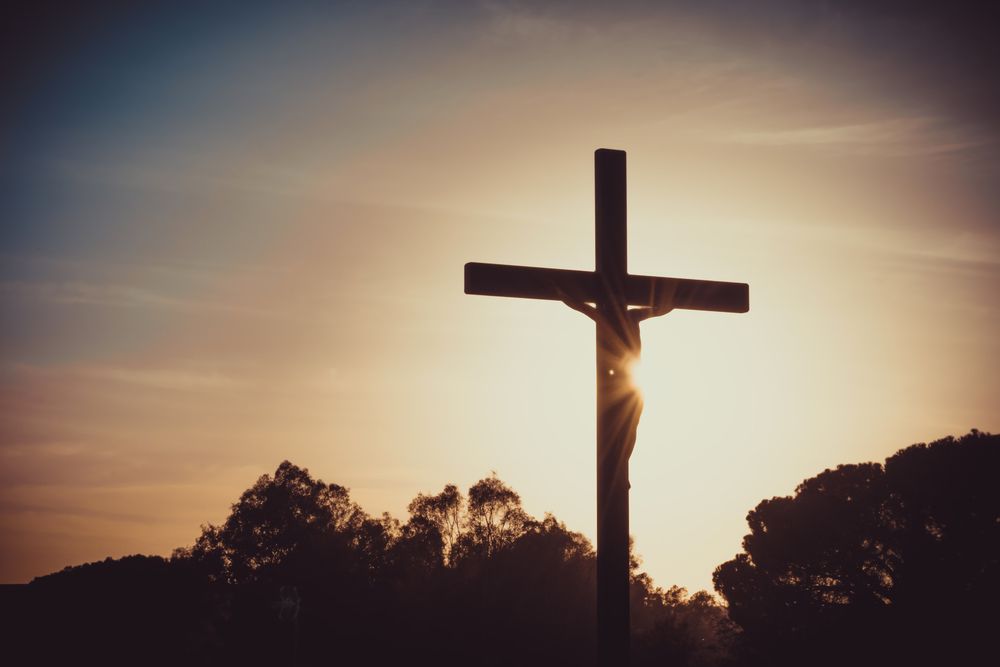
Two thousand years ago this week, according to Christian tradition, a Jewish preacher from Galilee was nailed to a wooden beam outside Jerusalem's city walls and left to die. For billions of believers, the crucifixion of Jesus is the central event in human history. For the Romans overseeing it, it was a Tuesday.
This is the strange history of the practice that led to Jesus’s death: what crucifixion was, why it was used, and how it worked.
Rome Didn't Invent Crucifixion
Crucifixion was, above all else, a crowd-control strategy – but the Romans weren’t the first to come up with it. The practice likely originated in Persia and spread west through Phoenicia before Rome adopted and refined it. However, no civilization embraced it with quite the same… enthusiasm as the Roman Empire did.
By the time of Jesus, it had been in use for centuries as the Romans’ preferred method of execution for slaves, non-citizens, and political troublemakers. Roman citizens convicted of capital crimes were typically beheaded. The cross was reserved for everyone else.
Crucifixion was designed to be slow, agonizing, and very very public. Executions were carried out along major roads and in crowded gathering places specifically so that as many people as possible would witness them – and hesitate before breaking Roman laws themselves.
How Crucifixion Worked
The practice was grim, to put it lightly. A condemned person was typically flogged first, then forced to carry the horizontal beam – called the patibulum – through the streets to their own execution site. The vertical post (or stipes) was often already fixed in the ground.
Victims were attached to the crossbeam by rope or nails, then hoisted into place. Death came slowly, from exhaustion, dehydration, and exposure. It could take hours, or it could take days. The whole thing was designed intentionally to be as prolonged as possible.
(A note: we've kept this description brief by design. The reality was considerably more gruesome than what's described here.)
How Common Was Crucifixion?
Christ’s crucifixion is the most well known to history, but the truth is that Jesus was just one of many thousands who died this way. The ancient world was cruel, and those who spoke truth to power often paid a heavy price.
For example, when the slave rebellion led by Spartacus was crushed in 71 BC, the Roman general Crassus lined the Appian Way – the main road into Rome – with 6,000 crucified slaves, a haunting message that stretched for miles.
The historian Josephus records that after the fall of Jerusalem in 70 CE, Roman soldiers crucified so many people that they ran out of wood and space for crosses. The practice continued until Emperor Constantine abolished it in the early fourth century.
What the Archaeological Record Shows
Evidence of all this is surprisingly scarce, for a grim reason: Rome typically left bodies on the cross to decay, then discarded the remains. The most notable find came in 1968, when construction workers outside Jerusalem unearthed the bones of a man named Yehohanan.
His heel bone still had an iron nail driven through it, with a fragment of olive wood attached – almost certainly from the cross itself. A second crucifixion victim was identified decades later in Cambridgeshire, England, the same way. One reason physical evidence like this is so rare: nails were routinely removed and repurposed as lucky charms after executions.
Where Did the Cross End Up?
Despite these challenges, there has naturally been much curiosity about what happened to the specific cross Jesus was nailed to. Is it possible it was preserved somehow?
The Bible notes that Jesus was not crucified alone – two men were there alongside him that day. Could they provide clues? The Gospels describe the men as thieves or criminals (the exact word varies by translation) condemned under the same Roman system that had sentenced Jesus for sedition. Their deaths also provide key evidence in this mystery.
According to Christian tradition, the cross of Jesus was buried near Golgotha and largely forgotten until the fourth century, when Helena, the elderly mother of Emperor Constantine, traveled to Jerusalem around 326 CE.
Early accounts hold that excavations near the site did indeed uncover three crosses, as the story suggests. To identify the True Cross, each was touched to a dying woman – and only one revived her. Helena took this as proof, and divided the wood into sections: one remained in Jerusalem, one went to Rome, one to Constantinople. Constantine then built the Church of the Holy Sepulchre over the site.
The fragments reportedly spread from there with remarkable speed. By around 348 CE, Bishop Cyril of Jerusalem was already noting that pieces of the “True Cross” had reached every corner of the inhabited world. This naturally invited skepticism about many claims.
The reformer John Calvin later quipped that if all the claimed relics were gathered together, they could fill a ship. But when a French architect named Charles Rohault de Fleury actually tracked down and measured every known fragment in the 1870s, he concluded that combined they would amount to less than a third of the volume of a full-size cross.
Is the "True Cross" Authentic?
There remains substantial disagreement about the authenticity of these relics, even today. While they are venerated in Catholic and Eastern Orthodox traditions, some historians and religious scholars say claims that Jesus’s cross still exists are impossible to prove.
The largest known relic of the True Cross today rests in Rome's Basilica of Santa Croce in Gerusalemme – the very church Helena built in her palace to house what she carried back from Jerusalem.
In 2023, Pope Francis gifted two fragments of the cross to King Charles III at his coronation, placed inside the processional Cross of Wales. Nearly seventeen centuries after Helena first divided it, the wood is still on the move.
26 comments
-
 Rev. B.D. Rees
Crucifixion was at the time of Christ no different than hanging or electricution is today.... I have a hard time believing that the wood the cross was made out of is holy, or venerated in any way. Jesus by God's design was treated and executed as a criminal to show the people just how "FAKE" the priests and temple higherarchy were. Christ is the Cross, Christ is the Chalis, Christ is the simple idea of believing in something greater than ourselves. The symbols are just that... symbols of an era gone by, Christ is the one thing that remains as a constant in our lives and the simplicity of his words to live by. How he died and the method (as brutal as it is) should not be the main reason Religion exists.
-
 Wayne L Christensen
Agreed
-
-
 George B. Crain
The tale of the True Cross is re-told.
“Queen’s Crusade” and “Queen’s Crusade: The Prologues” tell the story of Helena’s hiding of the Cross, then its movement across Europe and Asia Minor to save it from the dark powers that sought after its holy power. In modern times a man with no concept of its power or its meaning is called upon to save it from the darkest powers yet.Available on Amazon.
-
 Rev. Miche'al Yosef Dixon
"For the Romans overseeing it, it was a Tuesday." Actually it was a Wednesday, April 1st in the 10th year of the reign of Tiberius Caesar. (28AD On the Gregorian calendar.) And the proper term for the two is "Robbers" (or Muggers; one who threatens another's life to gain their possessions). Thieves/Burglars are those that broke into a home to rob it but tried to avoid confrontation. Now, from a Christian Archeologist point of view, this "True Cross" is BS. The original one would have been reused thousands of times until unusable then repurposed for other wood needs. The chances of finding even a peice after several centuries is astronomical. Better chance of finding the Mythical Holy Grail (not the true Holy Grail in Spain). The cup which was at the time as common as Tupperware and there were two dozen others exactly like it, the women would have picked up and cleaned and put away with the others, before Yeshua's illegal arrest and anyone gave a rat's butt about it four hundred years later. Yeshua did not want those items to like the Armor of Saul and Brass Fiery Serpent become an Idol of worship like the cross without the original.
-
 Reverend Paula Copp
Even if it were a piece of the “true cross” (which is, as previously mentioned, impossible to prove) it isn’t “holy”… that’s just for those who need strict structure in order to get through their daily lives. You know what? Whatever works!
-
 Marie Hampton
Crucifixion was common, even preferred, as a demonstration of punishment you would suffer for any number of crimes and especially those against Rome. Power, enforcement and take over included anything or anyone. Roman's disciplinary tactics used fear and tyrannical means to an end. Scorched Earth, men, women and children, crucifixion was a manor after conquest to continue ruling by tyranny which is said to be ruthless to rule... The only other rulers who garnered fame were those who loved their people and they earned it by elevating and championing its people usually exploiting those that weren't "their people". As far as any venerated object, the Bible says it's wrong. God is not found in wood and stone, but within the heart, mind and soul of a person. According to the commandments that's the only worship of humans allowed. Thinking about the Ethiopian Bible and it's oldest of all scriptures gathered as a new study... Gospel of Thomas, "...split a piece of wood and you will find me. Lift a stone and I am there." So in my faith always, tells us God is everywhere all the time and we are to seek Him out mind, body and soul.
-
-
 Rev. BH
Lion, your repetitive take on religion as "a form of mental illness" tends to make a mockery of the severity of true mental illness. Examples: "anxiety disorders, depression, bipolar disorder, schizophrenia, eating disorders, and personality disorders". These issues cry out for long-term, trained professional treatment. Going to church, praying and reading holy books does not. I've no doubt if I booked a psychotherapist to cure me of belief in god, he'd point out he had far more concerning patients needing his attention and show me the door.
-
 Sir Lionheart
I don’t know if you know this but Religious Trauma Syndrome (RTS) is a well known recognized psychological condition that can be treated by secular therapists. Many seek treatment having been deeply indoctrinated to believe, and worry, about things like, Hell, and a big daddy in the sky, and other such ridiculous religious ideologies. Some religious people get so indoctrinated that they are prepared to kill people who don’t subscribe to their beliefs. That indeed is a mental disorder.
As I’m sure you know, Christians have done that in the past, so yes, I remain convinced that people who want to believe in the fairy tales of ridiculous proportions listed in that book written by many people that believed the earth was the center of the Universe with everything in the cosmos revolving around it is a delusional mental disorder.
🦁❤️
-
Rev. BH
"Religious Trauma Syndrome (RTS) is a set of debilitating cognitive, emotional, and social symptoms resulting from oppressive religious experiences, high-control groups, or leaving a rigid religious community. Coined by Dr. Marlene Winell, it often causes symptoms similar to PTSD, including anxiety, depression, fear, loss of identity, and difficulty making decisions."
An interesting addendum: Religious Trauma Syndrome (RTS) is primarily associated with conservative, authoritarian, or fundamentalist religious environments
I reiterate Lion, going to church, praying and reading holy books does little to qualify as RTS. I have many decent, functional friends whose belief in a god in no way intrudes on their secular lives. How do your beliefs?
-
Sir Lionheart
Your first paragraph basically says it all. I believe you to be misguided by your second paragraph if you are under the impression that fundamentalist religious environments are all basically conservative based.
Yes, many people get a great deal of comfort from believing and praying to a big daddy in the sky. That’s the way it has always been for millennia, and possibly will always be that way. People get a great deal of comfort believing in fairies, crystal healing, astrology, psychic readings, mediums, and other forms of religion, and believe there are “holy” books, which of course are human constructs. These might not fall into the category of RTS, but they are non-the-less, forms of a psychological or mental health condition, believing and talking to imaginary beings that don’t exist.
Thanks for your comment.
🦁❤️
-
Rev. BH
Should have put quotes around my second paragraph, like my first. More, with appropriate quotes:
"Religious fundamentalism is a strict, literal adherence to sacred texts and conservative doctrines, aiming to return to a perceived "pure" form of faith. Examples include ultra-orthodox communities (Hassidic Jews, Amish), Wahhabi Islam, and evangelical literalism."
I'm talking to "you" - no proof of your existence but words.
-
Sir Lionheart
I’m not really sure what a “pure form of faith” is, are you? Is that akin to anything like a pure form of Socialism, or Communism? 🤷
As an FYI, I’m led to believe I do exist, but I only have that on good authority from my wife. She has been known to be wrong though at times. 🤭
I appreciate your comments. 🤗
🦁❤️
-
 Patricia Ann Gross
"pure" was his only word in quotes, and I believe he was refering to what he called those with extensively literal interpretations of their scripture, rather than looking at them through a critical lens, which, by the way is something you do all the time when you refer to Biblical stories.
I am familiar with RTS, and people who were abused physically and emotionally or survived attrocities by perpetrated by a church (cult activity, primarily) are the most likely victims.
-
Rev. BH
Put your quotes in the right place. "pure" form of faith (as in the article) is not the same as “pure form of faith” as you put it. An actual distinction.
But in answer to your first paragraph question, a simple yes.
-
-
-
-
-
-
 Rev Ned
I read somewhere, that if, out of all the religions in the world, only one is true, then logic dictates that none are true. That said, I have a short sword, pole arm and bearded hatchet to be buried with me to hedge my bet. If the Valkiries carry me across the rainbow bridge (scary thought djt supporters?) to Valhalla, I’ll have weapons with which to fight the ice giants.
-
-
 Merlin
Rome’s canon depicted salvation by death was strategically imposed to control and pay allegiance to the Ruler. It’s worked for 2000 years.
-
 Jimmy Moon
I’m saved, so you wouldn’t understand. To me, it represents the suffering HE chose to endure for me. I can see it and know HE thought of me that Wednesday—and He loved me enough to die for me. PRAISE HIS NAME. HE's ALIVE.
-
 Colleen McAllister
Real believers do not need to see or touch the "real" cross, nor any other artifact or holy object. We simply know and the proof we have is the change in our lives. Where it is does not matter, only that Jesus was willing to die for anyone willing to accept him. I feel sad for those who refuse.
-
Sir Lionheart
And I feel happy for those who have not been deeply indoctrinated to believe such things, which is no different to those of other religions that feel sad others have not accepted their “truth” of their religious beliefs.
It’s a very beautiful thing to be able to live a mentally healthy, and righteous life without having to be coaxed or coerced by a religion to do so. People can change their lives, and the way they live, without having to believe, a deity has helped them do it. I know of people who honestly believe that turning to their faith, and their god, other than Christianity, has changed their lives for the better.
🦁❤️
-
-
 Rev. Dr. Dennis Chevalier, Ph.D.
in Afganitan 1995 the world saw 3 contractors crucified just like my Christ so...what were you saying?
-
Rev. BH
If you bury a piece of wood for a couple hundred years, it would either rot away or become petrified. Very hard to believe it would be found intact and identifiable.
Secondly, to my pal Lionheart's point, if Jesus had been stoned to death, would Christians be wearing a rock on a chain? If he'd been hung, a noose? Beheaded? - well I don't want to imagine that necklace!
But myths are a part of every religion and cult to this day. I don't find them necessarily bad (depending on how you use them against those who believe in other myths), but insights into historical cultures and timeless literature. It's like begrudging kids of Grimm's fairy tales or Aesop's fables because they are equally fabricated.
-
 ServantOfJudgement
Stoning was indeed the way Israel dealt with a false prophet. My old thought, same as yours and Lionheart's exposes an interesting prophetic truth from the old testament. Stoning a person disqualifies that person from being The Christ. Consider crucifixion a box to check on a very long pre-flight checklist. If the boxes aren't all checked, the plane doesn't fly.
Simply put, if Jesus were stoned, we'd not have Christianity.
-
-
Sir Lionheart
It always amazes me that people would actually hang an effigy of something so brutal and barbaric around their necks. Yes I know they believe it’s in memory of someone that died “for them”, but I mean….really? If they actually witnessed a death by that method I’m sure they would think very differently, no matter who it was. I’m just glad it wasn’t a stoning, beheading, or hanging, who knows what they would hang around their necks if that had been the case. Such is the ridiculous mentality of those involved in religion. Circumcision on tiny new born baby boys is yet another crazy religious practice that has been “normalised” by religion, so don’t get me started. I honestly believe it’s all a form of mental illness, normalised in peoples heads to believe it’s okay.
🦁❤️
-
Patricia Ann Gross
Sir LH,
It is a reminder of the sacrifice of Jesus, for those who believe. There are two types of crosses, the crucifix which has Jesus hanging limply on the cross with a crown of thorns as a symbol of the "suffering Christ" (most common in Catholic circles) and the empty cross signifying the resurrected Christ (primarily Protestant). This is a very sacred weekend for those who believe, so please be respectful of those who use these symbols as reminders of why they believe that such a person existed and suffered the ultimate sacrifice.
-
ServantOfJudgement
I used to the same thing when I was an atheist only id say were lucky Jesus wasn't shot. Everyone would be sporting a musket on their neck. Later I found why it had to be crucifixion, still that old thought persists.
I'll not wear a cross and when I see one I always go back to what we've both said. To me it seems rude. Especially rude of Catholics who actually build an entire statue of Jesus on the cross. It's unbearable to even look at yet they seem numb to it.
-

Thank you