Product Description
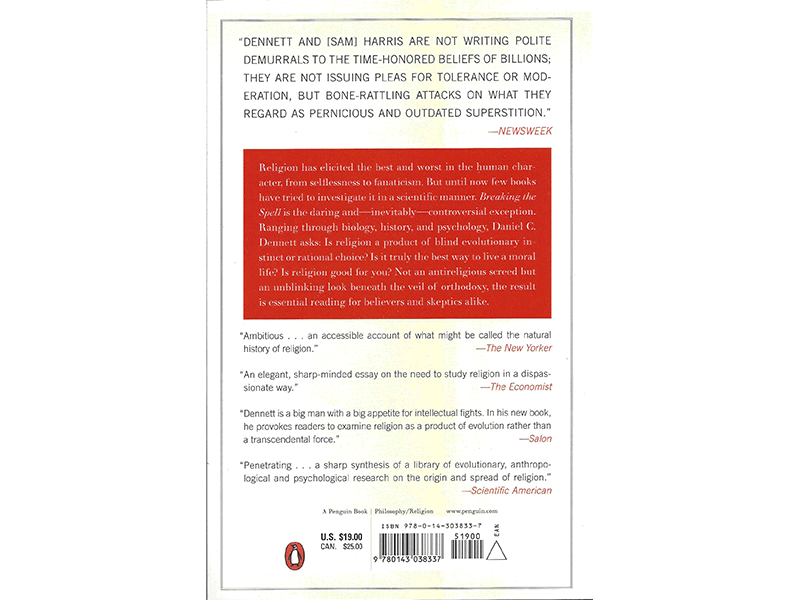
Religion, for many people, is vivid and central component of life. Religion comforts people in sickness and sorrow, is an integral tool in their relationships and family life, and has encouraged human coexistence to magnificent and awful ends. Because religion remains such a powerful force in our lives, it is important that we fully understand and are mindful of its influence and what that means for humanity as a whole. While some of the religious may be wary of outsiders examining their faith through a scientific lens, doing so is crucial for the success of humanity.
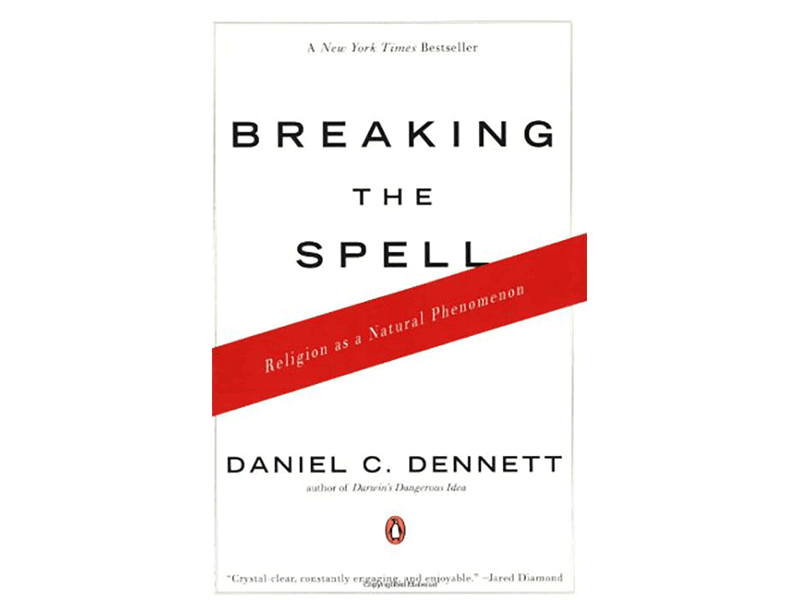
In his daring book, author Daniel C. Dennett seeks to uncover the origins of faith and why it means so much to so many different people.His analytical discussion tries to determine how and why religions have become so powerful, and why they can be so life-shaping. Where do they come from? Why are so many so devoted to God? What basis do they have in our biology? In our psychology? Is a life lived in a religious faith really the best life that a person can live? All important, fundamental human questions that Dennett explores in his latest book. He sets out to discuss why and how religions have commanded allegiance, become so potent, and shaped so many lives so strongly. Where does our devotion to God come from? What was the psychological and cultural soil in which religion first took root? Is it an addiction or a genuine need that we should try to preserve at any cost? Is it the product of blind evolutionary instinct or rational choice? Do those who believe in God have good reasons for doing so? Are people right to say that the best way to live a good life is through religion? These are the types of questions Dennett seeks answers to.
Dennett explores how religions formed, and how they might evolve moving forward. Note please that Breaking the Spell is not the author's attempt to crush institutional religion, but rather an open-minded exploration of those forces in our lives and systems. While religious debates rage on, Dennett's book is a reasoned and calm discussion that believers and nonbelievers each will find useful to further their own understanding.